
Carl Sagan’s team wanted to include the Beatles song “Here Comes the Sun” on the Voyager Golden Records (discs containing greetings in 60 languages, music and sounds from Earth aboard both Voyager spacecraft launched in 1977), but the record company EMI, which held the copyrights, declined.
Some of the Best Photos NASA’s Curiosity Rover Has Taken in Its 8 Years on Mars
NASA’s Curiosity landed on Mars on August 6, 2012 – if you remember, you could even sort of livestream its Martian landing. It became the only functional robot on the planet after NASA’s Opportunity stopped communicating on February 13, 2019.
After nearly 8 years of service, the Curiosity has taken some amazing pictures of the Red Planet (and it’s still trundling around doing it’s thing). You can check out the thousands of images on NASA’s official website.
In the meantime, here’s a quick preview of the beauty of Mars.
15. Curiosity Selfie!
Even robots want to take a picture now and then.

Photo Credit: NASA Mars Exploration Program
14. A Petrified Area
These patterns are just beautiful.

Photo Credit: NASA Mars Exploration Program
13. Check out These Gorgeous Views
Worthy of a museum exhibit!

Photo Credit: NASA Mars Exploration Program
12. Checking out Its Own Wheel Track
It’s a meta portrait.

Photo Credit: NASA Mars Exploration Program
11. An Active Sand Dune
Called Gobabeb, this sand dune belongs to a dune field called Bagnold.

Photo Credit: NASA Mars Exploration Program
10. Mount Sharp’s Base
This is mudstone.

Photo Credit: NASA Mars Exploration Program
9. Yet Another Shot of Mount Sharp
These sedimentary rocks are still charming to look at.

Photo Credit: NASA Mars Exploration Program
8. A Wide Shot
Actually taken from a Mars Orbiter, not by Curiosity.
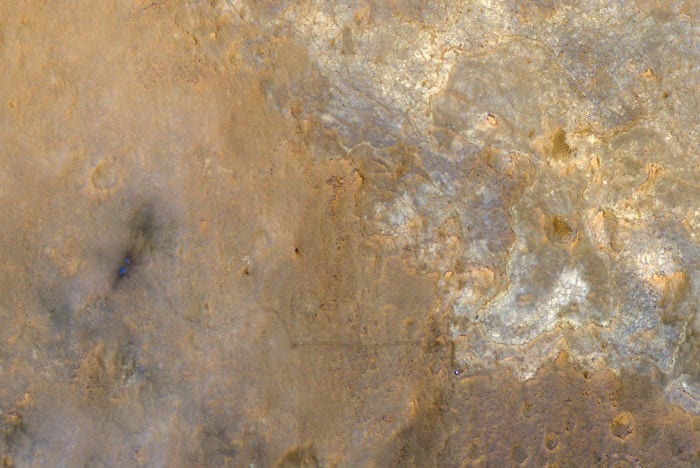
Photo Credit: NASA Mars Exploration Program
7. Fracture Shot
This has many rocks that look as if they’ve been, well, fractured.

Photo Credit: NASA Mars Exploration Program
6. A Rocky Dreamscape
It looks like a dream!

Photo Credit: NASA Mars Exploration Program
5. Wide-Shot of Mount Sharp
This far-off view definitely speaks for itself!

Photo Credit: NASA Mars Exploration Program
4. The Bottom of Mount Sharp
There are many great angles of this mountain.

Photo Credit: NASA Mars Exploration Program
3. Take a Gander at This!
It’s called Jake Matijevic Rock.

Photo Credit: NASA Mars Exploration Program
2. The “Harrison” Rock
There are some crystals in this shot too!
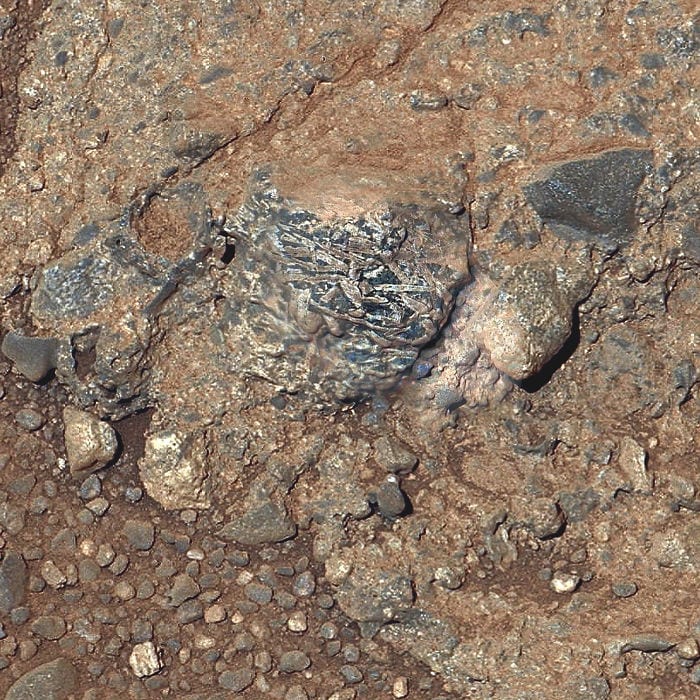
Photo Credit: NASA Mars Exploration Program
1. Martian Sunset
If it looks other-worldly, that’s because it is!

Photo Credit: NASA Mars Exploration Program
As of now, the Curiosity is still doing strong on Mars.
If you’ve got thoughts, we totally look forward to hearing anything you have to say about these landscapes. All scientific facts, discussion, and theories are totally welcome in the comments.
The post Some of the Best Photos NASA’s Curiosity Rover Has Taken in Its 8 Years on Mars appeared first on UberFacts.
Patagonia’s CEO Donated Company’s $10 Million Tax Cut to Fight Climate Change
As much as some people (and organizations) out there would like to bury their heads in the sand and pretend climate change doesn’t exist, it is very real, and its effects are growing more drastic.
Because of the 2018 rewrite of America’s tax laws – a tax code revision that greatly benefited corporations by lowering the corporate tax rate by almost a third for most companies – Patagonia paid $10 million less in taxes that year than it had anticipated. So the company’s CEO, Rose Marcario, decided to donate the $10 million to non-profit groups that are working to fight climate change and help the environment.
Cool things happen when women are in leadership positions! Rose Marcario, CEO of Patagonia, is donating the company's entire $10m tax cut – the result of corporate tax code passed by Trump admin last year – to non-profit groups working on climate change. https://t.co/ApydSyNLTT
— Nobel Women (@NobelWomen) December 2, 2018
Marcario believed the corporate tax cut was not a good thing, and she wrote, “Based on last year’s irresponsible tax cut, Patagonia will owe less in taxes this year—$10 million less, in fact. Instead of putting the money back into our business, we’re responding by putting $10 million back into the planet. Our home planet needs it more than we do.”
Speaking about climate change deniers, including many in government, Marcario wrote, “Far too many have suffered the consequences of global warming in recent months, and the political response has so far been woefully inadequate—and the denial is just evil.”
Respect! to Patagonia – Actions count more than words or vision/ mission statements: Patagonia’s CEO Rose Marcario is donating company’s entire $10M US tax cut to fight climate change. #purpose https://t.co/VPdQOabmcM
— ThomasJenewein (@ThomasJenewein) February 4, 2019
Patagonia has been a friend of the environment for many years now and their website says the company has donated more than $89 million to environmental groups to fight climate change.
Let’s hope that more corporations and individuals make their voices heard about the extreme consequences of climate change that are occurring around us every day. This isn’t something that might happen in the future, this is taking place right now.
The post Patagonia’s CEO Donated Company’s $10 Million Tax Cut to Fight Climate Change appeared first on UberFacts.
The sun looks like caramel corn
A new telescope built to study the Sun has released its first images. They show the surface of the Sun in the most exquisite detail we’ve ever seen – revealing convection granules the size of Texas, and tiny magnetic features – the roots of fields that extend far into space. via sciencealert.com
Wow! Astronomers Watched a Star Skip the Supernova Stage and Go Straight to Black Hole.
When people say “go out with a bang”, they usually don’t mean literally. But when it comes to dying stars, typically astronomers expect them to go out with enormous bangs: supernovae. However, recently a group of Ohio University scientists observed a star that didn’t have quite the same life path in mind.
Instead of exploding and then collapsing in on itself, the star turned directly into a black hole. That shocked the group of scientists who had been studying the star, named N6946-BH1 to be exact, which was located in the Fireworks Galaxy, 22 million light-years away. At first they didn’t think it was possible, yet in 2015, after six years of watching the star weaken, scientists concluded that the star had bizarrely skipped the supernova stage.
They chalked it up as a “massive fail.” That’s a technical term, referring to the star’s mass.
“The typical view is that a star can form a black hole only after it goes supernova,” said Ohio State astronomy professor and study researcher Christopher Kochanek. “If a star can fall short of a supernova and still make a black hole, that would help explain why we don’t see supernovae from the most massive stars.”
Photo Credit: Pexels
This atypical event still requires more analysis, but scientist Scott Adams estimates that massive fails occur in about 10 to 30 percent of massive stars. Ultimately, this discovery could lead to more answers about how super-massive black holes come to exist, since supernovae tend to blow away a lot of a star’s mass.
Without a supernova, more of a star’s mass would stick around to collapse in on itself and become a vortex that bends time and space and eats light for supper.
The post Wow! Astronomers Watched a Star Skip the Supernova Stage and Go Straight to Black Hole. appeared first on UberFacts.
This is Officially the Hottest Place on Earth
The past ten years were the hottest in recorded history, and it has seen record-breaking average yearly temperatures and single-day temperatures in places across the globe. This is largely due to global climate change, and it’s a dangerous trend.
However…
According to the World Meteorological Organization, the hottest temperature ever recorded was a sweltering 134 degrees Fahrenheit at Furnace Creek in Death Valley, California, way back in July 10, 1913.
Up until 2012, the record on file – 136.4 degrees Fahrenheit – occurred in El Azizia, Libya, and was recorded in 1922. But it was disqualified 90 years later because, according to the Guiness Book of World Records, the temperature could have been off by up to seven degrees due to the type of surface on which the measurement was taken.
Dallol, Ethiopia, is considered the hottest regularly inhabited place.

Photo Credit: Pixabay
Back to Death Valley. Air temperatures there typically reach 120 degrees due to its geographic location and boiling desert environment. The area receives less than three inches of average annual rainfall, and the sun beats down on the ground – 190 feet below sea level and enclosed by mountains.
So, in Death Valley, hot air rises and gets trapped by the surrounding mountain ranges. Then it cools and falls back into the valley. As it falls, where it’s heated again by then sun and the high air pressure down on the valley floor. That’s how the area holds the record for highest recorded air temperature.
Death Valley, though, is not the only hot spot around.

Photo Credit: Billy Hathorn
In Yellowstone National Park, the geothermal pools often reach 250 degrees Fahrenheit and above. According to National Geographic, vents on the ocean floor release liquids at 750 degrees Fahrenheit and higher. The Earth’s core is estimated to have a temperature of a super scorching 11,000-degrees. In our solar system, scientists say the hottest place is the sun’s core which is about 15 million Kelvin, or roughly 26 million degrees Fahrenheit.
If you’re looking for the hottest location in the universe, that seems to be, surprisingly, just outside of Geneva, Switzerland. At the Large Hadron Collider, scientists and engineers smash atoms in their experiments.

Photo Credit: Flickr
According to Inside Science News Service, the temperature inside the equipment reaches an incredible 7.2 trillion degrees Fahrenheit (if just for short bursts).
That’s a valid excuse for sweating.
The post This is Officially the Hottest Place on Earth appeared first on UberFacts.
A Teenager Discovered a Planet on the Third Day of His NASA Internship
These kids today…are pretty great, as it turns out!
At least, some of them are.
On only the third day into his internship at NASA, a 17-year-old named Wolf Cukier (awesome name) discovered a new planet that is being called “TOI 1338 b”. The planet is 6.9 times larger than Earth, and the folks at NASA believe the planet will be in a stable orbit for at least the next 10 million years. It is located roughly 1,300 light-years away from Earth.
View this post on Instagram
The teenager discovered the planet while looking at “variations in star brightness” in images captured by NASA’s Transiting Exoplanet Survey Satellite (TESS).
Cukier is from Scarsdale, New York, and he completed a two-month internship last summer with NASA at their Goddard Space Flight Center in Maryland.
17-year-old high school student discovers rare new planet 3 days into NASA internship https://t.co/cUlDKsHgeU pic.twitter.com/ujR6H3hYBR
— CBS News (@CBSNews) January 11, 2020
Cukier said, “I was looking through the data for everything the volunteers had flagged as an eclipsing binary, a system where two stars circle around each other and from our view eclipse each other every orbit. About three days into my internship, I saw a signal from a system called TOI 1338. At first I thought it was a stellar eclipse, but the timing was wrong. It turned out to be a planet.”
NASA just recently confirmed Cukier’s findings, and they submitted a paper co-written by the teenager about the discovery of the new planet.
Let’s get to meet this whiz kid, shall we?
Cukier also confirmed that he is indeed now looking for other new planets. Keep up the great work!
As the saying goes, the kids are alright.
The post A Teenager Discovered a Planet on the Third Day of His NASA Internship appeared first on UberFacts.
Look at These Awe-Inspiring Photos of the Final Solar Eclipse of the Decade
On December 26, people from Saudi Arabia to Guam scrambled to take pictures of the final solar eclipse to grace the Earth this decade.
Unlike in some eclipses, you’ll notice that the moon didn’t totally black out the sun. Instead, it covered the majority of the sun, leaving a visible “ring.” This type of event is called a “ring of fire,” or annular, eclipse.
The NOAA provided more information about the moon’s path on the 26th.
A rare #Annular, or #RingOfFire, #SolarEclipse happened on Dec. 26, which lasted 3 min and 40 sec. It was visible from most of #Asia and the #MiddleEast. See the imagery of the #SolarEclipse2019, captured by #Japan's #Himawari8 #satellite here: https://t.co/G8TFeh1dM2 pic.twitter.com/TtZZ2X717k
— NOAA Satellites (@NOAASatellites) December 26, 2019
Images of the eclipse are stunning, especially against the backdrop of beautiful landscapes such as these sand dunes.
A photographer in Guam was able to capture the moon’s movements against the ocean tide.
This picture gives us a different point of view from India.
LOOK: The moon totally covers the sun in a rare "ring of fire" solar eclipse as seen from the south Indian city of Dindigul in Tamil Nadu state on December 26, 2019. Photo by Arun Sankar/AFP pic.twitter.com/2zMOsf6UqZ
— Rappler (@rapplerdotcom) December 26, 2019
Some lucky travelers were able to fly right past the eclipse as well!
An airplane flies past as the moon moves in front of the sun in a rare "ring of fire" solar eclipse as seen from Hanoi on December 26, 2019. | via Nhac Nguyen, AFP pic.twitter.com/PF3NTKk84E
— ABS-CBN News (@ABSCBNNews) December 26, 2019
Residents of India, Pakistan, parts of Africa, and China will get to see the first solar eclipse of the new decade, which will pass by them in June 2020.
These images are out of this world!
Did you catch the eclipse? Share your thoughts with us below.
The post Look at These Awe-Inspiring Photos of the Final Solar Eclipse of the Decade appeared first on UberFacts.
Stars Are Disappearing and Scientists Aren’t Ruling out Aliens as a Cause
There have been a few stories lately when scientists and other suit-and-tie types have been unwilling to say aliens aren’t behind one thing or another – which I guess is the safest course, because no one likes to be proven wrong.
I mean, if a situation actually arose in which aliens were discovered, I doubt people would be running around pointing fingers at all of the folks who said aliens were a fantasy. But what do I know.
…But back to the story at hand, and the hundred-plus stars that have disappeared from the map.
 . . . #岡山県 #井原市 #美星町 #美星天文台 #岡山へ行こう #星活 #星空撮影 #星景ら部 #天の川 #milkyway #nightphotography #nightsky #night_gram #night_shots #japan_night_view #best_moments_night #stars #setouchigram92 #colore_de_saison #瀬戸内カメラ部 #star_hunter_jp #team_jp_西 #Lovers_Nippon #photo_shorttrip #eosm3 #サムヤン12mmf2 #キリトリセカイ #その瞬間に物語を #ダレカニミセタイソラ
Yes, it turns out that the night sky, which has remained static enough to guide seamen and pirates and explorers for eons, is changing.
The Vanishing and Appearing Sources during a Century of Observations Project (VASCO) compares 70-year-old surveys with recent images of the night sky to document what has changed, and after years of painstaking work (there are a lot of stars, after all), they’ve published their results in the Astronomical Journal.
The 100-odd stars that were documented to have disappeared could represent short-lived flashes in the night, or they could be actual stars that disappeared.
The researchers hope their results, and results to come, will be relevant to astronomy and the search for extraterrestrial intelligence (SETI).
“VASCO is a project that is both a SETI project and a conventional astrophysics project,” explained Beatriz Villarroel, a researcher at the Nordic Institute for Theoretical Physics and one of the report’s coauthor. “Even if we do SETI and have SETI questions, we are also interested in publishing other results that we find along the way.”
The disappeared pinpricks of light are curious because when stars die, their last burst of glory is usually hard to miss – people saw and wrote about them long before there were telescopes – so if they can also just wink out without fanfare, well, we want to know why.
And to that end, some of the researchers don’t think we should rule out something like another advanced civilization blocking stars with their solar panels to gather energy.
For her part, Villarroel is on board.
“If we should look for aliens, maybe we should actually look for something that would be truly absurd to find.”
 #NightSky #StarrySky #stargazing #space #astronomy #astropics #MyHappyPlace #UnderAStarrySky #pics #photography #NightPics #WV #WVstargazing #SkyGazing #TheSky
The research is being conducted by a team of 20 astronomers and astrophysicists who have compared 70 years worth of sky images taken by the US Naval Observatory and the Panoramic Survey Telescope and Rapid Response System.
They used software to analyze 600 million light sources that should have appeared in the earliest and most recent sets of data. At first, the number of potential missing stars numbered around 150,000, but was winnowed down to 24,000 after some additional cross-referencing.
In the end, Villarroel is confident the 100 stars they presented are, indeed, missing.
“We have done the best work to remove anything that resembles any artifacts.”
If they are – or were – brief flashes that just happened to show up on the old US Navy surveys, they were likely red dwarf flares, variable stars that dimmed, or the afterglow of a gamma ray burst.
If they really were enduring light sources that disappeared without fanfare, Villarroel – and others – would be much more excited. SETI enthusiasts have speculated about how alien civilizations with advanced engineering power could shield a star from view.”You would have to exclude all-natural things, and then there might also be new natural phenomena that we don’t know about can be more exciting.”
If this is totally blowing your skirt up, the scientists at VASCO plan to implement a citizen science project that lets civilians help search through the rest of the 150,000 candidates.
You know you want to be the one who discovers the spot where technologically advanced aliens are hiding….
The post Stars Are Disappearing and Scientists Aren’t Ruling out Aliens as a Cause appeared first on UberFacts.