
We’ve all wondered–could there be, not just life, but intelligent life, out there?
And while relative intelligence of life on Earth could be debatable, two scientists from the University of Nottingham have a new theory that suggests there is.
36 different potential civilizations, to be exact.
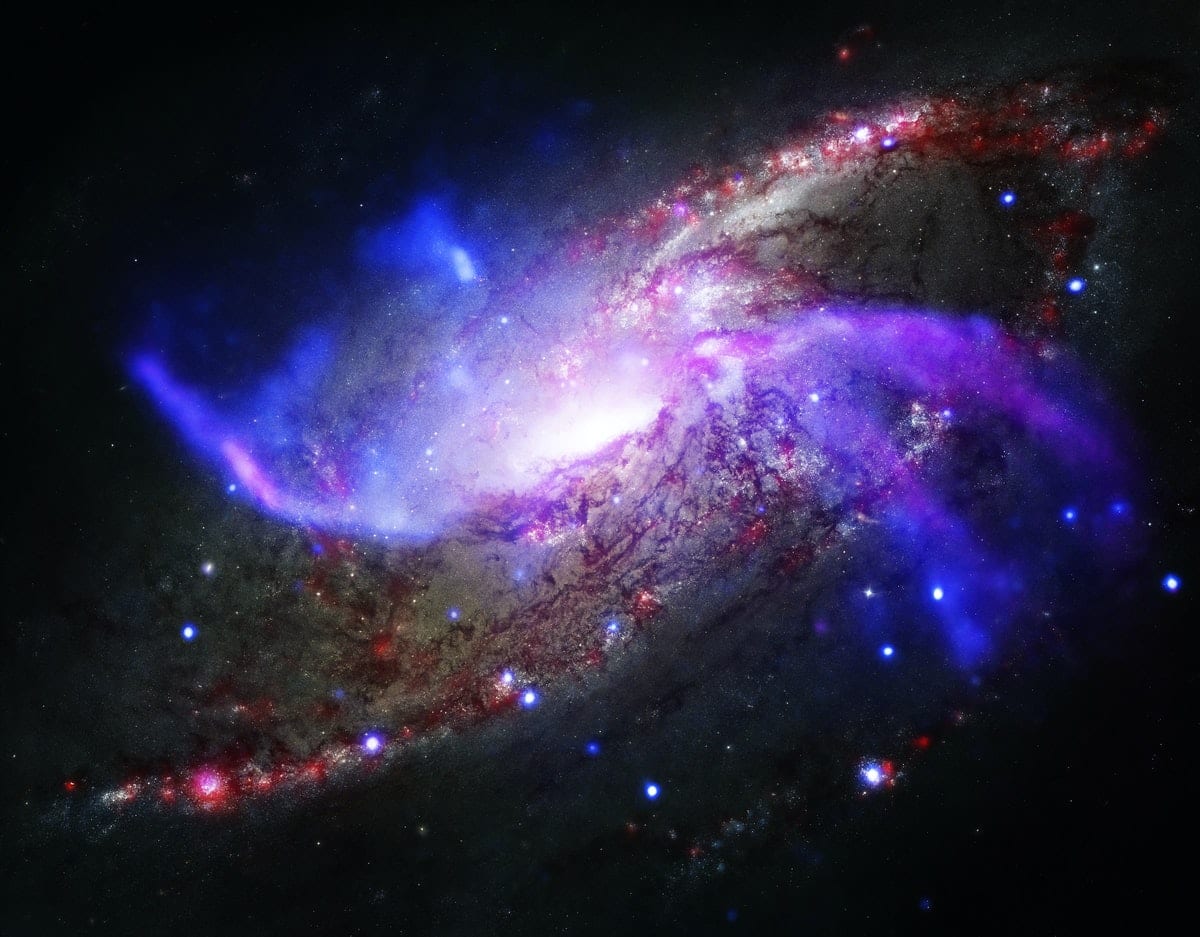
Image credit: NASA via Rawpixel
How can scientists possibly make a prediction about the number of undiscovered civilizations?
It’s a mathematical theory based on a fifty-year-old equation called the Drake equation.
As Popular Mechanics explains:
Drake’s seven key variables, which range from how many habitable planets exoplanets there are in the galaxy to the amount of time over which intelligent life takes shape, are almost impossible to pin down.
The formula acts more like a framework for the probability of finding life; previous estimates have ranged from zero to over a billion civilizations.
But Professor of Astrophysics Christopher Conselice, his colleague Tom Westby, and their team at the University of Nottingham used new technology and assumptions about our galaxy, the Milky Way, to formulate a new hypothesis.
They published their work last summer in The Astrophysical Journal.
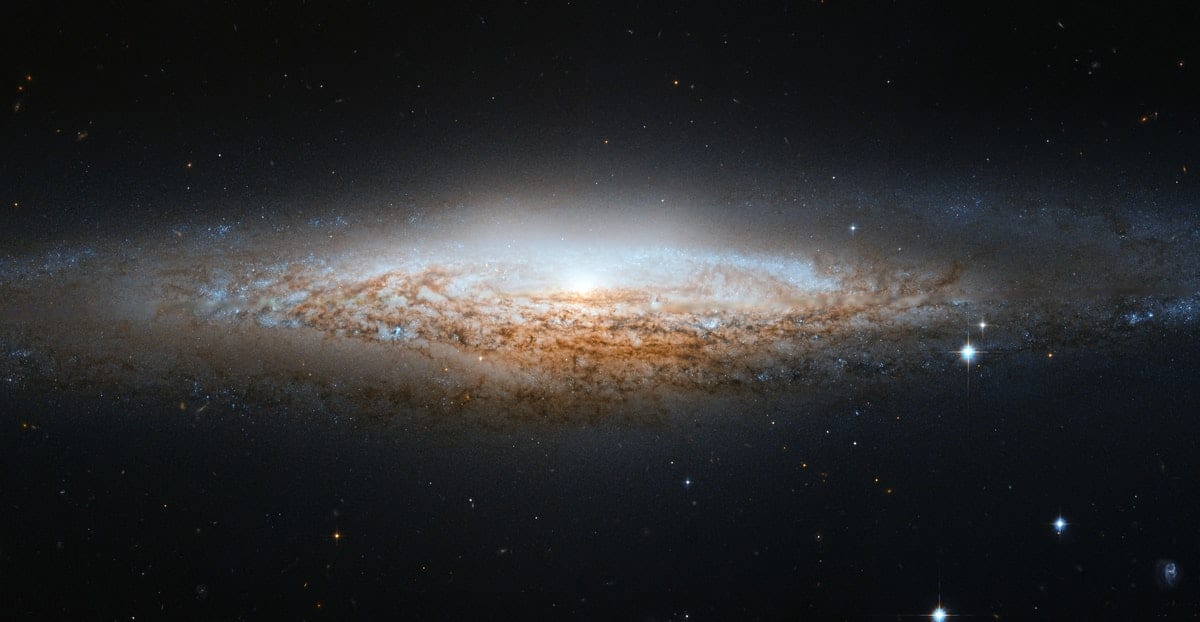
Image credit: NASA via Rawpixel
As quoted in Phys.org, Conselice explains that they based their assumption on the length of time it took a civilization to develop on Earth:
“There should be at least a few dozen active civilizations in our Galaxy under the assumption that it takes 5 billion years for intelligent life to form on other planets, as on Earth.
The idea is looking at evolution, but on a cosmic scale. We call this calculation the Astrobiological Copernican Limit.”
The Copernican limit guides researchers to think on a pretty large scale–where intelligent life develops in either more or less than 5 billion years.
By intelligent life, scientists mean a civilization capable of communication.
On Earth, that development took more than 4.5 billion years, thus the 5 billion year threshold.
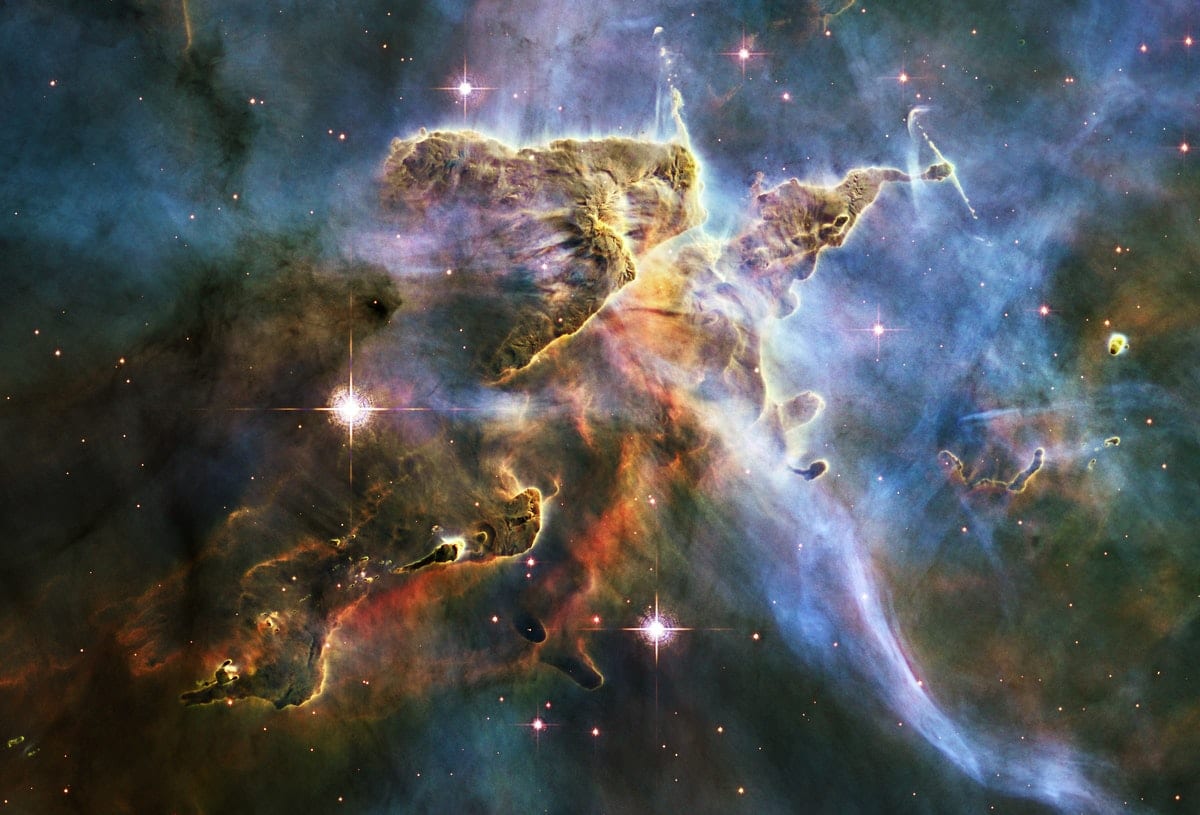
Image credit: NASA via Rawpixel
These calculations have been used for years, but the Nottingham team took it one step further, factoring in the specific composition of Earth’s sun.
As Westby explained:
“In the strong criteria, whereby a metal content equal to that of the Sun is needed (the Sun is relatively speaking quite metal rich), we calculate that there should be around 36 active civilizations in our Galaxy.”
When all of the data is combined and analyzed, they believe just 36 exoplanets possess all the right conditions to support the development of an alien civilization.
Of course that means 36 alien civilizations that are enough like us to be recognizable as communicative beings.
Who knows how many are out there that are so different that we might not even recognize them if we saw them.
The problem is, a theory needs to be proven, and the exoplanets are so far away that while we can see them with high powered telescopes and gather some sensory data on them, we don’t yet have the technology to visit them–even with probes.
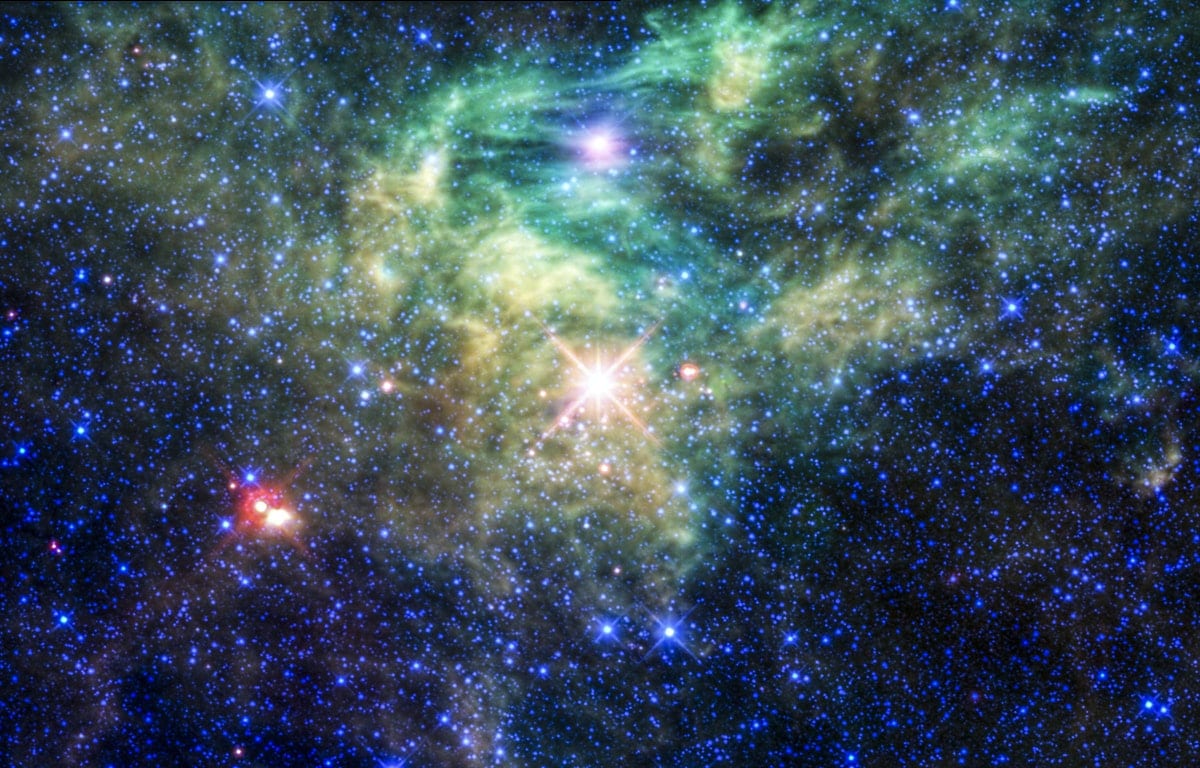
Image credit: NASA via Rawpixel
If they’re so far away, why do we even care?
Well aside from the intrinsic human need to explore and discover, finding out how many other civilizations co-exist could actually tell us something about how long life on earth will last.
As Professor Conselice points out:
If we find that intelligent life is common then this would reveal that our civilization could exist for much longer than a few hundred years, alternatively if we find that there are no active civilizations in our Galaxy it is a bad sign for our own long-term existence.
By searching for extraterrestrial intelligent life—even if we find nothing—we are discovering our own future and fate
This is very exciting in the world of astronomy.
But according to Popular Mechanics and The Guardian, not every scientist is convinced.
Oliver Shorttle of the University of Cambridge told the news organization that more factors need to be considered—such as how exactly life formed on Earth—before taking the new findings as fact.
That’s science for you. There’s always more to consider.
Even so, it’s pretty cool to have such a specific number, don’t you think?
Do you believe there’s life out there? Let us know your theories in the comments!
The post Scientists Say There Could Be 36 Alien Civilizations in the Milky Way appeared first on UberFacts.