This Is Why Men Fall Asleep After Sex (Don’t Worry, It’s Not You)

Listen up, people!

Ladies, have you ever had your world rocked in bed by your male lover? Have you experienced the dreamy, lovey-dovey state of a powerful orgasm and then the need to cuddle afterwards?

I hope so.

But I’m sure you’ve also noticed that during intimacy talk, your man drifts a bit, perhaps even falls into a deep sleep, leaving you…what? Alone? Unable to express your love and emotions? Darn it…

Photo Credit: Unsplash, Toa Heftiba

Don’t worry – he’s not sleeping as an excuse to escape cuddle time or ignore your connecting relationship. He’s doing it because you rocked his world. True story!

Male orgasms differ chemically from women’s

It goes without saying that the act of orgasming is experienced in different ways among the sexes. Men ejaculate externally while women “explode” internally. But what does this mean for brain chemistry?

When a man crosses the sexual finish line, his energy is literally spent. His prefrontal cortex (which houses decision making, personal expression, etc) pretty much switches off. Since this is the epicenter of consciousness, alertness, and mental activity, his brain basically gets sleepy.

But in women? Our orgasms doesn’t cause the same sort of energy expense, therefore we can talk and cuddle after sex. Le sigh.

Body reactions to sex and orgasm

Photo Credit: Unsplash, Adi Goldstein

There are many things…um…surging during sex and foreplay. And prolactin, a hormone excreted during playtime plays a huge factor. According to one study, “Research has shown that pituitary hormone prolactin (PRL) plays a role in regulating sexual satisfaction for both men and women.”

David McKenzie, a sex therapist in Vancouver told Reader’s Digest, “A man’s body chemistry changes after orgasm. The biochemical prolactin is released, physically altering his body and making him very tired.”

But that’s not all. Glycogen, a storage of carbohydrates, is spent as well.

Mark Leyner and Billy Goldberg, M.D., authors of Why Do Men Fall Asleep After Sex?, give their explanation: “It is thought that exertion during sex and after climax depletes the muscles of energy-producing glycogen. This leaves men feeling sleepy. Since men have more muscle mass than women, men become more tired after sex.”

Women like to process their experience

Photo Credit: Unsplash, Becca Tapert

Regardless of chemical increases and depletions, it is a simple fact that women enjoy conversational intimacy with their partners.

Laurie Betito, a Montreal sex therapist, said,”Women like to ‘process’ their experiences, hence the desire to talk after sex.”

As a woman, I can vouch for that. I’m better at communicating emotions after sex and therefore crave that tender heart-to-heart talk with my beau, even if he’s drifting off.

So no matter why you might think about your man drifting away into a post-coital slumber, it’s purely a matter of chemicals and fatigue. It is not you.

If anything, take it as a compliment that you wore him out!

The post This Is Why Men Fall Asleep After Sex (Don’t Worry, It’s Not You) appeared first on UberFacts.

The New Baby Smell Activates Your Brain’s Reward Centers

It’s hard to describe how a newborn baby smells, but you definitely know the scent. Although we don’t think about it much, people are highly driven by smell, and it’s an important part of mother-child bonding.

A study published in Frontiers of Psychology explores this bond. The researchers behind the study recruited 30 women: 15 without children and 15 moms who had recently given birth. They measured the brain activity of the women as they smelled different odors, including the odor of newborns, as collected from cotton undershirts. The women had no idea what they were smelling.

Photo Credit: Pixabay

Women had a hard time identifying the baby odor, and they said it was pleasant. The brain scans told another story, though. The scans showed activity in the dopamine pathway of the caudate nucleus, which is the region of the brain associated with rewards. The reaction was stronger in the new mothers than in the other women, but it was present in all the women.

Dopamine is a neurotransmitter that triggers feelings of pleasure and satisfaction. Dopamine also plays a role in addiction, although that role is complex and not completely understood.

Photo Credit: Pixabay

Does this mean that women are addicted to their newborn babies?

…No.

But it does help reinforce the that bond mothers have with their babies. The researchers weren’t sure of the exact cause of the dopamine response in the new moms as opposed to childless women – it could perhaps be due to hormonal changes, or maybe to the experience of caring for a newborn.

The researchers didn’t include men in the study, but it would definitely be interesting to see if they have a similar reaction to that new baby smell.

The post The New Baby Smell Activates Your Brain’s Reward Centers appeared first on UberFacts.

A Group of Heartbroken Scientists Wrote a Eulogy to Iceland’s First Disappeared Glacier

Scientists everywhere are in agreement that the climate of the world is changing rapidly, and that the results, should the problem go unchecked, will be disastrous. One of the first casualties are the world’s glaciers, like Iceland’s Okjokull (aka Ok), which officially melted away back in 2014.

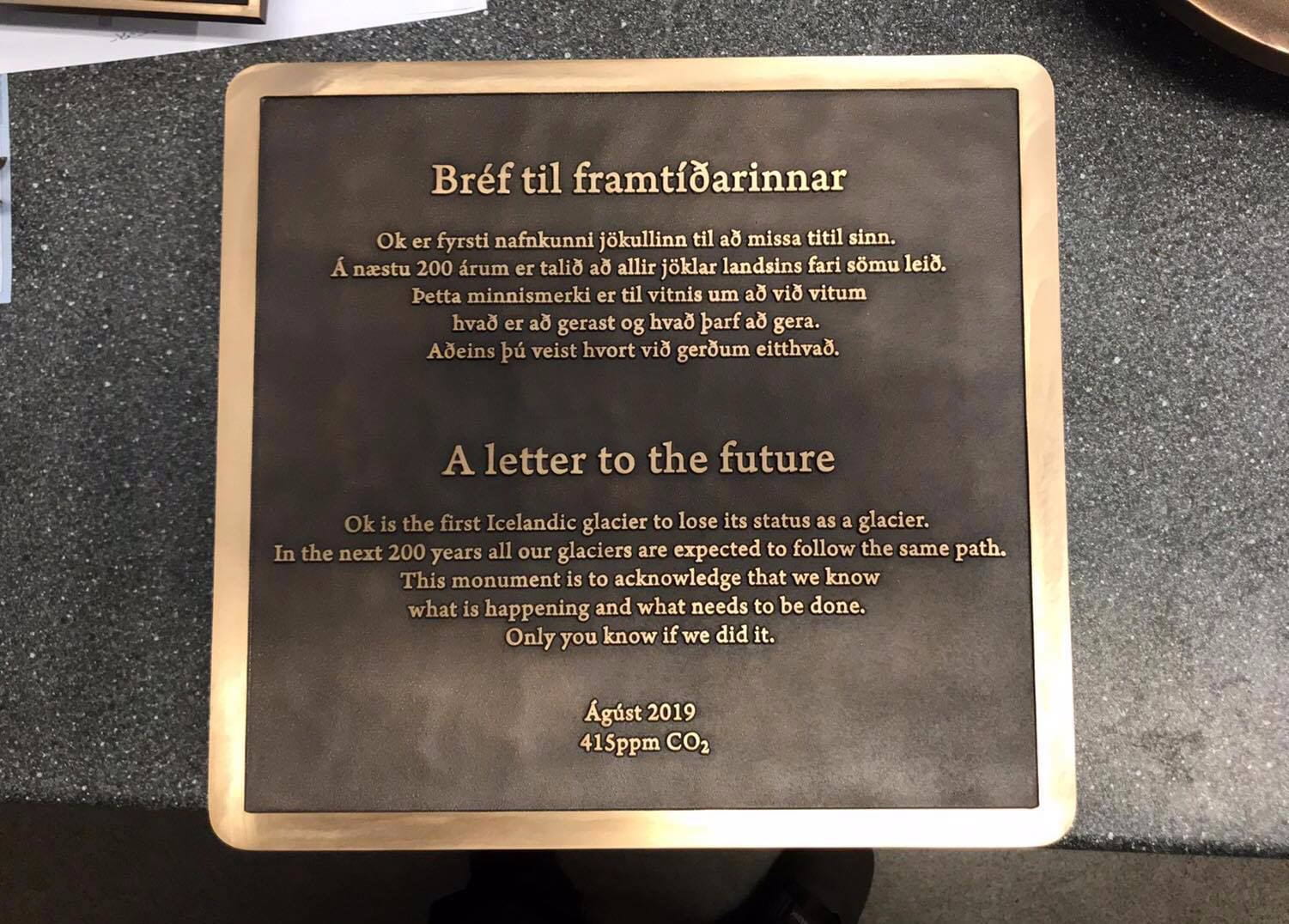
Scientists at Rice University will install a plaque containing a eulogy for Ok, which will no doubt serve as a reminder for generations to come that there were those among us who tried very hard to do something.

Cymene Howe produced a 2018 film titled Not Ok that documented the glacier’s demise.

“This will be the first monument to a glacier lost to climate change anywhere in the world. By marking Ok’s passing, we hope to draw attention to what is being lost as Earth’s glaciers expire.”

Image Credit: Rice University

The plaque reads:

“Ok is the first Icelandic glacier to lose its status as a glacier.
In the next 200 years all our glaciers are expected to follow the same path.
This monument is to acknowledge that we know what is happening and what needs to be done.
Only you know if we did it.”

The plaque will also mark 2019 as the year the world hit 415ppm Co2 levels.

View this post on Instagram

Not Ok. ⁣ After a rocky climb to the summit of Ok yesterday, I stood amidst a vast field of newly exposed volcanic rock, staring at this icy blue puddle in the central crater. It was hard to fathom that just a few years ago, a glacier named Ok (pronounced ‘awk’) existed right here in the surrounds of this crater. ⁣ ⁣ In 2014, Okjökull was first Icelandic glacier to officially lose its glacial status as a result of human induced climate change, and is now considered only as a mountain. A new memorial plaque will soon be placed at the summit with the following words: ‘In the next 200 years all our glaciers are expected to follow the same path. This monument is to acknowledge that we know what is happening and what needs to be done. Only you know if we did it’.

A post shared by B E N J A M I N (@benjaminhardman) on

Not Ok‘s co-producer, Dominic Boyer, has high hopes that awareness can still be raised in time to make a difference.

“We wanted to create a lasting memorial to Ok, a small glacier that has a big story to tell. Ok was the first named Icelandic glacier to melt because of how humans have transformed the planet’s atmosphere. Its fate will be shared by all of Iceland’s glaciers unless we act now to radically curtail greenhouse gas emissions.”

According to the research done for the film, all of Iceland’s 400-ish glaciers could face the same fate as early as 2200.

Glaciers are the largest freshwater reserves on Earth and are also invaluable for the insights they provide into Earth’s atmosphere. The Arctic is warming twice as fast as other parts of the world, and record temperatures are being recorded all over the globe. Wildfires are becoming common from Siberia to Greenland and sea ice is decreases rapidly, putting different animal species in danger.

“One of our Icelandic colleagues put it very wisely when he said, ‘Memorials are not for the dead; they are for the living,” said Howe. “With this memorial, we want to underscore that it is up to us, the living, to collectively respond to the rapid loss of glaciers and the ongoing impacts of climate change. For Ok glacier it is already too late; it is not what scientists call ‘dead ice.’”

Here’s hoping that when people read the plaque 100 years in the future, it marks the beginning of serious, focused action to reverse climate change and not the beginning of the end of the world as we know it.

The post A Group of Heartbroken Scientists Wrote a Eulogy to Iceland’s First Disappeared Glacier appeared first on UberFacts.

The Sunscreen You Wear May Be Harming the Environment

There are a lot of sunscreens that are claiming to be “reef friendly” these days.

Photo Credit: Public Domain Pictures

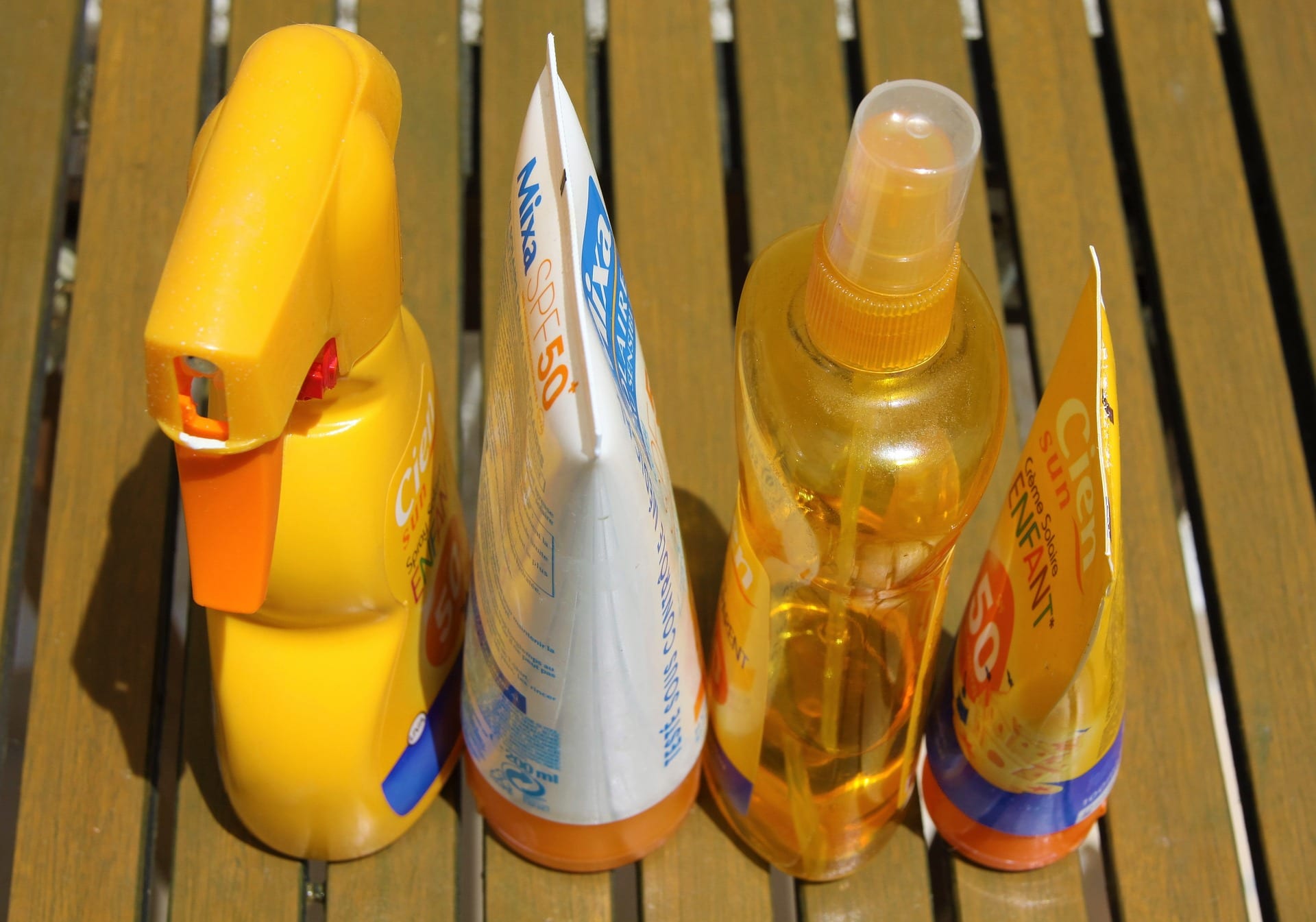
A new label on sunscreens allows consumers to see at a glance how safe the product is for ocean life. If you see the words “reef friendly” printed next to an image of a coral, then the sunscreen should be lacking damaging chemicals. Should be…

A couple of years ago, a report about the effects of sunblock use in the oceans was published by the Environmental Contamination Toxicology journal. According to the study, the common sunscreen ingredients octinoxate and oxybenzone are capable of contributing to bleaching in coral reefs.

Since then, Palau, Hawaii and Key West, Florida, have banned consumer use of these sunblock ingredients. Other tropical locations popular with vacationers, like Mexico, advise visitors about the potential of damage.

Photo Credit: Pixabay

Out of concern for the reefs, many companies like ThinkSport and All Good Sport offer coral friendly formulas. Other brands, such as Coppertone (for their Water Babies line) and Alba Botanical use minerals as a blocker. Thankfully, these sunscreen alternatives are easy to find.

Everyone should want to keep coral reefs from bleaching because the phenomenon is devastating to ocean health. But before you throw out all your drugstore sunscreen and suntan lotions, something to note: some environmentalists and scientists have come out against the report.

This is because Coral reef damage is caused more by environmental factors, such as climate change and pollution, than beach-goers slathered in sunscreen. Even if octinoxate and oxybenzone were successfully eliminated from the ocean, the damage would continue.

Photo Credit: Flickr

Also, the reef-friendly labeling itself is an issue. As is typical with other kinds of labeling—for example, food sold as all-natural or whole grain—there are no set standards. Consumers may be misled to believe they are using a reef safe sunblock because any manufacturer can make the claim. Consumer Reports also consistently finds mineral based sunscreens as not matching their SPF claims.

But because tropical beaches and diving spots do test for elevated levels of sunscreen, it wouldn’t hurt to use products without octinoxate and oxybenzone. Even if there are larger issues than sunscreen in the decline of the world’s coral reefs, every little stressor adds to the cumulative effect. So using reef-safe sunblock may not solve the issue, but it prevents you from being a direct contributor. Plus, they’re not even that expensive.

From an environmental standpoint, small changes sometimes result in big wins.

The post The Sunscreen You Wear May Be Harming the Environment appeared first on UberFacts.

A College Drop-Out Spent 11 Years in Bed Due to Mysterious Illness, Invented a Surgery to Cure Himself

At 21 years of age, Doug Lindsay was forced to drop out of college due to a mysterious condition that doctors were unable to solve for the next 11 years — until he invented his own cure.

Doug spent the years of his illness mostly confined to a hospital bed at home in St. Louis, Missouri. His symptoms included weakness, dizziness, and a racing heartbeat. He couldn’t stand for more than a few minutes at a time.

Doctors were stumped; no treatments seemed to help. The condition was hereditary, however. Doug’s mom suffered from the same thing, as did his aunt.

While at school, Doug had picked up a 2200-page endocrinology textbook, hoping to use it to figure out his mother’s condition. From it, he determined that his illness stemmed from his adrenal glands.

During his many years of bedridden life, he continued to immerse himself in medical research and old medical textbooks. He also consulted with specialists from endocrinology, neurology, internal medicine, and other specialties.

This work eventually led Doug to experiment with a new drug for his condition, which allowed him to be active for short periods of time around the house. In 2006, he came up with a diagnosis: bilateral adrenal medullary hyperplasia. In other words, his adrenal glands were producing too much adrenaline.

This discovery led Doug to invent a surgery to cure the problem, without ever even having obtained a college degree. After finally convincing a surgeon to try his new operation (pioneering a surgery is not at all simple), in 2010 and 2012, he underwent surgeries to remove the medullas from his adrenal glands, curbing his adrenaline production.

Doug still has to take medication for his condition — but he has his life back. He now works as a medical consultant and serves as an inspiration to chronic illness sufferers around the world.

View this post on Instagram

??… ?

A post shared by Doug Lindsay (@doug.lind.say) on

“I couldn’t be an assistant manager at Trader Joe’s. I don’t have the physical ability for that,” Doug said. “But I can travel and give speeches and go for walks. And I can try to change the world.”

The post A College Drop-Out Spent 11 Years in Bed Due to Mysterious Illness, Invented a Surgery to Cure Himself appeared first on UberFacts.

No Two Butts Are Alike to Chimpanzees

Butts, butts, and more butts!

Human beings recognize others by their unique facial features, but for chimps, it’s butts that differentiate one animal from another.

People use something called configural recognition that allows us to process an entire facial structure instead of individual features. This is, obviously, a complex and involuntary ability.

And it’s an ability that chimpanzees have and use – but not to recognize faces. Instead, they use it to recognize each other’s butts.

View this post on Instagram

#sanfrancisco #sfzoo #sf #chimpanzeebutt

A post shared by Christopher Avalos (@c.hrisavalos) on

Researchers from the Netherlands and Japan observed the animals as they examined photographs of primate butts and “matched” them, coupling identical butts on a touch screen. Like humans with faces, they struggled with ones that were upside down, which suggested to the scientists that the same configural recognition process was at play.

The findings were published in PLOS One, and conclude that chimps have evolved to recognize butts instead of faces because they move in groups, which puts them at eye level with each others’ behinds. Not only that, but females rear ends often appear red and swollen during ovulation, meaning males have extra incentive in being able to identify them.

“The findings suggest an evolutionary shift in socio-sexual signaling function from behinds to faces, two hairless, symmetrical and attractive body parts, which might have attuned the human brain to process faces, and the human face to become more behind-like.”

Which makes sense…but is still kind of funny.

And something to think about the next time you’re staring at someone in the grocery store as you try to place them.

It’s awkward and everything, but it could be worse. You could be looking at their butt, instead.

The post No Two Butts Are Alike to Chimpanzees appeared first on UberFacts.

Ladies, Your Boobs Will Be Cool All Summer with These Freezable Bra Inserts

Ladies, listen up!

Can’t stand the summer heat mixed with boob sweat? Fret no more. There is a product out that will keep you cool and fresh even on the hottest days: Bra Coolers!

Forget about that gross line of perspiration that appears on your shirts, right under your bra line. And the best part is?

These Bra Coolers are made to fit all bra sizes! Yippee!

Photo Credit: Polar Products

A company called Polar Products, led by creator William Graessle, is revolutionizing the cooling garment game – it’s “a leading worldwide manufacturer of body cooling and hot/cold therapy products.”

Since the company’s inception in 1984, Graessle’s “cooling garments [have been] used worldwide to cool surgeons in hot operating rooms, workers in sweltering factory conditions, military personnel out in the field” and more. Those all sound like important uses for the technology, but let’s be real…boob sweat reduction is the future.

What are Bra Coolers?

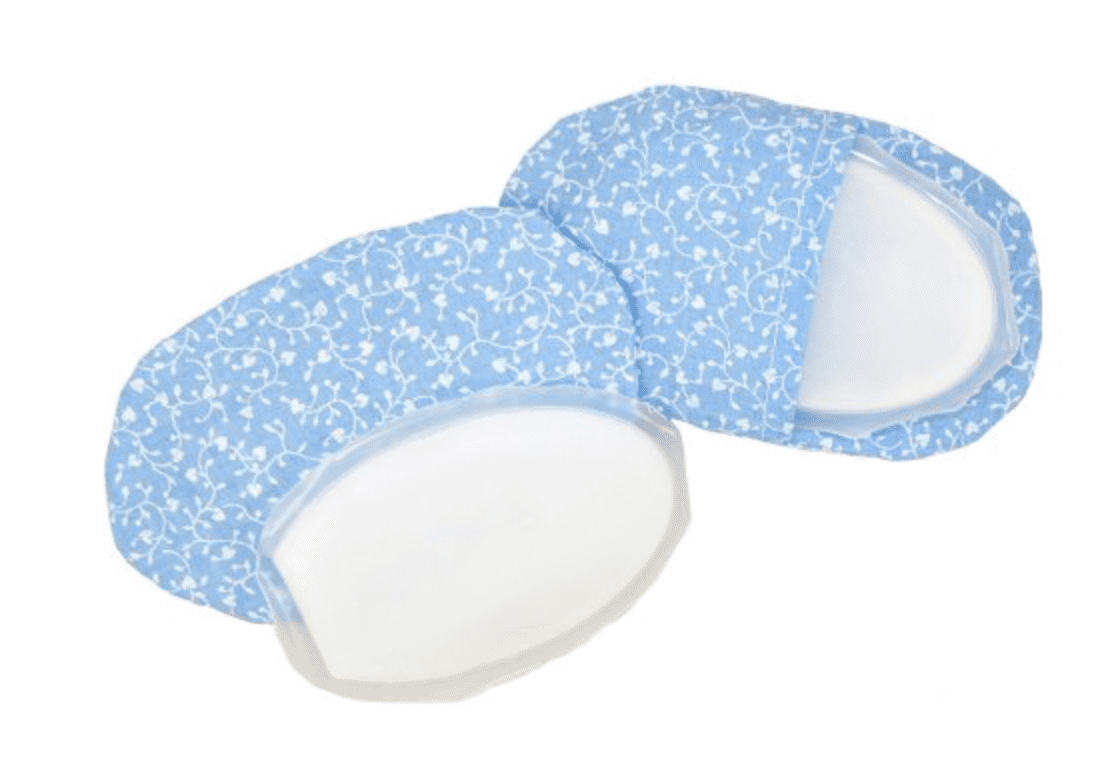
Exactly as the name suggests, Bra Coolers are oval-shaped packs filled with a special cooling agent intended to be worn in your bra. Are you worried your nipples may freeze from contact? Nope! The cooling agent is set to stay at 58 degrees – just right.

They are made not to need a freezer around to chill them. Customers can use a refrigerator or even a cooler of ice water. Those hot days at a tailgate? No problem.

Each cooling pack maintains temperature for about two hours, depending on activity, breast size, and body metabolism.

What do they look like?

Photo Credit: Polar Products

Each order comes with four cooling packs and two cotton covers. The products are discrete enough to travel with, so you don’t have to worry about any undue embarrassment. So far Polar Products only has “light blue” covers available, but I suppose boob sweat doesn’t need fancy colors – leave that to your bras.

Since they come in a four-pack, you can keep an extra pair handy at home, at work (shhh…), or in a cooler on the way to an event.

Who would buy these?

Um? Every woman?

But if you need a more practical reason think pregnancy, PMS, menopause, or simply summer heat.

How much do Bra Coolers cost?

Don’t worry, you won’t need to sacrifice your first child or even your left breast. Bra Coolers are super affordable…like $37 and change, affordable. That breaks down to $18.50 per boob, which is a small price to pay for comfort.

So get your cooler packs now and go beat the summer heat.

The post Ladies, Your Boobs Will Be Cool All Summer with These Freezable Bra Inserts appeared first on UberFacts.

Indian Scientists Used Mango Leaves to Solve a $2.5 Trillion Global Shipping Problem

This is a fascinating story.

Sometimes, the solution to a $2.5 trillion problem is hiding in plain sight.

The global shipping industry has a major rusting problem that costs an estimated $2.5 trillion each year, per a study from the National Association of Corrosion Engineers. That’s a lot of money.

A team of Indian scientists has found one solution to the issue in the leaves of mango trees. They developed a compound from the leaves that protects ships from rusting in a cost-effective, non-toxic, and environmentally friendly way. Win-win-win!

The scientists picked mango leaves because they’re rich in antioxidants and high in polyphenols, which resist corrosion.

Photo Credit: Pixabay

The compound has yet to be tested in the field, but it shows significant promise. It inhibits corrosion in commercial steel by 99% when immersed in a saline solution that is similar to seawater.

“This is a novel approach to dealing with the problem of corrosion but so far it has been tested only in simulated laboratory conditions rather than in actual use,” Nitya Nand Gosvami, assistant professor at the Indian Institute of Technology Delhi, told QZ.

With more research, this new method could be proven to be vastly superior to the most widely accepted current methods, such as galvanizing with zinc or coating with epoxy-based paints.

Photo Credit: Pixabay

“What has been developed is a dip-coated method—we do not know the strength of this coating and its ability to resist wear and tear in real conditions outside the laboratory, or the commercial viability of the product,” Nitya explained.

Other plant-based methods for reducing corrosion are also under study, including date palm seed extract, ginger root extract, and an extract of seaweed and horsemint.

The post Indian Scientists Used Mango Leaves to Solve a $2.5 Trillion Global Shipping Problem appeared first on UberFacts.

Indian Scientists Used Mango Leaves to Solve a $2.5 Trillion Global Shipping Problem

This is a fascinating story.

Sometimes, the solution to a $2.5 trillion problem is hiding in plain sight.

The global shipping industry has a major rusting problem that costs an estimated $2.5 trillion each year, per a study from the National Association of Corrosion Engineers. That’s a lot of money.

A team of Indian scientists has found one solution to the issue in the leaves of mango trees. They developed a compound from the leaves that protects ships from rusting in a cost-effective, non-toxic, and environmentally friendly way. Win-win-win!

The scientists picked mango leaves because they’re rich in antioxidants and high in polyphenols, which resist corrosion.

Photo Credit: Pixabay

The compound has yet to be tested in the field, but it shows significant promise. It inhibits corrosion in commercial steel by 99% when immersed in a saline solution that is similar to seawater.

“This is a novel approach to dealing with the problem of corrosion but so far it has been tested only in simulated laboratory conditions rather than in actual use,” Nitya Nand Gosvami, assistant professor at the Indian Institute of Technology Delhi, told QZ.

With more research, this new method could be proven to be vastly superior to the most widely accepted current methods, such as galvanizing with zinc or coating with epoxy-based paints.

Photo Credit: Pixabay

“What has been developed is a dip-coated method—we do not know the strength of this coating and its ability to resist wear and tear in real conditions outside the laboratory, or the commercial viability of the product,” Nitya explained.

Other plant-based methods for reducing corrosion are also under study, including date palm seed extract, ginger root extract, and an extract of seaweed and horsemint.

The post Indian Scientists Used Mango Leaves to Solve a $2.5 Trillion Global Shipping Problem appeared first on UberFacts.

The Apollo 11 Astronauts Were Honored with Butter Sculptures at the Ohio State Fair

To celebrate the 50th anniversary of the historic Apollo 11 moon landing, the three astronauts on that mission are being honored with life-sized sculptures made out of butter at the Ohio State Fair.

On July 20, 1969, Neil Armstrong, Buzz Aldrin, and Michael Collins landed on the moon and changed the course of history. The state of Ohio has a strong kinship with space travel: Neil Armstrong was an Ohio native and so was John Glenn, the first American to orbit the Earth. Ohio also has a long history of dairy production. Combine all those factors together and you get the magnificent butter display at this year’s Ohio State Fair.

If you are lucky enough to be able to go to the Ohio State Fair in Columbus, don’t miss the traditional “cow made out of…

Posted by Suellen Brady-Nugent on Thursday, July 25, 2019

Dairy farmers donated over 2,000 pounds of butter to help create the sculptures. An artist from Cincinnati named Paul Brooke and a team of sculptors spent 400-500 hours creating the buttery tributes in a cooler set at 46 degrees to prevent the pieces from melting.

Here’s a cool time-lapse video of the butter being sculpted:

Alexander Balz, one of the artists, said, “The space suits were a real challenge, to be honest. It’s easy to sculpt things that you know. When you sculpt a human being you memorize it, so this was a challenge.”

Roughly 500,000 people are expected to have attended the State Fair in late July and early August. Here’s a video with some great footage of the display.

What a unique and cool way to honor a pivotal event in American, and human, history!

And, by the way, I’m really hoping that this butter sculpting catches on more widely because it is fabulous.

The post The Apollo 11 Astronauts Were Honored with Butter Sculptures at the Ohio State Fair appeared first on UberFacts.