Could Planting 1 Trillion Trees Help To Save Us From Climate Change?

Most of us are looking for ways to combat climate change, since the science is irrefutable – we’re running out of time. If we want to have a viable earth to pass down to our kids and grandkids, time is of the essence.

What’s the answer, though? That’s a little harder, but even if planting trees couldn’t hurt anything, could planting a whole lot of trees actually save us?

The answer is… scientists think so.

In a recent report, the U.N. suggested that adding 2.5 billion acres of forest to the world could limit global warming by 2050.

What’s more? Data backs up their claims.

Image Credit: Pexels

A group of researchers out of Switzerland found that restoring around 223 million acres of canopy cover (that’s an area roughly the size of the contiguous United States) is “our most effective climate change solution to date.”

That number of trees could store about 205 billion tons of carbon – 2/3 of the carbon that has been emitted since the Industrial Revolution.

Jean-François Bastin, from the Switzerland study, lays out what that really means.

“The idea was to estimate what tree cover could be expected when you removed the ‘human factor,’ i.e. what specific types of forest would naturally occur in the absence of other development, and where.”

They built a “model to link tree cover with climate/soil/topography, based on 78,000 observations of tree cover in protected areas.”
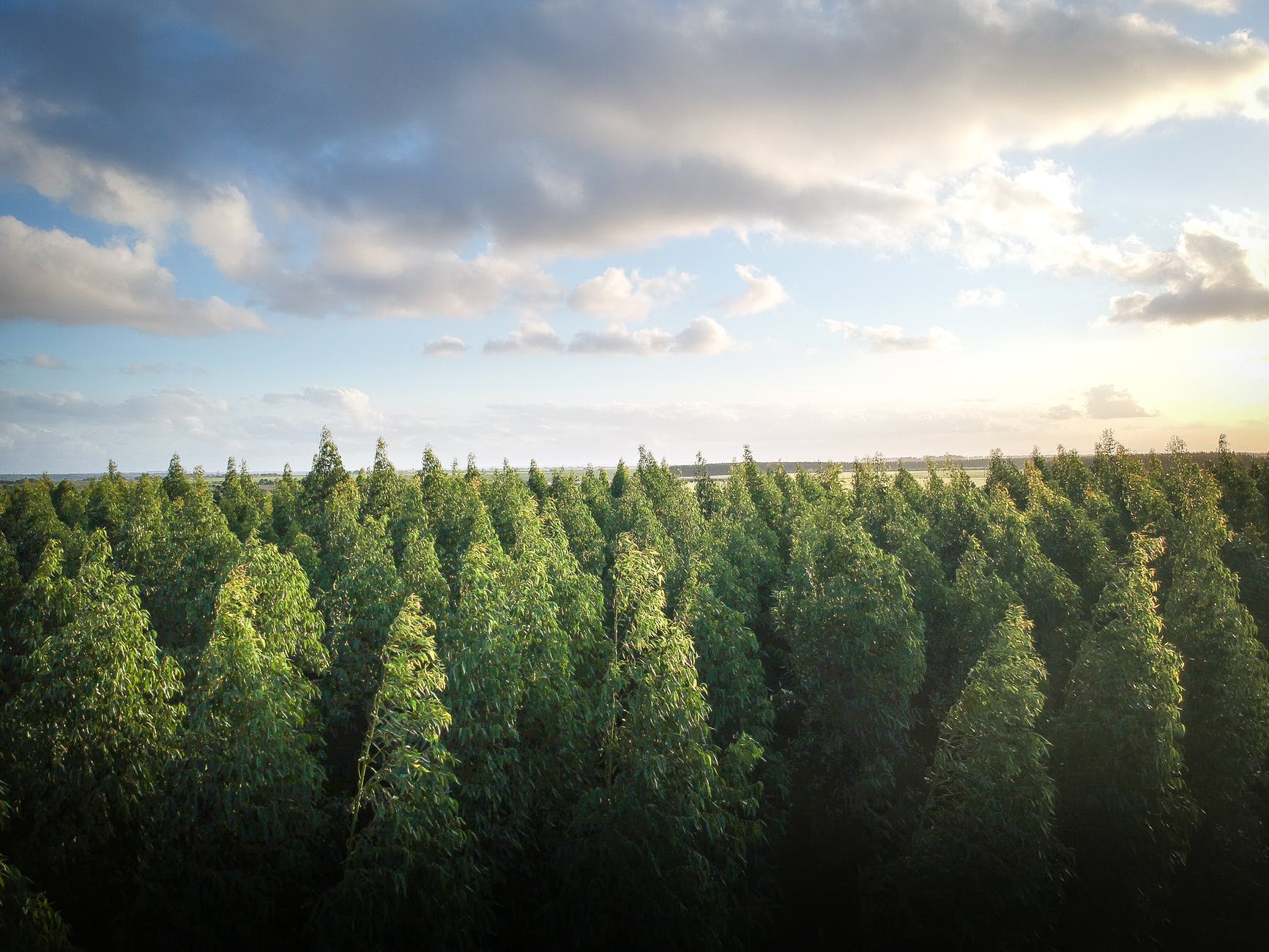
Image Credit: Pexels

They used some more fancy math to exclude land currently being used for urban settlements, croplands, and existing forests, which left them the total amount of land available for restoration.

These studies align with global efforts like the Trillion Trees Vision, which wants to plant those trillion trees by 2050, and the Bonn Challenge, a partnership between Germany and the U.N. that wants to restore 371 million acres of deforested land by the end of this year.

If you’re thinking this sounds easy, and we should just do it like, yesterday, but things are always more complicated than they seem.

Mostly, the fact that only a few countries are willing to chip in, says Jim Hallett, chair of the Society for Ecological Restoration’s board of directors.

“Implementation of forest restoration on the scale discussed in this paper is not as straightforward as it might seem.

By 2018, there were commitments of over 420 million acres (170 million hectares) by 58 nations, which exceeds the Bonn Challenge goal.

Current estimates indicate that around 29 percent of the committed lands are now under restoration, but most of this work has been done by a few countries.”

Other major challenges, according to Hallett, include “financing, governance, land tenure and ownership, [and] capacity to do the work. There is ample evidence that, in some contexts, if the benefits of restoration are not equally shared, the project will fail. So incentive programs have to be carefully developed.”
Image Credit: Pexels

Experts also warn that planting trees alone is not enough, even if we plant a billion of them. The models depend on us not further degrading the forested lands we currently have, too.

Not only that, but there are other scientists, like climate change researcher Eike Luedeling, who are skeptical for other reasons.

“Many of the allegedly available restoration areas are clearly unsuitable for more trees than they currently support.

If you look closely at the map, a large proportion of these areas are in regions where soils are permanently frozen.

The methodology implicitly (probably not on purpose) implies that carbon stock is proportional to canopy cover, i.e. ecosystems without trees contain no carbon.

This is clearly false and strongly inflates the global estimate [of restoration].”

Basically, for some, these studies and proposals are nothing more than interesting academic proposals that will never be able to be implemented in the real world.

The U.N. and Hallett, recognize that nothing they’ve proposed will be simple, but it could be a viable course of action if the kinks could be worked out.
Image Credit: Pexels

“What we need is universal action: international agencies, NGOs, governments, all citizens — anyone can be involved.

Local communities and small organizations may be especially effective.

While they do not have the same reach as national agencies, they have the benefit of knowing what works best in their own backyards.”

It seems like this could be a great solution, or at least the start to one.

I mean, who doesn’t love trees, right; they’re the best!

The post Could Planting 1 Trillion Trees Help To Save Us From Climate Change? appeared first on UberFacts.
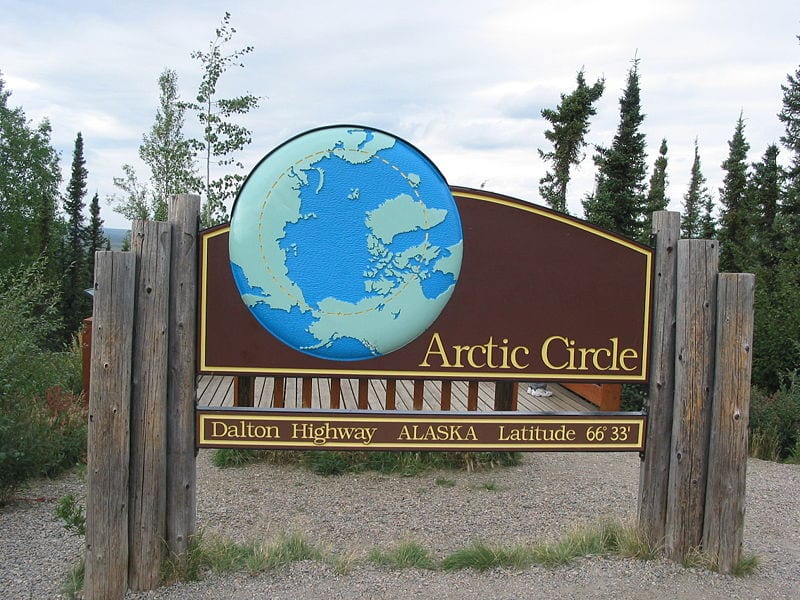
The Arctic Circle Is Owned by 8 Countries, and 4 More Facts We Think You’ll Love

Ready to learn some good stuff?

Geographers define the Arctic Circle as everything at or above 66 degrees and 34 minutes north latitude -more simply, anything between the 66th and 67th parallels in the Northern Hemisphere.

The Arctic Circle keeps strange hours, with the entire winter being more or less dark and other times of the year being sunny all the time. The land encompasses less than 4% of the globe’s surface, but it’s home to hundreds of thousands of people.

If you’re intrigued to know more, we’ve got you covered – below are 5 super cool facts about the Arctic Circle!

5. It’s not totally dark.

Image Credit: Wikipedia

First of all, even if the sun doesn’t make it all the way over the horizon, there’s still a sort of twilight that lends light to the skies. Even if the cities there don’t get a true sunrise for up to 65 days each winter, it’s not completely dark all the time.

If you’re looking for the “astronomical polar night” you’ll have to head farther north than 88 degrees latitude, where there are no human settlements. There, the complete and total darkness lasts for around 11 weeks.

4. It’s owned by 8 different countries.

Image Credit: Wikipedia

The United States, Canada, Russia, Norway, Finland, Greenland, Denmark, and Sweden all own land that falls north of the border for the Arctic Circle.

That’s fun!

3. It’s far colder in the Antarctic Circle.

Image Credit: Wikipedia

All of the seawater beneath the North Pole moderates the climate, while the South Pole is a larger, deeper landmass with a far lower average winter temperature – -76 degrees F. The North Pole only (!) gets down to around -40 degrees F.

There are no human settlements in the Antarctic Circle.

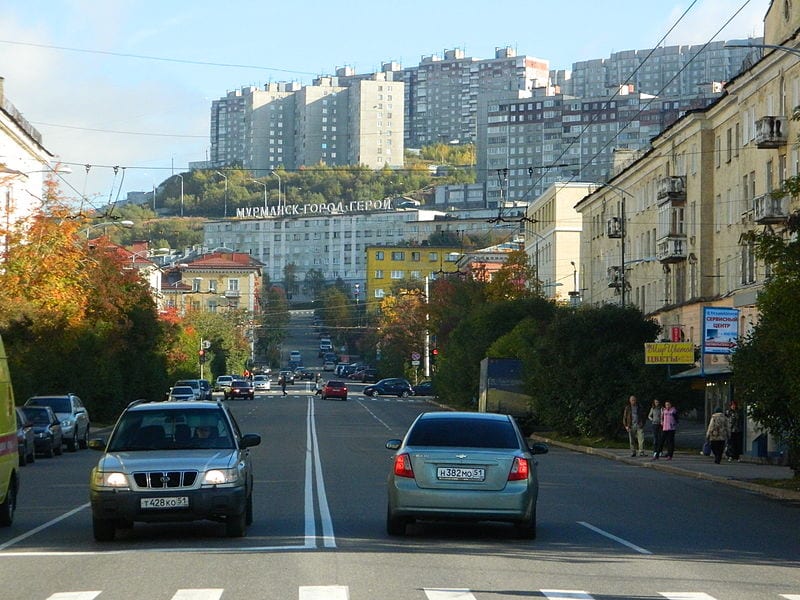
2. Murmansk, Russia, is the biggest city.

Image Credit: Wikipedia

It’s home to around 295,000 people, as well as the tallest building (236 feet high) in the Arctic Circle.

The second largest city, Norilsk, is also located in Russia, and famous for its mining operations and the historic Nord Kamal Mosque.

Around 295,000 people live in Murmansk, a port city founded in 1916 at the height of World War I. One of its Soviet-era landmarks, the 236-foot (72-meter) Arktika Hotel, is the tallest building north of the Arctic Circle.

The region’s second-largest city is Russian, too. Norilsk, a community of some 179,554 souls, is famous for its mining operations and the historic Nord Kamal Mosque. Outside of Russia, the Arctic Circle’s most populous municipality is Tromsø, Norway, which boasts the world’s northernmost university.

1. It’s shrinking.

Image Credit: Wikipedia

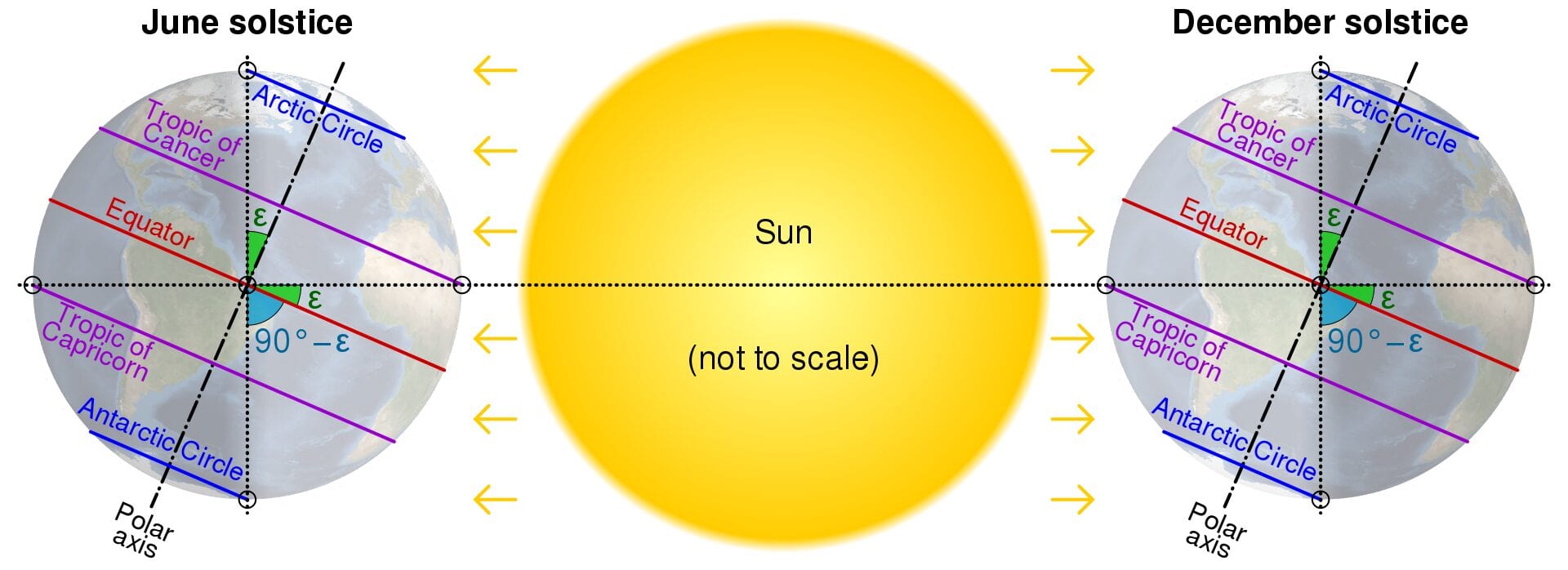
Earth’s axial tilt is changing, which means every 40,000 years or so, the boundary line retreats by between 46 to 49 feet.

Scientists project that the first human settlements will move outside the Arctic Circle by 2050.

I’m feeling ready to best someone at a trivia game any time, anywhere!

What’s your favorite fact about the Arctic Circle? If you’ve got one, lay it on us in the comments!

The post The Arctic Circle Is Owned by 8 Countries, and 4 More Facts We Think You’ll Love appeared first on UberFacts.

This is Why We See Such Beautiful Colors in the Fall

Fall is such a great time of year. It’s a time of transition from summer to winter, and nothing quite embodies that transition like the changing colors of the leaves.

According to an Iroquois Native American legend, the leaves change colors in the winter because a group of young hunters slew the Great Bear, and its blood turned the leaves red.

While a vivid illustration, there’s actually a much simpler and less gory explanation for why the leaves change colors in the fall.

Image Credit: Unsplash

Do you remember learning about photosynthesis in school? If not, let’s do a quick refresher.

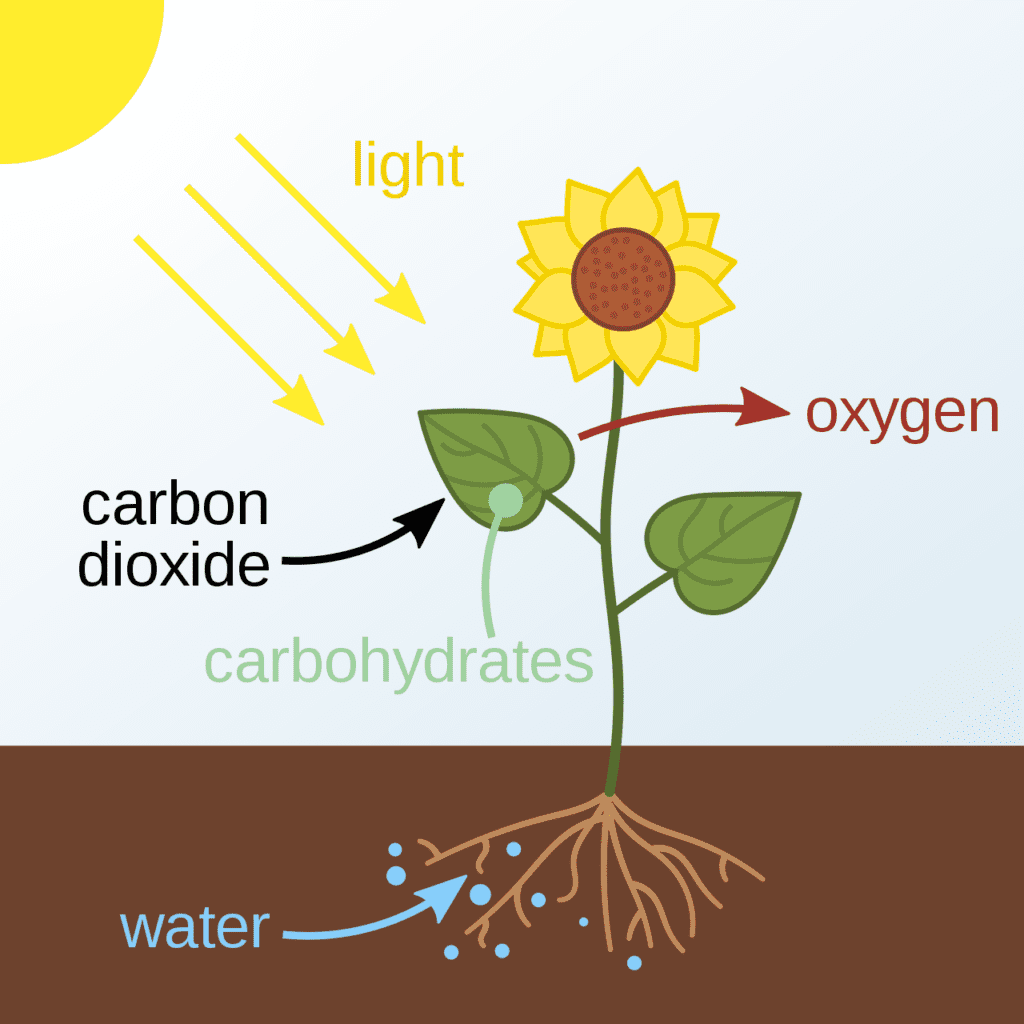
Photosynthesis is the process of plants converting carbon dioxide, water and sunlight into energy. Photosynthesis cannot happen without chlorophyll.

According to Gardening Know How,

“chlorophyll, which resides in the chloroplasts of plants, is the green pigment that is necessary in order for plants to convert carbon dioxide and water, using sunlight, into oxygen and glucose.”

So, does that mean the leaves turn shades of yellow, orange, and red because the plants are running out of chlorophyll?

Well… yes and no.

Image Credit: Wikipedia

Chlorophyll isn’t the only pigment present in leaves, even when they looks green. Pigments carotene and xanthophyll are also present, although we can’t see them.

In the fall, when the days are shorter and colder, and the air is dryer, there isn’t as much sunlight for the leaves of the trees to absorb.

Without sunlight, those leaves can’t convert carbon dioxide and water into energy, so they stop their food making process.

The chlorophyll in the leaf breaks down, revealing the other beautiful pigments that were always there.

Image Credit: Unsplash

Have you ever wondered why the leaves fall as they change color?

This happens because as the days get shorter and colder, each leaf grows a layer of cells that seal it off from the tree.

The tree keeps living, and the leaf detaches and decomposes, so that a new leaf can grow in the spring.

While carotene pigments give rise to orange leaves, xanthophyll pigments give us those beautiful yellow leaves like you might see on a Big-leaf Maple.

Image Credit: Unsplash

Some leaves, like those of most oak trees, will simply turn brown. Red or reddish-purple leaves will have various mixtures of anthocyanin pigments residing within them.

Some years you might see more vivid red leaves. This is because weather plays a role in determining how much anthocyanin pigment can be found in certain leaves.

Sunny days mixed with low evening temperatures, above freezing, generally lead to more anthocyanin production in trees like maples.

With the sun shining, the leaf can produce energy, but the cool evenings cause the tree to absorb as much sugar and nutrients from the leaf as possible.

The result is a higher amount of anthocyanin pigments.

Image Credit: Unsplash

Isn’t science cool?

Hopefully, the next time you take an autumn stroll through the park or in the woods, you’ll remember how the colors of fall come to be, and appreciate them all the more.

Personally, I love a maple full of yellow leaves.

What do you think is the most beautiful type of tree in the fall? Let us know in the comments!

The post This is Why We See Such Beautiful Colors in the Fall appeared first on UberFacts.

This is How Synesthesia or ‘Crossing of the Senses’ Works

If you experience synesthesia, then you most likely already know what it means. For everyone else, here’s a quick definition: experiencing something with one sense and somehow, that experience translating to a second one.

Like, you see a scone, and can taste the scone. Or, you hear the letter B and imagine the color yellow.

It doesn’t have to make sense, either; music can be a color, letters can taste like cake – whatever your brain comes up with goes.

Image Credit: iStock

For a long time, researchers believed synesthesia was fairly rare, but a 2006 study that employed objective tests found that’s not true – it affects around 2%-4% of the general population.

One of the reasons it can be hard to pin down is that there are so many different forms of the condition, and as a general rule, synesthesia can occur with any combination of senses or cognitive pathways.

The most common type is graphemes (letters or numbers) taking on certain colors. One synesthete will always see the letter A as red, but every synesthete won’t see the letter A as red – although some letter/number combinations are more common than others.

Sound-to-color synesthesia is the second most common type – a 2006 study found that these synesthetes typically associate a higher pitch to a lighter color, leading researchers to conclude that synesthesia might be using the same cross-modal pathways that most people use, rather than ones unique to the condition.

Lexical-gustatory (olfactory), tasting flavors based on a visual picture, word, or sound, is one of the rarer types of synesthesia – they might even associate smells with certain colors or shapes.

Image Credit: Pexels

Some people claim to taste emotions, or to experience a physical sensation when other people are touched, or even to assign personality traits to random letters or numbers.

Now that we understand (?) a bit more of what it means to be a synesthete, let’s talk a little bit about why scientists think people end up with these strange powers.

Only a little bit, because even though it’s become a popular field of study, synesthesia still isn’t well understood. There is some idea that it has a genetic component, because around 40% of people report a first-degree relative who also has the condition, and most recall experiencing it from a young age.

What scientists do agree on is that synesthesia is a sensory phenomenon that is unrelated to memory – meaning you thinking of a letter being blue because it was blue in your childhood bedroom isn’t the same thing.

Image Credit: iStock

It happens early in the perception process – you mind just makes the connection, it doesn’t spend time searching your memory for it.

Researchers believe synesthesia is a cross-wiring in the brain – that the area for one sense stimulates the area for another. There could be increased neural connections that stuck around when others were being pruned while still in utero – there might even be physical differences in brain matter to find.

Scientists also believe there could be some secondary benefits for people who “suffer,” mainly in the area of memorization. Some synesthetes can memorize a large list of numbers by using their color associates, for example, and some others can distinguish between extremely similar colors.

It’s not all sunshine and rainbows, though; many report the condition can be grating or uncomfortable, like when they see a letter or number that’s the “wrong” color, if a name doesn’t “taste” right, or other stuff the rest of us will never understand.

I’m not sure I understand humans any better after writing this article, but listen – I do have a renewed respect for how truly different each and every one of us are.

The post This is How Synesthesia or ‘Crossing of the Senses’ Works appeared first on UberFacts.

Gömböc

A ‘gömböc’ is a 3-d shape that will always end up settling in the same position regardless of how it was originally placed. The mathematics of these shapes has helped explain why tortoises can roll back over onto their legs when they’re placed with their shell to the ground.

The post Gömböc appeared first on Crazy Facts.

Check Out These Images of a Giant Squid in U.S. Waters

If you’re even a casual ocean aficionado, you realize that there’s no consensus that space is actually the last frontier.

The world’s oceans hold many similar secrets in their depths, tucked safely out of sight, and even though we’ve lived with these bodies of waters for millennia, we may never uncover them all.

Image Credit: Public Domain

We know that giant squids exist – there have been sightings, drawings, and the like for centuries – but here in the States, we’ve never had one show up on our shores.

The first modern look at these giant cephalopods was back in 2004, in Japanese waters, and then again around the same spot in 2014.

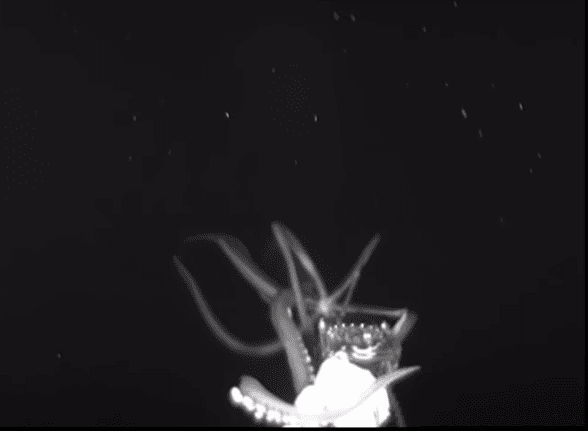
This time, though, NOAA researchers on an exploratory mission in the Gulf of Mexico captured a recording of a juvenile swimming in the waters there.

The video is brief, and like all underwater happenings, a bit eerie. The squid swims straight at the camera, which makes it hard to tell exactly how large it is, though researchers are estimating around 10-12 feet.

Image Credit: YouTube

An adult of the species could grow up to around 43 feet in length – the same as around seven adult American men.

The marine biologists are hoping the squid will come back and they’ll be able to get more footage. Their ROV that captured the encounter, the Medusa, doesn’t use the bright lights that others do in the depths, which could make the squid feel more comfortable.

Here’s hoping we get to see more soon!

As long as I’m watching from a distance, I’m here for it.

If there was one undiscovered or rare creature to be found in the depths, what would you want it to be?

I mean, the obvious answer is mermaids, but…what would you want it to be?

The post Check Out These Images of a Giant Squid in U.S. Waters appeared first on UberFacts.
Scientists Claim That Driving Tiny Cars Helps Rats Relax

Some days, driving can seem super relaxing and carefree, but other days, it’s definitely not – and it mostly depends on other drivers, not myself.

For rats, though, I suppose they’re always driving their tiny cars in nice, controlled environments. No rat road rage, no people looking at their phones instead of the light turning green…what a lovely world.

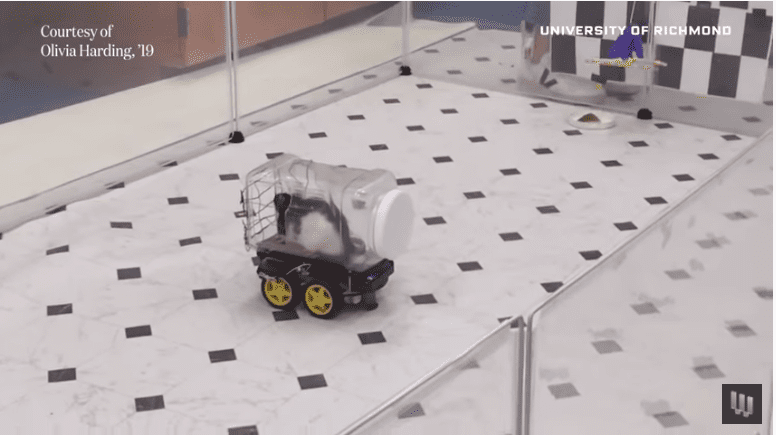
Image Credit: YouTube

Why, you ask, are rats driving cars? Why does it relax them, and how?

If you’re curiosity is piqued, I invite you to keep reading.

It’s researchers from the University of Richmond, in Virginia, where you’ll find these vehicle-driving rodents, and listen – they weren’t taught to drive just to see if they could do it. Scientists there wanted to prove that an enriched environment could improve their cognitive function, sharpening their ability to learn more complex tasks.

Image Credit: YouTube

Dr. Kelly Lambert, one of the study authors, expanded in an interview with IFLScience.

“The findings that the animals housed in a complex environment had more efficient learning in the driving task confirms that the brain is a plastic organ that is molded by our experiences to some extent.

I tell my students that they are accountable for what they do with their brains every day of their lives – more challenging and enriching lifestyles lead to more complex neural networks.”

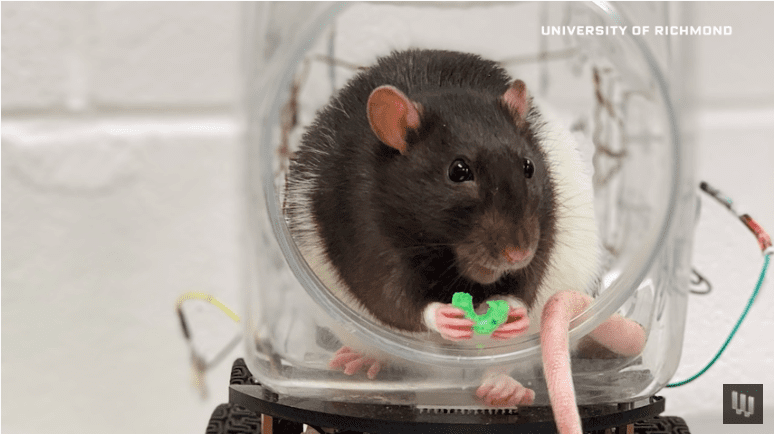
The study, published in Behavioural Brain Research, explains that the rats were given “cars,” that were basically plastic jars atop electric-powered wheels. They drove forward and steered using a copper bar, a task that’s not hard…if you’re human.

Image Credit: YouTube

The rats had to employ a ton of cognitive, motor, and visuospatial skills, and combine them, too, in order to get to their prize – Fruit Loops.

I get it. I would do some crazy stuff for a bowl of Fruit Loops right now, myself.

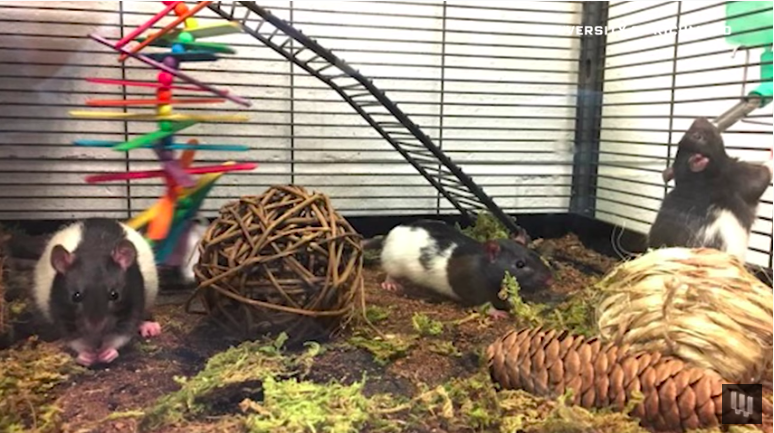
There were 11 rats involved in the study – six who remained in their standard environments, and five lucky rats who got an “enriched environment” that resembled a rat’s natural habitat, with awesome toys.

Image Credit: YouTube

The rats living in the enriched spaces performed better at the driving test, and even retained an interest in driving the car after the Fruit Loops were removed from the equation.

On the other hand, the rats who remained in their standard lab cages showed little to no interest in figuring out driving the cars, or the Fruit Loops.

Hormones seem to be part of the equation. The driving rats poop showed increasing levels of dehydroepiandrosterone – which controls stress – and decreasing levels of the stress hormone corticosterone, which suggests that mastering the skill of driving relaxed the rodents.

The study definitely suggests that, for rats, at least, their environment is tied to their mental state.

Image Credit: YouTube

Dr. Lambert, and the rest of the scientists involve, believe we humans could take a few lessons from the results.

“It reminds us that we can use challenging tasks with preclinical animals work to learn more about human challenging behavior and cognitive systems. We also see that the rats had healthier stress hormone profiles with the driving training.

We think this learning task and operating the ROV may be an animal model for agency or self-efficacy – two elements critical for mental health.”

If you’re feeling down and out, unmotivated, or just plain blue, you might want to try giving yourself a new challenge, it would seem.

I mean, it can’t hurt, right?

The post Scientists Claim That Driving Tiny Cars Helps Rats Relax appeared first on UberFacts.

NASA Captures Amazing New Images of the Universe That Almost Look Photoshopped

There are so many secrets of our universe that we still haven’t figured out yet. We get a little bit closer every day – and these images from NASA’s Chandra X-Ray Observatory are definitely a giant leap in the right direction.

Since 1999, the flagship X-ray telescope has produced over 23 trillion bytes of data. Thanks to the giant orbiting fixture, tons of magical, awe-inspiring images have come our way.

Here’s the latest drop from NASA that’s sure to blow the minds of even the most pessimistic of us.

Eta Carinae

Photo Credit: NASA/CXC

Eta Carinae is a volatile system in our Milky Way galaxy. Previous eruptions from these two stars once created a ring of incredibly hot gas spanning 2.3 light years in diameter. That’s some pretty serious firepower.

Researchers are keeping track of which stars are up next to transform into supernovas – stars that suddenly become super bright due to a recent catastrophic explosion. This pair is likely high up on that list.

Helix Nebula

Photo Credit: NASA/CXC

This image was created using data from the Chandra X-Ray Observatory, Spitzer Space Telescope, Hubble Telescope, and NASA’s Galaxy Evolution Explorer. The reason it takes so many sources to create one image? Each telescope is detects different elements of the Helix Nebula – so putting the data together provides a more accurate picture of the nebula’s moving parts.

This particular image is around 4 light years in diameter – or roughly 24 trillion miles long.

Cartwheel Galaxies

Photo Credit: NASA/CXC

Galaxies like the one above are formed when collisions alter star formations. The hot gas distributed from this particular collision drags on for over 150,000 light years. That’s a distance that we cannot even begin to understand on Earth.

Messier 82

Photo Credit: NASA/CXC

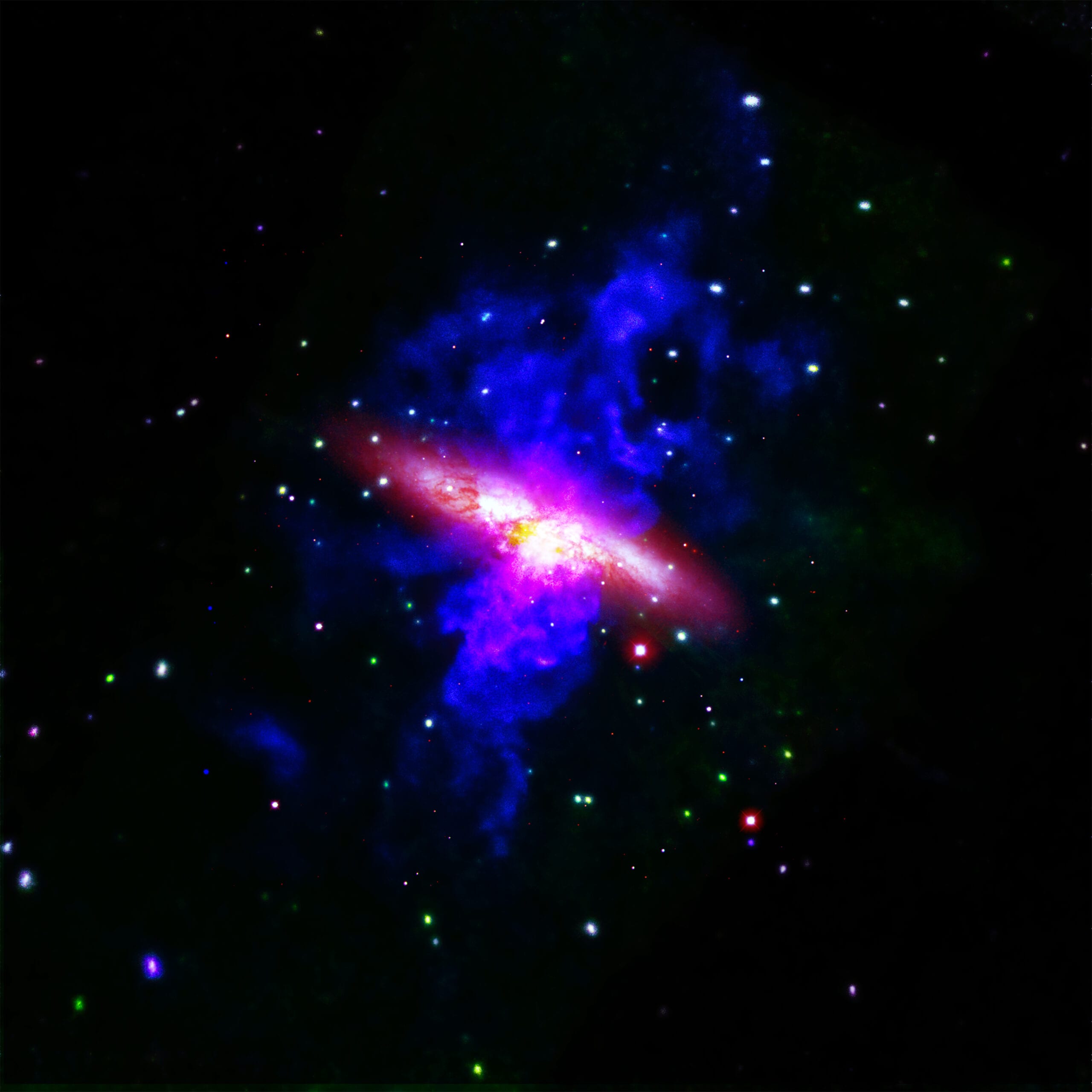
Messier 82, or M82, is giving scientists a glimpse into the process of star formation.

Here’s more about the image from NASA:

X-rays from Chandra (appearing as blue and pink) show gas in outflows about 20,000 light years long that has been heated to temperatures above ten million degrees by repeated supernova explosions.

Optical light data from NASA’s Hubble Space Telescope (red and orange) shows the galaxy.

This incredible album of images is seriously out of this world. The vast expanse of the universe gives me a little bit of hope during this super dark time. It helps remind me that there are things out there far bigger than our own tiny existence here on planet Earth. Plus, it’s comforting to look at other planets in the solar system and realize that – as it stands – Earth is still pretty hospitable.

If you’re feeling down about climate change, check out these dire photos from Venus. They’re sure to help you appreciate the greenery around us that we take for granted.

What are some of your favorite photos from space? Share them with us in the comments below!

The post NASA Captures Amazing New Images of the Universe That Almost Look Photoshopped appeared first on UberFacts.