The Flat Particle That Could Be The Key to Unlocking Quantum Computing

We don’t hear much on the news or in our daily lives about quantum computing per se, but the majority of the technological advances that have changed our lives over the past several decades are thanks to increased computer power.

Now, physicists have confirmed the existence of a particle they’re calling an anyon, and it could be the key to unlocking many more computing possibilities in the future, says Discover.

“These particle-like objects only arise in realms confined to two dimensions, and then only under certain circumstances – like at temperatures near absolute zero and in the presence of a strong magnetic field.”

Physicists have theorized that these anyons exist since the 1980s, but their nature has made them hard to pin down.

Those same qualities would make them very valuable to quantum research and computers, though, so scientists haven’t stopped trying to prove they exist.

Image Credit: YouTube

Purdue University talked about their many potential uses in a recent press release.

“Anyons have characteristics not seen in other subatomic particles, including exhibiting fractional charge and fractional statistics that maintain a ‘memory’ of their interactions with other quasiparticles by inducing quantum mechanical phase changes.

Nobel Prize-winning theoretical physicist Frank Wilczek, professor of physics at MIT, gave these quasiparticles the tongue-in-cheek name ‘anyon’” due to their strange behavior because unlike other types of particles, they can adopt ‘any’ quantum phase when their positions are exchanged.”

Researchers were able to train a miniature particle accelerator to “sort” particles and notice anyons, then came up with a maze that would phase out all of the other particles in order to end up with only the mysterious particles they were searching for at the start.

Image Credit: Cornell Chronicle

What they found was that it worked so well because, like electrons and photons, anyons “braid” – and this is good news for quantum computing, says researcher Mikael Rechtsman.

“Braiding is a topological phenomenon that has been traditionally associated with electronic devices.

We hope to show that a whole class of topological phenomena can be useful not only for electronic devices, but also photonic devices, such as lasers, medical imaging, telecommunications, and others.

We also expect that this new type of topological physics could be applied to quantum information systems, particularly those based on photons.”

With more particles in their toolkit, physicists are sure advances are to come – and we have the anyons to thank.

Who knew?

The post The Flat Particle That Could Be The Key to Unlocking Quantum Computing appeared first on UberFacts.

This is Why One Person Thinks High School Shouldn’t Start Earlier Than 10 A.M.

Reddit’s Unpopular Opinion thread is the place to go for people who think they know a better way to do things, or a way things should be done – that said, oftentimes it ends up being more of a popular opinion than people thought.

Validation!

This guy basically wrote a dissertation about why teenagers shouldn’t be required to get up so early.

We know TWO things about teenagers: (1) they need between 8-10 hours of sleep per night and (2) that their circadian rhythms, or the biological mechanism that regulates human sleep and wakeness patterns, operate in a way that, on average, they don’t start producing melatonin until after 11 PM.

Taking those two facts into consideration, the typical high class has class at around 7 am and most students have to wake up between an hour or two hours before their first class if they don’t want to be late. So like at 5 or 6 am. Let’s assume that teens fall asleep right on the dot at 11 pm (even though in reality they actually fall asleep much later since melatonin takes time to induce sleep), and have to wake up at 6 am. That’s only 7 hours of sleep, which is already under the 8-10 hour requirement.

And in reality since most teens fall asleep at least 15 or so minutes after 11 PM, as well as how some students wake up for school even earlier than 6, you have students getting between 4 and 6 hours of sleep, and this situation gets worse for students with jobs, lots of family obligations, extracurriculars, or lots of homework.

And listen, he’s got solutions, too!

These earlier start times just DON’T work. We already have the data for why they’re a terrible idea and even the CDC recommends that all high schools start no earlier than 8:30 am.

The reason I say 10 instead of 8:30 is because those same students who fall asleep at midnight and have to wake up two or so hours before school starts to make it on time would get 8 or 9 hours of sleep. You would have to fall asleep at 1 or 2 am to fall below the 8-10 number. That’s way better than if you had school at 8:30 or even nine.

And I know what people are gonna say. But what about students with jobs? What about athletics or clubs? What if the school day is longer?

Well, for athletics or clubs you can either have them at 9 am or have them as part of the regular school day if we reduce instruction time (which we should do anyway), so that way people don’t have to stay after school. You can also have tutorials and additional help during these times.

And about students with jobs, well I’m sorry but the rest of the school body shouldn’t have to suffer because a minority of students have jobs. What’s more, with a later start time, people have more time to spend doing things in the evening so maybe try to adjust your hours with your boss?

What does Reddit think about all of this? 10 people are weighing in!

10. We know it’s better, but…

I did my masters thesis on how to help students perform better in school. In short, studies support this. I dont know about 10, but 9 seemed reasonable for most.

Sh%t, I think I started school at like, 7:15. My gf was in honors choir, so she actually started at 6. Marching band was first hour and it was in the dark.

9. So many kids do this.

That’s why me and my homies used to sleep in school.

I slept more in school than at home some weeks, still managed decent average, schools make learning boring.

8. Thank goodness for college.

Yep… School started at 8am for me, from kindergarten till the end of high school, so I got up at 7 every school day for 14 years straight.

Then in college, the earliest any class you could enroll in started at 8:30. I’ve purposely avoided those at all costs. I’ve had a couple courses that started at 9:30, and even those were really hard to get to on time, or even at all.

I think I’d flunk out of college if I ever had to wake up for a class at 7am again.

7. This is ideal.

I teach middle school and we start at 8:20, which I like but feel is still a bit early.

8:45 would be perfect.

6. Because of society.

The general gist of it is teenagers are benefited by starting school later.

Youngsters are benefited by starting school EARLIER.

We do it the exact f**king opposite.

5.  Most of them are silent until lunch.

Maybe 8 or 9ish?

10 seems late to me.

It was amazing how some kids had enough energy to fight at 7am, I’d just be there half dead.

4. To put it bluntly.

Yes, we’ve chosen to value productivity over the developmental needs of our children.

This is very bad because kids who aren’t given the chance to grow as they should are obviously going to carry that forward into adulthood.

3. A minor quibble.

Got some of your data wrong.

Melatonin is produced at 1045, so the average international time to fall asleep is indeed at 11:00 pm sharp.

If you then want an average of 9 hours of sleep, you wake up at 8.

Delaying it until 10 has no basis in science (I lived far away from school and still didn’t need to wake up 2 damn hours beforehand), but there is a reason why most psychologists are calling for a start time no earlier than 830.

2. That’s so tough.

I don’t wake up til like noon.

High school was basically impossible because I’d just sleep all day.

That was until I flipped my schedule so that I would sleep when getting home and wake up at night.

Do my homework when I wake up and then end the day by going to school.

1. We have to grow up sometime.

People are angry in these comments.

I didn’t read the body bc its far too long but I remember in high school I was confused why the high school started the earliest out of all three types of school and I still am.

However ten is too late too. I’d say 8 or 9 though. I mean most adults work 9-5.

It makes sense, but what a big job it would be to switch things around.

Do you think we should try to make it happen? Tell us why or why not in the comments!

The post This is Why One Person Thinks High School Shouldn’t Start Earlier Than 10 A.M. appeared first on UberFacts.

Why Do Certain Smells Like Onion and Garlic Stay on Your Hands After You Wash Them?

If you’ve done any cooking in your life, then you’ve probably noticed that certain foods you prep…linger. The smell of onion and garlic, for example, can be scented days after you’ve made the meal, after you’ve washed your hands multiple times and even showered – but why?

This is the perfect query for Reddit’s No Stupid Question forum, and I don’t know about you, but I’m super pumped that someone actually asked it.

How do certain smells like onions stay on your fingers for so long, even after you wash your hands repeatedly? from NoStupidQuestions

Let’s hear what these 11 Redditors said in response then, hmm?

11. The technical answer.

When cut open, onion cells release enzymes which convert its amino acid sulfoxides into sulfenic acid, the effects of which can be felt immediately.

That same chemical adheres to skin and stays there, sometimes for days, until something neutralizes the acid. Soap typically won’t do the trick.

10. Using stainless steel can help take it away.

The sulfur from the onion, garlic or fish is attracted to—and binds with—one or more of the metals in stainless steel. Formation of such compounds is what makes stainless steel stainless. Onions and garlic contain amino acid sulfoxides, which form sulfenic acids, which then form a volatile gas—propanethial S-oxide—that forms sulfuric acid upon exposure to water. These compounds are responsible for burning your eyes while cutting onions, and also for their characteristic scent. The sulfur compounds bind to the steel—efficiently removing the odor from your fingers.

So, next time you find your fingers and hands smelling from fish, onions or garlic, don’t reach for the scented spray; grab a stainless steel knife. Take care, though, to wipe your hands on the flat side, and your limbs will be scentless in no time.

9.  This smell isn’t so bad, though.

Oranges too; gets in the creases of your hands.

8. Get yourself some stainless steel.

So because the smells are caused by sulfur, it turns into sulfuric acid when you wash your hands with water. So the stainless steel basically binds to the sulfur molecules and thus, “washes” away the smell on your hands.

I got a stainless steel soap from the dollar store and they had this explanation on the back of the packaging in terms of the smells being negatively charged ions and the stainless steel being positively charged, so basically positive attracts negative and zoop, your smell goes away.

But I was terrible at Chemistry and last I studied that shit was in 2014, so I don’t know if this ion business is legit. The first paragraph is the actual explanation for sure, though.

7. Because sticky molecules.

Same reasons why some stains are difficult to remove while others aren’t.

The adhesive force between your hand and the particles are strong and possibly stronger than the cohesive force between the particles.

Basically some molecules are sticky.

6. It can happen to your kitchen, too.

If your kitchen smells funky and it’s not the trash or the fridge, give every stainless steel appliance a rub down with salt mixed with baking soda (as long as it’s not a pan), then rinse with warm water. The smells should go away.

Typically kitchens retain scents for reasons I don’t know but this pretty much always works and in the worst case scenario you’ve cleaned the kitchen a little more than you needed to.

5. Moisten. Ugh.

They don’t if you keep some baking soda next to the sink.

Moisten your fingers and rub them with the baking soda after working with onions or garlic and poof, smell gone.

4. The tricks might not work, though.

Most likely not. Sulfenic acids bond covalently to the proteins in your skin, causing them to be released slowly. There isn’t much you can do about that except wait. The chemicals you’d need to reverse that aren’t generally available to consumers/are too harsh to put on your skin.

Interestingly, a lot of lachrymators (compounds that make you tear up) work this way, including some types of tear gas. Generally, highly reactive compounds are dangerous, so your body reacts strongly and tries to get them out of your eyes as soon as possible. Onions exploit this reaction to try (unsuccessfully) to get you to not eat them.

3. Soap doesn’t solve everything.

I see a lot of responses on how to get rid of the smell but not so much on why it lingers.

The reason it lingers is because soap is a surfactant that can remove some things, but it doesn’t work as a solvent for everything.

It’s why lemon juice or baking soda work for cleaning: acids and bases will dissolve some things.

Various foods will and will not dissolve in various solvents.

2. Props, indeed.

Jesus !! I never thought there was an actual answer to that question, I’ve always thought that’s just how things work, and have accepted it cause that’s how the things work

Props to the guy who asked the question, and the person who understands the answer to that should give it a shot and try to apply to SpaceX.

1. I need the answer to this one next.

Diesel is the one that gets me.

What’s the neutralizing yin to that yang on my hands?

If you didn’t know, now you know. Pumped!

Are these answers correct? If you need to fix some details, our comments are open!

The post Why Do Certain Smells Like Onion and Garlic Stay on Your Hands After You Wash Them? appeared first on UberFacts.

The Real Size of Megalodon Is Staggering

When you hear a word like “megalodon” to describe an animal, you’re probably picturing something – in this case, a shark – that’s really, really big.

Just how big megalodon likely was, though, really only comes into a clear focus when we compare it to things we’re relatively sure of the size of in our minds – and even then, it was so big that the concept can be hard to wrap our minds around.

This new study, published in Scientific Reports, tries to put the size of the megalodon into perspective, concluding that it was around 52 feet long, with fins the size of an adult human being.

Image Credit: iStock

Otodus megalodon lived from 23 million to 3 million years ago, had serrated teeth that means it ate meat, and was so big there’s no way it wasn’t a voracious predator. Fossil evidence has shows us the size and makeup of their teeth, but with little other skeletal evidence to go on, guessing their entire size and shape has been more of a guessing game.

This study came to its estimates with researchers from Swansea University and the University of Bristol using mathematical models to compare its body size to five shark species still living, all of which shared physiological characteristics.

“Megalodon is not a direct ancestor of the Great White but is equally related to other macropredatory sharks such as the Makos, Salmon shark, and Porbeagle shark, as well as the Great White. We pooled detailed measurements of all five to make predictions about Megalodon.”

Image Credit: Oliver E. Demuth

They tracked how these other, related species of sharks grew as the aged to get an idea about how megalodon might have grown in a similar pattern before settling into its adult form. That’s how they got to the adult length of around 16 meters (the 52 feet).

That makes them more than twice the size of modern great white sharks, with a dorsal fin around 5.3 feet in height (an average person’s height).

Their heads were around 15 feet in length and had a bite force of 10 tons, compared to a great white’s bite force of around 2 tons.

Image Credit: Oliver E. Demuth

Scientists are hoping these facts can also help us understand why it went extinct, and therefore helping prevent a similar decline in modern marine species.

Now you know for sure that you wouldn’t have wanted to run into one of these buggers – and I’m going to go ahead and stay away from the great whites, too, even if they are sort of puny in comparison.

The post The Real Size of Megalodon Is Staggering appeared first on UberFacts.

Plant-Based “Stem Cells” Could Possibly Drive an Environmental Revolution

For the last couple of years, my family has been making a conscious effort to buy less plastic.

Certainly we try to avoid single-use plastics, but even for things that we’ll use again and again we try to find more durable, organic or metal alternatives.

But of course, there’s often an environmental cost to wooden items, too. It presents a conundrum.

Until now. Are you ready to have your mind blown? Lab. Grown. Furniture.

I warned you.

Image credit: Goashape via Unsplash

Wooden furniture is gorgeous, and plant fibers are supremely useful for other everyday items too, like clothing.

That’s why bamboo has become so popular–it grows quickly, with less environmental impact.

But now a PhD candidate at MIT, Ashley Beckwith, and her co-author, Luis Fernando Velásquez-García, have a brilliant plan to reduce waste and environmental impacts even further by growing wood in useful shapes (like 2 by 4’s) right in a lab.

The MIT research team has been working with zinnia tissue, and they published their findings recently in the Journal of Cleaner Production.

As Fast Company reports, their goal is to:

…quickly produce in a lab what would take decades to grow in nature. From there, they could even coax wood tissue to grow into fully-formed shapes—like, say, a table—in order to mitigate the environmental harm of the logging and construction industries.

It’s not a completely new concept. Velásquez-García, a scientist in the university’s Microsystems Technology Lab, explains it in pretty simple terms.

“The plant cells are similar to stem cells. They have the potential to be many things.”

And it’s not just human stem cells. Other scientists have had similar success with lab grown meat products.

So isolating the ability to reduce plants down to a version of a stem cell is just the first step.

Like the meat manufactures who want to grow only the most desirable parts of the animal, Beckwith and team have similar plans for their saplings.

“Trees grow in tall cylindrical poles, and we rarely use tall cylindrical poles in industrial applications.

So you end up shaving off a bunch of material that you spent 20 years growing and that ends up being a waste product.”

Rather than stopping with just growing trees, the team could grow planks, or, rather like 3D printing, they could even guide the development of the plant fiber into the exact shape for its intended purpose.

Of course not every manufacturer has a noble drive to safe the planet.

That’s why this new process is so exciting. It’s so easy, that when compared with the cost of logging, transportation, and everything that goes into cutting down trees to shape them into boards, lab grown trees could actually come out on top, at a lower cost!

Image credit: Lukasz Szmigiel via Unsplash

If the idea of lab-grown veggies freaks you out though, don’t worry. The folks in charge don’t see this being a process that is used to grow food. More like the kinds of plants used to make clothes and industrial materials. There are so many things that could be made from biodegradable plant fibers! Deforestation could become a thing of the past! At least due to human consumption.

How’s that for exciting? Did it blow your mind?

Tell us what you think in the comments!

The post Plant-Based “Stem Cells” Could Possibly Drive an Environmental Revolution appeared first on UberFacts.

This is How Lava Lamps Are Protecting You from Hackers

Everyone worries about data encryption and cybersecurity. I’m certainly no stranger to the concept.

I think my credit card has now been skimmed 3 times in 2 years, but 2020 was 5 years long, so I may have lost count.

That’s where cybersecurity companies like San Francisco based Cloudflare come in, bringing a very unique perspective to data encryption.

As Atlas Obscura reports:

Cloudflare covers about 10 percent of international web traffic, including the websites for Uber, OKCupid, or FitBit.

I’m betting most readers have used at least 2 out of 3 of these sites at some point.

So it’s fascinating to learn that Cloudflare has a pretty unique method for generating random encryption code to protect those sites: a wall of lava lamps.

Posted by Cloudflare on Tuesday, September 27, 2016

Yes, you read that right.

The wall features over 100 lava lamps, spanning a variety of colors, and its random patterns deter hackers from accessing data.

It feels like the most hipster thing ever, but we all know the feeling of zoning out in front of a randomly swirling blob of light and color, right?

Well it turns out:

As the lava lamps bubble and swirl, a video camera on the ceiling monitors their unpredictable changes and connects the footage to a computer, which converts the randomness into a virtually unhackable code.

Posted by Cloudflare on Tuesday, October 25, 2016

Who knew that kind of magic was even possible?

Someone smarter than me, that’s who.

Cloudflare might have taken it to a whole new level, but they didn’t actually invent the “LavaRand” concept, which was patented for a few years by another company in the ’90s.

As Cloudflare explains on their blog:

In cryptography, the term random means unpredictable. That is, a process for generating random bits is secure if an attacker is unable to predict the next bit with greater than 50% accuracy (in other words, no better than random chance).

True randomness, they explain, only exists in the natural, physical world. Most encryption companies rely on pseudorandomness, or the generation of random data.

Pseudorandomness is generated through the use of a deterministic algorithm that takes as input some other random value called a seed and produces a larger amount of random output (these algorithms are called cryptographically secure pseudorandom number generators, or CSPRNGs)

The lava lamp system, it seems, may be a little bit of both, which is kind of mind boggling all on its own.

They’ve withstood the test of academic analysis, years of being used in production, attacks by resourced adversaries, and so on.

Be sure to check out this video from Tom Scott about the lamps:

And if you ever find yourself in the Bay Area, you can go see the futuristic cybersecurity in action for yourself.

Since any kind of external disturbance affects the lamps, increasing the randomness of their patterns, the company has no problem with visitors coming to gawk.

Simply enter the lobby of Cloudflare’s San Francisco headquarters and ask to see the lava lamp display.

I definitely want to check that out.

Did this story blow your mind as much as it did mine? Let us know in the comments!

The post This is How Lava Lamps Are Protecting You from Hackers appeared first on UberFacts.

This is How Lava Lamps Are Protecting You from Hackers

Everyone worries about data encryption and cybersecurity. I’m certainly no stranger to the concept.

I think my credit card has now been skimmed 3 times in 2 years, but 2020 was 5 years long, so I may have lost count.

That’s where cybersecurity companies like San Francisco based Cloudflare come in, bringing a very unique perspective to data encryption.

As Atlas Obscura reports:

Cloudflare covers about 10 percent of international web traffic, including the websites for Uber, OKCupid, or FitBit.

I’m betting most readers have used at least 2 out of 3 of these sites at some point.

So it’s fascinating to learn that Cloudflare has a pretty unique method for generating random encryption code to protect those sites: a wall of lava lamps.

Posted by Cloudflare on Tuesday, September 27, 2016

Yes, you read that right.

The wall features over 100 lava lamps, spanning a variety of colors, and its random patterns deter hackers from accessing data.

It feels like the most hipster thing ever, but we all know the feeling of zoning out in front of a randomly swirling blob of light and color, right?

Well it turns out:

As the lava lamps bubble and swirl, a video camera on the ceiling monitors their unpredictable changes and connects the footage to a computer, which converts the randomness into a virtually unhackable code.

Posted by Cloudflare on Tuesday, October 25, 2016

Who knew that kind of magic was even possible?

Someone smarter than me, that’s who.

Cloudflare might have taken it to a whole new level, but they didn’t actually invent the “LavaRand” concept, which was patented for a few years by another company in the ’90s.

As Cloudflare explains on their blog:

In cryptography, the term random means unpredictable. That is, a process for generating random bits is secure if an attacker is unable to predict the next bit with greater than 50% accuracy (in other words, no better than random chance).

True randomness, they explain, only exists in the natural, physical world. Most encryption companies rely on pseudorandomness, or the generation of random data.

Pseudorandomness is generated through the use of a deterministic algorithm that takes as input some other random value called a seed and produces a larger amount of random output (these algorithms are called cryptographically secure pseudorandom number generators, or CSPRNGs)

The lava lamp system, it seems, may be a little bit of both, which is kind of mind boggling all on its own.

They’ve withstood the test of academic analysis, years of being used in production, attacks by resourced adversaries, and so on.

Be sure to check out this video from Tom Scott about the lamps:

And if you ever find yourself in the Bay Area, you can go see the futuristic cybersecurity in action for yourself.

Since any kind of external disturbance affects the lamps, increasing the randomness of their patterns, the company has no problem with visitors coming to gawk.

Simply enter the lobby of Cloudflare’s San Francisco headquarters and ask to see the lava lamp display.

I definitely want to check that out.

Did this story blow your mind as much as it did mine? Let us know in the comments!

The post This is How Lava Lamps Are Protecting You from Hackers appeared first on UberFacts.
Scientists Say There Could Be 36 Alien Civilizations in the Milky Way

We’ve all wondered–could there be, not just life, but intelligent life, out there?

And while relative intelligence of life on Earth could be debatable, two scientists from the University of Nottingham have a new theory that suggests there is.

36 different potential civilizations, to be exact.

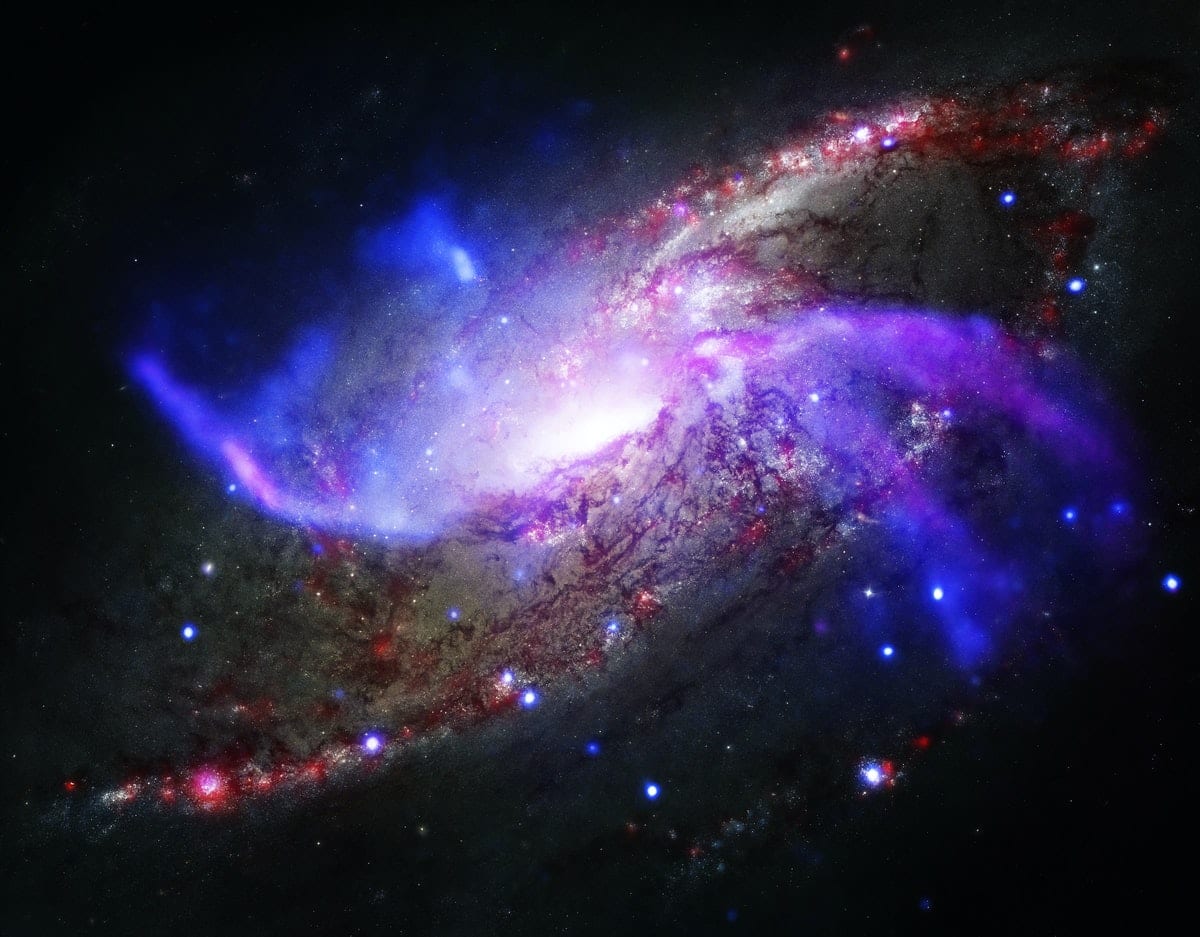
Image credit: NASA via Rawpixel

How can scientists possibly make a prediction about the number of undiscovered civilizations?

It’s a mathematical theory based on a fifty-year-old equation called the Drake equation.

As Popular Mechanics explains:

Drake’s seven key variables, which range from how many habitable planets exoplanets there are in the galaxy to the amount of time over which intelligent life takes shape, are almost impossible to pin down.

The formula acts more like a framework for the probability of finding life; previous estimates have ranged from zero to over a billion civilizations.

But Professor of Astrophysics Christopher Conselice, his colleague Tom Westby, and their team at the University of Nottingham used new technology and assumptions about our galaxy, the Milky Way, to formulate a new hypothesis.

They published their work last summer in The Astrophysical Journal.

Image credit: NASA via Rawpixel

As quoted in Phys.org, Conselice explains that they based their assumption on the length of time it took a civilization to develop on Earth:

“There should be at least a few dozen active civilizations in our Galaxy under the assumption that it takes 5 billion years for intelligent life to form on other planets, as on Earth.

The idea is looking at evolution, but on a cosmic scale. We call this calculation the Astrobiological Copernican Limit.”

The Copernican limit guides researchers to think on a pretty large scale–where intelligent life develops in either more or less than 5 billion years.

By intelligent life, scientists mean a civilization capable of communication.

On Earth, that development took more than 4.5 billion years, thus the 5 billion year threshold.

Image credit: NASA via Rawpixel

These calculations have been used for years, but the Nottingham team took it one step further, factoring in the specific composition of Earth’s sun.

As Westby explained:

“In the strong criteria, whereby a metal content equal to that of the Sun is needed (the Sun is relatively speaking quite metal rich), we calculate that there should be around 36 active civilizations in our Galaxy.”

When all of the data is combined and analyzed, they believe just 36 exoplanets possess all the right conditions to support the development of an alien civilization.

Of course that means 36 alien civilizations that are enough like us to be recognizable as communicative beings.

Who knows how many are out there that are so different that we might not even recognize them if we saw them.

The problem is, a theory needs to be proven, and the exoplanets are so far away that while we can see them with high powered telescopes and gather some sensory data on them, we don’t yet have the technology to visit them–even with probes.

Image credit: NASA via Rawpixel

If they’re so far away, why do we even care?

Well aside from the intrinsic human need to explore and discover, finding out how many other civilizations co-exist could actually tell us something about how long life on earth will last.

As Professor Conselice points out:

If we find that intelligent life is common then this would reveal that our civilization could exist for much longer than a few hundred years, alternatively if we find that there are no active civilizations in our Galaxy it is a bad sign for our own long-term existence.

By searching for extraterrestrial intelligent life—even if we find nothing—we are discovering our own future and fate

This is very exciting in the world of astronomy.

But according to Popular Mechanics and The Guardian, not every scientist is convinced.

Oliver Shorttle of the University of Cambridge told the news organization that more factors need to be considered—such as how exactly life formed on Earth—before taking the new findings as fact.

That’s science for you. There’s always more to consider.

Even so, it’s pretty cool to have such a specific number, don’t you think?

Do you believe there’s life out there? Let us know your theories in the comments!

The post Scientists Say There Could Be 36 Alien Civilizations in the Milky Way appeared first on UberFacts.
Physicists Are Getting Closer to Understanding Why Glass Exists

Until someone pointed it out to me, I never really considered that the existence of glass is a weird thing. I mean, I enjoy science, and I read about science, but this particular quirk has escaped me for all of these years!

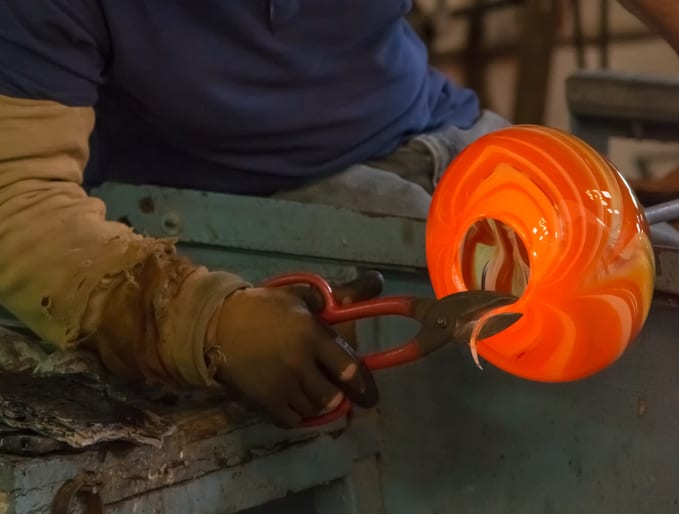
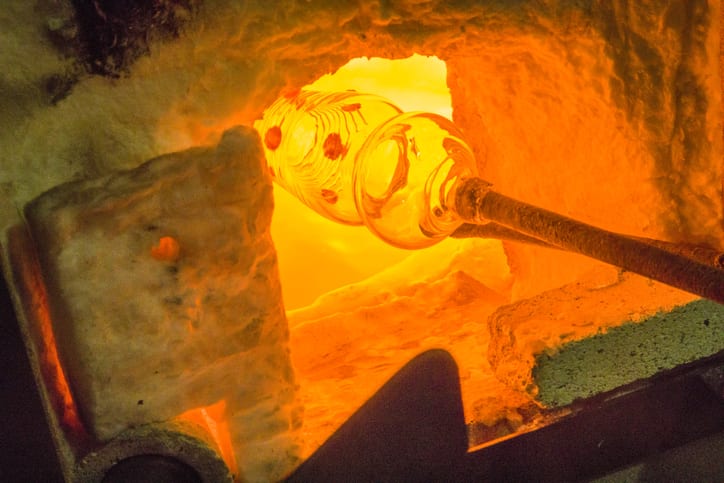
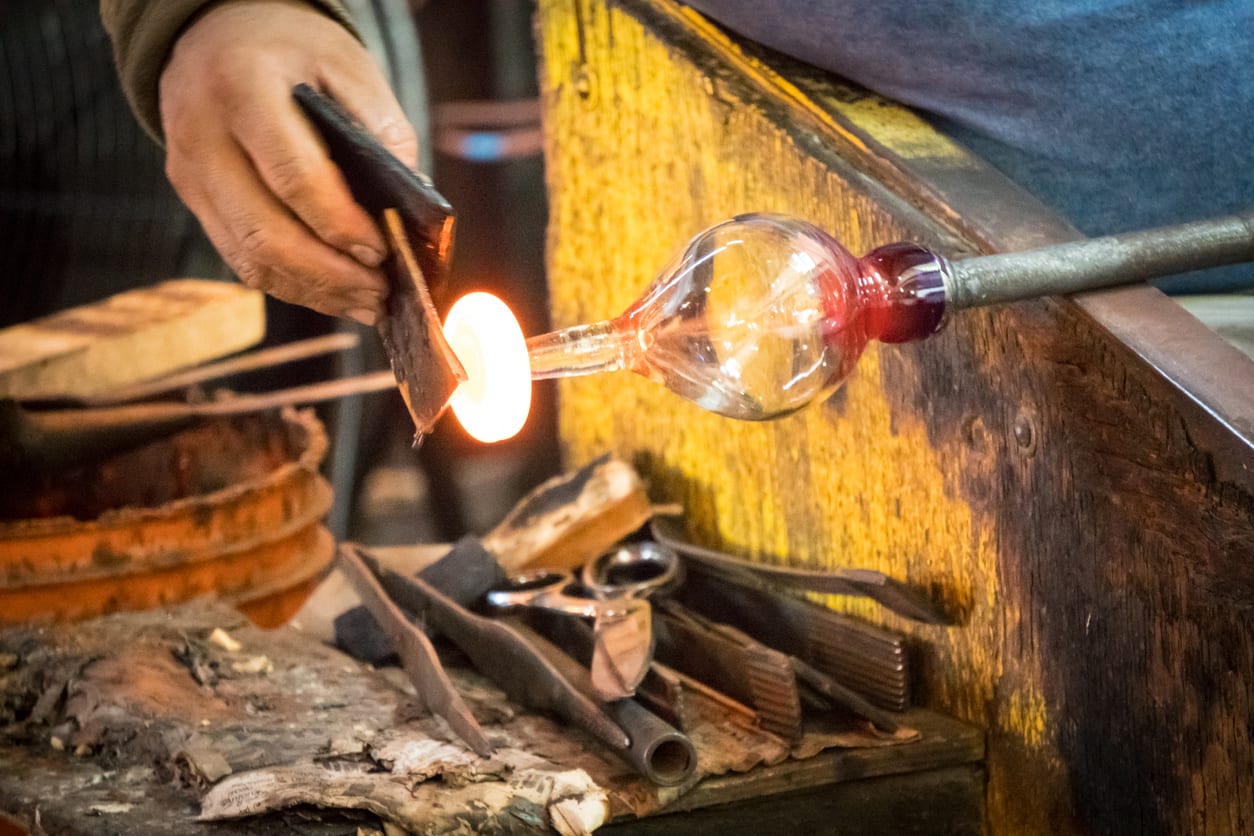
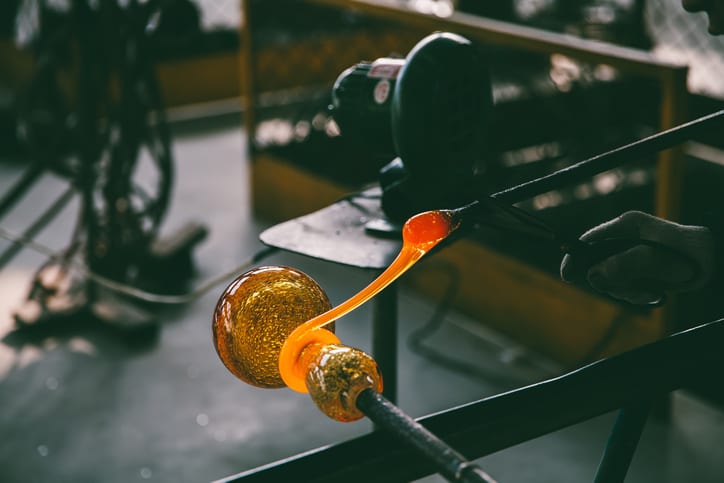
When liquid is cooled, it either crystallizes or hardens into glass. The former is a dramatic switch from the liquid phase, where molecules are disordered and free flowing, into the locked, regular, repeating pattern of the crystal phase (like how water freezes into ice).

Image Credit: iStock

Some liquids, like silica, begins as a molten liquid and when cooled, contracts and crowds closer together until they stop moving. The gradual transition doesn’t reorganize the molecules, and the gradual nature results in glass.

Scientists, though, don’t really understand why the cooling liquid hardens in some scenarios, or why the cold molecules don’t “squish” into new arrangements, confesses Camille Scalliet, a glass theorist at the University of Cambridge.

“Liquid and glass have the same structure, but behave differently.

Understanding that is the main question.”

They have had clues, like the one found by chemist Walter Kauzmann in 1948 when he noticed that the more slowly you cool a liquid, the longer it will cool before it transitions into a denser and more stable glass.

In that scenario, the molecules had longer to shuffle around and find tighter, low-energy arrangements before it fully hardened – and the lowest possible temperature it can stay at before full hardening is now known as the Kauzmann temperature.

Image Credit: iStock

There, the resulting glass has an entropy as low as that of a crystal, creating a paradox – how could glass possess the same order as a crystal?

It can’t, not normally, which implied something special happened at the Kauzmann temperature – something that created an ideal glass structure made of the densest possible packing of molecules.

Mark Ediger, a chemical physicist at the University of Wisconsin Madison, says that’s why “people thought there should be an ideal glass.”

Despite experiments through the years by scientists and glassmakers alike, no way has been found to form ideal glass by cooling a liquid. The cooling process would have to be perhaps infinitely slow, it was surmised, to keep the glass from hardening before it his the Kauzmann temperature.

Then, in 2007, Ediger developed a new method of glassmaking.

“We figured out there was another way to make glasses that are high density and close to the ideal-glass state by a completely different route.”

That route involved creating “ultra-stable glasses” that exist in a state somewhere between ordinary and ideal using a method called vapor deposition.

It required dropping molecules one by one onto a surface (kind of like playing Tetris), which allowed each one to settle into a snug space before dropping the next one. The glass that resulted was denser, more stable, and lower in entropy than any that had been created before, Ediger said.

“These materials have the properties that you would expect if you took a liquid and cooled it over the course of a million years.”

Several years after Ediger figured out how to make this ultra-stable glass, a group at Berkeley, and another in Madrid, set out to study whether it might depart from that universal heat capacity near absolute zero.

Image Credit: iStock

The two groups probed the low-temperature properties of the ultra-stable silicon and ultra-stable indomethacin and found that both had lower heat capacity than the typical near absolute zero – their configurations are especially snug.

Their theory is that there’s a “tunnel” or a “two-level system” that allows atoms to move between alternative configurations, passing through obstacles and occupying both levels at once. Since the ultra-stable glass has such a low heat capacity that results in fewer of these “tunnels,” then it would seem that ideal glass would have none at all, explained David Reichman, a theorist at Columbia University.

“It’s just perfectly, somehow, positioned where all the atoms are disordered – it doesn’t have a crystal structure – but there’s nothing moving at all.”

They believe, then, that when liquid becomes a glass it’s actually attempting to transition into “ideal” glass and a fundamental pull toward long-range order, but the increased viscosity prevents them from ever truly getting there.

Scientists were recently able to test these ideas through simulations, speeding up the process by a factor of 1 trillion and swapping particles to find the best possible fit.

Image Credit: iStock

They published their results in Physical Review Letters and reported that the more stable the simulated glass, the fewer two-level systems it has – just like they suspected.

There are still more experiments to do on substances like amber, which doesn’t fit this mold or these findings, but also exists outside of a laboratory setting.

For now, glass specialists and physicists all over the world are excited to be one step closer to understanding how class is made, how it exists, and how we can make it better.

The post Physicists Are Getting Closer to Understanding Why Glass Exists appeared first on UberFacts.

Physicists Are Getting Closer to Understanding Why Glass Exists

Until someone pointed it out to me, I never really considered that the existence of glass is a weird thing. I mean, I enjoy science, and I read about science, but this particular quirk has escaped me for all of these years!

When liquid is cooled, it either crystallizes or hardens into glass. The former is a dramatic switch from the liquid phase, where molecules are disordered and free flowing, into the locked, regular, repeating pattern of the crystal phase (like how water freezes into ice).

Image Credit: iStock

Some liquids, like silica, begins as a molten liquid and when cooled, contracts and crowds closer together until they stop moving. The gradual transition doesn’t reorganize the molecules, and the gradual nature results in glass.

Scientists, though, don’t really understand why the cooling liquid hardens in some scenarios, or why the cold molecules don’t “squish” into new arrangements, confesses Camille Scalliet, a glass theorist at the University of Cambridge.

“Liquid and glass have the same structure, but behave differently.

Understanding that is the main question.”

They have had clues, like the one found by chemist Walter Kauzmann in 1948 when he noticed that the more slowly you cool a liquid, the longer it will cool before it transitions into a denser and more stable glass.

In that scenario, the molecules had longer to shuffle around and find tighter, low-energy arrangements before it fully hardened – and the lowest possible temperature it can stay at before full hardening is now known as the Kauzmann temperature.

Image Credit: iStock

There, the resulting glass has an entropy as low as that of a crystal, creating a paradox – how could glass possess the same order as a crystal?

It can’t, not normally, which implied something special happened at the Kauzmann temperature – something that created an ideal glass structure made of the densest possible packing of molecules.

Mark Ediger, a chemical physicist at the University of Wisconsin Madison, says that’s why “people thought there should be an ideal glass.”

Despite experiments through the years by scientists and glassmakers alike, no way has been found to form ideal glass by cooling a liquid. The cooling process would have to be perhaps infinitely slow, it was surmised, to keep the glass from hardening before it his the Kauzmann temperature.

Then, in 2007, Ediger developed a new method of glassmaking.

“We figured out there was another way to make glasses that are high density and close to the ideal-glass state by a completely different route.”

That route involved creating “ultra-stable glasses” that exist in a state somewhere between ordinary and ideal using a method called vapor deposition.

It required dropping molecules one by one onto a surface (kind of like playing Tetris), which allowed each one to settle into a snug space before dropping the next one. The glass that resulted was denser, more stable, and lower in entropy than any that had been created before, Ediger said.

“These materials have the properties that you would expect if you took a liquid and cooled it over the course of a million years.”

Several years after Ediger figured out how to make this ultra-stable glass, a group at Berkeley, and another in Madrid, set out to study whether it might depart from that universal heat capacity near absolute zero.

Image Credit: iStock

The two groups probed the low-temperature properties of the ultra-stable silicon and ultra-stable indomethacin and found that both had lower heat capacity than the typical near absolute zero – their configurations are especially snug.

Their theory is that there’s a “tunnel” or a “two-level system” that allows atoms to move between alternative configurations, passing through obstacles and occupying both levels at once. Since the ultra-stable glass has such a low heat capacity that results in fewer of these “tunnels,” then it would seem that ideal glass would have none at all, explained David Reichman, a theorist at Columbia University.

“It’s just perfectly, somehow, positioned where all the atoms are disordered – it doesn’t have a crystal structure – but there’s nothing moving at all.”

They believe, then, that when liquid becomes a glass it’s actually attempting to transition into “ideal” glass and a fundamental pull toward long-range order, but the increased viscosity prevents them from ever truly getting there.

Scientists were recently able to test these ideas through simulations, speeding up the process by a factor of 1 trillion and swapping particles to find the best possible fit.

Image Credit: iStock

They published their results in Physical Review Letters and reported that the more stable the simulated glass, the fewer two-level systems it has – just like they suspected.

There are still more experiments to do on substances like amber, which doesn’t fit this mold or these findings, but also exists outside of a laboratory setting.

For now, glass specialists and physicists all over the world are excited to be one step closer to understanding how class is made, how it exists, and how we can make it better.

The post Physicists Are Getting Closer to Understanding Why Glass Exists appeared first on UberFacts.