People Discuss How They Deal With Their Depression

We’re in the dark, freezing months of the year right now and this is when depression really rears its ugly head for a lot of people out there.

Gray skies, more hours of darkness, and freezing temperatures can really do a number on peoples’ mental health so it’s important to take care of yourself.

How do you cope with your depression?

Let’s see what folks on AskReddit had to say about this.

1. Seems to work.

“I like to go outside and write songs.

I act like I’m someone important that people need to survive.

It’s weird, but it works sometimes.”

2. The little things.

“I don’t suffer from major depression, so I know that this may seem rather flyweight. I go for walks.

I put my favorite music on while I’m driving and sing along. If I’m at home (alone–I get embarrassed), I’ll put on some really fun music and dance. I watch stand-up comedy for a laugh.

I’ll allow myself to indulge in some nice chocolate. And I give myself small tasks that I can easily accomplish and pat myself on the back for getting them done.”

3. Depression lies.

“I stubbornly keep on breathing and I ignore everything my head thinks.

Depression lies.

I have a check list on the fridge of things I forget: keep warm, drink tea, take Zinc, being overwhelmed is a symptom you are quite fierce in reality, wear hat, eat proteins before noon, brush teeth before noon.”

4. Dealing with it.

“I have been struggling with anxiety and depression throughout all of Middle School, and into High School. Except no one knows about it, so everyone just thinks I’m fine.

But I don’t talk about it, because I am concerned about how people would react. Which really just makes everything worse. But some things I have done to help my self. I focus on the things that I do have. I am lonely and don’t have many friends but, I realized that thinking senselessly about the people who don’t care about me, doesn’t help at all and makes things worse.

But focusing on who cares about me, make me feel happy and cared for. Additionally, I have started a journal to record my thoughts that I have, when I go through a mental breakdown. Writing it down, helps me think about it more, and cope with it.”

5. Belt it out.

“I sing.

I get anxious a lot and have problems because of it. But when I sing I feel like all my problems are gone.

Also, I read! When I read I’m not me anymore, I’m the book character and that takes all my problems away.”

6. Clear your head.

“I like to walk around outside, I feel like it clears my thoughts.

One of my main things to do is to pour all of my emotions into something physical, ie a drawing, and then destroy it. Listen to happy music, read, take a bath are standard go-to’s. Hope this helps!

And remember you’re loved, wanted and needed in this world. also If you feeling suicidal please call a hotline, the world needs you.”

7. All kinds of things.

“I like to sit and think. some times I will draw and listen to music. I will play my favorite video games and chat with friends. but my favorite thing to do was to make up a new friend in my head then I would talk to them as if they were a therapist.

I like to do that because I feel it is easier to talk and vent to some that are not real then to talk to someone that might tell others. I do this a lot for more than just depression and it really helps if you have.

People say that I’m too old for an “imaginary friend” but I mean they are there for when you are sad and don’t want to talk o someone that’s real.”

8. Comforting.

“I do things that comfort me.

I mostly just watch RuPaul’s drag race, eat food and play video games.

I honestly just ignore it and let it build up. It’s not healthy but I like it.”

9. Ways to survive.

“I’ve dealt with major depression for almost 20 years now. A few ways I survive:

1. Give my dog (who’s passed away, so now my cat) a hug. I also talk(ed) to them

2. Read. Live in that world instead of mine

3. Listen to music

4. Journal (including keeping a gratitude journal), and just go back and reread

5. Sleep, so I don’t feel anything.”

10. Very aware.

“I try not to give myself to much importance. Meaning it’s okay not to succeed or to miss work.

The world doesn’t revolves around you. You are not that important.

For me, it takes all the stress off my shoulder and I can just simply be instead of doing and having.”

11. Escape from reality.

“Reading sci-fi and fantasy adventure books, the further they are from our reality, the better.

Also working with my hands, and doing something good for others (I’m currently renovating my mom’s apartment).”

12. Whatever works for you.

“I have depression & anxiety.

I used to believe it when I was told by media in various forms and by specialists that working or volunteering in something you care about, always helps people with depression. It Doesn’t. Never believe that something Helps Everyone. I had a breakdown, then started volunteering after a while – that caused things to get worse.

How do I cope with depression? I read, if I’m reading I can mostly forget the real world, my real situation, my real future, I feel a bit better. My other coping mechanism is to sleep, even with nightmares sleep is far better than being awake.

If the anxiety worsens at the same time as the depression and becomes very, very bad I lie on my bed and look out the window. I can’t do anything else except get to the bathroom as needed. It’s like a weird paralysis.

In years past, I would cope with depression by drawing a picture daily of how my day had been. Write down 5 good things each day. Write. Just write. Thoughts, fears, worries, hopes, regrets, anything.

Lie on the lounge with my doona and a pillow while my mother did things and I would just watch and we would talk unless I was too bad, then I just observed and Mum did her things and talked to me.”

Now we’d like to hear from you

In the comments, share some tips that you use to deal with depression.

Thanks in advance!

The post People Discuss How They Deal With Their Depression appeared first on UberFacts.

People Discuss the Mental Illnesses That Get Unfairly Stereotyped

There’s been a big effort in recent years to de-stigmatize mental illness in general, which is fantastic.

We’ve come a long way in talking about depression and anxiety, and with normalizing talking therapy, but when it comes to some mental illnesses, the stereotypes are still going strong.

That’s definitely the case with these 16 illnesses, and knowledge is power.

16. It will break your heart.

I have gender dysphoria and as a teen I starved myself to look more like a boy and so that my menstrual cycle would stop (amenorrhea caused by weight loss.) I also felt dirty and being thin made me feel clean and empty.

I hated myself and wanted to not exist. I literally wanted to starve myself into nonexistence. Vanity didn’t enter into it.

15. It’s paranoia, not always voices.

Schizophrenics don’t always hear voices. With mine, I hear people trying to break down my door, trying to open my windows, and movement under my house.

Schizophrenia often involves extreme paranoia rather than evil voices; my Bio Psych professor told us how her BIL, if off of his medication, believed that if he left the house for any reason someone would break in after he left to unplug the fridge and spoil all the food.

14. Sometimes there’s no reason.

Mood/anxiety disorders do not need an objective reason for occurring – you don’t need to have a shit life to be depressed or to be in at any actual risk of something bad happening in order to have anxiety. They can just happen randomly or in connection to things that happened far in the past.

Therefore, the common notions that someone is ungrateful for being depressed or having anxiety or that they’re faking it because they “have no reason” to suffer from them is absolutely flawed and the attempt at “fixing” them by pointing out the good things in somebody’s life is futile and antagonizing.

13. OCD gets co-opted often.

OCD is not about being tidy and clean. It involves rescuing, intrusive thoughts and obsessively cleaning is just one of OCD related compilations. It can seriously f*ck up someone’s life.

An example would be turning a light switch on and off 30 times once entering a room or you fear something terrible will happen if you don’t.

It really annoys me when someone calls themselves OCD because they like a clean kitchen.

12. This makes me angry.

If you get angry and go off on someone they ask, “are you off your meds?”

11. If only it were just that.

That depression only makes you sad. There is a myriad of other feelings, and physical symptoms.

10. Most people are just average.

Mental illness does not make you particularly dangerous or a genius.

9. And it gets worse with stress.

Not everyone with Tourette syndrome randomly yells out obscenities.

8. Usually they do.

That crazy people don’t know they’re crazy.

7. It can happen to anyone.

Most people with PTSD and/or CPTSD haven’t been in the military or a war zone.

6. It’s hard to spot.

People with anxiety being highly strung, or nervous about things.

It can manifest itself in that way, but it’s more like there’s always something at the back of your mind that needs doing, but you’re not sure what. Even if you know what that thing is, you can see the end goal, and maybe even the steps to getting to that goal, but staying on that path requires you to fight with self doubt, and the “what ifs” that plague your mind when you’re on the way there.

Also, you can appear quite well adjusted in social situations, but in downtime, overthink every fucking thing.

5. OCD takes over your life.

It’s not liking your pens in color coordinated order- it’s feeling like if this ‘contaminated’ pen touches that one, your sister will die.

If you don’t hit the light switch an odd/even number of times, you’ll die.

The rituals can literally take over your life, and you know they don’t make sense, but you can’t stop.

4. Sometimes you can’t cry.

Depression isn’t being sad all the time and crying a lot.

Parts of it can be but it’s different for everyone.

Personally, I don’t cry often and I’m not overwhelmingly sad, I just don’t feel things. Everything feels numb.

3. It’s much more complicated than that.

That eating disorders are a vanity thing.

And that people with an eating disorder only “want to be skinny and get attention ”

And that eating a banana is going to heal you.

2. Don’t judge a book by its cover.

Anorexic people aren’t all skinny teenage white girls.

I’m an average weight, adult man and it drives me crazy how hard it is to find support in the professional world because I’m “not thin enough”

1. Depression is rough.

The sheer exhaustion and feeling of weight. On particularly bad days it’s like I’m wearing a 50lb weight on each limb and a 100lb vest.

People love to say “Exercise and nature will cure your depression!” but it got to the point where I had to stop going to the gym because I was routinely leaving in tears halfway through my workout because I just could not physically or mentally do it anymore.

I have days where I can scarcely physically get out of bed. And all those things that are supposed to give you good endorphins – exercise, fresh air, sunlight, food, even sex… They leave me even more exhausted and miserable.

Now that we know better, let’s do better.

No one likes to be stereotyped, after all.

The post People Discuss the Mental Illnesses That Get Unfairly Stereotyped appeared first on UberFacts.

This is How Synesthesia or ‘Crossing of the Senses’ Works

If you experience synesthesia, then you most likely already know what it means. For everyone else, here’s a quick definition: experiencing something with one sense and somehow, that experience translating to a second one.

Like, you see a scone, and can taste the scone. Or, you hear the letter B and imagine the color yellow.

It doesn’t have to make sense, either; music can be a color, letters can taste like cake – whatever your brain comes up with goes.

Image Credit: iStock

For a long time, researchers believed synesthesia was fairly rare, but a 2006 study that employed objective tests found that’s not true – it affects around 2%-4% of the general population.

One of the reasons it can be hard to pin down is that there are so many different forms of the condition, and as a general rule, synesthesia can occur with any combination of senses or cognitive pathways.

The most common type is graphemes (letters or numbers) taking on certain colors. One synesthete will always see the letter A as red, but every synesthete won’t see the letter A as red – although some letter/number combinations are more common than others.

Sound-to-color synesthesia is the second most common type – a 2006 study found that these synesthetes typically associate a higher pitch to a lighter color, leading researchers to conclude that synesthesia might be using the same cross-modal pathways that most people use, rather than ones unique to the condition.

Lexical-gustatory (olfactory), tasting flavors based on a visual picture, word, or sound, is one of the rarer types of synesthesia – they might even associate smells with certain colors or shapes.

Image Credit: Pexels

Some people claim to taste emotions, or to experience a physical sensation when other people are touched, or even to assign personality traits to random letters or numbers.

Now that we understand (?) a bit more of what it means to be a synesthete, let’s talk a little bit about why scientists think people end up with these strange powers.

Only a little bit, because even though it’s become a popular field of study, synesthesia still isn’t well understood. There is some idea that it has a genetic component, because around 40% of people report a first-degree relative who also has the condition, and most recall experiencing it from a young age.

What scientists do agree on is that synesthesia is a sensory phenomenon that is unrelated to memory – meaning you thinking of a letter being blue because it was blue in your childhood bedroom isn’t the same thing.

Image Credit: iStock

It happens early in the perception process – you mind just makes the connection, it doesn’t spend time searching your memory for it.

Researchers believe synesthesia is a cross-wiring in the brain – that the area for one sense stimulates the area for another. There could be increased neural connections that stuck around when others were being pruned while still in utero – there might even be physical differences in brain matter to find.

Scientists also believe there could be some secondary benefits for people who “suffer,” mainly in the area of memorization. Some synesthetes can memorize a large list of numbers by using their color associates, for example, and some others can distinguish between extremely similar colors.

It’s not all sunshine and rainbows, though; many report the condition can be grating or uncomfortable, like when they see a letter or number that’s the “wrong” color, if a name doesn’t “taste” right, or other stuff the rest of us will never understand.

I’m not sure I understand humans any better after writing this article, but listen – I do have a renewed respect for how truly different each and every one of us are.

The post This is How Synesthesia or ‘Crossing of the Senses’ Works appeared first on UberFacts.

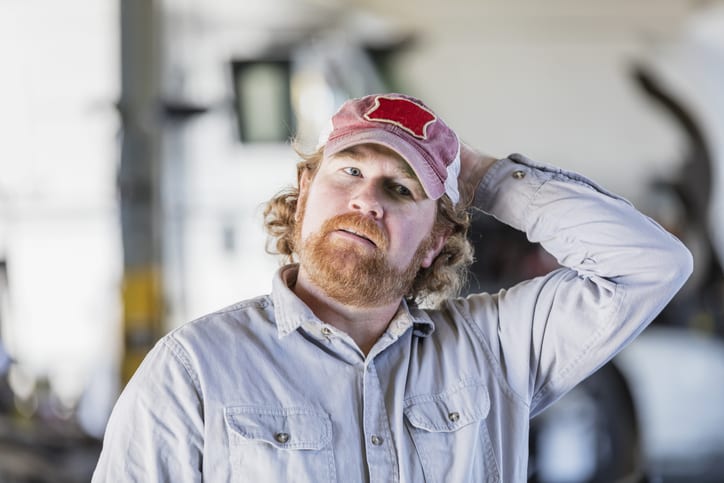
This is Why People Scratch Their Heads When They’re Thinking

You’ve probably never spent too so much time thinking about how often you touch your face until recently, but the truth is, most people do it more than we ever realized.

We scrub our faces, we play with our hair, we pick at our lips, we rub our eyes, and yes, we scratch our heads all the time.

Image Credit: iStock

Why is touching our faces and heads so common? Why do humans tend to scratch their heads while they’re thinking?

It turns out that there are some pretty interesting answers!

According to San Diego Reader columnist Matthew Alice, some people think it’s as simple as a behavior passed down from our caveman ancestors.

“One popular explanation for any hand-to-head movements is that they’re frustrated aggression – a reversion to the natural movements of our rock-throwing ancestors.

If you watch a small child strike at something, he’ll raise an arm over his head and bring it forward in an arc.

It’s a natural, unstudied movement. Not much finesse, but for a caveman, it got the job done.”

He also reiterated a possible anthropological explanation as well:

Image Credit: iStock

“When we’re wrestling with some knotty problem, we experience feelings of frustration, perhaps some anger, and before we know it, our hand flies up in the air.

But hold it. In these modern times, it’s not polite to bash the guy who asked the question.

So instead we deflect attention from the movement and scratch or rub our head or chin or neck.”

In a 2009 article, former FBI counterintelligence officer Joe Navarro put forth another observation.

“When we are under stress, our brain requires a certain amount of hand to body touching (hand wringing, forehead rubbing, temple massaging, lip touching, etc.).

These pacifiers serve to soothe the individual when there is negative limbic arousal [fear, stress, etc.].”

More recent research seems to bolster the stress theory, and even adds more layers to it.

They studied a bunch of rhesus monkeys and found that they scratched more often when they were stressed.

Image Credit: Pexels

So there you go – there are a bunch of reasons that scratching normal human behavior, so even if you think it’s weird, you’re not alone.

Which is pretty much the way things go with us humans.

The post This is Why People Scratch Their Heads When They’re Thinking appeared first on UberFacts.

Check Out the Wild Science Behind the Creepy “Thatcher Effect”

There’s absolutely no shortage of weird things the human brain will do if you put it in a scenario it doesn’t expect, or hasn’t been primed to expect.

It’s not that our brains don’t like surprises, exactly, it’s more that they just act like they don’t exist if they’re not sure how to handle them.

Case in point, the Thatcher Effect – sometimes known as the Thatcher Illusion.

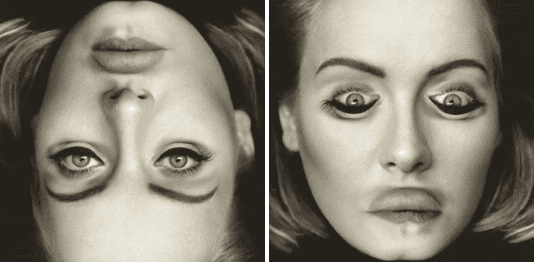
According to clinical psychologist Dr. Julie Smith, whose video showcasing the oddity has earned over 33 million views, the Thatcher Effect is  “a phenomenon in which changes in facial features that are very obvious in an upright face are much more difficult to identify when the face is upside down.”

@drjuliesmith

check out my IGTV video for why this happens (link in bio) #psychologyfacts #illusion #psychologytest #psychologytricks #psychology #learnontiktok

♬ Dr Julie Smith The Thatcher Effect – Dr Julie Smith – Psychologist

In her video, she vertically flipped people’s eyes and mouths in photographs, and even though the changes “seem obvious” in an upright photos, look normal when the picture is flipped upside down.

Image Credit: TikTok

Psychology professor Peter Thompson was the first person to point it out, back in 1980.

He used pictures of British Prime Minister Margaret Thatcher for his demonstration, which is how the effect got its name.

Image Credit: TikTok

Even though we’ve had a few decades to puzzle it out, Dr. Smith tells Buzzfeed we’re still not sure exactly how it works.

“This is thought to happen because our brains are so finely tuned to recognizing faces in the upright position.

This enables us to identify many faces that are very similar as unique individuals very easily.

It has been hypothesized that the cognitive processes involved in face recognition rely as much on the structural relationship between features as the features themselves.”

No matter the reason, seeing it for yourself is interesting, to say the least.

Image Credit: TikTok

OMFG. That is terrifying.

Those weird-looking organs running our bodies and lives for us never cease to amaze – even when they’re technically misfiring.

What do you think? Let us know in the comments!

The post Check Out the Wild Science Behind the Creepy “Thatcher Effect” appeared first on UberFacts.

Therapists Discuss Patients That Actually Frightened Them

Let’s get creepy!

I’ve always wondered what it would be like to be a therapist who had a scary patient and I guess now I’m gonna find out.

Because we’re about to read responses from therapists who’ve had patients that they were genuinely afraid of.

Check out these responses from AskReddit users.

1. Scary.

“This was early on in training but a mandated client had dropped acid before the session and it started coming on while we were talking.

He didn’t want to be there as it was and was much larger than me (5’0″). Once he got to threatening me for being the reason everything was wrong with the world I ended up needing to get up and leave my own office to get a supervisor.

I definitely thought he would hit and/or strangle me if I stayed.”

2. She meant it.

“The only one I have felt a little scared of was one who threatened to kill me. I knew she meant it.

She had already assaulted a number of other staff. She got sent to a higher security ward and I heard she had broke staff’s fingers first day she was there.

She held staff and other patients hostage in one of our rooms threatening them but circling the table as if playing with them first. I see violence and aggression regularly and it doesn’t phase me but she did.

I would purposely avoid eye contact and look straight ahead avoiding her and pretend I wasn’t intimidated, as that’s what she wanted.”

3. Rage.

“I have a student who is 6’4” with emotional behavioral issues.

Reading his social history made me cry because of all the sh*t he’s been through. So, of course, I have a soft spot for him. But his anger gets out of control and it can be very scary. He punched a pole right in front of me once and narrowly missed my face.

I looked at him in the eyes and sternly said do you realize you almost just punched me in the face? He snapped out of his rage and apologized profusely.

I wanted to hug him and tell him everything was going to be alright. “

4. Freaky.

“I was pretty nervous when the drunk partner of a client backed me into a corner, and pretty goddamn sweaty when a violent s*x offender with a good 80 pounds on me blocked my exit and told me he was going to kill me and my family.

The one that really got me long term was a 15 year old girl in a residential program I worked at. She had substance use issues, which is why she was there, but it was clear from the jump that she had deep, DEEP mental health stuff stemming from her child.

She had been adopted out of a Russian orphanage where she and a younger sibling has been left in a crib alone for god knows how long, covered in lice and shaved bald. She had a lot of (expected) attachment issues but talking to her was like talking to a black pit full of hatred. She hated everyone and everything and had no conception of consequences or what self preservation was.

She’d do stuff that would spin your head around in terms of how unsafe it was…and she just had no reaction. There was no getting through to her, as she needed the interventions when she was a very small child to be able to move forward successfully. She was discharged when it was found out that she was hiding knives under her mattress.

I would not be surprised if she was in jail at this point.”

5. That’s bad.

“In my first semester as a therapist I had a client bring a large hunting knife to session one day, he had it in his waist band in the back.

He revealed it halfway through our session He had been referred to our practice for anger issues.

When in doubt, REPORT.”

6. Had enough.

“Enough to quit my job.

Had high case load of suicidal teens. Most were medicated and low risk, but had two kiddos who had several suicide attempts prior to me, and while under my watch.

I was getting physically ill, not sleeping well, constantly worried. I tried to transfer them to a higher level of care but our company was greedy and didn’t want to transfer them and lose those funds.

I ended up quitting on the spot for these kids to be given a trauma focused therapist and get the help they needed.

Best decision for both myself and those kids.”

7. WHOA.

“They were very delusional and a heavy addict.

They decided our therapeutic engagement was a love story unfolding. Ended with the swat team showing up at the office when they showed up with a weapon and lost their sh*t when I wasn’t there. They disappeared for a couple years.

They appeared behind me on a bus one day and said I saw you with your daughter at your house she’s really pretty. Then gave me my address. They are a known s*x offender. I moved as soon as I could.”

8. Like a horror movie.

“Worked with a patient that complained of reoccurring night terrors about lobsters being boiled alive.

He couldn’t figure out what was causing them.

The fact he killed his gf, chopped her up and boiled her head didn’t seem come to him as a reason he might be having these dreams.

My only fear is the system will have to release him one day as they could never get him sane enough to stand trial.”

9. Takes a strong person.

“I remember when I was working on an adult acute unit, there was a guy who had come to be there through some kind of bizarre circumstances.

He was a pretty important person in the rural area he was from, and he was pretty charismatic. Had a huge family that all showed up for the family session despite having to drive several hours to get there.

The unit had windows that were translucent from ceiling to floor so that light could get in but no one could see into or out of the unit for privacy.

I met with each patient individually as well as in groups, and my office door locked automatically (as is typical for acute units). No one but myself and the custodian had a key. For this reason, I usually tried to meet with folks individually in the group room when it was empty, so we had privacy but I could also get help if needed.

This guy came to my office door and knocked. When I opened it, he came in without an invitation and sat in one of the 2 chairs on the door side of my desk. I sat in the other. He was going on about how much he appreciated my work and how much I’d helped him (which felt disingenuous—he frequently indicated he didn’t feel he needed to be there).

I became gradually aware that he was between me and the door, which was not usually a problem. You actually want to make sure folks have easy access to an exit. Contrary to popular belief, you don’t want to be between a patient and the door.

I did home-based work after I left inpatient work, and in that context, you most definitely do need to be closest to the door). I was also uncomfortably aware of how close he was to me. He could easily touch me if he decided to. I was aware of the fact that I don’t usually feel uncomfortable with proximity, as long as I generally feel safe, so alarm bells started going off.

Then he suddenly said, “how do you like driving that little silver [make and model of my exact car]?” As I said, the windows of this building were all frosted, so there was no way for him to see me getting into or out of my car. All the hairs on my body stood on end.

I had the mental image of being in a room with a tiger. Maybe I’d be fine. Maybe the tiger wasn’t hungry or mad. Or maybe he was. I was only going to get out of that room safely if he decided to let me, which is exactly the experience he wanted me to have, and I could see that he was enjoying it.

That was scary, even though I didn’t have any reason to think he was interested in hurting me physically.

Thank god I have a degree in theatre. I’m sure his predatory instincts told him that I’d received his message loud and clear, but I gave no outward indication of my feelings. I got him out by saying I had to meet with the psychiatrist, and he left the unit soon after.

That was very early in my career, and one of the first of a handful of instances. I’ve done meaningful work with murderers, rapists, animal and child abusers, and just ordinary bullies, and like I said, it’s not about what someone has done.

The folks who have frightened me were (with one notable exception) just ordinary people without scary rap sheets.”

10. Two incidents.

“Used to be a therapist at a behavioral health hospital. I had some patients who genuinely scared me in theory, but nothing ever happened with them. I was significantly attacked twice at work.

Both patients were young women. Neither of them “scared” me beforehand. Both were incredibly quiet, withdrawn, and unassuming. One strangled me with my keys- my lanyard was a breakaway for that very reason, but she had tried to steal them several times that shift in attempt to escape the building and run into traffic, so I stupidly knotted off the breakaway portion.

We carried panic buttons on the lanyards and I was able to press it while being strangled with it.

The other attack occurred when I was fairly new and on a low-security unit, in view of other staff. I was walking away from the patient and she grabbed me by my hair, pulled me to the ground, and dragged me for several feet down the hallway where she began kicking me in the chest and stomach.

She was sent to a higher security unit as a result. I guess I was afraid of her after that, but she wasn’t there long. There was law enforcement intervention after she assaulted a pregnant nurse, pulled her to the ground as well, and stomped on her stomach.”

11. A charmer.

“Worked residential for 20 years. Had only 2 kids scare me

. One put his baby sister in the freezer. She was found quickly and was ok. He was charming, a good looking kid and quite clever. Also no history of trauma or abuse. Serious serial killer vibes.

One was horribly abused and somehow figured out I was pregnant. I wasn’t showing at all since I was fat. He would just stare at my stomach. I asked to be moved to a different group. First kid was or still may be a case study for students at the local big university.”

12. The door is blocked.

“The only time I’ve ever been scared is when my physical safety is threatened such as a patient blocking the door, hinting they know where I live, or implying they’d like to hurt or r*pe me.

I have a stellar poker face and once these really tough patients realize that I’m unfazed they usually drop it. My strength in therapy is mostly just broad acceptance and tolerance of whatever they bring to the table.

I let them know when I have to break confidentiality from the get go and that’s that.”

Have you ever had a patient, a co-worker, a friend, or a family member who you were legitimately afraid of?

If so, tell us all about it in the comments.

Thanks!

The post Therapists Discuss Patients That Actually Frightened Them appeared first on UberFacts.

Therapists Talk About Patients That Genuinely Scared Them

I think these responses are going to sound like something out of a horror movie…so it should be kind of exciting! And creepy…

We’re about to hear from therapists who admitted that they have had patients that genuinely scared the hell out of them.

Are you ready to get creeped out?

Here’s what therapists said on AskReddit.

1. Threatening.

“I worked with a student who used to threaten us.

He’d stand directly behind me with a pencil and threaten to stab me with it. I’d remind him what would happen if he did, but otherwise didn’t flinch or try and look at him.

He’d get mad then and throw the pencil across the room. It turns out me and one other lady were able to sit stone faced when he was like that an she never did anything. He’d get way worse if he thought anyone was scared of him.

I was the lucky one, he’d threaten to stab her in the eye. I’d always joked that I’d rather not see it coming.”

2. Scary.

“I was genuinely scared of a 17 yr old client I had. They were adopted and then “given back” to child protective services.

They told me in session they had an entire plan to burn their house down. Down to the date and the time.

I was terrified.”

3. Take it seriously.

“In one of my first clinical placements I had a psychiatrist supervising me who would toss me cases without any meaningful review. One afternoon I went into a room to meet someone for the first time and was told they were “anxious.”

The individual was floridly psychotic and informed me shortly after I walked in that he was scared for himself and others because he was a werewolf and would be transforming that evening.

Apparently I did not respond quickly or meaningfully enough, because in almost the next breath he informed me that I was not taking him seriously enough, picked up the office lamp, and threatened to beat me to death with it.”

4.  Nice to me.

“The only client who scared me was one that was nice to me.

He was awful to everyone else on the treatment team and would never comply with services until I came along. He always greeted me with a smile and wanted to know what I did in my spare time. Asked personal questions. I lied about my entire life.

He would call me to chat about nothing sometimes. I could tell that it was all superficial, however. I would have to text my boss when I arrived at his home and when I was back at my car with the doors locked.

When I got pregnant I begged to be removed from the case.”

5. A tense situation.

“I was doing in home work during my first internship. I was working with a 16 year old male diagnosed with schizophrenia.

This kid was huge, like 6’9 and was jacked. He had assaulted three police officers that responded to a call about my client choking his mom. He threatened to r*pe his sister and pulled a knife on her as well. He had threatened to r*pe several other women.

He also assaulted a worker at an inpatient facility, he broke the dude’s nose. So my agency sends my *ss to work with the kid (I’m 5’1 and weigh like 95 lbs). While working with him he was pretty heavily sedated from all his meds when I met with him, so this made him slightly less scary.

He got up several times during our session and would start pacing. Every time he got up my heart was racing.

He was admitted to a group home so I only ended up meeting with him twice but this kid terrified me.”

6. “I don’t do therapy anymore.”

“I had recently graduated and was working with kids with an array of developmental disabilities.

There was one kid who was about 13, and he was a pretty big kid for his age. After a few sessions, it seemed like it wasn’t too bad. Common behaviors while more frequent, were no different than any other kid with a similar diagnosis. That was until I had to wear my knee brace one day.

I have a bad knee, and sometimes a brace helps. The next session after, he kicked my bad knee and then tried to choke me. If he tried escaping or aggressing, he always remembered to go for my knee. We continued therapy for a few months, until I had to leave for health (knee) reasons.

Apparently I handled it well and the company I was with continued to pair me with known aggressive kiddos. I had to go the doctor for an unrelated reason, and I had so many cuts and bruises the nurse asked if my husband attacked me.

I don’t do therapy anymore.”

7. Wow…

“When I worked with family court there was this super smart, super troubled kid who was in hot water for beating up a random guy on the street with a baseball bat.

Open and shut, surveillance camera caught everything. Apparently he didn’t know his victim, just a random act.

Anyways, he was being tried as an adult (he REALLY beat this dude up) and was being held in adult jail pre-trial. He was assigned a therapist and had a few sessions per week.

Long story short, one session the kid gets mad, grabs the chair he was sitting on, and beats his therapist within an inch of his life. I think the poor guy was on a ventilator for like a week.

Yeah, kid had some issues…”

8. Not worth it for you.

“My 1st job as a therapist in community mental health we had no “close time” & were expected to accommodate any & all late session requests from clients with no security, it was insane.

We had an incident occur with a coworker-her client exposed himself during session. At the next staff meeting we were berated & gas lit about safety “you should park closer” yet we would also get in trouble for parking closer & told those spots were for clients.

Needless to say I only stayed there about 7 months, daily crying & intense anxiety weren’t working out for me.”

9. Close call.

“I got this patient who witnessed his mom get stabbed by his father.

After that happened he only started talking about gore and threatening people. I worked with him for a month and he started getting way better. I started to get comfortable in front of him and so did he.

Then one day he comes into my office, he comes up to me and from his back he pulls out a knife. I barely have time to dodge the knife. The guard runs in to the office and grabs the kid.

He got sent to juvie and I quit after a week.”

10. She only get a year?!

“She told me she’d kill me for trying to shrink her and pulled out a knife and sat there looked her in the eyes trying to assert dominance I got out of that situation with a hole in my hand

She got 1 year in prison with a possibility of parole.

I quit my job 2 months later, my boss understood.”

11. Having an episode.

“My first ever client was having a psychotic episode, was homeless and had all of her belongings with her (a backpack filled with items and a duffle)

She proceeded to pull out a pair of kiddie scissors and cut off all of her dreadlocks and lay them on the table in front of me while talking about needing to get rid of the voices she was hearing.

This was all before I got her to even sign the paperwork ? she and I talked enough to get the formalities finished and she decided to take to locks and put them in her bag like nothing abnormal was happening. I was just glad the scissors went away too .

After that intake, she fell off the face of the earth. Never heard from her again. I was fully prepared to ask her to hand over the sharps and put them somewhere out of reach until she was ready to leave but I didn’t have to.”

12. Good thing Tom was there…

“Before I was a therapist, I worked for a brief time at a residential facility for youth with severe neurodevelopmental disabilities (eg, autism, intellectual disability) and behavioral problems.

All of our youth had a history of violence, most had experienced trauma, and 2/3 were in state custody. Also, this was a for-profit institution that was horribly managed and woefully understaffed.

I was on the older boys’ wing trying to get my group ready to transition to the next activity. Now, one of the boys in my group, let’s call him Jay, was pretty high functioning but had significant attachment issues. When new staff (like myself) would come in, he would quickly develop a favorite (unsurprisingly, it tended to be one of the few who would actually treat the residents as fellow humans worthy of respect).

Jay was funny and likeable and would generally do what you asked, with only a lil bit of sass, which honestly just added to his charming rapscallion persona. However, he’d gradually start to push boundaries, INSISTING that he be in that staff’s group (groups changed each shift for this exact reason), constantly demanding attention, acting out to try to get a reaction (one time he told me I would never get a boyfriend because I had a mustache ?), etc.

If he didn’t get his way, he’d get incredibly angry and upset. And then the next time you saw him, he’d be sweet as pie. Oh, and he’d also stabbed a previous “favorite” staff member in the face with a pencil…

So anyway, I’m trying to get my group ready to go, and Jay has been continuously saying my name for like 5 minutes. In order to reinforce boundaries and NOT reinforce his tantrums, I told him that I would be happy to talk when we were all ready to go and then started ignoring him.

I go into the room of a resident with more significant needs (eg, largely nonverbal, intellectually disabled), to get his shoes on, and I close the bedroom door so Jay’s yelling would be less upsetting to the resident. All of a sudden, Jay LAUNCHES himself at the door.

He’s spitting mad and he’s trying to get into the room with me. I don’t know what he had planned, but I knew it wasn’t a calm heart-to-heart conversation. So I put my whole weight on the door, fighting to keep it closed. Unfortunately, at 15, Jay is much bigger than larger than I am (which isn’t saying much as I’m 5’0″), and none of the doors have locks on them. It is not going my way.

He’s able to get the door open a crack, and I can see he’s smiling, like this has turned into a game to him. But he’s not less threatening or any more in control of his rage. I am freaking out and yelling for backup, but I can’t reach my walkie without letting go of the door.

Suddenly, out of nowhere, Jay gets full-body tackled and hits the ground with a thud. I take advantage of the opportunity to SLAM the door closed and send out a frantic emergency call on the walkie.

When I finally walk shaking out of the room, I see Jay, still spitting mad, is being physically restrained by staff members and sporting a brand new bloody lip. To my surprise, staff members are restraining another resident, Tom, who is sitting their calmly just waiting to be released.

Apparently, Tom had a history of witnessing domestic violence, and seeing someone try to hurt women was a huge trigger for him. So he had sprinted from his room, tackled Jay, and put him in a hold. (Tom’s parents thought that karate would help their oppositional, angry son more than therapy, so he knew what he was doing.)

Tom had to face the standard consequences for violence (eg, physical restraint until no longer a threat, loss of privileges for that day), but I made sure to thank him. I really don’t know what would’ve happened if Tom hadn’t intervened…”

13. 6’6”, 250 lbs

“I was a therapist for several years. I worked with a variety of patients of ages and diagnoses.

I worked in the community with violent offenders and s*x offenders. I worked with adolescents after suicide or homicide attempts. I worked with developmentally and intellectually disabled adults in rehab. I’ve seen quite the gamut. I had been in plenty of scary situations, but most of the time knew the patient themselves were never a concern.

The only time I was scared was when I had a couple come into my outpatient practice, my last of the day. The man was very large, about 6’6”, 250 lbs. They were having relationship troubles and it became evident he was abusive in about 5 minutes.

He was talking over her, interrupting her, and told her to shut up in a raised voice right in front of me. At one point he slammed the table and that knocked off a trinket. I think we had probably half of the session done at that point, but I ended things because I was scared. I saw the woman individually after that and worked to get her to a better situation.

I looked online after and he had several DV charges.”

Are you a therapist?

Have you ever had a patient that actually scared you?

If so, please talk to us in the comments. Thanks.

The post Therapists Talk About Patients That Genuinely Scared Them appeared first on UberFacts.

13 Petty Reasons Why Marriage Counselors Have Seen New Clients

If you have ever been married, you know that the littlest things, over time, can fester into much bigger problems. It’s also true that it’s easy enough to lose perspective when you’re inside a world of your own making for quite some time.

Those are both reasons that people seek out therapists, but listen….these 13 reasons for making appointments are still seriously petty.

13. Some things you can’t forget.

My mum still talks about the Christmas where my dad didn’t help her peel and prepare a bag of sprouts.

They were divorced and he’s dead and it still comes up from time to time.

12. How is this a thing people care about?

My ex-coworker once told me about an argument he and his girlfriend regularly have. Apparently, when you make a sandwich, some people care about whether the bread remains facing the same way it did in the original loaf or if one piece gets turned around relative to the other.

I don’t just mean top of the loaf remains facing the same way, I mean the cut sides of the slices remain facing the slice they were originally cut from. I told my fiance about this ridiculousness and he said “no, I see her point” and now I have to regularly have conservations about which way bread is facing.

11. To be fair, this might mean he’s a pod person.

There was a couple who fought because the husband stopped liking cheese for some reason

10. Why never bring it up?

My ex wife suggested we go to marriage counseling because she felt we needed to work on communication. I was slightly confused since we never really fought about anything and I didn’t know that much was amiss.

So I went with her and we had several sessions and it basically turned into just parenting classes since we didn’t seem to have any issues to work on.

Then one day she tells me she’s bi and is going to go sleep with a married couple she’s been friends with for a week because that’s the only thing that’s going to make her happy.

Would have been nice to know in marriage counseling that that was the real issue she was wanting to work on since I had no idea she was struggling with her sexuality. Guess there really was a communication issue.

9. “But not usually.”

There is no “stupid” reason to seek out counseling. What may seem trivial to one person can completely consume another person. What may seem insignificant to you might just be the last straw for a client. It’s our job to figure out why that “stupid” reason caused them to land in your care.

Sometimes it’s a lot of minor things that built up because they don’t have any good coping mechanisms. Sometimes it’s a major problem that they don’t want to talk about, so they start small. Sometimes it’s something they don’t even realise is a problem, but is causing them distress regardless.

There’s a lot of reasons why clients might present you with something that seems completely insignificant, but the fact is, they are in front of you, paying you money, so that you can help them improve their mental health. 99% of the time, that means that they believe getting help is worth their time and money.

He then proceeded to tell us a story about a woman who believed that Ashton Kutcher was her baby’s daddy, and she wanted a psychiatric professional to verify her mental health so she could file for child support and reconnect with him. As far as he could tell, she had never met Ashton Kutcher, or even seen him in person. So like. Sometimes people are crazy. But not usually.

8. Dodged a bullet there.

Because naps.

On weekends, I take a nap in the afternoon. Boyfriend was not ok with that and insisted I stop.

I’ll never forget the surreal feeling of his roommates watching me leave his house while he yelled at me.

7. That is a legit reason for counseling. And also divorce.

Vaccinate their child.

Dad say Go, mom says no.

6. Wow. Cold.

Nothing is really stupid in making the decision to come in for a couples session.

But the most startling session I’ve had was when the couple had barely sat down and one of them informed the other that the relationship was over, turned to me and said “thank you for supporting (partner) through this” and left the office.

5. Sh%t happens.

Not me but my buddy’s wife demanded counseling after he refused to “fix” his habit of leaving the seat up.

Apparently the straw that broke the camel’s back was he didn’t realize his poo ‘came back up’ and she fell into the toilet on his old, waterlogged shit.

4. That is definitely bizarre.

I had a woman come in for couples counseling. Over the phone she reported that her boyfriend (with the same last name- very confusing) was distant and was refusing to listening. When the session started it was just her that showed up. She went on and on about how absent he was and how he refused to see the progress she had been making in her life.

It turns out the “boyfriend” was an ex who had a restraining order against her and lived halfway across the country from her. She was delusional and was receiving treatment for her mental health issues. She just could not get her thinking away from him and legally changed her last name to his because it would mean they would be together.

She figured couples counseling was the way to work our their relationship issues.

3. It’s never about the spoon.

Not a counselor. But me and my ex had the biggest fight known later as the “spoon incident”.

We were both working over 60 hours a week and we’re stressed. Nonetheless we had one night off together so I made sure that I had cleaned the house and everything before she came home. She came back while I was unpacking the dishwasher and put the last cutlery in the drawers.

When I finally put a spoon in the drawer she said “that’s not where it’s supposed to go”. I asked her whether this is the way you want to treat me after I’ve cleaned the house and stuff? Never been so pissed at a GF, while it was actually fairly meaningless.

2. That poor therapist.

My ex made an appt for us when he got his side girl pregnant.

I was 26 and in grad school, lonely, stressed, and horribly gaslit, and went along.

At the time the therapist would say “if he hasn’t changed by now he’s not going to…..usually I’m trying to keep people together but I’m not sure I can now” and I would get mad.

Now I look back and things come on girl, run

1. Toxic masculinity comes from women, too.

I had a guy friend whose now ex-wife dragged him to couples counseling because he was “too nurturing” and she wanted him to be “more of a real man”. She actually complained about how when her female friends sat around complaining about their husbands, she couldn’t join in, cuz my friend wasn’t an emotionally stunted man-child.

Halfway through their first session, he told her he wanted a divorce and walked out, lol. That was right after she’d been telling the therapist about how she’d known he wasn’t an archetypal “man’s man” when they got together, but that she’d always thought she could change him into “a real man”. CHRIST, she was insufferable.

He’s now with an absolute Amazon of a woman, whom we all adore. They couldn’t possibly be more perfect for one another ?

I recommend marriage counseling to literally every couple, because if you feel like you want to go, it can’t hurt – no matter your gripe.

Why did you first make that appointment? Tell us in the comments!

The post 13 Petty Reasons Why Marriage Counselors Have Seen New Clients appeared first on UberFacts.

Things You Should Never Say to Your Partner in Front of Your Kids

It’s good for children to hear their parents debate, split up chores, make compromises, and even argue, as long as it’s done with respect and apologies are also made public later on.

That said, a stable home and a solid partnership between parents is important to children’s development and emotional well-being, so here are 5 things you should never, ever say unless you’re in private.

5. My body is ____.

Image Credit: Pexels

Even if you feel uncomfortable or have gained a few pounds, making comments about your weight can have a negative effect on your child’s self-image.

Don’t talk about being “fat” or “skinny,” but it’s ok to say things about making healthy and good choices most of the time.

Your kids are always watching and listening, and they will internalize the messages you post about yourself.

4. You’re too sensitive.

Image Credit: Pexels

We’re never allowed to tell other people how they can feel.

Saying something like this invalidates the other person’s feelings and tells them they’re wrong to feel upset.

3. You never do anything around here.

Image Credit: Pexels

Work-life balance, and the unpaid labor we all have to do at home, is a sensitive topic.

In front of your kids, though, you should always strive to acknowledge how each partner contributes in different ways – even if the same person always makes dinner or takes out the trash.

2. I don’t care.

Image Credit: Pexels

If your partner is asking for your opinion, there are better and more polite ways to say you’re indifferent rather than saying “I don’t care.”

Try to give at least a little feedback.

1. Look what you did.

Image Credit: Pexels

This phrase makes the mistake into a big deal, which is rude and disheartening to the person who made it. Instead, you can try focusing on a) how the mistake can be fixed, and b) what we can learn from it for the future.

I’d like to think most of us didn’t need to be told, but you never know!

How careful are you about keeping things behind close doors? Tell us how you handle marital conflict in the comments!

The post Things You Should Never Say to Your Partner in Front of Your Kids appeared first on UberFacts.