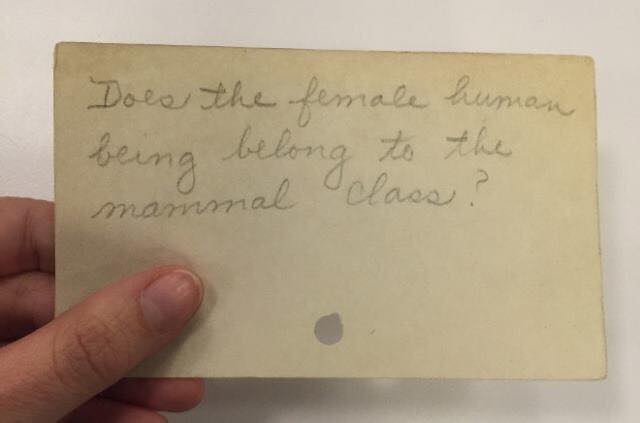
Museum Workers Reveal the Coolest Things That Aren’t on Public Display

Back when I was in college, I spent a few months working at a local museum, and let me tell you: if you think the stuff on display is cool, you’d be absolutely mind-boggled by the stuff that’s in storage/behind-the-scenes.

There are plenty of things that have been rotated out and might be put back out some day, but there’s also tons of stuff like rare artifacts and ancient documents that, sadly, will never see the light of day.

These AskReddit users share the coolest things they’ve seen in museums that guests don’t get to view.

1. Weapons

“I interned at the US navy museum for a few months, primarily in the armoury

There is a long list of awesome stuff, but the best was all the Vietnam era SEAL weapons. China lake grenade launcher (002), prototype .50 rifles, modified shotguns, suppressed m16e1’s…..

And that’s before the really spooky stuff like a g3 lacking all external markings and a soviet SVD donated by the state department in the late 60’s…”

2. Storage

“My mom was a helicopter pilot for a tour company and Jay Leno had a hanger next door to her company’s for storage. The security guard let me walk around and the amount of rad sh*t he has in his back up storage (not even his real shop or main storage) is insane.”

3. Great grandfather

“Obligatory don’t work at a museum but……. My great grandfather built a homemade motorized bicycle that was put in the Billy the Kid Museum in Fort Sumner NM. I went to see it a couple of years ago and when the curator found out I was related, he took me in the back and showed me a homemade sawmill my great grandfather had also built that they had taken off display because they didn’t have room for it.”

4. Cold storage

“Didn’t end up becoming a museum professional, but had a museum studies class in college that took some behind-the-scenes field trips with local curators. The wildest thing I saw as the cold storage room at the Cleveland Museum of Natural History. It’s where they keep all the taxidermy, and there are a TON of animals.

Imagine walking through a giant refrigerator full of animals that don’t go together at all “in real life”, cheetahs next to wolves, moose next to lions, gazelles with raccoons between their legs. Shelves full of squirrels and birds. So many birds–like going down a grocery store aisle, except it’s full of birds. You’re surrounded by animals, but everything is motionless and staring at you with glass eyes. It was completely surreal.”

5. A lot of guns

“One castle type museum I did my work experience in I was taken in a room just full of guns.

I am a lot older and work in a museum again now so I know how things are stored carefully, in controlled conditions, but these guns were just piled about. There were ton of musket looking guns but two that stood out was something that looked like a revolver but with a barrel like a canon, and a musket that was much bigger barrel and eleven of my feet long.

It was in the early nineties so I’m sure they’ve tidied up a bit now, but so so many guns.”

6. “Best job ever”

“Hmmmmm. Where to even start? Fun fact – most museums only have about 0.1-10% of their collections on display at any given time.

My desk used to be right next to an atomic bomb.

A couple of times, I was in Charles Lindbergh’s pants. Also Neil Armstrong’s boots. Also saw Buzz Aldrin’s underpants.

I got to hold a pair of Roald Amundsen’s skis.

SPACE SUIT STORAGE. It’s like a morgue but better. Fun story – one of the best ways to transport space suits is in coffin boxes. Always tripping over coffin boxes everywhere on shipping days.

A drum hand-collected by Margaret Mead that’s one of three like it left in the world (iirc).

Victorian hair art. So disturbing we didn’t have any on display at that museum. As one classmate said, “that’s not art, that’s the shower drain!”.

Airplanes made out of plywood.

An actual military medal that was a hand flipping the bird – Order of the Rigid Digit. Still my favorite use of taxpayer dollars to this day.

Napoleon’s handwritten notes for his autobiography. There was also a collection of prints with his face that made excellent memes among my friends.

James Doolittle’s pilot license signed by Orville Wright.

Lindbergh’s prize check for crossing the Atlantic.

135 laxatives previously belonging to Charles Lindbergh. Fun story – Jane Addams used the same kind of laxatives.

Used tissues. Used bandaids. Random trash. Unidentifiable fragments of wood. A board that was supposed to call cats to it or some weird hocus pocus like that. All things we had to take very seriously and treat with the same care we did everything else because some dumdum decided to accession everything.

A very wide range of baccula, aka penis bones.

Dinosaur storage, need I say more?

The super secret Egyptian temple buried in the bowels of the Field Museum.

Teddy Roosevelt’s samurai outfit, gifted to him at a state dinner by the Japanese ambassador. He then drunkenly put it on and ran around the White House in it, iirc.

A second atomic bomb.

Ugh, best job ever. I make myself jealous sometimes. Even when I had to alphabetize and chronologize 653 barf bags.”

7. Mummies

“My wife is an art curator. In her younger life, she was working at a museum and came across a box that said, “mummy head”.

Guess what was in there? A mummy head, as advertised.

My favorite experience from visiting her at work (besides meeting Cheech Marin… seriously, dude! He borrowed my guitar!) was blowing as much time as I wanted looking at a Warhol print from 1966. It was mind blowing to see all that effort to make something seem shallow and simple.

By the way, prints are awesome. You can buy art for less than the cost of furniture, directly from the artist. You are putting beer in one’s mug, gas in the van, alimony in the envelope.”

8. Super Important

“I went to a Super Important Museum (at least in my city? I don’t think I should name it) with my 11th grade anthropology class, and apparently my teacher had an in with someone there. We were brought to a conference room where there was an Incan mummy just sitting there on the table. This mummy had been specifically freed from the unknown depths of the museum to say hello to us.

It was a teenage girl sort of hunched over, and I remember she had braids. My teacher encouraged us all to touch the mummy. Like, barehanded. I seriously doubt every tour got to touch it. We were totally allowed. “You’re never going to get another chance to do this,” my teacher said.

I touched the mummy’s hand, I think, and the dress over her knee, vaguely horrified at the whole situation. Was trying to eat my fries a couple hours later and thought about the fact that I’d touched a dead body with those same fingers I was using to eat lunch and almost retched. I have not in fact ever gotten another chance to touch a mummy.”

9. Huey

“I volunteer at an air museum. We had just got a Huey helicopter to restore and it was in the maintenance hangar. Some Vietnam vets that flew a Huey found out that we got one in. We let them into the maintenance hangar to check it out and while they were looking at it they discovered it was the Huey that they flew in Vietnam. They had no idea that it had survived.

I was just hanging out and got to witness the whole thing.”

10. Creepy

“I volunteered in collections at a state history museum for a while. Two things especially have stuck with me.

A huge collection of dolls that are stored head down with their tiny little hands (and sometimes eyes) wrapped. It’s just as creepy as it sounds.

Also one time I got to vacuum a buffalo hide. That was fun.”

11. Hidden

“The prison cell door which housed Rudolph Hess when he died in 1987. It is preserved in a back room in a museum in the US. I was told by a staff member that it was not on display, and likely never would be, due to avoiding neo-Nazi attention.”

12. Zoo life

“A few things come to mind:

I spent several years working as a field biologist surveying headwater streams on private timber company land in the backcountry of Oregon. A lot of that land is only accessible through locked forestry gates, but it is many thousands of acres of gorgeous wild land that the public typically doesn’t get to see or access.

I used to work at the Oregon Zoo as well and have been allowed to go behind a lot of the animal exhibits to help clean or feed or whatever. That was tons of fun. The rhinos were my favorite – very friendly, and absolutely immovable objects when you touch them.

Now as a scientist I get to do some unique and fascinating work at times in some high-tech or high-profile labs, and also often work on research vessels at sea. Most of this is not directly open to the public.”

13. Words from a veteran museum worker

“I’ve worked at multiple museums and Archives/Special Collections sections of libraries (in various capacities). Some of the highlights:

The full collection first editions of Mildred Benson’s Nancy Drew hardbacks from the 1930s
the autographed Arthur Rackham-illustrated copy of Grimm’s Fairy Tales that we had sitting on our shelves in the Archives of my university, owned by his aunt-by-marriage and donated to us
The Virginia Museum of Transportation had so many cool railroad bits and bobs floating around in storage, especially while they were working on the restoration of the 611 steam engine.
a Lewis and Clark original map of the Pacific Northwest, kept in the Library of Congress archives because it’s too fragile to display

Another one that I just remembered:

the beautiful illuminated manuscripts and Book of Days from the Middle Ages that my university had sitting around in Special Collections. We occasionally wheeled them out for the Medieval Lit undergrads, but other than that they were generally locked up.”

14. Experiments

“Worked in a science museum. It’s not exactly not public, but when the museum was closed or on slow days we used to test out ideas we found on the internet for science activities. Anything from liquid nitrogen hurricanes to green and purple fireballs – if we had the ingredients, we could try it.”

15. Middle of nowhere

“I used to work in a local historical society, and their exhibit space was very small. Someone donated some land and a large barn to the historical society. My co-worker and I went to go check it out, and there was a huge horse-drawn hearse inside and literally nothing else. It was super creepy. It would be cool to display somewhere in the right exhibit, but we didn’t have space or the audience. As far as I know, it’s still during there in that barn in the middle of nowhere.”

The post Museum Workers Reveal the Coolest Things That Aren’t on Public Display appeared first on UberFacts.

10 Facts That Debunk Some VERY Commonly-Held Misconceptions

There are plenty of things we grew up learning as being the gospel truth turning out to be wrong. For instance, I thought Milli Vanilli were the greatest thing ever as a kid, but as new facts came to light, I had to reconsider my stance.

Learning something brand new that dispels your common knowledge is always a weird experience. These facts might just fall into that category for you.

1. You won’t die

Photo Credit: did you know?

2. Only two

Photo Credit: did you know?

3. Interesting…

Photo Credit: did you know?

4. Ancient mistake

Photo Credit: did you know?

5. No negative impact

Photo Credit: did you know?

6. Sex change

Photo Credit: did you know?

7. All a lie

Photo Credit: did you know?

8. Wow

Photo Credit: did you know?

9. Only use one

Photo Credit: did you know?

10. Rewriting history?

Photo Credit: did you know?

Debunked!

The post 10 Facts That Debunk Some VERY Commonly-Held Misconceptions appeared first on UberFacts.

7 Great Facts to Improve Your Small Talk

Small talk is one of life’s necessary evils. Sure, it can be a little awkward fumbling around for something to say to fill the silence, but if you work through it, you may be rewarded with some truly great conversation.

I’m here to give you these conversation starters so that you’re not fumbling around as long next time.

Consider it a gift.

1. Lock ’em up

Photo Credit: did you know?

2. Never ignore the Waffle House

Photo Credit: did you know?

3. Good engineering

Photo Credit: did you know?

4. I like the sound of this

Photo Credit: did you know?

5. Might want to do that…

Photo Credit: did you know?

6. Calm down

Photo Credit: did you know?

7. No time for that

Photo Credit: did you know?

Now you have no excuses for not bothering random strangers.

The post 7 Great Facts to Improve Your Small Talk appeared first on UberFacts.

8 Awesome Facts About All Sorts of Stuff

These facts are about a wide variety of topics, but they’ve got one very important feature in common: they’re memorable, interesting facts that’ll impress anyone you drop them on.

Heck, you might even share them with your pals.

You may proceed.

1. American Badass

Photo Credit: did you know?

2. Enjoy yourself

Photo Credit: did you know?

3. Did you know that?

Photo Credit: did you know?

4. A full investigation

Photo Credit: did you know?

5. Face to face

6. Keep that cat quiet

Photo Credit: did you know?

7. It’s that simple

Photo Credit: did you know?

8 Genius

Photo Credit: did you know?

Charles Darwin needs to be honored for this achievement.

The post 8 Awesome Facts About All Sorts of Stuff appeared first on UberFacts.
10 Fast Facts to Take a Look at Right NOW!

We get it, we’re all in a rush to get things done these days. So here are some fast facts that you can squeeze into your day at any time, then get back to it!

1. The law of urination

Photo Credit: did you know?

2. Nothing to prove

Photo Credit: did you know?

3. Get moving!

Photo Credit: did you know?

4. Glad they changed that

Photo Credit: did you know?

5. That is terrifying

Photo Credit: did you know?

6. The scent of snow

Photo Credit: did you know?

7. It’s okay to look away

Photo Credit: did you know?

8. Whoa!

Photo Credit: did you know?

9. What a story

Photo Credit: did you know?

10. Not a good look

Photo Credit: did you know?

FAST! And informative…

The post 10 Fast Facts to Take a Look at Right NOW! appeared first on UberFacts.
New Research Reveals Ancient Persians Recognized More Than Just Two Genders

These days, the issues of gender identity is quite a hot-button topic. The idea that gender can go beyond just male and female seems like it’s relatively new, but a study of 3,000-year-old Persian graves has revealed that the idea of more than two genders goes at least as far back as the ancient Persians.

Though some modern people insist that specific sexual characteristics are attached to strict binary genders, Professor Megan Cifarelli argues that’s just not the case.

“The gender binary is culturally specific, in conflict with many, perhaps most, past civilizations.”

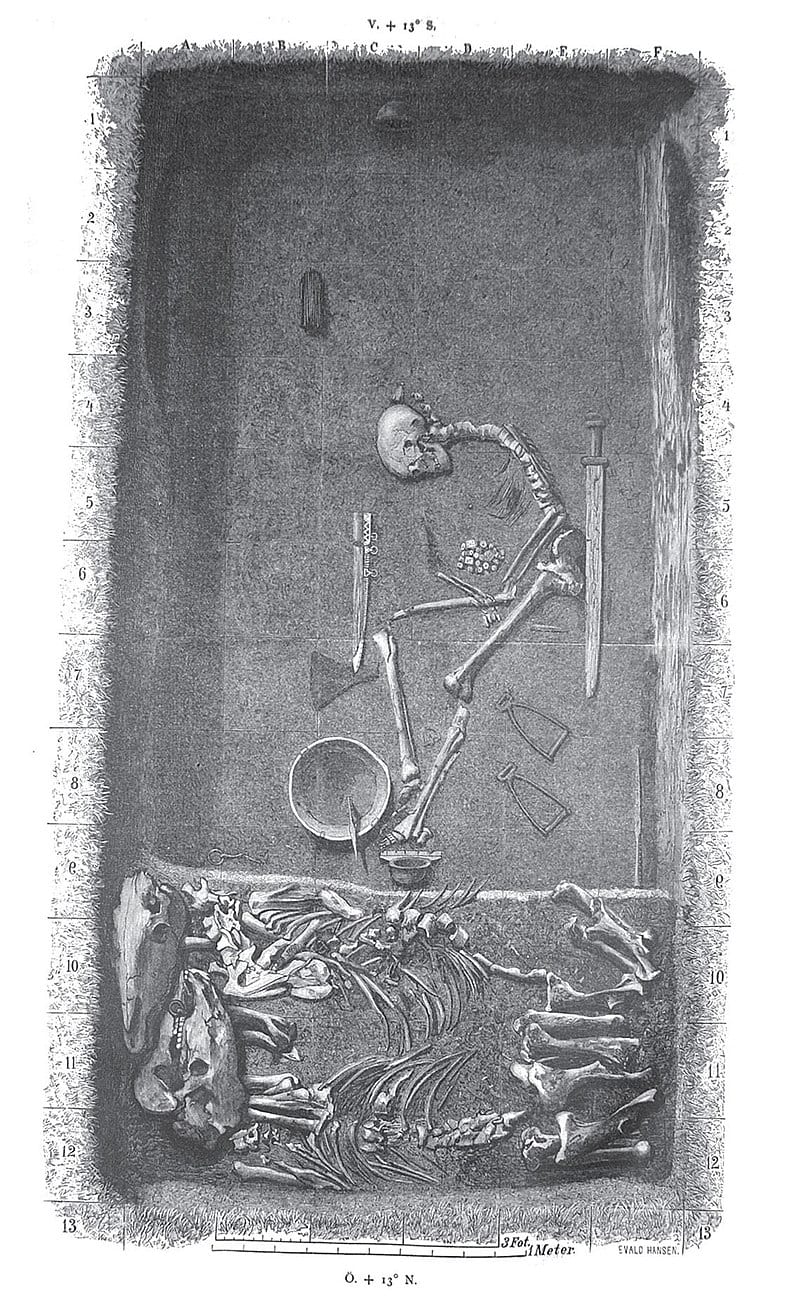
She’s conducted a special study of grave-sites from Hasanlu, a treasure trove of 2800-year-old, mostly undisturbed graves in northwestern Iran. The graves contained items that were likely gendered – some considered male and others female – and buried accordingly. But Cifarelli reports that a good 20% of the graves contained a mix of items associated with both genders.

Image Credit: The Penn Museum

She believes that could mean the people who created those graves believed in a third gender, or saw gender as a spectrum as opposed to a binary.

Her theory rests on a golden bowl that depicts a man with a beard performing typically female roles, though she has yet to publish her findings. She’s presented them at academic conferences, though, and Cifarelli says responses have been positive.

It makes sense, since it’s widely accepted that many Native American cultures recognized more than two genders, exemplified by the “two-spirit people.”

If the idea of gender is malleable, it could change more than the way we understand sexual culture and gender roles in ancient societies, but also change the way archeologists categorize the sex of bodies they uncover. Right now, graves are categorized, on occasion, based solely on what sort of items are found with the deceased.

Image Credit: The Penn Museum

“This has been replaced with a medical model, looking at bodies as being sexable via scientific methods,” Cifarelli told IFLScience. “However, for a large percentage of the population we can’t tell.”

She believes some of these people would be classified, in modern terminology, as intersex, and knows that not everyone will agree with – or even understand – her findings.

“People think I must be a crusading radical, pushing contemporary identity politics into the past, but I’m actually trying to lift the weight of the 19th-century identity politics.”

Given the current political climate, the amount of willful ignorance, and a lack of education surrounding the subject, it’s not surprising that presenting her work in public could be fraught with issues. Thankfully there are people like Cifarelli willing to speak for those who can’t – whether they lived 3000 years ago, or are living their best life today.

The post New Research Reveals Ancient Persians Recognized More Than Just Two Genders appeared first on UberFacts.
7 Little-Known Facts About The Beatles’ Famous Debut on “The Ed Sullivan Show”

Whether or not you’re a fan, there’s simply no denying that The Beatles are right up there amongst the most iconic bands of all time. Their debut on “The Ed Sullivan Show” in 1964 was a total game-changer that sparked a musical revolution.

Here are 7 things you might not know about The Beatles’ first trip to America.

#1. Seeing it live was like winning the lottery.

Image Credit: Wikipedia

Only 728 lucky people were chosen to attend, out of 50,000 fans who requested tickets.

#2. One of The Monkees was there that night, too.

Image Credit: Wikipedia

Davy Jones was on the show to promote Oliver! on Broadway, in which he played the Artful Dodger (and was nominated for a Tony).

#3. They got paid for their appearance.

Image Credit: Pixabay

While most acts appeared on the show in exchange for mere exposure, The Beatles would only agree to hop the pond if The Ed Sullivan Show agreed to not only cover their travel expenses, but to pay an additional $10k fee (around $80k in today’s dollars).

After getting an agreement for 3 appearances and not just one, a deal was struck and history was set in motion.

#4. That said, it was a bargain.

Image Credit: Wikipedia

Close to 74 million people – an astonishing 40% of the country’s population – tuned in for the band’s first U.S. performance.

#5. The “very nice” telegram from Elvis Presley wasn’t actually from Elvis Presley.

Image Credit: Pixabay

The telegram reportedly wished the Fab Four “tremendous success,” but it was actually sent by Elvis’ manager, Colonel Tom Parker, because he thought it would make The King look good. Elvis was notoriously jealous of The Beatles, and the feeling was likely mutual – Harrison responded to the telegram backstage with a mocking “Elvis who?”

#6. They weren’t the only act that night.

Image Credit: Wikipedia

Don’t feel badly if you don’t remember Brill & McCall – few do. They followed The Beatles performance and recall that they couldn’t hear each other during their sketch because of the screaming still going on.

Still, McCall doesn’t regret it, saying “we were there when the world changed.”

#7. The show’s musical director didn’t think much of the band.

Image Credit: Pixabay

His comment to The New York Times? “The only thing that’s different is the hair, as far as I can see. I give them a year.”

Keep on rockin’!

The post 7 Little-Known Facts About The Beatles’ Famous Debut on “The Ed Sullivan Show” appeared first on UberFacts.

8 Brilliant African American Inventors You Need to Know About

February is Black History Month, a time for us all to reflect on and highlight the incredible, but often overlooked, contributions that brilliant African American scientists, activists, freedom fighters, teachers, doctors, etc. have made towards the success of this great nation and their own communities.

Today, we’re remembering these 8 African American inventors who shaped the world we live in today.

#1. Jan Ernst Matzeliger

Photo Credit: Public Domain

The common person struggled to afford shoes in the 19th century, but that fact changed when Dutch Guiana immigrant Jan Ernst Matzeliger invented an automated machine that attached a shoe’s upper part to its sole. The device could make 700 pairs of shoes a day, while a worker was only able to sew about 50.

The lowered production costs led to lower shoe prices, and the average American foot thanked him.

#2. Mark E. Dean

Photo Credit: University of Tennessee

Dean was a computer scientists and engineer who worked for IBM leading the team that designed the ISA bus – a hardware interface that allowed multiple devices like printers, modems, and keyboards to all be plugged into a computer.

He also helped develop the first color computer monitor, and in 1999 helped create the world’s first gigahertz chip. He holds 3 of IBM’s original 9 patents and 20 overall.

He was inducted into the National Inventors Hall of Fame in 1997 and is currently a professor at the University of Tennessee.

#3. George Carruthers

Photo Credit: Public Domain

An astrophysicist who spent his career working with the Space Science Division of the Naval Research Laboratory in Washington, D.C., George Carruthers is most famous for creating the ultraviolet camera/spectograph. NASA used the technology to launch Apollo 16 in 1972, and it helped prove that molecular hydrogen existed in space. It was used again in 1974 to help scientists observe Halley’s Comet on the U.S.’s first space station.

He was inducted into the National Inventors Hall of Fame in 2003.

#4. Dr. Patricia Bath

Photo Credit: Public Domain

Dr. Bath revolutionized the field of ophthalmology by inventing a device that refined laser cataract surgery. She patented the Laserphaco Probe in 1988 and is the first female African American doctor to receive a medical patent.

Her research on health disparities between African American patients and other patients created a new discipline called community ophthalmology. She and other volunteers continue to offer primary care and treatment to under-served populations.

#5. Marie Van Brittan Brown

Photo Credit: Pixabay

A nurse and inventor, Marie Van Brittan Brown invented a precursor to the modern home TV security system. Her invention was born of a desire to feel safe in her NYC neighborhood, where she and her husband developed a way for a motorized camera to project images onto a TV monitor.

They filed for their patent in 1966 and it was approved in 1969.

#6. Thomas L. Jennings

Photo Credit: Pixabay

Jennings was the first African American person to receive a U.S. patent – he invented an early method of dry cleaning in 1821. He fought for his right as a free man to apply for and receive the patent despite his skin color and paved the way for future inventors of color to gain rights for their own inventions.

He used the money he earned to free the rest of his family and to donate to abolitionist causes.

#7. Alexander Miles

Photo Credit: Pixabay

We don’t know much about the life of Alexander Miles, who lived from 1830-1918, other than the fact that he was living in Duluth, MN, when he designed the first automatic doors for elevators. The safety feature saved travelers from accidentally falling into the shaft as they manually opened and closed the doors, and today’s elevators use similar technology.

#8. Charles Richard Drew

Dr. Drew with his wife and children
Photo Credit: NIH

Charles Richard Drew was a surgeon who created America’s first major blood banks. He studied transfusion medicine and refined key methods of collecting, processing, and storing plasma.

He’s also responsible for introducing “bloodmobiles,” and was the first African American doctor chosen as an examiner for the American Board of Surgery.

The post 8 Brilliant African American Inventors You Need to Know About appeared first on UberFacts.
Undiscovered King Arthur and Merlin Stories Found Hidden in Medieval Texts

The tales of King Arthur, his Knights of the Round Table, and his wizard Merlin have regaled children around the world for hundreds of years. If you happen to be a Camelot-ophile yourself, you may be thrilled to hear that we may be getting more stories soon, thanks to academic Michael Richardson.

Richardson was scouring the University of Bristol’s Special Collections Library for new reading materials for the university’s master’s program in Medieval Studies, when he found something totally unexpected.

Photo Credit: Wikipedia

Inside some of the 16th century books he was thumbing through were seven  hand-written parchment fragments that contained, upon closer examination, new renderings of the King Arthur, Merlin, and the Holy Grail legends.

Richardson contacted Leah Tether, the President of the International Arthurian Society, and together they found the fragments told familiar – though at times significantly different – stories. Tether expounded on their findings in a statement.

Photo Credit: Wikipedia

“These fragments of the Story of Merlin are a wonderfully exciting find, which may have implications for the study not just of this text but also of other related and later texts that have shaped our modern understanding of the Arthurian legend.”

The new fragments depict longer, more detailed accounts of the stories of Arthur, Merlin, and Gawain preparing for battle against Lancelot’s father, King Claudas, and include many unique details.

The fragments were found in books that are believed to have been printed in Strasbourg between 1494 and 1502, and then sent to England unbound. Researchers believe the Arthurian parchments were probably used as extra material during the binding process in order to save money.

Photo Credit: Wikipedia

Based on the content of the parchments, Tether and others theorize they come from an old French text called the Vulgate Cycle (aka the Lacelot-Grail Cycle), which were used as the primary source for the work of Sir Thomas Mallory. He penned the most famous account of King Arthur – the one that inspired most modern retellings of the tales – Le Morte D’Arthur.

“Time and research will reveal what further secrets about the legends of Arthur, Merlin and the Holy Grail these fragments might hold,” says Tether.

King Arthur fans around the world, rejoice!

The post Undiscovered King Arthur and Merlin Stories Found Hidden in Medieval Texts appeared first on UberFacts.
Pineapples Were Once So Expensive, People Rented Them by the Hour

Pineapples are available almost year-round in most grocery stores across the United States these days, but it wasn’t always this way. Pineapples actually have quite a long and storied history. They weren’t always as readily available as they are today, and much like anything that’s simultaneously desirable and scarce, they quickly became a symbol of wealth and status.

Between the 16th and 18th century in Europe, pineapples were actually so rare that they were put on display like fine works of art. It’s hard to estimate how much a single, whole pineapple would have cost in today’s money, guesses range between $5k-$10k – definitely not chump change for something that would eventually rot. So, why was it that valuable?

Photo Credit: Wikipedia

The pineapple is indigenous to South America, which is where Europeans first encountered it. The European royals loved the fruit for its natural sweetness, but having them imported was hit-or-miss. Only the fastest ships (and ideal weather conditions) would deliver the fruit while still edible, while finding a way to grow it back home turned out to be an expensive – and not at all simple – endeavor.

We don’t know who, exactly, was responsible for first growing a pineapple in a non-tropical climate, but the consensus is that it happened in Holland in the late 1600s. The Dutch West India Company had a stranglehold on Caribbean trade that allowed them to import pineapple plants to experiment on, which almost certainly led to them being the first ones to crack the growing-tropical-fruit-in-the-cold problem.

Photo Credit: Pixabay

In fact, Dutch cloth merchant Pieter de la Court invented the hotroom – spaces kept warm and humid – to try and accomplish the task. His design worked, though issues with ventilation, the release of hot fumes, and the stability of soil and air temperatures all presented constant and evolving challenges.

England wanted pineapples, too, and so sent men to Holland in search of the secret to putting the tropical fruit on royal tables on a much more regular basis. It would be many years, however, before a pineapple was grown on English soil – and when it was (around 1715), it was a Dutchman named Henry Telende who accomplished the feat.

His method, which involved a hothouse, special soil, pits lined with pebbles, manure, and tanners bark, was a delicate balance even in the best of times, but once he got it down to a science, more English were able to afford the fruits. But even though pineapples became more available, many nobles still declined to eat something they were spending so much cash on. Instead of serving the fruit to guests, they would display the pineapples around their homes.

For lesser nobles and regular rich people (as opposed to filthy rich people), it became fashionable to rent a pineapple just for a party, then pass it around to others having parties before returning the fruit to the person who could actually afford to eat it (if they so chose).

Photo Credit: Wikipedia

The fact that refined sugar was also a rare and expensive commodity only added to the allure of actually eating the fruit. Charles II was said to love pineapple – both because of its sweetness and partly because he thought the fruit looked to be wearing a tiny crown (he referred to it as “King-pine”).

People remained obsessed with the pineapple well into the colonial period, and you’ll see it carved into any number of wooden and stone pieces in both the old and new world. The fruit remained a symbol of wealth, and eventually morphed into a symbol of hospitality as well.

Fun fact: this is why you’ll still find pineapple designs on bedposts, gateposts, bath towels, and other items often left out for guests.

Fun fact #2: in colonial times, serving a pineapple upside-down cake would be a subtle way of suggesting your guests were overstaying their welcome and should make plans to depart.

The post Pineapples Were Once So Expensive, People Rented Them by the Hour appeared first on UberFacts.