10 Celebs Who Revealed the Hard Truths About Postpartum Depression

If you’ve ever suffered from Postpartum Depression, you know the effects can be absolutely crushing. Celebrities are no different from me or you, and these 10 shared their stories dealing with the devastating condition.

1. Sharon Osbourne

“I did suffer from it with one of my pregnancies, but I was suffering from depression anyways.
“The depression is so dark, you feel like you’re in a black fog the whole time and you just cannot cope. And you get to a point where you don’t realise what you’ve got with the baby and you’re just so dark and distraught and alone and it’s the loneliest feeling in the world.”

2. Celine Dion

“Some of the first days after I came home, I was a little outside myself. One moment, tremendous happiness; the next, fatigue sets in, and I cried for no reason.” She added: “Some of the first days after I came home, I was a little outside myself. I had no appetite and that bothered me. My mother remarked that she noticed I had moments of lifelessness but reassured me that this was entirely normal. It’s for things like that after having a baby that mothers really need emotional support.”

3. Drew Barrymore

“I didn’t have postpartum the first time so I didn’t understand it because I was like, ‘I feel great.’
The second time, I was like, ‘Oh, whoa, I see what people talk about now. I understand’. It’s a different type of overwhelming with the second. I really got under the cloud. I just got right on the idea of, ‘Where do I need to be the most?’ Fifty-fifty would be ideal but life doesn’t work like that. Life is messy. It was just really challenging and I felt overwhelmed. I made a lot of decisions and I definitely changed my work life to suit my parenthood.”

4. Chrissy Teigen

“…I was different than before. Getting out of bed to get to set on time was painful. My lower back throbbed; my ­shoulders—even my wrists—hurt. I didn’t have an appetite. I would go two days without a bite of food, and you know how big of a deal food is for me. One thing that really got me was just how short I was with people.

I would be in my dressing room, sitting in a robe, getting hair and makeup done, and a crew member would knock on the door and ask: “Chrissy, do you know the lyrics to this song?” And I would lose it. Or “Chrissy, do you like these cat ears, or these panda hands?” And I’d be like: “Whatever you want. I don’t care.” They would leave. My eyes would well up and I would burst into tears. My makeup artist would pat them dry and give me a few minutes.

I couldn’t figure out why I was so unhappy. I blamed it on being tired and possibly growing out of the role: “Maybe I’m just not a goofy person anymore. Maybe I’m just supposed to be a mom.”

5. Brooke Shields

6. Cardi B

“I thought I was going to avoid it. When I gave birth, the doctor told me about postpartum, and I was like, ‘Well, I’m doing good right now, I don’t think that’s going to happen.’ But out of nowhere, the world was heavy on my shoulders.

For some reason, I still don’t feel like my body’s the same. I feel like I don’t have my balance right yet. When it comes to heels, I’m not as good at walking anymore. I feel like I’m holding a weight on me … But there’s an energy I haven’t gotten back yet that I had before I was pregnant.”

It’s just the weirdest thing.”

7. Adele

“My knowledge of postpartum — or post-natal, as we call it in England — is that you don’t want to be with your child; you’re worried you might hurt your child; you’re worried you weren’t doing a good job. But I was obsessed with my child. I felt very inadequate; I felt like I’d made the worst decision of my life. … It can come in many different forms.
“Eventually I just said, I’m going to give myself an afternoon a week, just to do whatever the f**k I want without my baby. A friend of mine said, ‘Really? Don’t you feel bad?’ I said, I do, but not as bad as I’d feel if I didn’t do it. Four of my friends felt the same way I did, and everyone was too embarrassed to talk about it; they thought everyone would think they were a bad mom, and it’s not the case. It makes you a better mom if you give yourself a better time.”

8. Hayden Panettiere

“If you think for one second that a mother wants to feel that way toward her child, you’re outta your mind. It is one of the most debilitating, scary, guilty feelings that you can ever feel. That a mother would not be able to connect with their child, would not be able to get a grip, or would not know what’s going on, for anybody to say that it’s false or created by us, you must have your head examined.”

9. Serena Williams

“Honestly, sometimes I still think I have to deal with it. I think people need to talk about it more because it’s almost like the fourth trimester, it’s part of the pregnancy.”

10. Gwyneth Paltrow

“About four months into it, Chris came to me and said, ‘Something’s wrong. Something’s wrong.’ I kept saying, ‘No, no, I’m fine.’ But Chris identified it, and that sort of burst the bubble.
I thought postpartum depression meant you were sobbing every single day and incapable of looking after a child. But there are different shades of it and depths of it, which is why I think it’s so important for women to talk about it. It was a trying time. I felt like a failure.”

If you think you have postpartum depression, find out more info at Postpartum Support International.

As always, thanks for reading Did You Know. We really appreciate you spending time with us, and we hope you share articles like this with your friends so we can all be part of the conversation.

You rock!

The post 10 Celebs Who Revealed the Hard Truths About Postpartum Depression appeared first on UberFacts.
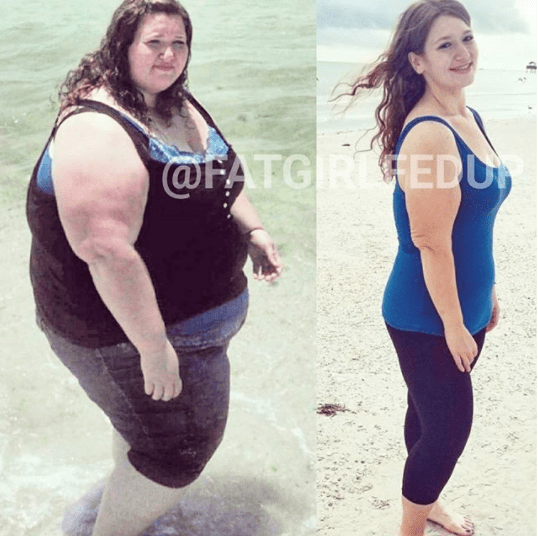
After Losing 400 lbs Together, This Couple Recreated Their Old Photos to Celebrate

One of life’s great tragedies is losing weight SO much harder than gaining it. Even if you only need to lose a couple of pounds, it can be a pretty long process, so imagine what it’s like to have to lose a few hundred.

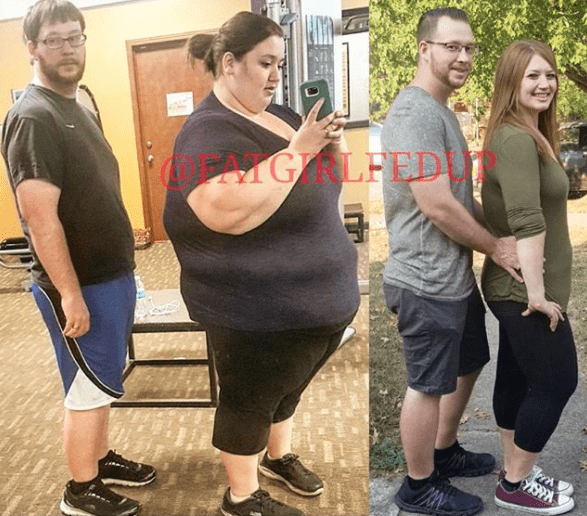
Indiana residents Lexi Reed and her husband Danny knew they both needed to commit to a healthier lifestyle, and the duo lost an incredible 400 pounds (combined) in only 18 months. It’s easy to see the transformation in these ‘before and after’ photos.

Photo Credit: Instagram,fatgirlfedup

Lexi said, “We didn’t have a meal plan, surgery, personal trainer, but what we did have was each other and the motivation within to work hard every single day. We wanted to be parents in the future and live a longer life together.” Lexi and Danny recreated some of their old photos to show just how dramatic both of their transformations have been.

Photo Credit: Instagram,fatgirlfedup

Photo Credit: Instagram,fatgirlfedup

Photo Credit: Instagram,fatgirlfedup

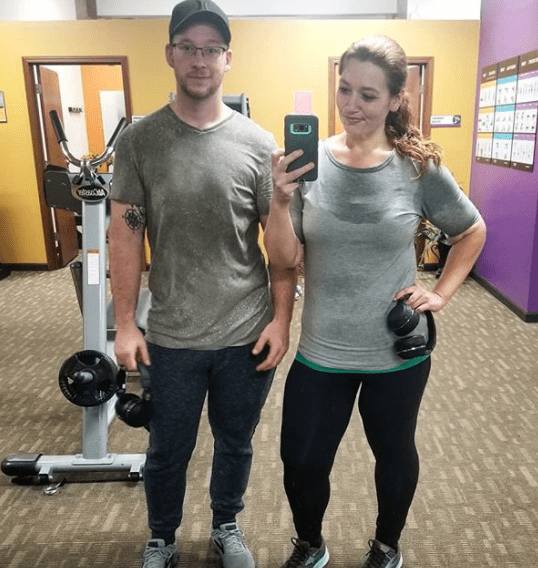
Lexi said, “Together we started meal prepping, drinking water instead of soda, quit watching television and started moving more, going to the gym just 30 minutes five times a week, focusing on our future every day, setting goals – and day by day the weight took care of its self.” Lexi used to weigh nearly 500 pounds, and now she weighs just 182.

Photo Credit: Instagram,fatgirlfedup

Photo Credit: Instagram,fatgirlfedup

Photo Credit: Instagram,fatgirlfedup

Photo Credit: Instagram,fatgirlfedup

Great work, Lexi and Danny! This is an inspiring story about how we can all reach our goals, if we stick with them and work hard.

The post After Losing 400 lbs Together, This Couple Recreated Their Old Photos to Celebrate appeared first on UberFacts.
Surgeons removed 27 contact…

Surgeons removed 27 contact lenses from a 67-year-old woman’s eye. She’s quoted to have thought that the discomfort was just a part of aging. After an initial “lump” of 17 lenses was removed during prep for cataract surgery, 10 more were discovered.

People who refer to themselves…

People who refer to themselves by name during inner monologues are calmer, less stressed and more confident than those who use “I” or “me” according to a research done by Michigan State University.

Male Athlete Gets Roasted to a Crisp for Comparing Skinned Knees to Period Pain

It’s unbelievable to me that we still need to say this in 2019: Guys, DON’T ever try to tell a woman that her period pains aren’t that serious. Honestly, it takes a real idiot to belittle someone’s pain. I’ve known dudes who could get stabbed in the chest without blinking an eye and yet quivered at the sight of a flu shot. You never know how something affects someone, and their pain is not made any less real just because it doesn’t hurt you the same way.

And yet, there’s always some self-appointed jackass willing to offer his hot take anyway, like this guy.

This man not only claimed that women tend to overreact to their menstrual pain, but he also compared that discomfort to skinned knees, which all of us have experienced at one time or another in our lives. Take a look at his post.

Dude…you’re an idiot. And you know you just opened the floodgates to get your ass handed to you.

Ladies, you may proceed.

What was this guy thinking? Here’s some more feedback for him.

Do you think this guy will ever open his mouth like this again? My money is on “NO.”

The post Male Athlete Gets Roasted to a Crisp for Comparing Skinned Knees to Period Pain appeared first on UberFacts.

12 Uniquely German Illnesses That We Have No Word For

I’ve always had a secret desire to learn German, because it seems like an extremely descriptive language.

Sure, even a simple recipe for cake can sound like you’re summoning the devil because of how harsh German sounds to the ear, but you’ve got to hand it to them for coming up with words to describe things most of us would never think of.

#1. Zivilisationskrankheit

Image Credit: Pixabay

This “civilization sickness” is a blanket term that can encompass any illness brought on by living in the modern world (anxiety, carpal tunnel, type 2 diabetes, etc).

#2. Kreislaufzusammenbruch

Image Credit: Pixabay

This is a super long word that technically means “circulatory collapse” but actually means “feeling woozy.” That’s it.

#3. Ichschmerz

Image Credit: Pixabay

Like the term above, but to describe dissatisfaction with yourself rather than the world.

#4. Fernweh

Image Credit: Pixabay

If you’ve got the opposite of homesickness – a longing for travel or wanderlust – this is the word for you.

#5. Föhnkrankheit

Image Credit: Pixabay

A föhn is a wind that cools air as it draws up one side of a mountain, then warms as it compresses coming down the other side. The winds are believed to cause headaches and other feelings of illness.

#6. Putzfimmel

Image Credit: Pixabay

Putzen means “to clean” and fimmel is a mania or obsession. You can put them together, and even though people go through it elsewhere, in Germany it’s a common occurrence (possibly because it’s fun to say).

#7. Lebensmüdigkeit

Image Credit: Pixabay

Despair or world-weariness, but literally “life tiredness,” Germans use it to describe people taking stupid chances with their own life.

#8. Werthersfieber

Image Credit: Pixabay

Werther, the main character in Goethe’s The Sorrows of Young Werther, is a lovesick lad whose affections ultimately go unrequited (after which he decides to commit suicide). Now, the term translates to “Werther’s fever” and is used to describe a miserable crush.

#9. Zeitkrankheit

Image Credit: Pixabay

It means “time sickness” or “illness of the times” and is used to describe whatever backward mindset and/or practices are attached to a particular era.

#10. Torschlusspanik

Image Credit: Pixabay

This “gate closing panic” describes the anxiety that comes with the awareness that your opportunities wane as the years of your life slip by and the “gates close” forever. Uplifting, right?

#11. Hörsturz

Image Credit: Pixabay

You can actually only contact hörsturz in Germany, because the sudden, stress-related hearing loss pretty much only happens there. Or so they say.

#12. Weltschmerz

Image Credit: Pixabay

It means “world pain” and is a sadness brought on by the reality that the world will never be as you wish it.

Isn’t language fun?

The post 12 Uniquely German Illnesses That We Have No Word For appeared first on UberFacts.
Vitamin D deficiency is linked…

Vitamin D deficiency is linked with many health disorders, including depression. In a survey of almost 8,000 US residents, it was found that those with lower vitamin D levels “are at a significantly higher risk of showing depression”.

According to Science, Sleeping in a Cold Room Leads to Better, Healthier Sleep

Do you or someone you know (such as your partner) have trouble getting sleep at night? Do you toss and turn all night? Lack of restful sleep can be seriously bad for your health. It turns out there’s a simple, science-backed tip to get better sleep right away.

According to an article written by Dr. Christopher Winter, medical director at Charlottesville Neurology & Sleep Medicine, there are several reasons to keep your thermostat between 60-67 degrees F while you snooze. According to his research, if the temperature falls below or climbs above that range you’re more likely to toss, turn, and generally get worse sleep.

Image by Michal Jarmoluk from Pixabay

Why? It’s important to note that our bodies have a natural, 24-hour cycle in which our temperatures peak in the late afternoon and fall to their lowest point around 5 am. We’re typically able to fall asleep when our body temperature begins to drop, so keeping your room cold could encourage you to fall asleep faster.

A cold room encourages a more restful sleep, says research out of University of South Australia that connected poor body temperature regulation with certain forms of insomnia.

It could keep you looking younger, since sleeping in a room warmer than 70 degrees stops your body from releasing melatonin.

Image by Jess Foami from Pixabay

Naturopathic doctor Natasha Turner says that healthy sleep patterns and a predictable temperature drop release a growth hormone and decrease your stress hormone, the combination of which could actually help you lose weight.

One study even found that it could lower your risk for metabolic disease like diabetes. Participants burned more calories while they were awake and also doubled their amount of brown fat, or good fat, while allows the body to store fewer calories. Over time, that combination can lower your risk for metabolic disease.

Image Credit: Pixabay

So, there you go – make sure to turn down your thermostat and get ready to catch some totally restful, totally healthy zzz’s tonight!

The post According to Science, Sleeping in a Cold Room Leads to Better, Healthier Sleep appeared first on UberFacts.

English Man Becomes the Second Person Ever to Be Cured of HIV

Nearly 10 years ago, scientists used a stem cell transfusion to functionally cure someone of HIV. Unfortunately, it’s been difficult to replicate that success… until now. A second individual has been found to show no signs of the virus after 18 months, and the results could bring hope to people affected by HIV around the world.

The idea for curing these people via blood transfusion is born from the fact that people who receive a Δ32 mutation of the CCR5 gene from both parents are naturally resistant to HIV-1. The mutation is rare, however, so the chance that both of your parents are carriers is something like winning the genetic lottery – but what if we could inject stem cells from those lucky people into those already infected?

Image Credit: Pixabay

The approach is what led to Timothy Ray Brown, the “Berlin Patient” being functionally cured in 2007 – he has stayed that way since – after effectively having his immune system transplanted.

The treatments are expensive and dangerous, however, and the fact that Brown already had one Δ32 mutation played in his favor. This time around, with the “London patient,” a double Δ32 stem cell transfusion was needed.

Both patients also had cancer diagnoses, which led to the out-of-the-box treatment idea and is why it hadn’t been conceived of or tried before 10 years ago.

Image Credit: Pixabay

A functional cure is different from what’s known as an eradicated cure in that the former means copies of the virus could still be in the body unactivated and undetectable at current levels.

That said, there is reason for hope, according to Professor Ravindra Guptra, one of the study’s authors.

“By achieving remission in a second patient using a similar approach, we have shown that the Berlin Patient was not an anomaly, and that it really was the treatment approaches that eliminated HIV in these two people.”

Image Credit: Pixabay

The problem with celebrating is that currently, this treatment approach will be difficult to repeat on a wide scale. Doctors believe that the chemotherapy played a role in the gene therapy success because the process temporarily destroys fast-dividing cells, leaving space for replacement. People who do not have cancer are typically treated with antiretrovirals, and for now, that’s more effective than short-term chemotherapy and a stem cell transfer.

Also, there aren’t enough stem cell donors that have the Δ32 mutation to make it a viable option on a wider scale – there are currently 37 million people infected with HIV.

That said, drug-resistant strains of HIV are becoming more widespread, so having alternative options may be live-saving news in the near future.

The post English Man Becomes the Second Person Ever to Be Cured of HIV appeared first on UberFacts.
In 2010, a Polish man living in Germany…

In 2010, a Polish man living in Germany asked doctors to remove what he thought was a several-year old cyst at the back of his head. However, doctors found that the ‘cyst’ was actually a .22-caliber round lodged in his scalp. He didn’t noticed it because he was drunk when it happened 5 years ago.