Florida Brewery Creates Edible Six-Pack Rings, Ensuring No Turtles Will Ever Die Eating Them Again

Human activity has put the oceans in extreme peril. There is enough plastic in the oceans to form a minor continent and to say that it’s killing marine wildlife would be putting it too kindly.

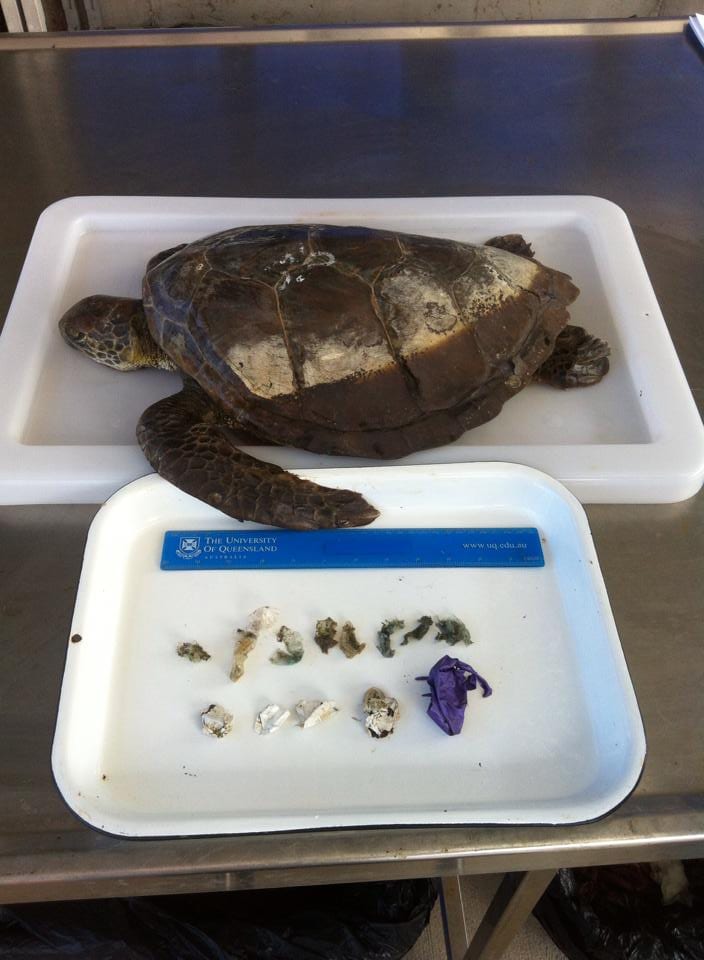
Turtles, in particular, can get seriously injured or killed when they get tangled in the plastic rings used to connect six-packs of beer or soft drinks, or when they eat floating plastic bags thinking they’re tasty jellyfish.
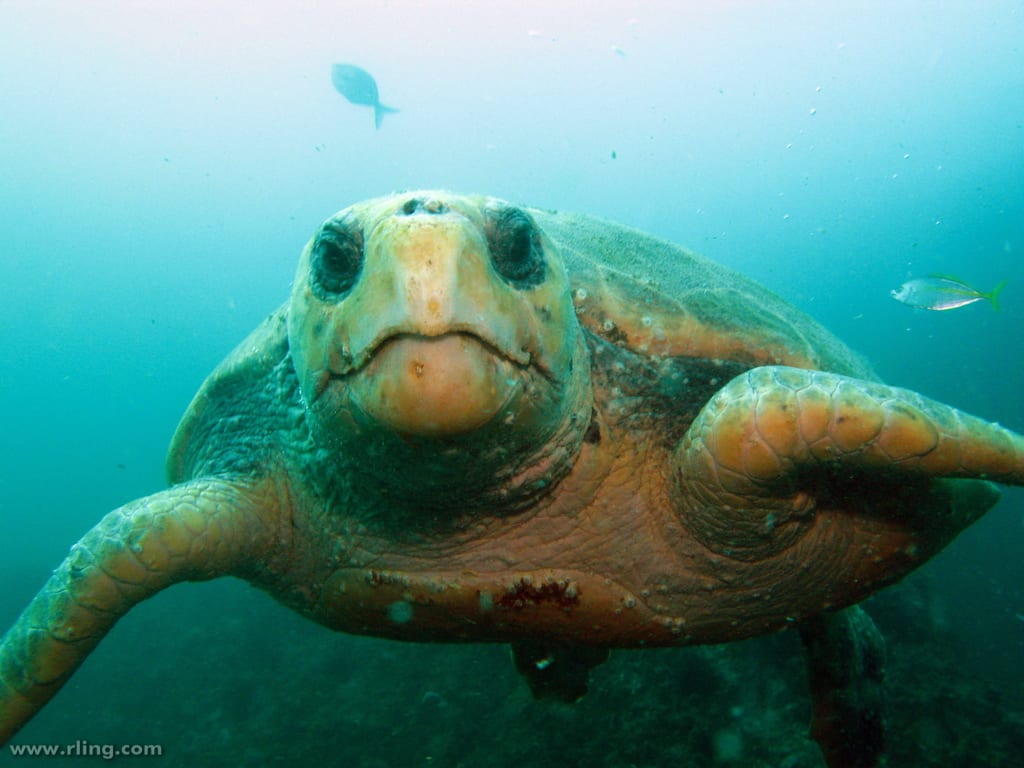
Photo Credit: Flickr

Fortunately, one of those problems might have a solution!

A Florida brewery believes they can help end the scourge of six-pack rings ending up in the water. Their goal is to keep turtles and their marine friends healthy and happy, while maintaining the convenience of grabbing a six-pack from the grocery store. To that end, SaltWater Brewery, working in conjunction with startup E6PR, has launched the biodegradable/compostable/edible six-pack ring.

View this post on Instagram

P A S S I O N F R U I T ?

A post shared by SaltWater Brewery (@saltwaterbrewery) on

The craft beer microbrewery, based in Delray Beach, Florida, now uses rings made out of barley and wheat instead of plastic. If the environmentally friendly packaging ends up in the ocean, it begins to break down within 2 hours – plus, it can be safely consumed by turtles and other animals. It should totally biodegrade within 2-3 months, on land  or in the water.

South Florida stores already have the rings on their shelves.

The rings are the first of their kind, and the idea is an excellent one. But the innovation doesn’t come cheap. The Mexican company behind the development, E6PR, is marketing the packaging to other beverage companies in the hopes of both bringing costs down and encouraging the use of plastic alternatives in creative ways.

So, expect to see these on your favorite beverages in the near future (hopefully!).

Just an FYI, the manufacturer does not suggest that anyone actually eat the rings or feed them to wildlife. The best way to dispose of the eco-rings is to put them in a compost pile.

The use of biodegradable packaging is a great development for the Gulf region, which has one of the world’s highest concentrations of plastic trash.

Over 50 other beverage companies have expressed interest in jumping on the edible ring bandwagon, which is a great start to reducing their contribution to our current garbage crisis!

The post Florida Brewery Creates Edible Six-Pack Rings, Ensuring No Turtles Will Ever Die Eating Them Again appeared first on UberFacts.

The Philippines Passed a New Law Requiring Students to Plant at Least 10 Trees to Graduate

Our planet is facing an undeniable crisis thanks to massive deforestation around the globe. The one stroke of good fortune, however, is that more and more governments are gradually starting to take it seriously.

Recently, the Philippines took one major step towards that goal by getting their students more involved with the planet. A new law will require all students to plant at least 10 trees before they can graduate from high school and college.

Planting trees upon graduation is already a tradition in the Philippines, but, thanks to this new law, it will now be formally required. Billions of trees will be planted in a generation.

“With over 12 million students graduating from elementary and nearly five million students graduating from high school and almost 500,000 graduating from college each year, this initiative, if properly implemented, will ensure that at least 175 million new trees would be planted each year,” explained the Philippines’ Magdalo Party representative, Gary Alejano, the principal author of the legislation.

“In the course of one generation, no less than 525 billion can be planted under this initiative.”

The representative went on to explain that, even if only 10 percent of the trees actually survive to adulthood, that still adds up to 525 million new trees.

This is especially meaningful for the Philippines, which is one of the most severely deforested countries in the world.

The new trees will be planted in mangroves, existing forests, some protected areas, military ranges, abandoned mining sites, and selected urban areas. The trees must be well-suited to their planting location, and there will be a preference for native species.

Photo Credit: iStock

The government hopes that this initiative will not only improve the ecology of the country, but will also encourage young people to care more about the environment.

I, for one, would love to see a similar law on the book in every country around the world!

The post The Philippines Passed a New Law Requiring Students to Plant at Least 10 Trees to Graduate appeared first on UberFacts.

Photographer Spends Two Years Taking Heartbreaking Photos of Soon-to-Be Extinct Animals

The plight of endangered animals is a very real one, and it’s largely our own fault. Thankfully, while much of the world wrings its hands in apathy, there are people like British photographer Tim Flach – a man who has made it his mission to document this plight and raise awareness around animals facing extinction.

Flach spent two years around the habitats of endangered animals, photographing their everyday lives. The images he’s created are both extremely powerful and heartbreaking.

A recent U.N. report stated that a staggering one million species of animals and plants are now facing extinction, which makes Flach’s work even more important.

Here are 15 examples of Flach’s photos. You can order his book Endangered on Amazon.

1. Philippine Eagle

2. Iberian Lynx

3. Golden Snub-Nosed Monkey

4. Axolotl

5. Hyacinth Macaw

6. Snow White Tiger

7. Shoebill

8. Snow Leopard

9. Saiga

10. Polar Bear

11. Hippopotamus

12. Pied Tamarin

13. Sea Angels

14. Yellow Eyed Tree Frog

15. Crowned Sifaka

Check out Flach’s website and his Twitter, Instagram, and Facebook pages to keep up to date on his incredible work.

The post Photographer Spends Two Years Taking Heartbreaking Photos of Soon-to-Be Extinct Animals appeared first on UberFacts.

Releasing Balloons May Look Pretty, but It’s an Environmental Disaster

Releasing balloons has been a staple of many celebratory events, from graduation ceremonies to funerals. They may have been inspired by the Chinese tradition of sky lantern ceremonies, but while sky lanterns are usually made of paper and bamboo and float down in a short time, helium balloons sail high and far away.

A gazillion balloons carried in the wind are pretty to watch and certainly can add buoyancy to the spirit…

But unfortunately, this cheerful sight portends an oncoming disaster for the environment.

Balloons waste is especially hard on wildlife. Sea animals, like turtles, pelicans, whales, as well as forest-dwellers, frequently come in contact with deflated balloons and string. Turtles may think a deflated balloon is a tasty jellyfish, while a seabird might see it as a fish to be snatched up.

Either way, they’re both wrong – and their errors can be deadly.

Not too long ago, a sperm whale corpse washed up on the beach of a resort town in Spain. An autopsy showed the whale had ingested 64 pounds of garbage, including plastic. This incident highlighted how polluted the earth’s waterways are, how clogged with waste. Though it may not seem an obvious effect of joyously sending some balloons soaring, marine life is dying because of what we do without considering the consequences.

People who patrol beaches and shoreline report finding sea turtles and birds tangled in balloons and ribbons. Some of these animals are rescued and cleaned up for rehabilitation and eventual release. Others are already dead.

Photo Credit: Pam Bedsole

Along with plastic bags and fishing nets, balloon are classed by the Ocean Conservancy as one of the three deadliest litter types.

Nick Mallos, Trash Free Seas’ program director for Ocean Conservancy, told The Dodo, “It’s not uncommon for sea turtles to be found emaciated, sick or dead, only to find out later after X-rays or a necropsy that they’ve ingested a balloon.”

His team often finds balloon fragments and string inside the GI tracts of turtles.

Even if the balloons are released many miles inland, they are often carried out over water where they burst or float down. Mallos said balloons released in the U.K. have reportedly been found as far away as Hong Kong and Australia.

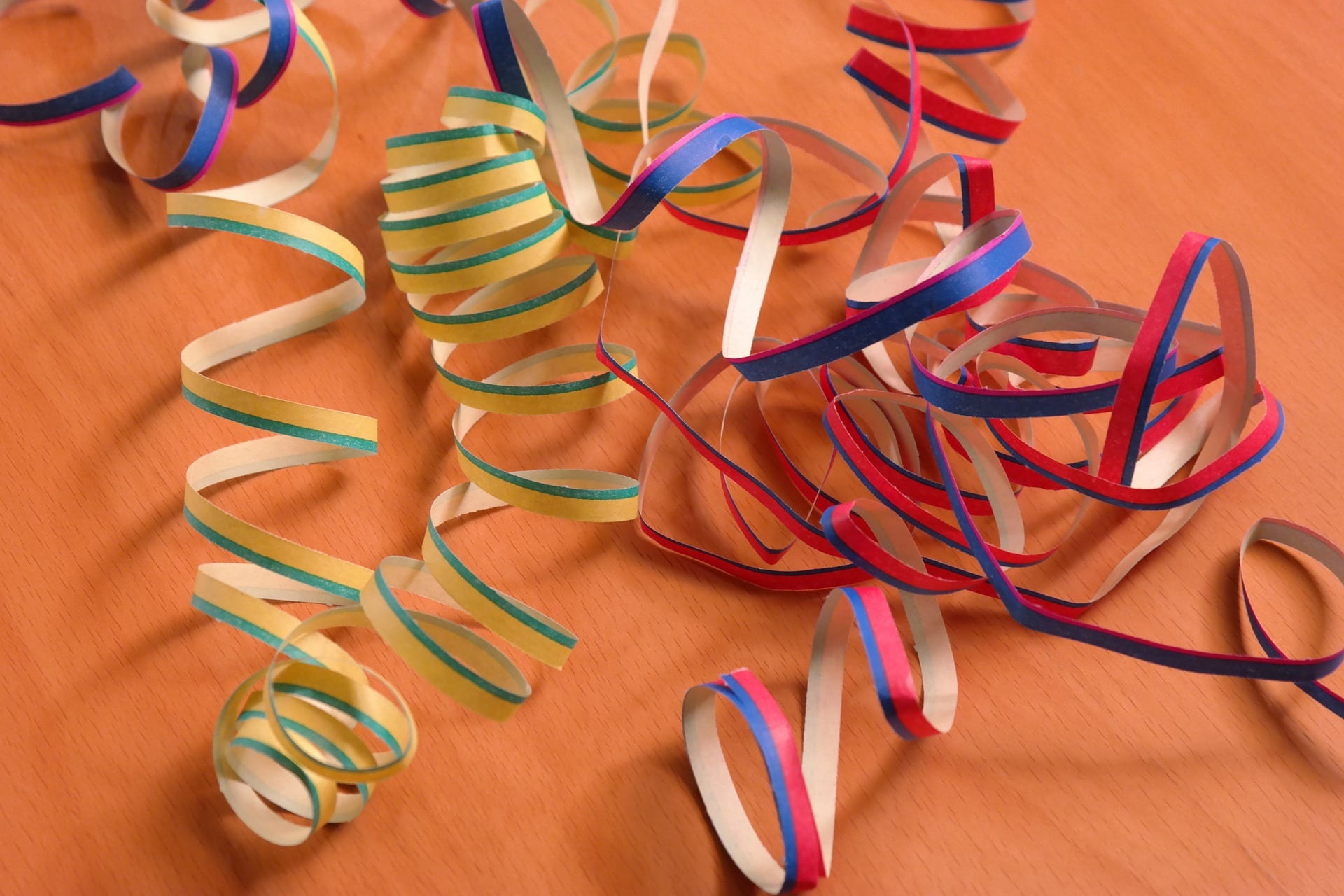
But, like the balloons, information about how celebrations that literally call for releasing garbage into the environment has traveled to faraway places. Cities and towns all over the U.S. and other countries are banning balloon releases in favor of less impactful commemorations. Colorful streamers or paper spheres can be released and cleaned up afterward. And even if they floated away and out of reach, they would biodegrade fairly quickly.

Photo Credit: Pixabay

Other alternatives are banners, kites or bunting.

To learn more about keeping balloons and other trash out of the sky, forests and waters, visit Ocean Conservancy and South Florida-based Balloons Blow.

Maybe do something a little more environmentally friendly for your kid’s next birthday party? Just a thought.

The post Releasing Balloons May Look Pretty, but It’s an Environmental Disaster appeared first on UberFacts.

Amsterdam Enacts a Ban on All Gas and Diesel Vehicles

Pollution is the global issue of our time, and around the world more and more cities are trying to take measures to reduce their carbon impact.

Most recently, the city of Amsterdam has taken a MAJOR step towards cleaner air: the Dutch city has announced that it is planning to phase out all gas and diesel vehicles by 2030.

Amsterdam’s traffic councillor recently said, “Pollution often is a silent killer and is one of the greatest health hazards in Amsterdam.” You might be surprised that such a world-renowned bike-friendly city (30% of Dutch commuters travel by bike) has such an awful pollution problem, but air pollution in the Netherlands is worse than European rules permit. This is mainly due to the heavy traffic in Amsterdam and Rotterdam.

The city’s plan is to replace all gas and diesel engines with electric or hydrogen cars, or other emission-free alternatives, by 2030. The plan will begin next year when diesel engines built before 2005 will be banned from Amsterdam. The plan then calls for gradual banning of more vehicles from city streets.

The current levels of nitrogen dioxide and particle matter in Amsterdam’s air can cause respiratory illnesses and shorten life expectancy by more than a year. The city plans to get rid of public buses that run on gas by 2022, to increase the number of electrical charging stations to 23,000 by 2025, and to offer subsidies and special parking permits to encourage residents to make the switch to electric and hydrogen cars sooner than later. We all know how crucial a nice parking spot can be, right?

Hopefully, other cities around the globe will take note – and in fact Brussels, Belgium, is already looking to follow Amsterdam’s lead.

The post Amsterdam Enacts a Ban on All Gas and Diesel Vehicles appeared first on UberFacts.

Guinness Goes Green: Beer Giant to Stop Using Plastic Packaging

Plastic waste is one of the biggest environmental issues of our time, and one of the most famous beer brands in the entire world is taking a huge step towards being part of the solution: they’re going to stop using plastic packaging materials altogether!

The manufacturer of Guinness, Diageo, announced that they’re getting rid of their plastic beer packaging and will replace it with cardboard that is 100% recyclable or biodegradable. That’s great news!

Guinness maker Diageo removes plastic from multipacks: http://ow.ly/Ytv430or4iN#NoPlastic #NoWaste

Posted by Love Clean Streets on Monday, April 15, 2019

The company also announced it is investing $21 million (U.S.) into the new project, and that getting rid of plastic rings and shrink wrap will remove the equivalent of 40 million plastic bottles from its operations.

Diageo owns Harp and Smithwick’s as well and plans to move away from plastic on those brands, too. The sustainable beer packs are supposed to debut in Ireland in August 2019 and expand to the rest of the world in 2020.

Guinness is good for you ? The maker of Guinness is eliminating all plastic packaging for its products. ? https://www.independent.co.uk/news/business/guinness-diageo-beer-plastic-free-packaging-a8869941.html

Posted by Marm O'Melia on Thursday, April 18, 2019

Oliver Loomes, the director of Diageo in Ireland, said, “Managing our environmental impact is important for the planet and the financial sustainability of our business. We already have one of the most sustainable breweries in the world at St. James’s Gate and we are now leading the way in sustainable packaging. This is good news for the environment and for our brand.”

Good work Guinness! Now head to the pub and order a couple to celebrate!

The post Guinness Goes Green: Beer Giant to Stop Using Plastic Packaging appeared first on UberFacts.

Asian Supermarkets are Wrapping Products in Leaves Instead of Plastic to Wrap Products

Our world is pretty sharply polarized these days, but if there’s one thing we can agree upon, it’s that we all need to be doing whatever we can to reduce waste. The single biggest thing we can do? Eliminate our dependence on plastic.

More and more businesses are jumping on board with sustainable and recyclable products and packaging, and here’s another great idea that will hopefully spread across the globe.

Posted by Perfect Homes Chiangmai on Tuesday, April 2, 2019

The photos in this article come to us from a supermarket in Thailand that has ditched plastic wrapping for their produce in favor of leaves. This means that more plastic that would be discarded to end up in a landfill is being eliminated from the environment.

Posted by Perfect Homes Chiangmai on Tuesday, April 2, 2019

These photos come from a place called Rimping Supermarket.

Posted by Perfect Homes Chiangmai on Tuesday, April 2, 2019

Posted by Perfect Homes Chiangmai on Tuesday, April 2, 2019

Posted by Perfect Homes Chiangmai on Tuesday, April 2, 2019

I love this idea! Let’s keep our fingers crossed that it catches on everywhere (here me, Kroger??)

The post Asian Supermarkets are Wrapping Products in Leaves Instead of Plastic to Wrap Products appeared first on UberFacts.

Outdoor Brand Patagonia Will No Longer Sell to Clients Who Wreck the Environment

The Midtown Uniform Instagram page has been amusing its followers for some time now. The page skewers NYC finance bros on the basis of their almost identical style choices – namely, a button-down shirt, slacks, and a Patagonia fleece vest.

The page’s name actually comes from the fact that SO MANY of these professionals wear that exact look that it may as well be considered an official uniform.


View this post on Instagram


I refuse to live in a world where I am killing it with my boys at joshua tree and am forced to go home at 4 am #midtownuniform

A post shared by Midtown Uniform (@midtownuniform) on


View this post on Instagram


This photo was found next to the term “squad goals” in the dictionary. #midtownuniform

A post shared by Midtown Uniform (@midtownuniform) on

That may not be the state of things for long, however. You see, Patagonia recently announced that they’ll be ditching clients in the corporate world in favor of clients whose interests more closely align with the company’s new mission to “save our home planet.”

This policy became public after Binna Kim, president of a communications agency named Vested (ironic, right?) tried to place an order of Patagonia vests for a client and received this rejection letter:

Basically, Patagonia is no longer accepting potentially lucrative deals from clients whose businesses support or condone practices that are destroying the environment.

It’s a move that may very well cost the brand quite a lot of money in short-term sales, but in the long run it’s a smart move for the outdoor-friendly company: they are making sure their brand is still associated with the great outdoors.

Talk about putting your money where your mouth is!

The post Outdoor Brand Patagonia Will No Longer Sell to Clients Who Wreck the Environment appeared first on UberFacts.

Big Apple Goes Green: New York State Just Banned Plastic Bags

Consumers have had the option of getting their groceries in resuable grocery bags for some time now, but sadly, plastic bags still reign supreme. A lot of folks are just forgetful, and buy the reusable bags but keep forgetting to bring them along when they go out.

Residents of New York state may not be able to use that excuse for long, however: New York State is officially banning plastic bags, and some counties will impose a fee on paper bags too.

New York is the second U.S. state to ban plastic bags after California.

Photo Credit: iStock

Governor Andrew Cuomo first proposed the plan last year, and it goes into effect in March 2020. Goodbye, single-use plastic bags! Mostly, anyway. Some types of plastic bags – like newspaper bags or trash bags – will be exempted from the ban.

Instead, customers will have to use either paper bags or reusable bags. Individual counties can opt into a 5-cent fee on paper bags, though it’s not a mandatory part of the new law. The idea, it seems, is to encourage people to use reusable bags as much as possible, rather than paper or plastic.

Photo Credit: iStock

Environmentally speaking, this new law definitely marks progress. Plastic bags are basically the bane of the planet’s existence. They’re hugely wasteful, non-biodegradable, harmful to wildlife, environmentally costly to produce…the list goes on and on.

“These bags have blighted our environment and clogged our waterways,” Governor Cuomo said in a statement. He said the new plan will be a way to “protect our natural resources for future generations of New Yorkers.”

And the rest of us benefit, too.

The post Big Apple Goes Green: New York State Just Banned Plastic Bags appeared first on UberFacts.