Teachers Discuss Which Generation They Enjoyed Teaching the Most

My sister has been a high school teacher for over 20 years and she likes to tell me stories about how the kids have changed throughout the years.

Because you know what they say…kids today! And that saying exists because it’s true.

Teachers who have been around for a while talked about which generation they’ve enjoyed teaching the most on AskReddit. Let’s see what they had to say.

1. Do what you want.

“I taught in the late 70s, early 80s in northern Alberta.

The nice part about being that early in my career, plus in northern Alberta, was that you could pretty much do whatever you wanted. My kids found an injured duck on the playground and we brought it into the classroom and spent weeks nursing that duck back to health.

As the duck grew stronger, he would do these practice flights in our classroom to the point where he would do a couple of laps around the room and my kids wouldn’t even get excited about it. Later in that same year we grew hydroponic tomato plants that went from floor to ceiling and were able to harvest tomatoes in the middle of winter.

Man, that was a great year! Pretty sure you couldn’t do most of that in a grade one classroom these days.”

2. Comparing themselves.

“In my mind kids have always been good at heart, but society and their upbringing is what ultimately shapes or corrupts them.

Unfortunately, I think more kids nowadays have mental health issues since they unconsciously compare themselves to their peers. The difference is 20+ years ago kids only compared themselves to the few hundred kids in their school.

Nowadays, they are comparing themselves to the millions of kids they see online.”

3. Breaking down the years.

“97 – sarcastic, grungy, smoking more cigarettes, more clique-y and edgy

07 – petty, attention starved, overwhelmed, but much nicer

17 – under so many layers of irony and memes they dont even know who they are anymore or care. there’s no point in being creative or devolving a personality, anything you could think of has already been done.”

4. Here’s the deal.

“Honestly it is not so much the generation but the age group and the relative interest and if you connect with the students or not (and they connect with you as a teacher and respect you as an educator who has their best interests at heart)

I like the younger students for their curiosity and eagerness and excitement when new ideas are being introduced or there is some challenge/learning-related contest going on in the class. This gets more difficult to cultivate as a group-energy level in the puberty years, and easier afterwards.

But I’ve had some kids in the 12-14 age group come in during lunch to continue their activity just because they were so engaged in what we were doing, and I was cool with it as I ate my lunch in the classroom and therefore my classroom (I taught computers, so other labs were often locked after classes) was always open.

It is very obvious when you see the interest and level of engagement from a class that is ready to learn, it is almost like when an engine is reving up and all cylinders are firing in sequence; you can really feel the energy. But you notice the differences as some classes just ‘click’ with their teacher more than others, even in the same year.

For those who may be wondering why that is, I like to think of each class as a sort of team, as in sports. I suspect that if there is a certain threshold of active, curious and interested students in each class then that interest level and energy just is infectious and becomes the overall mood of the class. A few leaders in the class can raise the energy of the whole ‘team’.

Of course, it’s the same story if there are enough disinterested students in a class who honestly don’t want to be there and have no interest in learning.

Sprinkle in a few more who prefer to disrupt a class for laughs and that just drains the interest and excitement right out of the room unless the teacher or occasionally some students can reassert the need for respect so learning can continue uninterrupted.

It can really be apparent when you are teaching the same exact lesson to different classes on the same day as you will see which ones are into it and which ones just aren’t.”

5. Out of touch.

“I enjoyed the 1990s because there was still not a ton of technology.

One of the things I’ve noticed now is that my cultural references have absolutely tanked now.

I was teaching a course and literally NO ONE got my reference to The Matrix or Pulp Fiction or well … anything.”

It was the first time I felt that internal twinge of being “out of date” and realizing I was teaching 17-18 year olds who were being BORN when that movie came out.

I still love the job though. :)”

6. All downhill.

“When I started teaching in the early  2000s, students still got my most obscure Simpsons and 80’s film references. By the late 2000s, I had nothing left to reference.

By the early 2010’s my kid had reached adolescence, so I had new material, but it really wasn’t mine, and the culture had splintered so much that my Rick and Morty references only hit about 30% of the class.

Lately I just stopped trying, and became that old, out-of-touch Prof; I lived long enough to become the villain.”

7. Used to love it.

“Started teaching first grade in 1999. I loved teaching till about 2006.

Students were so eager to learn kept me on my toes. They were respectful and the parents were supportive. Little by little things started changing. Complaining about colors of napkins, words like angels, witch, . It kept getting worse. The amount of paperwork and meetings no time to teach.

The testing got in the way took time away from teaching and what was important which is the children. Little by little it took most of my energy. Stopped teaching after only 13 years.”

8. Mom’s thoughts.

“My mom was a teacher from the mid ’70s up until covid hit and she retired for good.

I think she liked ’80s and early ’90s kids best. Parents still had respect for the teacher, as did most kids, and our government had not yet ran education into the ground with cuts and overcrowded classrooms. Plus ’80s and ’90s kids had silly fads and were kind of quirky and fun.

She said the biggest difference now is resilience. Kids today have bigger difficulties with overcoming things, more anxiety issues, many refuse to even try something for fear they’re not good. It’s not an issue with the kids per say, generally most things can be traced back to parents, who are putting more pressure on kids.

Also, the biggest difference is parents. It used to be parents and teacher were more a united front. Now parents are angry at the teacher if their kid doesn’t do their homework or work in class, or accuse the teacher of lying if the teacher says their kid did something bad.

I’m a teacher too, but have been teaching less than 10 years, so I have little comparison. But I can say that as a kid in the 90s, I can’t remember other kids saying “no” to teachers. We may have groaned or whined, but we didn’t refuse.

Today I’ll have an activity or game and kids will flat out say “no. I’m not doing that”. Kids refuse to participate to my face. I hear “no” all the godd*mn time, and it’s frustrating when I know my lesson slaps. They just say no to everything.

Also kids complain when you put on a movie. It used to be, when your teacher wheeled in the big TV cart, the class cheered. We didn’t care what it was. Now all you get is “ugh no I don’t like this movie/ I’ve already seen it/I don’t want to watch/ this is boring” and I’m like HOW DO YOU CHILDREN NOT LIKE MOVIE DAY.”

9. A big difference.

“Started teaching at university in the 2000s.

Kids were really cliquey (into what sub-culture or tribe they were in and didn’t mix) and intolerant of difference (of any kind). Was 10 years older than them, most had no idea how to save a file on the computer into different formats. Had to tell kids not to describe things they didn’t like a ‘gay’ ALL THE TIME.

In the 2010s they started being better at technology, but worse at fixing it when it went wrong, getting more tolerant, more likely to mix. 2020s kids are really tolerant, kinder, but much, much sadder.”

10. We need better parenting.

“Started teaching in 1985, retired in 2015.

I enjoyed teaching in all of those years and enjoyed knowing almost all of my students. I feel that any observations I might make would be so prejudiced by my own reactions to the era and my own aging that it’s a bit of a ridiculous question.

I do think that more people need to commit to better parenting, as I was appalled by how scarred many students were by sheer parental neglect and abuse, regardless of the era. I don’t think abuse has become any more prolific, but I recognized it more and more as I became a veteran teacher.

Other than that, talking about people by generations is just another way to divide us and keep us quarreling; otherwise we might notice that we’ve all become the property of corporations. And they don’t want that.”

11. No accountability.

“Kids don’t change, but accountability is gone in my district.

First half of my career (90s, 00’s) students and parents were far more accountable. Today, if a student does not thrive, it is blame the teacher all day, every day. Teachers now compete with Tik Tok, Snap Chat, video games etc…and there is such a sense of entitlement, at least in my district.

The students are still great, but the adults have messed this up so bad. We have eliminated all deadlines in my district, and students can re-do an assignment over and over until they get the grade they want.

Consequences can be great learning experiences, but we are no longer able to apply them.”

Have you been teaching for a while?

If so, which generation of kids has been your favorite?

Tell us what you think in the comments!

The post Teachers Discuss Which Generation They Enjoyed Teaching the Most appeared first on UberFacts.

Teachers Talk About What Generation of Kids They Liked Teaching the Most

Oh, boy…

The times, they are a changin’…

Well, I guess the times are always changing, right?

And that’s especially true when it comes to kids. Every generation is unique and learns from the triumphs and mistakes of the ones before them…and teachers who stick around long enough see kids change a lot throughout the years.

Teachers of AskReddit talked about which generation of kids they’ve enjoyed teaching the most. Let’s take a look.

1. Mid-1990s.

“I have taught emotionally disturbed children for much of my career.

The kids I had 25 years ago would constantly fight with each other. The kids I had most recently made a habit of going after me and the parents always wanted to know what I did to provoke them.

Give me my mid-1990s kids any day! They loved me as their teacher and didn’t tolerate any disrespect towards me from their peers.”

2. Changes…

“Started teaching in 2002. All of that has been middle school. Grades 6-8 (Ages 11-14)

Biggest changes have been prevalence and reliance on screens and devices, but ultimately what kids want is acceptance. And most of them will seek it wherever it can be found easily, which is on a screen.

All I can really say is that I am incredibly grateful that Facebook and social media did not exist when I was a kid/teenager.”

3. Bad writers.

“I’m a philosophy professor and the only thing I’ve noticed is that the latest generation of students (zoomers?) are like, really really bad at writing. Like, obscenely.

Every other generation I’ve taught has been roughly the same, with different philosophical predilections, but for some reason everyone’s just really bad at writing now (let alone philosophy).”

4. It was a simpler time.

“I recently passed my 10 year mark, so I’ve taught 2000s and 2010s.

Biggest difference is the coursework. Man do schools (and parents) love to cram so much work into such little time. They like having something to “show” for their kids schooling. Gone are the days when we could explore and learn. Where we could discuss topics, or I could even read them non-curriculum books, or do fun experiments.

Oh, little Timmy is 4 years old? Better start learning to write upper and lowercase alphabet letters perfectly. But don’t give the kids pressure. And don’t take away play time if they can’t finish in the allotted 10 minutes. But make sure they finish on time and there aren’t mistakes or you (the teacher) will get reprimanded for it.

Also the parents. They used to think being a teacher was a noble and respected job. Now many tell me that they know more than me despite my education and experience.

And god forbid I tell them their child made a mistake or had a behavioural incident. Then I’m either lying, or the kid didn’t mean it so how could I dare ask them to receive any consequence for their actions.

Parents are constantly undermining teachers, and the schools will throw teachers under the bus to keep a child’s tuition any day.

I also work in a private school. So the more money a family has, usually the worser the parents/children.

I miss the 2000s. A simpler time.”

5. Good kids.

“I like the kids I teach now.

They are, for the most part, really peaceful. We have so few fights on campus.

They are really accepting. LGBTQ folks would have been beaten when I was a kid, now it’s no factor. General apathy and major boredom rule the campus, but my kids still get up to fun.”

6. Gen Z’ers.

“I love my Gen-Zs.

They know us Elder Millennials saw some sh*t, and they are happy to lean right into the complete Iliza Schlesinger bit that we’ll do about basically everything pre-2005.

They’ll call out stuff like “Tell us about floppy disks!” and “Tell us about dial-up!” and “What about Surge, ma’am?” and I just do my best Madam Razz impression (reboot, not original She-Ra, these are Gen-Zs,) tell them about these things, and then reveal -to amazed gasps- an actual can of post-revival Surge, for whatever student can write me the best 250 words about a controversy of 1980 through 1985 before I get back from the john.

I handed out seven cans of Surge this week just on this topic. My students are glorious. I also saw one of my colleagues, who coaches a sport, happily sitting down to a wonderful lunch she had packed herself, took out a can of Surge, opened it, smelled it, savored it, saw me noticing and “I know, I know, it’s so bad for you. But I haven’t had this since I was a kid!” and I said “Not judgin’ here, love!”

And she described how one of her kids gave it to her after first period as a present and how she’d been looking forward to it all day and I remembered that one of my best writers, one of our best student athletes, is both Type I diabetic and just the sweetest person.

So I stopped by the good grocery store and got a bit of sugar-free Ramune, the fanciest and most delicious kind, which shall be theirs.”

7. Big shifts.

“I’ve been teaching in the humanities at a pair of universities for 11 years.

My main observation is that students don’t want a “think” piece anymore, they want a “doing” piece.

This shift happened about 5 years in to my tenure. It was a real break in what the students expected, and I felt compelled to adapt to it.

So a syllabus is now less “let’s learn about and reflect on a framework” and more “I want to do this myself first, then maybe we’ll see if there’s a framework there worth talking about.”

This can actually be a really good thing. I’m kind of a phenomenologist myself so I’m more or less theoretically oriented to the idea of learning equally from the experience of one’s self and from the experience of others. And then critiquing, reflecting, and acting on those experiences as a perfectly legitimate basis for a lot of good things that can come next.

But on the other hand, no one wants to read any more. It’s all bullet points and takeaways, slide decks and checklists, “gotta juggle my five classes but also my three side hustles”.

It encourages a kind of faddish approach, and frankly almost psychopathic and disconnected. It’s not about learning, it’s about extracting. On the cynical side of things, one might conclude that the students want to be given the cheat sheet so they can perform to others that “they know.” Everyone wants to be “a leader.”

This can cut both ways. For the students to be primed to apply what they’ve learned as and whenever it arises has arguably more practical impact in practice, so that’s good. But on the other hand, I feel that something deeper here with the academic process is being lost and very deeply devalued.

And I’m not so confident about what higher education will look like in 15 years as a result, particularly in context of the corporatized profit model that is already pressuring the academy in general.

It’s like every subject has become an MBA. And we used to poke fun of those guys for being problem-solving droids happily operating in narrow little boxes of their own making.

So that’s one big shift.

The other big shift I feel I am living through as a teacher is the total diminution of the classical era. The 1960s, 70s, 80s and 90s had their fair share of prophets of radical socio-technological change. But it’s only really now in the post-truth social media bot and AI-content-warped world of literal augmented reality that it has finally come to be.

Our globalized world is so radically different now that Greeks, Romans, Renaissance and even early modernists are all just looking like a quaint bunch of vaguely charming and very embarrassing (“cringe”) Neanderthals. A restatement of origins like “Hamilton” is about as far back as anyone feels they’d ever need to bother looking.

I frequently imagine the great contrarian Nietzsche himself feeling sidelined as the aging and irrelevant hippy amidst a world that has rendered his protest against the human condition itself as anachronistic.

There’s a radical un-mooring from history taking place and, combined with the new approach to learning I describe above, it’s really hard to feel any confidence in where the eff it’s going to take us.

The trend feels very technocratic in direction. And while that can be an admirably evidence-driven form of politics (“trust the science” as Biden feels compelled to repeat, for instance), it can also very easily subordinate a lot of values, rights, and principles that don’t look any more compelling as a bunch of bullet points than anything else on the to-do list.”

8. 1990s kids.

“I’ve been teaching for 28 years. From elementary to high school.

I’ll take the children if the 90’s because cell phones didn’t distract the students and most parents didn’t try to blame the teachers on the failures of their child.”

9. Much easier these days.

“I like teaching NOW because we have a lot of technology that makes things easier.

No more grading tests by hand, or standing in line to run scan-trons.

Pretty sweet!”

10. More respectful now.

“I like them all.

But my favourite thing about this generation is that they are in general more respectful, polite and empathic.”

11. Mom’s POV.

“My mother taught 6 year olds in the 60s, 80s and 90s.

The kids didn’t change much but the paperwork, administration and social work got too much for her at the end. Kids coming to school not being fed, reeking of smoke and pot.

And parents went from being allies to some becoming outright hostile for their kids being given the slightest reprimand – like “Jheydenn, you didn’t help tidy up so you’ll need to wait for the other children to go play before you can go”. Oh and names.

Not cultural, but badly spelled and weird names like “Hastalavista” and “Fordescort”. She still loves running into her old kids, many of whom had children she taught, and some are now grandparents.”

12. Reflections of society.

“It’s difficult to compare generations, but I can tell you something students are a reflection of the society around them, and if I compare students I have a had to what I was like there is a dramatic difference which I put down to social change.

The two most dramatic differences that I notice are that students now are far more emotional sensitive, which can be a good, or bad thing, and far less independent of thought. Social media, more standardized testing, less real life difficulties, and more imagined ones all contribute to this.

When I was growing up in the 80s and 90s I never worried about my future, and I didn’t feel any pressure socially to conform. I was always encouraged by friends and society to think, act, and learn independently. There were no universal right answers, and very little outside expectations.

Now, I find students feel constantly under pressure to outcompete each other, attain artificial goals, and not offend anyone. For a long time I taught graduates basic academic skills because schools either ignored, or refused to teach basic rhetorical, discussion or argumentative skills.

It is my default setting to assume the current generation of students, cannot automatically play devils advocate, or challenge accepted viewpoints. They are constantly being forced to accept whichever sides argument is dominant, and seem conditioned to follow whoever they have told to follow. It is a frightening situation.

Also, artificial competition has hollowed out people’s lives. Growing up me and everyone I knew had interests and hobbies. I rarely find that now with young people. And the interest and hobbies people do have have changed.

When I ask people what they do in their free time, the number one answers are always, browse social media, shop, and meet up with friends to take photos for social media.

Actually, that is being generous, the most common answer I get is actually ‘nothing.’ Students at high school and university don’t even seem to be able to manage the old cliched ‘s*x, drugs, and rock’n’roll.’ Bravado that dominated my generation, and the generations for that. People don’t seem to have the time, or energy to even enjoy themselves now.

It must suck being young now, or at least that is what I was told.”

Now we want to hear from more teachers!

Tell us about the favorite generation that you’ve enjoyed teaching in the comments.

Please and thank you!

The post Teachers Talk About What Generation of Kids They Liked Teaching the Most appeared first on UberFacts.

Professor Asks if It’s Wrong to Tell a Student That They Just Don’t Care

I used to think that being a college professor would be one of the best jobs ever.

You get a flexible schedule, you get to read about, publish, and teach about something you’re super into (you would have to be to get a Masters or PhD), and your students are old enough to be considered adults, so you wouldn’t have to deal with parents the way high school teachers do.

Then I learned about all of the politics that are involved with University teaching, and I’m kind of glad I petered out 80% of the way through my MA.

This professor is having an attack of a guilty conscience after following a school’s policy to not give deadline extensions on certain assignments without an excuse (and proof).

Happened a month ago but I still feel guilty over it. I’m a professor & my students had an assignment due on the week I was on bereavement leave. I informed my students of this, and let them know that I would be answering emails/ requests late, so it was better to inform the other professor in charge of the unit.

This assignment was given at the beginning of the semester & they were informed that no deadline extension would be provided unless there was an emergency (with proof) or requested in advance cause it was the school’s policy.

He had one student who emailed him timely, said her grandmother had passed, and was given the extension (pending proof).

One of student’s grandmother passed the day the assignment was due, so she emailed me & CCed the other lecturer. I happened to see the email in time, & I made a note in the system of her case & the deadline was extended with subsequent action pending the submission of proof.

Then another student emailed, citing “personal reasons,” but the professor did NOT see the email in time to stop him from getting an automatic fail because he was on bereavement leave (the students were informed ahead of time).

The student became upset and elevated the matter to both the professor’s superior and the dean, and he was forced into an online meeting while he was supposed to be grieving his brother’s death.

A day after the deadline, another student emailed me (only) saying that he couldn’t submit his assignment due to personal reasons & asked for a backdated extension. I didn’t see the email until a couple of days later. Because of the delay, he received an automatic fail. I emailed him back explaining what had happened but if he could provide proof of the emergency I may be able to find a solution where he won’t be failed (but won’t be given high marks).

He sent a really nasty reply & CCed the dean & my superior (the other lecturer in charge of the unit). I was dragged into an online meeting to sort this issue (while on my bereavement leave).

The conversation got a bit heated, with both parties saying things they probably shouldn’t have.

He called me a sh%tty professor because I was on leave the week the assignment was due & I was playing favourites cause I gave an extension to his classmate but not him & didn’t answer his email on time. He also said that I had no right to ask for proof because it was personal. I interrupted him to tell him off, saying that I honestly don’t give a shit about what excuses he has because I have proof that he acknowledged my emails.

I also said that I’m sorry that my brother’s death inconvenienced him but that it was his responsibility to keep track of dates & understand that certain things were out of my control because it’s the school’s policy, not mine. I also reminded him that I did say that I would try to not fail him but I couldn’t do that if I didn’t have proof.

I admit I was not as polite as I normally would be, & I was visibly upset by the time the Dean cut in.

The Dean excused the professor from the conversation, since he was on bereavement leave, saying the others would settle the matter. The prof found out later that the student came from a rough background and was already on academic probation, and now he’s feeling badly about the entire thing.

The Dean apologised to me first because he had no clue I was on bereavement leave (apparently my superior didn’t tell him for whatever reason). He then said I could excuse myself from the meeting cause he would settle this matter with my superior. I left the meeting & I found out later that the student was already on academic probation & would possibly be expelled cause he failed my unit (assignment was 60% of overall grade). He also came from a troubled background, which explained the personal reasons.

I really do care for my students, & knowing I may have contributed to him being expelled from the university does not sit well with me.

He did do his best to advocate on the student’s behalf, he said in an edit, but isn’t sure what will come of the whole thing.

I did write my superior a recommendation that he still be able to submit the assignment at a later date. My superior told me that because he was on academic probation, there would be another meeting to decide but they would take my suggestion into account.

The internet was ready to give their verdict on this one, though I honestly think everyone involved was a little bit right – and also a little bit wrong.

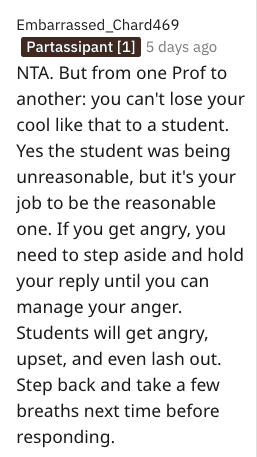
This fellow prof said the original poster wasn’t wrong, but that in the future he should work harder to be the bigger person as far as how he treats his students.

Image Credit: Reddit

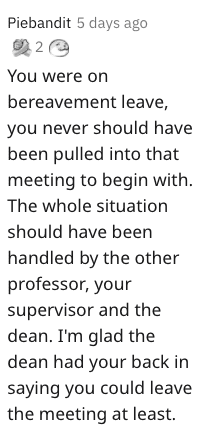
Several people pointed out that his superior should have been more involved, and that he never should have been expected to handle things like this while grieving his brother in the first place.

Image Credit: Reddit

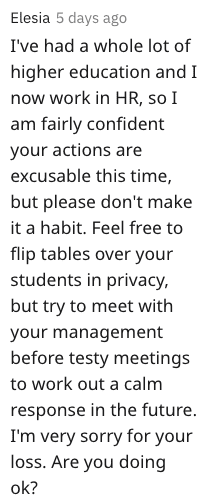
Everyone should have taken a few deep breaths before getting together.

Image Credit: Reddit

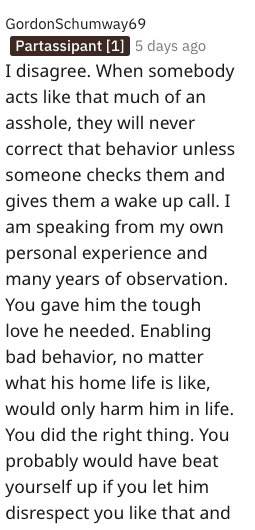
A few people thought the professor’s tough love might have been just what this kid needed to keep things together in the future.

Image Credit: Reddit

In the end, the professor is human and doing his best – and he’s done his best to correct things, too.

Image Credit: Reddit

I think the very first response on this one was the best – the professor wasn’t wrong, but he could have handled it better.

Let’s hope everyone involved has learned a little something for the next time, eh?

The post Professor Asks if It’s Wrong to Tell a Student That They Just Don’t Care appeared first on UberFacts.

People Share Free/Low-Cost Resources That College Students Need to Know About

Were your college days filled with scraping by, eating ramen, and drinking Hamm’s because you were always low on money?

Well, you’re not alone, my friends, because that’s the way it goes for countless numbers of young kids out there just trying to get an education.

And that’s why these resources that folks shared are so helpful for students trying to get by.

AskReddit users offered up free and low-cost resources that college students might want to take advantage of.

1. Cheap software.

“A lot of times your university will have stupid cheap software licenses for students/faculty.

At my university we got Adobe Creative-Cloud licenses for $10/year and free Microsoft Office licences (this was before office 365, so it wasn’t a subscription).

Sometimes the cheap software is only for certain departments/majors but at mine they had several deeply discounted software packages any student could buy.”

2. Good one.

“Find the previous editions of your textbooks. Frequently they will be as cheap as $0.05.

If your professor pulls homework questions out of the current edition go to the library and use their reference copy just for the questions.

Although with a lot of the access codes needed these days it might not be possible.”

3. Worth a shot.

“Check with your grocery store to see if they have a student discount day.

15% off can go a long way.”

4. Give it a shot.

“To help organize notes and sources for papers and assignments, I highly recommend Zotero to help keep organized.

It also makes writing citations super easy.”

5. For the smart folks.

“For science/ stem people: Khan Academy videos.

They saved me several times.”

6. This right here.

“Please use your school’s on-campus mental health professionals.

They are easy to access, usually free, certified, and acutely aware of the stresses and issues with college life.”

7. All kinds of discounts.

“Student discounts. I’m sure someone else has already put this but I benefitted from it greatly.

As a music major, I had to buy a lot of different DAWs and equipment along my journey. Big corporations want you to buy their product, but are aware that you’re already digging yourself into a huge hole of debt so they often times will drop the price of a product by half or more to sell it to you.

For example, as a student you can get an Adobe membership for about $20 a month. I got a copy of Studio One 4 for $250 as opposed to $500 because I was a student. This also works if you’re not a student but want to make a large purchase.

Most sites don’t actually check to see if you’re a student so just jump thru some hoops and see where it gets you!”

8. Doing the Lord’s work.

“Church pantries.

Free groceries every week/every other week.

Just being proof you live in the area.”

9. Drink up!

“The grad student bar usually has cheap booze.

Art shows often have free booze.”

10. Very helpful.

“Mendeley.

Its a citation manager geared towards peer reviewed literature. It has a browser extension that downloads the pdf/ citation, and integrates with word. As you’re typing, you can add in text citations by searching for the author.

Then when you’re done, click add bibliography. Boom.. Done. Its made by elsevier. Once you use it, you’ll wonder why you ever added citation by hand/ one at a time.”

11. Might as well try.

“Fafsa, even if you don’t qualify, it’s still worth trying to get financial aid.

I only have to pay about $45 per class as opposed to $250.

Might look confusing and tedious initially, but after the first time the website usually saves your info and it only takes a few clicks to apply for the next year.”

12. Yes!

“LIBRARY CARD. This cannot be overstated enough.

Libraries are one of the only remaining establishments in which you are not compelled to spend money. It is FREE material. Free books, movies, magazines and periodicals, games, sometimes even technology!

Libraries are amazing. Some library cards even provide you access to online only materials.”

13. Get on it!

“Coursera!

Basically college classes of various types taught online for free (you can pay for a certificate if you like, but you can access all the resources for free if you just want the knowledge).

The fun thing is the variety is huge and beyond the usual intro level stuff- for example, if you are past intro programming and like astronomy, there’s an excellent astronomy data science class I recommend to a lot of people.”

How about you?

Do you know of any good free or cheap resources that college students should know about?

If so, please share them with us in the comments. Thanks a lot!

The post People Share Free/Low-Cost Resources That College Students Need to Know About appeared first on UberFacts.
What Are Free and Low-Cost Resources College Students Should Know About? People Filled Us In!

No doubt about it, if you go to college, money is always tight…and that’s a huge understatement for a lot of folks out there.

So, every college student should be well aware of everything single thing that they can take advantage of while they’re studying hard and trying to get through school.

People on AskReddit were nice enough to share free and low-cost resources they think college students should know about.

1. You need to relax.

“Spotify Premium, Hulu, and Showtime for $5/month total with a student email address.

Works for grad school students too.

Not helpful with productivity, but very helpful for sanity.”

2. Study up!

“Paul’s Online Math Notes for calculus.

It’s filled with examples and decent, down to earth explanations that don’t confuse the sh*t outta you.”

3. The good ol’ library.

“Use the library for everything you can: textbooks, movies, games, music, printing, quiet study space, tutoring, etc.

Librarians love to help and you might be surprised what they can lend out to you.

I borrowed a telescope last week!”

4. Try it out.

“Google Scholar.

Great free google search engine that gives credible articles to use in research papers and show you how to properly cite them.”

5. Pro tip.

“Pay attention to events calendars.

Most college events have free food.

This may be different for this semester, but don’t underestimate it down the road.”

6. You gotta eat!

“BudgetBytes.com

Cheap meals that are healthier and tastier than ramen and Kraft dinners.”

7. Lots of software.

“You probably get access to a lot of software for no added cost.

This is how I got Windows for my pc.

It’s very worth checking out, a lot of times schools offer a free subscription of Windows, Office365, virus protection that’s not McAfee, and some Adobe products.”

8. I didn’t know about this.

“If you are a starving student, and there’s a Sikh temple in your area, they do something called a Langer.

It’s basically food they serve to the community and it’s legitimately good. They usually will ask you to volunteer or do some kitchen work in exchange. Me and a group of 4 college students would attend regularly, and the food was great.

I was broke and had to pay my way through college with zero support. I had a friend that told me about the Langer, but I was worried they would push the religion on me. Didn’t happen at all. I was nervous just showing up, but they were some of the kindest people I’ve ever met with zero judgement.

I’m not religious, but Sikh people restored my faith in humanity.”

9. You never know.

“Go to the awards office at your school and talk to someone and find out if you qualify for anything.

You’d be surprised how many bursaries and similar go unclaimed each year. As a student every little bit helps, and you never know what you’ll qualify for until you go and ask.

Some are based on grades sure, but many are based on need or your background or circumstances, and the occasional one is just first person to sign up with a pulse.

Seriously it’s worth the hour it takes for you to go visit in person and talk to a real person who can guide you through. Or maybe you can do all that sh*t online now.

But take the time, it could be free money to you and free you up to concentrate on your studies.”

10. Interesting.

“Clep testing.

It’s a program that allows you to take a single test rather than an entire class for credit. It’s only for some general academic courses, and each college has its guidelines on how they apply to credits.

That said, taking advantage of them can reduce the time and money required to earn your degree.”

11. Search high and low.

“Never buy/rent your textbooks from the college bookstore unless you can’t find them anywhere else online.

Seriously, bookstores overprice the sh*t out of your books and you will save a lot of money getting them from Amazon, Chegg, Ebay, etc instead.”

12. The data suggests…

“Data suggests that the number one reason students go to college is for better job prospects once they graduate.

Because of this, remember that to a recruiter or HR department, college is more than just your academics. It is about all of your experiences: class projects, personal projects, getting involved on campus through student orgs, student worker positions, volunteering, internships, etc.

This means you should make use of your school’s Career Center well before spring semester of your senior year so that you can learn how to talk about yourself professionally: through a resume, cover letter, interviews, networking. Learning the basics earlier and working on them each year as you look to secure internships will make you a really successful candidate once it comes time to find a full time job.

As some of the other comments have mentioned, your student fees pay for resources you have access to through the Career Center, so take advantage of them!”

13. Use it or lose it.

“While not technically free, you probably pay a bunch of student fees for access to the gym, pool, free/reduced cost public transportation etc.

Understand what things your student fees cover and take advantage of them.”

Do you know of any good resources that college students should take advantage of?

If so, please tell us about them in the comments.

Thanks in advance!

The post What Are Free and Low-Cost Resources College Students Should Know About? People Filled Us In! appeared first on UberFacts.
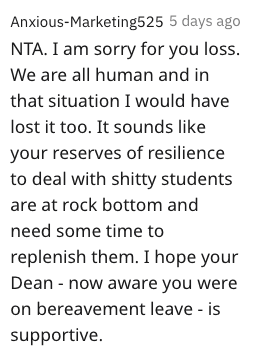
Teachers Share The Funniest Questions They’ve Gotten Over Zoom

Teaching has changed a lot over the past year, and in ways no one really wanted or planned for. Just like parents prefer their kids be in school all day, for myriad reasons, so would teachers prefer to be in the same space with the students they’re instructing.

That said, many are having to adjust to life over Zoom. If there’s an upside, it is, as always, the inherent humor – and these 13 teachers How 14 “Different” Kids Earned Their Reputations having some one-liners that are definitely going to crack you up.

13. The whole first week back after the holidays is just shot.

Might as well just roll with it.

12. You’re going to need to be more specific.

Even if that might not work, either.

Image Credit: Twitter

11. That’s what we all want to know.

Home is such a complicated thing these days.

10. An observant child.

Tell me she was wrong.

9. This is why they got into teaching.

Because kids are actually the best.

8. The children, they are learning.

Cats are the way to go.

7. These teachers really need to start asking better questions.

Not so open-ended, maybe, but then we wouldn’t be laughing!

6. That will take up half the class.

But you just can’t ignore it.

5. The answer to that question is obviously always yes.

Dogs aren’t as good as cats, maybe, but they’re still pretty good.

4. You can always count on kids to ask the real questions.

Don’t lie. You want to know the answer, too.

3. The description of the breath. Hahaha!

Those elusive cats, always messing up school!

2. It’s nice that someone is looking out for you.

Bless her little caring heart.

1. Are they just stalling?

It’s hard to tell, because it’s a legitimate question.


Kids really do say the darnedest things, and I love when people share them!

If you’re a teacher (or a parent with a kid on Zoom), what’s the funniest thing you’ve heard through the screen? Share it with us in the comments!

The post Teachers Share The Funniest Questions They’ve Gotten Over Zoom appeared first on UberFacts.

What Cooking Tips Should We All Know? Chefs Were Nice Enough to Offer Their Advice.

No matter how much experience you have working in restaurants or even just in your home kitchen, you can always learn new tips about how to make food and make the process smoother.

And that’s exactly what we’re going to dive into today!

Let’s check out some awesome cooking tips from folks on AskReddit!

1. For beginners.

“Two things for beginners:

First, taste as you cook. At various stages of cooking, while safe (not raw meat) taste your food as you cook it. This lets you know if you have too much of something or too little. It also helps you develop your palette for what different seasonings do.

Second, if you’re just starting out and don’t know which spices to buy. Pick a specific cuisine you like. Are you a fan of Italian food? Focus only on Italian recipes for a while. Most use similar herbs and spices because the cuisine of the area used what they had available to them.

This will let you learn several recipes without having to buy massive amounts of spices to make it work. Eventually you will build up a good stock and be set to handle most things.”

2. Yummy.

“Soy sauce goes on more than Asian foods.

Try a dash in scrambled eggs or towards the end of your caramelized onions.

It is a savory salt flavor that compliments many dishes.”

3. Some tips.

“The spice measurements in most online recipes are way too small. I usually double them.

Cinnamon isn’t just for sweet foods. It can be really really good in savory foods.

Don’t forget the acid. A bit of citrus juice or vinegar can really make a dish pop and bring out the other flavors.

Don’t be afraid to deviate from a recipe, but be careful with baked goods. If you make big changes in baked goods you might get a dud unless you know how it will effect the baking process.”

4. Spice it up.

“Salt is seasoning. It makes food taste more like itself.

Acids, like citrus or vinegar can also do this. If your food tastes flat, or like it is missing something, try some salt or acid. Acid is also critical for balancing very rich fatty foods.

The reason Americans love tomato ketchup so much is the fact that it adds acid and salt to their food. Adding a bit of “heat” like a pinch of cayenne can also accentuate a the flavor of a dish. Spices are something else. They bring a new and different flavor to the dish.

In sweets, sugar often takes the place of salt and is usually balanced by acid – see passionfruit, raspberry, citrus, etc. But salt plays an important role in sweets as well – often in unexpected ways. Try putting a pinch of kosher salt into your next batch of whipped cream.

I could keep going but I’ll leave it there. If you can master these concepts you will have a big advantage over most home cooks.”

5. Nice and easy.

“If you’re getting annoyed because it’s taking you too long to peel garlic, place an unpeeled garlic clove under the flat side of your kitchen knife and press on it with your hand.

The garlic peel will separate easily and your garlic will be crushed.”

6. Ouch!

“A falling knife has no handle.

The worst cut I’ve ever had was from trying catch one on reflex.

I got sliced across all my fingers, great tip to internalize.”

7. Good advice.

“Everything in it’s place. Have everything cut, seasonings and ingredients measured before you start cooking. This way you can focus on cooking.

Brown meats in small batches, do not overcrowd the pan. It will cause meat to sweat and will not brown properly.”

8. Keep it simple.

“Learn basic cutting techniques for cutting vegetables.

Keep it simple. The number ingredients doesn’t say anything about the taste of a dish. Go for dishes you can make in 30 to 40 minutes with 6 to 8 ingredients.

Keep a notebook. Gather a list recipes and dishes you do regularly. Expand gradually with new stuff. Don’t just buy cookbooks you never really use.

Adding is easy, removing is hard. People here argue to liberally add butter and seasoning. Tastes differ, though. It’s totally fine to put in less if that’s what you fancy.

You don’t need a gazillion utensils. In your daily cooking, a basic kitchen knife already does a lot of the heavy lifting. Learn to use that properly.

Observe. How do ingredients act when you combine them? What happens when your put them in a pan or pot and apply heat?

Always be cleaning. You have idle time? Clean the sink.

Don’t be afraid to fail. Learn from your mistakes. Also, don’t pretend you know better then the recipe. Especially if you never made a recipe before.”

9. All about timing.

“The amount of garlic flavor is dependent on WHEN you add the garlic.

Add it early for light flavor, add it late for bold flavor.”

10. Fond.

“Massively improve the quality of your proteins with fond. Doesn’t matter the protein. Bird, beef, pork, tofu. Fond is the dark brown stuff that sticks to your pan when you’re cooking.

Its not burnt unless is actually black. To get it off the pan on on the food, pour in either an alcohol or acid to dissolve it and get the now brown liquid to coat your protein. Different proteins work best with different alcohols.

Good rule of thumb, dry white for chicken or any lighter meat. Red for beef. Lemon juice works great for almost everything.”

11. Brine is good.

“Brine your dang birds.

Like salt, sugar and water makes a basic brine; let it sit in there overnight.

Juicy bird guaranteed.”

12. Good stuff here.

“Your pan does not need to be on maximum heat.

You have to cook meat to a specific internal temperature to kill bacteria, anything more is just trying it out (generalized).

Lemon zest and garlic with a cream sauce makes anything delicious.

Wash your hands, tools, and area after dealing with raw meats. Watch the water splatter from the sink when washing aswell.

When a recipe calls for you to let something ‘sit’ or ‘rest’, do not rush this step. Good things happen to the food in that time.

You are less likely to cut your self with a sharp knife, compared to a dull one.

Sifting flour, when adding it to baking recipes, can improve the results.

Test your yeast before committing to using it.

When cooking for a group, season lightly, and use hot spices sparingly; they can both be done after its served.

Puree or fine grate veggies such as carrots or zucchini into sauces, or even peanut butter, to get kids to get some nutrients.

Buy a rice cooker. Uncle Roger said so.

Sanitize, sanitize, sanitize.

Wet hand / dry hand while breading or coating food.

Never pry anything out of an electrical appliance. No metal in toasters or microwaves.

Dishwashers have a ‘gunk trap’ or general area where stuff collects. Clean this. Also check the water outlets as lemon seeds and other things can clog them.

Herbs and spices can be annoying to eat, such as twiggy pieces of rosemary or peppercorns. Put them in a cheese cloth, or emptied out tea bag, draped in the liquid, to give their flavours but not the textures.

Dont pan fry bacon in the morning with no shirt on.

Buy local as often as you can.”

How about you?

What cooking tips would you like to share with the world?

Do it in the comments, please!

The post What Cooking Tips Should We All Know? Chefs Were Nice Enough to Offer Their Advice. appeared first on UberFacts.

People Share Street Smarts That Everyone Should Know

Learning how to be street smart comes with experience.

I remember when I was a teenager and I’d visit a big city, I felt kind of lost and overwhelmed. I didn’t know exactly how to handle myself and it was a bit intimidating.

Nothing bad ever happened, but as I got older and eventually moved to a big city, I learned how to carry myself better and how to ignore certain people so there wouldn’t be any kind of drama or weird situations.

So what are some basic street smarts that everyone should know?

Here’s what AskReddit users had to say.

1. Alone on the street.

“If you’re alone on the street and you think you’re being followed, immediately call someone, forget about conversation starters, and give away your location. You should add ” I think I’m being followed”.

Speak loudly enough so the person you think is following you hears you doing it. If you’re right and they were following you, that will be a big turn off. If you’re wrong you have nothing to lose.”

2. Phone scams.

“It might sound harsh, but if anyone approaches you and asks to use your phone for anything ( especially emergency-related ), don’t fall for it.

They will usually tell you what the “emergency” is, so walk away, tell them you don’t have a phone/whatever, and for your inner peace call the emergency and give away that person’s location. Tell them exactly what the person told you.

Either they really needed help and you’re sending it their way, or they tried to trick you into something horrible and will most likely try it again with the next passerby.”

3. A bad idea.

“Please, for the love of God, stop using your earphones while on the street. At least try to only have one earbud in if you can’t help it.

It’ s not healthy (ear fatigue, potential risks to your hearing,etc.) but at least it won’t completely cover the background noises.”

4. Keep moving.

“If you’re walking and someone approaches, don’t break stride. You can carry on a conversation while walking, but people who are looking to proselytize, sell you something, or mug you will want you to slow or stop to address them.

If they want to chat, make them keep up with you. You can even tell them that you’re in a rush but would love to talk and walk.

They’ll likely find someone more stationary, because if you can make a person slow, you can make them stop. If you can make them stop, you’ve already adjusted their priorities and placed yourself at the top.

It’s a subtle power game. Keep going where you’re going, and you retain your power. Stop and cat, and you’ve given it up and opened yourself to possible problems.”

5. Bad drivers are everywhere.

“Pay attention when you cross the street on foot, no matter who has the right of way.

Vehicles will destroy you!”

6. It works!

“Walk fast and look p*ssed off.

This is how I deal with people on the street trying to market stuff to me.”

7. I belong here.

“Be aware of surroundings, look like you belong either through body language, attire, or occupation (without being oblivious to things around you).

The moment you look lost, out of place, or unsure is the moment you can look like a good target. If someone is looking at you with an expression questioning why you are there, be prepared to answer it with confidence and give an answer they would accept, or be prepared to leave before they can ask.”

8. Just walk away.

“Shut your f*cking mouth.

It doesn’t matter how angry you are or what they said to you. Shut your f*cking mouth and walk away.

Bruised ego is better than shot dead.”

9. Keep it hidden.

“Never flash your whole wad of cash in a public place while paying for something.

Keep a few bucks loose in one pocket for spending. Keep the majority of your cash in a separate pocket.

Don’t open a wallet full of all your money where other people can see you.”

10. I see you.

“Eye contact.

A lone assailant will often use the element of surprise to their advantage. If you’re walking alone and someone is following you, make eye contact to let them know that you are aware of them. This will often dissuade them from attacking.

This tactic has worked for me in the past.”

11. Might work?

“This reminds me of a comedian who was saying the best way to stay safe in a rough neighborhood is to fake a Russian accent cause Russians are terrifying.”

12. Beware of pickpockets.

“Here are a few of street smarts that makes it harder for pickpockets to steal your stuff:

Do not keep your wallet in the back pocket of your jeans. This is a super easy place for pickpocket to take it from.

When in crowed touristy areas it sometimes is better to wear your backpacks or purses to the front of your body. If you sit down in a restaurant, keep your backpack in front of your feet.

Be especially aware of your belongings when there is a bit of pushing, like when entering a subway or metro wagon.

Be alert in situations where a potential group of thieves try to distract you for example by asking you for directions on a map. While you are distracted by showing the person the directions another thief will open your bags and take your stuff without noticing.

Another thing to lookout are people in European cities asking for cash donations for the blind, deaf or handicapped. The huge majority of them are not for real charities but just to A) get some money from me and B) more importantly for an accomplice to see where you store your wallet.”

Do you think there are certain street smarts that everyone should know about?

If so, tell us what you think in the comments.

Please and thank you!

The post People Share Street Smarts That Everyone Should Know appeared first on UberFacts.

Chefs Offer Cooking Tips They Think All of us Should Know

Have you been spending a ton of time cooking (or learning how to cook) during the pandemic and the quarantine?

You’re definitely not alone on that one!

And we have a treat for you today!

Chefs on AskReddit offered up cooking tips that will help all of us out. Let’s take a look.

1. Watch the temp.

“Watch your cooking temperature! You don’t need everything blazing hot. In fact, with high heat you’ll usually end up burning/drying out your meal. Medium heat is your friend. It gives you more time to get it right.

A simple example is a good grilled cheese sandwich. If you make it in a skillet on medium heat, it might take a while. BUT you’ll have enough time to make sure the toast is perfectly crispy without getting burned.”

2. Take it all in…

“Learn how to hold a knife and cut correctly.

Use acid – it’s your friend! Lemon juice, vinegar, microplaned zest, whatever. It brightens up everything.

Season every step of the way and taste as you go. Don’t overdue it, obviously, but you want to season every layer and taste.

Keep in mind that acid will then also amplify things like salt – keep everything in balance.

Someone else said it, but it’s true – it’s easier to add than to take away.

And if you’re making something like soup or stock or sauce – if it’s something that will reduce down season lightly as you make it, and then when it’s finished season at the end to get it where you want it.

If you haven’t noticed, a lot of mine are about seasoning. The vast majority of home cooks (and even some restaurant dishes) are under seasoned. Sometimes all you need are salt and pepper, but most people don’t use enough – salt especially. It shouldn’t taste SALTY, but just shy of it.”

3. I love risotto.

“When you make risotto, add the rice to the pan and cook it on very low heat until the edges turn slightly translucent before adding any liquid.

Your risotto will be much more tender and evenly cooked”

4. Roast ’em up.

“You can roast almost all veggies and they turn out delicious. It’s also really easy.

Take the veggie, cut it into bite sized pieces give or take (can be larger if you want, just adjust cooking time and test for tenderness). Place in a bowl and toss with olive oil until everything is lightly coated. Spread out on a baking sheet (can put a layer of parchment paper on it to make clean up easier) and season with a thin layer of kosher salt and pepper on all pieces.

Place in an oven at 350F or above and once well browned, remove and eat. You can roast at 450F if you want but just know that it will take less time at this temp and more time at lower temps. Do it a lot and you’ll gain experience and figure out what temps you like. For me, it often depends on what else is in the oven and I just go with it and check it periodically.

If you want to kick it up a little, sprinkle some diced garlic and some red pepper flakes (go light if you’re sensitive to spice) over the veggies as well. Cook the same. They are delicious.

Works with almost everything – broccoli, brussels sprouts, cauliflower, carrots, all squashes, etc.”

5. Listen up!

“Too much salt in a soup? Add potatoes. Potatoes soak up salt like mad, I swear.

Whole roasted chicken will make two meals, plus create stock. First will be roasted chicken. Second will be chicken soup. Finally, boil bones to make stock.

Don’t be afraid of acid, like vinegars, citrus, pickled items. Fermented things as well. Add more jarred olives to your recipes, they will expand flavors.

Red wine is required for the best beef dishes.”

6. That’s all you need.

“Kosher salt, cracked black pepper, olive oil, garlic, lemon, butter.

That’s all you need to season anything. Any protein, any roasted veggie, any salad- keep it simple.

Also, a working meat thermometer will never let you down. Take the guesswork out.”

7. Now I’m hungry.

“Flour and fat makes a roux. Roux makes sauces thick.

You want a white country gravy? Put equal amounts oil and flour in a pan. Cook over medium heat while stirring until flour turns a little brown. Pour milk and whisk together. Crack black pepper. Reduce. Done.

You want thick sauce with some chicken or meat? Sear the meat and set aside. Sauté your vegetables in oil or butter. Sprinkle flour on it until it soaks up the oil. Stir it until it browns the flour a little. Pour in broth or milk for a sauce. Put meat back in to finish in the sauce.

Creamed spinach? Add oil to pan. Sprinkle with a little flour and a dash of nutmeg and pepper. Cook couple minutes just to get rawness of flour gone. Add milk and reduce to desired consistency. In separate pan sauté finely minced onion in butter and EVOO. Add garlic until fragrant. Wilt spinach. Mix together when they are both to your liking.

You want gumbo? Add flour and oil to big pot. Stir constantly until it gets dark (about milk chocolate color). Collect the roux. Sauté vegetables. Add roux and broth. Add chicken and sausage.

Seafood gumbo? You cook the roux until peanut butter color instead of super dark. Sauté veg. Add roux and broth. Add crawfish, shrimp, and blue crab.”

8. Good info for you.

“- Prepare ingredients before cooking them. This means get spices, seasonings and condiments ready to hand before you cook anything, and chop up everything you need.

Some recipes can be more forgiving and you can chop stuff while something’s cooking, but other dishes have a quick cooking time, and it can get chaotic if you’re trying to find a certain spice while your food is getting burnt.

– Clean as you go. One thing I hate about cooking is cleaning up after, but I try to clean every item that I use as soon as I’m done with it, so that there isn’t a mountain of cleaning up afterwards. I’ve lived with people who do not do this, and they put off the washing up because there is so much to do.

– Learn from mistakes. I have a few staple recipes that I can do pretty well, but I have f*cked up cooking on many occasions (even the stuff I usually get right), and have made stuff that I would throw away if I didn’t care about food waste and wasn’t hungry.

That being said, I try to figure out where I went wrong while I’m eating, and either look for a different recipe, or retrace my steps on the method to see what I could do better.”

9. Makes sense.

“If it grows together it goes together.

Want a tropical-tasting dish? Find a fish that lives in tropical climates and add tropical fruits. Want something Italian? Roma tomatoes, oregano, Italian parsley, they all come from the same region.

Of course, you can add things from other climates, but it’s a simple rule to follow.”

10. From a veteran.

“Things I would add to the list of tips given my time running restaurants:

Build a pantry of ingredients you can use…this includes dried spices/herbs, different vinegars, maybe a fancy(finishing) salt and regular salt. You won’t use them all every meal, but it’s good to have a bunch of stuff to work with. Think of a good mechanic. They have toolboxes full of various tools for any problem they may come across. This is the same for cooking.

Grab some small bowls…these will be your mise en place bowls. Prep your stuff out, place them in bowls and then use them as you need. There’s a reason you see cooking shows have all of their ingredients in bowls. It’s easier to NOT scramble around trying to chop up some veggies while trying to not burn the onions you put in the pan. Make sense?

Taste. Taste. Taste. Taste. Always taste the food. Somebody mentioned how different garlic tastes depends on when you add it to the process. That is absolutely true about EVERYTHING. Always taste as you add stuff and cook longer.

Don’t buy substitutes. They’re generally all trash. Get the regular butter. Get the regular mayo. Avoid “olive oil added!” For “health reasons”. They’re generally full of more crap and additives than the regular version. “Low fat” or “reduced calories” are the in the same boat. This is a broad stroke comment – for those with medical issues this may not apply. Everybody is different.

Keep trying stuff out. Try the same dish multiple times. Don’t get too hard on yourself. I’ve been doing this for 12 years and STILL cook some crappy meals or come up with dish ideas that just kind of suck. It’s going to happen. It’s not a 100% success rate with good food. You’re going to f*ck up dinner a few times. We’ve all done it. We’re going to do it again. It’s a craft. It takes time.

Hope these tips help! Keep cooking. Don’t stop. Make some funky meals. -From a chef de cuisine from Chicago.”

11. Practical advice.

“Keep a waste container.

As you chop stuff, put waste in the container. When you’re done, toss the waste in the garbage (or save vegetable scraps for stock).

No running to the garbage every second and no mixing of waste and your food.”

Do you have any great cooking advice you’d like to share with us?

If so, please talk to us in the comments.

Thanks in advance!

The post Chefs Offer Cooking Tips They Think All of us Should Know appeared first on UberFacts.