There’s a cool thing you can do to look cool AND literate on the Internet.
It’s real simple. Check it out. All ya gotta do is grab a book with a cover that you can make match yourself or your surroundings, take a picture with the correct perspective, and let that sweet, sweet Internet wash over you.
Sounds fun right? That’s because it is! These people did it, and they’ll never look back. Check out some of the best examples of the #BookFace challenge on Instagram.
15. Adele Parks
…is the name of the author, I’m not actually sure what this book is.
Hollywood has posited that there might be secrets in or around Mount Rushmore in at least a couple of films, and while some liberties were taken, there is actually a secret lair inside the giant, carved, monument.
Mount Rushmore is kind of a strange monument, as these things go. It contains the giant heads of four revered American presidents – Washington, Jefferson, Roosevelt, and Lincoln – and was never truly finished.
It was created by sculptor Gutzon Borglum, whose original plan was to sculpt the outline of the Louisiana Purchase and then inscribe it with the important events between Washington and Roosevelt’s presidencies (which is arguably even stranger than what we got), and when that fell through, he got the idea for the hidden Hall of Records instead.
That one, to many people’s surprise, did come to fruition.
The Hall of Records was to be a sort of time capsule to store important American documents. Borglum planned it to be 80 feet tall and 100 feet long, lined with brass cabinets that contained the original documents of the Declaration of Independence, Constitution, major contributions to art and science, etc, and was to be carved into the canyon behind the president’s heads.
Work began on the Hall in 1938, but was only partially finished (as were the heads) when Borglum died in 1941. His son finished the portraits, though they were never completed to the waists as they was the original plan, and the Hall of Records was abandoned as a big, empty cavern.
It wasn’t until 1998 that 16 porcelain panels were placed inside the chamber. They describe the construction of Mount Rushmore, including the reasons behind choosing those particular presidents, and a document history of the United States – basically a time capsule for some future time when all of that knowledge has been lost.
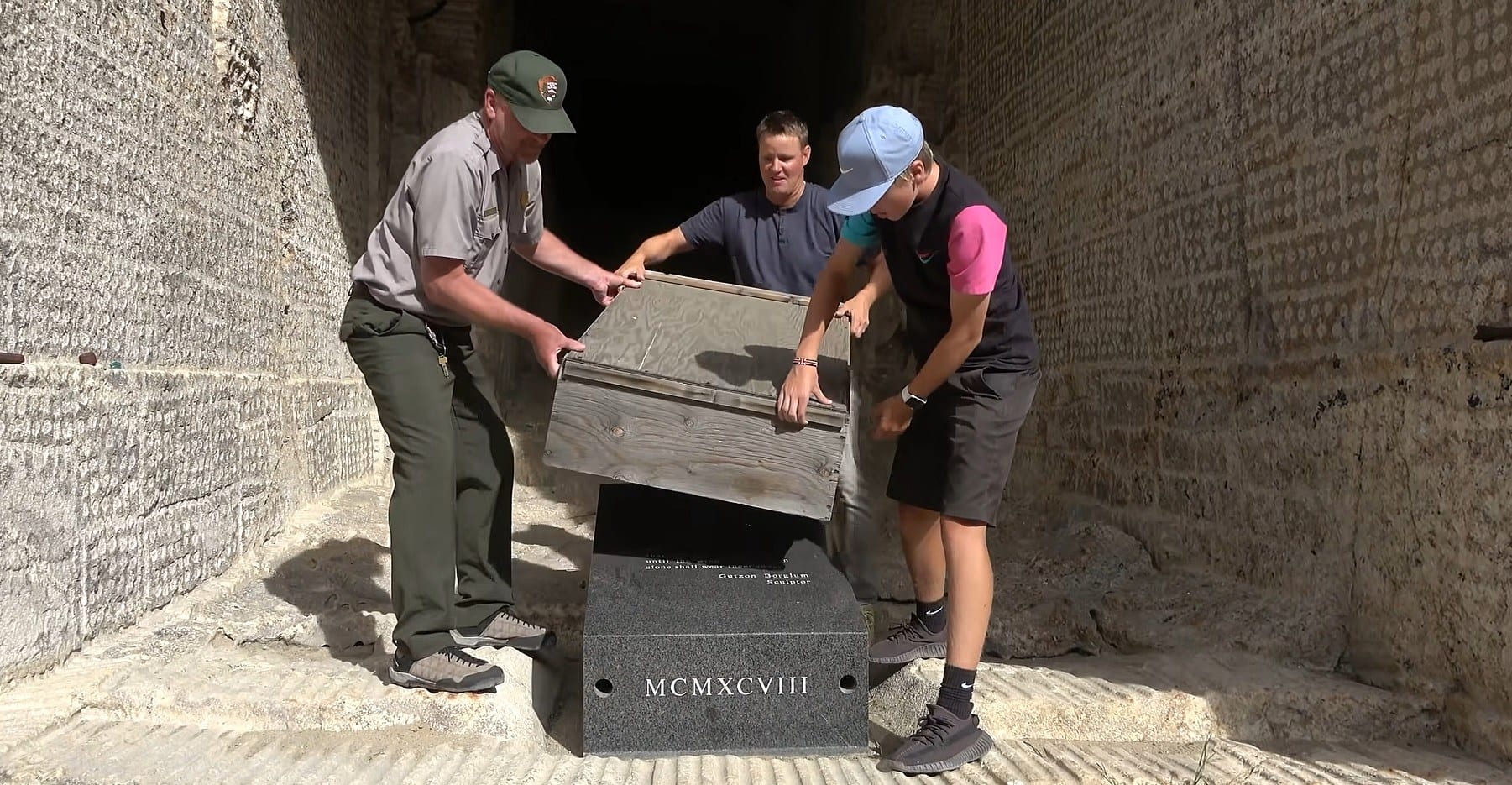
The panels are sealed inside a teak box inside a titanium vault, covered by a 1200-pound granite slab that contains a quote from Borglum’s original plans.
“Let us place there, carved high, as close to heaven as we can, the words of our leaders, their faces, to show posterity what manner of men they were.
Then breathe a prayer that these records will endure until the wind and rain alone shall wear them away.”
Yep, that’s what they say. Pretty poignant, right?
If you’re planning to visit Mount Rushmore you should know a couple of things – it’s a very long drive into the middle of nowhere, and also the Hall of Records has no direct access, so you will not be able to peek inside.
The Native history in the area is fascinating, though, and the Badlands and Black Hills are beautiful – so go and enjoy, and happy travels!
It’s hard for me to understand people throwing their trash onto the ground and leaving it there. Paper, glass, pieces of clothing – there are trash cans literally everywhere, and most of us have pockets or backpacks or our cars where we could store things until we get somewhere with a receptacle.
Clearly, there’s something I don’t understand, because there is tons and tons of trash littering the wilds of our beautiful planet on any given day.
Eco-artist Mariah Reading is bringing awareness to the issue while cleaning up, and transforming trash into something gorgeous besides – she paints landscapes of the spot where she found the garbage on the garbage, and the results, well…you really have to see them for yourself.
Here are 14 gorgeous landscapes painted so skillfully they blend right in – even though they never should have originally been there in the first place.
It’s hard for me to understand people throwing their trash onto the ground and leaving it there. Paper, glass, pieces of clothing – there are trash cans literally everywhere, and most of us have pockets or backpacks or our cars where we could store things until we get somewhere with a receptacle.
Clearly, there’s something I don’t understand, because there is tons and tons of trash littering the wilds of our beautiful planet on any given day.
Eco-artist Mariah Reading is bringing awareness to the issue while cleaning up, and transforming trash into something gorgeous besides – she paints landscapes of the spot where she found the garbage on the garbage, and the results, well…you really have to see them for yourself.
Here are 14 gorgeous landscapes painted so skillfully they blend right in – even though they never should have originally been there in the first place.
James Franco once created an invisible sculpture called ‘Fresh Air’. It was described as an endless supply of oxygen. Someone actually bought the ‘sculpture’ for $10,000.
There’s almost no chance you don’t know who the Peanuts gang are. Even if you’re too young to realize that they were born as comics, and even though there isn’t an updated version on Nickelodeon, the holiday specials have pretty much ensured that Charlie Brown, Snoopy, and the rest are forever lodged in American culture.
In 1968, though, the Peanuts gang were anything but nostalgic history. At the height of its popularity, Charles Schulz and the world he created were about to break barriers with the introduction of its first African American character, Franklin Armstrong.
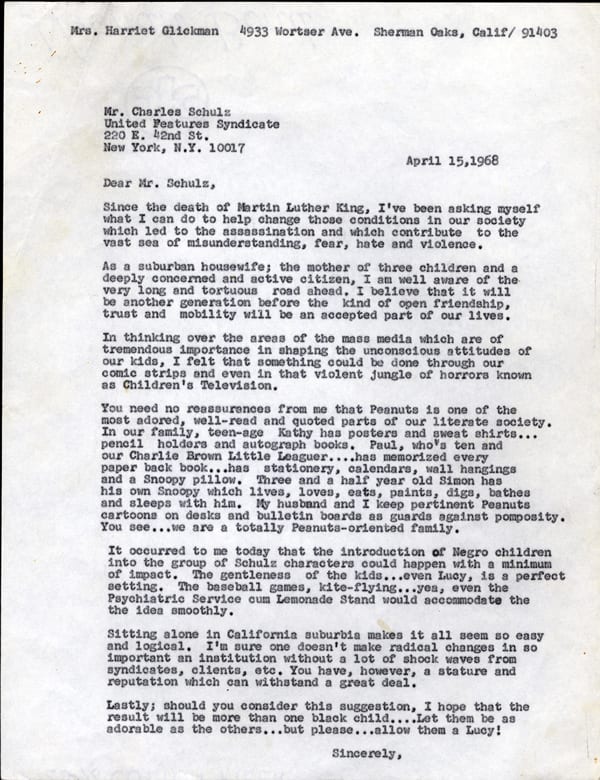
It was April of 1968 when Los Angeles-area schoolteacher Harriet Glickman, who thought media had a role in shaping the views and attitudes of children, wrote a letter to Schulz:
“Since the death of Martin Luther King, I’ve been asking myself what I can do to help change those conditions in our society which led to the assassination and which contribute to the vast seas of misunderstanding, fear, hate, and violence. …the introduction of Negro children into the group of Schulz characters could happen with a minimum of impact. The gentleness of the kids … even Lucy, is a perfect setting. The baseball games, kite-flying … yes, even the Psychiatric Service cum Lemonade Stand would accommodate the idea smoothly.”
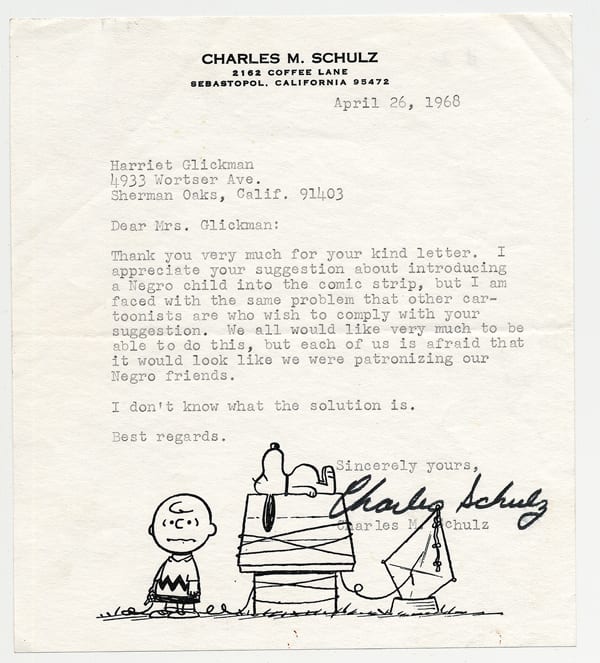
Schulz replied to the letter, telling Glickman what he would “like very much to be able to do this,” but confessed that he and other cartoonists were “afraid that it would look like we were patronizing our Negro friends.”
He told her he didn’t know what the solution was, and Glickman took that as a challenge to help him figure it out. She offered to pose the question to some of her Negro friends and get back to him, to which Schulz replied that he would be “very anxious to hear what your friends think of my reasons for not including a Negro character in the strip.”
They corresponded back and forth for some weeks, and the letters culminated in a strip, to be published on July 31, 1968, that Schulz told Glickman he thought would please her.
Franklin Armstrong entered the Peanuts strip that day, the first Black and first minority character to appear in any major, mainstream comic strip.
Later in his career, Schulz spoke about the particular strips featuring Franklin that received pushback from his editors.
“There was one strip where Charlie Brown and Franklin had been playing on the beach, and Franklin said, ‘Well, it’s been nice being with you, come on over to my house some time,’” Schulz recalled. “[My editors] didn’t like that. Another editor protested once when Franklin was sitting in the same row of school desks with Peppermint Patty, and said, ‘We have enough trouble here in the South without you showing the kids together in school.’ But I never paid any attention to those things, and I remember telling [United Features president] Larry [Rutman] at the time about Franklin—he wanted me to change it, and we talked about it for a long while on the phone, and I finally sighed and said, ‘Well, Larry, let’s put it this way: Either you print it just the way I draw it or I quit. How’s that?’ So that’s the way that ended.”
When Harriet Glickman passed in 2020, the director of the Charles M. Schulz Museum and Research Center, Karen Johnson, wrote about the woman she says is a hero.
“Heroes are hard to come by. I admire a lot of people, but not to the extent to call them a hero. But Harriet Glickman truly is MY hero.”
As far as Harriet, she was proud of Franklin, too, calling him her “third child.”
I love this story because it shows what can be accomplished when people take the time to listen to people who are different from them, to have an open and honest dialogue about a perceived impasse, and then work together to find a way to topple it effectively.
I’m not surprised at all that the Peanuts gang teaches us this one last lesson – it is, after all, what they do best.
There’s almost no chance you don’t know who the Peanuts gang are. Even if you’re too young to realize that they were born as comics, and even though there isn’t an updated version on Nickelodeon, the holiday specials have pretty much ensured that Charlie Brown, Snoopy, and the rest are forever lodged in American culture.
In 1968, though, the Peanuts gang were anything but nostalgic history. At the height of its popularity, Charles Schulz and the world he created were about to break barriers with the introduction of its first African American character, Franklin Armstrong.
It was April of 1968 when Los Angeles-area schoolteacher Harriet Glickman, who thought media had a role in shaping the views and attitudes of children, wrote a letter to Schulz:
“Since the death of Martin Luther King, I’ve been asking myself what I can do to help change those conditions in our society which led to the assassination and which contribute to the vast seas of misunderstanding, fear, hate, and violence. …the introduction of Negro children into the group of Schulz characters could happen with a minimum of impact. The gentleness of the kids … even Lucy, is a perfect setting. The baseball games, kite-flying … yes, even the Psychiatric Service cum Lemonade Stand would accommodate the idea smoothly.”
Schulz replied to the letter, telling Glickman what he would “like very much to be able to do this,” but confessed that he and other cartoonists were “afraid that it would look like we were patronizing our Negro friends.”
He told her he didn’t know what the solution was, and Glickman took that as a challenge to help him figure it out. She offered to pose the question to some of her Negro friends and get back to him, to which Schulz replied that he would be “very anxious to hear what your friends think of my reasons for not including a Negro character in the strip.”
They corresponded back and forth for some weeks, and the letters culminated in a strip, to be published on July 31, 1968, that Schulz told Glickman he thought would please her.
Franklin Armstrong entered the Peanuts strip that day, the first Black and first minority character to appear in any major, mainstream comic strip.
Later in his career, Schulz spoke about the particular strips featuring Franklin that received pushback from his editors.
“There was one strip where Charlie Brown and Franklin had been playing on the beach, and Franklin said, ‘Well, it’s been nice being with you, come on over to my house some time,’” Schulz recalled. “[My editors] didn’t like that. Another editor protested once when Franklin was sitting in the same row of school desks with Peppermint Patty, and said, ‘We have enough trouble here in the South without you showing the kids together in school.’ But I never paid any attention to those things, and I remember telling [United Features president] Larry [Rutman] at the time about Franklin—he wanted me to change it, and we talked about it for a long while on the phone, and I finally sighed and said, ‘Well, Larry, let’s put it this way: Either you print it just the way I draw it or I quit. How’s that?’ So that’s the way that ended.”
When Harriet Glickman passed in 2020, the director of the Charles M. Schulz Museum and Research Center, Karen Johnson, wrote about the woman she says is a hero.
“Heroes are hard to come by. I admire a lot of people, but not to the extent to call them a hero. But Harriet Glickman truly is MY hero.”
As far as Harriet, she was proud of Franklin, too, calling him her “third child.”
I love this story because it shows what can be accomplished when people take the time to listen to people who are different from them, to have an open and honest dialogue about a perceived impasse, and then work together to find a way to topple it effectively.
I’m not surprised at all that the Peanuts gang teaches us this one last lesson – it is, after all, what they do best.
The more time you spend on Instagram, the more it becomes apparent…there are some really strange and funny artists out there.
And a guy who goes by the name Chris (Simpsons artist) comes up with all kinds of odd, funny, and sometimes disturbing illustrations that we think you should check out…if you dare.
Are you ready to be titillated, creeped out, and entertained at the same time?
Well, we think this guy’s work hits the spot. Let’s take a look.
We often don’t think about the little details when we’re watching a movie because we’re focused on the story and the characters, so hearing about how the magic comes to the screen is fascinating.
Start popping the popcorn and look out for these 10 hidden stories from these iconic movie moments. These surprised even me, a huge movie buff!
1. Well played
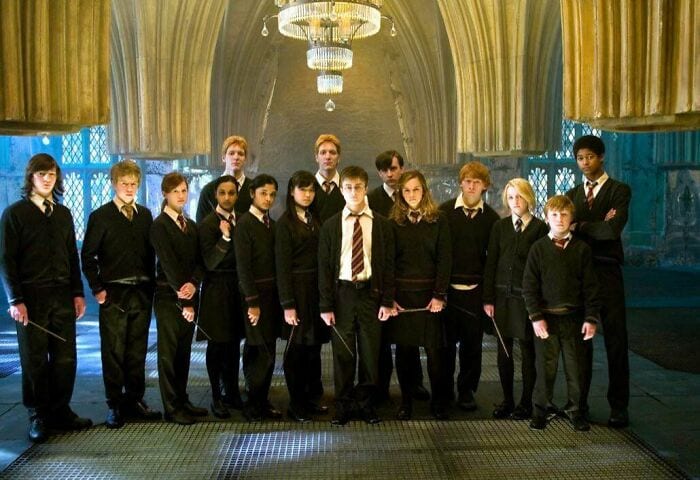
The only girl in Dumbledore’s army in Harry Potter and the Order of the Phoenix (2007) who isn’t wearing a skirt is Ginny. Her pants are likely hand-me-downs from her brothers.


 (@bibliotecascoslada)



 (@mariahreading)







#/media/File:Franklin_(Peanuts).png)