Futurists Weigh In on What Our World Might Look Like in 500 Years

Barring any significant scientific advancements, none of us alive today are going to be around in 500 years. That doesn’t mean we can’t harbor some curiosity about whether or not our planet will look the same for our descendents, or different?

If it’s going to look different, how will it look different? It can be a crazy thing to consider, and not just from a technology point of view, either.

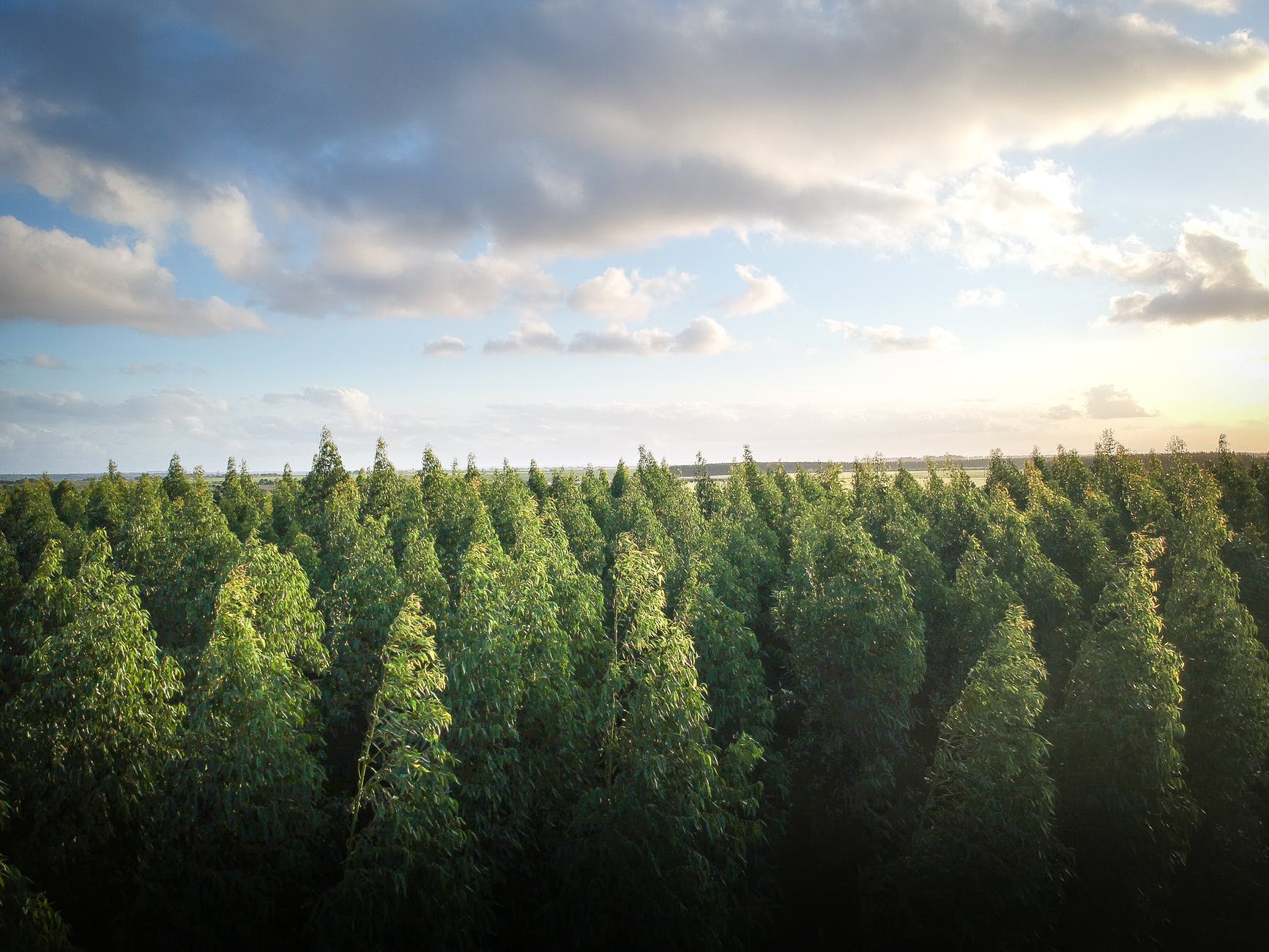
Image Credit: Pexels

500 years ago, after all, the world barely resembles the one we see all around us today. It was in the midst of a small Ice Age, and a period of vast European exploration and discovery.

When looking ahead several centuries, it’s hard to say for sure, largely because we remain unsure how the relationship between humans and the natural world is going to develop. We’ve been leaving our mark on the Earth since the Neolithic Age, manipulating the evolution of domestic plants and animal species, transforming the landscape, and of course, burning fossil fuels to our heart’s consent.

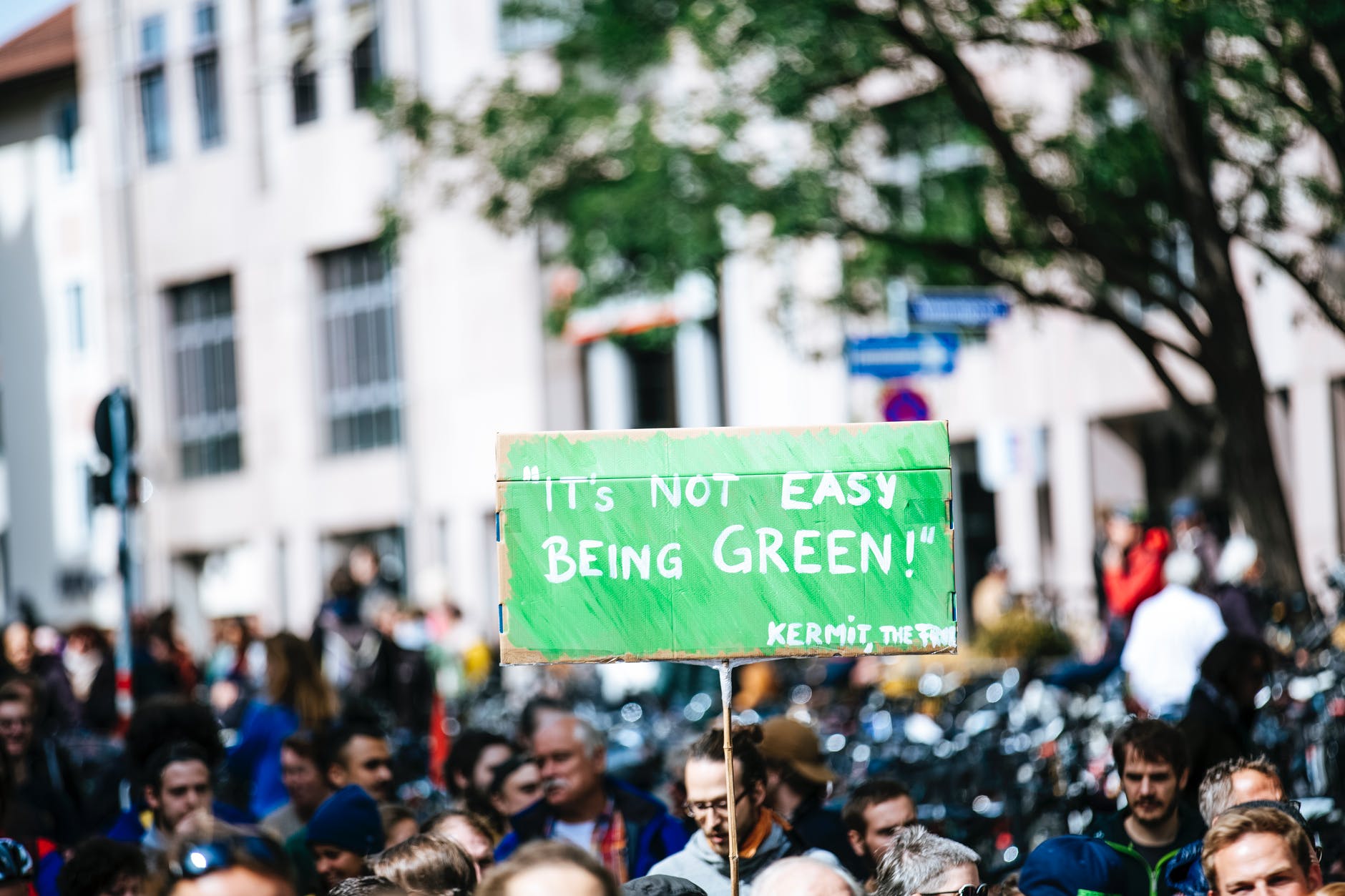
We’ve altered the planet’s climate, which continues to change and affect everything around us. Carbon dioxide levels are up to 412 parts per million as of the end of 2019, and global temperatures and sea levels are also on the rise.

Our planet is warming, and scientists have been warning for decades that natural disasters, food shortages, and other catastrophic events will eventually lead to social unrest, mass migration, and increased conflict.

Will the 26th century humans be dealing with the fallout of our lack of action? Or will they be looking back and thanking us for changing course while there was still time?

Image Credit: Pexels

Technology will surely continue to advance, and theoretical physicist Michio Kaku predicts that, by then, humans will be a civilization that’s learned to harness the entire sum of a planet’s energy. That means they would be able to use any clean energy technology we’ve imagined, and probably some that we haven’t.

Other theoretical futurists disagree, citing political and economic forces being likely to thwart any real steps toward progress.

Machine learning will be AMAZING, though. Stephen Hawking weighed in, proposing that by the year 2600, we would be publishing theoretical physics papers every 10 seconds. Moore’s Law says computer speed and complexity double every 18 months, so some of this work would surely be done by machines, without assistance.

Chew on that for a minute.

Other ideas include the average human lifespan stretching to 140 years, and that the digital storage of human personalities will let humans achieve a sort of immortality. We’ll be farming oceans, traveling in starships, and living on the moon and on Mars while robots take on the great frontiers.

Image Credit: Pexels

If any or all of that sounds pretty cool to you, I suggest you start calling your representatives today and pushing for action on climate change.

Otherwise we’re just going to be fighting over land and food instead of living on Mars.

And you’ve gotta agree that one of those things sounds way cooler than the other.

The post Futurists Weigh In on What Our World Might Look Like in 500 Years appeared first on UberFacts.
Learn About the World’s Deepest Underwater Trench, and 5 Other Facts About the Pacific Ocean’s “Ring of Fire”

There are few things as fascinating as the deepest, darkest parts of the ocean. We have no idea what’s down there, for one, and the mythology and lore surrounding spots like the “ring of fire” in the Pacific are enough to pique anyone’s curiosity.

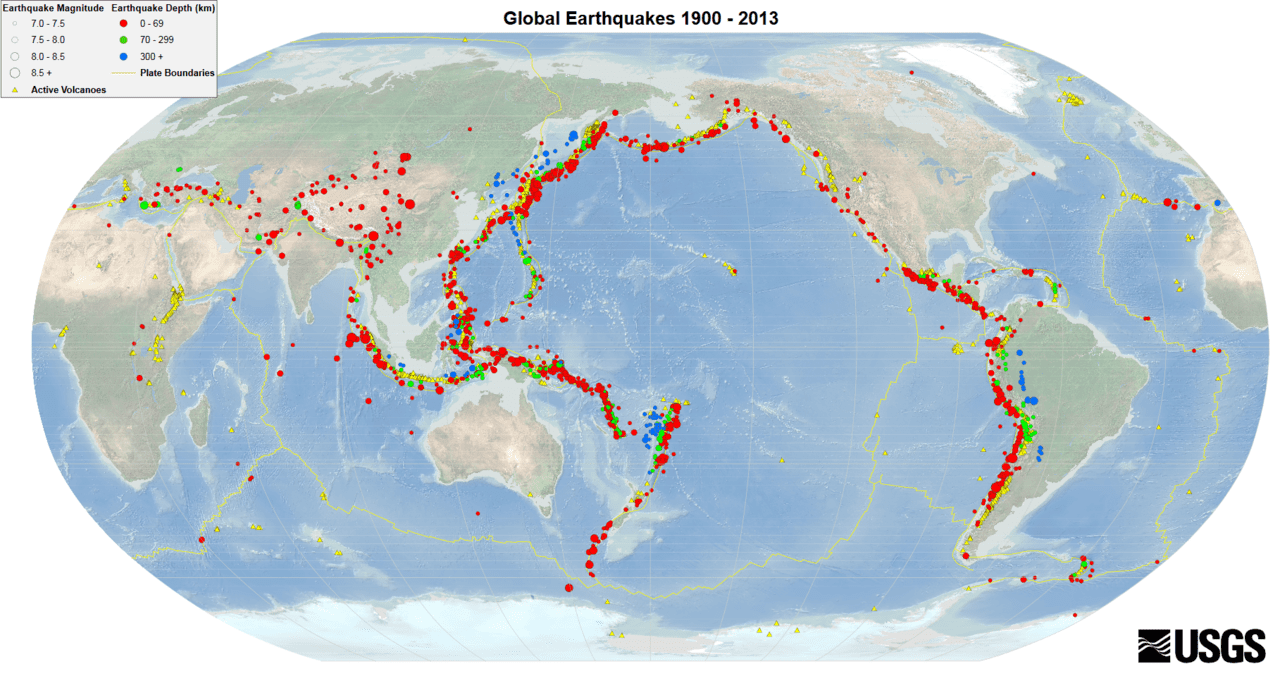
The “ring of fire” is a vast loop of volcanoes, trenches, and other seismically active delights that run all through the in-aptly named Pacific Ocean. Those 24,900 miles are where the majority of the world’s earthquakes and volcanic events take place.

If you’re chomping at the bit to learn more, don’t worry – we’ve got 6 great facts for you below!

6. It could help set up a new “supercontinent.”

Image Credit: Wikipedia

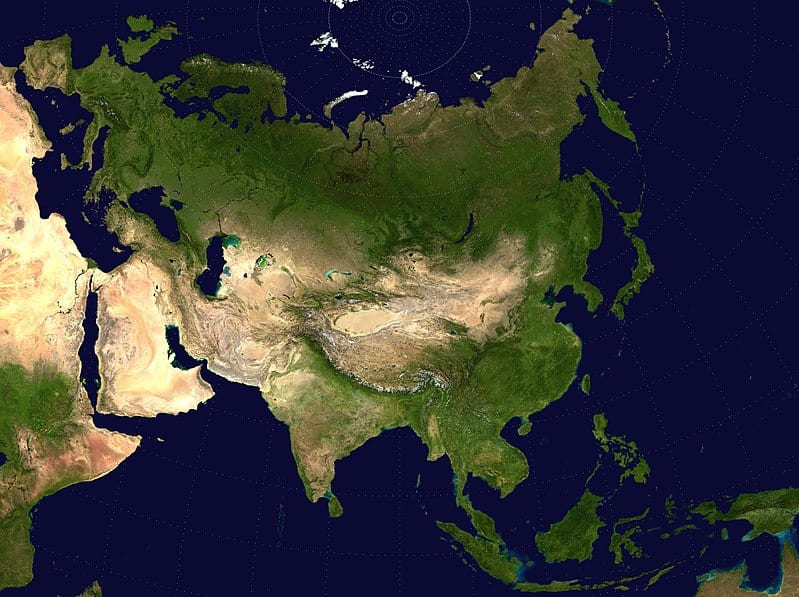
The Pacific has so many subduction zones that it should shrink significantly over the next 250 million years, bringing Asia, Australia, and both Americans together again.

As with most far-off science, there’s no consensus – others think the Atlantic or Artic Oceans will disappear first.

5. It touches more than 15 countries.

Image Credit: Public Domain

The “ring of fire” touches the western coasts of South, Central, and North America, sweeping up toward Alaska before ambling by Russia and through Japan.

From there, it lines up to hit the Philippines, Indonesia, Papua New Guinea, and New Zealand on its worldwide tour.

It ends in a number of volcanoes near northwestern Antarctica.

4. It produces a ton of geothermal energy.

Image Credit: Wikipedia

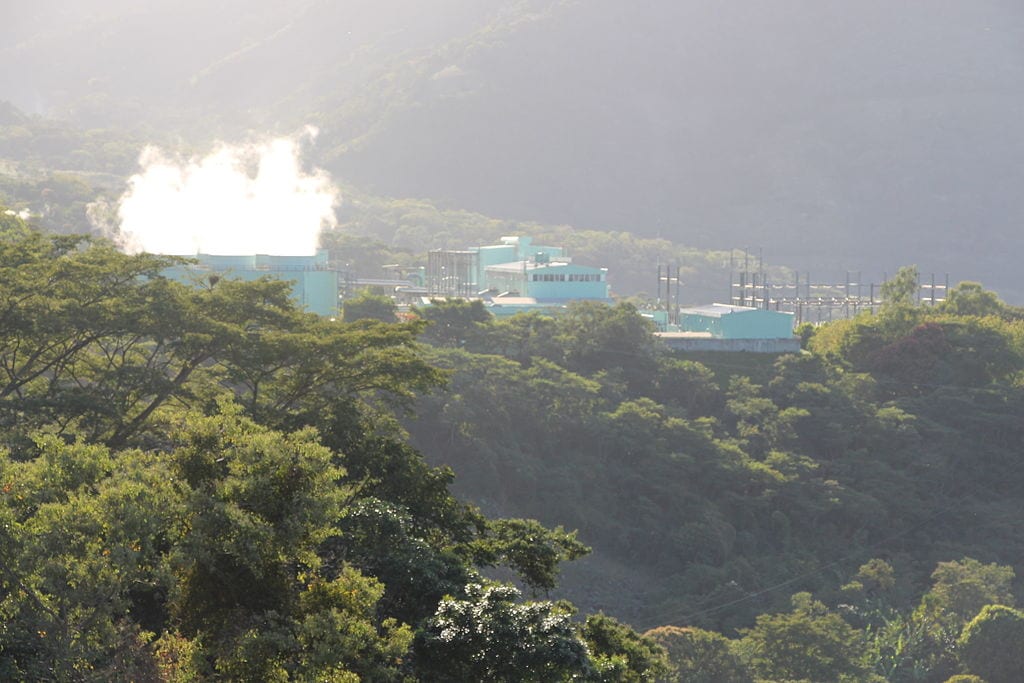
The interior of our planet is a source of nearly endless renewable energy, none of which emits greenhouse gasses.

The United States, Indonesia, Japan, New Zealand, and the Philippines have all capitalized on these natural hot water reservoirs for years.

3. It all comes down to plate tectonics.

Image Credit: Public Domain

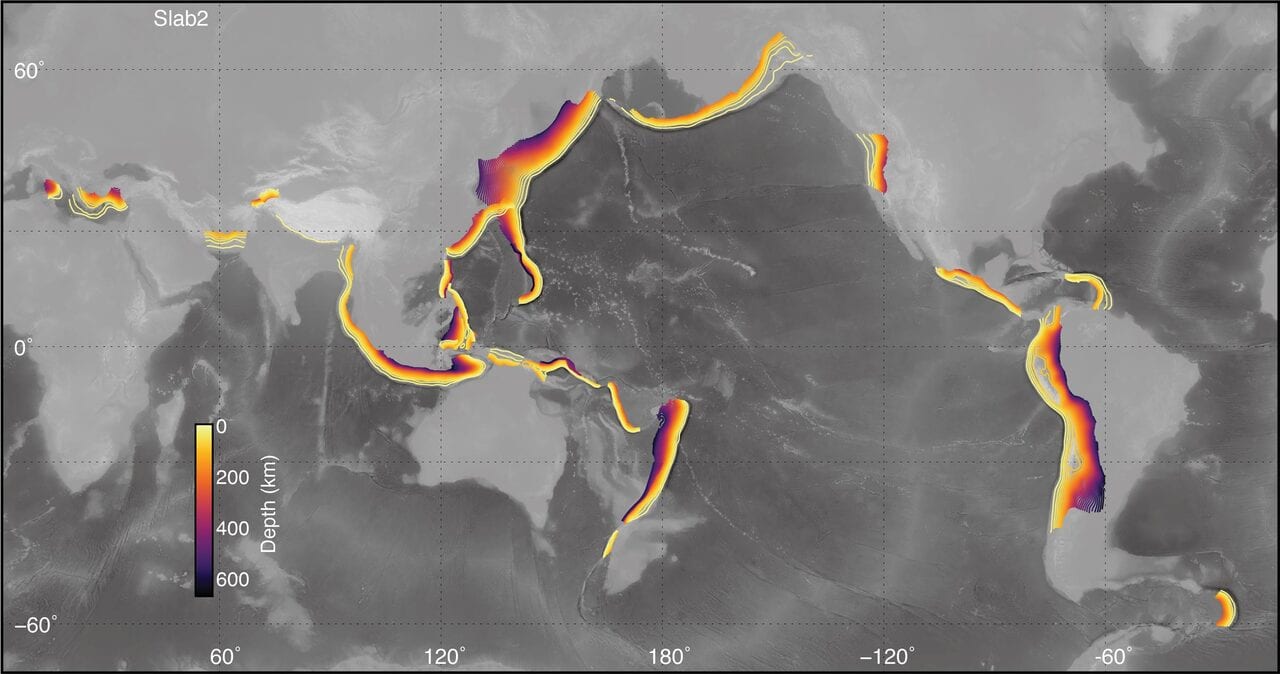
The planet is divided into 15-20 tectonic plates that drift over molten lava-like stuff that exists deeper inside the earth. There are three types of boundaries between them, and the “ring of fire” are home to all three.

Divergent boundaries occur when two neighboring plates move in opposite directions, generating new crust in the process.

The huge Pacific Plate is bring pushed away from four others by the another type, the East Pacific Rise.

And in California we have the transform boundary, where two plates sideswipe each other horizontally. The friction is what causes earthquakes.

2. Volcanoes and earthquakes abound.

Image Credit: Public Domain

There are around 452 active and dormant volcanoes through the “ring of fire,” which accounts for around 75% of the world’s volcanic activity.

90% of the world’s earthquakes occur in the general area, with some of history’s most shocking natural disasters all originating around the area’s volatile tectonic boundaries.

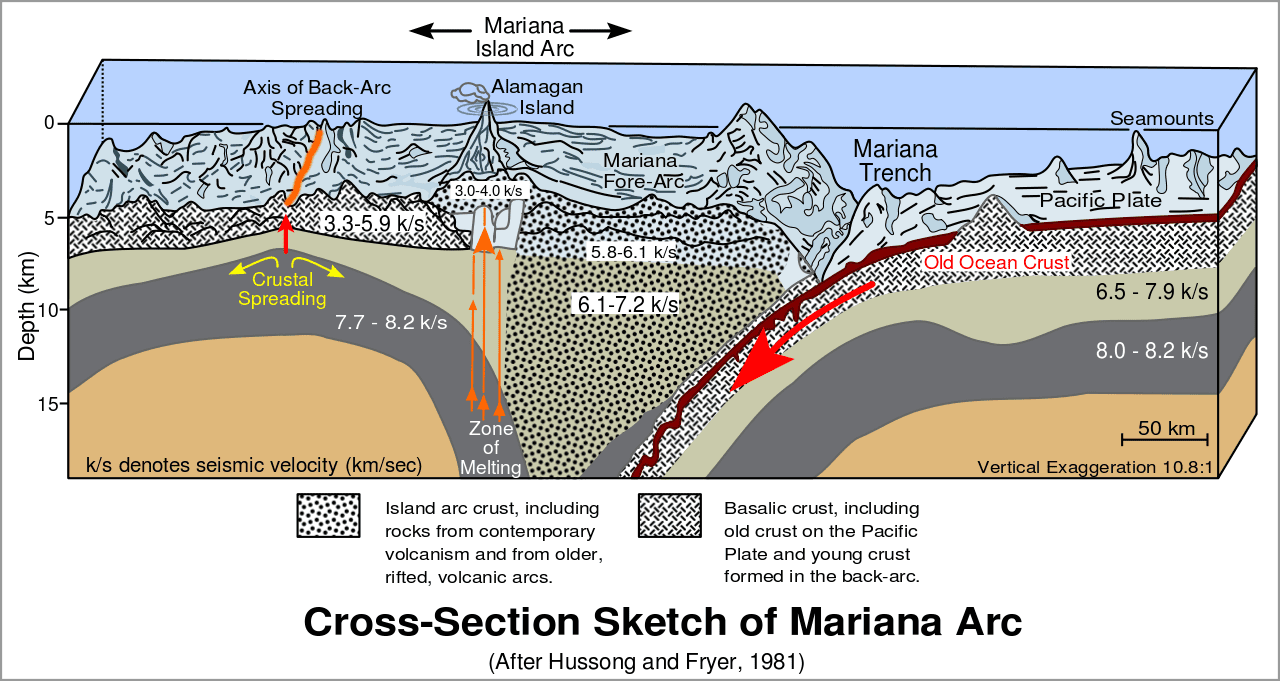
1. It’s home to the Mariana Trench.

Image Credit: Hussong, Fryer

A convergent boundary appears when plates collide head-on, and an excellent example sis how the Nazca plate is currently being driven underneath the South American continental plate. The ensuing subduction zone is setting off earthquakes like crazy, while lifting mountains and causing volcanoes to erupt at the same time.

The giant Pacific Plate is being overridden by the Philippine Sea Plate and creating the Mariana Trench, a yawning underwater chasm that’s deeper than Mt. Everest is high. The deepest part of the Mariana Trench, the “Challenger Deep,” has been measured at 36,070 feet below sea level.

The more you know, right?

Good luck to your opponents at your next night of Trivial Pursuit – they’re gonna need it!

The post Learn About the World’s Deepest Underwater Trench, and 5 Other Facts About the Pacific Ocean’s “Ring of Fire” appeared first on UberFacts.

This is How Fireworks Really Work

Whether you love them or hate them, fireworks are here to stay. Too many people fall into the “love” camp on this one – anyone without dogs or little kids, or who can wear earplugs if they need to, basically – and they really are a dazzling, fun way to celebrate any ol’ thing.

You might be curious how they work, though, or how we came up with exploding pretty things in the first place – and if so, we’ve got some fun info for you below.

Firecrackers are a form of fireworks that are smaller and simpler. They’ve been around for hundreds of years, and consist of black powder (gunpowder) in a tight paper tube, and a fuse used to light it.

Image Credit: iStock

Gunpowder contains charcoal, sulfur, and potassium nitrate, though the powder used in fireworks may have aluminum, too, to brighten the explosion.

A sparkler burns over a longer period of time, producing bright and showery lights, and contains different compounds – fuel, an oxidizer, iron or steel powder, and a binder.

Image Credit: Pexels

The fuel is generally charcoal and sulfur, and potassium nitrate is the most common oxidizer. The binder is sugar or starch, and then the whole thing is mixed with water and dipped onto a wire – voila! a sparkler.

To create the bright, shimmering sparks in both firecrackers and sparklers, aluminum, iron, steel, zinc, and magnesium are used, because when the metal fakes heat up they shine incandescently. Different chemicals can be added to create the different colors that make us ooh and ahh.

The large fireworks that you see at displays on the 4th of July or at sporting events are called aerial fireworks, and they’re made up of a shell. A shell has four parts – a container, stars, a bursting charge, and a fuse.

Image Credit: Pexels

Below the shell is a small cylinder that contains the lifting charge to get it off the ground.

The shell is launched from a mortar, like a short, steel pipe with black powder to lift it into the air.

When it launches the shell, it lights the fuse, which burns until the shell reaches the desired altitude before it explodes.

Image Credit: iStock

There are more complicated shells, called multi-break shells, that burst in two or three phases to create different colors or compositions or brighter or softer light. Some of the crackle, or whistle, etc. They’re basically shells within shells, each ignited by a separate fuse, or perhaps set up so that the bursting of one shell ignites the next one and so on.

The different patterns are created by the arrangement of pellets inside the shell. If you space the pellets equally in a circle, you’ll see a set of small explosions equally spaced in a circle. Basically, whatever you want to see in the sky, you create it in the shell with the pellets, then place explosive charges in order to blow them outward into a large figure.

Image Credit: Pexels

I’m kind of surprised that things are a bit simpler than I figured, but I suppose that’s the way with most things, once you pry the lid off.

Even so, I’m not going to be making my own fireworks anytime soon – best to sit back and enjoy, and leave the explodey things to the experts, don’t you think?

The post This is How Fireworks Really Work appeared first on UberFacts.

This is Why the Ocean Changes Color, Depending on Your Location

There are few things that attract people the way the ocean does. We’re not natural water-going beings, and yet, the lure of the sea’s vastness, the calming sound of its waves, has drawn us in since the beginning of time.

If you’re someone who has gone out of their way to visit the ocean whenever and wherever you’re in the vicinity, you might have noticed that it’s not always the same color.

Image Credit: Pexels

It makes sense, to some extent, that the ocean is an ever-changing beauty, and you probably guess that it has something to do with the depth in certain regions, but is there more to it?

Hold on – let’s find out together!

First, let’s dispel the notion that the water is – or is even supposed to be – blue. NASA oceanographer Gene Carl Feldman explains:

“The water of the ocean is not blue, it’s clear.

The color of the ocean surface for the most part is based on depth, what’s in it and what’s below it.”

Basically, if a body of water is deep enough that light can’t reflect off the bottom, it appears blue. When the sun’s rays strike the ocean, they interact with water molecules and can be either absorbed or scattered. Light of shorter wavelengths – which looks to the human eye blue or green – is most likely to hit water molecules and scatter.

The depth of the water, as well as the composition of the ocean bottom, will affect whether we see the dusky, dark blue of large parts of the Atlantic, or a sapphire-blue as in the tropics, says Feldman.

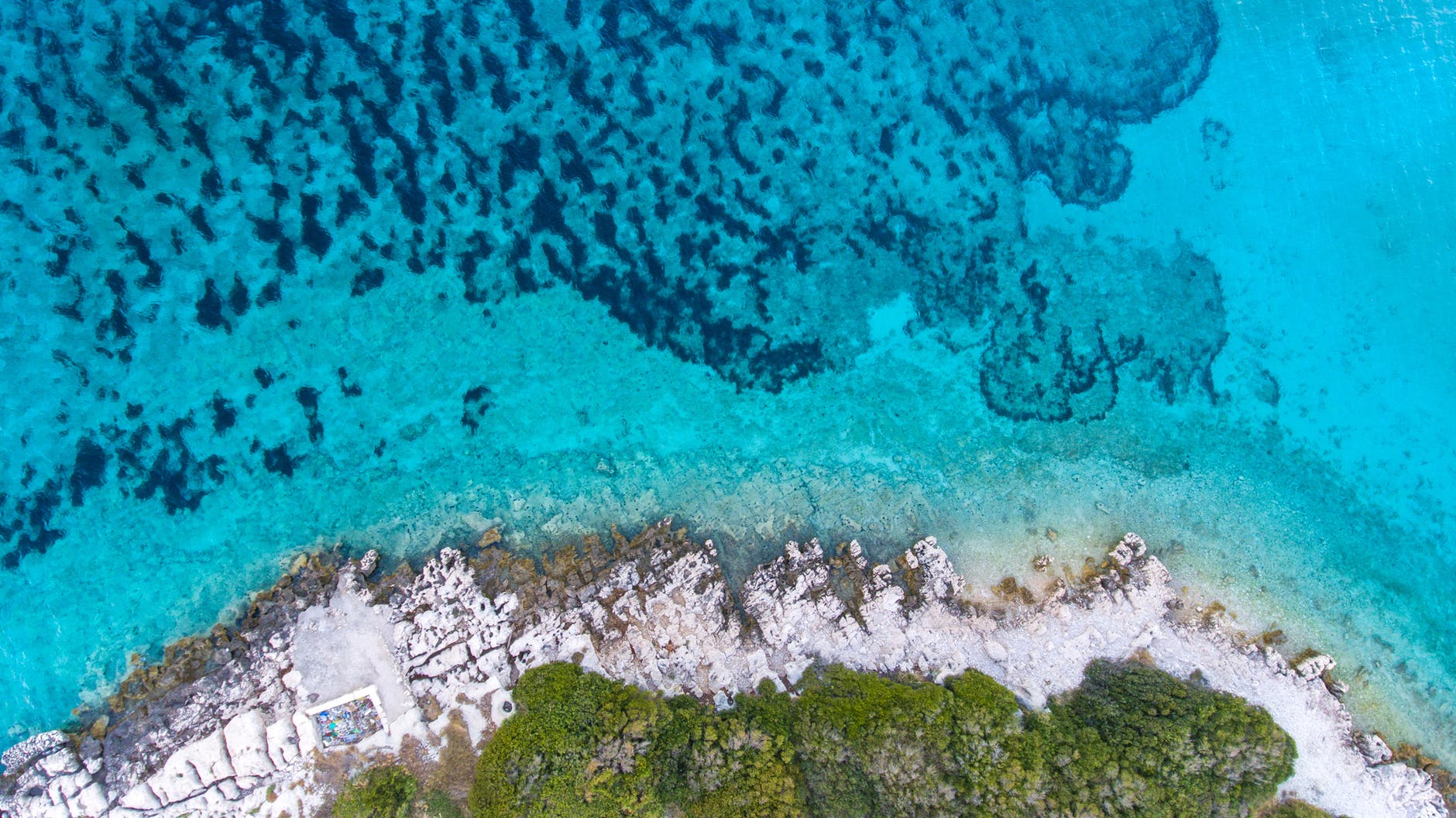
“In Greece, the water is this beautiful turquoise color because the bottom is either white sand or white rocks.

What happens is the light comes down and blue light gets down, hits the bottom and then reflects back up so you make this beautiful light blue color in the water.”

Complicating matters is the fact that the ocean isn’t empty – it’s full of small plant and animal life, along with sediment or other, man-made, contaminants.

Image Credit: Pexels

Feldman studies images of the ocean’s surface taken by satellite, and can analyze the color patterns to assess where sediment and runoff are an issue (the water will appear brown) or where phytoplankton, a microscopic plant, turns the water green.

Phytoplankton use chlorophyll to convert water and carbon dioxide into organic compounds, generating about 50% of the oxygen on the planet. They give ocean water a green tint most of the time, though they can also cause us to see yellow or reddish brown in some situations.

Feldman says green water should make us smid
As with everything in this world, balance is key – and both a decrease or increase in phytoplankton is not a good thing. It’s one more sign that our planet’s climate is out of whack.

Image Credit: Pexels

In the ocean’s least-touched, least-polluted sector – in the water off the coast of Easter Island – the water is deep and remarkably clear. It appears to the naked eye a pure, deep indigo.

“The light just keeps going down, down, down; there’s nothing that bounces it back.

Here is the deepest blue you’ll ever see.”

Just one more reason to love the ocean, y’all.

And if you do, with the depths of your heart, it’s long past the time to join in the fight to save it.

The post This is Why the Ocean Changes Color, Depending on Your Location appeared first on UberFacts.

This is How Much Water Exists on Earth

You probably know that there’s a whole lot of water in our oceans, but if you add in all of other bodies of water, not to mention what’s floating around in our atmosphere and up in the clouds, well, that number is probably bigger than any of us can imagine.

What is it exactly?

Image Credit: Pexels

326 million trillion gallons, or 1,260,000,000,000,000,000,000 liters.

Yeah. That’s obviously A LOT.

The oceans, of course, make up the vast amount of that number. They cover around 70% of the planet, with their average depth being 12,100 feet (3,688 meters). 98% of the water on the planet exists in the oceans, which makes it unusable as far as irrigation and drinking.

Less than 3% of the water on the planet is fresh, and 1.6% of that is frozen in glaciers and in the polar ice caps. Another 0.36% if underground, which means we’re left with only 0.036% of fresh water that’s available aboveground for us to all share.

Image Credit: Pexels

That’s still thousands of trillions of gallons of water, mostly found in lakes and rivers.

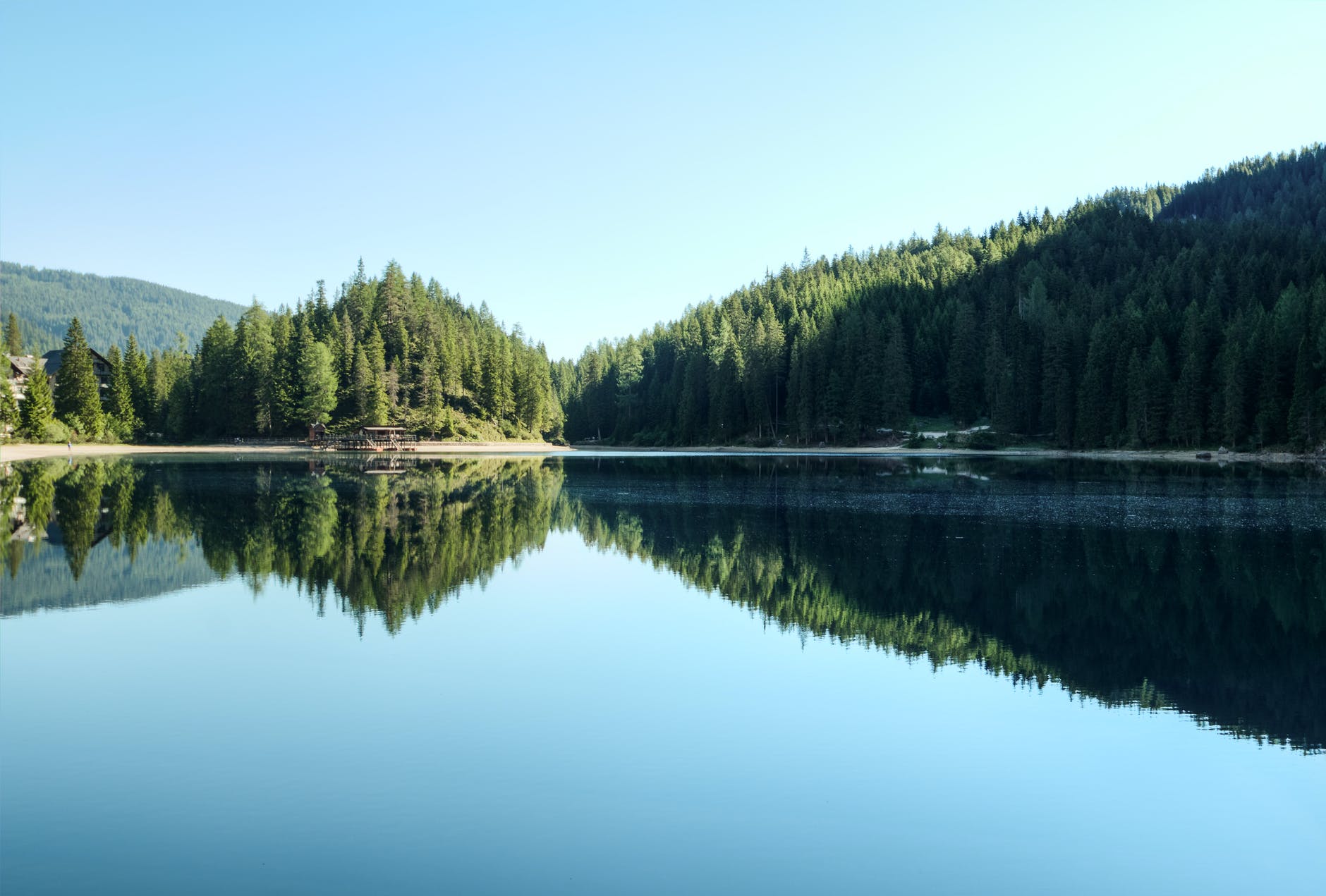
The earth contains around 117 million lakes – about 4% of the world’s land. The United States alone is home to 1681 lakes.

The rest of our water is floating in the air or is locked up in plants and animals (including your body, which is 65% water), and sitting in our fridges.

Image Credit: Pexels

Now you know a little bit more about our world’s water, salt and fresh.

And it probably seems a whole lot more obvious why we need to protect the fresh water that we have, don’t you think?

Let us know in the comments!

The post This is How Much Water Exists on Earth appeared first on UberFacts.

Orchid and More Words With Surprisingly Risqué Origins

Unless you’re an etymologist, I highly doubt you spend your days thinking about the history and evolution of language.

With bills to pay, errands to run, and work to get done we don’t all have the time to consider how and why our language has evolved over the centuries.

However, some words are worth taking the time to investigate. You’d be surprised at which ordinary, every day words actually have a naughty history.

They may seem innocent enough but these 9 words each have a risqué origin that might leave you blushing.

1. Patridge

Image Credit: Unsplash

You might be familiar with a partridge in a pear tree or even the Partridge Family, but did you know the word partridge comes from the Greek word perdesthai, meaning “to break wind”?

This references the whirring sound its wings make when it takes to the skies.

Think about that the next time you’re singing 12 Days of Christmas.

2. Gymnasium

Image Credit: Unsplash

When you read the word gymnasium you might recall memories from your younger years of dodging balls, enduring the Presidential Fitness Test, or enjoying a pep rally.

What probably doesn’t come to mind is… nudity.

Gymnasium comes from the Greek gumnazeinwhich means to exercise or play sports in the nude.

According to National Geographic, we’re not sure exactly why the Greeks were so keen on letting it all hang out, but it probably had to do with the Mediterranean climate and an abundance of body confidence.

3. Porcelain

Image Credit: Pexels

What could be naughty about porcelain? It’s so delicate and dignified.

Porcelain in and of itself is not a naughty word, as it translates simply to “cowrie shell.” Cowrie shells (remember “puka” shell necklaces?) are small, delicate and pretty.

However, the shell’s name in Italian is from porcella meaning “young sow,” or “young pig.” It is thought the shells were named for their resemblance to a cow/pig’s outer genitals.

Not so dignified now, huh?

4. Mastodon

Image Credit: Snappy Goat

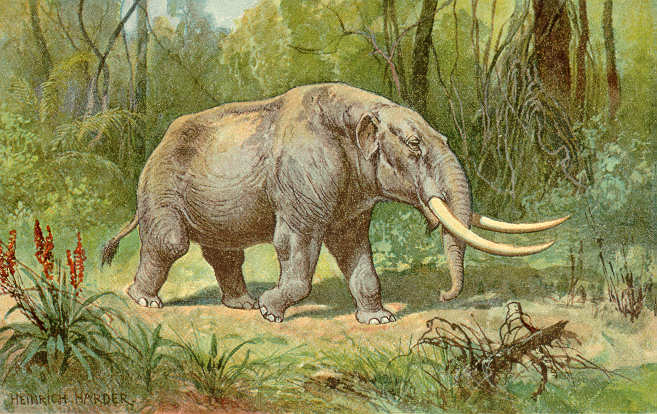
Mastodons are the ancestor of our modern day elephant. These large beasts roamed North and Central America during the late Miocene period up to their extinction 10,000-11,000 years ago.

In Greek, masto translates to “breast” and odon translates to “tooth,” so mastodon really means “breast-tooth.”

It was Georges Cuvier, a 19th century French naturalist who coined the name in 1817, after discovering nipple-like projections on fossils of the mammal’s molars.

5. Punk

Image Credit: Unsplash

When you read the word punk, you might imagine a band of rock and roll music artists or a group of their leather-clad fans thrashing in a most pit.

Though it describes a particular genre of music and style, the word punk originally meant something was “worthless” or a “worthless person” of a “criminal” background.

It was also used to describe female prostitutes, as seen in Shakespeare’s Alls Well that Ends Well.

6. Musk

Image Credit: Pixabay

According to the Online Etymology Dictionary, musk comes from the Sanskrit word muṣka, which translates to “testicle.”

You’ve probably heard of “man musk,” in reference to a particular smell associated with the male of the species (whether it’s a good smell or not is up to you). But did you know male musk deer actually secrete musk in the form of a reddish-brown substance? (gag!)

It’s produced in a gland that was originally thought to look like a scrotum, although it is not directly tied to reproduction.

7. Forlorn

Image Credit: Pexels

We all experience lows in our life, but to be forlorn is to be more than just sad.

According to Dictionary.com, forlorn means to feel desolate, unhappy, lonely, or despairing.

Forlorn comes from Old English loren, meaning “to lose” or to be “depraved of.”

Those who are forlorn are destitute and godforsaken, abandoned by those they love.

And it’s hard to bounce back from a place like that.

8. Pasta Alla Puttanesca

Image Credit: Unsplash

Pasta alla puttanesca is a delicious Italian dish consisting of anchovies, olives, tomatoes, capers, and pasta. You may recognize it as the dish the Baudelaire orphans cooked up for Count Olaf in the first book of A Series of Unfortunate Events, but did you know the word puttanesca literally translates to “in the style of a prostitute”?

Some have theorized that courtesans and sex workers used the dish to lure in potential customers, or that it was a simple dish to cook up between services.

However, Italians use the word puttana like Americans might use “sh^t,” she the real origin of the name is most likely that someone just threw together whatever sh^t was on hand and called it dinner.

9. Orchid

Image Credit: Unsplash

I know what you’re thinking, but no, the origin of orchid is not related to the female anatomy. The name actually comes from the Greek orkhis, which literally translates to “testicle.” Yet another word whose origins are associated with male genitalia.

The orchid was named so for the shape of it’s root which resembles a testicle. The more you know!

Aren’t words fun?

My personal favorite of these saucy origins is pasta alla puttanesca. I can’t wait to see the look on my mother’s face the next time we have dinner and I tell her I’ve made pasta “in the style of a prostitute.”

Do you have a favorite world of indecent origin? Let us know in the comments!

The post Orchid and More Words With Surprisingly Risqué Origins appeared first on UberFacts.

This is When Turquoise Is More Valuable Than Diamonds

There are a lot of stones and gems out there that are more valuable than diamonds. The coveting of diamonds, the idea that they’re the end-all, be-all for women around the globe, that you must have a large one ready if you’re going to propose marriage, is all a marketing scheme.

That said, if I asked you to name a gem other than a diamond that has a large inherent value, I bet you would say a ruby, or maybe an emerald.

Not, probably, turquoise.

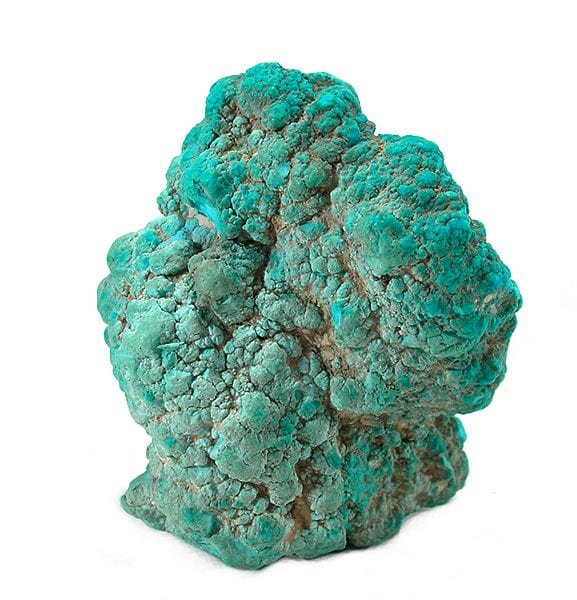
Image Credit: Rob Lavinsky

There are people, though, who have been mining, buying, and selling turquoise in the American Southwest for generations – people who know it’s history, it’s value, and can pick out both with a quick glance at the raw stones.

People like Michael Garland of Sedona, Arizona, whose family has worked with American Indian art for four generations.

He told How Stuff Works,

“Turquoise has a fascinating and unique history. This beautiful stone has captured human imagination all over the globe for thousands of years, from King Tutankhamun’s death mask to Aztec and Mesoamerican art.

Turquoise has been cherished and used by the Southwest Native American Indian tribes for centuries in trade, for ceremonial purposes, and to enhance their beautiful art forms — from sandpaintings to jewelry. Its rarity and beauty continue to make it a highly coveted stone.”

Cultures all over the world have long treasured the precious stone, and though its chemical compound is well known, the truth is that its value goes far beyond the science.

Image Credit: Public Domain

Here’s more from Garland…

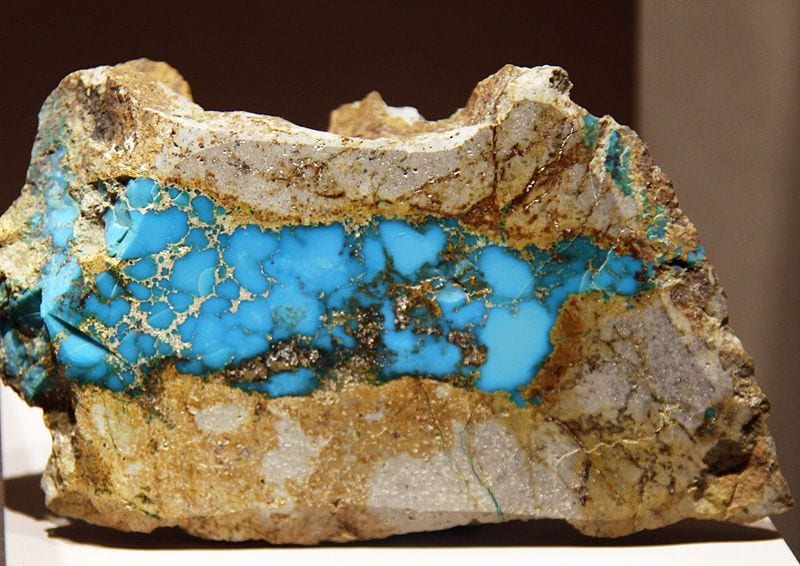
“Turquoise is formed by a complex combination of aluminum, copper, phosphorus, water, and other local ingredients that may change the color or add matrix (host rock). Turquoise is found at elevations between 3,000 and 8,500 feet (914 and 2,590 meters) and typically in dry, arid climates.

Only certain regions on earth provide this recipe for turquoise to form. Turquoise mines in the Southwest United States are the most famous, such as Bisbee, Lander Blue, Number Eight or Lone Mountain. However, other areas in the world produce high quality natural turquoise such as Iran, Tibet, China, Egypt and Kazakhstan.”

Emerald Tanner and her father, who own Tanner’s Indian Arts in New Mexico, talk about how the value can vary widely.

“The value of turquoise comes from the quality and rarity of the stone. Some mines produced tons of material over numbers of years — others, only a hundred or so pounds and for a very short period of time. Turquoise can be as soft as chalk or as hard as a 6 or 7 on MOH’s scale — the harder and more intense colors tend to be more valuable. Another variable in valuing turquoise is comparing all-natural turquoise to ‘stabilized’ or ‘enhanced’ turquoise.”

The fact is there’s a lot of turquoise out there – but not a lot that’s strong enough to survive the cutting and polishing process.

There is a process for “strengthening” turquoise that’s not naturally strong enough, but since it has to be manipulated and stabilized, it’s not as valuable.

Which means that even though you’ve probably seen something touted as turquoise in gift shops all over the world, only about 10% of turquoise on the market is natural and untreated.

The tanners say this definitely matters.

“Over 90 percent of the ‘turquoise’ on the world market has been stabilized, treated, or tampered with to enhance the color or harden the stone. Some of the ‘turquoise’ on the market isn’t even turquoise at all, but an imitation material that has been dyed or colored to look like the stone.

We always encourage anyone looking to purchase turquoise or turquoise jewelry to ask questions about the stones and forever say ‘if you don’t know your turquoise, know your turquoise dealer.’ Natural gem quality turquoise is one of the most rare and collectable natural commodities of our world. It is indeed a special stone and one to be collected and celebrated.”

Turquoise is graded like any other gemstone, on the four C’s of color, clarity, cut, and carat weight. There are other factors to weigh, as well, such as where it was mined.

Image Credit: Tim Evanson

Since it’s so much rarer than a diamond of the same grade, turquoise definitely qualifies as more valuable.

It’s worth more than gold, as well, and most other precious gems that people consider high value.

Garland says that, when it comes to turquoise, the hardness, aesthetic beauty, and rarity all play a huge role.

On hardness:

“Only a small percentage of all turquoise mined is naturally hard enough to be used in jewelry. In some cases, as much as 90 percent of the turquoise mined is chalky and soft and would need to be stabilized in order to be used. The top-level of turquoise that is naturally hard enough to be used is called ‘natural’ or ‘untreated’ turquoise. Within this top tier of natural turquoise, there are further categories such as ‘high-grade’ and ‘gem-grade’ that describe the absolute best and hardest natural stones.”

When it comes to aesthetic beauty:

“The depth of the stone’s color and the presence of matrix or host rock can both add value. Deeper, darker colors are generally more expensive. Tight webbing in the matrix (called ‘spider webbing’) can also add value to turquoise. There is an ongoing debate regarding value in the turquoise world: matrix vs. clear gem turquoise,” they write. “A gemologist will tell you the more clear, the more perfect the stone, and the more valuable. Collectors and Native American jewelers may deem the more matrix with intense and beautiful webbing, the more valuable.”

And last, the stone’s rarity:

“Rarity is a huge factor in price, specifically as it relates to the turquoise mines. A fantastic example of this is the Lander Blue turquoise mine in Nevada. Lander Blue was considered a ‘hat mine,’ meaning the entrance to the mine was so small you could cover it with a cowboy hat. High-grade Lander Blue turquoise can sell for as much as $500 per carat.

To put that in perspective, that’s more than $1.1 million per pound. Why is it so expensive?

Because it is considered to be some of the hardest and highest grade turquoise ever discovered. On top of its quality, it was an extremely small deposit — only about 100 pounds was mined before the deposit completely ran out in the 1970s. The rarity, combined with the quality of the stones and their aesthetic beauty, makes Lander Blue the most expensive turquoise mine in the world.”

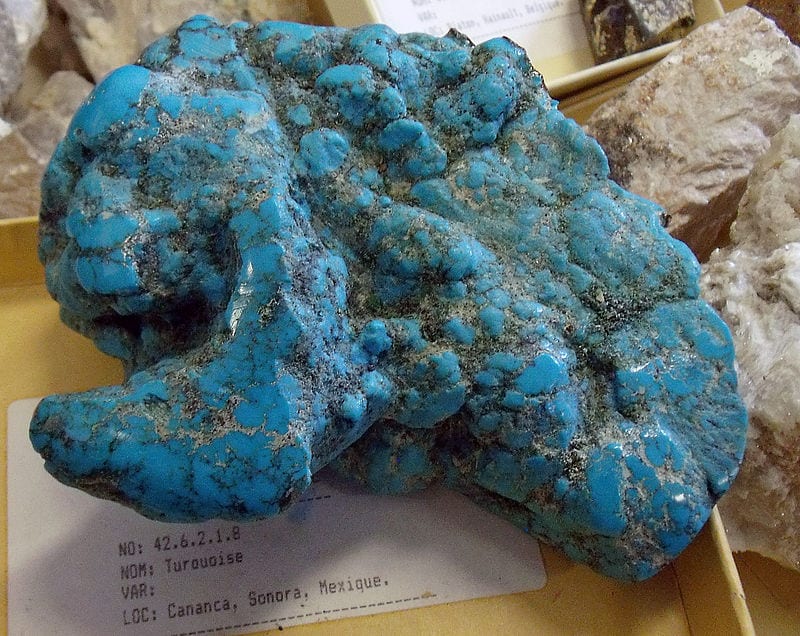
It’s not uncommon, then, for gem-grade turquoise to sell for anywhere before $40-$200 per carat – nearly four times the price for the same amount of gold, even at the low end.

Image Credit: Mike Beauregard

All of the experts recognize the significance the stone has for Native Americans who populate the American Southwest, and the Tanners make sure to point it out at every turn.

“Turquoise is a sacred stone to many of the Native American tribes of the American Southwest.

The unique appeal of turquoise comes from its color kinship to the sky and compatibility to water, which is the most precious thing in the Southwest.”

The Navajo, especially, says Garland, have a connection to the stone.

“Turquoise took on special meaning for the Navajo people, specifically, as one of the four sacred stones of the Navajo tribe.

Along with white shell, abalone and jet, these stones are associated with the Four Sacred Mountains, which form the traditional boundaries of Navajoland.”

In short, there are many things that make a stone valuable.

When it comes to turquoise, none of them are man made, and marketing is the last thing on any miner’s mind.

Just a few things to think about the next time you pass through a gift shop or visit a gem show – the turquoise might be a better investment than you might have thought!

The post This is When Turquoise Is More Valuable Than Diamonds appeared first on UberFacts.

Could Planting 1 Trillion Trees Help To Save Us From Climate Change?

Most of us are looking for ways to combat climate change, since the science is irrefutable – we’re running out of time. If we want to have a viable earth to pass down to our kids and grandkids, time is of the essence.

What’s the answer, though? That’s a little harder, but even if planting trees couldn’t hurt anything, could planting a whole lot of trees actually save us?

The answer is… scientists think so.

In a recent report, the U.N. suggested that adding 2.5 billion acres of forest to the world could limit global warming by 2050.

What’s more? Data backs up their claims.

Image Credit: Pexels

A group of researchers out of Switzerland found that restoring around 223 million acres of canopy cover (that’s an area roughly the size of the contiguous United States) is “our most effective climate change solution to date.”

That number of trees could store about 205 billion tons of carbon – 2/3 of the carbon that has been emitted since the Industrial Revolution.

Jean-François Bastin, from the Switzerland study, lays out what that really means.

“The idea was to estimate what tree cover could be expected when you removed the ‘human factor,’ i.e. what specific types of forest would naturally occur in the absence of other development, and where.”

They built a “model to link tree cover with climate/soil/topography, based on 78,000 observations of tree cover in protected areas.”

Image Credit: Pexels

They used some more fancy math to exclude land currently being used for urban settlements, croplands, and existing forests, which left them the total amount of land available for restoration.

These studies align with global efforts like the Trillion Trees Vision, which wants to plant those trillion trees by 2050, and the Bonn Challenge, a partnership between Germany and the U.N. that wants to restore 371 million acres of deforested land by the end of this year.

If you’re thinking this sounds easy, and we should just do it like, yesterday, but things are always more complicated than they seem.

Mostly, the fact that only a few countries are willing to chip in, says Jim Hallett, chair of the Society for Ecological Restoration’s board of directors.

“Implementation of forest restoration on the scale discussed in this paper is not as straightforward as it might seem.

By 2018, there were commitments of over 420 million acres (170 million hectares) by 58 nations, which exceeds the Bonn Challenge goal.

Current estimates indicate that around 29 percent of the committed lands are now under restoration, but most of this work has been done by a few countries.”

Other major challenges, according to Hallett, include “financing, governance, land tenure and ownership, [and] capacity to do the work. There is ample evidence that, in some contexts, if the benefits of restoration are not equally shared, the project will fail. So incentive programs have to be carefully developed.”

Image Credit: Pexels

Experts also warn that planting trees alone is not enough, even if we plant a billion of them. The models depend on us not further degrading the forested lands we currently have, too.

Not only that, but there are other scientists, like climate change researcher Eike Luedeling, who are skeptical for other reasons.

“Many of the allegedly available restoration areas are clearly unsuitable for more trees than they currently support.

If you look closely at the map, a large proportion of these areas are in regions where soils are permanently frozen.

The methodology implicitly (probably not on purpose) implies that carbon stock is proportional to canopy cover, i.e. ecosystems without trees contain no carbon.

This is clearly false and strongly inflates the global estimate [of restoration].”

Basically, for some, these studies and proposals are nothing more than interesting academic proposals that will never be able to be implemented in the real world.

The U.N. and Hallett, recognize that nothing they’ve proposed will be simple, but it could be a viable course of action if the kinks could be worked out.

Image Credit: Pexels

“What we need is universal action: international agencies, NGOs, governments, all citizens — anyone can be involved.

Local communities and small organizations may be especially effective.

While they do not have the same reach as national agencies, they have the benefit of knowing what works best in their own backyards.”

It seems like this could be a great solution, or at least the start to one.

I mean, who doesn’t love trees, right; they’re the best!

The post Could Planting 1 Trillion Trees Help To Save Us From Climate Change? appeared first on UberFacts.

The Arctic Circle Is Owned by 8 Countries, and 4 More Facts We Think You’ll Love

Ready to learn some good stuff?

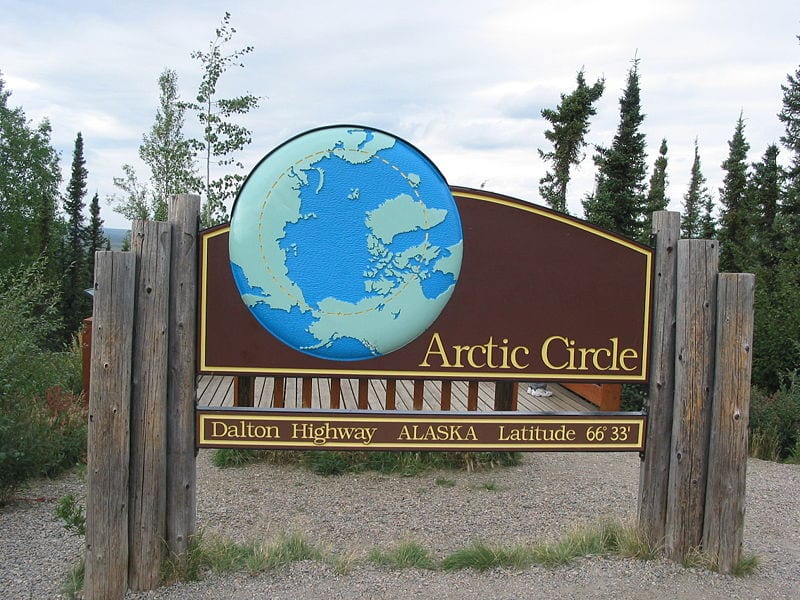
Geographers define the Arctic Circle as everything at or above 66 degrees and 34 minutes north latitude -more simply, anything between the 66th and 67th parallels in the Northern Hemisphere.

The Arctic Circle keeps strange hours, with the entire winter being more or less dark and other times of the year being sunny all the time. The land encompasses less than 4% of the globe’s surface, but it’s home to hundreds of thousands of people.

If you’re intrigued to know more, we’ve got you covered – below are 5 super cool facts about the Arctic Circle!

5. It’s not totally dark.

Image Credit: Wikipedia

First of all, even if the sun doesn’t make it all the way over the horizon, there’s still a sort of twilight that lends light to the skies. Even if the cities there don’t get a true sunrise for up to 65 days each winter, it’s not completely dark all the time.

If you’re looking for the “astronomical polar night” you’ll have to head farther north than 88 degrees latitude, where there are no human settlements. There, the complete and total darkness lasts for around 11 weeks.

4. It’s owned by 8 different countries.

Image Credit: Wikipedia

The United States, Canada, Russia, Norway, Finland, Greenland, Denmark, and Sweden all own land that falls north of the border for the Arctic Circle.

That’s fun!

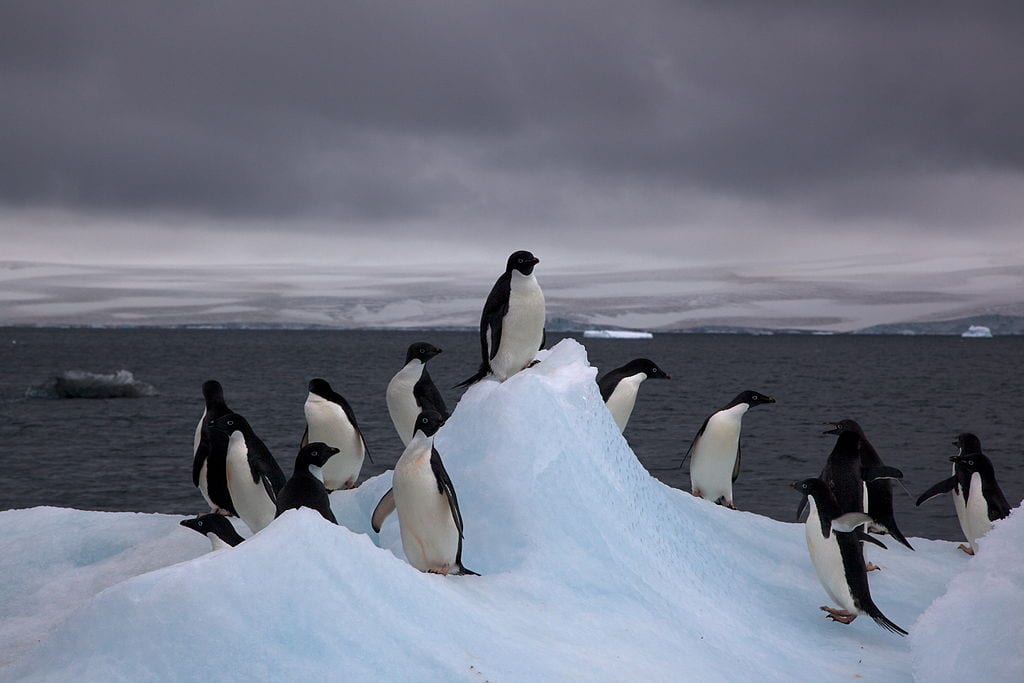
3. It’s far colder in the Antarctic Circle.

Image Credit: Wikipedia

All of the seawater beneath the North Pole moderates the climate, while the South Pole is a larger, deeper landmass with a far lower average winter temperature – -76 degrees F. The North Pole only (!) gets down to around -40 degrees F.

There are no human settlements in the Antarctic Circle.

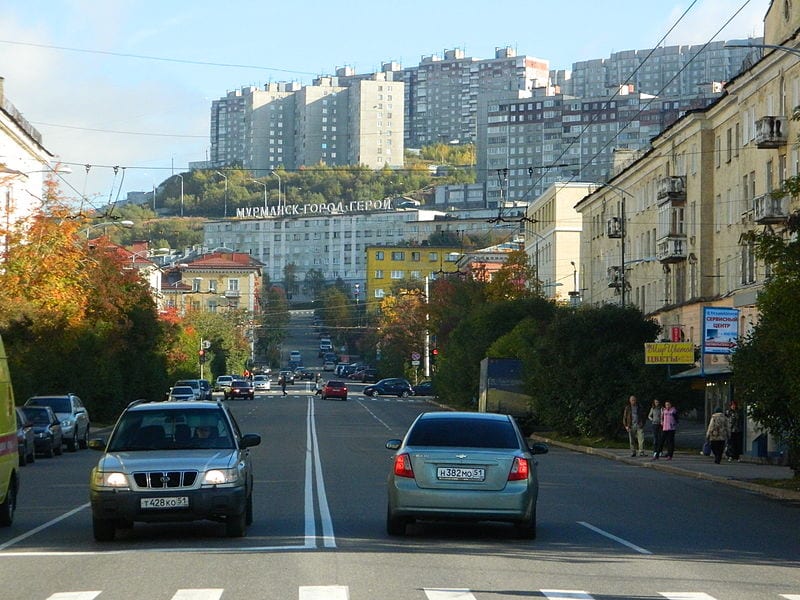
2. Murmansk, Russia, is the biggest city.

Image Credit: Wikipedia

It’s home to around 295,000 people, as well as the tallest building (236 feet high) in the Arctic Circle.

The second largest city, Norilsk, is also located in Russia, and famous for its mining operations and the historic Nord Kamal Mosque.

Around 295,000 people live in Murmansk, a port city founded in 1916 at the height of World War I. One of its Soviet-era landmarks, the 236-foot (72-meter) Arktika Hotel, is the tallest building north of the Arctic Circle.

The region’s second-largest city is Russian, too. Norilsk, a community of some 179,554 souls, is famous for its mining operations and the historic Nord Kamal Mosque. Outside of Russia, the Arctic Circle’s most populous municipality is Tromsø, Norway, which boasts the world’s northernmost university.

1. It’s shrinking.

Image Credit: Wikipedia

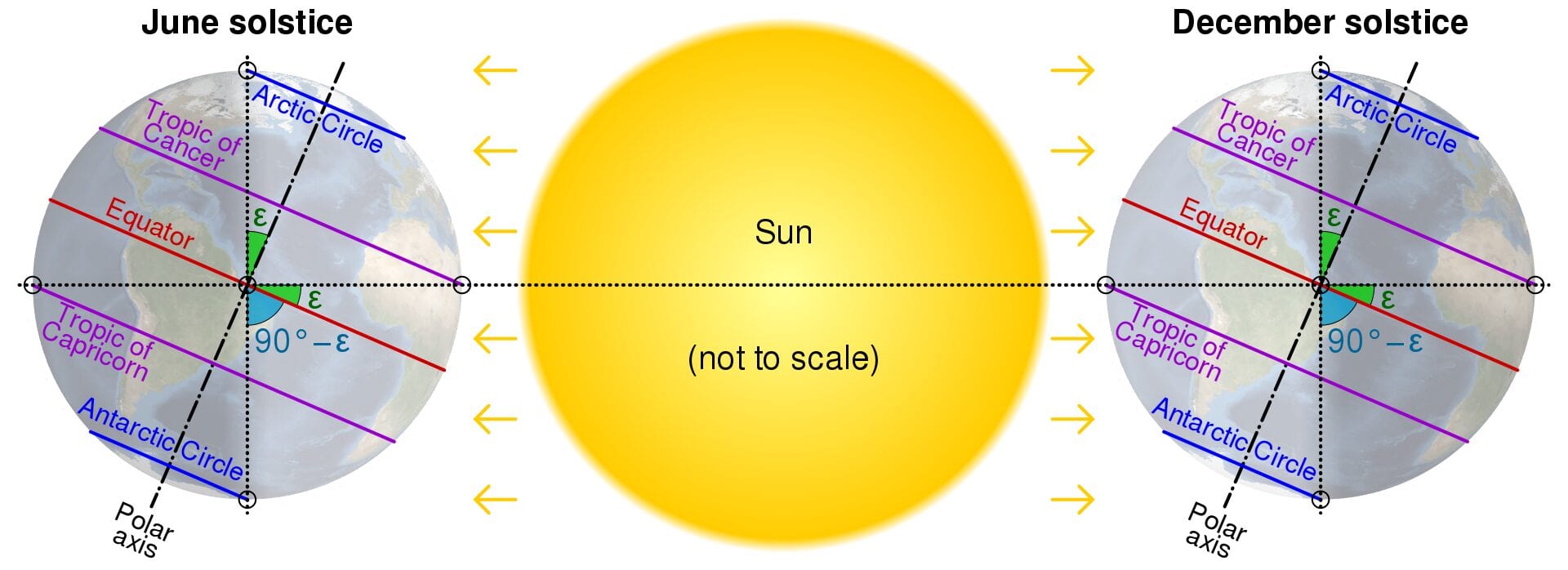
Earth’s axial tilt is changing, which means every 40,000 years or so, the boundary line retreats by between 46 to 49 feet.

Scientists project that the first human settlements will move outside the Arctic Circle by 2050.

I’m feeling ready to best someone at a trivia game any time, anywhere!

What’s your favorite fact about the Arctic Circle? If you’ve got one, lay it on us in the comments!

The post The Arctic Circle Is Owned by 8 Countries, and 4 More Facts We Think You’ll Love appeared first on UberFacts.
Unsolved Mysteries That Continue to Freak People Out

If you needed any more proof that people are completely fascinated by unsolved mysteries and true crime, look no further than the rabid fanbase for Netflix’s revival of Unsolved Mysteries. Not only that, but there are whole television channels that show nothing else all day and all night, and here we are.

If you can’t get enough (I feel you), here are 15 unsolved mysteries that make people lose their minds every time they hear about them.

15. That’s a lot of info to still be unsolved!

I say the most interesting case is the one billed as “Septic Tank Sam”.

It took place in Tofield, a small town in Alberta with roughly a 1,200 inhabitant and located 70 km east of Edmonton. It began in April 1977, when a local couple named Charlie and Mavis McLeod wanted a pump for their septic tank, and decided to take the one in the tank located in their old abandoned farm, located 13 km outside of Tofield. However, when they opened the tank, they saw a sock and a shoe, and when they picked up the shoe, it turned out to be attached to a leg.

The police were notified immediately. They drained the tank and removed the decomposed body of a full grown man, and so began one of the most horrifying murder cases in Canada’s history.

The man was heavily decomposed, and was wrapped in bedsheets. The killer put quicklime on him to quicken the decomposition. He was genitally mutilated and it the police a lot of time to know if he was man or a woman. He also had signs of torture, with burn marks from a butane blowtorch and cigarettes, as shown from the burns on his clothes. He also appeared to have been tied on a bed on the time of his death. He was eventually shot in head and in the chest before being dumped in the septic tank. There could’ve been more shots, but they only found two broken bones. These infos about his fate are a result multiple investigations done through the years.
He was buried in an unmarked grave, and was exhumed when forensic scientist Clyde Snow from University of Oklahoma wanted to make a 3d reconstruction of his face in 1979, and again in 2000 when forensic scientist Cyril Chan made another clay face of Sam. His teeth info was sent to over 800 dentists across the country with no avail, only agreeing that his teeth were in bad shape, and the dental work he did was probably done in Canada. Many people claimed to have known Sam and said that he fit the description of a missing relative. These reports came from all over Canada and even from California, but they were all ruled out by teeth records.

This scared the small town. People were checking their septic tanks, and were afraid that their neighbor is the killer and grocers were afraid that the killer might be a regular customer.

They could get a little info about him through the years of investigation:

He initially thought to be white, but agreed later that he was a native American. This is mainly based on his shovel faced incisors. His bones and teeth showed that he suffered from an illness in his childhood. He didn’t match any of the missing persons’ descriptions in Alberta, so he probably wasn’t from the province, and was probably a migrant worker. His clothes (Levi shirt blue shirt, jeans pants, Clarks Wallabee imitation) indicate that he was a worker, either in construction or in a farm. The killer was probably a local, since he knew that the farm was abandoned.

The motive for murder is probably revenge for a sex crime that Sam committed, as the genital mutilation indicated so. He could’ve been a child molester, or gay, or slept with the killer’s wife. Sam is said to have been between 24-32 years of age, and later the age was raised to 32-40. It was speculated at first that Sam was in the tank for three months, but the date was pushed back to a year.

WebSleuths.com tried to solve the case. Their nearest match was a man named Edward Arcand, a native who left his home in June 1975 in Colman in SW Alberta. He was driving his 1969 Ford Falcon station wagon, which was later found on the side of the road, and he was never seen again. He was ruled out because he was missing six teeth, while Sam had all his teeth.

Four decades have passes since Sam was murdered, and his identity, along with his killer’s, is yet to be known, as of 2019. With time passing, his relatives, killer, and any witnesses are dead or dying. Only hope to identify him now is through DNA, although he’s likely to remain a john doe forever. Retired sergeant Ed Lammerts, who one of the first people on the scene, says the only hope would be that the killer would confess on his death bed.

14. The Unsolved Mysteries episode about this dude blew my mind.

Xavier Dupont de Ligonnès.

He killed entire family and vanished. He has been looked for over a decade and even today french media brings new info about his troubled past, money and marriage problems – that gives you chills.

13. I need to know what happened here.

The death of Magdalena Zuk.

She was a polish girl who bought tickets for both herself and her boyfriend to go to Egypt but ended up going alone due to issues with her boyfriend’s passport/visa.

Just a day after she arrived in Egypt, she seemingly lost her mind. She started acting strange and was taken to a private hospital while arrangements were made for her boyfriend’s friend to come take her back to Poland.

At the hospital, she made multiple attempts to jump out the window and had to be restrained. A nurse untied her so that she could go to the bathroom and apparently Magda made a final, fatal dash for the window. She was taken to a larger hospital but died hours later.

You can find recordings of her video call with her boyfriend which clearly shows her being paranoid and jumpy. When asked what the problem was, besides phrases like ‘they have all sorts of tricks here’ and ‘I’ll never get out of here’, all she said was one letter – M.

Her boyfriend’s name started with M, her tour guide’s name started with M, the name of the friend who was being sent to her also started with M, if I remember correctly. So there really is no way to know what the whole thing was about. She also said something along the lines of ‘they’re watching me, I can’t talk’.

What made Magda act strangely? Why was she so scared? Why did she jump out a window? Did she even jump out on her own accord? Was she pushed off?

Another girl who was associated with her boyfriend also died under suspicious circumstances but I couldn’t find much more on that in English.

12. Maybe it was aliens?

The disappearance of Brian Shaffer

He went out drinking with friends, entered a bar and never came out again. Nobody knows what happened to him and there were no other exits inside. He just disappeared without a trace.

11. You’ve definitely gotta be careful!

Giulio Regeni was an Italian university student from Cambridge. He was doing some research in Egypt for the American University in Cairo and he wrote some articles, with a pseudonym, about the 2011 Egyptian revolution. His dead and mutilated body was found on the side of a road outside Cairo on 3rd February 2016.

He had signs on his body that indicated he was brutally tortured, broken ribs and fingers, both legs, arms and five teeth. He was probably killed by the Egyptian secret services. We still don’t know the truth about his death and the Egyptian government still hasn’t do anything to help Italy solve the case.

This made and makes me realize how dangerous are some countries in the world still today.

10. How is this possible?

Missy Bevers.

The footage of her attacker wandering around the church in riot gear, waiting (?) for her to arrive.

Horrifying.

The fact that they are on crystal clear video yet still has not been identified. Just wtf all around.

9. Who WAS this guy?

In early 1945, a Boston hospital received an unconscious patient suffering serious injuries, including infected shrapnel wounds.

The hospital was taking in injured seamen from several US ships, and no one bothered asking questions as they started treatment, but someone wrote on a card, “Charles A. Jamison (some articles say ‘Jamieson’); forty-nine; religion-Catholic; American. Cutty Sark.”

After extensive treatment, Jamison slowly improved to the point he could speak. Unfortunately, he seemed to be suffering amnesia, and what little information he could give couldn’t be matched to any records.

There was no US enlisted man named Charles Jamison (or any variation) who was unaccounted for. The patient’s fingerprints and photos were checked against military and criminal records with no match.

No ship named Cutty Sark was listed in the US military. There was one used by the British Navy. This seemed promising as among Jamison’s distinctive tattoos was one with the US and British flags, and he recalled living in London and training at a British gunnery school, but the British vice-consul (who felt Jameson spoke with a British accent) sent his information to the Admiralty and the British Maritime Registry, who couldn’t match it to any sailor.

Despite record searches in both the US and the UK, and widespread newspaper coverage, no one was ever able to figure out who Charles Jamison was. He spent 30 years in the hospital before he died with no solid identity.

8. They definitely sold that house.

The Watcher.

In New Jersey a family bought a house at 657 Boulevard and began receiving letters from an eloquent man who claimed to have inherited a family tradition of “watching” the house.

The letters were not pleasant ones.

7. You should see my face right now.

The Atlas Vampire

In 1932, a woman living alone in Stockholm was found bludgeoned to death in her apartment. The discovery of a blood-covered gravy ladle led police to believe that they had found the murder weapon, but this was not the case. The murderer had used it to drink her blood, and had successfully drained the corpse of nearly all liquid before fleeing the scene.

6. Yeah all of that sounds suspicious.

The Isdal woman.

She was a foreign woman found burned to death at a remote area in Norway in 1970. She visited Norway twice in 1970… once in March 1970, and then in November 1970. The Isdal woman stayed at various hotels around Norway under several false names, and supposedly possessed false passports. Hotel staff reported that she kept to herself and spoke to them in German and broken English. She was also witnessed conversing in French with a man at a hotel lobby.

The Isdal woman stood out in Norway because she looked foreign and dressed very stylishly. She was also a lone woman staying in hotels, which was unusual in 1970. After her death, it was rumored that she was a spy from Israel or Russia. Nobody knows who she is and why she came to Norway. Her death was ruled as a suicide, though many investigators dispute this ruling.

5. How is he not a suspect?

Claudia Kirschhoch, a journalist going to a press trip in Havana, Cuba, didn’t make it to her destination. The 29-year-old stayed at the Sandals Beaches Resort in Negril, Jamaica while waiting for available flights to the United States since she was not able to enter Cuba.

Kirschhoch stayed a bit longer at the resort before mysteriously disappearing. The only missing things from her room were the clothes she wore the night of her disappearance. Kirschhoch befriended bartender Anthony Grant whose behavior, including calling in sick for four days after her disappearance, seems noteworthy.

Further investigations found evidence of Kirschhoch in his car, but authorities don’t consider him a suspect. A 2002 judge ruling says Kirschhoch died of foul play, but there were no charges.

4. What did they do with the art, though?

The Isabella Stewart Gardner Museum art heist:

On the night of March 18, 1990, museum guards allowed two men dressed as police officers to enter Boston’s Isabella Stewart Gardner Museum. They were fake cops and immediately tied up the guards and set about stealing 13 art works worth a half-billion dollars.

Despite the $10 million reward, the case remains unsolved.

3. Someone must know something…

Elizabeth Barraza & her husband lived in the neighborhood behind me. On January 25, 2019 someone drove up to the house as she was setting up for a garage sale. The person got out of their truck & walked up and shot her several times and then drove away.

We have surveillance video from a neighbor & it shows the whole thing. But there still hasn’t been a suspect named, the Harris County police are at a loss. It was so early in the morning that the light was still low so it’s hard to tell if the person is even a male or female.

Elizabeth was a wonderful person, she was heavily involved in a volunteer group that would visit hospitals dressed as characters from Star Wars. Her marriage was great, there’s just no reason for someone to want to kill her.

So over a year later there’s been nothing, all we know right now is that a random person just drove up and shot Elizabeth in her driveway.

2. I do not like this story at all.

The very first black drum major at Michigan State University disappeared one night and was never seen again. His wallet, car, and everything else he owned was left behind. He was supposed to appear in court to testify against someone who had stolen from him and beaten him up and it’s suspected that that person murdered him but no evidence was ever found and no one came forward.

There’s a great documentary about it that can be found here: What Happened to Henry?

1. That is one creepy sketch.

The Lake Bodom murders.

Four teenagers, 2 young couples, were brutally attacked while camping. The sole survivor underwent hypnosis to try to identify the murderer. Many criticised this method and dismissed it as nonsense noting the sketch didn’t really look like a real person, except for the fact that a man who looked just like it was photographed at a memorial service for the murders. He was never identified.

I’m honestly never going to get over some of these. They need to be solved!

What’s your “favorite” unsolved mystery? If it’s not here, tell us about it in the comments!

The post Unsolved Mysteries That Continue to Freak People Out appeared first on UberFacts.