
Frontman Alice Cooper once lost a 12-foot boa named Yvonne in a hotel room in Knoxville, Tennessee. The snake reappeared two weeks later, having crawled into the sewer system via a hotel room toilet.
A British survey concluded that…
A British survey concluded that, in an emergency aircraft evacuation, up to 35% of people admit they would try to take some or all of their belongings with them, despite being instructed not to.
The USA paid more for the construction…
The USA paid more for the construction of Central Park (1876, $7.4 million), than it did for the purchase of the entire state of Alaska (1867, $7.2 million).
Animals re-evaluate what they…
Animals re-evaluate what they experienced during the day in their sleep and thereby secure knowledge, meaning they have dreams as complex as a human’s.
Researchers examined more than…
Researchers examined more than 1,000 decisions by eight Israeli judges who ruled on convicts’ parole requests. Judges granted 65 percent of requests they heard at the beginning of the day’s session and almost none at the end. Right after a snack break, approvals jumped back to 65 percent again.
4 Interesting Facts About Rugby League
Rugby League is played all over the world. Yet, it’s quite unique in that, unlike many other sports, its popularity is regional rather than national. It enjoys particular popularity in northern England, for example, where almost all its top professional teams are based. Equally, its appeal in Australia is largely in the country’s east. The game enjoys some support in South Auckland in New Zealand and southwest France too. 1. A Working-Class Triumph Rugby League’s origins represent a triumph for the working class. Highlighting a gap between the more prosperous south and the industrial north, the split between rugby codes
The post 4 Interesting Facts About Rugby League appeared first on Factual Facts.
The Legendary Curse of King Tut’s Tomb (and 6 People Who Died From It)
King Tut, or Tutankhamun, was a boy king of Egypt, reigning from 1332 until 1323 BC. He was only 10 years old when he became Pharaoh. His young age and short reign are notable enough, but he is most famous for his tomb, which was opened in 1922 and found filled with gold and extraordinary Egyptian artifacts.
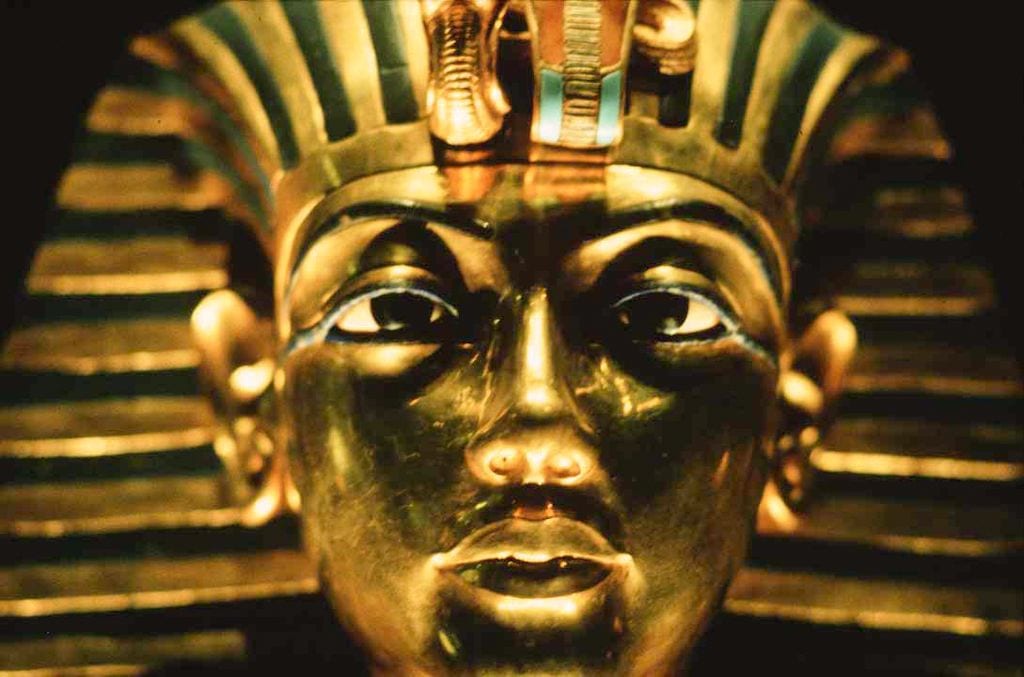
Photo Credit: Steve Evans, CC BY 2.0
When archeologist Howard Carter and his team opened the tomb of King Tut in 1922, those fascinated with Egyptology knew of the legends of curses and so watched for King Tut’s curse to extend its undead hands. The tomb had been left alone about for over 3,000 years – certainly, it was consecrated and should remain undisturbed.
And terrible events threatened those who dared to enter.
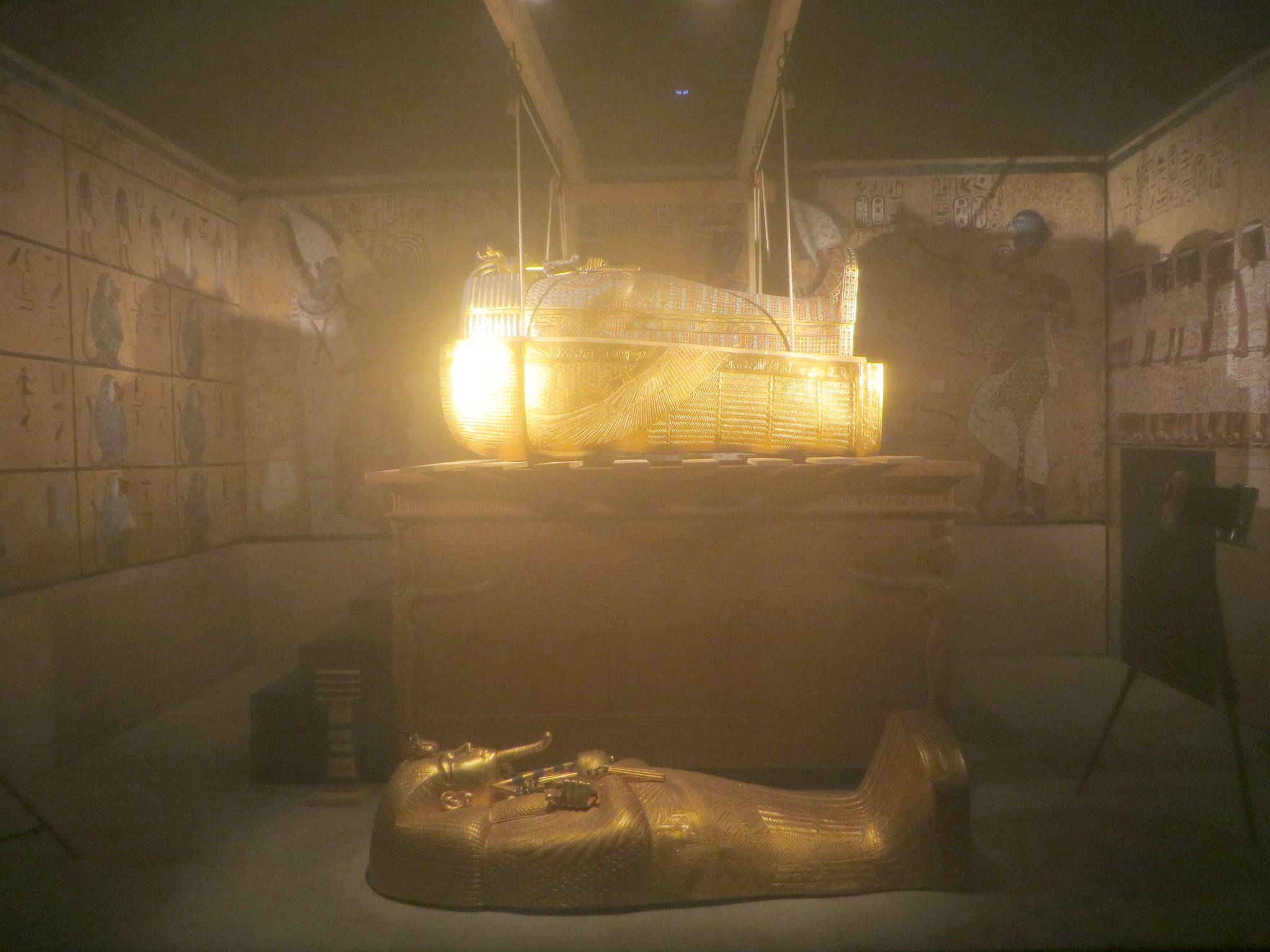
Photo Credit: Flickr
For the next 10 years, the dying didn’t stop.
Carter’s team was financed by a wealthy man named George Herbert, 5th Earl of Carnarvon. After receiving a cable from Carter announcing that after six years of exploration he had found the tomb of King Tut, Lord Carnarvon rushed to the area in Egypt known as the Valley of the Kings. He had dreamed of this moment for years and was a witness when Carter finally broke the seals and opened the door to the Pharaoh’s final resting place.

Photo Credit: Public Domain
When Carter pulled the door back, Carnarvon asked, ” Can you see anything?” Carter answered, “Yes. Wonderful things. Wonderful things!”
A few weeks later, as he was shaving, Carnarvon cut his face where a mosquito had bitten him. He consequently died of blood poisoning. Supposedly, the lights in his home back in England went out at his last breath, and a gash on the cheek of the king’s mummy matched the cut on Herbert’s.
The second ‘manifestation’ of the curse wasn’t a death, but it was terribly unlucky just the same. Carter sent a mummy’s hand paperweight to his friend, Sir Bruce Ingham, with a scarab bracelet inscribed with a warning: “Cursed be he who moves my body. To him shall come fire, water and pestilence.”
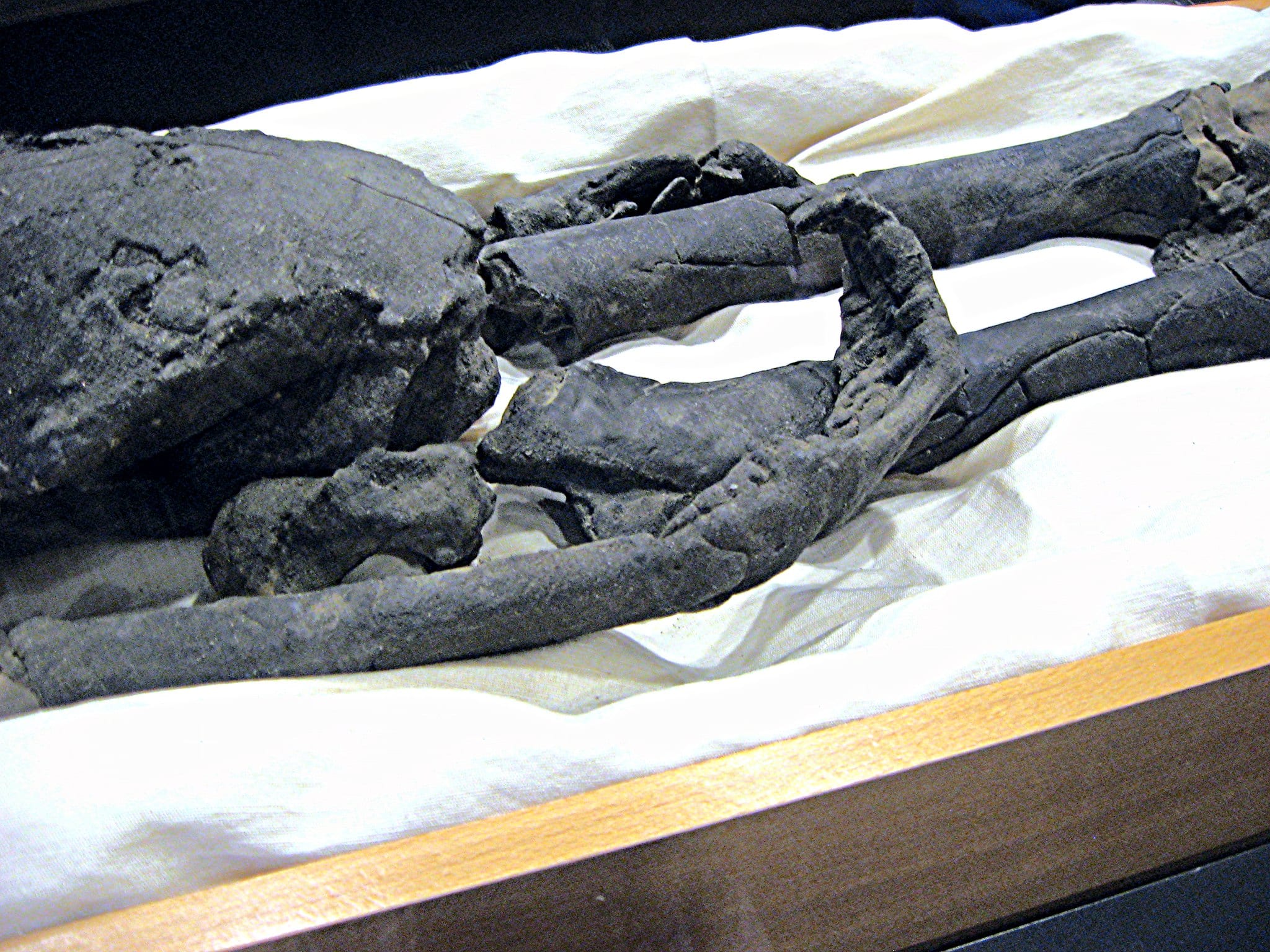
Photo Credit: Flickr
Carter, who scoffed at the notion of any curse, meant the gift as a macabre joke. But soon after receiving the mummy hand, Sir Ingham’s house burned to the ground, then flooded.
Ingham didn’t rebuild.
American financier and railroad executive George Jay Gould visited the tomb in 1923. He contracted pneumonia a few days later and never recovered, dying within the year.
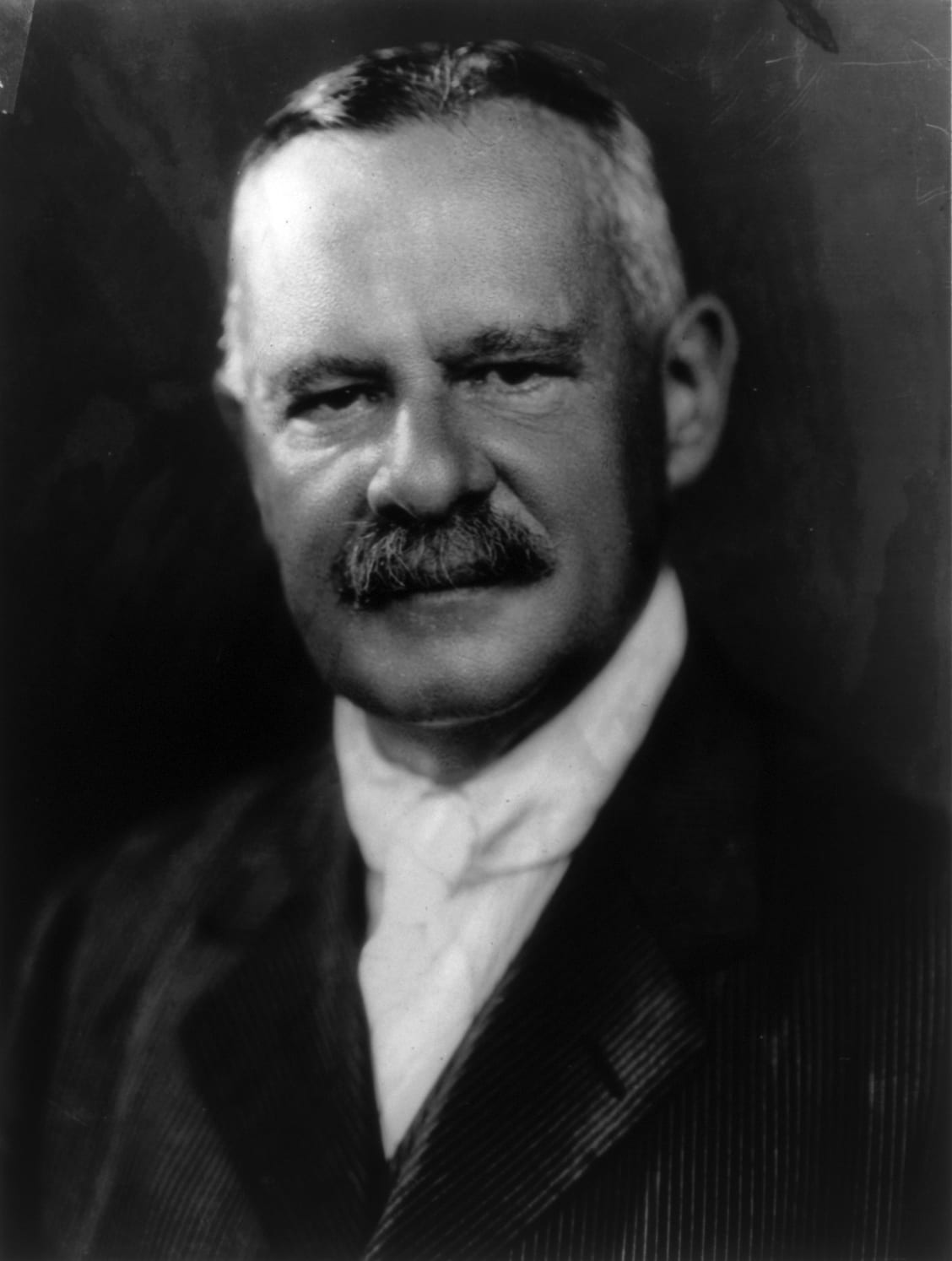
George Jay Gould
Photo Credit: Public Domain
The curse also extended itself to people who never even went to the tomb. Carnarvon’s half-brother, Colonel The Honorable Aubrey Herbert went blind, had all this teeth pulled (he though it might cure his blindness) and died of sepsis – five months after Carnarvon.

Effigy of Colonel The Honorable Aubrey Herbert
Photo Credit: Wikimedia Commons
Hugh Evelyn-White was one of the archeologists who helped excavate the tomb. It was rumored he was so spooked by the thought of a curse taking the lives of others associated with the project that he hanged himself. His suicide note, written in blood on a wall said, “I have succumbed to a curse which forces me to disappear.”
Also present at the opening of the tomb were American Egyptologist Aaron Ember and his wife, both of whom perished in a fire in their home after giving a dinner party. Though they initially escaped the flames, Ember and wife ran back in. She wanted to save their son. He wanted his manuscript–The Egyptian Book of the Dead.
In truth, out of the 58 people who were present when Carter opened the sealed tomb doors and discovered the riches within, eight died within 12 years. Carter himself lived to be 64 before dying of lymphoma.
So, which is it? Curse or coincidence?
Historians may be able to explain away the deaths and disasters due to the times and other circumstances. But the idea that there was a curse of King Tut’s tomb has been a boon to both tourism in Egypt and to Hollywood horror movie-making.
Curses are just more fun.
The post The Legendary Curse of King Tut’s Tomb (and 6 People Who Died From It) appeared first on UberFacts.
Scientists Discovered a Way to Treat Burns Using Fish Skin
Here’s a sentence I never thought I’d write: a team of Brazilian scientists has figured out how to treat burns using fish skin. This is absolutely insane, and more than a little creepy and also… who in the world even comes up with an idea like that?!?
Ok, in all seriousness, it’s actually a really cool invention!
Researchers at the Federal University of Cearà in Brazil came up with this innovation. They use tilapia skin, which is high in collagen (a healing protein) and moisture. It reportedly speeds up healing and reduces the need for pain medication.
Burns can be treated with fish skin — here's how pic.twitter.com/f598HTJAJo
— INSIDER (@thisisinsider) April 15, 2019
In modern medicine, burns are often treated with grafts of human or pig skin, both of which transfer collagen to burn victims’ healing skin. The alternative is to use burn creams and gauze strips that have to be changed out frequently, which involves a lot of pain for victims.
But in Brazil, it’s not easy to get human or pig skin for grafts. Thus, the foray into fish skin. Fish skin works similarly to other tissues — and it may even be MORE effective.
Even better, tilapia is a cheap, abundant fish. It costs 75% less than the burn cream used in Brazil. While it’s still under study and has yet to catch on mainstream, it has been used experimentally in the US on bears.
Two bears whose paws suffered burns during the California wildfires were treated with experimental fish skin bandages and released back into the wild. https://t.co/TATCnLdi04 pic.twitter.com/M6nrp8FblF
— ABC News (@ABC) January 27, 2018
And yes, it does look really bizarre. But the tilapia skins are sterilized first, so it’s totally safe.
The post Scientists Discovered a Way to Treat Burns Using Fish Skin appeared first on UberFacts.
15 People Share Their Generation’s Version of Trusting Technology
You know how, in this day and age, someone saying “I don’t use a computer” would literally make you stop in your tracks? Well, even though the world has changed and technology has advanced like crazy, it turns out that every generation has had their hold-outs – and below are 15 examples of what the “cool” kids might not have been doing along with everyone else.
#1. The mark of the beast.
I’m not an older generation, but my grandparents are very old-fashioned for their generation, if it counts.
My grandfather worked as a grocery manager for years. He finally quit when his small Mom & Pop store buckled down on bar scans and electronic cash registers.
He was convinced that bar codes were going to be the “mark of the beast” from Revelations, and that if people use computers to access porn, then all computerized items must be banned. So there’s that.
#2. Ice was a luxury.
My grandmother drinks only hot decaf coffee. 95 degrees with 100% humidity? Hot decaf coffee. Feeling parched after a day of hard work? Hot decaf coffee. And what to drink with your hamburger and French fries? Hot decaf coffee. Every meal, every day.
“When I was growing up, we never had ice. That was a luxury. Cold drinks aren’t good for your stomach.”
Edit: Grandma’s from the States. Grew up during the Depression.
#3. I get paid by check.
I am the web designer for a local organisation. Their treasurer refuses to accept card payment via their website. People have to print out forms, fill them out and post them with a cheque. I also get paid by cheque with a handwritten note. They would be a much more popular and successful business if they just modernised a little!
#4. Such an amazing sentence.
When remote control TVs came out, I suggested that my father buy one, and he said said, “It will be a cold day in Hell when I’m too lazy to tell one of you boys to get up and change the channel.” It was such an amazing sentence that I committed it to memory, and I still remember it word for word 50 years later.
#5. People thought they were unnecessary.
When I was a kid (late 50’s early 60’s) seat belts in cars were an option. Lots of people thought they were unnecessary and refused to pay extra for them
Heaters and windshield defoggers were likewise optional (my parents bought a new 1964 Plymouth Valiant and didn’t get the option).
#6. She didn’t want to mess up her hair.
My dad once told me a story about his grandmother refusing to fly in planes because she didn’t want to get her hair all messed up from the wind.
#7. The forward pass.
My dad is 65. He remembers old folks complaining about the forward pass in football.
#8. I was given a typewriter.
My grandparents laughed at the idea of a mobile phone or sending messages through the phone line when fax machines were a thing. My grandparents didn’t like computers they still had a typewriter or wrote by hand. I was given a typewriter as a kid but by then I was using windows 95.
#9. She wouldn’t use it.
Back in the 80s I knew an old lady who used one of those really old toasters that could only toast one side of the bread at a time. As a present, we went out and bought her a modern pop-up toaster, but she wouldn’t use it. She preferred to use her old one.
#10. He called them machines.
My grandmother is 89. When she was a kid, she had an uncle who hated cars. He called them machines and refused to drive one. It could’ve been job security though, her whole family worked for the railroad.
#11. They were laughing.
Some people still had outdoor toilets and were laughing at those who had them installed inside because “they are shitting their own houses”.
#12. A depression-era baby.
My 89 yr old mom pays for cable but insists on watching only PBS and occasionally NBC, CBS or ABC. The other channels are too much technology to find on the remote. She also buys multiple boxes or cans of food, dates them in sharpie marker, records the price (less coupon or sale special) and has a rack of all her finds. She will never eat all the oatmeal or beans in our collective lifetimes. But she was a depression era child so I get why the urge to stock up on food is strong.
#13. A time when literacy wasn’t a given.
My grand-aunt still believes that 15 is the age of adulthood, that schooling isn’t necessary beyond that point. She grew up in a time when literacy wasn’t a given.
#14. The age of answering machines.
My grandparents refused to get an answering machine.
My mother, who has a smartphone and uses email, still refuses to communicate via text messages.
#15. She got promoted.
My mom was just telling me about when answering machines were new, and how people were so fearful of them and refused to leave a message.
She got promoted at a job because she didn’t mind calling clients and leaving messages.
Hipsters, man. I guess they don’t know there’s nothing new under the sun.
The post 15 People Share Their Generation’s Version of Trusting Technology appeared first on UberFacts.
This Woman Is Waging a Hilarious War Against Selfies
If you’ve never seen a picture of a person impersonating a cadaver and taking a picture of it, then you’re in luck! STEFDIES is a photo series by an anonymous woman who pretends to be, well, dead in photos.
And there’s a good reason for it!
The STEFDIES series reminds us we will one day die, like our face down figure. Hence seeing her in the photograph wakes up not only the image but us. We are given the opportunity to ‘die before we die’ and really take in the moment in the photo as we must in life. It is not about death, it is about life.
STEFDIES is a constant reminder of how precious life is. The breath inside is what we all ultimately seek.
So that’s fun!
You know what’s more fun? Her pictures!
1. Looks like London?
2. At a petting zoo!
3. A friend joining her for an art show!
4. Okay, that could actually be lethal…
5. Submerged
6. Outside Notre Dame
 . #notredame #cathedrale #cathedralenotredame #paris #stefdies #stefdiesinparis #cathedral #streetphotography #photography #femalephotographer #performanceart #performanceartist #contemporaryart #contemporaryphotography #antiselfie #faceplant #leaveamark #femaleartist #travelphotography #artexhibition #celebratelife #humour #photogallery #photoexhibition #coffeetablebook #rencontresarles


7. Clowning around!
8. Eiffel corpse!
9. Smashed on the rocks!
10. Under the Golden Gate bridge…
11. In Madrid!
12. At Disney World?
13. Enjoying a snack…
14. Parking lot probs…
15. Along the English countryside…
Check out her website here and Instagram here, and enjoy all that weirdness. You’ve earned it.
The post This Woman Is Waging a Hilarious War Against Selfies appeared first on UberFacts.