
1 in 3 children can use a tablet before they can speak, a survey found.
A Texas Man Built an Awesome, 2,500 Square Foot Home out of Shipping Containers
You’ve probably heard all about the tiny house craze that’s gained massive popularity over the past few years. Well, maybe the next big thing will be based on what Will Breaux did with his house.
Breaux decided to do something radically different by building a 2,500 square foot house in Houston, Texas, out of shipping containers – 11 of them, to be exact. Breaux stacked the shipping containers on top of each other to make a three-story house with a rooftop deck.
He wanted to own a house like this since the early 2000s, and after years of not being able to find someone to design one, he decided to design the house himself. According to Breaux,
“I began looking at projects that were being built that I liked. Ultimately, a designer with a home builder family was hired to design a 3 story townhouse to be built on the lot. After going round and round for months, I eventually had to fire that group because they weren’t willing to give me what I wanted. Thus, the journey to design my own house began around 2011.”
He said he wanted to use shipping containers because they’re “strong, fireproof, long-lasting, hurricane resistant, and have common characteristics.” Breaux spent a long time learning everything he could about building with shipping containers and then he decided to go for it after he created a 3-D sketch of the house.
Let’s take a look at some photos of the inside of Breaux’s house because it looks awesome.

Photo Credit: WordPress

Photo Credit: WordPress

Photo Credit: WordPress
That is amazing!

Photo Credit: WordPress
Now I kind of want one of these for myself…
The post A Texas Man Built an Awesome, 2,500 Square Foot Home out of Shipping Containers appeared first on UberFacts.
Kenya Installed First Solar Power Plant That Transforms Ocean Water into Drinking Water
A lot of us, as Americans, take clean water for granted. It’s just something that’s part of our everyday routine, whether we need to grab a drink from the faucet, to wash the dishes, or to take a shower – water is always (mostly) there for us.
But that’s not the case in certain parts of the world.
Roughly 2.2 billion people around the globe don’t have access to clean drinking water, but an organization called GivePower is looking to change that. The nonprofit recently installed a solar-powered plant in Kenya that turns salty ocean water into fresh drinking water, benefiting 25,000 people per day.
 #GivePowerInNepal⠀⠀⠀⠀⠀⠀⠀⠀⠀⠀⠀⠀⠀⠀⠀⠀⠀⠀⠀ #GivePower⠀⠀⠀⠀⠀⠀⠀⠀⠀⠀⠀⠀⠀⠀⠀⠀⠀⠀⠀ #JoinTheCharge ⠀⠀⠀⠀⠀⠀⠀⠀⠀⠀⠀⠀⠀⠀ ⠀⠀⠀⠀⠀⠀⠀⠀⠀⠀⠀⠀⠀⠀⠀⠀⠀⠀ .⠀⠀⠀⠀⠀⠀⠀⠀⠀⠀⠀⠀⠀⠀⠀⠀⠀⠀⠀ .⠀⠀⠀⠀⠀⠀⠀⠀⠀⠀⠀⠀⠀⠀⠀⠀⠀⠀⠀ .⠀⠀⠀⠀⠀⠀⠀⠀⠀⠀⠀⠀⠀⠀⠀⠀⠀⠀⠀ .⠀⠀⠀⠀⠀⠀⠀⠀⠀⠀⠀⠀⠀⠀⠀⠀⠀⠀⠀ .⠀⠀⠀⠀⠀⠀⠀⠀⠀⠀⠀⠀⠀⠀⠀⠀⠀⠀⠀ .⠀⠀⠀⠀⠀⠀⠀⠀⠀⠀⠀⠀⠀⠀⠀⠀⠀⠀⠀ ⠀⠀⠀ #actnow #takeaction #active #building #buildingthefuture #buildingabetterfuture #workforchange #agentsofchange #bethechange #bigsteps #solarpanel #solarmicrogrids #solarenergy #solaristheanswer #solaristhefuture #future #futuregenerations ⠀
The plant was built in the small town Kiunga, Kenya because of the lack of clean drinking water in sub-Saharan Africa. Turning saltwater into drinking water is both expensive and energy-intensive, which is why GivePower decided to build the plant using solar panels that harvest energy. The two water pumps at the solar-powered plant provide clean drinking water to residents 24 hours a day.

 Learn how you can help by going to the link in bio. . . . . . #givepower #solarpower #jointhecharge #cleanwater #haiti #waterislife #nonprofit #renewableenergy #sustainability #climatechange
Before the plant was built, people in Kiunga had to travel more than an hour to get clean drinking water. And bathing and washing clothing in saltwater is harsh on skin and fabrics, so access to clean water helps the people in that way, too.
Because of the success of the plant in Kenya, GivePower wants to use this technology to help out people around the world. The organization is already planning projects in Colombia and Haiti. If you want to help out this great cause and donate, you can do that HERE.
Great work!
The post Kenya Installed First Solar Power Plant That Transforms Ocean Water into Drinking Water appeared first on UberFacts.
A Tumblr User Takes Us to School About Why Older Cars Are Definitely Not Better
How many times have you heard this?
“They don’t make them like they used to!”
It’s a refrain we hear often from the older generation around us, and about pretty much everything – cars, washing machines, people – and even though most of us may just roll our eyes and mutter “OK, Boomer,” one Tumblr user was on the same page:
Yeah. That old car acted like my grandpa used to when a bee stung him in the garden – he grunted, swiped it away, and went about his business.
Luckily for all of us younguns, though, someone else on Tumblr was there to tell us exactly why (at least when it comes to cars) it’s a really, really good thing they don’t make them like they used to.
While there are legitimate criticisms about the throwaway mentality that capitalism has engendered in American society, vehicle safety has improved dramatically over the last several decades. This is one area where government regulation has made a huge difference, and it is quite literally life or death.
Seems like the government isn’t always out to get us, y’all – they’re actually trying to help!
Who knew?!
The post A Tumblr User Takes Us to School About Why Older Cars Are Definitely Not Better appeared first on UberFacts.
A High School Engineering Class Created a Prosthetic Arm so Middle Schooler Can Play Cello
High school kids in Irving, Texas put their engineering class to good use by fulfilling a middle school girl’s dreams of playing in the orchestra.
Kayla Arqueta was born without her left hand and part of her forearm. As a student at Austin Middle School, she wanted to join the orchestra, so she auditioned for cello. Orchestra director Carly Addison was happy to welcome Kayla to the group, but she wasn’t sure how to make it work.
“She told me she wanted to play cello and I had no idea how to make that happen, but I knew I couldn’t say no,” Carly said in a school district video.
Carly did some internet research, and she discovered another young girl who used a prosthetic arm to play the cello. The musical prosthetic was designed by Dr. Jennifer Mankoff at Carnegie Mellon University.
Texas High Schoolers Design and Build Prosthetic Arm for Student So She Can Play the Cello https://t.co/SxN4btZTea
— People (@people) November 13, 2019
After contacting Dr. Mankoff, Carly found the blueprints for the prosthetic online. Next, she learned that the high schools in her district had 3D printers, so she reached out to Dwight Davison, an engineering teacher at Nimitz High School.
Dwight hadn’t been using 3D printing in his engineering class, but he created a new class project just to help Kayla out. It was optional for students, and six enterprising teens signed up.
They successfully designed and printed a musical prosthetic for Kayla, who is now blossoming as a burgeoning cellist.
“When Kayla pulled on the string, it made this big beautiful cello sound, and I knew we had done it,” Carly said.
As for Kayla? In addition to her new prosthetic, she’s learned a valuable lesson. “I learned that people are willing to help, and that it’s okay to be different,” she said. “I would like other students to know that life is challenging, but everyone is going to love you for who you are.”
The post A High School Engineering Class Created a Prosthetic Arm so Middle Schooler Can Play Cello appeared first on UberFacts.
13 Things Millennials Grew up with That Today’s Kids Have No Idea About
It’s time for some Millennials to feel old for once…
Because these young kids today have NO CLUE about the technology that Millennials grew up with.
To them, the gadgets look like alien objects sent from another planet in a galaxy far away. Or something like that.
Enjoy these tweets and just remember. WE’RE ALL GETTING OLD.
1. A record player?
i just asked my sister what this is, she said 'record player?' I WAS LAUGHIN TOO HARD SHE WAS YELLING "WHAT? WHAT IS IT? A TV?" yall im done https://t.co/AfpFdPEI62
— marina
(@marinap_13) July 28, 2017
2. All the way back during the Civil War…
The kids found this Lynyrd Skynyrd tape in the creek bed and asked if it was "from the Civil War." pic.twitter.com/ViQZYeDmyH
— Ed Wiley (@EdWiley) May 29, 2016
3. What is this foreign object?
Ya'll, visited my mom today. My niece asked what this was.
I now feel old.pic.twitter.com/BYjcyAqjBu
— Veronica Colon (@L0stPh03n1x) August 17, 2019
4. Hmmmmm.
In the back of an Uber the other day my 11-year-old asked me what this thing on the door is. pic.twitter.com/rCzmjFvQgy
— Marc Sebens (@MarcSebens) July 27, 2018
5. That makes me sad.
My daughter just asked why we say "hang up" the phone and now I feel 90.
— Jason English (@EnglishJason) June 2, 2015
6. Wow. That is kind of insane.
In the "I'm getting old" department.., a kid saw this and said, "oh, you 3D-printed the 'Save' Icon." pic.twitter.com/rwgCpSjfDQ
— Bill Gross (@Bill_Gross) October 17, 2017
7. Could be used for many things…
Admit you’re old……Retweet if you know what this is pic.twitter.com/1kj8r7MpID
— Siobhán McHatton (@Alltheway80s) March 20, 2018
8. Did you make up something cool?
My son just asked me what this is, he's 11 years old….have times changed THAT much?! #OldMan #KidsTheseDays pic.twitter.com/lJSa1Uan5s
— Gil_6:30 (@Gil_630) August 8, 2016
9. Fix it!
I gave my old iPod to my son: “Daddy, I don’t like it because it doesn’t work”
pic.twitter.com/kW8GRjF1RD
— Fernando Torcelly (@Torcelly) April 25, 2019
10. Close, but no cigar.

Photo Credit: Twitter
11. How did this activity work?

Photo Credit: Twitter
12. A forgotten relic.

Photo Credit: Twitter
13. He never forgave her…

Photo Credit: Twitter
Back in my day…
Man, that makes me sound really old…
The post 13 Things Millennials Grew up with That Today’s Kids Have No Idea About appeared first on UberFacts.
A Company Is Making “Meat” out of Air
The idea behind making food from air comes from NASA, who wondered during the early days of space slight whether they could take exhaled carbon dioxide and turn it into food that could sustain astronauts during a long voyage.
It never quite became a reality in space, but now a California-based company is revamping the principle to produce animal-free meat products.

 Researchers in Finland have successfully created a batch of single-cell protein by combining electricity and carbon dioxide, a revolutionary new development that can be used in food and animal feed applications.
If it worked, the sustainable form of meat could help address issues like feeding a constantly growing population and the strain on farming resources, not to mention the treatment of animals raised for slaughter and the negative effects on the environment. Plus, pulling CO2 out of the air could potentially be beneficial in fighting climate change.
Enter Air Protein, a probiotic production process that converts carbon dioxide into a protein substance using microbes. The “protein substance” has the same amino acid profile as an animal protein.
The microbes, called hydrogenotrophs, grow inside fermentation tanks. They eat carbon dioxide, water and other nutrients and produce a brown-colored “flour” that is 80% protein and has a “neutral” taste. It can then be blended with other ingredients to create meat substitutes.
CEO Lisa Dyson is excited about the potential.
“The statistics are clear. Our current resources are under extreme strain as evidenced by the burning Amazon due to deforestation and steadily increasing droughts. We need to produce more food with a reduced dependency on land and water resources. Air-based meat addresses these resource issues and more.”
Right now, animal agriculture emits more greenhouse gases than the entire global transport sector, which is one reason so many plant-based alternatives have started to be offered and consumed. There’s potential for trouble with those options, too, as deforestation to make room for crops comes with its own negative environmental impact.
This air protein doesn’t require plants or animals, it’s not sprayed with pesticides, and it can be produced in a matter of hours – all of which kind of makes it sound like the perfect food.
Of course, I still haven’t tasted it. But I’ll go out on a limb and say I bet we’ll all have our chance to do that in the not-too-distant future.
The post A Company Is Making “Meat” out of Air appeared first on UberFacts.
These Interesting Facts Might Make You Say ‘Wait, What?’
WOW.
These facts are good. Damn good, if I do say so myself.
I think you’ll agree.
Go ahead and see for yourself…
1. There’s something out there…

Photo Credit: did you know?
2. That sounds nice right about now.

Photo Credit: did you know?
3. I’m in big trouble.

Photo Credit: did you know?
4. They are definitely real.

Photo Credit: did you know?
5. Gotta pay your dues.

Photo Credit: did you know?
6. Yes! More of this!

Photo Credit: did you know?
7. A legend.
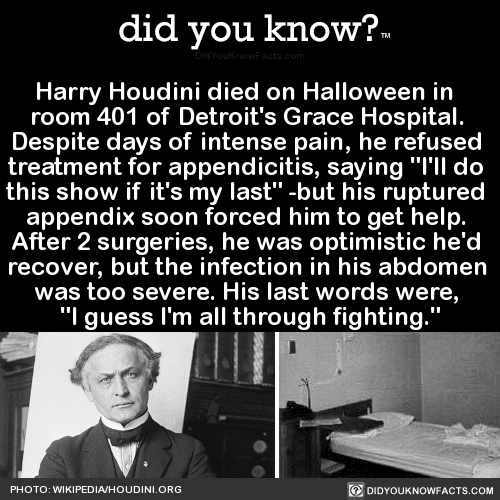
Photo Credit: did you know?
8. Gettin’ it on!

Photo Credit: did you know?
9. That makes perfect sense.

Photo Credit: did you know?
10. Does this pertain to you?

Photo Credit: did you know?
Are you wowed? Like, majorly wowed?
I think you are…thanks for stopping by!
The post These Interesting Facts Might Make You Say ‘Wait, What?’ appeared first on UberFacts.
This Mom Is Frustrated with School Photographers Offering to Photoshop Kids
Picture day at school is a tradition dating back to, well, probably since there were cameras and schools. Part of the charm for parents is getting a yearly photograph that reminds you of exactly what your child looks like from year-to-year.
The good, the bad, and the ugly, because we all go through those phases, my friends.
But now, with technology and everything, school photographers are offering to make your kid look like his or her best – but not necessarily true – self.
One mom, though, isn’t having it.
The girls have their school photo today and there is the option to AIRBRUSH the picture! There are two levels offered!! What the….?! Have complained! What 8 yr old needs to be paranoid about an “uneven skin tone” pic.twitter.com/6BGCx3FRZ9
— Sam Walker (@WalkerSam) October 28, 2019
What 8-year-old, Sam Walker asks, needs to be concerned about their tooth or skin color in a picture they didn’t want to take, anyway?
She spoke with Metro US to further explain her outrage.
“When you have a child who has some issues and so to suggest we can wipe that away you can look like everyone else is incredibly dangerous and very sad.”
Other parents, some of whom have children with skin conditions, agreed with her.
Teach him to love himself, he is living with it and it's going to be with him forever.
If he is having issues hiding it in photos isn't going to help him, you'll only teach him that there is something wrong with his skin.— Calliope Jackalope
(@TLJackalope) October 28, 2019
This is appalling. My daughter has 9% full thickness burns and we have never attempted to hide her scars in photos. We just taught her that she is amazing as she is.
— Home Improvement Sales Network (@HISalesNetwork) October 28, 2019
The photographer in question hasn’t commented, though we can all assume that they offer those additional services because some extra mom somewhere requested them.
That said, let’s all agree that kids are kids, and kid’s photos should come complete with some form of this mom’s checklist:
My 4 year olds first ever school photo this month. This is also an option. I was gobsmacked then disgusted. Who photoshops school photos?
Lunch cardigan stain
Dishevelled hair
Face graze from fall at lunch timeThat makes it a school photo
— Kate (@ellasservant) October 28, 2019


Please. Kids have so little that’s pure – let them have the terrible images that will show up on their wedding video one day, I’m begging you.
The post This Mom Is Frustrated with School Photographers Offering to Photoshop Kids appeared first on UberFacts.
What Happens When a Plane Flies into a Flock of Birds?
Sometimes, these two worlds collide mid-air, and planes fly straight into a bird, or even a flock of birds.
The results can look really disastrous, especially for the birds. The good news is that bird strikes don’t typically pose any risk to airplanes or passengers. The really good news is that they’re unlikely to bring down a plane.
“Aircraft are designed and built to withstand bird strikes, and pilots undergo rigorous training to enable them to deal with eventualities like a bird strike,” BALPA flight safety specialist, Stephen Landells, told The Telegraph.

Photo Credit: Wikimedia Commons
.jpg)
Even if a bird gets sucked into the airplane’s engine, the plane can usually land just fine. “Losing one engine is not going to cause an aircraft to crash because they are designed to fly with one engine down,” Stephen explained.
That doesn’t mean fliers are completely in the clear, however. While a single bird rarely poses any danger to a plane, Stephen added that “multiple bird strikes – or hitting large birds such as Canada geese – can and have caused serious accidents.” Captain Sully’s landing of a US Airways plane on the Hudson River in 2009 is perhaps the most famous example of this.

Photo Credit: YouTube
This is quite rare, though.
There were 160,894 bird strikes between 1990 and 2015 in the U.S. Only 40 of those strikes resulted in an accident.
Unfortunately, these incidents are often fatal for the birds (though not always). They can die on impact if they run into a plane, and they usually disintegrate if they get sucked into an engine. The number of wildlife strikes has also increased drastically over the years, as flying gets more popular.
Sadly, there’s not much that planes can do to avoid birds in the sky.
The post What Happens When a Plane Flies into a Flock of Birds? appeared first on UberFacts.