Treasure That People Found While Metal Detecting

There’s a little show called Detectorists that centers around a couple of old friends and their frequently fruitless hobby scanning the countryside with metal detectors, ostensibly in search of some great unknown treasure.

The show, of course, isn’t really about metal detectors, it’s about friendship and fulfillment and life and love and all that good stuff. But still – it did get me wondering about people who actually spend their time doing these things, and what they might find out there.

Lucky for me, I don’t have to search long. Reddit is here with plenty of answers.

15. Spoils of war

Dang sun, that’s a whole gun!

We found an entire civil war Burnside Carbine, a soldier’s silver spill, two spurs, hundreds of bullets and more at a Civil War river crossing I found! from metaldetecting

14. Dog tags

Very nice of you to return them.

Bob is heading home to Wisconsin tomorrow. from metaldetecting

13. More dog tags!

Godspeed, Junior.

I just sent home "Jr" to California. The family are thrilled and I can rest easy knowing the right thing is done. from metaldetecting

12. The lost ring!

What a nice little story.

Wow, this was really cool. Landlady saw me metal detecting in the yard and told me she had lost a treasured silver ring she got in Bali 5 years ago in her garden. I found it in an hour, she was almost crying. Detectorists are your friends! from metaldetecting

11. VERY old money

I wonder what that’s worth?

Found 320 year old silver today in the Netherlands! from metaldetecting

10. 15th century jewelry

That’s definitely something for a museum.

Update: The ring I found earlier this year has been identified as late medieval dating around 1450. Due to its age and material I am obliged to report it and auction it to museums. from metaldetecting

9. An 1851 dollar

This had the equivalent buying power that about 30 bucks has today.

My buddy threw his detector down and started this wild and crazy dance. I tried to ask him what he found, but he couldn’t speak. He had to point to it. from metaldetecting

8. Beautiful Squidward

Where did this come from and why?

Random find of the day… Squidward! from metaldetecting

7. Hammered coin

Let’s celebrate by getting hammered!

It’s finally happened. My first hammered. Henry III silver hammered coin ~1250, England. from metaldetecting

6. Real old 7up

Hate to break it to you but that’s probably flat by now.

Not gold, but still a really cool find! from metaldetecting

5. The silver metal

It’s first place in my heart!

Found my first bit of silver! from metaldetecting

4. Diamond ring

Look at it shine.

Finally! It wasn’t a pull tab. from metaldetecting

3. Carnival medallion

Was it law for a while that you had to put an eagle on absolutely everything?

Found in my front yard, live about 5 miles from where the carnival was held! One of my favorite finds so far. from metaldetecting

2. The upvote

As the prophecy foretold!

Was about to give up when I found this mega upvote. from metaldetecting

1. A treasure trove

What a weird way to propose.

From 1 beach with my girlfriend the other night. Both rings are 18k, 1 with diamonds. That’s 7 rings in total! All were shallow with the equinox 800 and 15×12 coil from metaldetecting

The real treasures are the friends we made along the way. Also treasure.

Have you ever found anything cool?

Tell us about it in the comments.

The post Treasure That People Found While Metal Detecting appeared first on UberFacts.

Scientists Figured Out a Way to Turn Your Body Heat Into a Battery

In a world where everyone is looking for the next best source of renewable energy, I doubt most of us considered that we might be staring at a decent one in the mirror every  day.

That’s exactly what scientists are saying is possible though – that we might be able to power things like pacemakers, insulin pumps, etc. using the body heat we’re already generating on a daily basis.

They think that a small gadget, the same size and shape as a typical smartwatch or even a ring, could turn your body’s electricity into a battery.

They’re calling it a thermoelectric generator (TEG), and the scientists at the University of Colorado Boulder think it could be as small as a ring, but as large as a sleeve, if a person needed or wanted to generate more power.

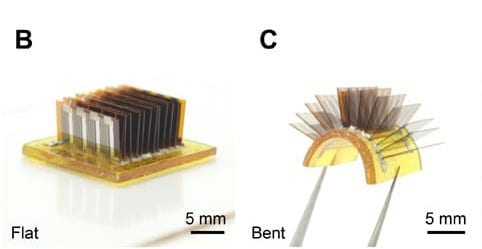
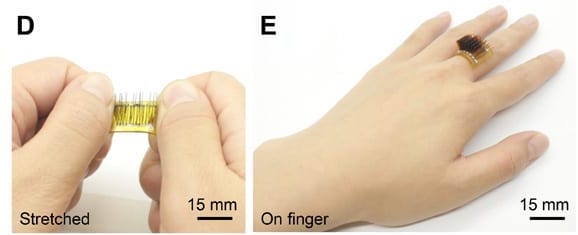
Here’s what it would look like as a ring. First, the making of the flexible sheets that would produce the electricity.

Image Credit: Science Magazine

Then the construction of the ring.

Image Credit: Science Magazine

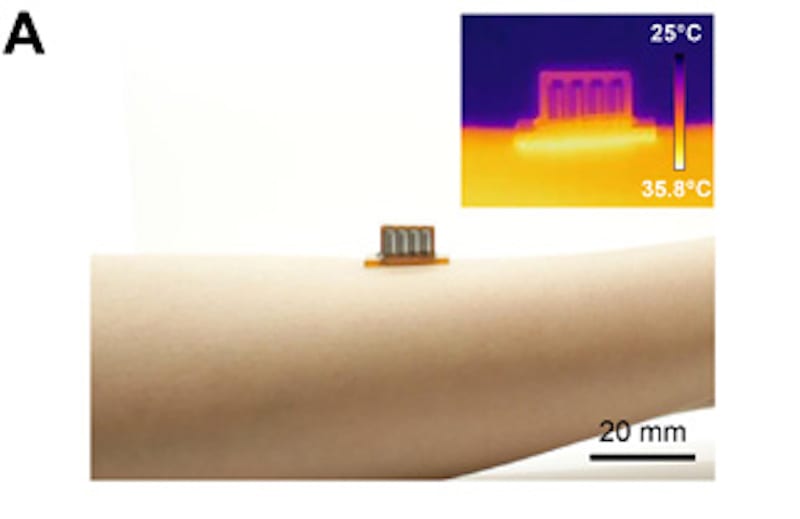
The ring, watch, or sleeve must come into contact with your skin, where the malleable circuitry inside the device converts your body heat into electricity, and then a special material inside the gadget reconfigures itself to keep from breaking as you move.

The TEG resembles your skin, which means you should be able to wear it all the time, in almost every situation, without ruining or harming it at all.

Image Credit: Science Magazine

In the published study, found in Science Advances, the researchers say that not only does the TEG use the warmth of your skin to create energy, the side that faces outward will also soak up and convert solar energy, when possible.

Image Credit: Science Magazine

Jianliang Xiao, an associate professor of mechanical engineering at CU Boulder, released a prepared statement.

“In the future, we want to be able to power your wearable electronics without having to include a battery.

Whenever you use a battery, you’re depleting that battery and will, eventually, need to replace it.

The nice thing about our thermoelectric device is that you can wear it, and it provides you with constant power.”

The technology uses your body’s natural conduction process, which maintains a constant temperature of 98.6 degrees F by walking a tightrope of heat gain and heat loss – but at a cost.

We lose around 75% of the energy we produce in the form of heat.

Image Credit: Science Magazine

The TEGs use that difference in the temperature of our bodies versus the surrounding air, to turn energy into power. They capture, in essence, the heat that’s coming off your skin before it disappears.

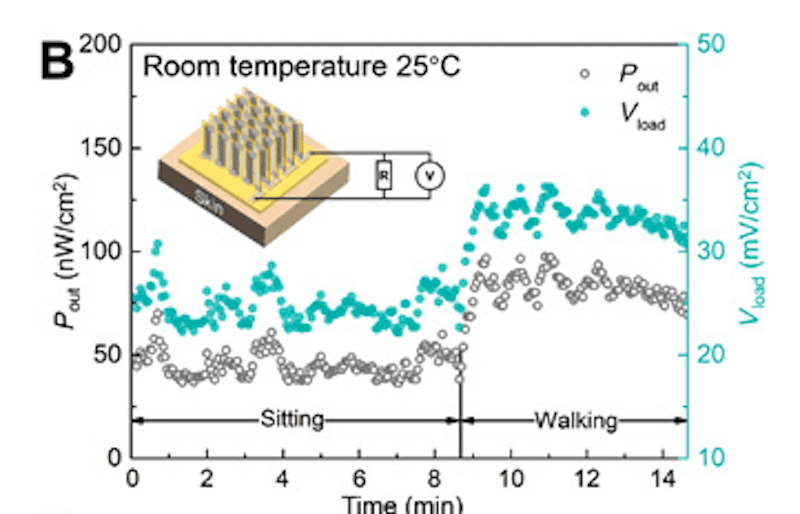
They can generate around one volt of energy for every square centimeter of skin space, which is less than a typical battery. That said, the larger the device, the more power, and researchers believe we would be able to do away with traditional batteries in our smartwatches, phones, fitness trackers, insulin pumps, pacemakers, you name it.

This is exciting not only for the medical and convenience benefits, but also in the fact that it’s cleaner, doesn’t use rare Earth metals, and doesn’t require corrosive materials – and it might not be that long until they’re available everywhere, according to Xiao.

“We’re trying to make our devices as cheap and reliable as possible, while also having as close to zero impact on the environment as possible.”

Five to ten years, y’all, and we’ll be using our own body’s energy to power our many devices. Wild, right?

The future is always closer than it seems.

The post Scientists Figured Out a Way to Turn Your Body Heat Into a Battery appeared first on UberFacts.

Dog Owners Can’t Wait to Try a Robotic Pooper-Scooper

I remember when I was young, my dad had to walk around the yard every weekend scooping up all the dog poo before he could mow the lawn.

Sometimes I had to do it too, and you could always tell when the dog had gotten hold of some crayons…

Well now it seems like there’s a robot for every unpleasant task–vacuuming, mopping, even cutting the grass–so of course it was only a matter of time before someone invented a robot that scoops the poop for you.

You read that right.

The scrappy start-up Beetl Robotics, led by CEO Xiong Chang, has developed a prototype for a machine that will rove through your yard picking up all the little presents that your four legged friend left behind.

Their Facebook page, which explains that the robot will deposit the doo into a compost bin, shows the development of their design over time, from this early concept…

…to a finished product that debuted at the 2017 CES (consumer electronics) trade show, where Beetl placed 3rd for Best Tech:

The company follows the Agile method of product development, which allowed them to deviate from their original design to make the concept even better.

According to their website:

We iterated on our robotic poop-scooper idea to add lawn mowing functionality.

We opted for a sickle-bar grass shear mechanism to get the added benefit of releasing the clamshell jaws from long grass.

All navigation was processed via computer vision and advanced sensor fusion.

Consumers are very excited about this technology, but unfortunately it can take a long time to get from concept to market, so the Beetl isn’t available for sale yet.

Still, I love a good robot, so sign me up when it is. What do you think about this idea? Do you need one for outside, and another for inside, to pick up your kids’ toys before you run your Roomba? Tell us in the comments!

The post Dog Owners Can’t Wait to Try a Robotic Pooper-Scooper appeared first on UberFacts.

The Department of Defense Is Evaluating UFO Data That Might Be Released to the General Public

Anyone who grew up on “The X-Files” can’t help but think that “the truth is out there” was more than just a catchphrase.

And as it turns out, we could finally begin to learn a little bit more of that truth very soon.

I’ve never seen a UFO, unless you count the cow-abduction road signs in New Mexico.

But I definitely think it’s a little bit silly and hugely egotistical to assume that in the whole vast cosmos, our planet is the only one to sustain intelligent life.

It turns out, the U.S. government has seen enough unexplained evidence that they think so too.

Who that’s heard the audio of Australian pilot Fred Valentich’s encounter and subsequent disappearance can deny that something has visited us?

The U.S. government doesn’t refer to them as UFO’s anymore.

Maybe that’s considered a little too hokey and little-green-manish now, so they instead describe them as UAP or Unidentified Aerial Phenomena, which can take in a broader range of encounters.

Just last year, after videos filmed by Navy pilots was leaked to the public, the Department of Defense established a new task force for investigating these phenomena, or UAPTF.

Not only that, but Popular Mechanics reports:

When Trump signed the coronavirus relief and government funding bill into law in December 2020, it contained the IAA for Fiscal Year 2021, which means the UAPTF must report its findings to Congress by June 25.

That’s June 25 of this year.

The Director of National Intelligence who served under President Trump at the time went on Fox News recently to talk about the project, and it sounds like he’s a believer too, stating that the reports will cover:

[UAP that make] “movements that are hard to replicate that we don’t have the technology for, or traveling at speeds that exceed the sound barrier without a sonic boom. In short, things that we are observing that are difficult to explain.”

The note about the sound barrier is particularly relevant.

Image credit: U.S. Navy, via Flickr

Here’s why, according to Popular Mechanics:

When an aircraft increases its speed, pressure waves build up on it and eventually coalesce into a single shockwave. When the plane outruns that shockwave and travels faster than the speed of sound in air, it causes a sudden change in pressure, which in turn creates the sonic boom. There’s no publicly available scientific data to suggest any aircraft can break the sound barrier without producing a sonic boom; while engineers can take steps to try to reduce sonic booms, physics says it’s impossible to outright eliminate it.

Which means that if the government has proof of aircraft that defy physics, then they have proof of civilizations more advanced than our own.

And so, although a watchdog group will be evaluating how the Pentagon handled UAP reports:

the Pentagon itself will be busy this month reviewing all the data they have been collecting under the UAPTF project ahead of that June deadline to release the information.

And it’s not all going to be blurry videos and darting shapes, either. There’s actual concrete data.

According to a source from The Debrief, a contributor to Popular Mechanics:

“Some of the best evidence acquired has come from measurement and signature intelligence (MASINT), rather than from videos or still images.”

Suddenly I’m on the edge of my seat waiting for summer!

What do you think? All an elaborate hoax, or FINALLY some transparency?

Let us know in the comments!

The post The Department of Defense Is Evaluating UFO Data That Might Be Released to the General Public appeared first on UberFacts.

These People Got Embarrassing Notifications While Someone Else Had Their Phone

The obvious solution to this problem is to set your messages not to display when your phone is locked, but I guess if someone else was actually using your phone, that might not always work.

If there was a foolproof solution, these 16 people would surely be all ears after these cringey moments of others seeing notifications on their phones that honestly, all parties probably wish they hadn’t.

16. Just so sweet. Ha!

My boyfriend and I send each other shit randomly during the day like “FedEx me that pecker” or “flap them t**s my way”.

I was showing my mom something on my phone once and he sends “gonna slap u with my d%*k tonight”

15. It may not be what it seems, but she’s not going to believe that.

My mum was looking up stuff on my prescription app on my phone when a message came in from a group chat I’m on, a group chat named pornographic material.

I turned Instagram notifications off after that.

14. This is actually kind of sweet.

I remember when i was like 13 my mom was showing me something on her phone. My dad was away on a business trip and texted her. I said oh dad texted you. She’s like whats it say?

And i read it (in my head thank god) and it said something like “i cant wait to make love to you again” 13 year old me just turned red and handed back the phone.

13. Beautiful.

My friend made this fake account on Twitter and followed me exactly at the time my teacher had taken my phone away.

The notification read @analfister6969 has followed you.

12. Everyone is sorry.

“Gonna f*k your a$$ so hard tonight, love <3”

Sorry for you having to see that, mother

11. It’s probably not the worst thing he’s seen, honestly.

I had this roommate my sophomore year of college and we had a very weird, close personal relationship. I was in my Spanish prof’s office hours and she was waiting for me at the cafeteria to get lunch together. Just before going in I texted her and asked her to get me some fries, and then I turned off my phone. I was showing my prof my paper on my laptop screen, very much forgetting that I had iMessage set up on my laptop.

I’ll never forget the look on his face when a notification from my roommate came in with her (jokingly) saying “I’ll get you fries but only if you sensually feed them to me while you call me daddy”. Suffice it to say, that was my last time visiting his office hours!

10. That’s a topic for therapy.

Imagine my conservative 15 yr old little brother’s face when my bf texted “I’ll destroy your p**sy” while we were watching some stupid goat on youtube.

9. I have questions.

My friend sent a poop pic while my then girlfriend was checking the weather for us one morning.

8. Teen movie level awkward.

Not exactly a bad message but I leant my jacket to my crush and it had my phone in it’s pocket. Someone sent me a message so she got it out to give to me but unfortunately she had sent me a message before that and saw that her name was marked with a heart.

Awkward night after that.

7. An awkward explanation.

A friend of mine sent me a message for the first time in 4 months that was just
“Ily”

Right as my GF held the phone…

6. At least he laughed.

Story apps can give really interesting ones.

My favorite that popped up while my boyfriend was holding my phone was something like, “Mike misses you! Come back and play!” Or something like that.

Of course all he did was pull the drop down menu down to see the full notification and laugh.

He teased me about it for hours.

5. Bless his heart.

I was showing my grandma some pictures. She chuckled a bit and quickly handed me back my phone. I looked at it and saw that my boyfriend (now husband) had texted me saying “I hate it when I’m pooping and my dick touches the water. Big d*%k problems.”

We laughed about it, but my husband is still horrified by the thought of my grandma knowing about his “big dick problems.”

4. What else can you say?

Not really my phone but I had text notifications on my computer, was working with a vendor and sharing my screen, my SO picked that time to send me a text that said “that was the most amazing s^x we’ve ever had last night!”.

I silenced the notification as fast as I could but the vendor went quiet for half a minute and then said “good job!”, so got out of that awkward zone pretty well. I never shared my screen with notifications active ever again.

3. No good explanation, really.

When I was in high school, my friends and I had the habit of giving each other funny contact names on our phones based on jokes we came up with. To this day my high school friend’s contact names are things such as River B*%ch, Jeff the Sl*t, Baby America, Sugar Mama, etc.

When we were juniors, a girl who was obsessed with my friend led to his contact name becoming “Booty Lord” with some rather suggestive emojis following it. Everything was fine and dandy, until a few months later when I had forgotten about it.

I was applying for a leadership position in a club I was a member of and was required to get two letters of recommendation. For the second letter I asked one of my teachers, who happened to be a very conservative man in his late 70’s, if he could write one for me. Being the lazy son of a bitch that he was, he told me to write the letter myself saying all the things I wanted him to say, and he’d sign it.

After I finished typing up the letter, I handed him my phone to let him read and approve it before I printed it out. About 45 seconds after I gave him my phone, he (very loudly and incredulously) said “Booty Lord??????” and gave me a horrified look and shoved the phone back into my hands.

That was hard to explain.

2. This might be my favorite story ever.

Not my phone, but a Hangouts notification that popped up on the screen while my new boss was standing behind me to train me on a new program.

The message from my husband asked “how’s the Pooper?”

I was so focused on the task that she saw and read it before I did and collapsed to the floor in hysterical laughter. I read it and immediately lost it too.

In tears from laughing we were frantically talking over each other – her trying to apologize for the unprofessional reaction, and me trying to explain that Pooper was our dog’s nickname because he was getting over a bout of diarrhea!

The rest of the office was so confused!

1. High five?

My aunt was like “hey, is that the new samsung, can I see it?” I say “sure”, and then I got a text from my gf, “Good news! I had my period!”


So, so awkward, y’all. Woof.

Has this ever happened to you? Share the story in the comments!

The post These People Got Embarrassing Notifications While Someone Else Had Their Phone appeared first on UberFacts.

Learn About the Two People Who Made GPS a Reality

There have been many advancements in the past several decades that have changed and improved the way we live our lives every single day, and GPS definitely fits into that category.

Whether it’s helping us get where we’re going anywhere in the world or helping police find missing persons, to a hundred other uses in between (it’s helped me find my dog more than once), there’s no question our society is better for it.

There are two people responsible for turning the idea into a reality – one you’ve probably heard of and one you probably haven’t – and I think it’s about time they got a bit more recognition and credit, don’t you?

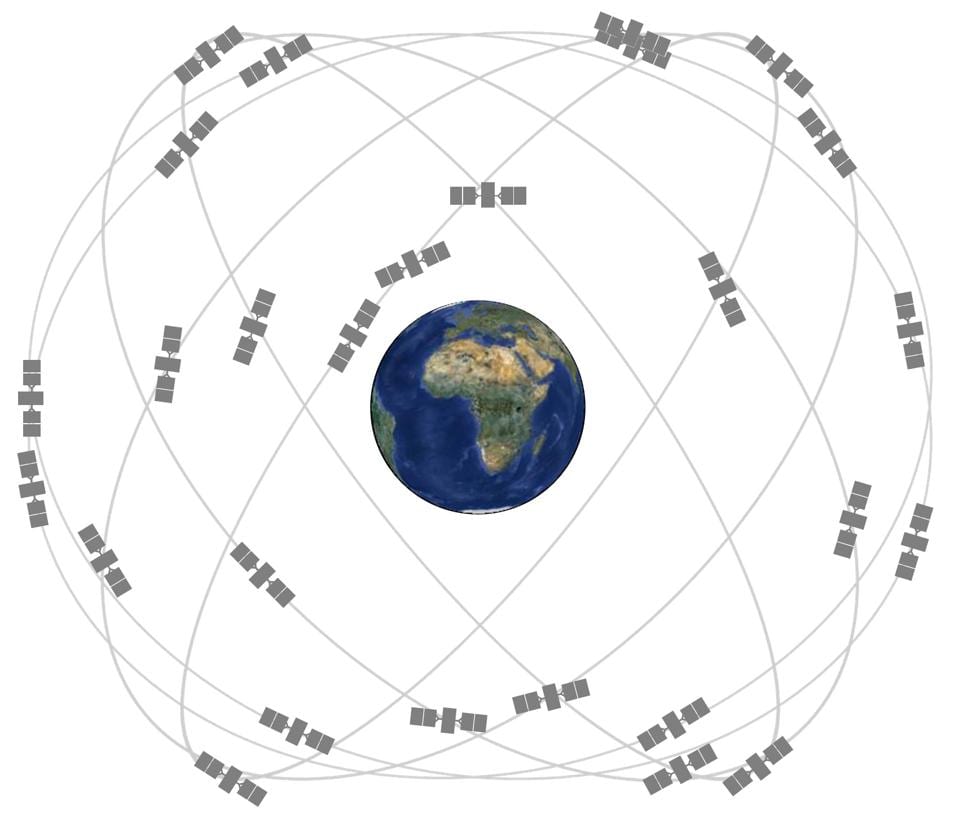
Image Credit: GPS.gov

GPS is short for Global Positioning System, and it means that from anywhere in the world, signals can be transmitted by a network of satellites to pinpoint your location within 3 feet. It’s right more than 95%of the time, with the most accurate of devices spotting your position within 12 inches.

The first person responsible for this scientific magic is none other than Albert Einstein, whose theories of special and general relativity play an important role in the process.

The second is a fairly obscure Black female scientists named Gladys West, whose work allows us to understand geodesy and the shape of the Earth well enough to put those physics into action.

Image Credit: NASA/JPL

Basically, you have to know three things in order to interpret signals received from the the 31 operational satellites:

  1. Motion: this includes the motion of both the satellites through space and the motion of the person they’re trying to pinpoint, the motion of the receiver on earth, all of which relate to the laws of Special Relativity.
  2. Curved Space: The gravitational blueshifting and gravitational time dilation of light as it moves between the curvature in space to the curvature on Earth’s surface, following the laws of General Relativity.
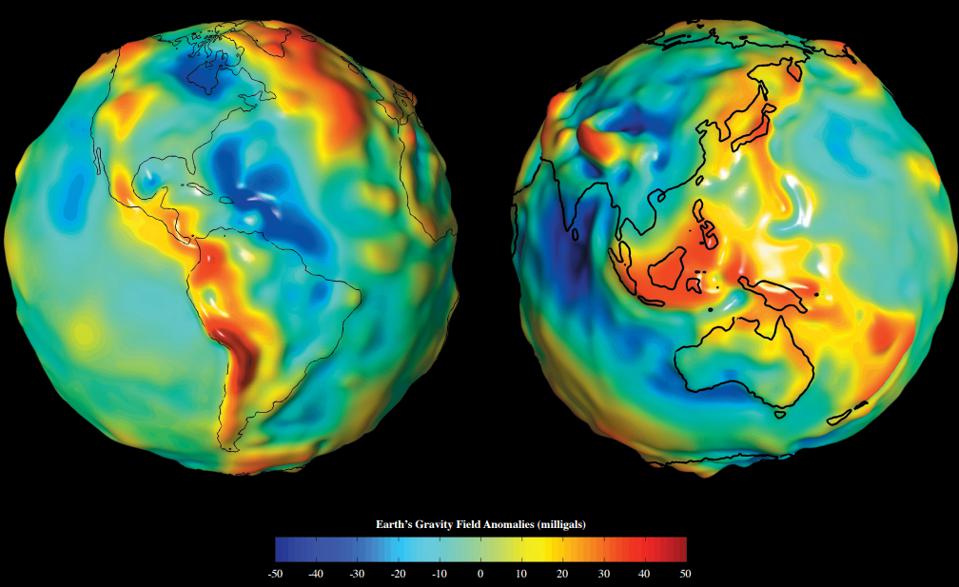
  3. Earth’s Gravity: It’s effects may vary by small but still substantial amounts due to mountains and valleys, the thickness of Earth’s crust, and the water present at a given location.

The rules of relativity, put forth by Einstein in the early 20th century, address all of these effects and help us mitigate them neatly.

Image Credit: NASA

Gladys West comes in with the next piece of the equation, which compensates for the fact that the Earth is not a uniform, perfect sphere with the exact same gravitational properties everywhere.

All told, the actual acceleration on Earth can be as little as 9.764 m/s² and as great as 9.834 m/s²: a difference of 0.7%.

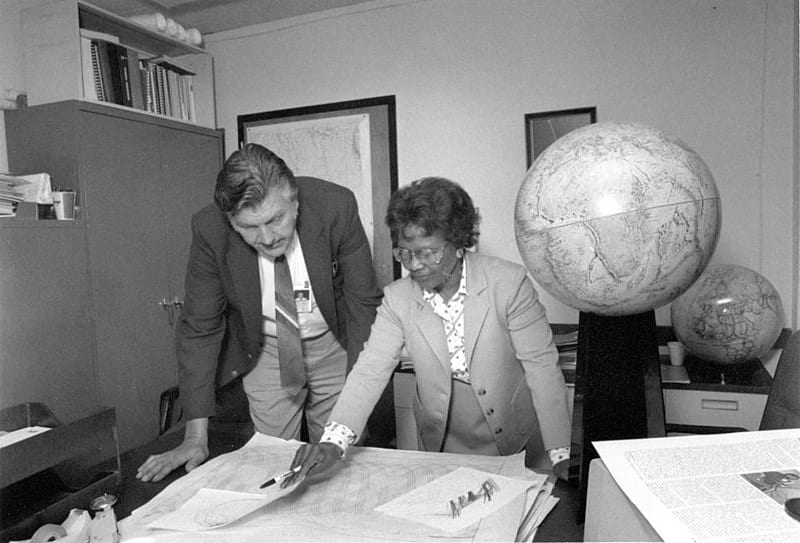
Gladys, the second Black woman ever hired as a computer programmer at the Naval Proving Ground in Virginia, specialized in large-scale computer systems and data-processing systems for the analysis of information obtained from satellites.

Image Credit: US Air Force

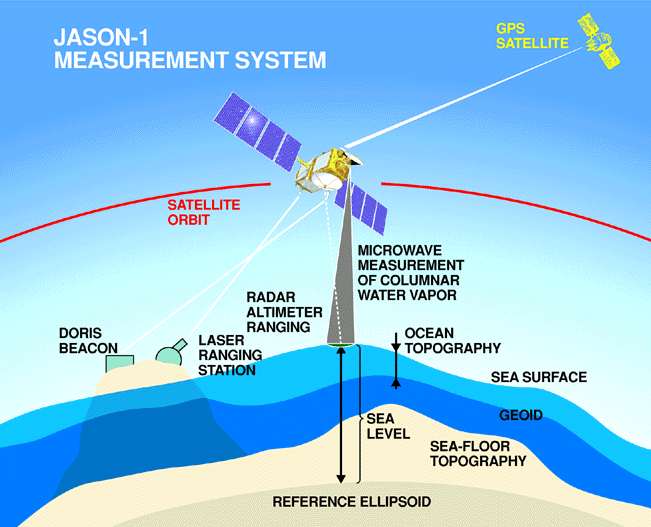
From there, she put together altimeter models of Earth’s shape in the 1960s, and served as the project manager for Seasat, the first satellite to perform remote sensing of Earth’s oceans.

Through her work, she cut the processing time for these remote sensing applications in half.

Her most revolutionary work, though, was when she programmed the computer that calculated Earth’s geoid to the kind of sufficient precisions that enabled the existence of GPS. To accomplish this, she had to account for every variation in all the forces and effects that can distort the shape of the Earth.

She wrote a guide on radar altimeter satellites, which taught others how to increase the precision of satellite geodesy with her improved technology.

Gladys was inducted into the Air Force Hall of Fame for her efforts, and is universally recognized as one of the Hidden Figures whose work with vital computations allowed the U.S. Military and NASA to complete successful missions before the advent of computing that could take over the tasks.

Image Credit: US Navy

Her commanding officer, Captain Godfrey Weekes, had this to say about his famous employee:

“She rose through the ranks, worked on the satellite geodesy, and contributed to the accuracy of GPS and the measurement of satellite data. As Gladys West started her career as a mathematician at Dahlgren in 1956, she likely had no idea that her work would impact the world for decades to come.”

For West’s part, she still uses a paper map when she travels.

Better safe than sorry, I suppose.

The rest of us, though, say thank you – especially the generations who have never seen a paper map in their lives.

The post Learn About the Two People Who Made GPS a Reality appeared first on UberFacts.

The Flat Particle That Could Be The Key to Unlocking Quantum Computing

We don’t hear much on the news or in our daily lives about quantum computing per se, but the majority of the technological advances that have changed our lives over the past several decades are thanks to increased computer power.

Now, physicists have confirmed the existence of a particle they’re calling an anyon, and it could be the key to unlocking many more computing possibilities in the future, says Discover.

“These particle-like objects only arise in realms confined to two dimensions, and then only under certain circumstances – like at temperatures near absolute zero and in the presence of a strong magnetic field.”

Physicists have theorized that these anyons exist since the 1980s, but their nature has made them hard to pin down.

Those same qualities would make them very valuable to quantum research and computers, though, so scientists haven’t stopped trying to prove they exist.

Image Credit: YouTube

Purdue University talked about their many potential uses in a recent press release.

“Anyons have characteristics not seen in other subatomic particles, including exhibiting fractional charge and fractional statistics that maintain a ‘memory’ of their interactions with other quasiparticles by inducing quantum mechanical phase changes.

Nobel Prize-winning theoretical physicist Frank Wilczek, professor of physics at MIT, gave these quasiparticles the tongue-in-cheek name ‘anyon’” due to their strange behavior because unlike other types of particles, they can adopt ‘any’ quantum phase when their positions are exchanged.”

Researchers were able to train a miniature particle accelerator to “sort” particles and notice anyons, then came up with a maze that would phase out all of the other particles in order to end up with only the mysterious particles they were searching for at the start.

Image Credit: Cornell Chronicle

What they found was that it worked so well because, like electrons and photons, anyons “braid” – and this is good news for quantum computing, says researcher Mikael Rechtsman.

“Braiding is a topological phenomenon that has been traditionally associated with electronic devices.

We hope to show that a whole class of topological phenomena can be useful not only for electronic devices, but also photonic devices, such as lasers, medical imaging, telecommunications, and others.

We also expect that this new type of topological physics could be applied to quantum information systems, particularly those based on photons.”

With more particles in their toolkit, physicists are sure advances are to come – and we have the anyons to thank.

Who knew?

The post The Flat Particle That Could Be The Key to Unlocking Quantum Computing appeared first on UberFacts.

Nikola Tesla’s “Wireless Electricity” Is Now Reality in New Zealand

It’s kind of depressing when the things people dream up don’t come to be until after they’re gone, but I like to think that somehow they always knew it was a solid idea and it would eventually come to fruition.

That’s been the case with several of Nikola Tesla’s inventions, of course, and now an energy startup called Emrod is bringing wireless electricity to New Zealand.

It’s been nearly a hundred years since Tesla first demonstrated wireless electricity was possible, and now Emrod is doing it again, with only a clear line of sight as a prerequisite.

Their founder, Greg Kushnir, issued a statement that said New Zealand’s particular set of skills is what actually made it possible.

“We have an abundance of clean hydro, solar, and wind energy available around the world but there are costly challenges that come with delivering that energy using traditional methods, for example, offshore wind farms or the Cook Strait here in New Zealand requiring underwater cables which are expensive to install and maintain.”

Without the need for traditional copper wiring, Emrod plans to bring power over terrain that has proven difficult, and into homes and businesses that exist in places where physical infrastructure is lacking.

They believe this wireless option will also ease the demand on diesel generators, too, which will benefit the environment.

The company is still in the testing phases, working out the kinks while sending “a few watts” over a distance of just over a hundred feet.

“Energy is transmitted through electromagnetic waves over long distances using Emrod’s proprietary beam shaping, metamaterials and rectenna technology.”

Image Credit: Chetvorno

The “rectenna” is what turns magnetic waves into electricity. It’s a square element mounted on a pole acts as the pass-through point that keeps electricity moving, and a broader surface area that catches the entire wave.

To stop it from zapping things like birds and cars, the beam is surrounded by a low-power laser fence, and they’ve got a contingency plan for outages, too.

There was initially some concern over the loss of signal or signal strength without any conducting materials, but Emrod claims their relay technology “refocuses the beam,” which allows them to lose almost no power over the distance.

“The efficiency of all the components we’ve developed are pretty good, close to 100 percent. Most of the loss is on the transmitting side. We’re using solid state for the transmitting side, and that’s essentially the same electronic elements you can find in any radar system, or even your microwave at home. Those are at the moment limited to around 70-percent efficiency. But there’s a lot of development going into it, mainly driven by communications, 5G and so on.”

Emrod seems like quite a company, yeah?

Emrod says on its site, referring to the New Zealand government’s “innovation agency,”

“The prototype received some government funding and was designed and built in Auckland in cooperation with Callaghan Innovation.

It has received a Royal Society Award nomination, and New Zealand’s second largest electricity distribution company, Powerco, will be the first to test Emrod technology. “

They hope to increase both the distance and kilowatts over time, and believe there is no upper limits to what they can achieve once they work out all of the kinks.

Thank you, Nikola Tesla.

Just think about all you could have accomplished if you’d had the idea for a rectenna, too.

The post Nikola Tesla’s “Wireless Electricity” Is Now Reality in New Zealand appeared first on UberFacts.