After just under a year in space…

After just under a year in space, astronaut Scott Kelly’s gene expression changed significantly and it’s different to his identical twin brother’s DNA. A new NASA statement suggests the physical and mental stresses of Scott Kelly’s year in orbit may have activated hundreds of “space genes” that altered the astronaut’s immune system, bone formation, eyesight […]

The post After just under a year in space… appeared first on Crazy Facts.

Learn About Debunking the “Scientists” Who Say There’s a Black Hole in the Center of the Earth

A story like this one just goes to show that academic degrees don’t always mean a whole lot…

13 scientists actually claimed in a published journal that there’s a black hole in the center of the Earth. Basically, it’s close to the most unscientific claim ever.

Though this paper might be a clever hoax, the hypothesis here is still close to crazy. Science can be weird, but surely it’s not supposed to be this weird.

Image Credit: iStock

The essay, “A Black Hole at the Center of Earth Plays the Role of the Biggest System of Telecommunication for Connecting DNAs, Dark DNAs and Molecules of Water on 4+N- Dimensional Manifold,” squeaked by peer review and got published last year in the Open Access Macedonian Journal of Medical Sciences.

Wait… what?!? First of all, as if that title isn’t a GIGANTIC red flag.

Second, one look at the paper is a deep-dive into some word salad. For example, the abstract reads:

“The earth’s core is the biggest system of telecommunication which exchanges waves with all DNAs and molecules of water.”

From there, the essay goes on to claim that DNA imprints on the Earth’s core created a black hole… Which resides conveniently in the middle of the planet. That idea has naturally given other scientists some pause.

If your jaw is already on the floor, just wait. It gets a whole lot crazier.

What’s even more shocking is the fact that this happens in the academic world pretty often. There’s also a VERY likely chance that this essay is just a regular part of trolling in the science world.

Researchers use this method of “peer-review-tricking” to ensure that journals stay accurate and reputable. They’ll sprinkle blatantly unscientific claims throughout their papers just to make sure readers are paying attention.

Sometimes, it works; other times, it totally backfires.

For instance, take this mind-blowing sentence:

“Each DNA has two parts which one can be seen on the four-dimensional universe, and another one has existed in extra dimensions.

This dark part of DNA called as a dark DNA in an extra dimension.”

Yes, sci-fi language actually made its way into an academic journal. (Note to self, never take anything from that journal seriously. They definitely give a whole new meaning to “open access.”)

Image Credit: iStock

When crazy theories like this one manage to slide by, it shows a serious issue with the peer review system. But hey – it sure beats Flat Earthers!

Well, this paper proves that anything is possible if you just set your mind to it. Then again, it sure helps when you have 13 other people in on the plan with you.

What are some crazy scientific theories you’ve come across?

Share them with us in the comments!

The post Learn About Debunking the “Scientists” Who Say There’s a Black Hole in the Center of the Earth appeared first on UberFacts.

This is How to Tell the Difference Between an Asteroid, a Meteorite, and a Comet

I’m not advising that any of us get up close and personal with any of these things. We’ve all seen the movies (so many movies!) and obviously, close encounters with burning hot rock from outer space never goes well for the inhabitants of planet Earth.

That said, wouldn’t you like to sound (even) smarter the next time you engage in a game of Trivial Pursuit, or run into an ex with his new girlfriend?

Of course you would!

So, let’s take a look at the differences between asteroids, meteorites, comets, and for extra fun, meteors, too!

Asteroids

Image Credit: iStock

These rocky objects are smaller than planets, and are left over from the formation of our solar system. Basically, when a cloud of gas and dust collapsed to form our fun, the big chunks of remaining material turned into planets. The smaller fragments of dust are what’s left behind, just floating around waiting to kill us all.

There are millions of known asteroids. the largest, Ceres, is nearly 600 miles wide – big enough to be classified as a dwarf planet, technically. NASA tracks the asteroids that are nearest to Earth (Ceres is not one of them, thank goodness), and plots their trajectories to make sure they’re not coming too close.

Most of them are irregular in shape and sometimes orbit each other and the sun in small groups. Their compositions vary based on how far away they were from the sun when they formed.

The space between Marys and Jupiter is known as the asteroid belt, and that’s where most of them good-sized rocks reside.

Comets

Image Credit: iStock

Comets are also composed of leftover materials, and they formed around the same time as the asteroids. While asteroids formed toward the inner, hotter regions of the solar system, though, comets formed further out – beyond the frost (or snow) lines, where water can freeze.

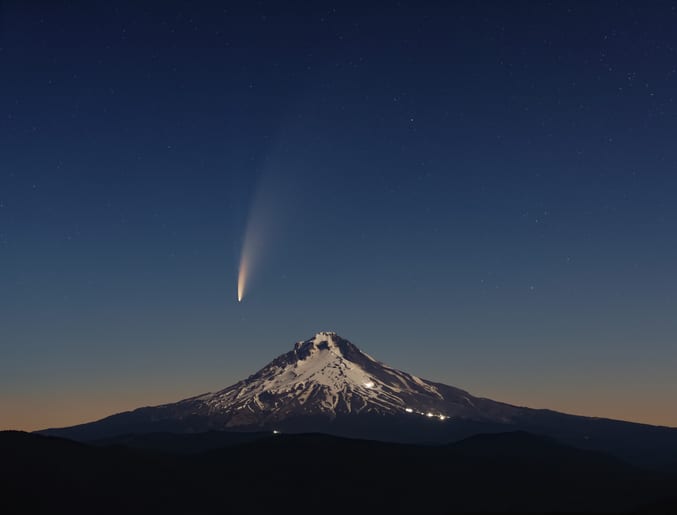
That means that, instead of being comprised of only rock or other metals solid enough not to melt, comets are formed from frozen gas, rock, ice, and dust. Some scientists call them “dirty snowballs,” and are easily identifiable by their trailing jets of gas and dust that melt away as they fly too close to the sun.

Meteors

Image Credit: iStock

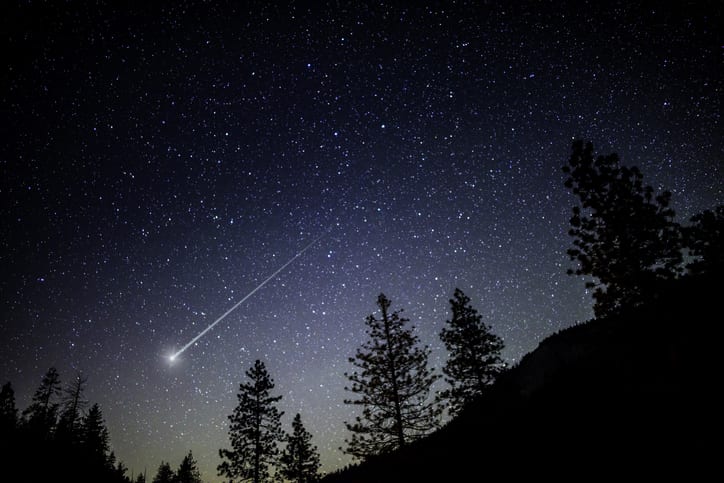
A meteor is an asteroid that is vaporized when it hits Earth’s atmosphere.

We sometimes see the glowing hot air left behind, and call them “shooting stars.”

We also see meteor showers, when more than one enters our atmosphere at the same time.

Meteorites

Image Credit: iStock

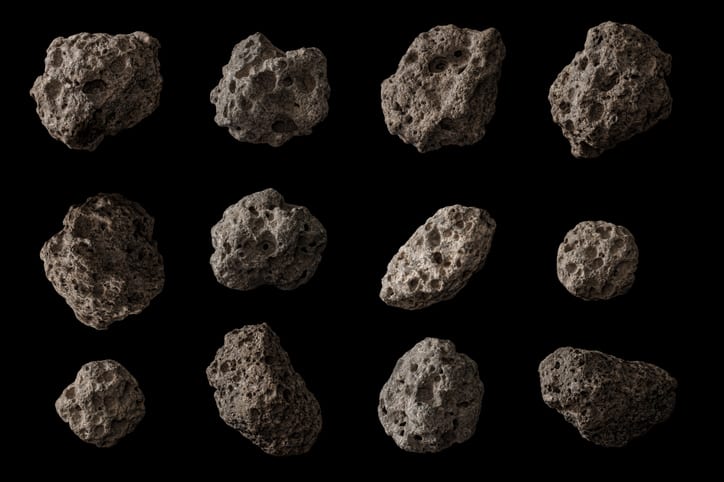
Meteorites are what survives the dive through the atmosphere to land on Earth’s surface.

They’re usually made from iron or stone, a mix of oxygen, silicon, magnesium, iron, and a smattering of other elements.

Studying these fragments has helped us understand the age and formation of our solar system, and how and when Earth came into existence.

Well, now you know!

This information will come in handy one day, I just know it!

The post This is How to Tell the Difference Between an Asteroid, a Meteorite, and a Comet appeared first on UberFacts.

This is How Scientists Figured Out the Age of the Earth

How old humanity is will remain a point of contention probably for as long as there are people around to argue.

When it comes to the age of this beauty, disastrous planet we all call home, though, scientists are pretty much in agreement as far as when she was born in a fury of explosions and creation.

Image Credit: iStock

What you’ll find if you Google this question (aside from my amazingly succinct and informative article), is that – since the 1950s – scientists have been secure in the belief that the earth is around 4.54 billion years old (plus or minus 50 million years).

People have been working on the answer to this question for a few hundred years, actually, all the way back to Greek philosopher Aristotle. He believed that time had no beginning and no end, and that the earth was infinitely old.

In ancient India, religious scholars envisioned a universe that perpetually exploded, expanded, and collapsed before beginning again – their calculations were that this had been happening for around 1.97 billion years.

Image Credit: iStock

In the Middle Ages, Christian scholars combed the Bible for clues, coming up with much shorter estimates, somewhere between 5471 and 7519 years.

From the Renaissance on, scientists looked at factors from the planet’s rate of cooling, the accumulation of sediment, and the chemical evolution but came up with such wide-ranging answers there couldn’t be a consensus.

Around the turn of the 20th century, scientists discovered they could calculate how old a rock was by measuring radioactive decay, from which we got carbon dating – a reliable method for measuring large swaths of time.

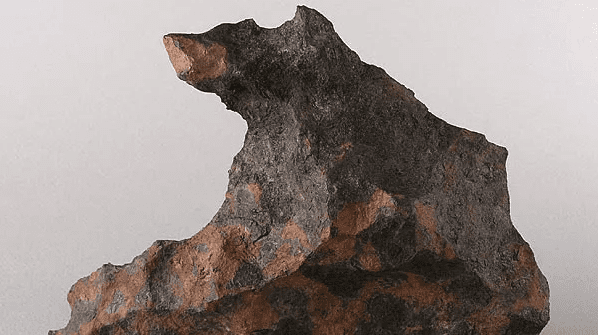
In the 1950s, a geochemist named Clair C. Patterson – who had worked on the Manhattan Project – measured the isotopic composition of lead from the Canyon Diablo meteorite and other space rock samples that correlated to the formation of the earth.

Image Credit: Public Domain

His estimate – 4.5 billion years.

That number has been revised only slightly in the decades since.

Patterson recalled later that “no one cared about it.”

Image Credit: Public Domain

He feels that remains true even today, and maybe even less so.

It’s pretty cool to think about, though – rocks from space can tell us how long our planet has been around.

It’s like alien but not, and if you take the time to ponder it for a few minutes more, I doubt you’ll be sorry!

The post This is How Scientists Figured Out the Age of the Earth appeared first on UberFacts.

Futurists Weigh In on What Our World Might Look Like in 500 Years

Barring any significant scientific advancements, none of us alive today are going to be around in 500 years. That doesn’t mean we can’t harbor some curiosity about whether or not our planet will look the same for our descendents, or different?

If it’s going to look different, how will it look different? It can be a crazy thing to consider, and not just from a technology point of view, either.

Image Credit: Pexels

500 years ago, after all, the world barely resembles the one we see all around us today. It was in the midst of a small Ice Age, and a period of vast European exploration and discovery.

When looking ahead several centuries, it’s hard to say for sure, largely because we remain unsure how the relationship between humans and the natural world is going to develop. We’ve been leaving our mark on the Earth since the Neolithic Age, manipulating the evolution of domestic plants and animal species, transforming the landscape, and of course, burning fossil fuels to our heart’s consent.

We’ve altered the planet’s climate, which continues to change and affect everything around us. Carbon dioxide levels are up to 412 parts per million as of the end of 2019, and global temperatures and sea levels are also on the rise.

Our planet is warming, and scientists have been warning for decades that natural disasters, food shortages, and other catastrophic events will eventually lead to social unrest, mass migration, and increased conflict.

Will the 26th century humans be dealing with the fallout of our lack of action? Or will they be looking back and thanking us for changing course while there was still time?

Image Credit: Pexels

Technology will surely continue to advance, and theoretical physicist Michio Kaku predicts that, by then, humans will be a civilization that’s learned to harness the entire sum of a planet’s energy. That means they would be able to use any clean energy technology we’ve imagined, and probably some that we haven’t.

Other theoretical futurists disagree, citing political and economic forces being likely to thwart any real steps toward progress.

Machine learning will be AMAZING, though. Stephen Hawking weighed in, proposing that by the year 2600, we would be publishing theoretical physics papers every 10 seconds. Moore’s Law says computer speed and complexity double every 18 months, so some of this work would surely be done by machines, without assistance.

Chew on that for a minute.

Other ideas include the average human lifespan stretching to 140 years, and that the digital storage of human personalities will let humans achieve a sort of immortality. We’ll be farming oceans, traveling in starships, and living on the moon and on Mars while robots take on the great frontiers.

Image Credit: Pexels

If any or all of that sounds pretty cool to you, I suggest you start calling your representatives today and pushing for action on climate change.

Otherwise we’re just going to be fighting over land and food instead of living on Mars.

And you’ve gotta agree that one of those things sounds way cooler than the other.

The post Futurists Weigh In on What Our World Might Look Like in 500 Years appeared first on UberFacts.

NASA Captures Amazing New Images of the Universe That Almost Look Photoshopped

There are so many secrets of our universe that we still haven’t figured out yet. We get a little bit closer every day – and these images from NASA’s Chandra X-Ray Observatory are definitely a giant leap in the right direction.

Since 1999, the flagship X-ray telescope has produced over 23 trillion bytes of data. Thanks to the giant orbiting fixture, tons of magical, awe-inspiring images have come our way.

Here’s the latest drop from NASA that’s sure to blow the minds of even the most pessimistic of us.

Eta Carinae

Photo Credit: NASA/CXC

Eta Carinae is a volatile system in our Milky Way galaxy. Previous eruptions from these two stars once created a ring of incredibly hot gas spanning 2.3 light years in diameter. That’s some pretty serious firepower.

Researchers are keeping track of which stars are up next to transform into supernovas – stars that suddenly become super bright due to a recent catastrophic explosion. This pair is likely high up on that list.

Helix Nebula

Photo Credit: NASA/CXC

This image was created using data from the Chandra X-Ray Observatory, Spitzer Space Telescope, Hubble Telescope, and NASA’s Galaxy Evolution Explorer. The reason it takes so many sources to create one image? Each telescope is detects different elements of the Helix Nebula – so putting the data together provides a more accurate picture of the nebula’s moving parts.

This particular image is around 4 light years in diameter – or roughly 24 trillion miles long.

Cartwheel Galaxies

Photo Credit: NASA/CXC

Galaxies like the one above are formed when collisions alter star formations. The hot gas distributed from this particular collision drags on for over 150,000 light years. That’s a distance that we cannot even begin to understand on Earth.

Messier 82

Photo Credit: NASA/CXC

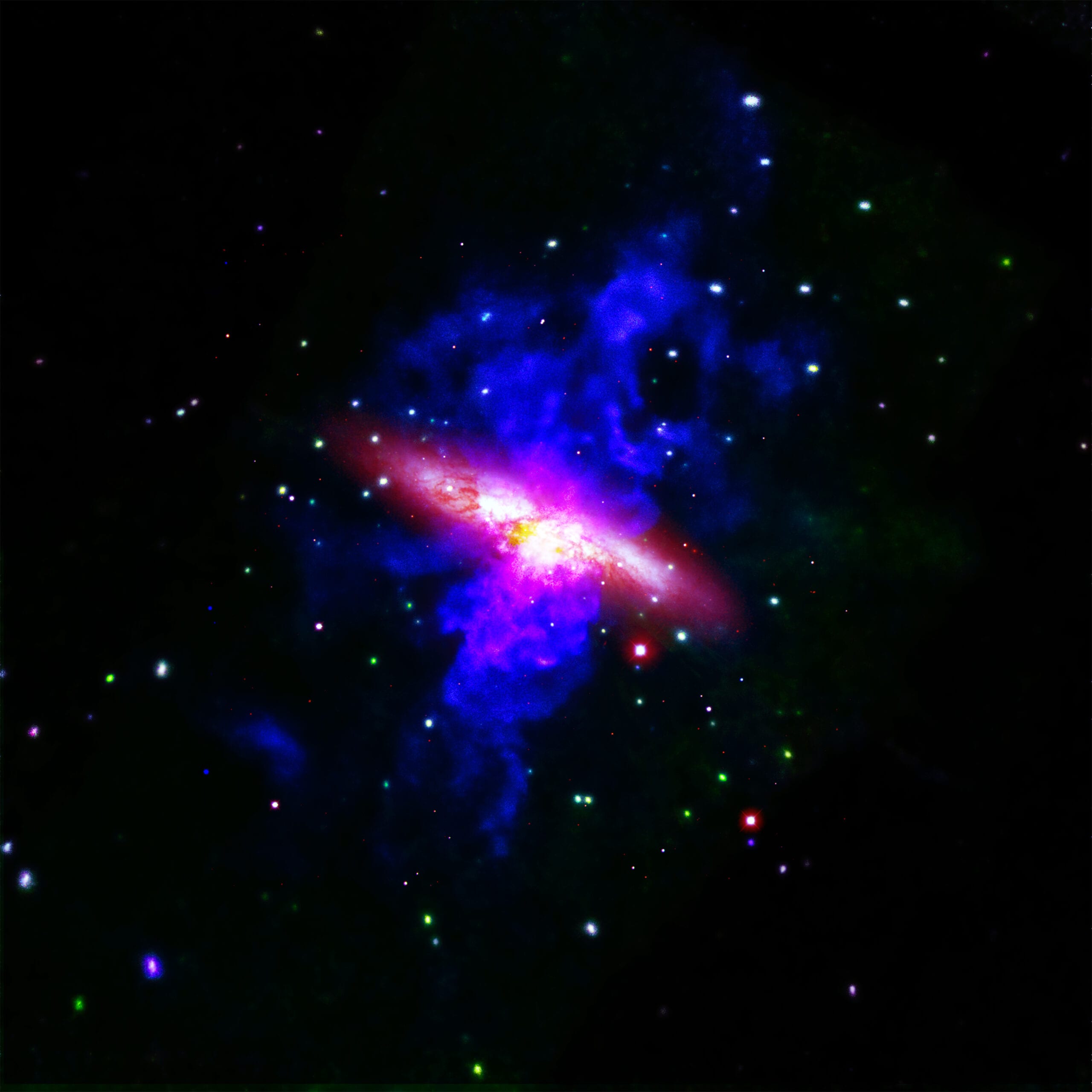
Messier 82, or M82, is giving scientists a glimpse into the process of star formation.

Here’s more about the image from NASA:

X-rays from Chandra (appearing as blue and pink) show gas in outflows about 20,000 light years long that has been heated to temperatures above ten million degrees by repeated supernova explosions.

Optical light data from NASA’s Hubble Space Telescope (red and orange) shows the galaxy.

This incredible album of images is seriously out of this world. The vast expanse of the universe gives me a little bit of hope during this super dark time. It helps remind me that there are things out there far bigger than our own tiny existence here on planet Earth. Plus, it’s comforting to look at other planets in the solar system and realize that – as it stands – Earth is still pretty hospitable.

If you’re feeling down about climate change, check out these dire photos from Venus. They’re sure to help you appreciate the greenery around us that we take for granted.

What are some of your favorite photos from space? Share them with us in the comments below!

The post NASA Captures Amazing New Images of the Universe That Almost Look Photoshopped appeared first on UberFacts.