One Million Cannibal Ants Have Escaped from an Abandoned Nuclear Bunker

Hundreds of thousands of worker ants have been forced to survive by eating the “corpses of their imprisoned nestmates” after they found themselves trapped in an abandoned nuclear bunker in Poland.  Apparently, some individuals fell through a vent in the ceiling and were unable to climb back up to their “mother nest.” They were left little choice if they wanted to survive (not that ants really make “choices” in that way).

The nest was first discovered in 2013, when researchers intending to study bats found close to a million worker ants in the confined space with no light, no source of food, and a year-round temperature that averaged only 10 degrees C. They were immediately intrigued, and wanted to understand how – without a queen, without their typically sources of food, and without sunlight – they were thriving.

Scientists are looking at the situation as an opportunity to learn more about the complex evolutionary history of the ants, and have since released the survivors into their “mother nest” once again – basically just to see what happens.

“The present case adds a dimension to the great adaptive ability of ants to marginal habitats and suboptimal conditions, as the key to understanding their unquestionable eco-evolutionary success,” the authors wrote in their paper.

Before they reintroduced the cannibals into the world, scientists had to confirm that the nest above the ventilation shaft was where the ants had come from in the first place. They took a few individuals and set them along the outskirts of the “mother nest,” and after observing that none of the ants were attacked as outsiders, they were reasonably sure their hypothesis was correct.

Three years later, they decided to help the ants free themselves. They took a 3-meter-long boardwalk in the bunker and set it up as a ramp that led from the floor to the ceiling vent. The ants made their way out from there.

“Soon after the boardwalk had been installed, single ants started to inspect it,” noted the authors.

Within 6 months, and with no further intervention, the bunker was nearly empty. Ants continued to fall through the pipe, but the typically found the ramp and returned to their nest room afterward.

Scientists were thrilled to learn more about the “monumental” ability of wood ants to adapt to “marginal habitats and suboptimal conditions.” We now know they’re able to not only survive, but are able to self-organize and work together without a queen, and without contact with their original nest.

This strange turn of misfortune for the ants has turned into something of a win for science and for all of us – because the better we can understand how insects like ants have managed to survive and to thrive, despite the circumstances, the better prepared we can be to face such inevitable changes ourselves.

The post One Million Cannibal Ants Have Escaped from an Abandoned Nuclear Bunker appeared first on UberFacts.

Sweating Is Not at All Detoxifying, FYI

It feels good to feel your muscles sweat and work, and something about feeling the sweat pop out on your skin makes me feel accomplished, like it might all be worth it in the end.

But of course, you don’t have to exercise to sweat. Hot yoga, saunas, and sweat lodges have become more and more popular, at least in part due to their claims that they help you “sweat out toxins.” But well…that’s not even a little bit true.

Image Credit: Pixabay

Actually, your liver and kidneys do all of the heavy lifting when it comes to toxins, and exercise isn’t going to make them more or less functional.

Sweat is made up of mostly water, with a bit of sodium, chloride, potassium, and trace amounts of proteins, fatty acids, and maybe a stray “toxin” or two, says dermatologist Tsippora Shainhouse.

“Most of the ‘toxins’ that concern people include pesticides, residue from plastics, or from air pollution. These tend to be fat-soluble, and do not dissolve well in water, so they will not be removed from the body in any significant quantity, given that sweat is 99 percent water.”

Image Credit: Pixabay

In fact, attempting to detox merely by sweating can backfire. If you don’t drink enough water to replace what you’ve sweated out, your kidneys have to work overtime while you’re dehydrated – and if your kidneys are working especially hard, they may not be as efficient at weeding out actual toxins in the meantime.

Image Credit: Pixabay

Which is not to say sweating is bad, nor is exercise. Just don’t expect it to do what your kidneys and liver are already doing, and make sure to drink plenty of water when you’re done.

The post Sweating Is Not at All Detoxifying, FYI appeared first on UberFacts.

The “Scully Effect”: Female “X-Files” Fans Flock to STEM Careers

Scully does it again!

As if The X-Files wasn’t awesome enough as a television show, now we’re learning that all of the little girls who looked up, wide-eyed, at the tough-as-nails, no-nonsense, science-loving Scully are flocking to careers in science, math, and engineering.

Those fields have long been dominated by men, and though that tide has been shifting little-by-little, women in STEM (science, technology, engineering, math) fields still find themselves in the minority more often than not.

The news comes out in a recent report compiled by scientists working for The Geena Davis Institute. They surveyed more than 2000 U.S. women over the age of 25, 68% of whom were X-Files viewers, and asked them whether watching Dana Scully influenced their career decisions as they grew up.

A significant number of them said her character affected them to the point that they chose to major in a STEM field in college, and to work in STEM field as a career. They claimed that Scully gave them positive impressions of women working in science, and more than half said she increased their confidence in their ability to succeed in a male-dominated field.

More than 60% responded that Scully’s character increased their belief in the importance of STEM work.

“In the world of entertainment media, where scientists are often portrayed as white men wearing white coats and working along in labs, Scully stood out in the 1990s as the only female STEM character in a prominent, prime-time television role.”

The study provides data to back up long-held anecdotal beliefs that a “Scully Effect” of this type existed.

Saying definitively that Scully is the reason gets tricky, since there’s always the chance that women interested in STEM are more likely to watch shows like The X-Files in the first place.

That said, if more women are entering STEM fields, I say give Scully the credit (or maybe let her share it with Astrid, from Fringe).

With The X-Files revival, who knows – maybe a whole new generation of girls will be inspired.

The post The “Scully Effect”: Female “X-Files” Fans Flock to STEM Careers appeared first on UberFacts.

Meet the Golden Retriever Puppy Who Emerged a Lovely Shade of…Green

In a strange plot twist that seems more worthy of Oz than plain old Earth, a regularly-colored golden retriever has given birth to a green puppy.

Just one – the other eight members of the litter were all hued similarly to their parents (and presumably, their parents before them).

Little Mojito was born just before Halloween in Wermelskirchen, Germany, and his owner, Joanna Justice, was at first concerned about his mint-green coloring. He was healthy, though, as were his litter mates.

Dr. Christian Dimitriadis assured Joanna (and all of us) that the puppy’s green fur would likely grow out and disappear, turning white the second time around.

Though green puppies are rare, they’re not entirely unheard of – the same week, a shamrock-colored great Dane was born in the U.S. – and another green golden retriever pup was born in Scotland in 2017.

Veterinarians and other scientists aren’t entirely sure why some puppies are born green, though most believe it has to do with bile pigment biliverdin exposure in the womb. This is why it’s most often seen in white dogs – the pigment has a better chance of being seen in a light-colored coat.

Biliverdin can be found in the bile, bruises, and placenta of dogs, and it shows up in other biological phenomena, as well – even in the 6-million-year-old shells of dinosaur eggs.

So anyway, I assume this mama dog loved her green baby the same as the rest – a sentiment I hope would be shared should a human child come out green, but you never know.

Not everyone grew up dreaming of a visit to Oz, herself.

The post Meet the Golden Retriever Puppy Who Emerged a Lovely Shade of…Green appeared first on UberFacts.

This Is What You Should Know About the Hymen

Too many people don’t understand the female body well enough (or at all). The recent revelation that rapper T.I. asks his daughter’s doctor to check her hymen to ensure her virginity on a yearly basis is the (extremely disgusting and invasive and inappropriate) proof. And the fact that so many people support him makes a lot of women very uncomfortable.

In case you’re someone who would like to know more, or who would like to be able to educate other people who should know more, here’s some general information for all of us about a part of the female body.

First up, fact check: the presence of an attached hymen does not indicate whether or not a woman has had vaginal intercourse.

Truly.

View this post on Instagram

"We have yearly trips to the gynecologist to check her hymen."⁣??‍♀️ ⁣ Yup, TI the rapper said this on a podcast recently.⁣ I can’t make this up. ⁣ If he would have come into my office asking for this I would have laughed in his face. But seriously, there are a lot of people that don't know that you actually can't tell if a woman is a virgin or not just based on an exam. It just doesn't exist.⁣❌ ⁣ ⁣So what is the hymen? It is a thin piece of tissue that covers the opening of the vagina. The hymen can stretch or tear as a result of various behaviors, by tampon or menstrual cup use, pelvic examinations with a speculum, regular physical activity, sexual intercourse, insertion fingers or items into the vagina, and activities such as gymnastics. There are different types and shapes.⁣ ⁣ When a dad puts their daughter in this predicament then she can't trust him. He is humiliating her and possibly making her hide things behind his back. In this case it is making his daughter and other women believe that sex is bad and is not healthy. Her outlook on sex is totally different now and possibly gives her a subconscious thought to thinking that controlling her is ok. She also will possibly view going to the gynecologist or any doctor for that matter as a bad experience, and that could potentially have health consequences for her future. ⁣ So how do we tell if someone is a virgin or not? ⁣ You ask them! ⁣? That's it.⁣ Plan and simple. ⁣ Communication is key as a human being, between friends, between father and daughter, mother and son, doctor and patient.⁣?? ⁣ Let's learn from this and hope that in this century we can dispell myths on virginity, what sex means and hope that women are not scared to see doctors for their health concerns. I hope his daughter can overcome this and have a healthy sexual relationship in her future, because she is after all 18 years old and an adult!⁣ ⁣ FYI, In October 2018, the UN Human Rights, UN Women and the World Health Organization (WHO) stated that virginity testing must end as it is a painful, humiliating and traumatic practice, constituting violence against women. Let’s end this violence! Keeping it real! Dr. E

A post shared by ✨Erica Montes, M.D.✨ (@the.modern.mujer) on

The hymen is a thin piece of membranous tissue that partially covers the vaginal opening. It’s usually half-moon shaped, but every body is different. The general belief is that when a woman has sex for the first time the hymen is “broken,” but in truth, it’s typically stretched and only sometimes torn.

Again, that doesn’t happen for everyone.

View this post on Instagram

#Repost @plannedparenthood • • • • • • “Sex” means different things to different people, so “virginity” does too. But whatever you believe, the fact is you can’t tell if someone’s had sex by checking their hymen (the thin, fleshy tissue that’s located at the opening of the vagina). Hymens are different for everyone. Most hymens naturally have holes in them, and some are more open than others. Many other activities besides sex can stretch your hymen — like riding a bike, doing sports, or putting something in your vagina (like a finger or tampon). ?: @emilysweirdembroidery #misogyny #misogynior #virginity #sexed #hymen #embroidery #sexeducation #womensrights #genderbasedviolence #genderequality #genderequity #equality #equity #feminism #feminists #feminist #oppression #oppressed #marginalized #disenfranchised #virginitytesting #antiwomen

A post shared by David Mondelice (@sonofgoddess1207) on

Not only that, but some girls are born with open hymens, some don’t have one at all, and others naturally stretch or tear their hymens through activities like gymnastics, exercise, or horseback riding – even using tampons, menstrual cups, and regular gynecological exams could cause stretching and/or tearing.

The idea that if a woman is a virgin she’ll bleed the first time she has sex? Also a myth, for the reasons mentioned. Also, even if a woman is a virgin, and even if she has a hymen, her hymen may not bleed if it gets stretched and/or torn.

The bottom line? No one should be examining a woman’s hymen or bedsheets for proof of her virginity, or in order to verify rape allegations – it is useless and can potentially cause physical and psychological harm.

The World Health Organization (WHO) and the United Nations (UN) condemn virginity testing for those reasons and because, in some countries, if an unmarried woman is determined to not be a virgin, she may be publicly shamed, beaten, and imprisoned. Not to mention she may be more likely to consider suicide – or even be murdered.

“The practice is a violation of the victim’s human rights and is associated with both immediate and long-term consequences that are detrimental to her physical, psychological, and social well-being. The harmful practice of virginity testing is a social, cultural, and political issue, and its elimination will require a comprehensive societal response supported by the public heath community and health professionals.”

Also, the concept of virginity itself might be a topic for another day, but this bears repeating: virginity is a social construct, and, in most cases, a holdover from a very different time. A time when women were controlled like property by the men in their lives, and a time before we had technology that could address concerns like paternity and inheritance.

Whether or not a woman has had sexual intercourse has no bearing on her value to herself, her family, or to society at large.

The sooner we all accept that and stop (literally, in some cases) poking our way into other people’s business, the better off everyone will be.

The post This Is What You Should Know About the Hymen appeared first on UberFacts.

10 Interesting Facts for You to Think About

Let’s get down to business with another fact set. We consistently bring you the facts that you make you think about our world and ponder our past, present, and future.

Are you ready to put on your thinking cap?

Let’s go!

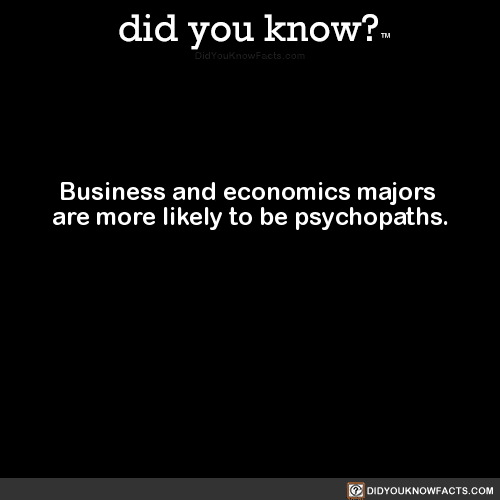
1. Get down to business!

Photo Credit: did you know?

Source 1 Source 2

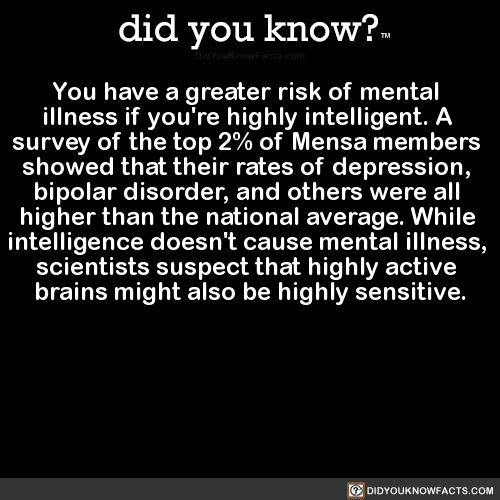
2. You have two minutes!

Photo Credit: did you know?

Source 1 Source 2

3. Consider me the hardest worker of all time.

Photo Credit: did you know?

Source 1 Source 2

4. How many do you have?

Photo Credit: did you know?

Source 1 Source 2 Source 3

5. I want to ride my bicycle.

Photo Credit: did you know?

Source 1 Source 2

6. I’m with Mr. Jefferson on this one

Photo Credit: did you know?

Source 1 Source 2 Source 3

7. What a story!

Photo Credit: did you know?

Source 1 Source 2

8. No proof…yet.

Photo Credit: did you know?

Source 1 Source 2

9. I’m in luck!

Photo Credit: did you know?

Source 1 Source 2

10. Brilliant until the end.

Photo Credit: did you know?

Source 1 Source 2

Some quality facts, right there!

Be sure to explore our other fact sets as well.

The post 10 Interesting Facts for You to Think About appeared first on UberFacts.

10 Interesting Facts for You to Think About

Let’s get down to business with another fact set. We consistently bring you the facts that you make you think about our world and ponder our past, present, and future.

Are you ready to put on your thinking cap?

Let’s go!

1. Get down to business!

Photo Credit: did you know?

Source 1 Source 2

2. You have two minutes!

Photo Credit: did you know?

Source 1 Source 2

3. Consider me the hardest worker of all time.

Photo Credit: did you know?

Source 1 Source 2

4. How many do you have?

Photo Credit: did you know?

Source 1 Source 2 Source 3

5. I want to ride my bicycle.

Photo Credit: did you know?

Source 1 Source 2

6. I’m with Mr. Jefferson on this one

Photo Credit: did you know?

Source 1 Source 2 Source 3

7. What a story!

Photo Credit: did you know?

Source 1 Source 2

8. No proof…yet.

Photo Credit: did you know?

Source 1 Source 2

9. I’m in luck!

Photo Credit: did you know?

Source 1 Source 2

10. Brilliant until the end.

Photo Credit: did you know?

Source 1 Source 2

Some quality facts, right there!

Be sure to explore our other fact sets as well.

The post 10 Interesting Facts for You to Think About appeared first on UberFacts.

Here Are the First 4 Things People Notice About Your Face

When it comes to impressing strangers, some things aren’t within your control. For example: Your face.

Every time you meet someone new, they judge your face on four basic characteristics, psychologist Leslie Zebrowitz says. She listed the four facial cues in a paper published in Current Direction in Psychological Science in June 2017.

Photo Credit: Pixabay

The first characteristic is called “babyfaceness.”

Yep.

People are unconsciously assessing whether you have a baby face or not—features like large eyes, a round face, a short chin and a large forehead. Humans naturally have a soft spot for babies for obvious evolutionary reasons, so seeing these features in others may make us predisposed to be kinder towards them.

The second cue is familiarity. Familiar faces are preferable to completely strange and new ones. Even babies show this preferential treatment.

The third cue, fitness, is not surprising–people judge you by whether your face is healthy-looking and attractive or not.

Photo Credit: Pixabay

Lastly, the fourth cue is emotional resemblance. When people meet you, they assess your emotional expressions based on certain features, like your eyebrows and mouth. If you’re frowning, people assume you’re angry. If you’re smiling, people assume you’re happy.

All of these cues produce quick, almost immediate assessments about the people we meet. Whether those assessments are true is another story. They’re definitely not precise ways to gather info about someone. Leslie’s paper refers to the “overgeneralizations” that these cues create.

Regardless, it seems that humans can’t help but judge a book by its cover.

The post Here Are the First 4 Things People Notice About Your Face appeared first on UberFacts.

Here Are the First 4 Things People Notice About Your Face

When it comes to impressing strangers, some things aren’t within your control. For example: Your face.

Every time you meet someone new, they judge your face on four basic characteristics, psychologist Leslie Zebrowitz says. She listed the four facial cues in a paper published in Current Direction in Psychological Science in June 2017.

Photo Credit: Pixabay

The first characteristic is called “babyfaceness.”

Yep.

People are unconsciously assessing whether you have a baby face or not—features like large eyes, a round face, a short chin and a large forehead. Humans naturally have a soft spot for babies for obvious evolutionary reasons, so seeing these features in others may make us predisposed to be kinder towards them.

The second cue is familiarity. Familiar faces are preferable to completely strange and new ones. Even babies show this preferential treatment.

The third cue, fitness, is not surprising–people judge you by whether your face is healthy-looking and attractive or not.

Photo Credit: Pixabay

Lastly, the fourth cue is emotional resemblance. When people meet you, they assess your emotional expressions based on certain features, like your eyebrows and mouth. If you’re frowning, people assume you’re angry. If you’re smiling, people assume you’re happy.

All of these cues produce quick, almost immediate assessments about the people we meet. Whether those assessments are true is another story. They’re definitely not precise ways to gather info about someone. Leslie’s paper refers to the “overgeneralizations” that these cues create.

Regardless, it seems that humans can’t help but judge a book by its cover.

The post Here Are the First 4 Things People Notice About Your Face appeared first on UberFacts.

The Mystery of the Bermuda Triangle Has Been Solved

The mystery of why things – ships, people, maybe even entire civilizations – seem to disappear over one particular barren section of ocean has captured the minds of the public and conspiracy theorists alike. We’re talking about the Bermuda Triangle, obviously.

The truth is that while ships and planes go missing fairly regularly in the BT, they do not do so more often in the triangle of sea between Puerto Rico, Bermuda, and Florida than they do anywhere else.

Like, we don’t really know why the myth got so out of control, but there is not and never has been any statistical significance to the area at all.

Despite scientists knowing the truth of this fact, when things do happen to go missing in the area, reports often don’t neglect to take facts into consideration. Maybe to make a buck on the sensational aspect?

After a recent event, however, many are hopeful that it’s finally time to dismiss the harebrained theory once and for all.

During an on-air interview with news.com.au, well known Australian scientist Karl Kruszelnicki said in no uncertain terms that the number of boats and other vessels that disappear in the triangle “is the same as anywhere else in the world on a percentage basis.”

“It is close to the equator, near a wealthy part of the world, America, therefore you have a lot of traffic.”

According to Kruszelnicki, the myth can be traced back to a number of disappearances in the area between WWI and WWII. People started to get weirded out about the incidents even though the weather was often terrible and the craft weren’t reliable. In addition, pilots at the time weren’t as efficient or well-trained, and therefore were more likely to make catastrophic mistakes (like being drunk while they flew).

The fact that wreckage and remains were rarely found makes sense, too, given that it’s a large area and the water is quite deep in most places.

The National Oceanic and Atmospheric Administration (NOAA) also maintains there’s nothing to see there – not even the Triangle itself, if you want to get technical. They agree that environmental conditions could explain many, if not all of, the disappearances, but they also reiterate that the “US Board of Geographic Names does not recognize the Bermuda Triangle as an official name and does not maintain an official file on the area.”

Lol.

So, it’s time we put the whole theory to rest once and for all and stop blaming perfectly normal, but tragic events on the supernatural or whatever.

“There is no evidence…that mysterious disappearances occur with any greater frequency in the Bermuda Triangle than in any other larges, well-traveled area of the ocean,” NOAA states.

Make no bones about it, there’s nothing to see here.

The post The Mystery of the Bermuda Triangle Has Been Solved appeared first on UberFacts.