Patagonia’s CEO Donated Company’s $10 Million Tax Cut to Fight Climate Change

As much as some people (and organizations) out there would like to bury their heads in the sand and pretend climate change doesn’t exist, it is very real, and its effects are growing more drastic.

Because of the 2018 rewrite of America’s tax laws – a tax code revision that greatly benefited corporations by lowering the corporate tax rate by almost a third for most companies – Patagonia paid $10 million less in taxes that year than it had anticipated. So the company’s CEO, Rose Marcario, decided to donate the $10 million to non-profit groups that are working to fight climate change and help the environment.

Marcario believed the corporate tax cut was not a good thing, and she wrote, “Based on last year’s irresponsible tax cut, Patagonia will owe less in taxes this year—$10 million less, in fact. Instead of putting the money back into our business, we’re responding by putting $10 million back into the planet. Our home planet needs it more than we do.”

Speaking about climate change deniers, including many in government, Marcario wrote, “Far too many have suffered the consequences of global warming in recent months, and the political response has so far been woefully inadequate—and the denial is just evil.”

Patagonia has been a friend of the environment for many years now and their website says the company has donated more than $89 million to environmental groups to fight climate change.

Let’s hope that more corporations and individuals make their voices heard about the extreme consequences of climate change that are occurring around us every day. This isn’t something that might happen in the future, this is taking place right now.

The post Patagonia’s CEO Donated Company’s $10 Million Tax Cut to Fight Climate Change appeared first on UberFacts.


These Memes are for People With Anxiety Who Need a Laugh Today

What’s the point of life if you don’t have a sense of humor? It helps us deal with the truly awful stuff.

Anxiety is definitely one of those tough things that basically everybody has to deal with, but isn’t that unifying?! Yeah it is!

These 12 memes will make you laugh and give you at least a moment’s break from your anxiousness.

1. Oh yeah. I forgot about those…

Photo Credit: Pizza Bottle

2. Works every time!!

Photo Credit: Pizza Bottle

3. If only…

Photo Credit: Pizza Bottle

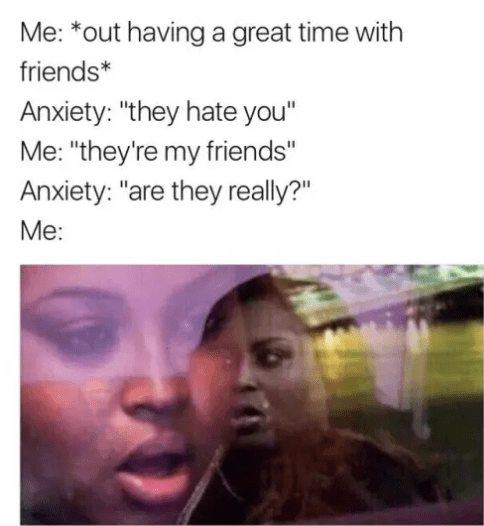
4. I’m pretty sure they don’t hate me THAT much, right?

Photo Credit: Pizza Bottle

5. Ahhh… just like always!

Photo Credit: Pizza Bottle

6. Somebody actually got this!

Photo Credit: Pizza Bottle

7. They grow up so fast!

Photo Credit: Pizza Bottle

8. You know what anxiety? You need to SHUT UP!

Photo Credit: Pizza Bottle

9. Yep, checks out!

Photo Credit: Pizza Bottle

10. Every. Single. Day.

Photo Credit: Pizza Bottle

11. Do I have to use it all at once, or…

Photo Credit: Pizza Bottle

12. You’re gonna make me care, aren’t you???

Photo Credit: Pizza Bottle

Feeling less anxious? No? Me neither, but… I’m laughing. And maybe I’ll be able to live with myself tomorrow.

Probably not. We’ll see.

Which of these are your faves? Let us know in the comments!

The post These Memes are for People With Anxiety Who Need a Laugh Today appeared first on UberFacts.

This Is What Happens to Mosquitoes in the Winter

The greatest thing about winter is the lack of bugs. No pesky mosquitoes making you itch every time you go outside at night! It’s such a relief — but, like, what even happens to mosquitoes in winter? Do they fly south, like birds?

Not quite, according to Mental Floss.

Mosquitoes have difficulty surviving in any temperatures below 50 degrees Fahrenheit, but their strategy depends on their sex. Males simply die off, though not directly due to the cold — instead, the winter just happens to coincide with the end of their life cycle, when they’ve already finished mating. They actually only live for about 10 days anyway.

Females, on the other hand, enter what is called diapause, a rested state similar to hibernation. They find a hollow log to burrow into, slow their metabolism, and hunker down until the cold is over. Females can stay in diapause for up to six months, thanks to the large reserves of energy that they hoard beforehand — they eat up to 10 times their normal body weight in blood to prepare for this stage.

Photo Credit: iStock

After warm weather returns, females leave their burrow and return to their normal metabolism. Then they must search for more food (blood) to nourish their eggs, and the whole dreadful cycle starts all over again.

Photo Credit: iStock

Unfortunately, there are some exceptions to all this. Some types of mosquitoes can actually breed underground in the winter and forego food, allowing them to stay alive all throughout the cold months. A species called Culex pipiens molestus invaded a poor Manhattan neighborhood in exactly this manner.

Bummer.

The post This Is What Happens to Mosquitoes in the Winter appeared first on UberFacts.

The Coronavirus Can Be Tracked on Johns Hopkins’ Website

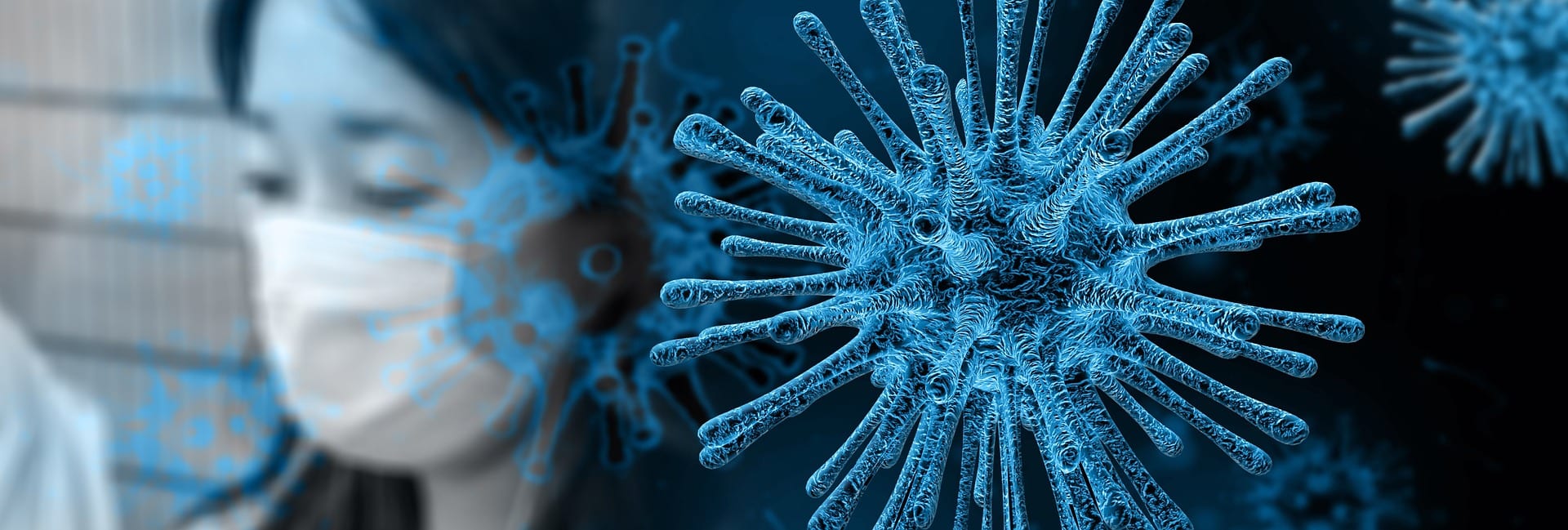
The coronavirus, or 2019-nCoV, has spread throughout mainland China and beyond. The virus makes daily headlines, though reports about this new respiratory disease are constantly changing, which makes monitoring it a challenge for everyday people.

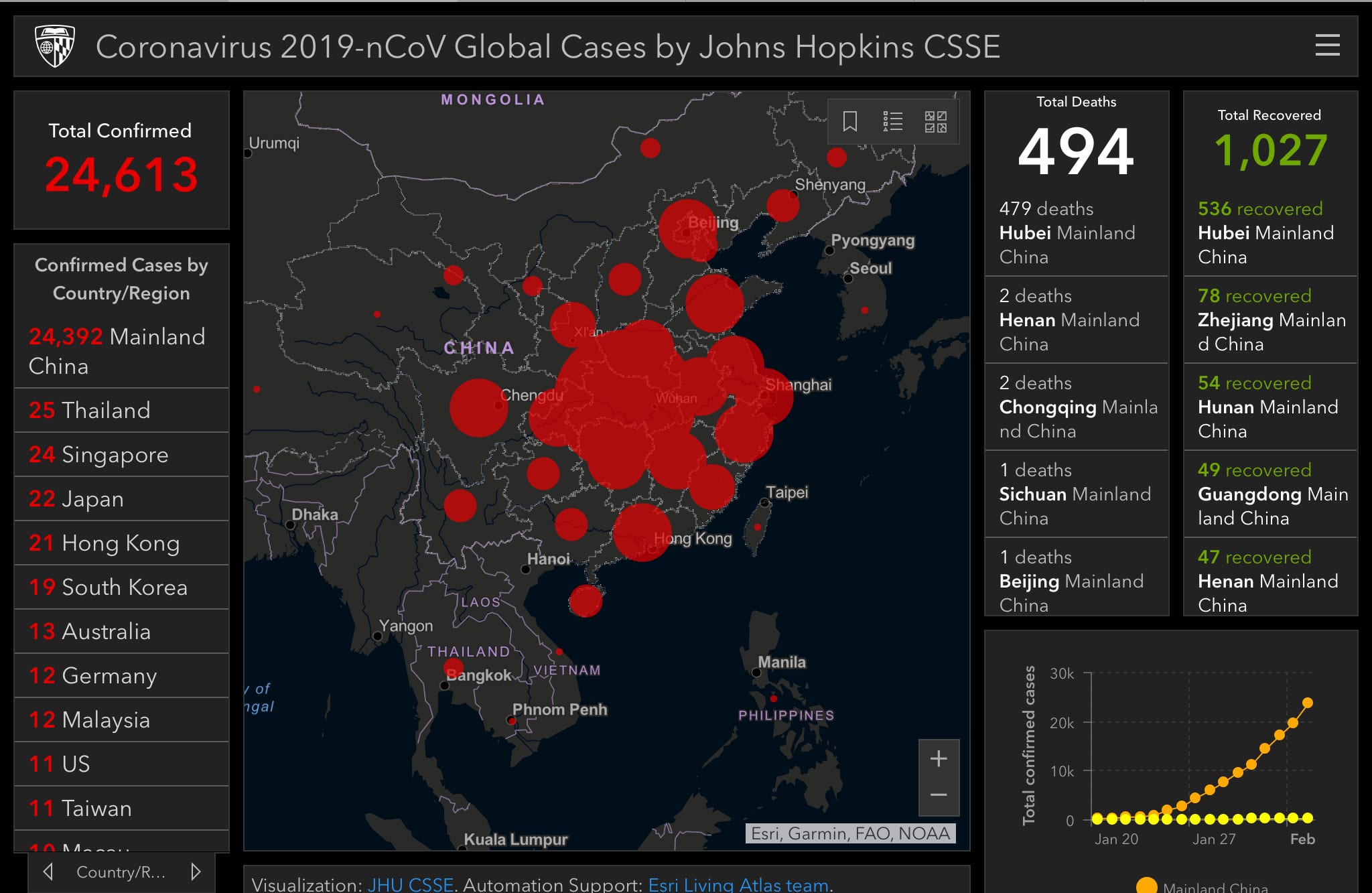
However, the Center for Systems Science and Engineering (CSSE) at Johns Hopkins University has provided a way for those outside the medical community to see how widespread coronavirus is with an online dashboard tracking the outbreak as information is confirmed.

Photo Credit: Johns Hopkins University

Users can see hard data regarding numbers of confirmed cases and their locations, as well as recoveries and deaths. Clicking through the various figures and graphs will expand the information further.

For those who like to see the hard facts without the grabbing verbiage of online news outlets, this website will prove to be revealing, if not fascinating. Use it to become informed, but be wary if you live in an area with confirmed cases. You don’t want to scare yourself unnecessarily.

Photo Credit: Pixabay

So far, the Center for Disease Control (CDC) reports that the cases found in the U.S. are people who had recent and close contact with travelers from Wuhan – or were travelers themselves. They state the virus is not spreading throughout communities.

While they call the coronavirus a “very serious public health threat,” it’s also unclear how the threat will affect the U.S. at this time. As of right now, the threat-level to citizens in the U.S. who are not actively treating or being exposed to coronavirus patients in a medical setting is low.

Photo Credit: Edwards AFB

In the meantime, wash your hands, keep yourself healthy and check out that factual dashboard if your concerned or even curious about the coronavirus spread stateside.

And maybe buy a few medical masks, just in case.

The post The Coronavirus Can Be Tracked on Johns Hopkins’ Website appeared first on UberFacts.

Science Has Brought a 3,000-Year-Old Mummy’s Voice Back to Life

In the vast pile of cool things offered to us by science, a talking 3,000-year-old mummy has got to come out somewhere near the top.

Laypeople, historians, archaeologists, and scientists alike have all been fascinated with the legacy of Ancient Egypt since we first discovered the remains of their society. Since they were remarkably advanced in many areas, we’ve gotten to know them better than most bygone civilizations – and now, because of the careful way they had of preserving their dead, we can also hear one of their voices.

View this post on Instagram

#nesyamun

A post shared by Гид Лондон Экскурсии Трансфер (@gid__london) on

A team of UK scientists was able to reconstruct the vocal tract of one mummy using CT scans, 3D printing, and an electronic larynx. The project has been going on since 2013, and to make it come to life, experts from the areas of clinical science, archaeology, Egyptology, museum curation, and electrical engineering had to come together for the good of all.

Ok. Here it is:

View this post on Instagram

(You’ll want your sound on.) A replica of a 3,000-year-old mummy’s vocal tract has revealed how that mummy might sound if he rose from the dead. Using CT scans of the mummified Egyptian priest Nesyamun (his inner coffin lid is shown), researchers mapped the exact shape of the mummy’s vocal tract — which governs the unique sound of a person’s voice. When connected to an artificial voice box, a 3-D printed mold of the mummy’s vocal tract produces a sound somewhere between the vowels in “bed” and “bad,” researchers report. But Nesyamun’s undead utterance doesn’t quite mimic his original voice, because the mummy’s tongue, which affects the shape of the vocal tract, is dried up and flattened out. Rather, “we’ve created the sound that he would make if he was to speak as he currently lies in his sarcophagus,” electronic engineer David Howard says. The plastic mold of the priest’s vocal tract cannot say full words, but using a computer simulation of the vocal tract with a jaw and tongue that move, “we could make him speak,” Howard says. Using inscriptions in the mummy’s tomb and other ancient religious texts, the researchers may someday render vocal recordings of Nesyamun’s own prayers and the daily liturgy that he would have performed in his duties as a priest. . . . (?: © @leedsmuseumsandgalleries ?: D.M. Howard et al/Scientific Reports 2020) . . . #science #mummy #egypt #history #archaeology #ancientegypt #nesyamun #sarcophagus

A post shared by Science News (@sciencenewsmagazine) on

The six years of dedication resulted in returning the 3,000-years-gone Nesyamun’s voice to his throat. And yes, right now it’s just a single sound – but rest assured, they are working on more.

The amazing accomplishment was only possible because Nesyamun’s larynx and throat were remarkably well-preserved. This stroke of luck allowed scientists to totally reconstruct his vocal tract, which they then printed using a 3D printer, explained lead author and professor David Howard of the University of London to IFLScience.

“This process allows the sound of his tract as he is in his sarcophagus, which is a sound that his vocal tract can make – so it is his voice.”

That makes it sound a bit creepy, like something that happens at the outset of a horror movie, but it’s also cool.

“When it comes to any thoughts of producing running speech, things are different but there are possibilities. Combining knowledge of phonetics and linguistics with speech science means that we could use it to anticipate typical articulatory gestures that he would have used to change his vocal tract shape and therefore do this in software and create running speech. So that is an idea – there is a load of work to do to get anywhere near this but it is a distinct possibility for the future.”

In a twist of fate (or is it something more?) Nesyamun means “True of Voice” – he was a priest, incense-bearer, and scribe at an ancient temple at Karnak. He died around 1100 B.C.E. and due to his state of preservation, he’s one of the most-studied mummies in Britain’s “Voice of the Past” project.

As a history nerd, but an ancient history nerd first, this is just thrilling, one syllable or more.

The post Science Has Brought a 3,000-Year-Old Mummy’s Voice Back to Life appeared first on UberFacts.

The HPV Vaccine Has Nearly Eliminated Related Cancers in England

Well, this is interesting…

HPV – the human papillomavirus – is the most prevalent sexually transmitted infection among sexually active people. One of the reasons it’s so transmitted is that most people show few or no symptoms and there’s not even a test for men, so there’s often no way to be warned that you might have it, much less be transmitting it. There are dozens of strains, most of which are virtually harmless.

But two strains, HPV16 and HPV18, are not at all harmless. In fact, those two strains alone cause 70% of HPV-related cancers.


View this post on Instagram


A post shared by Centers for Disease Control (@cdcgov) on

For the last decade there has been a vaccine available for teenagers, male and female, that targets HPV16 and HPV18 (as well as other higher-risk strains of the virus), but it (like other vaccines) has faced hesitancy from parents.

England, though, began a mass vaccination program in schools, and the results have been staggering.

The latest statistics from Public Health England suggest there has been a massive slowdown of new infections of HPV among sexually active young women.

Researchers used a group of 584 women between the ages of 16 to 18, and found that none of them were infected – compared to a rate of around 15% infection ten years ago, when the program began.

Dr. Vanessa Saliba, the consultant epidemiologist on the project, says the team also believes the report indicates a wider decline of the virus in England overall.

“This is clear evidence of the success of our immunisation programme, which continues to achieve high coverage. With millions of young women protected by HPV vaccination, we expect to see big reductions in cervical cancer in years to come and the introduction of the boys’ programme will accelerate this progress.”

Even though the vaccine targets the highest-risk strains, researchers also say there’s some evidence suggesting that other types of the virus have also declined.

England’s vaccination rates since the program began have soared to nearly 84%. Scotland has implemented a similar program with equally positive results, and Australia may well be the first country to eliminate HPV-related cervical cancer over the next 20 years.

There has been at least one study to suggest that even if HPV could be curbed, cervical cancer would remain a threat, since HPV is not the only known contributor to the disease, but scientists are quick to cast a shadow over those results.

Jonathan Ball, a molecular biology professor at the University of Nottingham, admits that the authors do “raise some important points highlighting that HPV vaccination isn’t the absolute panacea for cervical cancer prevention,” but also reminds us that “undoubtedly the current HPV vaccines are effective at preventing infection with the types of virus known to cause cervical and other cancers.”

It all boils down to this: we have a vaccine that has a 70% (or maybe better, if we can get the rates up high enough) chance of preventing your child from contracting at least one type of cancer, and we know that it works.

So, even if you can’t protect them from everything, you can protect them from this one thing, and isn’t that something to celebrate?

It’s definitely something to do. 

I mean, if you ask me.

The post The HPV Vaccine Has Nearly Eliminated Related Cancers in England appeared first on UberFacts.

Experts Claim That 98.6 Is No Longer Reliably the Average Body Temperature

This is bad news for all of those kids headed to the nurse’s office, praying their thermometer spits out a temperature of 100 degrees or higher – you’re most likely starting from a point lower than 98.6.

The world’s “normal” body temperature was established back in the 19th century, and though most accept it as a reasonable average, doctors and scientists have always known that variables like gender, size, age, time of day, and other factors can play into the thermometer’s readout.


View this post on Instagram


A post shared by ? Erica Lewis (@a.lewis.life) on

Recent research, though, shows that not only has the average body temperature dropped since it was established by Carl Reinhold in 1851, it’s dropped significantly just since the 1970s – about 0.05 degrees Fahrenheit per decade, based on your birth year, explains Dr. Julie Parsonnet.

“People are stuck on the 98.6 number, but that number has always been wrong. There’s never been a real number because people vary.”

Also, Parsonnet and others involved in the study aren’t afraid to admit that there are still variables that remain unknown, as well. They looked at the temperatures of three groups of data – one from a study of Civil War veterans’ as they returned from war, another from a CDC record from the 1970s, and a third of Stanford health clinic patients from 2007 to 2017.


View this post on Instagram


A post shared by Katie Bush (@katiebush26) on

Men born in the 2000s typically run about 1.06 degrees Fahrenheit lower than men born in the early 1800s. For women, they’re running around 0.58 degrees Fahrenheit lower than women born in the 1890s.

The researchers say it’s unclear what’s causing the continued decline, or what it could mean for our health moving forward. That people have grown both taller and heavier, and that metabolic rates have slowed, likely all factor in.

The fact that a good portion of the population in the mid-19th century could have been fighting diseases like syphilis, tuberculosis, and periodontal disease also means infections (and fevers) may have been raising the average.


View this post on Instagram


A post shared by キレイShop公式 (@kireishopjapan) on

Doctors like Dr. Edward Ward, an emergency medicine physician at Rush University Medical Center, say that for now, the information won’t change they way they assess and treat patients.

“It’s not surprising that there will be changes (in normal body temperature) since the Industrial Revolution. As an ER doctor, I’m looking for abnormalities. …there’s a difference between having what is medically considered having a fever and feeling feverish. If someone is normal 96 and then suddenly they’re 99, they probably feel uncomfortable.”

Parsonnet and her team echoed the sentiment, stating that how you feel is more important than the numbers on your thermometer.

That said, they are excited to follow the research further.

“We are having human cooling, and we don’t know what that means, but its’ good to know that it’s happening.”

Until we know more, trust your instincts out there. You know your body better than anyone else, and if you feel like you’re ill or feverish, stay home until you feel better.

If you’re a kid, you could try printing off this research for your school’s nurse, but no promises.

The post Experts Claim That 98.6 Is No Longer Reliably the Average Body Temperature appeared first on UberFacts.

A Rescued Sea Turtle’s Digestive System Was Jammed Full of Plastic Trash

You probably know that trash dumped into waterways around the world makes its way to the ocean, where it’s endangering the lives of all manner of marine life.

It can be a difficult problem to look directly at because no one wants to see animals hurting because of human behavior, but until we recognize the power we have to fix the problem (i.e. reduce, reuse, recycle), nothing is going to change.

So we have to look.

Scientists rescued a green sea turtle from a fisherman’s net off the coast of Buenos Aires, in Argentina, and passed it to a conservation group called the Mundo Marino Foundation.

Workers there quickly figured out that the animal’s health was endangered by the amount of plastic trash clogging its gut.

“Through radiographic images, we could see foreign bodies inside. Therefore, we started a treatment with a medication that increases peristaltic movements (movements of the digestive tract) and allows it to excrete what we saw in images,” explained Ignacio Pena, a veterinarian at the Foundation.

The turtle – a member of an endangered species that faces grave threat due to the degradation of their habitat – spent a full month excreting over 13 grams (half an ounce) of nylon bags, netting, and other plastic trash.

Green turtles typically keep a herbivorous diet, but juveniles will branch out, and a young and inexperienced hunter like this one was can easily mistake trash for food, scientists say – particularly because many sea turtles will eat jellyfish, which look alarmingly like plastic bags floating along. The mistake is often deadly according to one 2018 study that found that a turtle who eats just one piece of plastic has a 22% chance of dying.

Pena says that this particular turtle, though, is doing well.

“Today the turtle is eating green leaves, mainly lettuce and seaweed. We’re viewing this with an optimistic attitude, the progress is favorable.”

Sadly, the same can’t be said for other turtles who have been found in a similar state – even at Mundo Marino, they’ve been unable to save many that came into their care.

Plastics are insidious for animals like turtles, says biologist and conservation manager Karina Alvarez, for a couple of big reasons.

“There is not only a risk of a mechanical obstruction due to plastic intake. The accumulation of non-nutritive elements in the digestive systems of these marine reptiles can cause them a false sense of being full, which gradually weakens them. …In addition, a large amount of gas could be generated in their organisms, product of the accumulated plastic. Which would affect their ability to dive, both to feed and to find more suitable temperatures.”

Please do your part to keep turtles like this one from accidentally ingesting your trash; put your garbage where it belongs, and try to find alternatives to single-use plastics wherever you can.

Think of the turtles (and the fish and the dolphins and whales and sea lions)!

The post A Rescued Sea Turtle’s Digestive System Was Jammed Full of Plastic Trash appeared first on UberFacts.

According to Science, Your Second Child Was Born to Be Wild

There have been several studies (and also people claiming to know stuff who basically make it up based on personal experience) about the role that birth order plays in our personalities and development.

It seems first-borns are leaders, and also more prone to anxiety. Youngest kids are spoiled, middle kids are good at fending for themselves, and on and on.

What (real) science has strong evidence for, though, is that your second-born child is more likely to behave badly – even once they’re an adult.

Image Credit: Pixabay

A 2017 study from MIT, The University of Florida, and Northwestern University found that there’s a good chance your second child – especially if he’s a boy – will have more behavioral issues than his (or her) older sibling.

Lead author Joseph Doyle and his team studied thousands of family in Denmark and in Florida, and found that those second-born kiddos are not only more likely to challenge their parents more in early childhood, but also are more likely to have problems at school…or even with the law.

“Second-born boys are on the order of 20 to 40 percent more likely to be disciplined in school and enter the criminal justice system compared to first-born boys even when we compare siblings.”

Image Credit: Pixabay

The researchers believe the reason for this is mostly “differences in parental attention,” which they consider “a potential contributing factor to the gaps in delinquency across the birth order.”

“Second-born children tend to have less maternal attention than do their older siblings because first-born children experience their mother’s maternity leaves and temporarily reduced labor market participation both following their own births as well as following the birth of the second-born.”

They also believe that who the child looks up to for guidance on how to act could play a part.

“The firstborn has role models who are adults. And the second, later-born children have role models who are slightly irrational 2-year-olds, you know, their older siblings,” Doyle told NPR.

I take issue with the “slightly” modifier on “irrational,” but the rest makes sense.

image Credit: Pixabay

In the end, we know there’s not a whole lot we can do with the information; younger kids will always idolize the older ones, and there’s only so much time, so many hands, and so much attention to go around.

It’s worth keeping in mind, though. Maybe try to tip the scales by scheduling 1-on-1 time between a parent and each child separately, letting the younger child be the star of the day on occasion, or just being more aware of who is getting the bulk of your time.

Easier said than done, for sure, but you don’t want to spend all of your hard-earned college savings on bail money and legal fees, do you?

Just something to think about…

The post According to Science, Your Second Child Was Born to Be Wild appeared first on UberFacts.
A Melting Glacier Revealed 28 New Virus Groups and Scientists are Worried

There are a whole lot of reasons to lament the demise of glaciers around the world – for one, they are the visual proof that the earth is warming, no matter what the weather outside your window or the politicians in their offices want to claim.

For another, many of them have been around for millennia, and as they melt, things are thawing out of them that modern human beings have never encountered.

In 2015, researchers from China and the United States drilled a 164-foot hole into a Tibetan glacier, gathering 2 ice core samples to study in a lab. The 15,000-year-old glacier is melting, and the scientists have so far found 33 virus groups in their core sample.

28 of them are completely new to science.

These scientists and researchers are not alone; their peers around the world are desperately trying to identify potential microbial threats in the melting ice before they escape and put us on the spot.

Image Credit: Pixabay

The meltwater from glaciers and ice caps could release these potentially harmful pathogens into streams, rivers, and pretty much any other type of waterway…and once a previously unknown microbe finds its way into human beings, there’s no telling what might happen.

The permafrost around the world is melting, too, and presents similar microbial challenges. It’s also releasing an alarming amount of methane gas and carbon dioxide – it is estimated to hold twice as much carbon as currently resides in our atmosphere.

View this post on Instagram

For 141 years since its first ascent, mountaineers from around the world traveled to climb la Meije in the Massif des Ecrins of France. Meanwhile, the permafrost that held its stones together was melting. On August 7, 2018, rockfall destroyed much of the normal route. In this On Belay story from Alpinist 68—which is now available on newsstands and in our online store—two locally based guides—Benjamin Ribeyre and Erin Smart—recount a search for a new way up the peak amid the uncertainties of the planet’s future. . You can now read the story at Alpinist.com. . Did you know—only a small fraction of our many long-form stories from the print edition are ever uploaded to Alpinist.com. Be sure to pick up Alpinist 68 for all the goodness: https://shop.holpublications.com/products/alpinist-magazine-issue-68 . The south face of la Meije (3983m) and the upper Etancons Valley is pictured here with the Glacier Carre covered in snow during spring, Massif des Ecrins, France. [Photo] Manu Rivaud . @benjaminribeyre @erinsmart_mountainguide #lameije #glaciercarré #frenchalps #snowmelt #rockfall #climatechange #meltingpermafrost #alpinistfeature #theclimbinglife #alpineclimbing #mountaineering

A post shared by Alpinist Magazine (@alpinistmag) on

Researchers have pulled samples of smallpox, Spanish flu, bubonic plague, and even anthrax from thawing permafrost, along with pollutants like mercury, all previously trapped inside permanently frozen ground.

There are important buildings in jeopardy, too, as thawing ground begins to result in more slumping or sagging of previously hardened earth. In Sweden, for example, there is a nuclear waste containment facility that could be in danger, and in Norway, the world’s global seed vault, built to safeguard seeds against exactly this kind of environmental impact, could itself be threatened.

View this post on Instagram

Humans are very good at self sabotaging ourselves, controlling and manipulating others, colonizing and dominating over other live and sentient beings. All these behaviours are driven by fear, anger, greed, hunger for power, status and control. ?? Would we still buy into all this nonsense if we fully realized that we are destroying ourselves, all living beings and our planet? What if we only have few years to live? Would we contemplate life and death? Seek reconciliations between peoples with different religions, nations, genders, classes, generations? ❤ Let's make universal love our compass. ❤ Let's live in present. ❤ Let's seek and adapt inner peace and love. ❤ Let's be human again. ❤ Let's share love and show compassion. ❤ Love, enjoy, live. Now. #love #behuman #awakeninghumanity #humanrights #climatecrisis #sixthmassextinction #climaterefugees #consumerismkills #foodshortages #heatwave #flooding #reducereuserecycle #circulareconomy #govegan #carbondrawdown #risingsealevel #meltingpermafrost #plasticfreelife #socialcollaps #noplanetb? #universalconsciousness

A post shared by sarkasakura (@sarkasakura) on

Basically, we’ve only encountered the tip of the iceberg (pun intended) when it comes to the potential disastrous effects of global warming – not only on the planet, but on humanity, too.

I don’t know about you, but the idea that I could get smallpox is one more reason I want to do my part.

The post A Melting Glacier Revealed 28 New Virus Groups and Scientists are Worried appeared first on UberFacts.