Check Out These Important Dos and Don’ts of Creativity

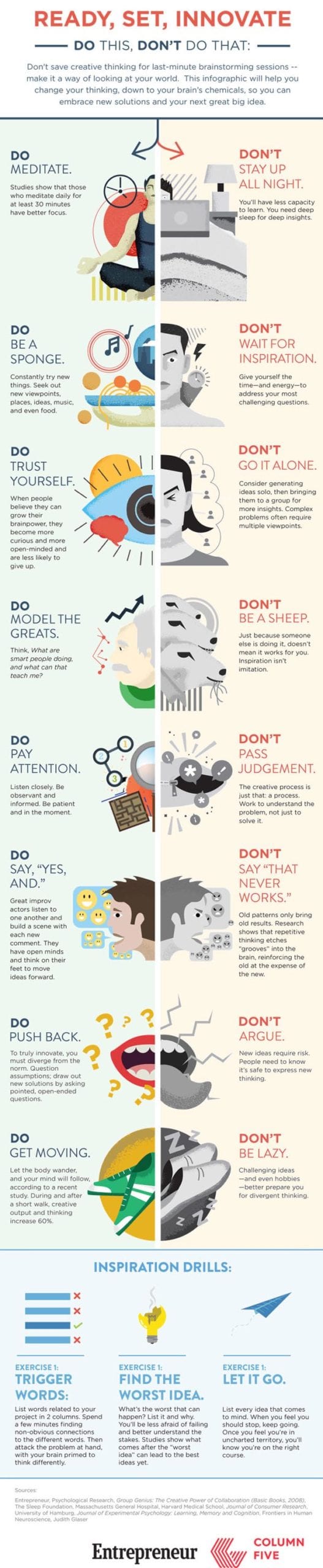
Creativity is a skill that needs to be nurtured and practiced if we want to see improvement. While every person is different, we can all learn a lot from this infographic that lays out the dos and don’ts of creativity.

These habits will help work out your brain and hopefully assist you in creating the best project possible.

So whether you’re working on a book, a painting, or a business venture, these tips will get your brain moving.

The post Check Out These Important Dos and Don’ts of Creativity appeared first on UberFacts.

This Is Why You Shouldn’t Leave Water Bottles in Your Hot Car

There are a lot of things you shouldn’t leave in a hot car (dogs and cats, kids) but you should add one more thing to the list this summer, and a lot of us are guilty of it.

Photo Credit: Pixabay

That’s right, plastic water bottles. And there’s a couple of reasons why you shouldn’t do this. The first is because when it gets hot, chemicals from plastic bottles can seep into the water, and we all know that isn’t good for anyone. But a hot plastic bottle also has the potential to set your car on fire.

Photo Credit: iStock

If the sunlight hits the bottle just the right way, it can set your seat ablaze. A man named Dioni Amuchastegui noticed this happening in his truck one hot day and he took to Facebook to warn others of this hazard.

The thermometer tested his bottle at an incredible 213 degrees. If the beam of light is focused on a vinyl seat and the conditions are perfect, you might find your car on fire this summer. So clean out the trash from your vehicle and have a safe summer.

The post This Is Why You Shouldn’t Leave Water Bottles in Your Hot Car appeared first on UberFacts.

A Super-Stinger Wasp Was Discovered in the Amazon

As if regular wasps weren’t frightening enough, now you have another insect to worry about. It’s a super-stinger wasp that was discovered in the Amazon by researchers from the University of Turku in Finland.

Photo Credit: The University of Turku

The Calistoga crassicaudata has a stinger that is almost 5 millimeters long. And the way it lays eggs is really horrifying. The wasp impales its prey, usually a spider, the sting paralyzes it, and the wasp lays its eggs inside the prey. When the eggs hatch the prey dies. Thus is life in the animal kingdom…

The post A Super-Stinger Wasp Was Discovered in the Amazon appeared first on UberFacts.

10 Fascinating Facts About Life in Our Universe

Our universe is FASCINATING! Fascinating, I said!

And these 10 facts prove it.

1. Lots of stuff in there

Photo Credit: did you know?

2. Interactive

Photo Credit: did you know?

3. The hexagon

Photo Credit: did you know?

4. Poor Pluto

Photo Credit: did you know?

5. Retro

Photo Credit: did you know?

6. It’s a long way to the moon

Photo Credit: did you know?

7. Mars

Photo Credit: did you know?

8. HUGE

Photo Credit: did you know?

9. Large quasar group

Photo Credit: did you know?

10. Cool…

Photo Credit: did you know?

The post 10 Fascinating Facts About Life in Our Universe appeared first on UberFacts.

Here’s the Proof. Lightning Can Strike the Same Place Twice.

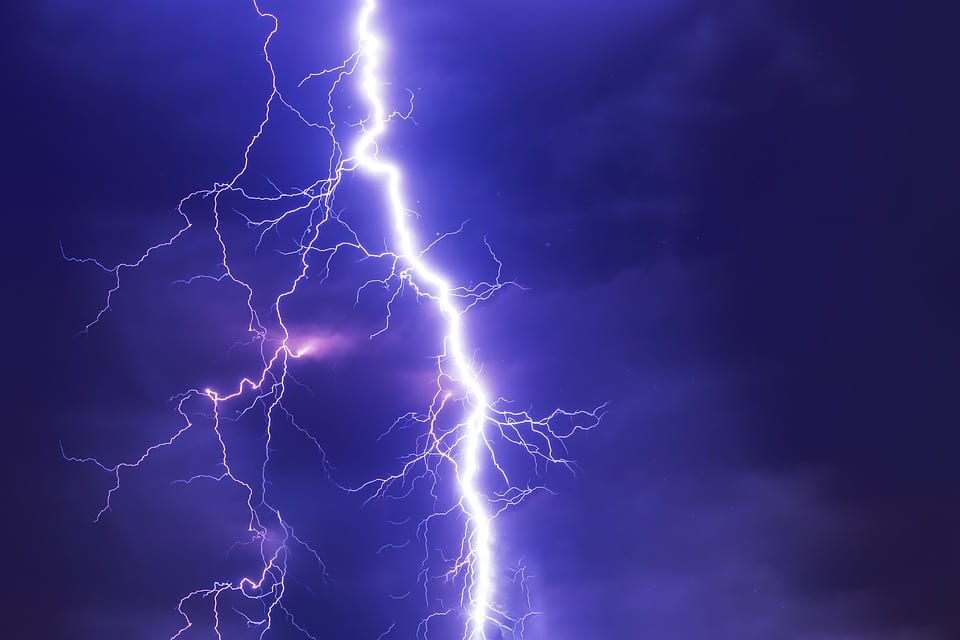
“Lightning doesn’t strike twice.” It’s a phrase you hear all the time, even if someone is not referring to the weather. Well, science says otherwise.

Photo Credit: Pixabay

Actually, it’s almost inevitable that lightning will strike the same place twice. As soon as a lightning bolt hits the ground, a new one is not deterred in any way, shape, or form from hitting the same spot again. A good example is lightning hitting tall buildings. Take a look at this video from the tallest building in Chicago, now known as the Willis Tower.

That night the Willis Tower was hit by 10 bolts of lightning. According to storm chaser Dan Robinson, tall buildings are most likely to be hit by multiple lightning strikes.

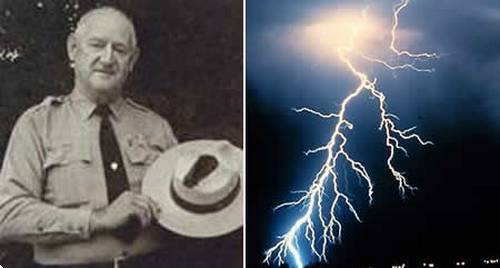
And what about human beings? Can they be hit more than once? The story of park ranger Roy Sullivan proves that yes, this phenomenon can occur. I remember seeing poor Mr. Sullivan in the Guinness Book of World Records as a kid for his unfortunate encounters with lightning.

Sullivan was a park ranger in Virginia who was struck by lightning an incredible 7 TIMES between 1942 and 1977, more than any other human being on record. So be careful out there during thunderstorms. You may think you’re safe, but you never know…

The post Here’s the Proof. Lightning Can Strike the Same Place Twice. appeared first on UberFacts.

Monkeys in Panama Have Just Entered the Stone Age

Researchers have observed a small group of white-faced capuchin monkeys off the coast of Panama using stone tools to break nuts and shellfish. That’s right: a group of capuchin monkeys have entered the Stone Age.

Photo Credit: YouTube

These are the fourth group of primates to use stone tools after humans. It was reported all the way back in 2004 that monkeys on the island were using stone tools. In 2017, researchers placed cameras on Jicarón Island to try to capture the act on camera, which they eventually did.

Photo Credit: Pixabay

Researchers saw the group of male monkeys using tools to break coconuts, snails, and crabs. For some reason, the same behavior has not spread to other groups of monkeys or other islands off Panama’s coast. The researchers think that the monkeys’ behavior may be by chance and isn’t necessarily the expected trajectory. The other three primate groups that have already entered the Stone Age are a group of capuchins in South America, macaques in Thailand, and chimpanzees in West Africa.

Watch the video below to see the monkeys in action.

The post Monkeys in Panama Have Just Entered the Stone Age appeared first on UberFacts.

Do You See Blue or Purple Dots? Your Answer May Be Skewed

Recently, researchers at Harvard University released a study that makes a pretty surprising revelation: our concept of “threat” and the color blue, it turns out, is all relative and is not based on hard-and-fast rules. This is how the experiment worked: the researchers showed subjects a series of dots that ranged in color from very blue to very purple. For the first 200 times, the participants saw an equal number of blue and purple dots from the color spectrum. After that, the number of blue dots gradually decreased.

Photo Credit: YouTube

By the end, the subjects’ interpretation of the colors was different: dots they thought were purple in the first experiments they now saw as blue. This happened even after researchers told the subjects that the number of blue dots would decrease and they would be paid in cash for correct answers.

Photo Credit: Pixabay

The team also had similar results when they conducted experiments about whether a face was threatening or a research proposal was unethical. Even when the rate of threatening faces or unethical proposals decreased, the subjects picked them out at the same ratio, and viewed benign faces or proposals as being threatening and unethical.

So what does it all mean? The researchers think the results might explain why so many people are pessimistic about the state of world affairs. The authors of the study believe that as social problems decrease (poverty, illiteracy) and become less common, issues that previously seemed minor or insignificant start to seem more problematic.

Take a look at this video for more information:

The post Do You See Blue or Purple Dots? Your Answer May Be Skewed appeared first on UberFacts.

Uranus Once Took a Hard Pounding

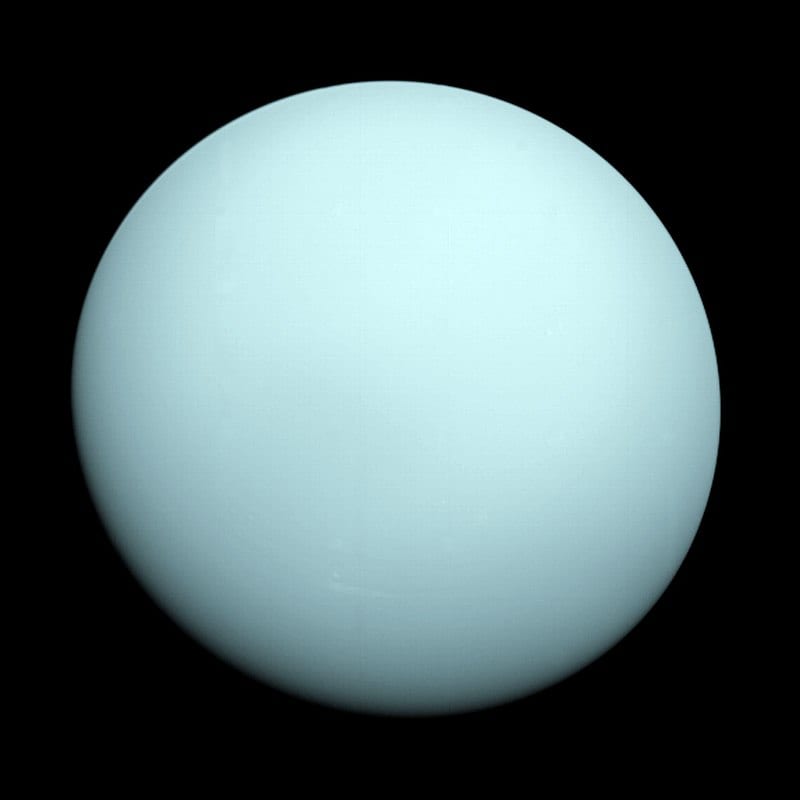
Alright, get your mind out of the gutter. The fact of the matter is that Uranus is an unusual planet in our solar system. The planet has a strange tilt and rotates around the sun on its side. Each pole of Uranus faces the Sun for 42 years before switching to the other side.

Photo Credit: Public Domain

So why does Uranus tilt? Scientists have long suspected that a major collision at some point in history caused the planet’s unusual orientation. And they were right. Astronomers at Durham University in England led an international team of researchers and studied 50 different possible impact scenarios.

Photo Credit: Durham University

The team concluded that a huge rock and ice formation twice the size of Earth hit Uranus during the formation of the solar system about 4 billion years ago. The impact caused Uranus’ tilt and also the planet’s low temperatures.

Photo Credit: Pixabay

The researchers believe that debris from the collision might act as a thermal shield and that the heat from Uranus’ interior is trapped, making the planet’s outer atmosphere very cold. The team also believes that the impact could be the explanation for Uranus’ rings and moons.

Science!

The post Uranus Once Took a Hard Pounding appeared first on UberFacts.

A Study Suggests That We Might Be Alone in the Universe After All

Hollywood has loved to imagine what it will be like to discover intelligent alien life one day, as have books and comics, and most other creative mediums for as long as we can remember. Sadly, science is starting to wonder whether or not the chances are actually good that we’re not alone.

According to a new study out of Oxford University’s Future of Humanity Institute, researchers applied existing knowledge of biology, chemistry, and cosmology to the Drake equation, created by astronomer Frank Drake in 1961 in an attempt to calculate the number of intelligent civilizations in our galaxy.

Photo Credit: Pixabay

The equation takes into consideration things like the average rate of star formation and the average lifespan of intelligent civilizations, among other things. Using Drake’s model combined with modern astronomy, the researchers at Oxford estimate there’s a 53%-99.6% change we’re alone in the galaxy and a 39%-85% chance we’re the only intelligent life to be found in the entire universe.

They’re also relying on the class Fermi Paradox, which asserts that intelligent extraterrestrial beings exist and that they should have visited earth by now. Since they have not, the conclusion is that they are “probably extremely far away and quite possibly beyond the cosmological horizon and forever unreachable.”

Others, like Seth Shostak of the SETI Institute, are dismissive of the recent claims, mainly because there remains too much unknown about the universe to make any such claims.

Photo Credit: Pixabay

“I could walk outside here in Mountain View, California, and not see too many hippos strolling the streets,” he told Mental Floss, “but it would be incorrect for me to say on that rather limited basis that there’s probably no hippos anywhere. It’s a big conclusion to make on the basis of a local observation.”

Not only is so much of the universe still shrouded in mystery, there’s also the idea that scientists and astronomers here on earth aren’t even looking for the right type of communication. So far, we examine potential radio and light signals, but there’s a chance that alien beings are trying to contact us in ways we haven’t designed yet.

The bottom line is that the truth may still be out there, just waiting for our feeble human science to catch up enough to find it.

The post A Study Suggests That We Might Be Alone in the Universe After All appeared first on UberFacts.

Turns Out Lightning Can Strike the Same Place Twice… And Here’s Evidence

“Lightning doesn’t strike twice.”

It’s a phrase we’ve all heard a time or two in our lives, and one we’ve all probably believed at one point or another. While it makes for a fine anecdote, science has other things to say.

Photo Credit: Pixabay

In fact, it’s almost inevitable that lightning will strike the same place twice. As soon as a lightning bolt hits the ground, a new one is not deterred in any way, shape, or form from hitting the same spot again. A good example is lightning hitting tall buildings. Take a look at this video from the tallest building in Chicago, now known as the Willis Tower.

That night the Willis Tower was hit by 10 bolts of lightning. According to storm chaser Dan Robinson, tall buildings are most likely to be hit by multiple lightning strikes.

But what about human beings? Can they be hit more than once? The story of Roy Sullivan proves that even that phenomenon can occur.

I remember seeing poor Mr. Sullivan in the Guinness Book of World Records as a kid for his unfortunate encounters with lightning. Sullivan was a park ranger in Virginia who was struck by lightning an incredible 7 TIMES between 1942 and 1977, more than any other human being on record. So be careful out there during thunderstorms. You may think you’re safe, but you never know…

The post Turns Out Lightning Can Strike the Same Place Twice… And Here’s Evidence appeared first on UberFacts.