Anxiety is a funny thing. And by “funny,” I mean “a serious mindf***.”
How else would you explain the fact that your anxiety can actually get WORSE when something good happens to you. Seriously, there’s just no winning with this, is there?
Clinical psychologist Carla Marie Manly explained to HuffPost why this often happens to people with anxiety:
“Anxiety can be a bit tricky, as it’s a primitive response that’s hard-wired into the brain. The brain’s fear circuit works very quickly, and it doesn’t always pause to differentiate between good anxiety and bad.”
When something good happens, it triggers very similar physical symptoms to those that you associate with panic or fear, Carla said. Excitement and anxiety are very similar, as far as your body is concerned.
Also, the mere sensation of happiness can cause fear if you’re not really used to feeling that way. It’s new and unfamiliar — an anxious person’s worst enemy. Furthermore, many people worry that something good happening MUST mean that something bad is going to happen next.
It sucks to feel overcome by anxiety when you feel like you should be jumping for joy. But the first key to moving past the feeling is acknowledging and accepting it, Carla explained. Then practice enjoying any little piece of good news that comes your way — and be patient with yourself.
“It’s natural for the psyche to want to go back to old thought patterns, so this new one will take time and patience to become hard-wired into the brain.”
It’s a daily struggle for many people to try to find a silver lining in their lives. Life can really beat you down, and sometimes you just have to dig deep to find positivity and reassurance in yourself so you can move forward and carry on.
That being said, you can’t always do the same for other people. You can encourage and support someone until you’re blue in the face, and it still might not do them any good at the end of the day. Sometimes, all people really want is for their negative thoughts to be validated.
Bottom line: you can’t force a positive attitude or positive feelings on someone if they don’t have it within themselves.
That’s why this chart from Whitney Hawkins Goodman is so useful. In the chart, she explains the difference between support and toxic positivity.
As you can see, there are major differences between the two approaches. On one side, you’re offering actual helpful, validating advice that may allow someone struggling to move forward in some way.
On the ‘toxic positivity’ side, you’re offering them a platitudinous one-liner that doesn’t really help and may even make the advisee feel unsafe in expressing their negative thoughts in the future. Toxic positivity can also make people who don’t have “good vibes only” feel like something is wrong with them, that they are choosing to be negative
We all have people in our lives who rely on us because they have a difficult time coping. Or perhaps you are that person. Either way, your friends and loved ones or maybe even YOU can use this chart as a starting point for thinking about things in a different light.
Sometimes you just need a little help to change your perspective.
According to Stanford psychologists, the the advice “find your passion” could have negative affect on people because it implies that the number of interests a person has is limited. That causes people to narrow their focus and neglect other areas.
One of life’s great annoyances is being in the presence of a loud chewer. Someone just sitting there, the sound of their mastication steadily growing in your mind until it becomes almost earsplitting.
If you feel that way about pretty much everyone’s chewing noises, to the point of having emotional reactions to them, you may have a condition is called “misophonia.”
One 18-year-old girl, Ellie Rapp of Pittsburgh, has been aware of having misophonia since middle school. But she’d been dealing with the condition since she was a toddler. When Ellie hears her family chewing their food at dinner, her “heart starts to pound.”
“I go one of two ways. I either start to cry or I just get really intensely angry. It’s really intense. I mean, it’s as if you’re going to die,” she told NPR.
Ellie’s mom, Kathy, spent years trying to figure out how to handle Ellie’s reaction to sounds. She found an article online about misophonia.
“And I read it and I said, ‘This is what I have. This is it,’” Ellie said.
Misophonia is not just a reaction to chewing. It also happens in response to other ordinary sounds that other people make, like clearing their throat or clicking their pen. Mouth stuff is a very common trigger.
Misophonia is basically the extreme version of what many people experience – an aversion to other people’s random noises. But it can be difficult to cope with, and there’s still a lot of work to be done in recognizing and treating the condition. It’s not listed in the DSM-5, and many doctors have never heard of it.
“It sounds bizarre, but it’s very real,” Kathy said.
Hedonic adaptation is the tendency for people to return to a baseline happiness level regardless of what happens to them. A study conducted on lottery winners and paraplegics concluded that neither group was either happier or sadder less than 6 months after the event.
Have you ever heard the term “Hylophobia?” I’m betting the majority of you haven’t – and yet it describes a fear that just about all of us grew up with.
Yes, I told you that you probably suffer from it. Let’s be honest: the woods are creepy and unpredictable. You have no idea what lurks out there and if you’ve been brought up on ungodly amounts of horror movies since you were a kid, you already know what happens in the forest and it’s never good.
If you’ve ever suffered from Postpartum Depression, you know the effects can be absolutely crushing. Celebrities are no different from me or you, and these 10 shared their stories dealing with the devastating condition.
1. Sharon Osbourne
“I did suffer from it with one of my pregnancies, but I was suffering from depression anyways.
“The depression is so dark, you feel like you’re in a black fog the whole time and you just cannot cope. And you get to a point where you don’t realise what you’ve got with the baby and you’re just so dark and distraught and alone and it’s the loneliest feeling in the world.”
2. Celine Dion
“Some of the first days after I came home, I was a little outside myself. One moment, tremendous happiness; the next, fatigue sets in, and I cried for no reason.” She added: “Some of the first days after I came home, I was a little outside myself. I had no appetite and that bothered me. My mother remarked that she noticed I had moments of lifelessness but reassured me that this was entirely normal. It’s for things like that after having a baby that mothers really need emotional support.”
3. Drew Barrymore
“I didn’t have postpartum the first time so I didn’t understand it because I was like, ‘I feel great.’
The second time, I was like, ‘Oh, whoa, I see what people talk about now. I understand’. It’s a different type of overwhelming with the second. I really got under the cloud. I just got right on the idea of, ‘Where do I need to be the most?’ Fifty-fifty would be ideal but life doesn’t work like that. Life is messy. It was just really challenging and I felt overwhelmed. I made a lot of decisions and I definitely changed my work life to suit my parenthood.”
4. Chrissy Teigen
“…I was different than before. Getting out of bed to get to set on time was painful. My lower back throbbed; my shoulders—even my wrists—hurt. I didn’t have an appetite. I would go two days without a bite of food, and you know how big of a deal food is for me. One thing that really got me was just how short I was with people.
I would be in my dressing room, sitting in a robe, getting hair and makeup done, and a crew member would knock on the door and ask: “Chrissy, do you know the lyrics to this song?” And I would lose it. Or “Chrissy, do you like these cat ears, or these panda hands?” And I’d be like: “Whatever you want. I don’t care.” They would leave. My eyes would well up and I would burst into tears. My makeup artist would pat them dry and give me a few minutes.
I couldn’t figure out why I was so unhappy. I blamed it on being tired and possibly growing out of the role: “Maybe I’m just not a goofy person anymore. Maybe I’m just supposed to be a mom.”
5. Brooke Shields
6. Cardi B
“I thought I was going to avoid it. When I gave birth, the doctor told me about postpartum, and I was like, ‘Well, I’m doing good right now, I don’t think that’s going to happen.’ But out of nowhere, the world was heavy on my shoulders.
For some reason, I still don’t feel like my body’s the same. I feel like I don’t have my balance right yet. When it comes to heels, I’m not as good at walking anymore. I feel like I’m holding a weight on me … But there’s an energy I haven’t gotten back yet that I had before I was pregnant.”
It’s just the weirdest thing.”
7. Adele
“My knowledge of postpartum — or post-natal, as we call it in England — is that you don’t want to be with your child; you’re worried you might hurt your child; you’re worried you weren’t doing a good job. But I was obsessed with my child. I felt very inadequate; I felt like I’d made the worst decision of my life. … It can come in many different forms.
“Eventually I just said, I’m going to give myself an afternoon a week, just to do whatever the f**k I want without my baby. A friend of mine said, ‘Really? Don’t you feel bad?’ I said, I do, but not as bad as I’d feel if I didn’t do it. Four of my friends felt the same way I did, and everyone was too embarrassed to talk about it; they thought everyone would think they were a bad mom, and it’s not the case. It makes you a better mom if you give yourself a better time.”
8. Hayden Panettiere
“If you think for one second that a mother wants to feel that way toward her child, you’re outta your mind. It is one of the most debilitating, scary, guilty feelings that you can ever feel. That a mother would not be able to connect with their child, would not be able to get a grip, or would not know what’s going on, for anybody to say that it’s false or created by us, you must have your head examined.”
9. Serena Williams
“Honestly, sometimes I still think I have to deal with it. I think people need to talk about it more because it’s almost like the fourth trimester, it’s part of the pregnancy.”
10. Gwyneth Paltrow
“About four months into it, Chris came to me and said, ‘Something’s wrong. Something’s wrong.’ I kept saying, ‘No, no, I’m fine.’ But Chris identified it, and that sort of burst the bubble.
I thought postpartum depression meant you were sobbing every single day and incapable of looking after a child. But there are different shades of it and depths of it, which is why I think it’s so important for women to talk about it. It was a trying time. I felt like a failure.”
As always, thanks for reading Did You Know. We really appreciate you spending time with us, and we hope you share articles like this with your friends so we can all be part of the conversation.
People who refer to themselves by name during inner monologues are calmer, less stressed and more confident than those who use “I” or “me” according to a research done by Michigan State University.
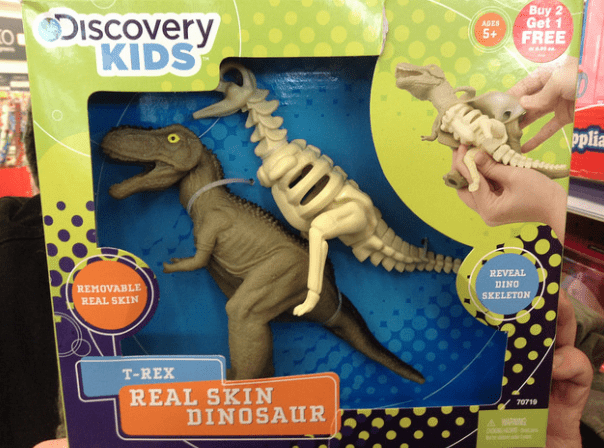
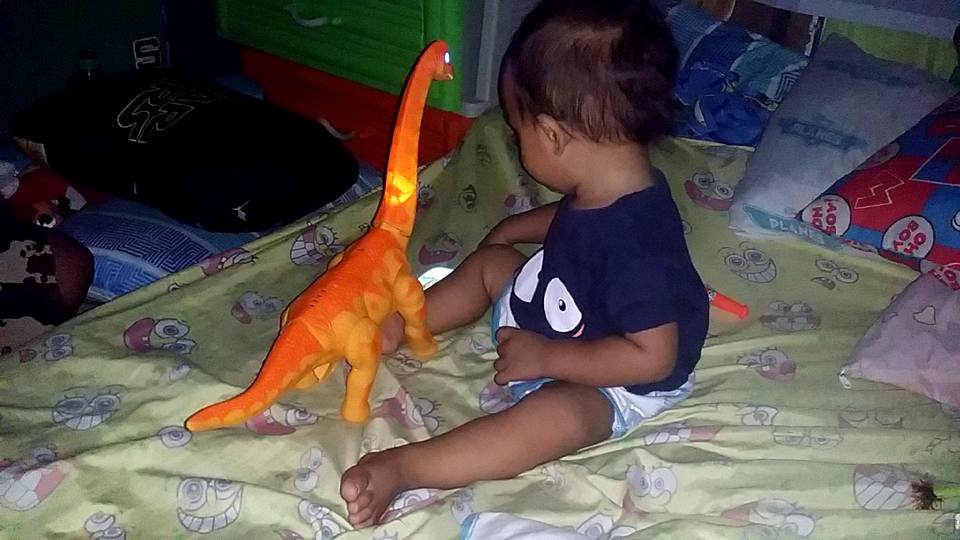
Do you know a kid who absolutely LOVES dinosaurs? My nephew is obsessed with them, and I was the kind of kid who could describe a paleontologist’s job in great detail back in second grade.
If that describes your kids, that’s great news since a recent study found that kids who are obsessed with dinosaurs are smarter than kids who aren’t.
In the psychology world, this phenomenon is called “intense interests.” Roughly one-third of kids develop an intense interest in their lives but for most the obsession usually fades after the age of six.
A study from the University of Indiana and the University of Wisconsin found that an intense interest can “enhance perseverance, improve attention and enhance skills of complex thinking as the processing of information”, especially when the interest demands a conceptual domain.
Intense interests have also been shown to improve linguistic skills and are a good indicator of higher understanding. It’s also been shown that the way children study dinosaurs helps them develop strategies to tackle problems throughout their lives.
Interestingly, kids’ intense interest in dinosaurs develops in the first year of life without encouragement from their parents. As mentioned earlier, most of these obsessions pass and only 20% of kids still have the intense interest when they enter school.
Researchers believe that once kids start school and have to devote time to learning new things, they lose their free time to explore their interests. It is suggested that in order to keep your child’s interest alive as they grow up, parents should teach their kids facts about the subject as opposed to letting them have “pretend adventures.”
Make sure those kids keep learning on their own after they start school, and remember, if your child is obsessed with T-Rex, that’s a good thing!















.jpg)