
What Small Ways Has Society Progressed in the Last 20 Years? Here’s How People Responded.

You blink and you’ll miss it.

An older gentleman told me that when I graduated from high school. I kind of shrugged off his words of wisdom but it turns out he was right…

And things are always moving forward, which is good news for all of us here on planet Earth.

In what small ways has society progressed in the last two decades?

AskReddit users shared their thoughts.

1. That’s nice.

“My grandfather has been blind for forty years.

He says people are way more friendly than they used to be, especially younger people are eager to help.”

2. Much more aware.

“I think the majority of the world knows a lot more about other cultures and countries.

Thanks to the internet and learning facilities and the vast possibilities of travelling, people can really get into these topics if they want to.”

3. Progress.

“Infant mortality rate in Africa is now the same as it was in Europe in the 1970s.

Absolutely amazing progress.”

4. Knowledge is power.

“Think about the public’s access to information.

Just Wikipedia is equivalent to thousands of dollars of encyclopedias and almanacs in the 1990s.

And it’s way more valuable than that because it’s constantly being updated.”

5. A good thing.

“The rapid skill increase across all forms of gaming/sports, art, leisure activities, etc.

The internet really has allowed niche-activity folks to learn the most effective practices collectively, as opposed to independent and un-structured learning.

Hobbyists can (and are) now able to quickly get really good at nearly everything, at a ridiculous rate. Poker, paintball, video editing, computer games, etc…. doesn’t matter what it is, it’s easier now to jump from “beginner” to “pretty good” in nearly anything.”

6. You can learn anything!

“The intermet has made it easier to learn almost anything.

When something in my house/car breaks or needs upgraded, I can generally diagnose it with Google and then watch how-to videos on youtube to decide if I should do it myself or just save time and contact a professional to complete the repair.”

7. Click it or ticket.

“Stressing the importance of seat belts and helmets.

Old TV shows commonly depict no helmets and seatbelts.”

8. The little things.

“I took my grandparents to my Grandpa’s sister’s funeral, on the drive back home I had to buy a Pepsi and a coffee because I was tired.

I finished the can of Pepsi, and put the can in the cup holder.

Grandpa said “you know son, 10 years ago that would have went right out the window.””

9. More opportunities.

“Giving more opportunities to people with disabilities.

And this doesn’t mean just work either, but designing more building to universal design so that people with disabilities can access more spaces unassisted.

It’s really great!”

10. You see it less and less.

“Way fewer people smoke these days.

Honestly, in my extended family it’s maybe only one of my distant cousins.”

11. No more stigma.

“Wearing glasses has all but lost the negative stereotypes surrounding it.

They often used to make kids suffer through school unable to see.”

12. Normalizing.

“We’re normalizing openly discussing miscarriages. It use to be uncouth to discuss in social settings and was more something that couples had to suffer silently to themselves.

After recently experiencing one, the outpouring of support has been amazing and such a pillar of support for us through this tough time. We were thankful to have others to mourn with us.”

13. Preservation.

“In my country several efforts have been made to save our only remaining native indigenous language from being extinct.

A decade ago less than 1,000 people could speak it, now I believe the number is closer to 10,000.”

How about you?

What progress do you think we’ve made in the last two decades?

Sound off in the comments and let us know!

The post What Small Ways Has Society Progressed in the Last 20 Years? Here’s How People Responded. appeared first on UberFacts.
Stockton, California Gave Residents $500 a Month. Here’s How It’s Going.

There are a lot of conversations happening in politics these days about how we can better take care of everyone in our society. What can we afford, how can we re-allocate funds, who deserves what, and what history says about supporting people with a safety net when times are hard.

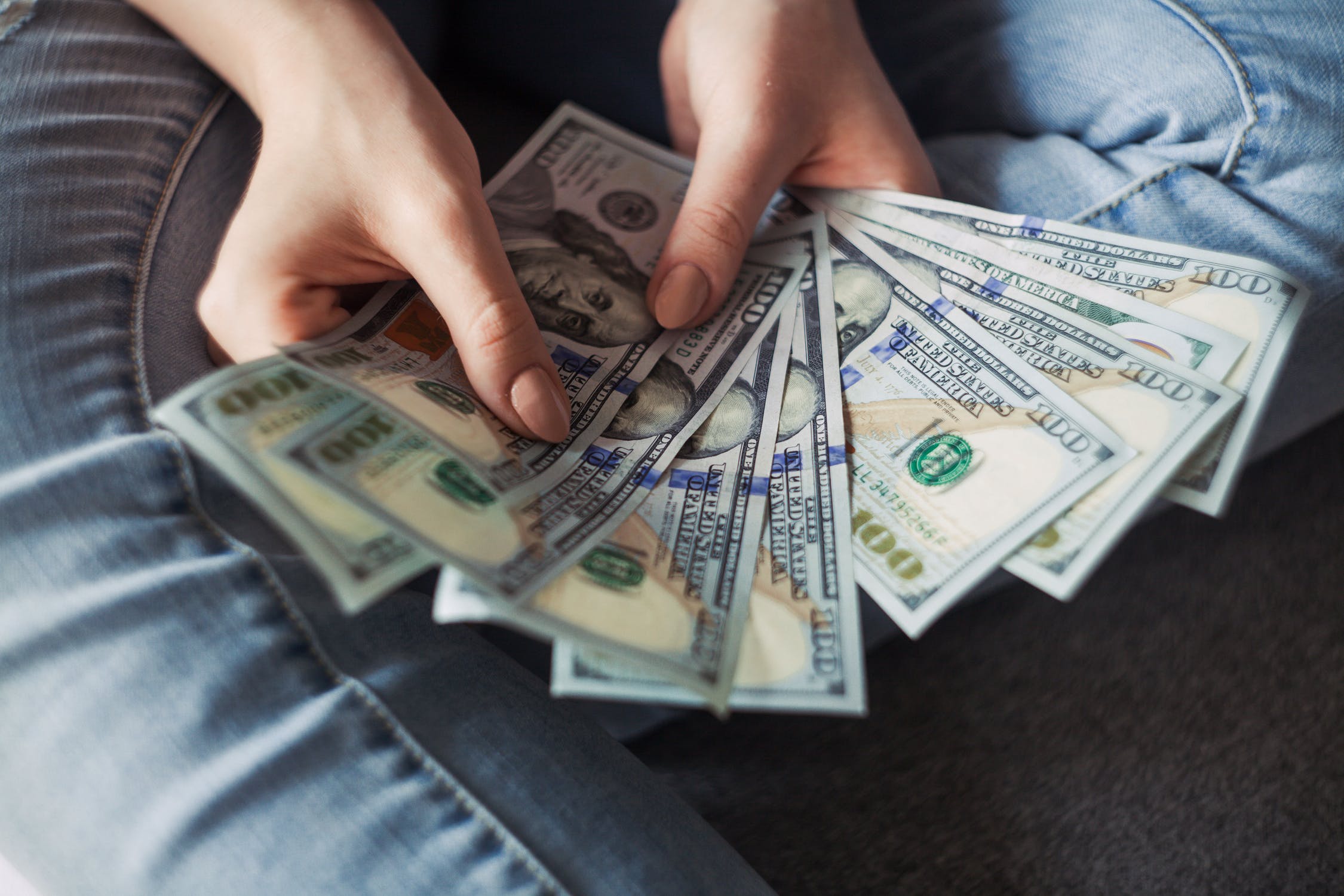
Michael Tubbs, though, the young mayor of Stockton, CA, is done talking – in 2020, he decided to start doing, instead. He and the city council approved a budget measure that would give 125 randomly selected residents with a median household income below $50k a year an extra $500 a month.

Image Credit: Pexels

There were no strings attached. No drug tests, no requirements to work or be actively looking for a job. Very little monitoring was done at all.

Tubbs is heavily invested in Stockton, having grown up there below that median income line himself, and was so dismayed in 2012 to hear Forbes call it one of “America’s Most Miserable Cities” that he ran for mayor. He was elected at the age of 26, making him one of the youngest mayors in the country – but also perhaps, one of the most forward-thinking ones in the crowd.

He founded the Stockton Empowerment Distribution (SEED) in 2019. The funding comes from philanthropic donations, and when a team of independent researchers heard about the initiative, they couldn’t get there to conduct a parallel experiment fast enough.

Researchers Stacia West of the University of Tennessee, and Amy Castro Baker of the University of Pennsylvania, worked together to collect data from those who received the money, and also established a control group of people who were not selected.

What they found was that, instead of “squandering” the cash – a worry of some who thought there should be some requirements and stipulations placed on it – what the extra month did was reduce people’s income volatility compared to those in the control group.

Image Credit: iStock

Basically, unexpected expenses up to $400 in a month would be able to be handled instead of causing an issue that could take months to straighten out, which also improved people’s mental health.

One recipient said that she “had regular panic attacks and anxiety. I was at the point where I had to take a pill for it” but after the checks, “I haven’t even touched the pills in a while. I used to carry them on me all the time.”

The study found that families typically spent the money on essential items like food, home goods, utilities, and gas, and that instead of encouraging people to stay home, the extra cash did the opposite – after one year, the percentage of recipients who were employed full time grew from 28% to 40%, more than twice the rate for the control group.

Image Credit: iStock

Baker believes that having something of a safety net makes it easier to not only imagine a different job or future, but also to take the risks that are often associated with interviewing for new jobs.

“People were able to apply for jobs they knew they were eligible for but just literally could not take a shift off work to do so.”

She adds that people who don’t have enough money almost always don’t have enough time, either.

“When you live in constant scarcity your entire day is taken up with battling poverty and trying to make ends meet.

You literally don’t have the capacity, or the time to even breathe and reset and think about what a different goal might be.”

Extra money, according to the study and also this participant, made a huge difference in that area.

“I was able to finally take time off work to study and complete my real estate license and even pursue an associate degree.

I have more time and net worth to study…to achieve my goals.”

This experiment joins many others that are seeking ways to alleviate poverty around the world, and the idea of a universal basic income is gaining some traction. We’re seeing the needle move in the States with the stimulus checks and also the recent changes to the child tax credit, both of which were given to people without any strings attached as to how they would spend it.

The full analysis from this study will be available in 2022, and in the next few years, researchers agree that there will be a good knowledge base across diverse populations that can be used to make an assessment.

We’ll just have to keep our fingers’ crossed that good policy follows.

The post Stockton, California Gave Residents $500 a Month. Here’s How It’s Going. appeared first on UberFacts.

This Artist Uses Tech to Show What Historical Figures Really Looked Like

Sometimes it can be hard to imagine what people from the past looked like before cameras were invented.

Yes, we have paintings and sculptures we can admire, but it sure would be nice to know what ancient leaders and famous artists of centuries past REALLY looked like.

Well, thanks to a photographer and artist named Bas Uterwijk who specializes in computer graphics and 3D animation, we have an idea of what some famous figures from history might have looked like.

Uterwijk started tampering with the likenesses of historical figures in 2019 and his work is really something. Here are some faces that the Dutch artist made come to life.

Let’s take a look.

1. Is that Bill Shakespeare?

Why yes, it is!

2. Albrecht Durer.

A German painter, FYI.

3. Portrait of a lady.

This one is pretty interesting.

4. That’s Lady Liberty.

If she was a real person…

5. Alexander the Great.

A giant historical figure.

6. Emperor Caligula. 

A lot of crazy stories about this fella.

7. They lived in Pompeii in AD 79.

What they must have seen…

8. Playwright. Politician. Philosopher.

Taken from a sculpture. I like this one.

9. Marcus Aurelius.

An emperor and a philosopher.

10. Julius Caesar.

We all know what happened to him…

11. The one and only Vincent van Gogh.

A master Dutch painter.

Those are awesome! I love all the detail. His creations seem to jump right off the screen.

Who else would you like to see given this treatment?

Share some fascinating historical figures with us in the comments. Thanks!

The post This Artist Uses Tech to Show What Historical Figures Really Looked Like appeared first on UberFacts.