
Here is What The Symbols on the Dollar Bill Really Mean

Have you ever studied a dollar bill and thought about what all those symbols meant? I’ve always heard random theories: aliens, Freemasons, other secret societies, etc.

Let’s put an end to all the conspiracy and speculation, and get down to the nitty gritty.

1. Pyramid
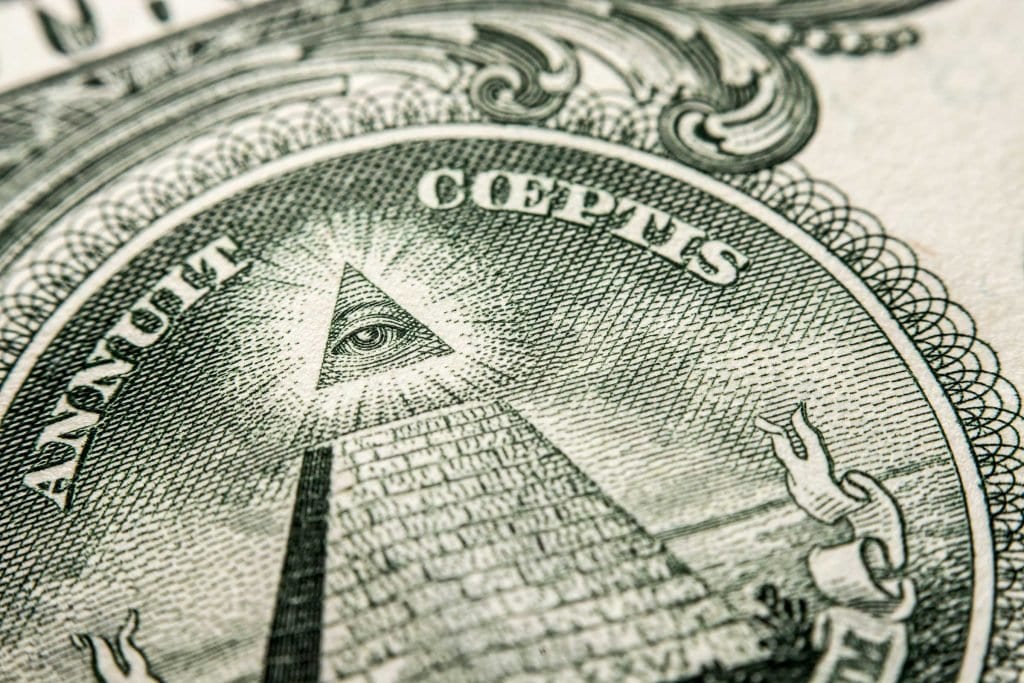
Photo Credit: iStock

The pyramid on the dollar bill represents strength and duration. The western face of the pyramid has a shadow while other parts of it are in full light, which some think referenced that the western part of the country hadn’t been explored yet when the design was completed – or perhaps that it was still undetermined what the U.S. could achieve for Western civilization.

2. The eye above the pyramid.
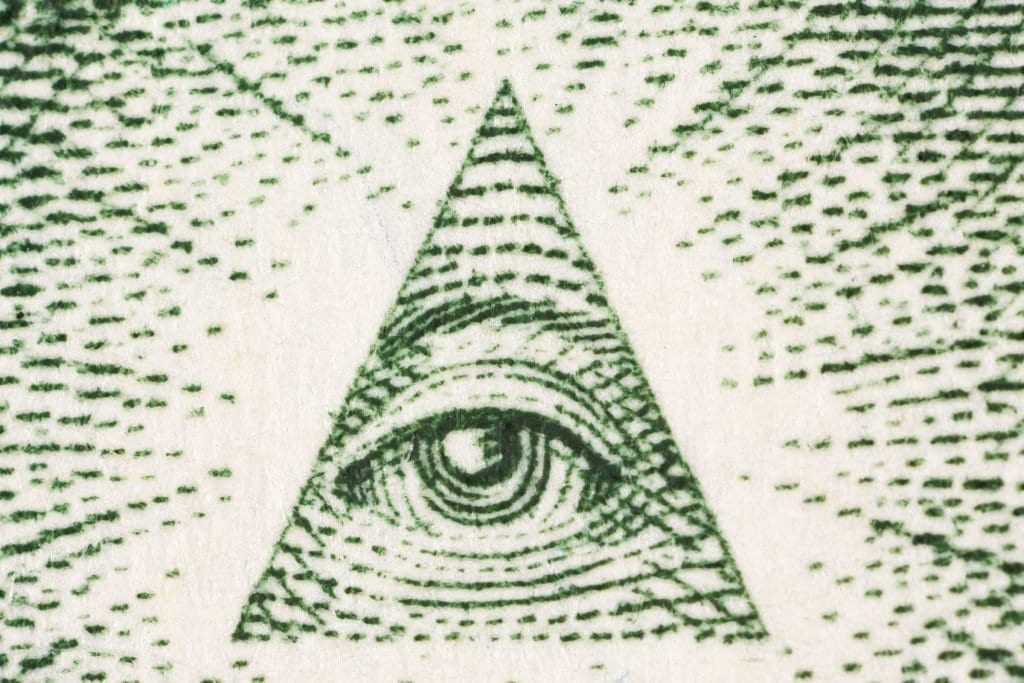
Photo Credit: iStock

Three different committees made suggestions about the design of this seal, and the first included Thomas Jefferson, Benjamin Franklin, and John Adams (strong group). The trio wanted an “all-seeing eye,” and they got it. The eye enclosed in the shape of a pyramid is an ancient symbol of divinity.

3. The letters at the base of the pyramid.
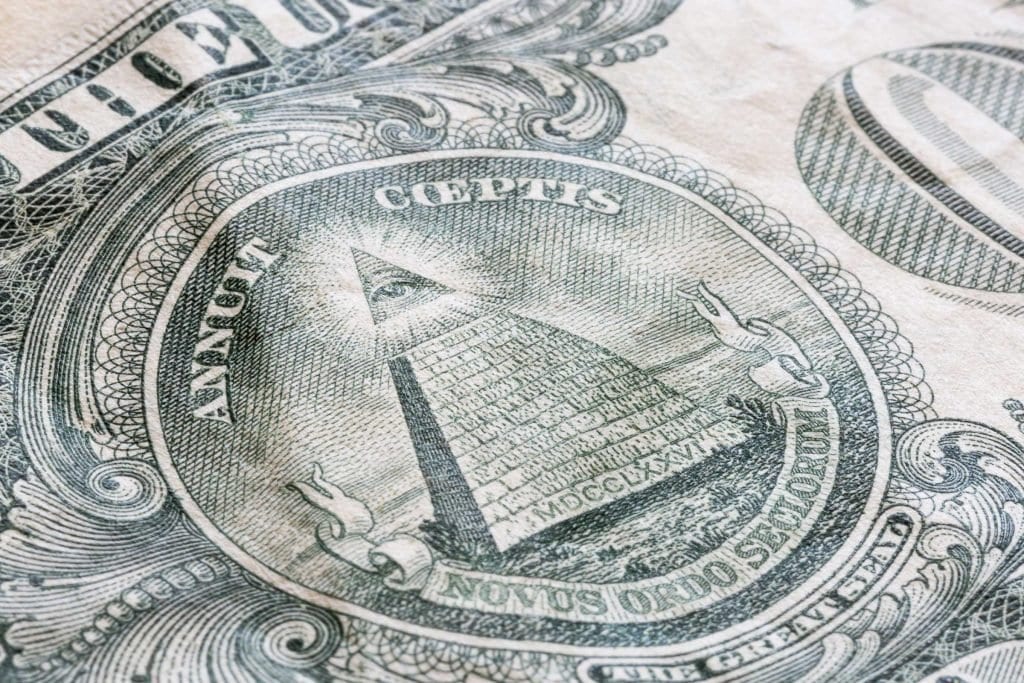
Photo Credit: iStock

You see the letters “MDCCLXXVI” across the base of the pyramid, which are the Roman numerals for the year 1776, the year our country declared its independence.

4. The eagle’s shield.

Photo Credit: iStock

As you can see, the eagle’s shield is not supported by anything. This symbolizes that Americans should rely on their own virtue and not on anyone or anything else. The horizontal bar at the top of the shield represents the federal government and the 13 stripes below it are for the 13 individual states that existed when it was designed.

5. The stars above the eagle.
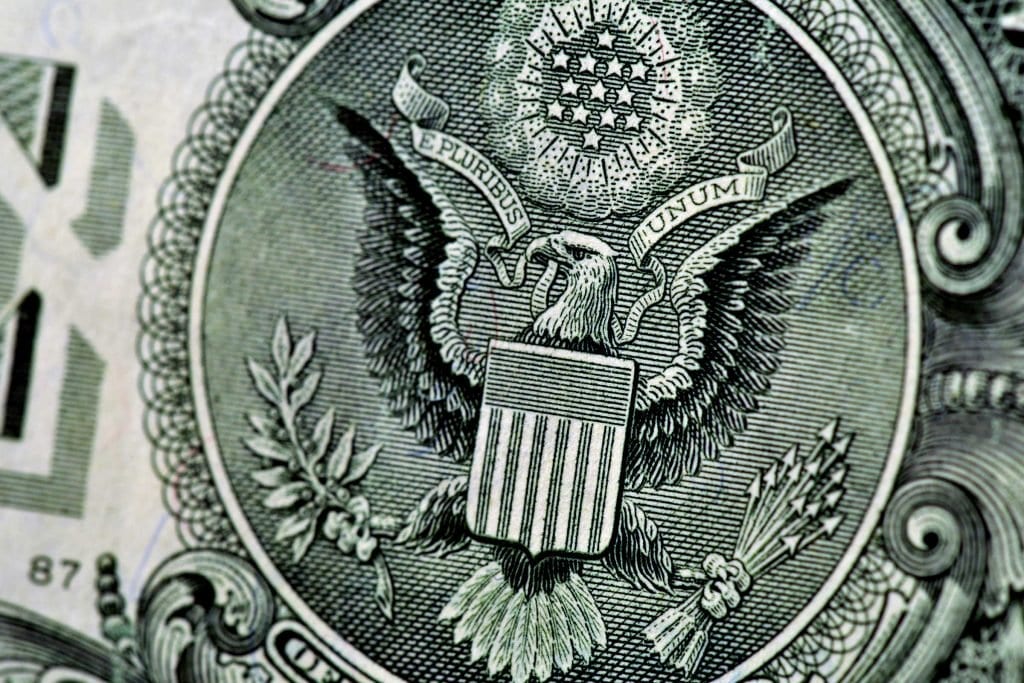
Photo Credit: iStock

This one is pretty easy. The 13 stars represent the original 13 colonies in the country.

6. The eagle’s talons.
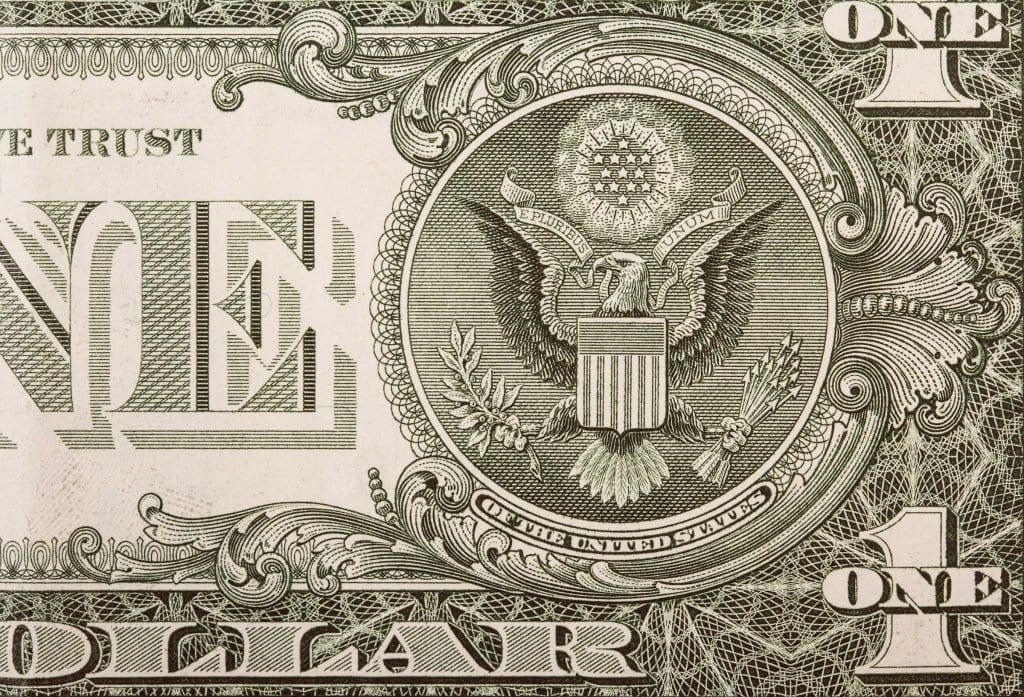
Photo Credit: iStock

The eagle holds an olive branch in one claw, representing peace, and arrows in the other, representing war. I honestly had no idea about this one…very interesting.

7. The lucky number 13.
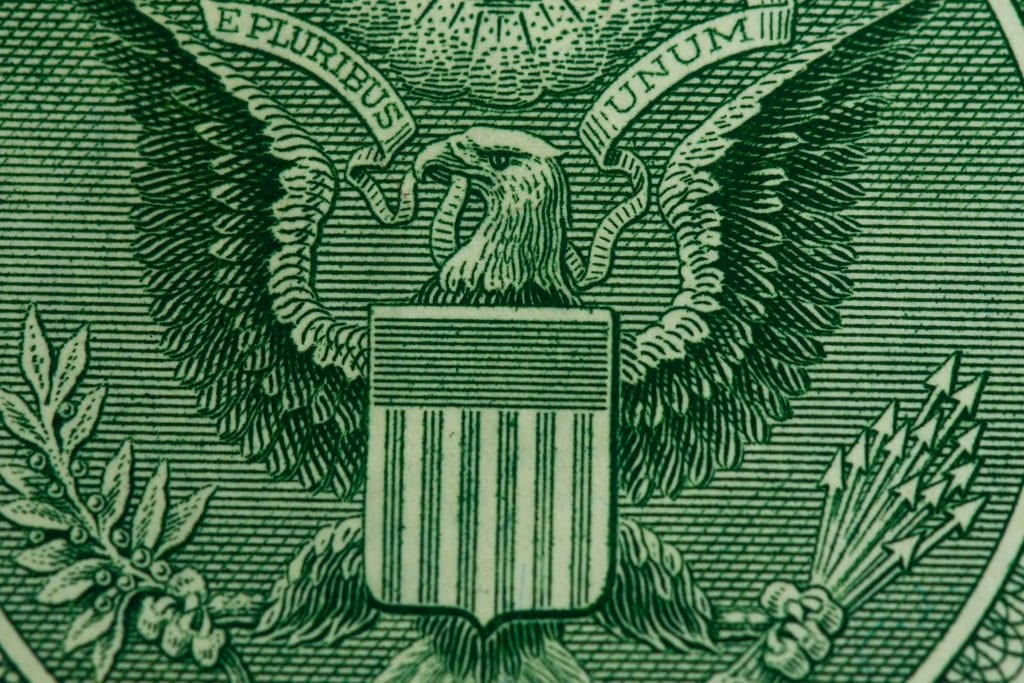
Photo Credit: iStock

The number 13 pops up in many places on the dollar bill. There are 13 olive branch leaves, 13 arrows, 13 olive fruits, 13 steps on the pyramid, 13 stars above the eagle, and 13 bars on the eagle’s shield.

Oh, and “annuit coeptis” and “e pluribus unum” both have 13 letters.

The post Here is What The Symbols on the Dollar Bill Really Mean appeared first on UberFacts.

When You’re Stressed About Money, This Is What Happens to Your Body and Your Brain

I think a lot of us can say that we’ve felt this kind of stress before: stress about being broke or very close to it. But how does this stress affect us, physiologically speaking?

We all have a fight-or-flight response system in our bodies that developed when our ancestors were roaming the land trying to avoid the many threats that could literally kill them at any time. Stress hormones are released when we’re presented with what we interpret as these kinds of situations – times when we humans have to decide whether to stick it out and fight or to run for our lives.

Stressed

But there are fewer saber-tooth tigers these days, and your fight-or-flight reflex is much more likely to be triggered by social issues – including dealing with money problems. When it does happen, the fight-or-flight reaction is very hard on the body. It can tense up our muscles until they hurt and mess up how our immune systems work, leaving us more vulnerable to getting sick. It can also cause constant stomach aches and headaches.

Stress

Another bad side effect: you might make bad decisions, even though, deep down, you know better. Aimee Daramus, a clinic psychologist, said, “Under stress, blood flow and electrical activity are reduced in the frontal and prefrontal lobes and increased in the survival parts of the brain, such as the amygdala.”

Since the parts of the brain where blood flow is reduced influence impulse control and planning, your decision-making process might get thrown for a loop, causing you to do things you normally wouldn’t do. Basically, you start to feel the walls closing in, which pressures you to act in ways that actually hurt your situation.

Daramus added, “We act quickly and decisively, but not always as accurately as usual.”

Depressed

On top of that, frequent stress reactions – whether caused by money issues or not – may cause anxiety, depression, and other mental health issues. Chronic stress might even lead to long-term physical ailments such as heart disease and diabetes. Finally, the stress may lead you to take comfort where you can find it – and that can sometimes mean in alcohol and drugs, which may lead to substance abuse problems.

Money problems are hard – really hard – but try to take care of yourself.

Remember, your only real wealth is health.

The post When You’re Stressed About Money, This Is What Happens to Your Body and Your Brain appeared first on UberFacts.

Illinois Sold More Than $3 Million Worth of Marijuana on the First Day of Legalization

As a former Chicagoan, all I can say is…why the hell didn’t this happen when I lived in Illinois? I know, I know, things are moving along and more and more places are legalizing marijuana, but it sure would’ve been nice…

And now I live in North Carolina, and I really don’t think legalization is coming anywhere near this state anytime soon…

The Cannabis Joint

But back to the story. Though it was passed into law in 2019, it became officially legal to purchase marijuana for recreational use in Illinois on January 1, 2020.

And apparently, people were pretty fired up about it (who could have expected?).

On January 1st, the first day of legal sales, the state sold nearly $3.2 million of weed. The exact numbers were 77,128 transactions totaling $3,176,256.71. Not bad for a one-day haul, huh?

If you’re curious, the state hasn’t yet released figures for how much tax revenue that will work out to.

Toi Hutchinson, senior advisor to the governor for cannabis control, said:

“As we start a new decade, Illinois has achieved a monumental milestone, launching the legalization of cannabis in a way that includes communities left behind for far too long, creates good jobs and expunges thousands of records for those who have lost out on opportunities and ends prohibition.”

Illinois became the eleventh U.S. state to legalize weed, joining Alaska, California, Colorado, Massachusetts, Maine, Michigan, Nevada, Oregon, Vermont, Washington and the District of Columbia.

Weed

You have to be 21 years old and have a government-issued ID to buy weed in Illinois. Non-residents of the state can also buy marijuana but in smaller quantities. And keep in mind that all purchases must be made in cash, because cash is king baby!

And also because weed is still illegal at the federal level, and banks are wary about working with an industry that is both illegal and legal at the same time.

Time for a road trip?

The post Illinois Sold More Than $3 Million Worth of Marijuana on the First Day of Legalization appeared first on UberFacts.

15 Pieces of Advice That Might Save You a Lot of Money

When it comes to saving money, every little bit of advice helps. We can all be smarter with our finances, so it’s time to keep your mouth shut and your ears open.

People on AskReddit weighed in with their advice.

1. Avoid them at all costs.

“Don’t use credit cards.

Unless you know you’re one of those people that will pay the bill off completely at the end of every month and want to take advantage of the rewards.

Even then… don’t use them.”

2. Check Amazon first.

“That thing you want might be way cheaper on Amazon.

You never know unless you search. It takes two minutes.”

3. Take this one to heart.

“Work like an adult, live like a college student.”

4. Don’t spend it.

“If you are lucky enough to receive a substantial inheritance, DON’T SPEND A DIME OF IT (unless you owe the mob some money and your legs are about to have a rough encounter with a baseball bat).

Seriously. I got about 10k from an inheritance while I was a senior in high school. I blew through it in less than a year. Most of it went towards cigarettes, pot, alcohol, other non essentials, etc. All I really have to show from it is my laptop.

Now I’m a sophomore in college and working a shitty job, donating plasma, and participating in research studies monthly just so I can make rent payments and pay off shitty internet service. I can’t even imagine how much easier my life would be if I had just saved that money or even invested some of it so help me out in the future.”

5. Not for everyone.

“For the youngins: Really think about if you want to go to college. It’s not for everyone.

There’s a lot of opportunities in the skilled trades now if you’re into one of them.

College can put you into major debt, so make sure you want to make the investment beforehand.”

6. Some good tips.

“Housing and food / eating out will eat a lot of budget if you let them. Live within your means.

Don’t get payday loans. Ever. Credit card interest will eat you alive if you make minimum payments, so if you must let a balance float, pay it off the next month.

Get a cheap but affordable car. You don’t need a $30k car. A $15k car will do, if you must by new. Appropriate tires will be cheaper than paying insurance deductibles or increased premiums if you live somewhere with weather. If you can take public transportation, you can save a lot by doing that instead of getting car in the first place.

Alcohol at a bar is very expensive. Buy Cards Against Humanity and have a guest bring a bottle of rum.

Save for a rainy day, even a little, every month or pay period.”

7. This will pay off when you’re older.

“Brush your teeth. Taking good care of your teeth will save you a shit ton of money.”

8. Don’t be a lead foot.

“Drive the speed limit and buckle your safety belt. It costs me $120 a month in car insurance for a 12 year-old Prius because I had a lead foot in my younger days.

Now I have a bad catalytic converter and my car is physically unable to exceed the speed limit. I haven’t received a ticket in two years & my insurance rates have flat-lined.”

9. Avoid the big-name companies.

“Instead of getting your taxes done with a big-name company, use a Mom-and-Pop company that has had the same owners for years.”

10. It’s pretty expensive.

“Learn to relax after work without drugs or alcohol.”

11. STOP.

“Just stop buying shit. Seriously, stop it. Look how much fucking junk you have that you don’t need and have never needed. Look how much of it was never any use or any fun.

Stop caving in to advertising and marketing and learn to stop buying garbage.”

12. Things won’t be as appealing.

“Go grocery shopping after you’ve eaten.”

13. Fund your fun.

“Get some kind of marketable skill in your twenties. A trade. An IT skill. Even if it is not your dream job. Then put time in doing it. It gives you something you can use to build income value on, by building experience in your field.

It might not be fun, but it will FUND your fun. That’s what jobs do.

Not many jobs are fun after 10 or 20 years, even if they were your dream job.

That’s why the call them jobs, not hobbies.”

14. As simple as that.

“Quit buying shit you don’t need with money you don’t have.”

15. And then there’s this…

“Men: Always wear a condom Women: Take your birth control every day.

There. Money and sanity saved.”

So… did you learn anything? Pick up any handy tips?

What about your own tips? Got some you’d like to share?

Let us know in the comments!

The post 15 Pieces of Advice That Might Save You a Lot of Money appeared first on UberFacts.

This Toilet Designed to Limit Worker Bathroom Breaks Might Be the Most Evil Office Invention of All Time

We all have those really long, seemingly endless days at work where we’ll do anything to get away for a few extra minutes. You know, the ones where you pray that the clock hits five as soon as possible. And sometimes that means spending a few extra minutes in the bathroom, contemplating life and checking all our social media.

Well, one company in the UK is looking to curb the breaks when you spend an extra few minutes (or 30) sitting on the john. To do so, they’ve invented the StandardToilet. It is a very real thing, and it is, in all honesty, evil.

Capitalism at its finest.

The toilet has a tilted design that is meant to make people very uncomfortable while sitting on it;  the hope is that workers will not spend as much time in the bathroom during business hours because of the toilet is a literal pain in the ass. Isn’t that nice?!?!

The StandardToilet has been approved by the British Toilet Association (sounds like a fun place to work), and it works by tilting downwards at a 13-degree angle. Apparently, that strains your legs and feels like an extended squat. The founder of StandardToilet, Mahabir Gill, said, “Anything higher than that would cause wider problems. Thirteen degrees is not too inconvenient, but you’d soon want to get off the seat quite quickly.” Thank you for that!

Gill worked as a consulting engineer for 40 years and became annoyed when he would discover workers asleep on toilets or encounter long lines for the bathroom while working. So the idea for the StandardToilet was born. Gill says, “Its main benefit is to the employers, not the employees. It saves the employer money.”

Again, THANK YOU SO MUCH.

Isn’t capitalism the best?!?! Let’s hope and pray that this invention doesn’t make it to this side of the pond anytime soon. I know you need to catch up on your Netflix shows during your work breaks…

The post This Toilet Designed to Limit Worker Bathroom Breaks Might Be the Most Evil Office Invention of All Time appeared first on UberFacts.

If You Waste Money on Stupid Stuff, These Tweets Will Be Right up Your Alley

Take all of my money! Just take it!

I’ll be honest, I have a tendency to spend my money on stupid things. For example, I recently just ordered a 5-pack of headlamps from Amazon. A 5-PACK. Even I recognize that headlamps don’t need to be sold in a 5-pack, and I bought the 5-pack!

Though I guess you never know when you and your friends will get stuck in a cave…or something.

Do you do this, too? If so, these tweets will speak to your soul.

1. Ask and you shall receive.

2. This was necessary.

3. That makes sense.

4. You have your priorities.

5. Don’t do it!

6. Seriously…

7. Just keep it to yourself.

8. Why not?

9. The big time.

10. I’d like to forget it.

11. That’s an essential.

12. That’s not a good feeling.

13. You did your best!

Do us a favor: in the comments, tell us the last really dumb thing you spent your money on. Let’s see if we can out-do each other!

The post If You Waste Money on Stupid Stuff, These Tweets Will Be Right up Your Alley appeared first on UberFacts.

12 People Who Admitted They Married for Money, Not Love

People tie the knot for a lot of reasons. We’d like to think that the reason is love, and it often is… but these 14 people had very different reasons.

Let’s face it, financial stability IS important when you want to build a life. Of course, it’s not the only thing, so maybe these people should have thought twice before tying the knot.

Check it out!

1. Maybe? Yeah, okay…

Photo Credit: Whisper

2. EVERY single day? That must be hell!

Photo Credit: Whisper

3. And… sometimes it works!

Photo Credit: Whisper

4. Yeah, but would your kids REALLY starve? Come on…

Photo Credit: Whisper

5. It’s hard to fake what? Being rich?

Photo Credit: Whisper

6. Awww, poor baby…

Photo Credit: Whisper

7. Yeah, sounds like your mom is a real peach!

Photo Credit: Whisper

8. Yikes! This sounds like it’s gonna blow up BIG time.

Photo Credit: Whisper

9. That is a valid reason.

Photo Credit: Whisper

10. Time to talk it out!

Photo Credit: Whisper

11. Yeah, that’s gonna be tough to sustain…

Photo Credit: Whisper

12. Haha… next time… after you GET THAT MONEY!

Photo Credit: Whisper

Well, did you learn anything? What NOT to do? Maybe what you MIGHT do? Naughty, naughty…

Do you have a story like this? Well, we want to know! Tell us in the comments!

The post 12 People Who Admitted They Married for Money, Not Love appeared first on UberFacts.

Economists Say That Forgiving Student Debt Could Give the Economy a Major Boost

I don’t know if anyone in power will take these recommendations seriously, but a headline like this is probably music to the ears of the millions of people out there are struggling to pay off their student loans.

Although different politicians have different ideas and plans about how much student loan debt they would forgive (or not), economists say that forgiving student debt could boost the economy in huge ways while also fighting income inequality.

Economists argue that the debt forgiveness could boost the economy because so many Americans are limiting their life decisions based on their student loans.

A prime example is Laura Greenwood, 30, of Montpelier, Vermont. Greenwood works for the state education agency in Vermont, making $63,000 a year. She said, “I make probably a better salary than a lot of my peers.” But, she added about a major life decision, “Children, it’s not about if you want them. It’s about can you afford them?”

Greenwood said she owes $96,000 in student loans for college and graduate school. She admits that this is a major hindrance to the decision to have kids with her partner. She said, “We’re interested in having kids, but just cost of living and all our other bills and then the student loans, it’s just like the final straw.”

Greenwood added that her debt makes the possibility of having children seem impossible.

Stressed

Economists argue that if people like Greenwood and others saddled with debt had that anchor removed, more of them would buy houses, have kids, and start businesses.

Lawrence Yun, the National Association of Realtors chief economist, said, “In the short term, it would be very positive for the housing market. Home sales could be, say, 300,000 higher annually if people were not saddled with large student debt.” According to Yun, this would be “a boost to the housing sector as well as the economy.”

William Foster, a vice president with Moody’s, said about total loan forgiveness, “There’ve been some estimates that U.S. real GDP could be boosted on average by $86 billion to $108 billion per year.” He also said, “Student loans are now contributing to what’s perceived as lower economic prospects for younger Americans.”

Stressed?

On the flip side of those seemingly encouraging statements is the fact that loan debt forgiveness would be expensive. Foster said the total for student loan debt is about $1.5 trillion – which is why it’s such a drain on the economy. He claims the federal government would have to give up $85 billion in annual revenue that it collects from these loans, which would result in a wider fiscal deficit (not that it seems to matter these days).

What do you think about this controversial and divisive topic? Should student debt loan be forgiven? Or partially forgiven? Or do you think that these former students need to pay in full?

Let us know what you think in the comments.

The post Economists Say That Forgiving Student Debt Could Give the Economy a Major Boost appeared first on UberFacts.

Jeff Bezos Just Gave $98.5 Million to Help the Homeless

Jeff Bezos is the man behind Amazon, and he’s also the richest person in the world (he and Bill Gates go back and forth). Now, he’s trying to do his part to help those who are less fortunate, specifically the homeless population of America.

Bezos recently donated $98.5 million to 32 organizations in 23 U.S. states to help out homeless families. The donations to the different organizations range from $1.25 million to $5 million.

The businessman started his Bezos Day One Fund in September 2018 and has pledged that he will give $2 billion to the fund. His charity is focused on two different areas: helping out organizations that feed homeless families, and helping to establish Montessori-inspired preschools across the United States.

In 2018, Bezos donated $97.5 million to 24 organizations fighting homeless in 16 states across the U.S.

Here is the full list of organizations across the country that received donations in 2019.

Bethany House Services, Cincinnati, OH • $1.25 million
Catholic Charities Eastern Washington, Spokane, WA • $5 million
Catholic Social Services Alaska, Anchorage, AK • $5 million
Coburn Place, Indianapolis, IN • $1.25 million
Connecticut Coalition to End Homelessness, Hartford, CT • $2.5 million
Covenant House, New York, NY • $5 million
Family Gateway, Dallas, TX • $2.75 million
FamilyAid Boston, Boston, MA • $5 million
ForKids, Norfolk, VA • $2.5 million
Goodwill Industries of Northern Michigan, Traverse City, MI • $1.25 million
Great Lakes Community Action Partnership, Fremont, OH • $1.25 million
Homeless Services Network of Central Florida, Orlando, FL • $5.25 million
HOPE Services Hawaii, Hilo, HI • $2.75 million
HopeWorks, Albuquerque, NM • $2.5 million
Interim Community Development Association, Seattle, WA • $2.5 million
Lafayette Transitional Housing Center, Lafayette, IN • $1.25 million
Mary’s Place Seattle, Seattle, WA • $5 million
MIFA, Memphis, TN • $5 million
Our Family Services, Tucson, AZ • $2.5 million
Pathways of Hope, Fullerton, CA • $2.5 million
St. Joseph Center, Venice, CA • $5 million
St. Joseph’s Villa, Richmond, VA $1.25 million
St. Stephen’s Human Services, Minneapolis, MN • $5 million
St. Vincent de Paul, Baltimore, MD • $5 million
The Road Home, Salt Lake City, UT • $5 million
The Road Home Dane County, Madison, WI • $1.25 million
The Whole Child, Whittier, CA • $5 million
UNITY Of Greater New Orleans, New Orleans, LA • $2.5 million
Upward Bound House, Santa Monica, CA • $1.25 million
Welcome House of Northern Kentucky, Covington, KY • $1.25 million
West Virginia Coalition to End Homelessness, Bridgeport, WV • $1.5 million
YWCA Columbus, Columbus, OH • $2.5 million

I’d say that’s a pretty generous move, wouldn’t you?

The post Jeff Bezos Just Gave $98.5 Million to Help the Homeless appeared first on UberFacts.

A Baby Abandoned in a Dumpster Grew up to Be the Founder of a Multi-Million Dollar Company

This is an amazing success story! “Rags to Riches,” “the American Dream,” “self-made man.” Every single cliché you’ve heard about that classic story, Freddie Figgers is living proof that it is actually possible.

Figgers is only 30 years old, but he’s already a huge success as the CEO and President of Figgers Communication, a telecommunications company that is now valued at a whopping $62 million.

Them: I don’t think it will happen ?Me: There are three kinds of people in this world: people who make it happen,…

Posted by Freddie Figgers on Friday, July 5, 2019

But life didn’t start out very well for Figgers. He was abandoned in a dumpster by his mother shortly after she gave birth to him in Quincy, Florida, though luckily he was adopted when he was two days old by a couple named Nathan and Betty Figgers. The Figgers’ gave young Freddie all the love and support he needed, and he grew up to be a curious boy who loved to tinker around with computers.

Figgers got his first job as a computer technician at the age of 12, and at age 15 he started his own cloud computing service. His first job in this field came after he helped a car dealership back up their information on a remote server after they had previously lost all their files in a tornado. Figgers set up the server in his own backyard.

Do not follow where the path may lead. Go instead where there is no path and leave a trail.

Posted by Freddie Figgers on Wednesday, June 26, 2019

The young entrepreneur invented his own creations as well, including a GPS tracking device that goes in someone’s shoe to help keep track of them. Figgers created this device specifically for his father, who was suffering from Alzheimer’s disease. He sold that idea to a company for $2.2 million and started Figgers Communications, the extremely profitable company that he now runs, with his earnings.

His business is also the only African-American owned company of its kind in the United States.

Bravo, Mr. Figgers!

Let Freddie Figgers’ story remind you that no matter where you come from or where you are at the moment, you can always achieve your dreams if you work hard and aim high.

The post A Baby Abandoned in a Dumpster Grew up to Be the Founder of a Multi-Million Dollar Company appeared first on UberFacts.