
Scientists at Australia’s Flinders University helped create a plastic-like film from milk protein,…
Scientists at Australia’s Flinders University helped create a plastic-like film from milk protein,…
Scientists at Australia’s Flinders University helped create a plastic-like film from milk protein,…
The story became more complicated in 1972. Autopsies of 50 Maasai men actually found…
The story became more complicated in 1972. Autopsies of 50 Maasai men actually found…
Most mammals stop digesting milk well after childhood, and early humans were the same. But some…
Most mammals stop digesting milk well after childhood, and early humans were the same. But some…
A Japanese company sold Adult Milk…
A Japanese company sold Adult Milk – for adults living in a stressful society. The milk cost ¥5000 ($47) per bottle, and was taken from cows once a week at the break of dawn, as they discharge a lot of melatonin, a stress-relieving hormone. It contained 3-4 times more melatonin than regular milk
The post A Japanese company sold Adult Milk… appeared first on Crazy Facts.
Before modern refrigerators, Russian…
Before modern refrigerators, Russian and Finnish people would keep live brown frogs in their milk to keep it fresh. It was found that the secretions made by the frogs basically act as antibiotics, killing bacteria, and keeping the milk fresh and safe to drink.
The post Before modern refrigerators, Russian… appeared first on Crazy Facts.
Here’s the Science Behind Why Canadians Drink Milk in Bags
Canadians have a much different way of consuming a classic component of American cuisine.
Take a walk down a Canadian grocery store and you may wonder what’s inside that gigantic bag that weighs nearly 10 pounds. Could it be rice? Or how about flour?
Nope, that would be milk. Inside the bag are actually three bladders of milk. Most people place the bladder inside a pitcher, snip a corner and pour for consumption.
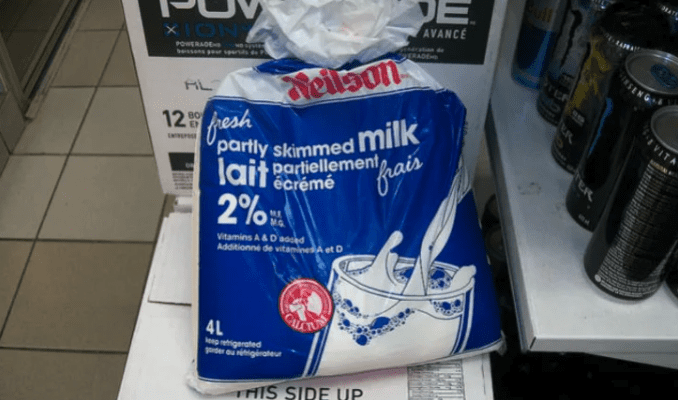
Photo Credit: fw_gadget, Flickr // CC BY-SA 2.0
So what’s the reason behind the prevalence of milk in bags in Quebec and other parts of Canada?
As usual, the difference can be explained by science.

Photo Credit: Pixabay
During a period where glass bottles often broke and resulted in wasted product, Canadians resorted to a different solution thanks to their use of the metric system.
Because liquids had to be sold in liters, manufacturing plants would have needed to make radical adjustments to meet the new requirements.
However, bags did not require such an extensive overhaul.
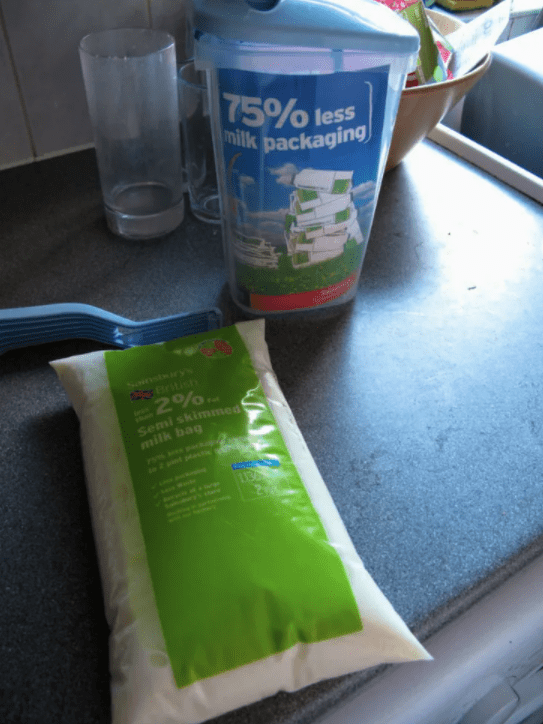
Photo Credit: Andrea Vall, Flickr // CC BY-ND 2.0
Plus, they produced less packaging waste.
By the late 1970s, four-liter packages of milk became the standard in Ontario, and customers continued to pick up on the trend.

Photo Credit: Pixabay
In fact, milk served in bags has started to make its way to other parts of the world. You can now find bagged milk in South Africa, Hungary, and China.
Even a school in Nebraska started serving kids milk packaged in Capri Sun-esque pouches.

Photo Credit: Pixabay
No matter how you consume your milk, it’s best to keep it fresh. So whether you’re a bottle loyalist or you’ve broken the mold and gone with the bag method, at least you’re following mom’s orders to keep those bones strong and healthy.
Have you ever drank milk from a bag or pouch before? Would you try it out even if you drank bottled or cartoned milk your whole life?
Weigh-in in the comments below!
The post Here’s the Science Behind Why Canadians Drink Milk in Bags appeared first on UberFacts.
Here’s the Science Behind Why Canadians Drink Milk in Bags
Canadians have a much different way of consuming a classic component of American cuisine.
Take a walk down a Canadian grocery store and you may wonder what’s inside that gigantic bag that weighs nearly 10 pounds. Could it be rice? Or how about flour?
Nope, that would be milk. Inside the bag are actually three bladders of milk. Most people place the bladder inside a pitcher, snip a corner and pour for consumption.
Photo Credit: fw_gadget, Flickr // CC BY-SA 2.0
So what’s the reason behind the prevalence of milk in bags in Quebec and other parts of Canada?
As usual, the difference can be explained by science.
Photo Credit: Pixabay
During a period where glass bottles often broke and resulted in wasted product, Canadians resorted to a different solution thanks to their use of the metric system.
Because liquids had to be sold in liters, manufacturing plants would have needed to make radical adjustments to meet the new requirements.
However, bags did not require such an extensive overhaul.
Photo Credit: Andrea Vall, Flickr // CC BY-ND 2.0
Plus, they produced less packaging waste.
By the late 1970s, four-liter packages of milk became the standard in Ontario, and customers continued to pick up on the trend.
Photo Credit: Pixabay
In fact, milk served in bags has started to make its way to other parts of the world. You can now find bagged milk in South Africa, Hungary, and China.
Even a school in Nebraska started serving kids milk packaged in Capri Sun-esque pouches.
Photo Credit: Pixabay
No matter how you consume your milk, it’s best to keep it fresh. So whether you’re a bottle loyalist or you’ve broken the mold and gone with the bag method, at least you’re following mom’s orders to keep those bones strong and healthy.
Have you ever drank milk from a bag or pouch before? Would you try it out even if you drank bottled or cartoned milk your whole life?
Weigh-in in the comments below!
The post Here’s the Science Behind Why Canadians Drink Milk in Bags appeared first on UberFacts.
Borden Dairy Declared Bankruptcy and Is the Second Milk Seller to do so in Two Months
Two of the most recognized names in milk and dairy have recently declared bankruptcy: Dean Foods declared bankruptcy back in November, and Borden Dairy, one of the oldest milk processors in America, just recently did the same.
The rising cost of raw milk and a drop in consumer demand have been cited as reasons for both companies to take this drastic action. Borden will remain in business while it goes through its bankruptcy proceedings, which is a bit of good news for the 3,300 employees of the company that is based in Dallas, Texas.
Milk News: Borden Dairy Is Second Big Producer to Go Bankrupt – @business @BordenDairy @PNCBank #dairyfree #bankruptcy #MILK https://t.co/cN54cI5KXg
— Sociallama (@sociallama) January 7, 2020
Tony Sarsam, the CEO of Borden, said, “Despite our numerous achievements during the past 18 months, the Company continues to be impacted by the rising cost of raw milk and market challenges facing the dairy industry. These challenges have contributed to making our current level of debt unsustainable.”
The U.S. Department of Agriculture says that Americans drank 18.4% less milk from 2008 to 2018. At the same time, there has been a dramatic increase in sales in nut and plant-based milk. It may seem hard to imagine, but in 2019 alone, 2,700 dairy farms went out of business. There’s no denying that the entire American dairy industry is struggling mightily.

Borden was founded all the way back in 1857. It was the first company to use glass bottles for milk and was also the first company that developed a patent for condensing milk.
The times sure do seem to be changing, don’t they?
The post Borden Dairy Declared Bankruptcy and Is the Second Milk Seller to do so in Two Months appeared first on UberFacts.
Millions of Americans Think Chocolate Milk Comes From Brown Cows
I’ve never thought about the fact that people over the age of 5 might think strawberry, chocolate, and regular milks come from different color cows, but, I mean, if no one ever told you differently…I suppose it could still make sense?
Aside from the fact that you’ve never actually seen a pink cow.
Then again, I live in the middle of the country, where cows appear regularly on the side of the road. So maybe I should give coastal city folk a break?
View this post on Instagram
NAH – this is ridiculous.
It turns out that A LOT of adults believe that chocolate milk comes from brown cows. How many, you ask?
Well, according to the Innovation Center for US Dairy’s website, around 16.4 million people across the country.
They know this because they commissioned a survey to see, which found that 7% of respondents think brown cows equal chocolate milk.
Yep, right out of the udder.
This despite the fact that their official statement (and common sense) says, “Chocolate milk – or any flavored milk for that matter – is white cow’s milk with added flavoring and sweeteners.”
And get this: 48% of respondents – which would mean over 154 million people nationally, if the survey statistics were extrapolated to the country as a whole – admitted they aren’t sure where chocolate milk comes from. As in, maybe it comes from a brown cow? Who knows??
A few more fun facts that emerged from the same survey:
37% of Americans admit to drinking milk straight out of the carton in the fridge (YIKES).
And 29% of Americans buy chocolate milk “for the kids,” but really they just want an excuse to drink it themselves.
As far as the latter, I hope by the time their kids move out they can own what they like and drink it all day like a m-fing adult (who may not know where it comes from). Because chocolate milk, brown cow or no, is delicious.
The post Millions of Americans Think Chocolate Milk Comes From Brown Cows appeared first on UberFacts.