The Air Force Is Putting Lasers on Their Fighter Jets

You read that right, my friends – laser death rays are a really real thing that the actual military is going to be utilizing in the near future.

I mean, I realize that most of this timeline is a horror show and The Jetsons’ promised us flying cars and our hoverboards are a horrible imitation, but I mean…death rays are pretty cool, right?

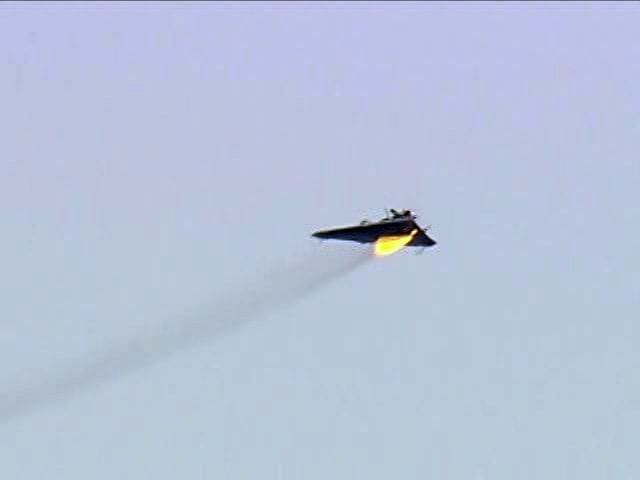
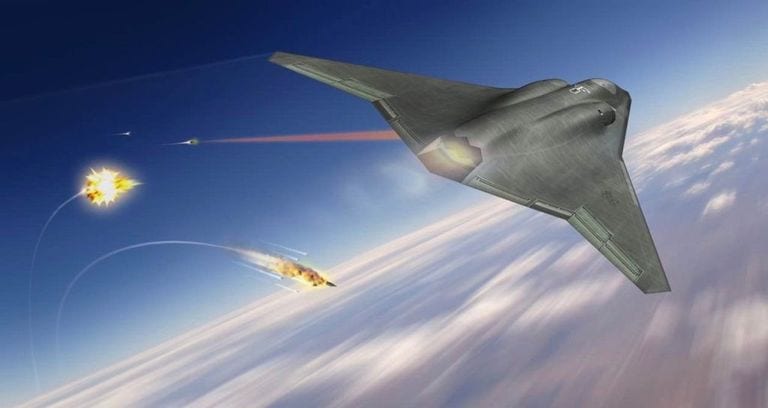
The Air Force is working on a laser weapon, known as SHiELD. It’s a pod-mounted laser that’s meant to protect fighters from incoming missiles, and will be used initially to protect older fighters with less effective stealth technology.

Image Credit: U.S. Navy

SHiELD stands for Self-Protect High Energy Laser Demonstrator. Lockheed’s plan is to mount the laser on the fuselage or wing of a fighter jet, and will eventually be used in conjunction with a second weapon – the Tactical Airborne Laser Weapon System – to shoot down air-to-air and surface-to-air missiles.

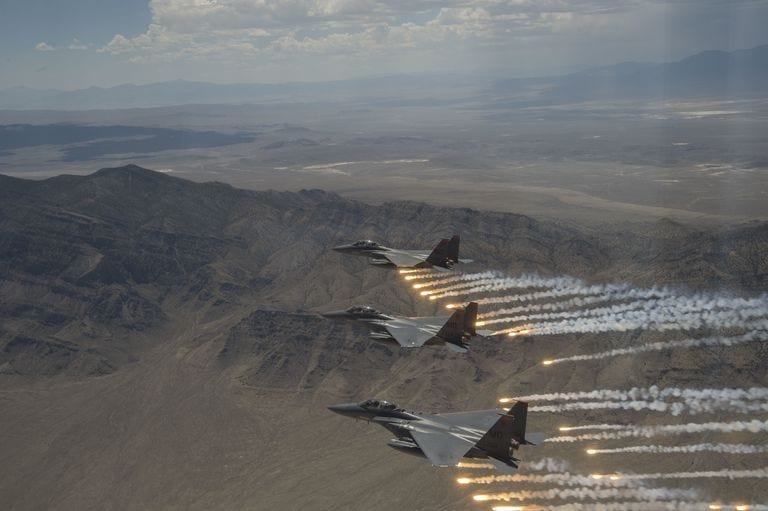
At the moment, pilots only have access to passive defenses against incoming missiles, like evasive action or managing to fly outside an incoming missile’s sensor arc, maybe launching flares or other measures meant to confuse tech.

Image Credit: U.S. Air Force

This new laser would be the first active anti-missile defense in history – and yeah, go ahead and imagine something straight out of Star Wars.

The systems will take up space on fighter jets that is typically reserved for bombs and missiles of their own, which means they won’t be added to stealthy aircraft.

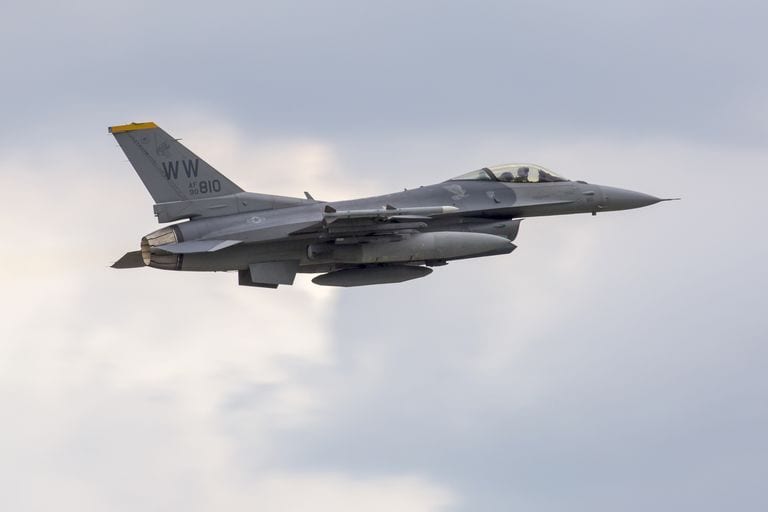
Instead, SHiELD and TALWS will go on fighter jets like the F-15E, F-15C, and the new F-15EX, because they have room for more than one bomb the way it is.

Image Credit: U.S. Air Force

And get this: the laser could very conceivably be controlled by something that looks a lot like R2D2.

Even so, there are a few downsides to using lasers. Water moisture and smoke particles in the air can dilute a laser’s strength, and they can’t travel all that far without the beam weakening.

They’ll also have to be able to focus on the missile for long enough to heat it to the point of dissolving, which could prove tricky in an actual combat scenario.

Image Credit: U.S. Air Force

Even if there are problems that still need to be untangled, there’s no doubt that laser weapons are the future, and will likely go on almost all warplanes in the future.

All that’s left is to make it more practical, more affordable, and then the future is here, my friends.

And I say we could all use a win.

The post The Air Force Is Putting Lasers on Their Fighter Jets appeared first on UberFacts.

Gold Star Families and Veterans Can Visit any National Park for Free

If you know anything about how veterans and the families of those who gave their lives in service to America are treated when the fighting and serving are done, then you know they don’t get nearly enough.

Not enough thanks, not enough healthcare, not enough financial support, you name it.

Image Credit: Pixabay

And though it may seem like a small thing to let them into the country’s national parks for free, I mean…at least it’s something.

Recently the Department of Veterans Affairs announced that U.S. military veterans and gold star families will have free access to all national parks, wildlife refuges, and other federal lands for as long as they live.

Image Credit: Pexels

Secretary of the Interior, David L. Bernhardt, issued a statement.

“With the utmost respect and gratitude, we are granting Veterans and Gold Star Families free access to the iconic and treasured lands they fought to protect starting this Veterans Day and every single day thereafter.”

The passes known as America the Beautiful grant access to more than 2,000 federal recreation sites and 400 million acres of public lands, including Yosemite, the Grand Canyon, Arches, and Mount Rushmore. They normally run you $80 a year.

To nab complimentary access, all veterans have to do is provide identification showing they were in the armed forces, the U.S. National Guard, or the Reserves.

Image Credit: Pexels

Gold star families, who have lost a family member while they were serving in a war or military operation outside the U.S. or in an international terrorist attack.

Staying physically active is one of the best ways to nourish our minds and bodies, so as long as everyone is following guidelines as far as social distancing, there’s no reason veterans and their families shouldn’t get out and enjoy.

The post Gold Star Families and Veterans Can Visit any National Park for Free appeared first on UberFacts.

This Artist Uses Tech to Show What Historical Figures Really Looked Like

Sometimes it can be hard to imagine what people from the past looked like before cameras were invented.

Yes, we have paintings and sculptures we can admire, but it sure would be nice to know what ancient leaders and famous artists of centuries past REALLY looked like.

Well, thanks to a photographer and artist named Bas Uterwijk who specializes in computer graphics and 3D animation, we have an idea of what some famous figures from history might have looked like.

Uterwijk started tampering with the likenesses of historical figures in 2019 and his work is really something. Here are some faces that the Dutch artist made come to life.

Let’s take a look.

1. Is that Bill Shakespeare?

Why yes, it is!

2. Albrecht Durer.

A German painter, FYI.

3. Portrait of a lady.

This one is pretty interesting.

4. That’s Lady Liberty.

If she was a real person…

5. Alexander the Great.

A giant historical figure.

6. Emperor Caligula. 

A lot of crazy stories about this fella.

7. They lived in Pompeii in AD 79.

What they must have seen…

8. Playwright. Politician. Philosopher.

Taken from a sculpture. I like this one.

9. Marcus Aurelius.

An emperor and a philosopher.

10. Julius Caesar.

We all know what happened to him…

11. The one and only Vincent van Gogh.

A master Dutch painter.

Those are awesome! I love all the detail. His creations seem to jump right off the screen.

Who else would you like to see given this treatment?

Share some fascinating historical figures with us in the comments. Thanks!

The post This Artist Uses Tech to Show What Historical Figures Really Looked Like appeared first on UberFacts.

If You Only Had 30 Minutes to Hide From a Nuclear Blast, Where Would You Go? Here’s What People Said.

This sure isn’t the most pleasant question you’ve ever been asked, but we still want to know what people would say, right?

And, hopefully (fingers crossed), we’ll never have to actually worry about this, but we’re gonna dive in!

If you had 30 minutes to hide from a nuclear blast, where would you go?

Here’s what AskReddit users had to say.

1. Hopefully that wouldn’t happen.

“The Eisenhower tunnel on I-70 in Colorado (1.7 miles long).

Unless it turns into Stephen King’s “The Stand”…”

2. It might work?

“I’d always heard a basement of a library is good because books may absorb some radiation.”

3. You don’t have to go anywhere!

“I work at a nuclear pharmacy which has dosimeters, geiger counters, potassium iodide tablets, Radiac spray, PPE and lead, and the break room/office is an extra vault that was made to house a particle accelerator (known as a cyclotron).

I’m at work right now. So, assuming I’m safe from the initial blast radius, I’d probably go sit at my desk, scroll through Reddit and watch the world end.”

4. Out in the country.

“The nearest city is over 30 miles away, and it’s all open country from where I am and for at least another 10 miles to the mountains in the other direction.

Either I’d jump in the truck and try to make it to the mountains thru the reservation or crawl under the house and hope for the best.”

5. Secret spot.

“There is an old building near me that has a basement. I know what boards to move to get into the basement from the outside.

It’s the only building I know of within about 100 miles that is entirely reinforced brick masonry with a basement, and I’m sure I’d spend the apocalyptic event chatting with several homeless people who also know about the board.

We’d all survive though.”

6. That’s where I’ll be.

“There’s a building at the college I work at that goes 80 feet underground and has 6 foot thick inward sloping concrete walls

I’ll be in there.”

7. All over the place.

“Pretty easy, I would just go to my nearest bomb shelter. They are all over the place here in Finland and can house up to 4 million people (so more than enough room for the entire urban population) .

Every metro station also doubles as a bomb shelter, and I can walk to one of those within 10 minutes so I would probably chill there (there are probably a bunch of shelters even closer to me though but could be busy).

You can actually walk across a lot of Helsinki centre completely underground (I often do when it is raining), the underground network of tunnels is huge. And all bomb proof.

Finland actually has one of the most thorough civil defense programs in the world.”

8. Fallout shelter.

“There’s a fallout shelter in a bank about a mile down from where I live that was built back in the 1960s.

I’d probably yank some snacks and a bottle of Jack from the kitchen and sprint down there, then hunker down for a few days.

If it’s locked, then… well… I can polish off the Jack and wait for the fireworks.”

9. Sounds like you’ll be fine.

“If I knew it was coming, I’d just drive away. Distance makes all the difference with nuclear blasts.

I’m close to mountains in the outer suburbs of a big city, I’d drive in that mountain direction as we often have winds from there. Minimal fallout that way too.

If leaving the city was not an option, I’d just hit up my basement. It’s below ground enough that I think I’d be fairly safe.”

10. Now I’m sad.

“I’d gather my dogs and cats and go up to our bedroom and cuddle my husband.

Give the doggies and kitties some treats on the bed and hope they don’t jump off so that my last moments are a cuddle fest.”

11. Wait for it.

“I’d grab a six pack, grab a chair and sit outside calling my family and friends while waiting for the end.

I’m not suicidal but any world that would exist after my city gets bombed would be unrecognizable and probably not worth surviving for.”

12. Pedal to the metal.

“I’d drive like crazy for 30 minutes.

If I drive at 100km/hour, I would be 50km from the center of the explosion. A good distance.’

13. It’s under control.

“Switzerland.

They have the 110% capacity of their population in bunkers so there’s room for me.”

14. To the library!

“There is an old library built in the 1960’s less than a mile from my house with a basement fallout shelter.

I know because I always see the old 1960’s fallout shelter signs and consider stealing one but the potential of getting caught and being banned from the library for the rest of my life stops me every time.”

Now it’s your turn!

In the comments, tell us about when you told a lie that spiraled out of control.

Please and thank you!

The post If You Only Had 30 Minutes to Hide From a Nuclear Blast, Where Would You Go? Here’s What People Said. appeared first on UberFacts.

Older People Talk About Which Year Felt Worse Than 2020 and They Explain Why

I’ve read quite a bit about the year 1968 and I’ve always said to myself, “wow, that must have been so exciting and interesting to live through such a tumultuous year.”

Now that we’re living through an awful year, my mind has definitely been changed. This is not fun, it’s not exciting, and it’s honestly pretty terrifying. But I guess that we should all appreciate that we’re living through some very interesting times that will be studied and written about forever.

What are some other years that felt worse than 2020?

Let’s get some history lessons from folks on AskReddit.

1. Crash in Finland.

“My parents still think the economic crash of the 1990s that happened in Finland was worse, and in Finland it killed more people in the form of suicides than Corona has thus far.

I was just born around that time. And lots of people just lost everything. Companies folded left and right. Loan intrests were crushing people.

Then right after that we got dot com bubble.”

2. The burst bubble.

“Personally speaking:

2002 the dot-com bubble burst and I lost a cushy job, that was pretty bad.
2008 great recession happened, again was laid off, that was pretty bad too.

2019 was awful. I found out my recently deceased father had an entire other family. I guess technically, we were his other family.

Met the ones he abandoned (my new older half siblings) last summer and it was incredibly awkward and for some reason left me hollow and extremely full of guilt.”

3. A personal story.

“I’m 42. I’ve had years that were personally pretty bad, but this is super weird times.

Like, late 1997, the day before my 20th birthday, my mom was diagnosed with cancer and the first 6 months of 1998 were especially very, very stressful and scary, but at least I could go out with friends, I threw myself in to school, I worked, I tried to be useful or out of the way at home. I didn’t have to think about it 24/7.

I deactivated my FB, Insta, and Twitter October 1 and I’m planning to keep them like that at least through the election, maybe longer. Can’t change what’s going on, but I can’t have all of this crap living rent-free in my head all the time.”

4. JFK.

“1963 because President Kennedy was shot.

My teacher cried and my father left home.”

5. Interesting perspective.

“The last quarter of 2001 was more intensely miserable.

2020 misery is more spread out and not quite as terrifying.”

6. Serbia.

“Bombing of Serbia in 1999.

NATO was only supposed to bomb military objects, but they bombed hospitals, markets, random populated areas. I was in the hospital with my dad when the sirens came on the whole hospital went to the basement, lucky the hospital wasn’t hit, after the danger my dad drove us back he told me not to look out the window, being a kid I did look only to see innocent people dead along the whole street as the flea market was hit on a weekend…

I am 25 y/o now I still have nightmares about it occasionally. Also NATO used prohibited weapons with uranium which also caused a lot of people to get cancer from the radiation years after…”

7. History in the making.

“The year 1970.

People dying or being maimed for life (both mentally and physically) in a stupid, nonsensical war. Richard Nixon was President. The government refusing to listen to hundreds of thousands of people protesting the war, and people of all sorts not just college kids and hippies.

I participated in a HUGE protest in DC and walked down Pennsylvania Avenue with a lot of other people, holding the hands of my two kids. “We are speaking to our government. Never forget.””

8. It was bad.

“2008 was a really bad year.

Big financial crash, lots of people lost a lot of money, especially from their savings and retirements. Lots of layoffs, including me, and really high unemployment and few jobs to move to.”

9. The Eighties.

“1983 was probably the year we came closest to global nuclear war. Even worse than the Cuban Missile Crisis.

There was a large confluence of circumstances and events (some related, some not) that could have spelled doom.”

10. Bad years.

“1994-95.

I spent a good bit of time homeless or living in a tent. I was in the US illegally and couldn’t get any form of assistance without being deported, and I was too small for most places to even consider employing me under the table.

Also, honorable mentions to 2016-17 for my divorce year and pretty much the entire period of 1992-1997 for me. 2020 doesn’t crack my top ten worst years, aside from the collapse of western civilization it really hasn’t been too bad on me.”

11. Way back when.

“It’s has to be 1947 when India got independence from britishers and then divided into Pakistan(Islamic country), India (republic nation).

People were forced to leave according to their religion. They were burnt alive and r*ped. Around 2 million people died, 14 million misplaced.

And my father told me that my grandfather who used to work as a ticket checker in railway had seen trains full of dead bodies.”

12. This is maybe as bad…

“Late 1960s and early 70s, we had the Vietnam war body count nightly on the news, for years. Everyone was worried about being drafted. I was too young.

There was plenty of angst to go around then. But I feel this year has probably been as bad or worse.”

13. Chaotic times.

“1968-1969.

Started with the Tet Offensive in Vietnam. It was a military disaster for the North Vietnamese, but a big surprise to the American public – they had been told the war was effectively won. And from there it just got worse.

Student riots. City riots. MLK was assassinated in early April and the ghettos exploded. Then in early June, I was on a South Vietnamese hilltop firebase. One of our less English-proficient officers came up to the American advisers in the afternoon. “You know Kennedy, ya? They shoot him!” The three of us looked at him. I said, “Yeah Đại Úy (Captain), back in 1963. So?”

“NO!” he said, “They shoot him now!” Then he got frustrated with us and stomped off. Weird. What’s up with the Đại Úy? We couldn’t get American radio (AFVN) in the daytime, but later that night we found out what he was talking about. Another Kennedy? WTF is going on back home?

I got back on leave in December. America was nuts. I couldn’t walk through the airport without starting a fight. I wasn’t fighting. Someone would want to yell at me, and someone else would start yelling at him, and eventually they’d forget I was there – because I wasn’t. My instructions were to keep walking. The war had come home. Racial justice had graduated to racial war.

It was almost a relief to get back to Vietnam. Seemed saner.

Bad year for the USA. 1969 was only better because some of the things people were expecting to happen, didn’t. But it wasn’t much better.”

Now we want to hear from even more older folks.

In the comments, please tell us what years you think were worse than 2020.

We’d love to hear from you!

The post Older People Talk About Which Year Felt Worse Than 2020 and They Explain Why appeared first on UberFacts.