Residents of Shingo, Japan believe Jesus did not die on a cross in Jerusalem, but instead he fled to their town and became a rice farmer.
When the Japanese emperor announced…
When the Japanese emperor announced Japan’s surrender in WW2, his speech was too formal and vague for the general populace to understand. Many listeners were left confused and it took some people hours, some days, to understand that Japan had, in fact, surrendered.
There is a town in Japan that…
There is a town in Japan that is filled with scarecrows. Basically the entire town has left or died and this woman has filled this tiny town with handmade scarecrows.
Ohaguro is the process of dyeing…
Ohaguro is the process of dyeing the teeth black in Japan. Black dyed teeth are a symbol of status thought to compliment the white painted faces of women. The dyeing was also done to mask the yellow teeth and make the teeth stronger by preventing the growth of cavities. It was outlawed in 1870.
Students Clean Their Own Classrooms and Toilets in Japan
It’s actually common for Japanese people to take responsibility for cleaning public spaces they utilize.
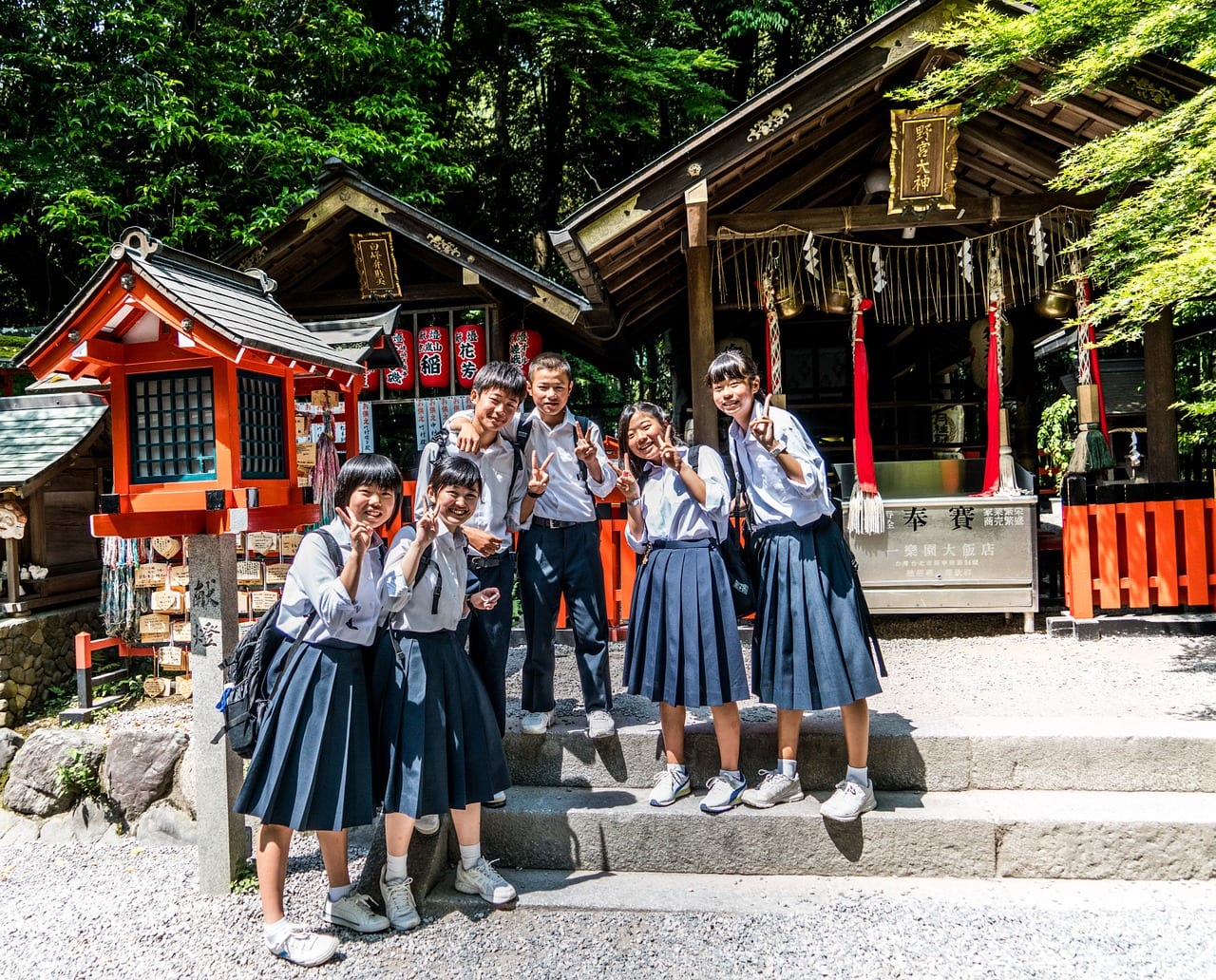
Photo Credit: Needpix
After a recent win over the Colombian football team during the World Cup, the fans naturally wanted to celebrate. But not until they all pitched in to clean the stadium.
This Japanese drive to maintain cleanliness is a concept introduced during their early school years. According to Bright Vibes, the o-soji (cleaning), as it is called, is tradition in Japanese schools.
【News: Japanese-Style Education “Special Activities” /Tokubetsukatsudo(Tokkatsu) Spreads to Egyptian Elementary…
Posted by JICA – Japan International Cooperation Agency on Tuesday, January 10, 2017
Making the children clean their schoolrooms and restrooms has nothing to do with lack of manpower. Even though people – called yomushuji, often shortened to shuji – are hired for non-teaching roles like cleaning and maintaining school grounds, children are still taught to clean. The idea is to instill the values of discipline, responsibility and the joint care of spaces into children. It’s a value they go on to hold throughout their lives.
Starting each day (except Wednesdays and Saturdays) after lunch, the students clean for approximately 20 minutes. They start with their own classrooms, then rotate as groups to clean other spaces like the playground, library and common areas. Then, they get recess.
Interesting coincidence – listening to a story by @KatGregoryABC on @abcnews about Australia’s waste management crisis and saw these Japanese primary school students doing a cleanup outside their school. pic.twitter.com/i0LWXpy8HC
— Jake Sturmer (@JakeSturmer) April 26, 2018
The school gets a longer cleaning on the last day of each semester. The children also get an o-soji song or something else to get them pumped while they clean. Older kids also help teach the little ones what to do, which bonds the kids like siblings.
Once they reach the third grade, children start participating in chiiki seiso – a full neighborhood clean-up.
If you ask me, this Japanese tradition is onto something. If everyone was taught to clean up after themselves starting in early childhood, the world would be a much cleaner place.
What do you think about the practice? Let us know in the comments.
The post Students Clean Their Own Classrooms and Toilets in Japan appeared first on UberFacts.
Surgeon Tryouts in Japan
A Japanese hospital has an entrance test for aspiring medical students – they must perform 3 tasks in 15 minutes using surgical instruments – make miniature paper cranes, reassemble a dead bug from parts and make miniature sushi using a single rice grain. 40 students are selected.
When Japanese prime minister…
When Japanese prime minister Keizō Obuchi was a young man and short on money, he travelled to thirty-eight countries, completely circumnavigating the globe and taking odd jobs as he went. These included being a dishwasher, an assistant aikido instructor and a TV camera crew assistant in Berlin.
5 Interesting Christmas Traditions From Around the World
If you’re an American like yours truly, you have Christmas down pat here in the good old USA. We know the Christmas traditions, the songs, the pop culture surrounding it, and we know all about the good food we eat every December 25.
But what do folks do in other countries to celebrate this holiday?
Here are five interesting and unusual Christmas traditions from around the globe that you might not know about.
1. Japan

This one is very unusual, but who are we to judge? In Japan, people enjoy eating Kentucky Friend Chicken on Christmas Eve. Only one percent of the Japanese population is actually Christian, but KFC’s “Christmas Chicken” bucket is a huge hit in the country.
In 2016, an estimated 3.6 million families celebrated Christmas Eve this way in Japan. The tradition dates back to 1974 when a group of foreigners in Japan couldn’t find a turkey and decided to go to KFC instead. KFC saw it as a good marketing opportunity, and the rest is history. Today’s version consists of chicken, cake, and champagne.
2. Ukraine

In Ukraine, people decorate their trees with fake spiders and webs. Why, you ask? According to that country’s folklore, there was a poor, single mother who couldn’t afford to put any decorations on her family’s Christmas tree. One night while the family was sleeping, a spider spun a beautiful web and decorated the tree. The sun turned the web silver and gold and the poor family never needed anything ever again.
A nice story, I think.
3. Guatemala
On December 7 at 6 o’clock in the evening, Guatemalans build bonfires to “burn the devil.” This tradition kicks off the Christmas season in Guatemala every year, and it especially popular in Guatemala City as a way to honor the city’s patron saint during the Feast of the Immaculate Conception.
The tradition started with a simple fire during colonial times, then over the years devil figures and even devil piñatas have been added to the mix. It’s estimated that 500,000 bonfires now burn in Guatemala every December 7.
4. Greenland

Greenland doesn’t get a lot of mentions in the history books, but they do have an interesting Christmas tradition that’s worth noting. In that country of only 55,000 people (that’s half the size of Boulder, Colorado), the men serve the women their meals at Christmas. What’s the meal? Strips of whale blubber known as “mattak.” Dessert usually consists of porridge with butter, cinnamon, and sugar.
5. Venezuela

This might be the best Christmas tradition I’ve ever heard! In Caracas, Venezuela, people strap on roller skates to head to church on Christmas Eve. The story goes that kids are supposed to go to bed with a piece of string tied to their toes and their foot dangling out of a window. People skating by the windows tug on the toe strings letting kids know it’s time to roller skate to mass. Despite the fact that people probably don’t sleep with their feet hanging out of the window, Venezuelans still roller skate to mass to this day.
When mass is over, people get together for food, music, and dance. I like this idea!
The post 5 Interesting Christmas Traditions From Around the World appeared first on UberFacts.
In Japanese culture, shaving your head…
In Japanese culture, shaving your head is a common form of public apology or an acknowledgement of failure.
A Company Is Offering Nonsmokers Six Extra Vacation Days to Make up for Cigarette Breaks
If you work with smokers, they take breaks constantly. I’m sure you’ve noticed this. I’ve worked with some people who took at least one cigarette break per hour and sometimes even more.
That time really adds up.
A company in Japan has taken notice and decided to give non-smokers an extra six days of vacation per year to make up for the time that smokers take on breaks. Piala Inc. is a marketing firm in Tokyo, and they decided to take this step after non-smokers at the company complained about working more than people at the business who take time each day to smoke.
This company is giving non-smokers 6 extra vacation days pic.twitter.com/Ymzt2IY6P0
— NowThis (@nowthisnews) October 24, 2019
A spokesperson for the company said, “One of our non-smoking staff put a message in the company suggestion box earlier in the year saying that smoking breaks were causing problems. Our CEO saw the comment and agreed, so we are giving non-smokers some extra time off to compensate.”
The company is based on the 29th floor of a building so you can imagine how much time was spent by smokers venturing all the way downstairs, taking a leisurely cigarette break, and then coming back up 29 flights. Like I said, it adds up.
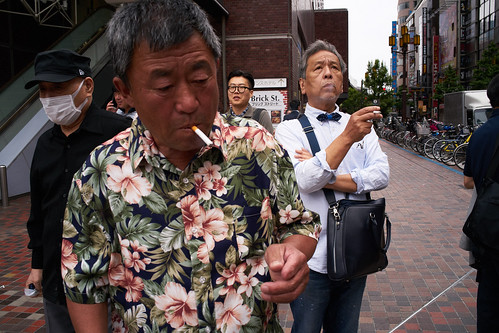
Takao Asuka, the CEO of the company, said, “I hope to encourage employees to quit smoking through incentives rather than penalties or coercion.”
What do you think about this? Fair? Unfair? Unnecessary?
Share your thoughts with us in the comments.
The post A Company Is Offering Nonsmokers Six Extra Vacation Days to Make up for Cigarette Breaks appeared first on UberFacts.