10 Facts so Good You Might Just Jump Around

Let’s cut the chit chat and the small talk RIGHT NOW. I’m here with 10 facts that you absolutely NEED in your life right now.

They’re so good, in fact, that I have a feeling you’re going to jump for joy. So go ahead and do it! …After you enjoy these facts.

1. Been there, done that

Photo Credit: did you know?

Source 1 Source 2

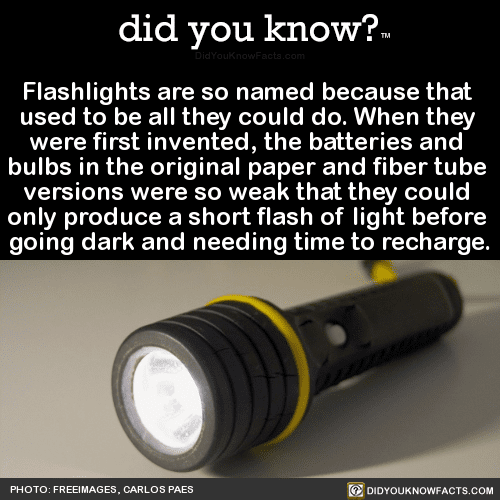
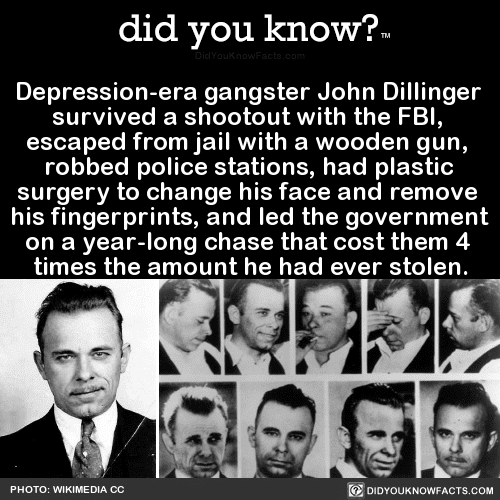
2. Ouch…

Photo Credit: did you know?

Source 1 Source 2

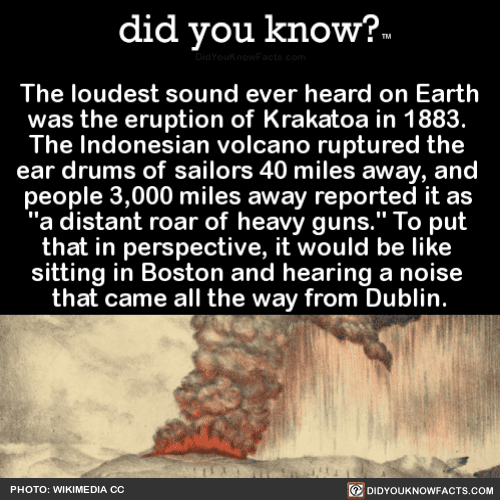
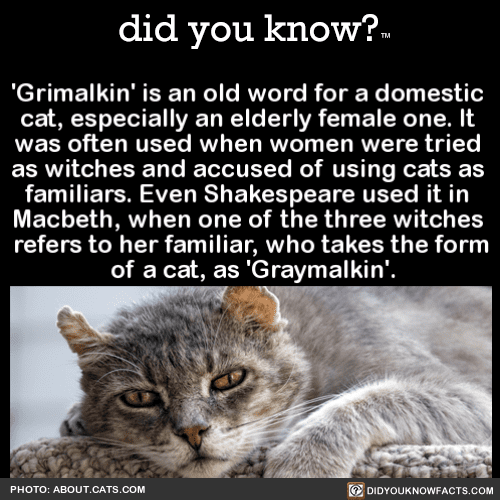
3. Freaky!

Photo Credit: did you know?

Source 1 Source 2 Source 3

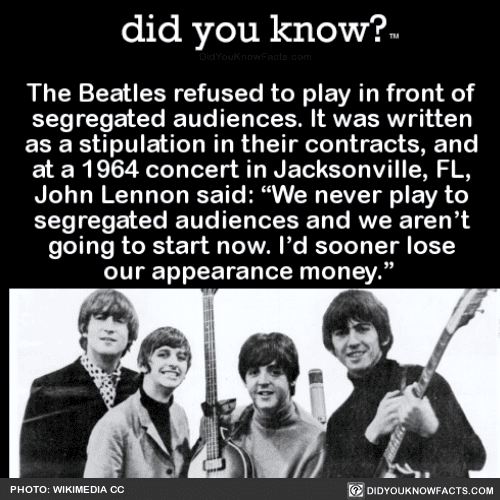
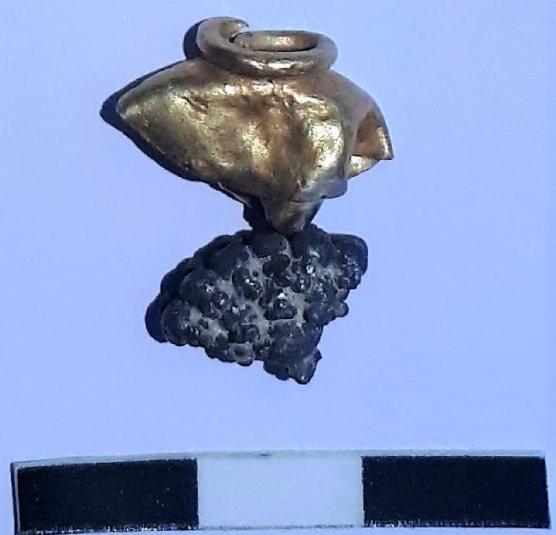
4. That’s interesting

Photo Credit: did you know?

Source 1 Source 2 Source 3

5. It works!

Photo Credit: did you know?

Source 1 Source 2

6. Give it a shot

Photo Credit: did you know?

Source 1 Source 2

7. Here come the waterworks

Photo Credit: did you know?

Source 1

8. I’ll take two!

Photo Credit: did you know?

Source 1 Source 2 Source 3

9. Harry Potter critters

Photo Credit: did you know?

Source 1 Source 2 Source 3

10. Hey, Gramps!

Photo Credit: did you know?

Source 1 Source 2 Source 3

Might as well JUMP!

The post 10 Facts so Good You Might Just Jump Around appeared first on UberFacts.

10 Sobering Photos from the Great Depression Era

When the stock market crashed in October 1929, the entire country was plunged into a disastrous economic downturn lasting until the 1940s. In those years, families suffered destitution, starvation and breakdowns. It was the worst economic depression the industrialized world had ever seen.

Here are 10 photos that illustrate the devastation of the era.

1. Titled “Migrant mother.”

Photo Credit: LOC.gov

This is perhaps the most famous of all Great Depression photos. It shows Florence Thompson, a California pea picker, with three of her seven children. She was 32 years old.

2. Memphis 1939, the sign of the Hotel Clark says it’s the best service for “colored only.”

Photo Credit: LOC.gov

Laws against segregation would not be enacted until the Civil Rights Act, 25 years in the future.

3. A crowd gathered outside the New York Stock Exchange after the crash.

Photo Credit: US Gov, public domain

Wall Street panicked and investors were wiped out. The event abruptly started the Great Depression.

4. Unemployed men sleeping in the park in Minneapolis, 1939.

Photo Credit: LOC.gov

Rampant unemployment led to rampant homelessness.

5. Meal time at the Sioux City, Iowa, homeless men’s bureau for unattached men, 1936.

Photo Credit: LOC.gov

Boarding houses, rented rooms and shelters were common.

6. Sharecropper’s children in 1935.

Photo Credit: LOC.gov

Landlords collected government farm subsidies and used the money to mechanize farms, heavily reducing their need for labor.

7. Sharecropper’s wife and baby, Arkansas, 1935.

Photo Credit: LOC.gov

Sharecroppers were often the poorest of the poor. In response to the mechanization of farms, bad living conditions and unfair terms of their leases, sharecroppers unionized during this time.

8. Children in the tenement district, Brockton, Massachusets, 1936.

Photo Credit: LOC.gov

Tenements in the major eastern cities, like New York City and Boston, were homes to the waves of immigrants that become the working class.

9. Men sleeping in railroad station, Radford, Virginia.

Photo Credit: LOC.gov

From out of town and working in the powder plant, they slept in the train station because they had no where else to go.

10. Family from Georgia in tent with neighbor’s child, eight or ten men, two women and two children.

Photo Credit: LOC.gov

The tent was their permanent home. Men slept in shifts as construction workers in Alexandria, Louisiana, 1940.

The economy didn’t fully recover until the end of World War II with sharp reductions in spending and taxes, and the end of war-time economy. It wasn’t until the 1950s that America began enjoying broadly renewed prosperity. Although poverty and food scarcity is still a problem for many, the levels of unemployment and despair felt by depression era Americans have not been seen since.

The post 10 Sobering Photos from the Great Depression Era appeared first on UberFacts.

These Photos Show How Polluted America Was Before the EPA Cleaned It up

It’s difficult to imagine that there was a time when the Environmental Protection Agency (EPA) didn’t exist in the United States, but it actually wasn’t until 1970 that President Richard Nixon signed the order to create the agency.

From 1971 until 1977, the EPA hired freelance photographers to document just how bad the environmental problem was in the U.S. at the time.

These old photographs show just how polluted America’s air and waterways were before the EPA stepped in and cleaned them up. You can view more from the series here on Flickr.

1. “The Atlas Chemical Company Belches Smoke across Pasture Land in Foreground”

Photo Credit: US National Archives

2. “Smog Hangs Over Louisville And Ohio River, September 1972”

Photo Credit: US National Archives

3. “Burning Barge On The Ohio River”

Photo Credit: US National Archives

4. “Detroit Lake the Dam”

Photo Credit: US National Archives

5. “Paddlewheel Steamboats Seen From Banks Of Ohio River”

Photo Credit: US National Archives

6. “Litter Left In The Ohio River”

Photo Credit: US National Archives

7. “Broken Glass From “No-Deposit, Non-Returnable” Bottles Along the Washington Shore of the Columbia River in a Public Picnic Area”

Photo Credit: US National Archives

8. “The Job Of Clearing Drift From The Potomac And Anacostia Rivers Is Done By The Army Corps Of Engineers”

Photo Credit: US National Archives

9. “Warning of Polluted Water at Staten Island Beach Verrazano-Narrows Bridge in Background”

Photo Credit: US National Archives

10. “Abandoned Car in Jamaica Bay”

Photo Credit: US National Archives

11. “Sand Covers Abandoned Car on Beach at Breezy Point South of Jamaica Bay”

Photo Credit: US National Archives

12. “Outflow Pipe 6 of the Oxford Paper Company Will at Rumford on the Androscoggin River”

Photo Credit: US National Archives

13. “Mary Workman Holds A Jar of Undrinkable Water That Comes from Her Well, and Has Filed A Damage Suit Against the Hanna Coal Company”

Photo Credit: US National Archives

14. “International Paper Company Mill at Jay on the Androscoggin River”

Photo Credit: US National Archives

15. “Cleaning Up the Roadside in Onset”

Photo Credit: US National Archives

Powerful photos, that’s for sure.

The post These Photos Show How Polluted America Was Before the EPA Cleaned It up appeared first on UberFacts.

You’ll Never Hear the British Royal Family Say These 13 Words – Here’s Why

Social anthropologist Kate Fox revealed which words are banned by the British Royal Family, and, more importantly, why, in her book, Watching the English.

1. Tea

Around the United Kingdom, tea is used to refer to the evening meal. This is considered a custom of the working class. The royals are to say dinner or supper instead.

Photo Credit: Pxhere

2. Portion

This is another working class term regarding served food. Upper class society says helping size instead.

Photo Credit: Pexels

3. Pardon

Instead, royals say sorry. Pardon is considered too bawdy. No one in the royal family says pardon.

Photo Credit: Gobierno de Chile

4. Toilet

Only the French would say toilet near a royal. Royals coyly ask for the loo.

Photo Credit: Wikimedia

5. Patio

Need some fresh air? Good luck asking about the patio. However, the royal family would be delighted to show you to one of their bazillion terraces.

Photo Credit: Diliff – Own work

6. Lounge

You do mean the drawing room or sitting room, right?

Photo Credit: Flickr

7. Couch

Nope, it’s a sofa for royals.

Photo Credit: Picryl

8. Perfume

Gauche. Instead, ask a duchess about her scent. Is this a thing with the French, again?

Photo Credit: Pixabay

9. Posh

The royals are not Spice Girls and neither they, nor anyone they know, use that word. You are permitted, however, to say smart. As in, “My, how smart you look in all that Prada.”

Photo Credit: Wikimedia

10. Function

Functions are for the middle class to attend. The upper classes go to parties.

Photo Credit: Nick Warner

11. Refreshments

At their parties, upper class society will partake in some food and drink. Thank you, that would be lovely.

Photo Credit: Pxhere

12. Dessert

Anything that is sweet is never called a dessert, or a sweet for that matter. That’s too boorish. But they will have a pudding, which is a word that covers all sweet desserts.

Photo Credit: Max Pixel

13. Mom and Dad

It’s mummy and daddy, even as adults. Cute!

Photo Credit: Wikimedia

Speaking like a royal would take some practice. Next lesson: holding your pinky up. Cheers!

The post You’ll Never Hear the British Royal Family Say These 13 Words – Here’s Why appeared first on UberFacts.

This 392-Year-Old Bonsai Tree Survived Hiroshima

If you find yourself at the National Bonsai & Penjing Museum in Washington, D.C., check out a piece of Japan’s history that dates back to the 17th century.

It’s a bonsai tree, gifted by master Masaru Yamaki to America on its bicentennial. The 392-year-old white pine is the oldest tree in the collection – it was planted in 1625, cultivated and personally cared for over the years by one master or another, and was living only 2 miles from where the U.S. dropped the atomic bomb on Hiroshima.

View this post on Instagram

i met a 400 year old tree today

A post shared by Brendan Novak (@brendanrnovak) on

The Yamaki family – Masaru’s son and grandson – revealed that the tree was sitting on a garden bench at their home when the bomb went off. It survived (and so did all of the other trees in their garden, along with their family).

Though the tree’s history is amazing (it’s a rare specimen that hails from the island of Miyajima), it’s not the oldest bonsai in the world – that title belongs to a 550-year-old tree at Tokyo’s Imperial Palace.

They have one that’s 450 years old, too, though no word on how close either of those were to a bomb that stunned the world with its destructive power.

View this post on Instagram

Imperial palace Tokyo ??? #tokyo #japan #imperialpalacetokyo

A post shared by Elena (@elenafioretti93) on

The gift of the tree was a nice gesture, but you have to wonder how it feels about residing in the country who dropped an atomic bomb so close to its home – and if plants had memories, whether it would ever be able to forget the devastation it must have witnessed that day, and in the years that followed.

The post This 392-Year-Old Bonsai Tree Survived Hiroshima appeared first on UberFacts.

Check out These 5 Ancient Legends Based on Real Events

A lot of kids go through a phase when they’re fascinated by the legends and myths that have wound their way through the centuries. Whether Robin Hood, Arthur and Lancelot, the antics of the gods of old, or creatures like a unicorn or a vampire, it’s fun to imagine that the world might have once been more magical than it is today.

And these 5 legends, which are rooted in reality, suggest that just maybe…it was.

5. Atlantis

Greek philosopher Plato was the first to describe a beautiful, advanced civilization that once disappeared beneath the sea, never to be seen or heard from again – but he was far from the last to re-tell one of the most well-known myths in human history.

Now, many archaeologists think he was describing the collapse of the Minoan empire after a volcanic eruption rocked Thera (modern-day Santorini). The core of the island collapsed in the aftermath, creating a tsunami that flooded the island and left it completely under water, sending it to a grave from which it never arose.

4. The Ape-Men Army of Sri Lanka

Indian Sanskrit epic the Ramayana features a classic kidnapping plot, in which Sita, the wife of god Rama, is stolen away to the Demon Kingdom on Lanka. To rescue her, Rama banded with an army of ape-like men to build a floating bridge between India and Lanka that they used to defeat the demon king, Ravana.

The tale, of course, is just good storytelling, but the bridge still exists – aerial surveys show a 30-mile-long stretch of limestone shoals under the sea that reaches between India and Sri Lanka.

Experts believe it was above the water until a 15th-century cyclone brought a huge storm surge into the channel.

3. Thunderbird and the Whale

View this post on Instagram

The Thunderbird awaits you.

A post shared by Janet Hartmann (@12janets) on

Native American lore tells of a benevolent, supernatural being called a Thunderbird, which once swooped over the sea to snatch a killer whale that was stealing resources from the Quileute tribe.

The bird prevailed, dropping the whale on dry land to die with a thud that shook the ground, and many natives died during the battle and ensuing chaos.

Back in the 1980s, geologists discovered that a powerful earthquake occurred in the area in 1700, one that would have been powerful enough to cause a tsunami. It would have hit the coast where the tribe lived, generating the tales to explain the giant shaking of the earth.

As far as the Thunderbird, many scientists believe it’s based on the Aiornis, a prehistoric giant bird that co-existed thousands of years ago with early North America settlers. The bird had a wingspan of up to 16 feet and used to feast on whales washed up on the beaches.

2. The Guest Star

In 1006, people looking at the sky all over the world described seeing a “guest star.” Persian scholar Ibn Sina was particularly intrigued, however, explaining how the star hung in the sky for months, changing color and eventually emitting sparks before fading away.

We now know that Sina was describing a supernova that took place 7200 years ago and whose dying remnants can still be detected by powerful NASA technology.

They believe the color changes he described were due to the merger of two white dwarfs, which astronomers say would create a supernova bursting with color. What Sina did, essentially, was provide details for modern scientists that would otherwise have been lost to time.

1. The Great Flood

There are stories from around the world that join the biblical account of a great flood that covered most of the earth, wiping out almost all of mankind in the process – so most think it makes sense to assume this event took place in our human past in some way, shape, or form.

Geological records show that around 11,500 years ago, glacier meltwater melted into the North Sea, causing the Black Sea to dry up while the Mediterranean Basin refilled with seawater from the Atlantic Ocean. Between them was dry land, but eventually the Mediterranean overflowed into the Black Sea, forcing the barrier between them to all but disappear.

The result would have been a waterfall 200x the volume of Niagara Falls and covering an area double the size of Manhattan in a single day.

That said, the worst flood of the last 10 millennia took place along the Yellow River in China at a date that coincides with ancient texts.

This is the next best thing to actually being a kid again!

The post Check out These 5 Ancient Legends Based on Real Events appeared first on UberFacts.

Medieval Drawings of Cats Licking Their Own Butts. That Is All.

Cats have been domesticated for less time than dogs, but that doesn’t mean people haven’t been fascinated with our feline friends for centuries – a fact proven by these medieval paintings of cats grooming their nethers.

And to be honest, butts are pretty much always funny.

Check out the pictures below before you even try to argue with me.

11. Why doesn’t he have whiskers, though?

Image Credit: Tumblr

10. Did Jesus have a cat? Was he doing sign language? I’m so confused.

Image Credit: Tumblr

9. She looks so happy.

Image Credit: Tumblr

8. I mean, who wouldn’t want to focus on that?

Image Credit:Tumblr

7. The face of a cat that can’t be bothered.

Image Credit: Tumblr

6. That’s quite a tongue.

Image Credit: Tumblr

5. Contortionist cat.

Image Credit: Tumblr

4. How are you going to sneak up on a cat like that?

Image Credit: Tumblr

3. I have many questions about this painting, and the butt-licking isn’t even one.


Image Credit: Tumblr

2. One of these things is not like the other.

Image Credit: Tumblr

1. Typical dad cat, not helping with the kids.

Image Credit: Tumblr

Happy cat watching!

The post Medieval Drawings of Cats Licking Their Own Butts. That Is All. appeared first on UberFacts.

Is Being Killed by a Guillotine Painless? Learn the History, and Everything We Know About It.

Sure, it seems terrifying – a giant blade dropping toward the back of your exposed neck – but it turns out that the people on revolutionary France were actually being relatively humane (at least when it came to how they executed their many victims).

In the intervening centuries, the U.S. (the only developed nation to still use the death penalty) has tried out all sorts of ways to legally murder its citizens, almost all of which have been found to be, well, bad.

If not excruciating.

So, if quick and painless is what we’re going for when it comes to executions, perhaps the guillotine should make a re-entrance. Find a new day in the sun, as it were.

Death by guillotine (as long as the blade is sharp) would be completely painless – the blade almost immediately severs the nerves from your spinal cord to your brain, paralyzing you and blocking pain receptors from sending signals to your brain.

View this post on Instagram

Daily #Art – Day 08-03-19 (2019) In the Name of freedom Here's an illustrated tribute to French revolutionary Madame Roland (Mar 17, 1754 – Nov 8, 1793), with a portrait of her before being guillotined by the mob. Her famous last words was: “'O Liberté, que de crimes on commet en ton nom!” “O freedom, what crimes are committed in your name!” I would like to use this art to condemn all violent rioters who use freedom and democracy as a guise to create chaos and destruction. . 每日藝術 – 2019年8月3日 (2019)自由之名 這是一幅向法國大革命時期政治家羅蘭夫人(1754年3月17日-1793年11月8日)致敬的畫, 繪了她在被暴民送上斷頭台前的肖像。 羅蘭夫人臨刑前留下了一句為後人所廣為傳誦的名言: 「自由啊,古今天下多少罪惡,假汝之名以行!」 謹以此畫指責古今中外借自由民主為名來製造混亂和破壞的暴徒。 (#15,678 / #268 / #164) . . . #dailyart #illustration #pendrawing #portraitart #revolutionary #madameroland #roland #freedom #liberté #mob #mobjustice #guillotine #crime #自由 #罪惡 #羅蘭夫人 #反送中 #香港 #hinxlinx #ericlynxlin #elynx #軒 #instaart #artofinstagram

A post shared by Eric Lynx Lin – Art (@hinxlinx) on

It would be so fast, in fact, that experts don’t think you would feel the blade at all; your death would be nearly instantaneous.

There might be spasms or jerks that happen – involuntary eye or muscle movements – which are common up to five minutes after death as the brain suffocates from lack of oxygen. But the deceased person is, you know…deceased. So they can’t feel anything at all.

Even studies that acknowledge brain activity can continue after death agree that the subject is really not alive in any practical way, which means they do not have any kind of feelings, including pain.

While the guillotine was much more humane than being shot by a firing squad, hanged, or burned at the stake, the idea of being murdered in much the same way as a chicken was surely something people were trying to avoid by the time it went out of fashion.

Though if I ever found myself on the wrong side of the law (or the mob), this does sound like the best possible way to go.

The post Is Being Killed by a Guillotine Painless? Learn the History, and Everything We Know About It. appeared first on UberFacts.

10 Facts That Are Good for Quiet Reflection

With this fact set, you’re getting quality and quantity.

Enjoy! And learn!

1. Harmful

Photo Credit: did you know?

Source 1 Source 2 Source 3

2. Get a load of those names

Photo Credit: did you know?

Source

3. Are you living it?

Photo Credit: did you know?

Source

4. Prudish

Photo Credit: did you know?

Source 1 Source 2 Source 3

5. Thank God!

Photo Credit: did you know?

Source 1 Source 2

6. Dream away

Photo Credit: did you know?

Source 1 Source 2

7. I think I sound like Barry White

Photo Credit: did you know?

Source 1 Source 2

8. That is cool!

Photo Credit: did you know?

Source 1 Source 2 Source 3

9. Clone wars

Photo Credit: did you know?

Source 1 Source 2

10. Ahhhhh, that’s better

Photo Credit: did you know?

Source 1 Source 2

I can safely say I didn’t know any of those facts. How about you?!?!

The post 10 Facts That Are Good for Quiet Reflection appeared first on UberFacts.

5 of the Most Costly Computer Failures in History

It’s utterly terrifying to think of what would happen if there was a major computer-related disaster and the entire world’s records were wiped out in one second.

I guess we never really know what dangers lurk out there in the world of cybercrime, hacking, etc., but it’s scary to think about it, considering how much we rely on computers for everything.

Let’s look at five major computer failures in history and what ended up happening.

1. The Dhahran Patriot Missile Interception

Photo Credit: US Army

During the first Gulf War in the early 1990s, the Patriot Missile became an iconic fixture. The Patriots were able to shoot down other missiles and aircraft.

One Patriot system in Saudi Arabia had its internal clock drift by 0.34 seconds because it had been operational for 100 hours. Israelis had advised the Americans to periodically reboot the system’s computers, but it was not done. The results turned out to be fatal.

On February 25, 1991, Iraqi forces launched a Scud missile. The Patriot system originally detected it but because of the slight time drift, it looked in the wrong place and did not attempt to intercept the Scud. The missile hit American barracks in Saudi Arabia and 28 American soldiers were killed.

2. WannaCry

Photo Credit: Public Domain

A worldwide ransomware cyberattack was launched in May 2017 affecting Windows-based computers. The encrypted data put out by the virus infected over 200,000 computers in 15 countries.

The WannaCry attack demanded ransom from those affected, asking for between $300 and $600 per computer. If people paid the ransom, their data was returned safely. WannaCry also badly infected the UK’s National Health System. It’s estimated that the attack caused $4 billion worldwide, and it is believed that North Korea was to blame.

3. Spectre

Photo Credit: Wikipedia

Spectre, discovered in 2018, is a vulnerability present in almost all current computer systems. This is how it works: it tricks a program into accessing memory while actually allowing someone to read data and possibly retrieve sensitive information.

It’s highly likely that Spectre will not disappear for a long time, and it might even be affecting your system right now.

4. ILOVEYOU

Photo Credit: Wikipedia

On May 5, 2000, millions of people around the world received an email with “ILOVEYOU” in the subject line. There was a file attached to each email called “LOVE-LETTER-FOR-YOU.TXT.vbs,” and, in classic fashion, millions of people opened the file.

When opened, the virus overwrote files on the computer and sent copies of itself to every address in a person’s Microsoft Outlook contacts, so you can imagine how quickly it spread. The attack ended up costing $15 billion to remove from computer systems after it infected 50 million computers in just ten days.

5. The Boeing 737 MAX

Photo Credit: Wikipedia

This one you may have heard of, since it’s been in the news recently.

The Boeing 737 MAX was rushed into production, and, like all planes, it needed to keep its fuel costs as low as possible. But the 737 MAX needed larger engines that could not be mounted on the wings like usual, which meant the engines were moved closer to the body.

Because it would be expensive to retrain pilots to deal with the changes, Boeing used a computerized system called MCAS that automatically pushed the nose of the aircraft down when an excessive angle was detected. They also neglected to inform pilots about the MCAS system.

This technology led to two catastrophic incidents: a Lion Air flight crashed in October 2018 and an Ethiopian Airlines flight crashed in March 2019 that killed a total of 346 people. The 737-MAX is now grounded worldwide, costing airlines and Boeing millions, if not billions of dollars.

The post 5 of the Most Costly Computer Failures in History appeared first on UberFacts.