15 Red Flags When It Comes to Finding a Therapist, According to Patients

Admitting that you need help takes a lot of courage, which is why you want to make sure you get the help you deserve from someone who is qualified to give it. A bad therapist might be worse than not talking to anyone at all. And when you found out you’ve been seeing a bad one, it sucks.

It sucks so bad, AskReddit put out a call for red flags to look for according to both experienced patients and other therapists. Hopefully this’ll help keep you away from any real quacks.

#15. Bad advice.

“When your 3 month pregnant fiance is killed suddenly and the therapist says “You shouldn’t cry.”

Lol. Im tough as nails… but yeah bro. Bad advice.”

#14. You’re gonna see someone else.

“When they get angry that you’re gonna see someone else… my old coworker said that to her therapist and that lady flipped out on her…”

#13. No other comments or helpful dialogue.

“Asking questions like “What can I help you with?” and getting short or frustrated with you when you have trouble producing a tangible issue with an elegant and easily forecasted solution.​

Asking “How does that make you feel?”, or something similar over and over, with no other comments or helpful dialogue.”

#12. Gee, thanks lady.

“from my old therapist: “But emotional abuse isn’t really abuse, right?”

Gee, thanks lady.”

#11. When you pay in advance.

“He offers complementary Prozac when you pay in advance for 3 sessions or more.”

#10. Therapy isn’t one size fits all.

“This is a less glaring red flag, but a therapist should always tell you that it’s okay if their style of therapy doesn’t work for you. They should be open about the fact that it’s okay to stop and see someone else. They should also tell you that they’d like you to tell them if they make you uncomfortable/mad etc.

I feel like so many people would have better experiences with therapy if therapists were open that they aren’t perfect, all-knowing, brain-fixing psychics. Therapy isn’t one size fits all.”

#9. Turns out he got paid.

“They get kickbacks for prescriptions.

I had a therapist keep me on an SSRI that made my moodswings worse to the point I tried to kill myself. Every time I expressed concern, he told me to “just keep giving it a chance,” and got angry when I quit. Turns out, he got paid for every patient he got on Celexa.

Edit: Because everyone points it out, yes he was a psychiatrist. I just misused the word therapist.”

#8. Confidentiality.

“They break confidentiality by talking to your parents, spouse, etc about your sessions.”

#7. She forgot key details.

“Mine was okay at first but later forgot key details in what was going on with me, began to judge some lifestyle choices in ways that were pretty much just “oh it’s only a phase” and kept repeating to me that I have a hulk inside me and need to just keep it under control as his only “technique.” Still in the market for a new one but there aren’t many where I live

Edit since there were a few questions being asked:

I was absolutely a very angry person before. I ruined things with my ex because of how easily I would become upset/angry. But I’m a teacher and I’m genuinely struggling to become a better person both for my sake and the sake of my students. I genuinely tried to implement what this therapist was discussing with me, and I know these are just words so maybe it’s difficult to believe but when I had to answer the questions “who is x person, and who is y person? And fell me where you work again?” over and over again, on top of the therapist forgetting that my parents are divorced and so on, it was difficult. I gave him the benefit of the doubt for a long time, but I’m surprised this information was not in his notes.

And for the most part, all that he offered was, again, breathing techniques to calm down and stop the hulk within. First off, I wasn’t so angry to the point I would punch things or anything like that. I would get more upset than angry. I struggled a lot wondering if I was a good person and being treated like I was this hulk just made me feel worse. To some extent I can see why that might sound like something I don’t want to hear. But the reality is that I needed more than just anger management and I didn’t want that to be the main focus and reminder of the damage I had done to my life.

Nowadays I’ve learned to just not stop moving. I wake up early to do a few chores, go to work and spend nearly ten hours of my day doing that (that includes commuting). I come home and I’ll exercise, cook, read, game, watch tv, write…anything to just keep moving. If I stop to think too much I get severely depressed so i think i know now to just not stop. But frankly it’s tiring. That’s why I’m going to do my best to come to terms with everything and that’s why I’m searching for a therapist who can guide me and show me the skills needed to do so.

I am considering online therapy but I would prefer in person because I think that works best for me. I have already looked into a therapist about two hours away from me and plan on making monthly trips if that works out. Thank you all for the support!”

#6. Professionalism.

“Lack of punctuality or professionalism. Showing up late, last minute cancellations, deciding to take a non emergency call during a session etc. These show that they are not committed to helping you and don’t value your time.”

#5. The first guy I saw.

“The first guy I saw was cringing with a fake smile on the whole time I talked. Like what I said was beyond crazy and not things every 15 year old says. It was off putting and I’ve really not gone back.”

#4. Facial expressions.

“Facial expressions of disgust or condescension while their mouth is professing compassion or understanding.”

#3. Texting.

“She’s texting while you’re talking.”

#2. Yes, that’s why I’m here.

“I had a therapist once who simply said “that must be so hard” to basically everything I said. Yes, it is, that’s why I’m here, do you have any way to make it better?”

#1. Go find you a good one.

“Starts the session by telling you that he was once formally disciplined for having an inappropriate relationship with a patient, and then ends it by inviting you to meet up to do some 1-on-1 yoga with him. Later that week, he shows up in your LinkedIn feed for having viewed your profile.

PS – If you have a bad experience with a therapist (like this one that I had, described above), don’t write off therapy. There are bad counselors just like there are bad dentists and bad teachers and bad hair stylists. Walk away from that one and go find you a good one.”

Be happy and healthy, my friends.

The post 15 Red Flags When It Comes to Finding a Therapist, According to Patients appeared first on UberFacts.

Here’s Why You Need to Get a Flu Shot This Year (And Every Other Year)

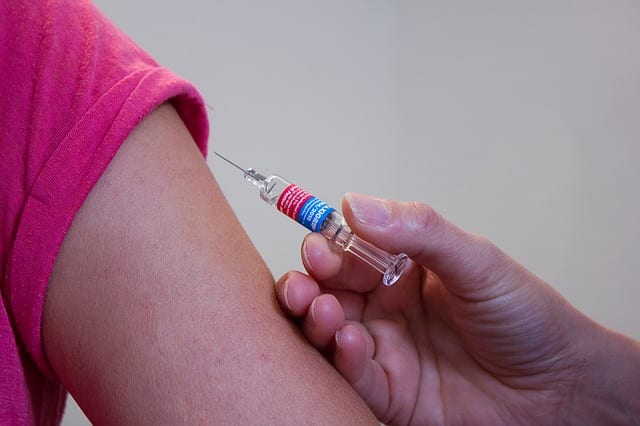
It’s estimated that 80,000 deaths occurred in the US during the 2017-2018 flu season. What’s frustrating for medical professionals is the fact that these deaths are largely preventable with the flu vaccine. Many people are reluctant to get vaccinated, though; people are concerned about getting the flu after being vaccinated, maybe, or they feel they’re young and healthy enough not to need it.

Those concerns may be unfounded, though. Here are some common questions about getting the flu shot, and their answers:

When should I get vaccinated?

The CDC recommends getting vaccinated by the end of October, but even if it’s after that, you can still benefit from the flu shot. It takes about two weeks for the vaccine to take effect, which is why people sometimes think the vaccine has given them the flu – they just weren’t vaccinated early enough and caught a virus in that intermediate 2-week period.

Isn’t this flu season supposed to be mild?

Unfortunately, by the time experts know whether a flu season will be mild or not, it’s already well underway. It’s better to be prepared for every flu season by getting the flu shot.

Photo Credit: Pixabay

Is it really effective?

To be clear, the flu shot isn’t perfect. Each year different flu strains make their way through the public, and while the flu vaccine contains multiple common strains of the flu, sometimes scientists miscalculate.

For instance, the 2017-2018 vaccine was 40 percent effective, and, though this may not sound impressive, it means that your risk of needing to seek medical care due to the flu is reduced by 40 percent. That’s a 40 percent lower chance of being hospitalized…or worse. It’s not perfect, but it’s effective.

But it’s the flu. What’s the big deal?

The flu can kill healthy adults, so it is a big deal. The elderly, children, people with underlying health conditions, and people with suppressed immune systems are even more vulnerable. Getting the flu shot protects you, as well as the people around you. For adults with young kids, that can be the most important consideration.

Where can I get the flu shot?

The flu vaccine is available at your doctor’s office as well as many pharmacies and local health departments. The CDC has also set up a handy website to help you find a location close to you. The cost for the flu vaccine is typically pretty modest ($25 or less), and it may even be free if you have insurance coverage. If you don’t have health insurance, many state health departments can connect you with free or low-cost flu shots.

So protect yourselves and your loved ones – get vaccinated today!

The post Here’s Why You Need to Get a Flu Shot This Year (And Every Other Year) appeared first on UberFacts.

Doctors Can’t Believe That More Than Half of Parents Still Think You Can Get the Flu from the Flu Shot

Flu season is already underway. That’s right, while you are enjoying the fruits (and pumpkin spice lattes) of autumn right now, the sad truth is the flu bug is out and about. For many people, that means getting themselves and their children vaccinated in order to avoid a painful (and exhausting) illness, a recent survey revealed many parents are actually avoiding the flu shot for a head-scratching reason…

They think the flu shot causes the flu.

Photo Credit: Pixabay

“I’m flabbergasted,” says Dr. William Schaffner, who studies infectious disease at Vanderbilt University’s School of Medicine. “I and many others have been saying for over 20 years that you can’t get the flu from the flu vaccine. I don’t know how to say it any louder. You cannot get the flu from the flu vaccine. That’s a myth.”

Jean Moorjani, a board-certified pediatrician at Orlando Health Arnold Palmer Hospital for Children, brings some additional facts to the debate:

The parts of the virus that are used are completely dead, so you cannot get the flu from the flu shot. After receiving the shot, it takes your body about two weeks to build up antibodies to fight the flu, so if you come in contact with the virus during that time, you may still get sick, which is why you should get your flu shot as early as possible.

Photo Credit: Pixabay

Many, many other doctors have added their enthusiastic support for the vaccine in recent days.

According to the CDC, 172 kids lost their lives to the flu in 2017 — the highest death toll in almost a decade — and over 80% of the children who perished did not have a current flu shot.

Doctors and other health professionals aren’t trying to scare parents, but they do want them to know that by not giving them the flu vaccine because of unfounded fears, you could be putting their lives in danger.

“There’s no reason to be nervous about getting your children vaccinated against the flu,” reiterates Amesh A. Adalja, a senior scholar at the Johns Hopkins Center for Health Security. “You should be nervous about not getting your children vaccinated.”

The post Doctors Can’t Believe That More Than Half of Parents Still Think You Can Get the Flu from the Flu Shot appeared first on UberFacts.

Kids Are Less Violent in Countries Where Spanking Is Outlawed, Studies Show

When it comes to raising children, the use of corporal punishment is a hot topic of debate. People on the “pro” side often argue that the way they were raised didn’t harm them, so why change? While those on the other worry about the psychological impact childhood violence could have on the next generation…even if it takes years to manifest.

Even though this isn’t the first time science is weighing in on the topic, a new study shows a clear correlation between the use of corporal punishment and incidences of violence in youth and beyond.

Photo Credit: Pixabay

In fact, youth living in countries with bans on corporal punishment were found to be 31% less violent than those living in countries that let parents make discipline decisions for themselves.

The study’s data came from 88 countries and covered over 400,000 adolescents, and the results of the “largest cross-national analysis of youth violence” were published in the journal BMJ. The results were clear, if a bit unsurprising for those against the practice of spanking.

“Societies that have these bans in place appear to be safer places for kids to grow up in,” reported lead study author Frank Elgar.

30 of the 88 covered countries had bans on spanking and other forms of corporal punishment, while 38 featured partial bans, and 20 had no bans in place whatsoever. For the purposes of the study, corporal punishment was defined as an adult’s use of physical force to “correct or control” a child’s behavior.

Globally, close to 300 million children between the ages of 2 and 4 receive some type of physical discipline from their caregivers on a regular basis, but researchers hope studies like this one can help educate parents about the future impacts of their discipline choices.

Photo Credit: Pixabay

At the end of this extensive and groundbreaking study, Elgar and his team found the following statistics to be true:

“Boys in countries with a full ban showed 69% the rate of fighting found in countries with no ban. In girls, the gap was even larger, with 42% the rate of fighting found in countries with no ban.”

The lowest rates of violence, if you’re curious, were found in Costa Rica, Portugal, Finland, Honduras, Spain, New Zealand, and Sweden, in that order.

Also of note: the wealth of a country didn’t end up factoring into the study’s results, even though researchers initially expected that it might.

“Bans and levels of youth violence had no relationship to the wealth of a country,” said Elgar. “Some very low-income countries happen to be quite peaceful, while some richer nations, such as the US, UK, and Canada, didn’t fare as well.”

There has been at least one other study to link spanking to future violence; that one looked at over 160,000 kids and published its results in the Journal of Family Psychology. It found that the more children are physically disciplined, the more likely it is they will defy their parents, experience increased anti-social behavior, aggression, and deal with mental health problems as adults.

Photo Credit: Pixabay

It’s important to remember this, if nothing else: children look to their parents for cues on what behaviors are acceptable and unacceptable. If we show them that hitting is a way to handle anger, disappointment, or a loss of control, then that’s exactly how they will behave toward others.

As anyone with kids knows, they’re always watching, and kids will mimic us at the least opportune moment imaginable. Every. Single. Time.

The post Kids Are Less Violent in Countries Where Spanking Is Outlawed, Studies Show appeared first on UberFacts.

This Chart Shows How Your Lifestyle Can Affect Your Cancer Risk

We all know that the healthier our lifestyle, the more our likelihood of getting cancer goes down. But there is so much news about so many different cancer risk factors that it’s hard to block out the noise and get the facts.

How do cell phones, different foods, coffee, exercise, etc. affect our likelihood of getting cancer? The World Cancer Research Fund gathered all the latest research data and has provided all of us with an interactive chart that allows you to see how different lifestyle choices affect cancer. You can play around with the full version by clicking HERE.

Take some time to play around with the interactive chart and maybe you’ll be inspired to change some of the habits you have that could lead to a healthier lifestyle.

The post This Chart Shows How Your Lifestyle Can Affect Your Cancer Risk appeared first on UberFacts.

20 Before and After Photos That Show Stunning Transformations

Weight loss is hard, and those who can shed major pounds deserve a lot of credit and recognition.

These 20 folks were kind enough to share their before and after photos, and they look great.

And remember, if they can do it, you can do it!

1.

Photo Credit: Bored Panda

2.

Photo Credit: Bored Panda

3.

Photo Credit: Bored Panda

4.

Photo Credit: Bored Panda

5.

Photo Credit: Bored Panda

6.

Photo Credit: Bored Panda

7.

Photo Credit: Bored Panda

8.

Photo Credit: Bored Panda

9.

Photo Credit: Bored Panda

10.

Photo Credit: Bored Panda

11.

Photo Credit: Bored Panda

12.

Photo Credit: Bored Panda

13.

Photo Credit: Bored Panda

14.

Photo Credit: Bored Panda

15.

Photo Credit: Bored Panda

16.

Photo Credit: Bored Panda

17.

Photo Credit: Bored Panda

18.

Photo Credit: Bored Panda

19.

Photo Credit: Bored Panda

20.

Photo Credit: Bored Panda

h/t: Bored Panda

The post 20 Before and After Photos That Show Stunning Transformations appeared first on UberFacts.

This Infographic Shows Where in the U.S. People Aren’t Getting Enough Exercise

Yes, the United States is a notoriously sedentary country, but it shouldn’t come as a surprise that some places are lazier than others. There’s plenty of evidence out there to support the idea that Americans spend too much time in their cars and in front of screens, but according to the CDC, physical activity rates can vary significantly from state to state.

The CDC recommends that adults take part in 150 minutes of moderate physical activity a week, or 75 minutes of vigorous activity, plus 2 days a week of weight lifting or calisthenics. Countrywide, only about 23% of people between the ages of 18-64 meet these recommendations.

The infographic below draws on data from 2010-2015 National Health Interview Surveys.

There are a few things to consider, like the fact that broad recommendations don’t take into consideration people who are injured, ill, or disabled. In addition, the survey only asks about leisure time used to exercise, which doesn’t account for people who might meet the requirements with physically demanding jobs or who bike or walk to work on a daily basis.

Still. I think I’m going to go for a walk.

The post This Infographic Shows Where in the U.S. People Aren’t Getting Enough Exercise appeared first on UberFacts.

10 Facts You Might Not Know About Migraines

There’s not much worse than having a terrible headache – except, perhaps, having a terrible headache that won’t go away. It’s not just a headache, either. Migraines are often associated with nausea, dizziness, fatigue, sensitivity to light and sound, and sometimes temporary blindness.

Sounds pretty awful, right?

If this is news to you, here are 10 more facts you might not have known, either.

#10. They may be hereditary.

Photo Credit: Pixabay

Most people find that their migraines run in the family – between 80%-90% of sufferers say that at least one family member also has them. If one parent has migraine headaches, children have a 50% chance of dealing with them, too.

#9. They’re the 3rd most common disease in the world.

Photo Credit: Pixabay

One good reason to learn about migraines is that chances are good that someone in your life suffers – they affect 14.7% of the population, or 1 in every 7 people. That’s 39 million people, just in the US.

#8. Veterans are more likely to suffer.

Photo Credit: Pixabay

After a 12-month deployment in Iraq, one study found that 36% of returning veterans exhibited symptoms. The cause stems often from head or neck trauma sustained during service, and most go away within a few months.

#7.  Women are also more likely to suffer.

Photo Credit: Pixabay

Even though women make up 50% of the population, they make up 75% of migraine sufferers worldwide. Due to laboratory research, most medical experts attribute this to the cyclical nature of female hormones.

#6. Research is underfunded.

Photo Credit: Pixabay

Last year, the National Institutes of Health invested just $22 million in migraine research – while asthma, breast cancer, and diabetes receive between $286 million and $1.1 billion.

#5. Some people experience “auras” as warning signs.

Photo Credit: Pixabay

Even more than nausea, dizziness, and headache arrive, some people (around 25%) experience numbness or tingling in the hands or face, or blotches of light or darkness disrupting their vision. These typically occur anywhere from 10-30 minutes before a migraine develops.

#4. It costs a lot of money annually.

Photo Credit: Pixabay

Because migraines are so widespread, they do havea widespread negative societal impact. Workers take time off from jobs – some estimates say up to 113 millionwork days are missed annually, which can add up to $13 billion in costs.

#3. One rare symptom is the loss of limb function.

Photo Credit: Pixabay

It’s called hemiplegic migraine and people who experience it can have weakness, numbness, tingling, or loss or motor function in part or even half of their body. The sensations typically dissipate within 24 hours.

#2. Migraines are linked to depression.

Photo Credit: Pixabay

In the US, up to 40% of migraine sufferers also deal with depression. The risks of anxiety, bipolar disorder, and panic disorder are also elevated for people who get migraines. Researchers are still working out why the link exists, but they suspect the brain chemical serotonin, which is involved in both mental illness and migraines, may play a role.

#1. Kids can get them, too.

Photo Credit: Pixabay

10% of school-aged kids will report migraines and are reported as the third most common reason for children’s emergency room visits. They have similar symptoms, though nausea and stomach pain can often be more pronounced. The good news is that, according to one study, 23% of children will report “outgrowing” their migraines by age 25.

The post 10 Facts You Might Not Know About Migraines appeared first on UberFacts.