The Deadly Incident at Lake Nyos Is One of History’s Most Bizarre Unknown Natural Disasters

Have you ever heard of this story before?

Lake Nyos in Cameroon is a crater lake – the water there poured in after an incredibly explosive volcanic eruption forged the large divot. It appears innocuous and silent, and even though the view is spectacular, the lake could be easily overlooked.

If you know its eerie history, though, you’ll definitely spend some time contemplating its calm surface.

On August 21, 1986, thousands of cattle and 1746 people living near the lake died within moments of each other.

View this post on Instagram

On August 21, 1986, a rare natural disaster occurred in the West African country of Cameroon. A large cloud of carbon dioxide gas spewed from Lake Nyos and blanketed nearby villages, killing 1,746 people and 3,500 livestock while they slept. .. News of the tragedy took a few days to reach international newspapers, with the first reports appearing in North American papers around the 24th. (Independent Record, 08.25.1986). . . . . . @independentrecord #cameroon #lakenyos #historybuff #historylover #historygeek #historynerd #historylesson #oldnewspaper #newspaper #newspapers #newspaperclipping #newspaperarticle #historicalnewspapers #doyouremember #otd #onthisday #thisdayinhistory #todayinhistory

A post shared by Newspapers.com (@newspaperscom) on

When the bodies were discovered, authorities discovered no signs of physical damage or distress.

Though the locals were ready to blame vengeful spirits or the government testing chemicals, geologists quickly uncovered the real killer: carbon dioxide.

When water from the lake was captured in vials, it popped the lids off the sample jars. It was packed with the colorless, odorless gas, and scientists concluded in their official report that the lake had released a sudden and large amount of the gas. Denser than air, it rolled over fields and down slopes toward the local villages, smothering everything breathing in its path.

The lake sits above a system of still-active volcanos, and since carbon dioxide is a common feature of magmatic systems, the fact that it bubbled up into the water isn’t a surprise. Typically, though, the gas simply leaks out of the water slowly and harms no one – people wouldn’t even be aware of it.

At Lake Nyos, though, the huge amount of very still water ensured that pressure remained high enough to keep the gas dissolved in the water. It hosted a defined layer of CO2 that accumulated for several centuries, undisturbed by any kind of current or waves, until each gallon of water had collected an astonishing 5 gallons of carbon dioxide dissolved inside it.

Obviously, that is unsustainable.

There’s some debate as to what triggered the massive release of the gas. It may have been a landslide that fell into the CO2 layer, or a sudden release of fresh CO2 into the water, but, either way, it was like breaking the seal on an over-carbonated bottle of soda.

Water would have shot up and out in a geyser hundreds of meters tall, expelling 1.2 cubic kilometers of CO2 in a mist that blanketed villages as far as 15.5 miles away. The lake turned from blue to red, a result of the iron at the bottom floating toward the top after the massive disruption.

Entire villages perished – there were only 800 survivors in the area, most of whom suffered symptoms of CO2 poisoning.

Authorities installed a degassing system in the lake, as well as a solar-powered warning system, in the hopes that there will never be another mass asphyxiation event like this in the future.

Lake Kivu, straddling the border between Congo and Rwanda, is 2000x bigger than Lake Nyos, and is full of Co2 as well as methane. With 2 million people living within killing range of either gas, scientists have pointed out that similar precautions should be taken there, as well.

Efforts to extract the methane to be used as an energy source, or to explore it for potential oil deposits, have been met with words of caution from scientists.

Here’s hoping the governments listen, or another silent, mass annihilation could be on the horizon.

The post The Deadly Incident at Lake Nyos Is One of History’s Most Bizarre Unknown Natural Disasters appeared first on UberFacts.

This Is Why Some People Can Function Well on Less Sleep Than Others

Which category do you fall into?

Some people need a full eight hours of sleep to function no matter what, while others seem to be able to go go go with less than six hours of solid sack time. The latter like to brag about their ability as if it’s something they’ve trained for, or a reason to think themselves a superior human, but what is it about their makeup, really, that leaves them able to function with so few zzz’s?

Cause it’s just unfair.

Well, science has the answer, so hold on.

Neurologists from the University of California San Francisco think they’ve isolated a gene that could directly impact how much a person has to sleep to feel good.

The findings, published in Neuron, show that people with a single-letter gene mutation seem to be able to function well on six hours of sleep or less without suffering any of the adverse heath effects associated with too little time under the covers.

Whereas people without the mutation wake up moody, tired, and subject to the other nasty side effects of sleeping less than six hours a night.

Study author Louis Ptacek explained more in a statement:

“It’s remarkable that we know so little about sleep, given that the average person spends a third of their lives doing it. This research is an exciting new frontier that allows us to dissect the complexity of circuits in the brain and the different types of neurons that contribute to sleep and wakefulness.”

Interestingly, this isn’t the only gene that’s been linked to requiring less sleep – one called DEC2 also typically means a person averages 6.25 hours of sleep per night, as opposed to the 8.06 hours averaged by the people who do not posses the mutation.

This new gene exists in people without the previously known mutation, and it appears to affect neurons and their level of activity in the brain region that controls stages of sleep.

When the mutated gene was engineered into mice, the ones with the new gene mutation not only slept less, but were more active both when they were awake, and when they were in REM sleep. So it seems the mutation affected their circadian rhythms, says Ptacek.

“Sleep is complicated. We don’t think there’s one gene or one region of the brain that’s telling our bodies to sleep or wake. This is only one of many parts.”

One of many parts that I clearly don’t have. Le sigh…

I’m gonna go take a nap.

The post This Is Why Some People Can Function Well on Less Sleep Than Others appeared first on UberFacts.

A Study Found That Drinking Red Wine Can Contribute to a Healthy Gut

Studies come and go extolling the benefits of having a glass of red wine (aside from stress relief) now and then (and now), so add this one to the mix. It claims that red wine has the potential to improve your gut health.

The study of almost 3,000 drinkers in the U.S., the U.K., and the Netherlands revealed that red wine drinkers have a higher diversity of gut microbiota than those who prefer beer, cider, or white wines, even when controlling for age, weight, diet, and socioeconomic status.

Having a healthy gut microbiome has been linked to physical and mental health, including curbing food cravings and the efficacy of certain medicines.

The King’s College research was led by Caroline Le Roy, who issued a statement about their findings.

“While we have long known of the unexplained benefits of red wine on heart health, this study shows that moderate red wine consumption is associated with greater diversity and healthier gut microbiota that partly explain its long-debated beneficial effects on health.”

They’re still looking into why this might be the case, though they posit it has to do with active compounds called polyphenols that are found in the beverage. The chemicals are found in the grape skins, and have anti-inflammatory and antioxidant properties that may help fuel the microbes living in our guts.

The same chemicals are found in chocolate and coffee, so maybe take a look at those, too.

“Although we observed an association between red wine consumption and the gut microbiota diversity, drinking red wine rarely, such as once every two weeks, seems to be enough to observe an effect. If you must choose one alcoholic drink today, red wine is the one to pick as it seems to potentially exert a beneficial effect on you and your gut microbes, which in turn may also help weight and risk of heart disease. However, it is still advised to consume alcohol with moderation.”

Moderation is key with alcohol consumption, of course, and the authors point out that people often underreport their consumption, for obvious reasons – and also that there was no way for them to determine the causal relationship between drinking red wine and health.

View this post on Instagram

It's all about the art of the pour. #PerUs

A post shared by PerUs Wine (@peruswine) on

The scientific community has spent a fair amount of time trying to decide whether the benefits of drinking wine outweigh the potential downsides, so for now, as ever, consume with caution.

But if you’re going to pick up an alcoholic beverage, red wine seems like the best possible choice.

The post A Study Found That Drinking Red Wine Can Contribute to a Healthy Gut appeared first on UberFacts.

Willem Kolff created…

Willem Kolff created the first dialysis machine in the Netherlands during WWII. Lacking materials, he used sausage casings, tin cans, a washing machine, and salt water. He also saved more than 800 people from the Nazis by hiding them in his hospital. And he later invented the artificial heart.

Here’s How Intermittent Fasting May Enhance Your Immune System

For years, it’s been argued whether intermittent fasting is good for us. Is it worth the hunger? Are there any actual health benefits from doing it?

Over the years, some people have claimed that this method has helped with rheumatoid arthritis and other ailments. Studies have also shown that intermittent fasting has improved multiple sclerosis in mice.

Well, there is more evidence that fasting may be beneficial to our health.

Photo Credit: Needpix

Three new studies explore how fasting might temporarily offer certain health benefits to humans. All three studies saw researchers give mice less food or go on a water-only diet for about a day. Each study researched a different type of immune cell and discovered that each type of cell had a unique response to the fasting.

Two of the three studies looked at the T and B cells. These cells help create immunity against past infections and identify and destroy pathogens. When the mice fasted, the T and B cells disappeared from the bloodstream and the organ tissues. The immune cells took shelter in the bone marrow to protect themselves. In other words, the cells migrated to the bone marrow, which is food rich, to survive during fasting.

Photo Credit: Wikimedia Commons

The studies further showed that when the T cells did retreat to the bone marrow, they became supercharged. T cells produce molecules to kill pathogens and cancers, so this is potentially a very important find. When mice were injected with a pathogen they’d had in their bodies before, the fasting mice fought it off in only two days, as opposed to the week it took the regularly-fed mice.

Study author Dr. Yasmine Belkaid said, “It’s a striking enhancement. The goal is to [eventually] understand this magic soup in the bone marrow and extract what’s making that response. If we can train our cells to do these things, we can have an extraordinary impact on human health.”

The third study revolved around the white blood cells that attack pathogens. These are called monocytes. When you’re sick, this type of cell induces inflammation. This study showed that monocytes went down in the bloodstreams of both mice and humans when they fasted; the mice’s bone marrow was still producing monocytes, just not as many were being released into the bloodstream.

Photo Credit: Pixabay

Fasting somehow creates a “roadblock” between bone marrow and blood for the monocyte cells. If fewer monocytes are moving throughout the body, overall inflammation goes down.

These studies suggest that intermittent fasting can be a good thing, and we can manipulate our immune systems based on changing how much we eat.

Something to think about…that’s for sure.

The post Here’s How Intermittent Fasting May Enhance Your Immune System appeared first on UberFacts.

A Man Landed in the Hospital After Sniffing His Own Dirty Socks

If you’ve ever done the laundry of a teenaged boy, then you’re probably aware that the smell can get pretty rank, but hospitalization via stinky socks?

Read on, my friends.

A 37-year-old man from southeast China went to the hospital experiencing chest pains. There, he was admitted and given X-rays to determine the cause of his pain, as well as a cough he couldn’t seem to shake.

The diagnosis? A fungal infection deep in his lungs.

It took doctors some time to deduce the cause, and they were only able to do so after the man admitted to a habit (addiction?) of sniffing his dirty socks after they’d just come off his feet.

Feet that, it turns out, were harboring a fungus. Which they then transferred to his socks. Which he then sniffed.

A fungal infection he’d developed on his feet was transferred to his lungs when he smelled his socks, taking in some of the fungal spores (microscopic particles that allow fungi to reproduce and disperse) as he did so.

The questionable habit, combined with a weakened immune system due to life and parenting, contributed to the seriousness of the incident, according to doctors.

The patient had to spend some time in the hospital, but is expected to make a full recovery – as long as he can find a new hobby.

Like, literally anything else.

Parents of teens, be warned – maybe don’t breathe in at all while dumping that laundry in the machine. You never know what’s in there.

The post A Man Landed in the Hospital After Sniffing His Own Dirty Socks appeared first on UberFacts.

According to the EPA, handling…

According to the EPA, handling most receipt paper (aka thermal paper) is likely dangerous to your health, due to the high levels of BPA, and using hand sanitizer before handling a receipt exponentially increases the amount of the chemical you absorb into your body.

Lego Launches a Feature to Help Make Their Products Accessible to Blind Children

Unless you know someone who is blind, you probably don’t give a whole lot of thought to how blindness affects people – how difficult certain chores and tasks might be. And that includes hobbies and fun as well, especially for kids.

A young blind man named Matthew Shifrin remembers how difficult it was to just be able to play with LEGOs when he was growing up. Because the instructions for LEGOs are represented with images, a family friend of Shifrin’s had to spend hours writing out the instructions and then Shifrin had to upload them into a program that converted the instructions into braille.

A pretty complicated process for a kid who just wants to build things with LEGOs.

Get some #inspiration. Matthew Shifrin has been working tirelessly for several years to spread audio and Braille Lego building instructions to children around the world. https://buff.ly/2PApHdv

Posted by Mike Parsons on Tuesday, September 3, 2019

That’s why Matthew Shifrin teamed up with LEGO to create braille and audio instructions for the company’s toy sets.

LEGO is intent on making its products more accessible to people with disabilities, and earlier this year, the company launched its Braille Bricks that teach people the braille writing system.

Lego launches new feature to make building sets accessible to blind childrenRead more Technology News Here –>…

Posted by Technology News on Wednesday, August 28, 2019

The new sets that come with braille and audio instructions will be sold until December 31, and they include sets of buildings, vehicles, and a spaceship from The LEGO Movie 2. The sets are available for sale and then people can access free instructions on this website. Users can also share feedback on the site, which LEGO will use to make improvements to their instructions. The company also plans to add more sets with braille and audio instructions next year.

Matthew Shifrin says of the partnership with LEGO, “I just want to foster as many blind Lego addicts as I can and help them get into the hobby because it’s helped me so much … I really want to give back to these kids.”

Here’s a video of Shifrin giving a Ted Talk.

Great work!

The post Lego Launches a Feature to Help Make Their Products Accessible to Blind Children appeared first on UberFacts.

You Can Make Money by Selling These 5 Body Parts

There are a whole bunch of body parts you can sell to make some cash. We’re not talking about an arm and a leg here, but instead, things that you can sell and still get on with your day (and your life).

Take a look at this list; you might be surprised.

And you might want to make a little extra money!

1. Hair

Photo Credit: Wikimedia Commons

That’s right, you can sell your hair. In case you haven’t noticed, the industry surrounding baldness is HUGE, and people are always buying wigs that are made of real human hair.

Long hair that has not been altered by various salon processes is the most sought-after and will get you the most money.

2. Plasma

Photo Credit: US Air Force

The part of blood that carries blood cells to different parts of the body can be sold for about $30 to $40 per visit. Not the most righteous bucks in the world, but not bad if you’re in a pinch. The process of donating plasma is quite different from giving blood, so read up on it before you go if you decide to do it.

3. Sperm

Photo Credit: Pixabay

If you want to donate sperm, be prepared to go once a week for up to a year if you get approved by a sperm bank. That could mean up to $1,500 extra per month, fellas.

4. Eggs

Photo Credit: Pixnio

If a woman is willing to sell her eggs, she can make some real cash. The process is lengthy and intrusive, but depending on how you feel about injections and invasive exams, the payout could be worth it. An egg retrieval cycle can take up to 3-4 weeks and women can earn over $10,000.

5. Skin

Photo Credit: Pixabay

This is an unusual one because obviously we don’t literally mean you can remove section of your skin and sell them.

Marketing types out there are going so far as to use people’s bodies to advertise products using henna tattoos. Some athletes are being paid up to $100,000 to allow companies to advertise on their skin. Of course, henna doesn’t last forever, but there are some companies that will pay people to get their logo permanently tattooed on their body. That seems a little crazy to me…

People can also make money by selling bone marrow and breast milk as well.

The post You Can Make Money by Selling These 5 Body Parts appeared first on UberFacts.

A Teen Went Blind After Eating a Diet of French Fries and White Bread for Years

No one really warns you that eating only crappy food could cost you one of your five precious senses.

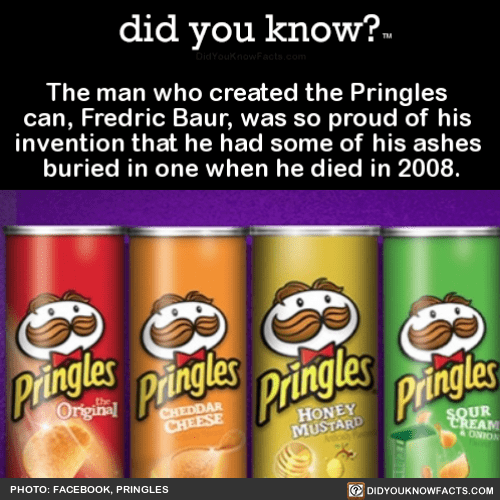
The teen – who, sadly, was living with parents and not on the street – had subsisted on fries, Pringles, white bread, and the occasional slice of processed ham for years. Not surprisingly, he started experiencing medical issues at the age of 14.

His parents brought him to the doctor, who found that his hearing problems were due to poor vitamin intake.

“His diet was essentially a portion of chips from the local fish and chip shop every day. He also used to snack on crisps – Pringles – and sometimes slices of white bread and occasional slices of ham, and not really any fruit and vegetables.”

He was diagnosed with a vitamin B12 deficiency. B12 is found in fish, meat, dairy, and eggs, and it is essential for proper brain function, forming red blood cells and new DNA, proteins, hormones, and fat. Doctors provided him with supplements, but recommended a diet change.

Eventually, they conceded that he was more than just a “fussy eater” and diagnosed an eating disorder called Arfid – avoidant restrictive food intake disorder. The disorder causes people to limit their food based on appearance, texture, presentation, taste, or past negative experience. People who suffer from Arfid often also have anxiety and will limit their food to the point that it affects their health, without intervention.

At 17, he returned to the doctor complaining of vision loss, and admitted he had quit taking his supplements. His original doctor said, “He had blind spots right in the middle of his vision. That means he can’t drive and would find it really difficult to read, watch TV, or discern faces.”

His eyesight had deteriorated quickly and was past the point of recovering through treatment. According to his mother, he showed no other obvious signs of poor health along the way. “He has always been skinny so we had no weight concerns. You hear about junk food and obesity all the time – but he was as thin as a rake.”

The boy was severely malnourished, suffering a catastrophic loss of minerals from his bones and has been referred to mental health services to treat his eating disorder.

For her part, his mother blames the doctors.

“They said it was all in his head. By the time they realised what was wrong it was too late to save his sight. The whole ordeal has been very traumatic. I want to scream about what we have gone through.”

I mean, now I want to scream about parents who don’t realize that diet could cause problems for a child in their care, so I guess we’re all traumatized here.

I guess I can still see, at least.

The post A Teen Went Blind After Eating a Diet of French Fries and White Bread for Years appeared first on UberFacts.