Have you ever wondered about this?
Ed Schoenfeld, the owner-operator of RedFarm, an Asian-fusion dim sum restaurant with two NYC locations, and Decoy, a West Village shrine to traditional Peking duck, compares his Christmas Day-business to a holiday miracle:
“I think on that day we do more business than many restaurants do in three months. We serve all day long, we stay open all day long.”
You might think that Jews opt for Chinese food while their Christian counterparts feast on turkey or ham because those restaurants are almost always open on Christmas Eve and Christmas Day, but culinary experts and food historians promise there’s more to it.
Many Jewish people developed a taste for Chinese fare as they left Europe for America between the mid-1800s and the 1930s. They settled into Manhattan’s Lower East Side, a cheap neighborhood that teemed with tenements, docks, and factories, but that also played host to synagogues and kosher butcher shops.
The neighborhood was next door to Chinatown, where many Chinese immigrants settled after completing work on the Transcontinental Railroad. As they sought out new business opportunities, many went on to open restaurants.
The Jews found community on the Lower East Side, but they also discriminated against by many outside their faith, says Sarah Lohman, author of Eight Flavors: The Untold Story of American Cuisine.
“There was a lot of discrimination against Jews at the turn of the century. They were often criticized not only for not dressing like Americans and not speaking the language, but also for not converting to an ‘American’ religion.”
That often wasn’t the case at the neighboring Chinese restaurants, though, as the owners and operators made little or no distinction between Christian New Yorkers and Jewish immigrants. Not only that, but the restaurants were nearby, they were inexpensive, and they gave Jews access to the American custom of dining out.
Yong Chen, a history professor and author, explains the concept in his book:
“Diners were attracted to Chinese food because, in their mind, it represented American cosmopolitanism and middle class status.”
In the process, many developed a taste and love for the food – and purposefully didn’t ask what was in it, so they could continue to pretend it was kosher.
Not only did they not have to worry about mixing meat and milk, but non-permissible meats, like pork, were often so finely chopped it could easily go unnoticed, Lohman says.
“You could kind of willfully ignore that there might be pork in there. It’s like a vegetarian eating a soup that has chicken stock. If you’re a little flexible about your Judaism, you would just ‘not notice’ the pork in your fried rice.”
Also, even though the food was exotic and new, many of the dishes and flavor combinations, like basing dishes around eggs or combining sweet and sour flavors, were familiar.
As Joan Nathan, author of King Soloman’s Table: A Culinary Exploration of Jewish Cooking from Around the World, recalls, “Chinese restaurants had these pancakes, which were like blintzes,” and also that the wontons resembled kreplach.
All of this, combined with the fact that the Chinese and Jews were both large immigrant populations and that Chinese restaurants were open on Christian holidays, bonded the two groups.
During the early 20th century, the number of Chinese restaurants grew quickly, with Jewish people accounting for 60% of the white clientele in NYC and Philadelphia’s establishments. By the mid-20th century, Chinese restaurants were basically the social clubs of Jewish communities – everyone left with their bellies full of food and their ears full of gossip, and nowadays, the hankering for Chinese food on Sundays (and holidays) has stuck around for many. As Ed Schoenfeld says,
“Jewish guests want to go out and eat Chinese food on Christmas. It’s become a tradition, and it’s extraordinary how it’s really grown.”
If you ask me, any day is a good day to eat Chinese – Christmas and Easter included.
The post This Is the Traditional Reason Many Jewish Families Eat Chinese Food on Christmas appeared first on UberFacts.



 Just Linda


 (Not available till next year ) #apple #cosmiccrisp #cosmiccrispapple #produce #fruit #exporterworldwide #exporter


 – 30 days without shampoo – 1 year without deodorant – 21 days of only fruit juice – 30 days without social media – 3 YEARS of not shaving my armpits, not wearing makeup, not using heat on my hair.. Etc. etc. you get da point
  Yehhh — some may call me crazy..
  But I’m a firm believer in experiencing things first hand + getting a real feel for what something is all about before I form a personal opinion on it.
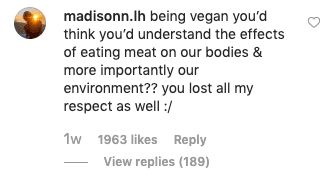
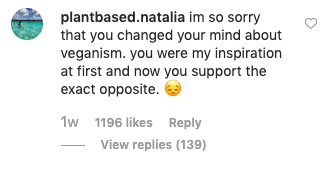
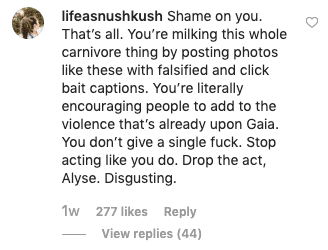
 The Carnivore Diet first came into my awareness when a close friend shared with me all of the benefits that he was experiencing by eating this way. Coming from being vegan 4.5 years, I was hellla resistant to the concept of eating ONLY animal foods (aka only meat, seafood, + eggs) I didn’t make ANY sense to me. It actually sounded pretty f*cking ridiculous.
 But I had my own fair share of health struggles and eventually reached a breaking point where I was willing to try anything to function properly again. With an online community of 800,000 people ~ many of which were primarily showing up for my vegan related content… I was a bit conflicted to say the least. But I knew I needed to make decisions based on what was in the best interest for my health. I swallowed my pride + decided I’d give it a shot. Full onnn carnivore. I woke up the next morning feeling more mentally clear, focused, wholesome, and healthy than I had felt in years. God bless. But also, WTF? My vegan identity crumbled immediately. This past year of my life has been a journey of remembering who I am separate from what I eat.
  In hopes of challenging others to step out of their current perspective ~ I documented my newest challenge of eating only meat for 30 days. Video launches next week. Who’s ready? Comment
  below!