
Selfies distort the face and can make the nose appear 30% larger than the rest of the face, and is linked to a rise in patients seeking nose jobs because they say their noses looked too big in their selfies.
According to Texas Bankruptcy…
According to Texas Bankruptcy laws, you can keep 1 house, 1 car, 1k use limit in bank account, a bible or other religious text, and 2 guns.
Ten Tons of Trash Have Been Brought down from the Slopes of Mount Everest
The “highest dumpster in the world” recently had a big clean out.
More good news: the trash is getting upcycled into goods for homes and hotels all over Kathmandu.
Everest had a serious trash problem – thousands of climbers were bringing stuff up that they weren’t taking down with them. Nepal recently forbid single-use plastic in the area to try and prevent the issue from recurring.
Nepal is banning single-use plastic on and around Mount Everest in a bid to cut down on the region's trash problem. https://t.co/0iRv8E0P1D
— CNN (@CNN) August 22, 2019
Now, empty cans, bottles, canisters and abandoned camping materials are finding new life as drinking glasses, pots, lamps and other housewares. This approach represents the latest innovation in dealing with the environmental damage caused by the climbing industry.
Nabin Bikash Maharjan of local recycling organization Blue Waste to Value (BW2V) told AFP, “We received a mix of materials from Everest — aluminium, glass, plastic, iron — much of which could be recycled. We need to up-cycle and add value to them.”

Photo Credit: Wikimedia

The government of Nepal and some of the mountaineering outfits coordinated on a massive, six-week long clean-up after getting hit with heavy criticism about the conditions of the magnificent mountain.
A team of 14 scaled over 26,000 feet – from base to the camp closest to the summit – to remove ten tons of garbage. That’s the trash that ended up in recycling centers in Kathmandu.
Workers sorted through the pile by hand. Iron was transferred to rod manufacturers, aluminum cans went to utensil manufacturers, and bottles were turned into products for homes, hotels and restaurants. There is even global consumer interest in buying upcycled goods made from Everest waste.

Photo Credit: Pixabay
There is also some bad news, though: the trash collected is only a fraction of what’s on the mountain. The slopes are littered with decades of garbage and abandoned campsites that still need removal.
Agencies involved in cleaning Mount Everest are imposing rubbish deposits and requiring climbers to carry a kilometer (2.2 pounds) of trash with them on their descent. The challenge here is that when climbers are paying tens of thousands of dollars to ascend, another few thousand as a deposit isn’t a guaranteed motivator to bring their trash down.
Perhaps the only real long-term solution to Mount Everest’s garbage problem is to reduce the amount the climbing polluters take up with them.
Or reduce the number of climbers altogether.
The post Ten Tons of Trash Have Been Brought down from the Slopes of Mount Everest appeared first on UberFacts.
10 Random Facts About All Sorts of Stuff for You to Ponder
We’re serving up some good facts for you here today!
So sit back, relax, and let’s learn about a bunch of different subjects together.
Start now!
1. Do you know anyone who might need this?

Photo Credit: did you know?
2. That makes sense…

Photo Credit: did you know?
3. Placebo sleep.

Photo Credit: did you know?
4. I’ve always wondered about that…

Photo Credit: did you know?
5. This can’t be real!

Photo Credit: did you know?
6. You’re not alone, fruit flies…

Photo Credit: did you know?
7. Two kinds of nostalgia.

Photo Credit: did you know?
8. I love this!

Photo Credit: did you know?
9. I did not know that!

Photo Credit: did you know?
10. Please don’t tell me this.

Photo Credit: did you know?
Nothing like a good fact set. NOTHING.
Please feel free to share with your family and friends…it might do them some good.
The post 10 Random Facts About All Sorts of Stuff for You to Ponder appeared first on UberFacts.
The Roaming Charges on Eagles’ GPS Trackers Bankrupt Russian Researcher Team
Now, this is certainly interesting.
Some steppe eagles got into trouble with their researchers for sending text messages that resulted in huge cell phone bills.
Bad, bad birds!
Researchers at the Russian Raptors Research and Conservation Network were studying the steppe eagles to learn more about their summer migratory patterns. To track the eagles, researchers tagged the birds with GPS monitors that would send their locations via text.

Photo Credit: Needpix
The idea was that the eagles would fly around all summer in a virtually cell tower-less region of Kazakhstan, banking up texts of their GPS coordinates that would eventually get sent when they returned to cell service.
So, yes, the plan worked…almost.
The birds spent the majority of their time in the area researchers assumed they would. And the researchers received texts whenever the eagles hit a network in other parts of Kazakhstan and Russia.
What the researchers didn’t anticipate were the odd trips into Iran, where there is oodles of cell phone coverage. Unfortunately, the researchers’ cell phone plan didn’t cover that service.
The eagles weren’t only soaring, they were roaming.

Photo Credit: Wikimedia

Everyone knows– except steppe eagles, evidently – that sending text messages without an international calling plan is like throwing money out the window.
What do birds think? That money grows on trees?
The researchers were charged about $0.77 per text, at four per bird per day.
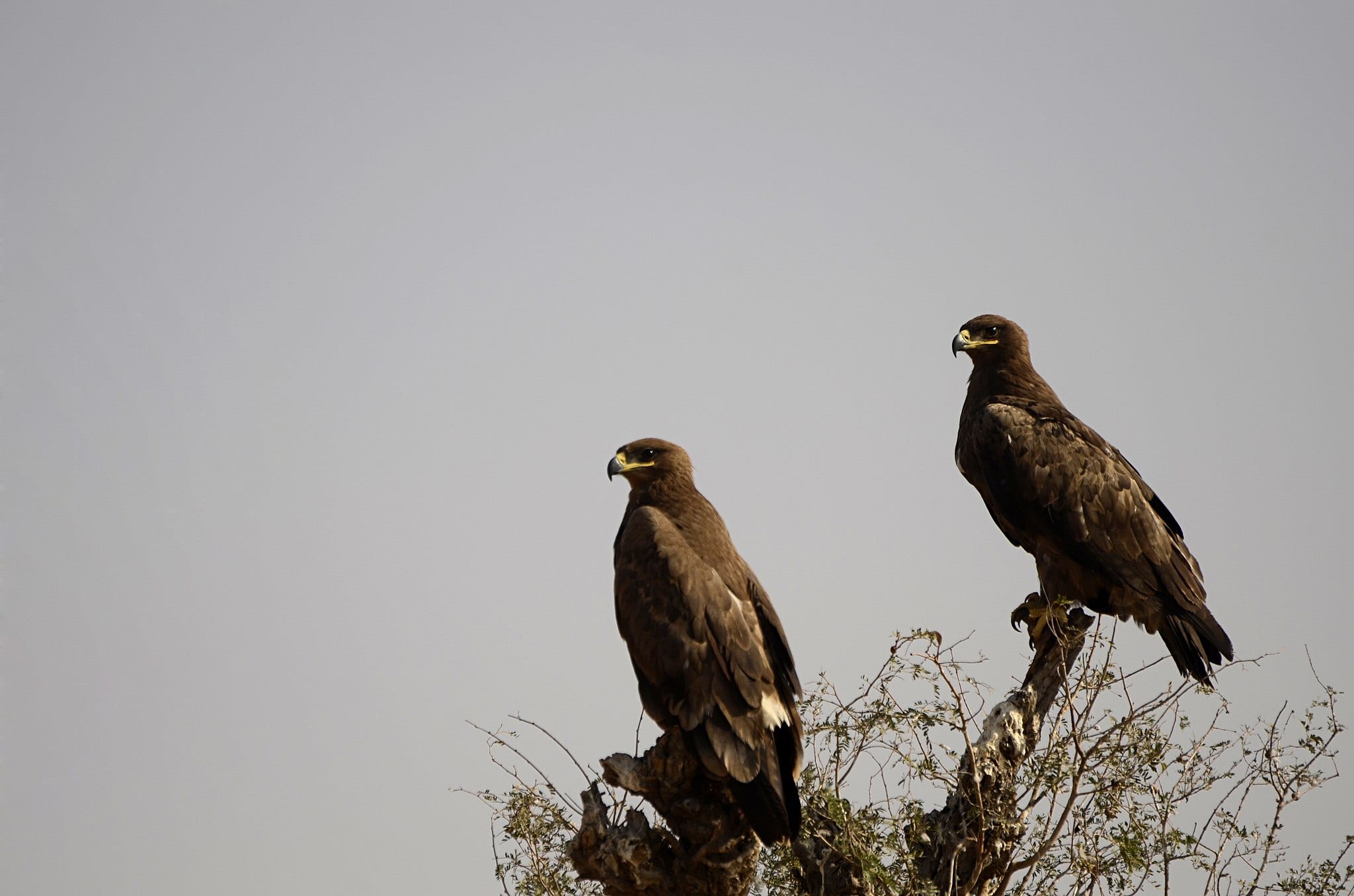
Photo Credit: Wikimedia

In the eagles’ defense, they may have decided to vacay in Iran due to the loss of some of their traditional Kazakh breeding grounds to farmland. At any rate, they literally bankrupted the scientists, who had to turn to social media for fundraising.
Friends and fans of steppe eagles stepped up and covered the birds’ bills (and more) so the research could continue.
Cell phone roaming charges are…for the birds.
The post The Roaming Charges on Eagles’ GPS Trackers Bankrupt Russian Researcher Team appeared first on UberFacts.
NASA Wants to Send a Probe to Venus’ Infernal Surface
Even though we’ve had our eyes on the Mars prize for some time, a different team of researchers is actually working on getting to Venus.
Venus gets closer to Earth in its orbit than any other planet, yet we have precious little information about the surface – except that it’s close to a living hell.
In 1966, a Soviet space probe crash-landed on the surface, where it lasted a few hours before being destroyed. Now NASA’s Long-Lived In-situ Solar System Explorer, or LLISSE, is looking to last a full 60 days in the reactive atmosphere, crushing pressure and blasting heat found on Venus’ surface. In fact, each probe has to be specially designed to withstand the high temperatures and pressure.

Photo Credit: Wikipedia

Called Earth’s evil twin, Venus is roughly the same size and mass of our home planet. Scientists say it was once water-rich, potentially with the elements necessary for life. But it has since turned into a hell planet with scorching, lead-melting temperatures, pressure comparable to what’s found at the bottom of our deepest oceans and winds whipping like tornados. During the day, sulphuric acid blocks the sun’s rays. The nights each last one hundred Earth-days.
One theory about what happened to make Venus so inhospitable is that, over time, the once huge, shallow ocean evaporated, releasing the super-light hydrogen atoms into space. As hydrogen disappeared, all the carbon-dioxide left in the atmosphere created an out-of-control greenhouse effect. Basically, turbo-charged climate change run utterly amok.
But we really don’t know.
And we can’t know, until we put some equipment on the surface.
Small as a ten-inch cube, LLISSE will piggyback on other space-going craft and then get dropped onto Venus. The unit is made of super hard silicon carbide – also used in sandpaper and lab-made diamonds – to protect it against sulphuric crystals. Like a missile, it will be powered by a heat-activated thermal battery for its 60-day life.

Photo Credit: NASA

NASA engineers need the unit powered for that long to see the change from day to night on Venus. Each Venus day lasts almost four Earth-months. If the unit can get placed late in the day, and if it can stay powered long enough, we’ll be get critical data on the transition for the first time.
Eventually, LLISSE will be used as part of a joint Venus project with the Russian space agency, but, as of right now, it looks as if nothing is getting to the next planet over before 2026. Frankly, it’s not even sure if LLISSE will ever get a trip into space at that point.
But the technology is already here, and Venus isn’t going anywhere.
A visit next door is just a matter of a few more Venus days.
The post NASA Wants to Send a Probe to Venus’ Infernal Surface appeared first on UberFacts.
Ketchup started as a Chinese…
Ketchup started as a Chinese fish-based sauce, then it was picked up by the British and made into a mushroom-based sauce, and finally picked up by the Americans and made into a tomato-based sauce.
The word Boycott is named…
The word Boycott is named after an Irish landlord named Charles Boycott. After Boycott attempted to evict 11 tenants, the local community decided to shun him. Workers would not work for him, traders would not trade with him, and the postman would not deliver the post.
A city in Virginia passed…
A city in Virginia passed an ordinance earlier this year barring people older than 14 from trick-or-treating. If the law is enforced, anyone older could be guilty of a misdemeanor and fined $250.
There is a garden in Alnwick Park…
There is a garden in Alnwick Park, Northumberland which contains over 100 different types of poisonous plants, which visitors are prohibited from touching or smelling. Despite this, seven people fainted in 2014 from inhaling the toxic fumes.