
In 1929, W. Forssmann performed the first human heart cath on himself. He tricked the OR nurse, put himself under local anesthesia, inserted a catheter into his arm, then walked to the X-ray room to see if it reached his heart. He was fired from the hospital, but awarded the Nobel Prize in 1956.
Lydia Litvyak was the Jewish…
Lydia Litvyak was the Jewish Soviet fighter ace. During WWII she claimed 14 kills, trained 45 pilots, and shot down an ace who wouldn’t believe a woman beat him until she described the fight. She went missing on a flight Just before she was to receive the award “Hero of the Soviet Union”.
About half of Thailand’s 349,000…
About half of Thailand’s 349,000 monks are either overweight or obese. They rely solely on alms from the faithful and must consume what they are offered before noon each day. After midday, to keep their energy up, many rely on highly sweetened beverages, including energy drinks.
Alex, the parrot
Alex was a grey parrot with a vocabulary of over 100 words, the ability to identify over 50 different objects, and the ability to count quantities up to 6. Before he died in 2007, his last words were “You be good, see you tomorrow. I love you.”
This “Revolutionary” New Air Filtering Device Might Be a Big Deal in the Fight Against Climate Change
Are you listening? Good.
A carbon dioxide filtering device that can capture carbon dioxide from the air at just 400 parts per million has been hailed as a “revolutionary” instrument for tackling our climate crisis.
Sahag Voskian and T. Alan Hatton, chemical engineers at MIT, developed the method, which captures CO2 by passing air through special charged plates.
Carbon dioxide from the gas intake reacts with the electrodes in the device. Each electrode is coated with a carbon nanotubes and a polyanthraquinone compound. The device acts sort of like a battery, and as it charges, it absorbs carbon dioxide passing over the electrodes. As it discharges, it releases the greenhouse gas it has collected.
The carbon dioxide it releases during the discharge can be recycled to feed greenhouse plants, or even used in carbonated beverages.
Dr. Voskian said, “All of this is at ambient conditions — there’s no need for thermal, pressure, or chemical input. It’s just these very thin sheets, with both surfaces active, that can be stacked in a box and connected to a source of electricity.”
The biggest advantage to this way of filtering is the low energy cost: one gigajoule of energy for every ton of carbon dioxide captured. Compare that to the 1-10 gigajoules (depending on the concentration of CO2 taken in) used by alternative methods. Plus, if to expand the systems capacity, they only need to add more electrodes!
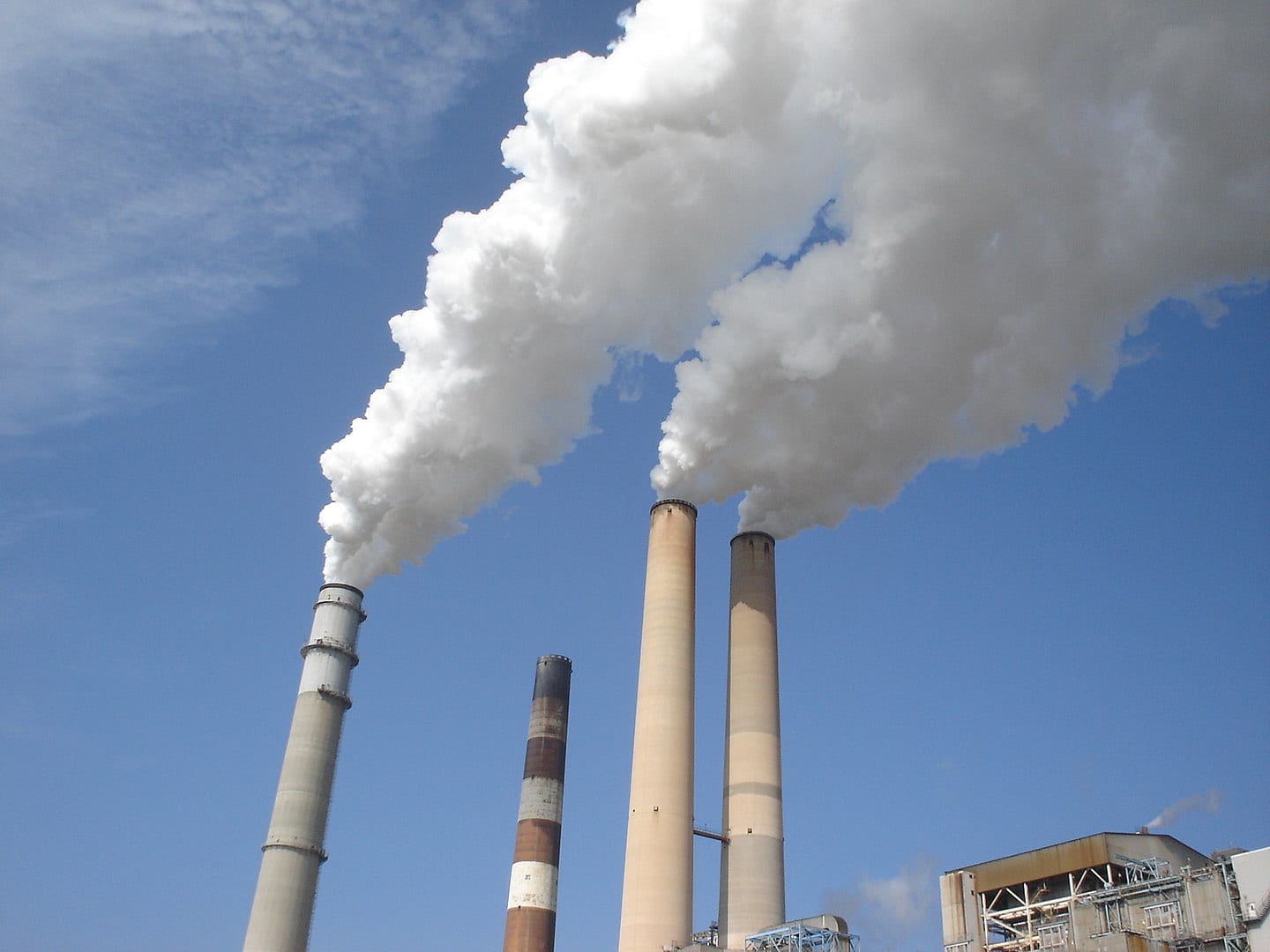
Photo Credit: Wikipedia
The study describing the new system was published in the journal Energy and Environmental Science.
The scientists have even created a company called Verdox that plans to build a plant to scale the process up for commercial use.
Cleaner air with lower energy. There’s a real future for that.
The post This “Revolutionary” New Air Filtering Device Might Be a Big Deal in the Fight Against Climate Change appeared first on UberFacts.
Why Is the Sun Hot If Space Is so Cold?
The solar system is pretty extreme as far as temperatures go. At its core, our sun registers at around 27-million degrees Fahrenheit, but its surface is no slouch temperature-wise either: it’s clocks in at about 10,000 degrees.
So is it kind of weird that in outer space, away from the sun and the mild atmosphere of Earth, the temperature measures -455 degrees?
What’s really going on out there?
Let’s go over some basic physics. Heat is actually energy, radiating as an infrared wave (like light, but below the spectrum of what’s visible to human eyes) that moves from its source (ie, the sun) to…everything else. As infrared radiation comes into contact with molecules, it imparts some of its energy, causing them to become excited and heat up. But only the matter in the path of the radiation will heat up –any matter outside of the path will remain cold. Any void the energy travels through will also remain cold because there’s nothing in it to get warmer.
Consider the planet Mercury. As the planet turns and night falls, the newly dark surface plunges in temperature to 1000 degrees colder than the radiation-exposed day side.

Photo Credit: NASA
Earth, in contrast, feels warm even if you’re standing in the shade. Summer nights stay warm too. Even night during the wintertime in Canada is warmer than most other places in our solar system at night (withe some exceptions, notably Venus). This is due to the sun’s radiation causing convection and conduction.
When radiation hits molecules, the molecules pass that energy to others next to them, which then pass their extra energy on to their neighbors. This chain reaction is conduction. Areas outside of the path of radiation are warmed this way – so night stays warm (relatively speaking).
But in empty space there are fewer molecules that are too far apart to transfer energy if they are heated. Conduction, under these circumstances, can’t happen. This is the void issue we touched on earlier.
Convection, the process by which heat moves via a fluid (ie air or water), also can’t happen in low-gravity, molecule-scarce space.
Engineers at NASA takes all this in consideration when they are designing spacecraft for exploration. Out in space, probes and other equipment are exposed to temperatures either boiling hot or icy cold, depending on where they’re traveling in relation to the path of the sun’s radiation.
The closest any spacecraft has gotten to the sun was the Parker Solar Probe, which came within 15 million miles. This was only possible because of the specially designed heat shield that kept the rest of the probe cool.
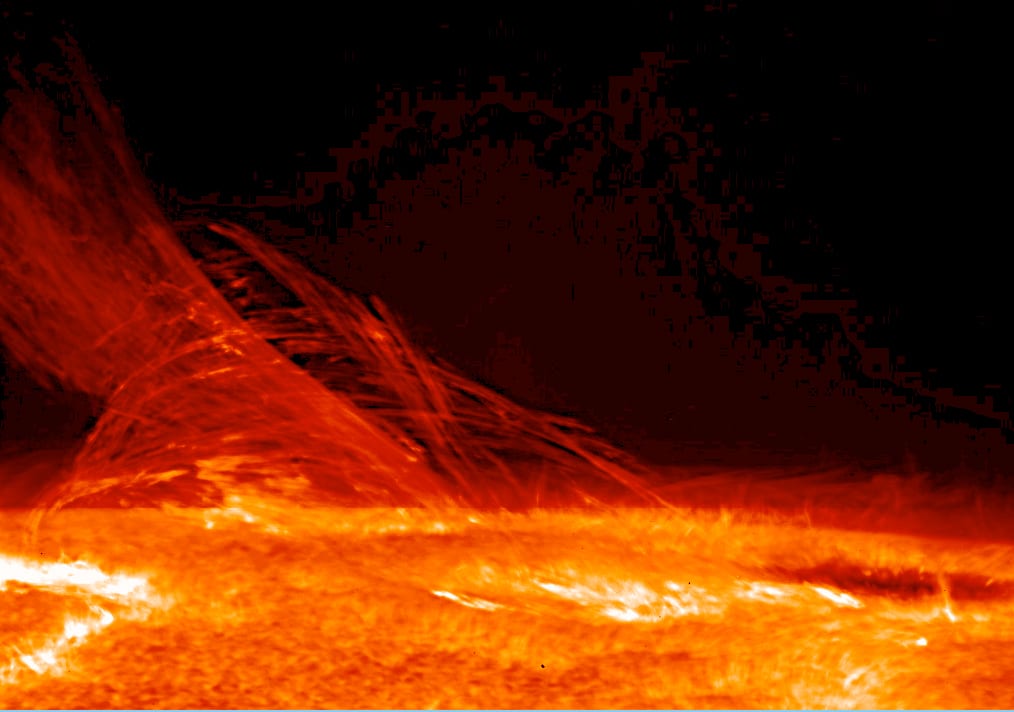
Photo Credit: NASA

The ability to adjust to the rising and dropping in temperatures to the tune of hundreds of degrees Fahrenheit is a necessity for surviving the extremes of space.
Luckily, our balmy little home planet manages it for us surprisingly well.
The post Why Is the Sun Hot If Space Is so Cold? appeared first on UberFacts.
A dark patch was left intentionally…
A dark patch was left intentionally on the ceiling of Grand Central Station’s main concourse to show how dirty it was before and after it’s first cleaning. The patch was swabbed and tested revealing the dirty ceiling was about 100 years of built up nicotine from cigarette smoke.
Mobile phone giant Gionee went bankrupt…
Mobile phone giant Gionee went bankrupt in 2018 when it’s chairman lost $144 million gambling at a casino forcing the liquidation of the company.
In 1949 Farmers blew up 1000 Acres…
In 1949 farmers blew up 1000 Acres of Wetlands in an attempt to kill 1000s of crows. The crows moved their Roost Prior to detonation, killing none.
19th-century inventor Charles…
19th-century inventor Charles Cros petitioned the French government to build a giant set of mirrors that could be used to communicate with aliens by scorching messages onto the surfaces of Venus and Mars. His request was declined.