
The Sony PlayStation was never meant to be a product. It was intended to be a new console that would play exclusively Nintendo games on CDs. Instead Nintendo backed out of the deal at the last minute. Sony went ahead and launched what would become the most successful console of all time.
The State of Washington once forced…
The State of Washington once forced Comcast to refund nearly 50,000 customers for charging them a $5/month “service protection plan” that actually did nothing.
While the Royal Mail employed cats…
While the Royal Mail employed cats from 1868, the cats only had one pay rise in the first 84 years. When questioned about these labour practices in the House of Commons, the Assistant Postmaster-General reported “there have been no complaints”.
Hitler was so paranoid that the British…
Hitler was so paranoid that the British would poison him so he had 15 girls taste the food before he ate it himself. “The food was delicious, only the best vegetables, asparagus, bell peppers, everything you can imagine”, food taster Margot Woelk recalled.
Forcing left-handed children to write…
Forcing left-handed children to write with their right hands is not in any way innocuous or helpful- it is actually harmful to their developing brains and can result in dyslexia, stuttering and other learning or speech disorders.
Bill Withers, the singer song…
Bill Withers, the singer song writer of “Aint no Sunshine” was a factory worker making airplane toilets when he wrote the hit song at age 31. After the song hit gold, the record company presented him with a gold toilet marking the start of his new career.
A man from New Zealand memorized…
A man from New Zealand memorized every french word in the french scrabble dictionary and won the French Scrabble Championship. He still doesn’t speak any french.
Hitler privately expressed great…
Hitler privately expressed great admiration for Mussolini; however, Mussolini had little regard for Hitler. Mussolini said that the Germans were the descendants of those who were illiterate when Rome had Caesar, Virgil, and Augustus.
This Fun Illustrated Periodic Table Shows How We Interact with the Elements
Most of us had to memorize the periodic table in school (or at least I did). But did our ability to recite the elements really help us understand how each functions in our day-to-day lives?
No, not really. I mean, who knows what boron is used for?
Well, now there’s a chart for that.

Photo Credit: Keith Enevoldsen, CC BY-SA 4.0
This very cool and colorful graphic gives you a picture reference for each element that demonstrates how you might see it in your day-to-day surroundings. The atomic numbers of the elements and their material states are also noted.
Boeing software engineer Keith Enevoldsen is the genius behind The Periodic Table of Elements, in Pictures and Words. It’s meant to help students visualize the elements, which can assist with the tedious task of memorizing the chart.
But adults are sure to find this information fascinating too.

Photo Credit: Keith Enevoldsen, CC BY-SA 4.0
So boron is in sports equipment. Who knew?
Imagine being able to tell people at the bar that they’re being exposed to tantalum as they are checking their Snapchats on their cell phones. Most of us know what arsenic is, represented by a jar of poison. But what about finding gallium in LEDs? Or, krypton in flashlights?
Who knows that besides science people?
If you like it, the chart is available to buy as a poster, so you can grab one for yourself. And if you know a student or have an element-loving person in your life, a poster or the corresponding flashcards would make a great gift.
Or, at least a helpful gift.
The post This Fun Illustrated Periodic Table Shows How We Interact with the Elements appeared first on UberFacts.
Ancient Watermelons Tasted Awful. So How Did We Get to the Delicious Summer Treat?
Refreshing slices of watermelon on hot, summer days are one of the best treats of the season. But it wasn’t always like that.
In ancient times, no one wanted to eat a fruit that tasted as bad as those old, pale melons.

Photo Credit: Flickr
So, how did we get from a fruit that was so unappealing and bitter, to the flavorful, ruby-colored delight watermelon is today?
Archaeologists have found wild watermelon seeds and other evidence of their presence in ancient tombs (including King Tut’s) across the continent of Africa, dating back to as long as 5,000 years ago.
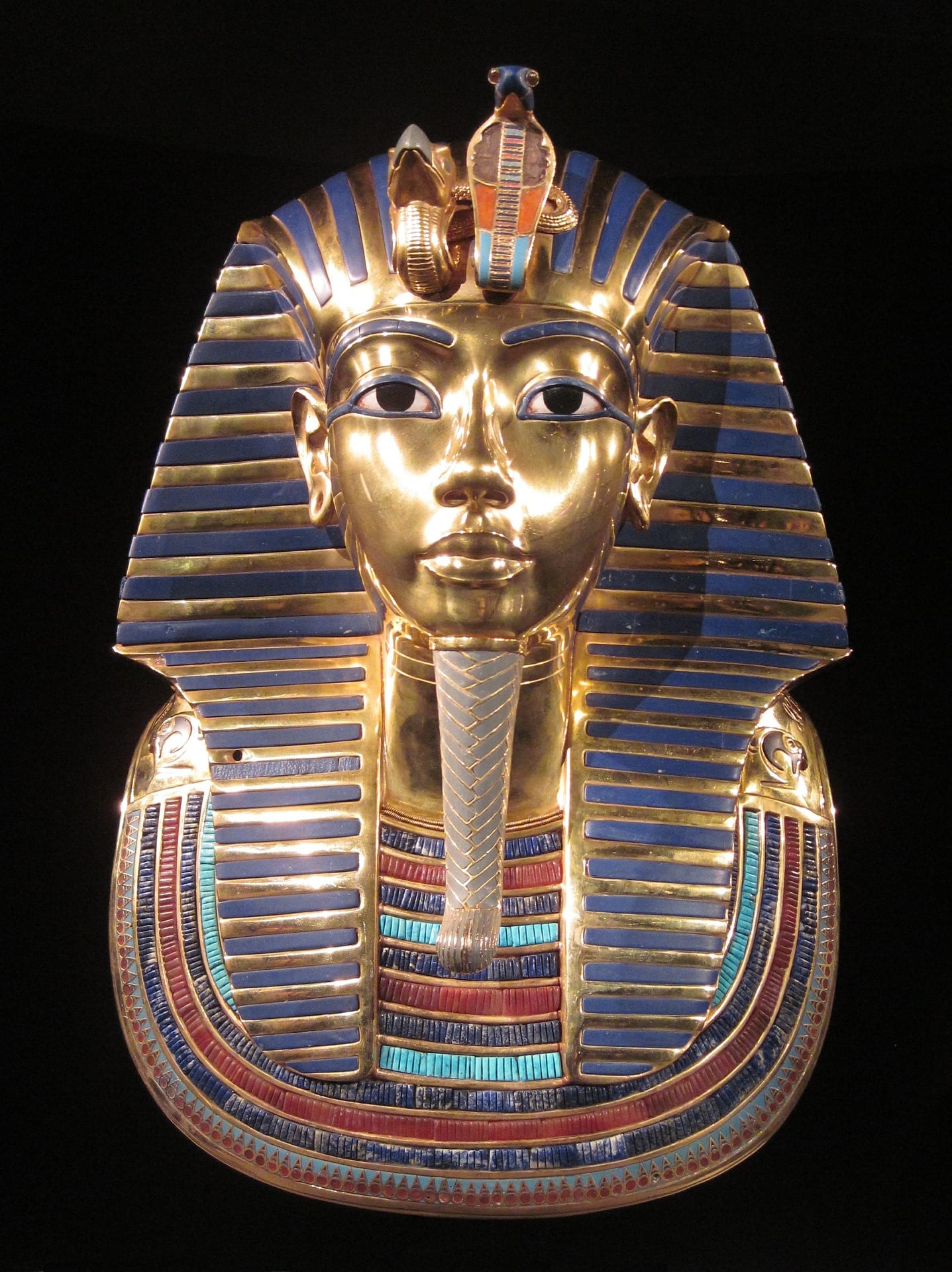
Photo Credit: Pixabay
But why? The fruits they grew were nasty.
According to Harry S. Paris, a horticulturalist at the Agricultural Research Organization in Israel, the reason for growing the unpalatable melons and putting them in tombs with pharaohs is because of their water content. Egyptians liked to give them to livestock to keep them hydrated in arid conditions.
For the same reason, the melons were included in tombs: to keep pharaohs quenched in the afterlife.
As those still in the land of the living also needed water, it’s likely that travelers would take some watermelons to use as water bottles—a predecessor to the modern day Hydroflask, if you will. As travelers moved across the continent, dropped watermelon seeds spread the fruit.
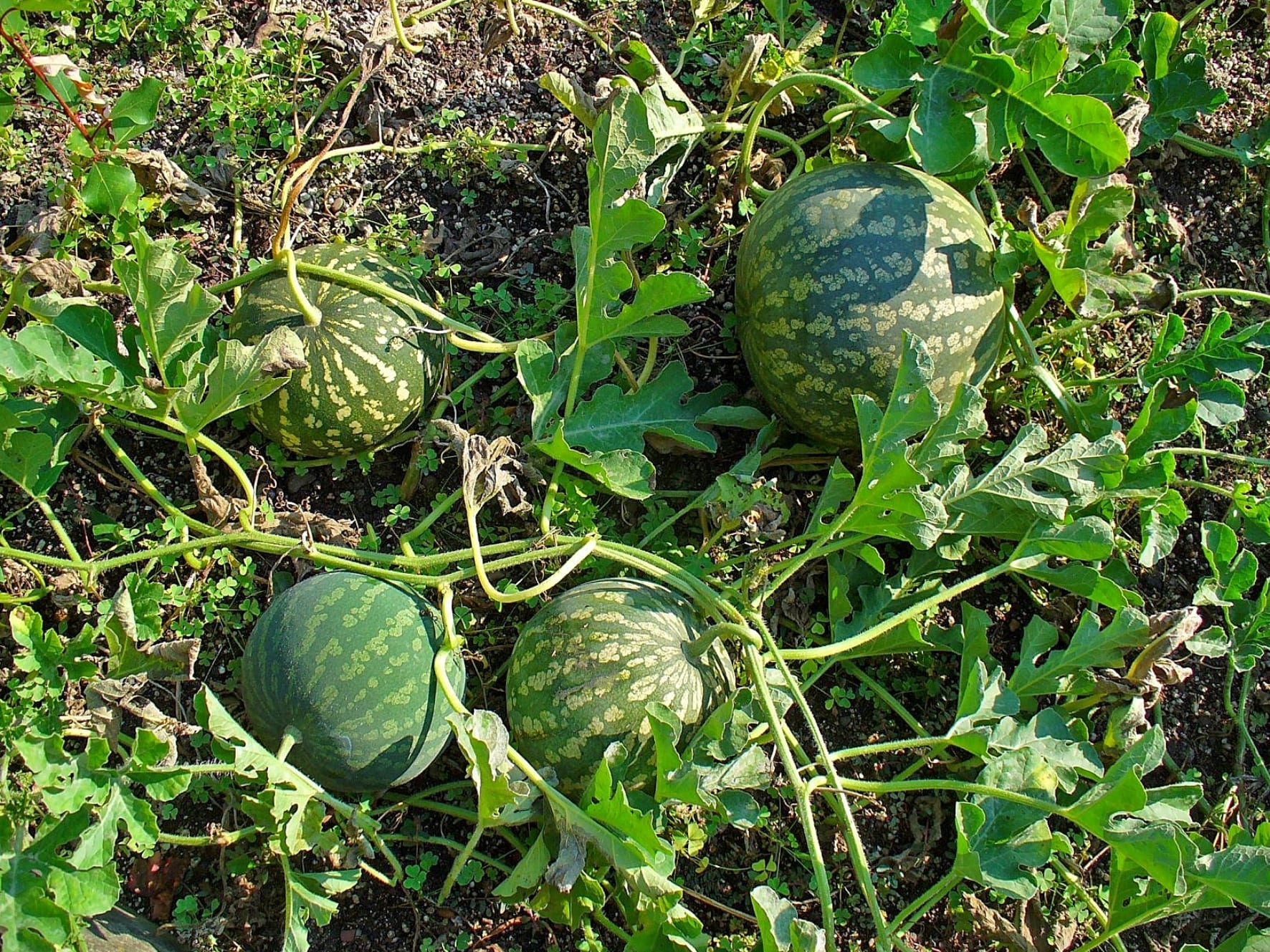
Photo Credit: Wikimedia

Eventually, the Greeks got a hold of the fruit. They would cook and eat it, but they also used it as medicine. Pliny the Elder thought it made an excellent laxative.
One can only imagine.
Greek physicians also like to place rinds on the head to ward off heat stroke, which I can see working to some extent.
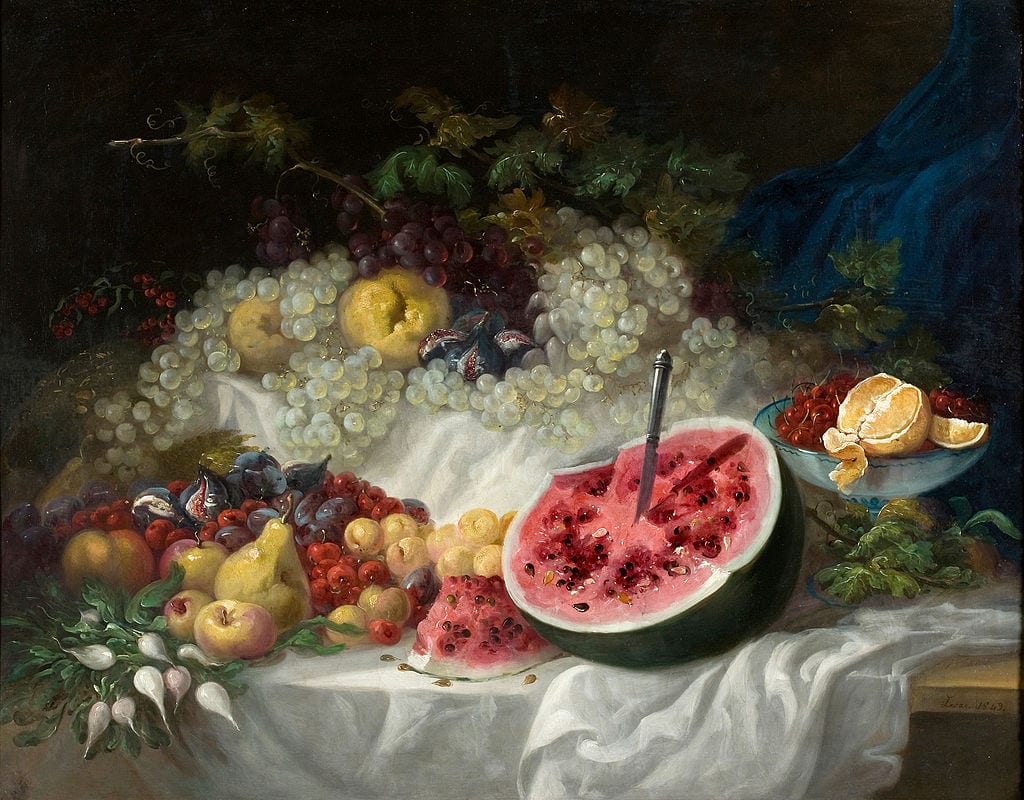
Photo Credit: Wikimedia

As they were selectively bred over the next few centuries, watermelons got sweeter and pinker. Paintings of feasts throughout the ages began to show dark pink slices of watermelon staged along with figs and pomegranates. And voila! We arrive at today.
Super glad we didn’t just give up on them. Summer wouldn’t be as sweet without watermelons.
The post Ancient Watermelons Tasted Awful. So How Did We Get to the Delicious Summer Treat? appeared first on UberFacts.