People Break Out Their Most Obscure Animal Facts

Everybody loves a good fun fact.

They’re worth their weight in gold when you find yourself at an intimidating team-builder or other ice breaker situation.

On top of that, if you can master the art of injecting them into conversation without sounding like a middle school science teacher, you can rely on them to turn a boring chat around at a party.

And of all the fun facts, the animal ones seem to pique our interest more than most others.

Those creatures all around continue to fascinate us with their mysterious behaviors—often genius—behaviors.

Apparently Redditor KnightsWhoSayKni was fresh out of those facts, so they asked a simple, yet compelling question:

“What’s your #1 obscure animal fact?”

People came locked and loaded with all sorts of weird truths.

One common area of intrigue was, of course, anatomy.

“The American bison is the only animal in which both lungs share a common cavity. In every other animal the lungs are separated. What this meant is that when shot by an arrow, both lungs would collapse and the buffalo would suffocate quickly.”

“(For other animals, being shot in the chest would only collapse one lung, and they would at least have a chance) That’s why such a large animal could be taken down with relatively small weapons.” — angmarsilar

“Sloth hands work opposite to ours. They have to exert energy to open their ‘fist’ and relax to close it. This is how they can hang from trees while they’re sleeping and not fall off.” — liripipe

“Ancient penguins could have been up to 7 feet tall.” — StarsandstampS

“Some squid have toroid shaped (donut) brains, and their esophagus (throat) passing through it. If they eat something too big they can get brain damage.” — horch13

“Bird poop is white because they don’t secrete ammonia in urea like we do when we pee so it comes out in one movement and as nearly pure ammonia. Why that stuff eats your car paint!” — dave-pumpkins

Plenty of people were fascinated by the mental tendencies of certain animals. 

“Fish have been seen using tools – deliberately hitting a clam with a rock to get it to open so they can eat it.”

“Some fish (eels and groupers) form hunting partnerships where they communicate across the species barrier with specific signals to put their individual strengths to work (the eels chase prey out of crevices to where the groupers are waiting in open water).”

“They also get fooled by illusions in the same way we do, meaning that their brains are processing and interpreting their environment in a similar way to us.”

“That’s technically three facts but I like fish.” — BoldlyGone1

“There’s an insect called the scorpiofly that impresses mates by bringing them prey to eat. The bigger the meal, the better.”

“Only, some scorpionflies aren’t that great at catching food. So some of these males will imitate females, and wait for other males to bring them their gifts. Then they take the gift, fly away, and give it to an actual female.” — smiffypiffy

“On ostrich farms, some farmers have a hard time with breeding because the ostrich is more attracted to humans than other ostriches.”

“That’s right, somewhere out there an ostrich wants to fu** you.” — cleancutPunk

“Dogs may make social judgements about people based on how those people treat their owners. A study out of Japan had dog owners asking two people for help opening a container. There were three possible outcomes.”

A person reacting negatively by refusing and turning away, a person remaining neutral and a person helping. The dogs were then offered food from the people the owner had approached for help.”

“Dogs were much much less likely to accept food from the people who had refused to help their owners, and much more likely to accept food from those who had been neutral or who had helped.” — LogicalMess

Then came mention of those out-there behaviors. 

“Snapping/pistol shrimps and their colonies are so loud that they can interfere with sonar used by other animals and submarines.”

They also create tiny but incredibly powerful explosions implosions through the sheer force of their pincers closing ludicrously fast, which is cool.” — SolipsistAngel

“A green sea turtle can swim faster than Usain bolt can sprint. An animal out there with a house for a body can swim at speeds we don’t allow in playground zones 35MPH.” — rkhbusa

“Avocados were evolved to be eaten by the giant ground sloth. Imagine a sloth, but so massive it could only live on the ground. The flesh attracted the sloth and the very large seed was ‘designed’ to travel through their intestinal tract for re-seeding or whatever plants do.”

“Humans killed the sloth but loved the avo. We domesticated the avo to increase the yummy flesh. The pit has gotten smaller but is still very large. Whenever you eat an avo, think of the long extinct giant sloth.” — quokkafarts

“I’ve said this in my own thread but I’ll say it again.”

“Porcupines climb trees and come down backwards and use their tail to feel for the ground. Sometimes their tail will hit a branch and they will think it is the ground and so they will jump off and impale themselves.”

“Over time they evolved to have antibiotics in their quills so when they fall out of trees they don’t die.” — otterdragon

“Squirrels are responsible for thousands of new trees every year. They collect and bury their nuts all over the place so they’ll have food to last thru winter, but they forget about most of them.” — southwycke75344

And a few talked about what was myth and what was real. 

“Scientists thought the platypus was a joke until they send a dead one back to be studied.” — [deleted]

“People thought the okapi was a hoax until it was photographed. In parts of Sumatra it is believed that the orangutan can speak and refuses to do so because they don’t want to work.” — Victoresball

So there you have it.

Plenty of bizarre, fascinating, grotesque tidbits to keep you stocked for any lull in conversation.

People Divulge The Coolest Facts About The Human Body They Know

It’s easy to dismiss everything going on inside of us as unimportant and anyone who didn’t pay attention in high school biology class might agree with that statement, but the human body is a wonder of science and nature.


By all accounts, we all appear mundane on the outside.

We are all of us just a walking, talking bag of bones, electrical impulses and chemical reactions in a meat suit with an appetite for excellent television and an addiction to overpowered, miniature super computers we carry with us everywhere.

But there’s more to us than that.

For example, did you know your liver is capable of regenerating itself like Wolverine or that you can produce enough spit in a lifetime to fill up two entire swimming pools?

WARNING: some of it is kind of gross to those with weak stomachs.

Just when we think we know everything about the human body, the internet goes and surprises us with a bit of blood and gore.

Redditor Actionkat63 asked:

“What’s a strange, but true fact about the human body?”

We’re All Queens

“The acid in your stomach could burn your skin! I always thought that was pretty interesting, and reminds me of the scene in Alien, where the alien blood burns everything.” ~ RebaRocket

Get Your Running Shoes On

“Humans can outrun almost every animal on long distance.” ~ WantedJOCZ

“Long distances only. Humans have been known to jog for days at a time without sleeping, and we seem to have evolved as endurance predators (ie, jog after an animal until it’s literally too tired to fight back).”

“In cold weather the only animal that beats us is huskies, and in hot weather we can be outdistanced by camels and IIRC kangaroos, but otherwise we tend to win in the end.” ~ Pseudonymico

They Can’t Wiggle Out Of This

“Your intestines are in near constant motion, wiggling like a worm.” ~ EasilyForgotten1

But Are We Still Allowed To Lick Things?

“We know what everything would feel like on our tongues without even licking it.” ~ meh2557

“I’ve read this before and it blew my mind looking around at everything and realizing how weirdly, fascinatingly true it is. I’m assuming it’s a combination of you know textures from your fingers and that stage of infancy when babies put everything in their mouths.” ~ ablondedude

Care Package: Incoming!

“When pregnant, if a mother suffers a heart attack or other large physiological issue, the fetus will release a swarm of stem cells that move to the affected area, greatly helping in survival and healing.” ~ SugaBear9001

Flip The Switch

“that the brain operates on the same amount of power as a 10-watt lightbulb” ~ boringg-moon

Shut It All Down!

“Our immune system is so strong it can kill our own bodies’ cells: so techinically we do have a self destruct sequence” ~ SheepSh-t2525

“Our cells have a self destruct sequence also. If things start getting weird, your mitochondria send a signal to the brain which sends a signal to the cells lysosomes which then burst open and destroy the cell.”

“It’s called apoptosis or programmed cell death.” ~ callisstaa

Every Adults’ Kneecaps Feel This One

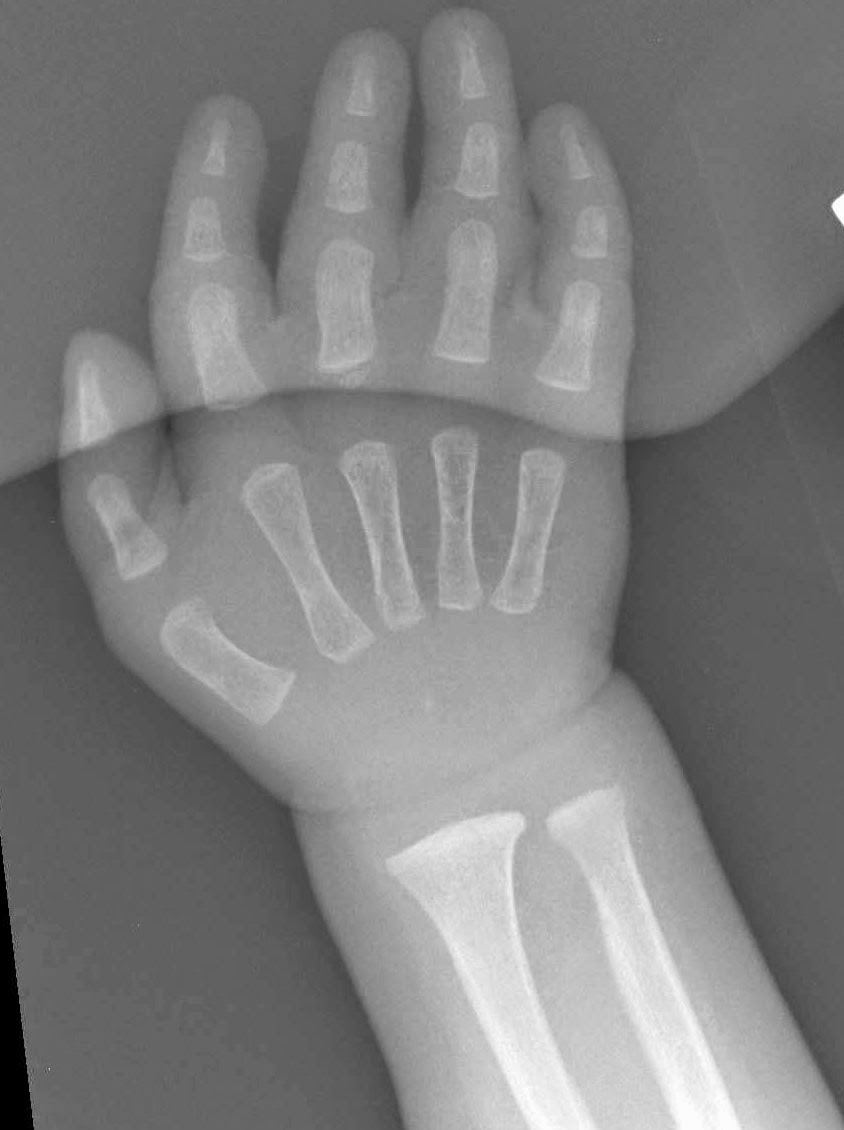
“Until the age of like 2 ish babies don’t have real kneecaps, they are made of a squishy cartilage type thing” ~ Bunchnivski

Lots of their bones are squishy cartilage stuff, and only grow into bone as they age. Compare this baby hand with this adult hand x-ray.”

“We can actually use this development of cartilage into bone in the wrist to figure out roughly how old somebody is.” ~ elcarath

We Just Need To Keep Believing And Soon We Can Also See Over Tall Walls

“We have the same number of bones in our neck as a giraffe.” ~ Team_Captain_America

“Giraffes’ neck vertibrae are just really big.” ~ KaityKat117

It Truly Is Liquid Gold

“Human breast milk adapts it’s nutritious content to fit the need of the offspring. Baby lacks iron?”

“Next dose of milk will contain more iron. It’s amazing.” ~ Grimms_tale

“how does that work?”

“like.. how does the body of the mother know what the baby needs?”

“or is it more a ‘the ingredients of milk change over time, as the baby goes through different stages of grow’?” ~ Chepi_ChepChep

“Breastmilk is SO cool!! There’s a reason why it’s called liquid gold!”

“More fun facts:”

“1- breastmilk can be dripped into babies eye/ear/nose to treat infections (as mentioned by someone below, it works best as an anti-inflammatory, which can help! Also, it’s more of a preventative than a cure.)”

“2- breastmilk does change depending on babies needs and as they grow”

“3- breastmilk contents differ depending on babies gender”

“4- breastmilk can help with cradle cap”

“5- it works on mild eczema!”

“6- the components of breastmilk could lead to treatment for cancers! possibilities still under trial”

“7- it’s “made” out of the mother’s blood”.

“Milk is made inside glands from the blood stream. Breast milk is NOT made from the mother’s stomach contents”

“The foods mom eats are broken down in the digestive system. Blood reaches the milk glands where it delivers carbohydrates, nutrients, white blood cells, enzymes, pro- and pre-biotics water, fat, and proteins into the gland. link!”

“8- mothers can detect issues with the baby through all of that kissing, which tells her body what to produce (like more antibodies ect) whoa!“~ Exotic-BlueBird

And That’s Enough For Today…

“It’s possible for your bowel movements to go backwards, causing you to poop from your mouth” ~ ipakookapi

“Just a way your body adapts to changes. If, for some reason you can’t poop, your body will attempt to expel it like its other waste products. You’ll find your breath will go rank, you’ll throw up poop and you urine will smell strong.”

“This will happen shortly before you die of sepsis, since all of these methods collectively aren’t good enough to dispose of everything you need.” ~ Gh3rkins

Never forget the human body is a fascinating and marvelous wonder of biology, chemistry and physics.

Just never be surprised when it does something surprising and/or upsetting to learn about.

We’re only human, after all.

Fun Facts People Just Learned About Nature

Nature sure is amazing.

It’s amazing that I don’t even believe it half the time. I mean, have you SEEN pictures of those deep sea fish? Or the fossilized imprints of dragonflies with six foot wingspans?

Those things EXIST (or existed) in the real world, and here we are just going about our day pretending it’s fine.

It’s not fine. It’s ridiculous. And somebody oughta do something about it, like, say, take to Twitter and share random facts.

Enjoy these ridiculous nature realizations.

10. Beavers

Don’t let them fool you, it’s all because of their strict Cheeto diet.

9. Cats

This might be why my cat is physically incapable of being sweet.

8. Harvest mice

This phenomenon is what top scientists refer to as “the cutest thing in the entire whole wide world.”

7. Supervolcanoes

The Earth is angry and waiting to strike.

6. Turtles

This almost seems like an inefficient use of space.

5. Owls

The more I learn about these creeps, the less I trust them.

4. Donkeys and lambs

“Lol what?” – lambs, probably

3. Hammerhead Bats

This is the villain in a 90’s kid’s cartoon.

2. Yellow watermelon

Why do I feel like I’m gonna get superpowers if I eat one of these?

1. Eggplants

Letting anything in nature be simple would just be overeasy.

The words have been said before but they’ve never rang more true: crazy how nature do dat.

What’s your fun nature fact? Teach us something fun about the world around us! Please!

If you can, share it with us in the comments. We love learning stuff like that.

The post Fun Facts People Just Learned About Nature appeared first on UberFacts.

15 Times Men Got Female Biology Very, Very Wrong

I have some excellent AND terrible news for you.

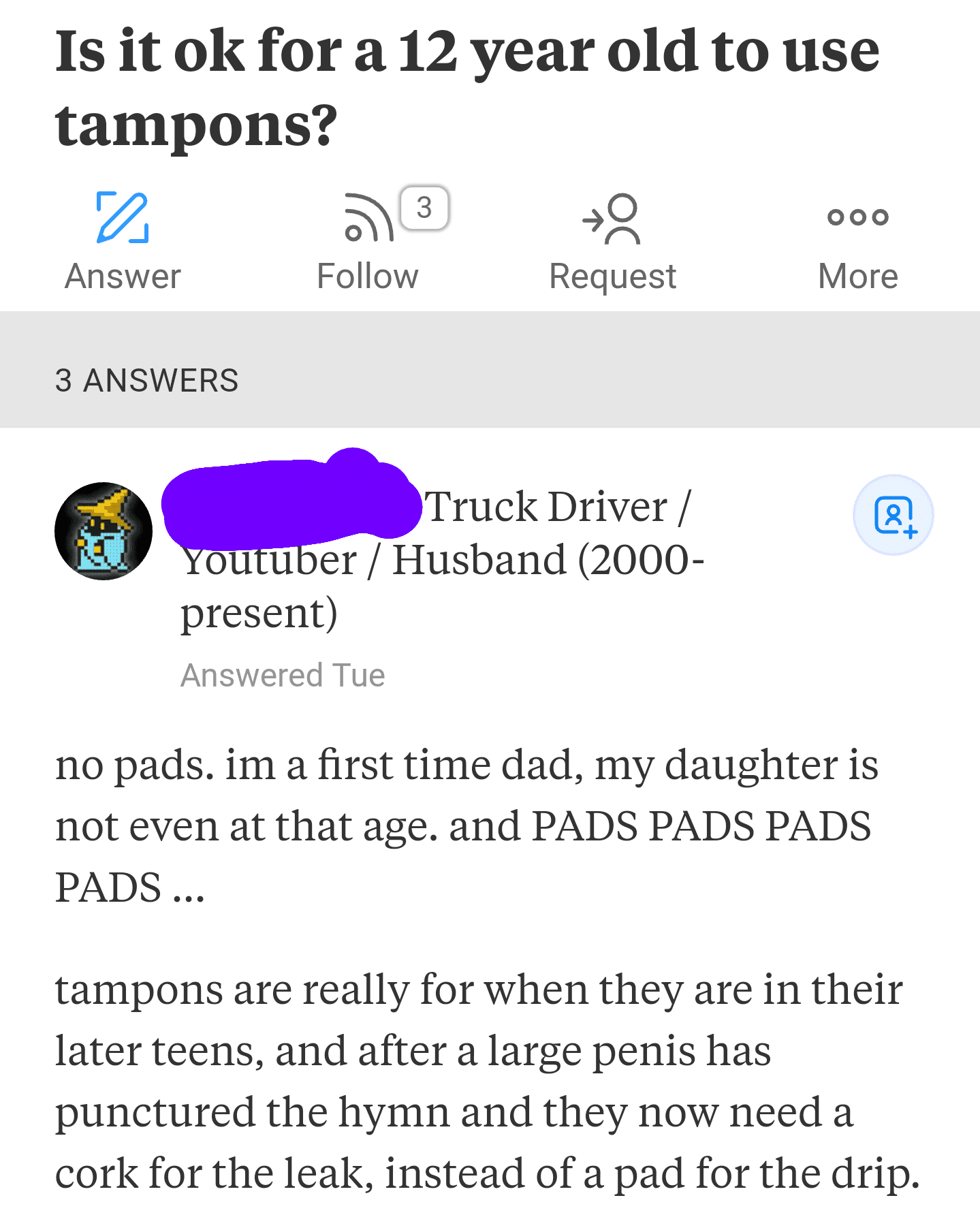
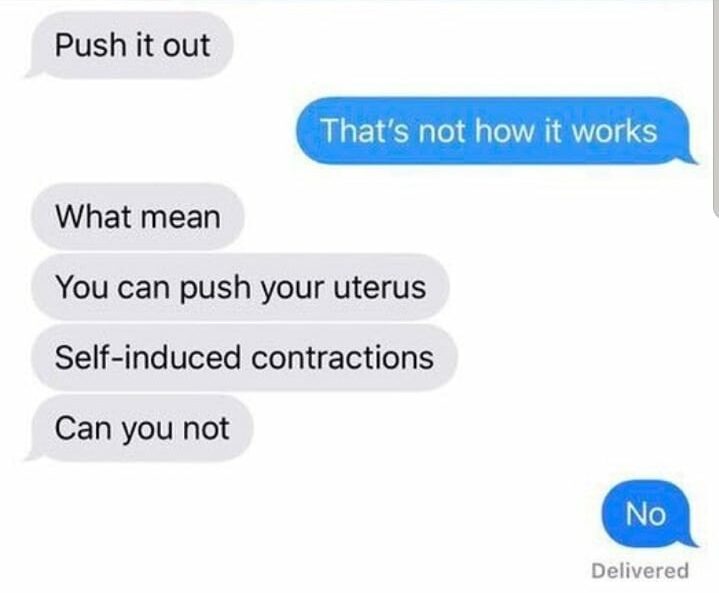
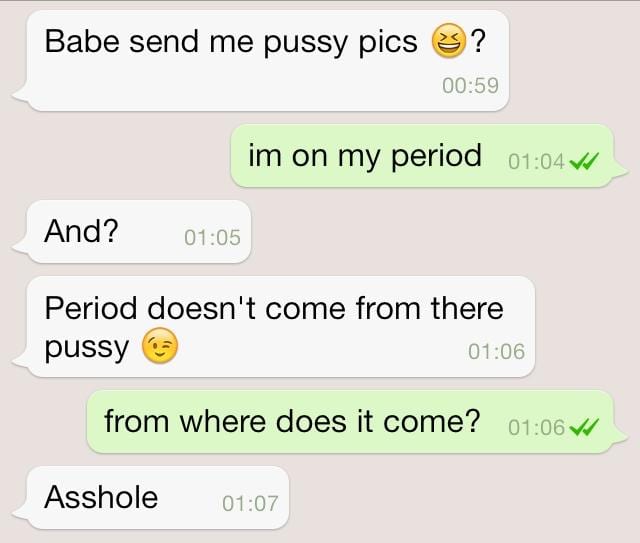
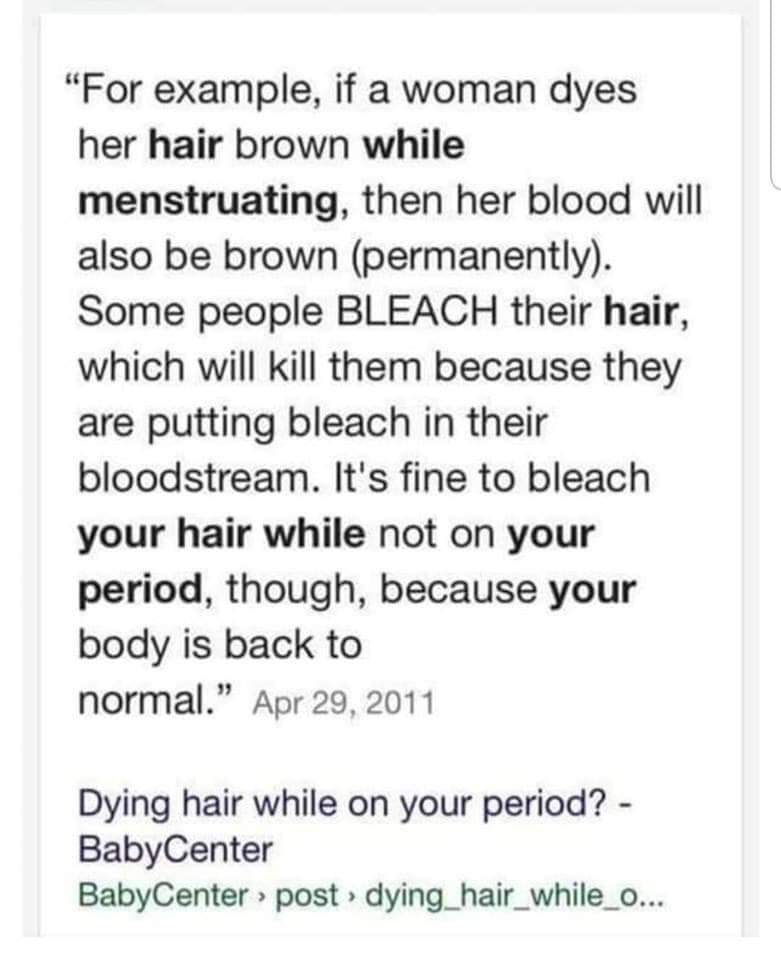
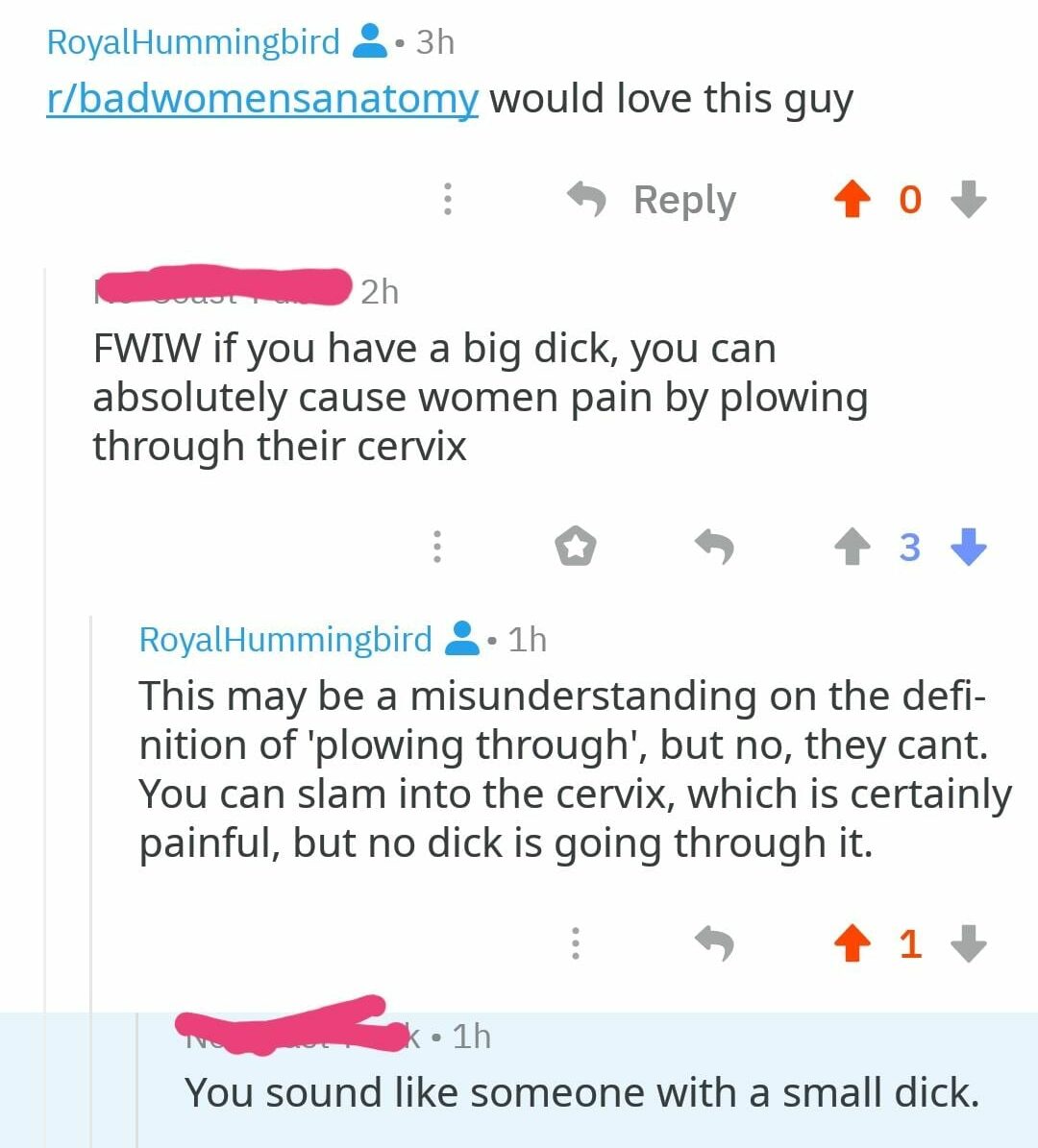
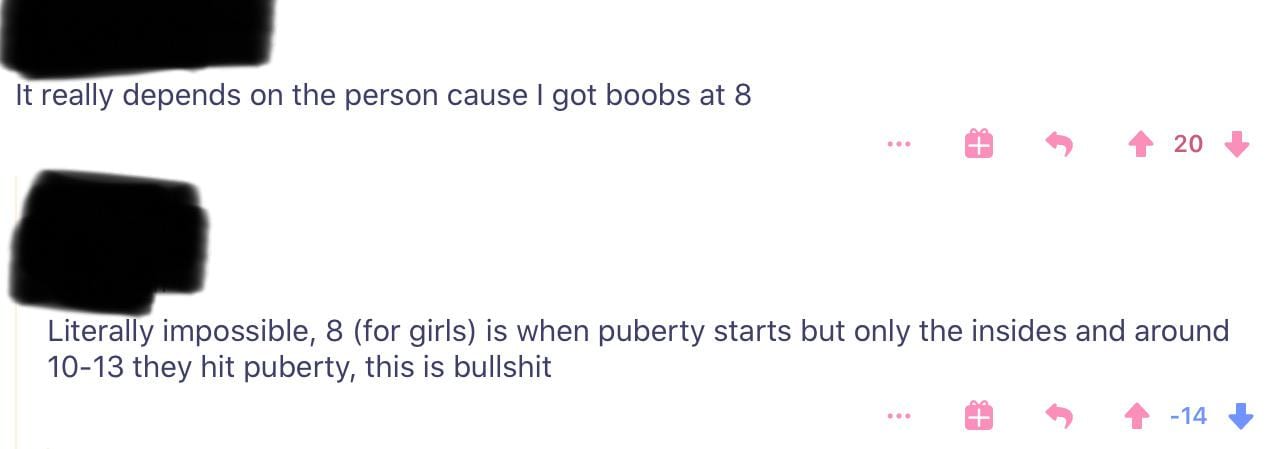
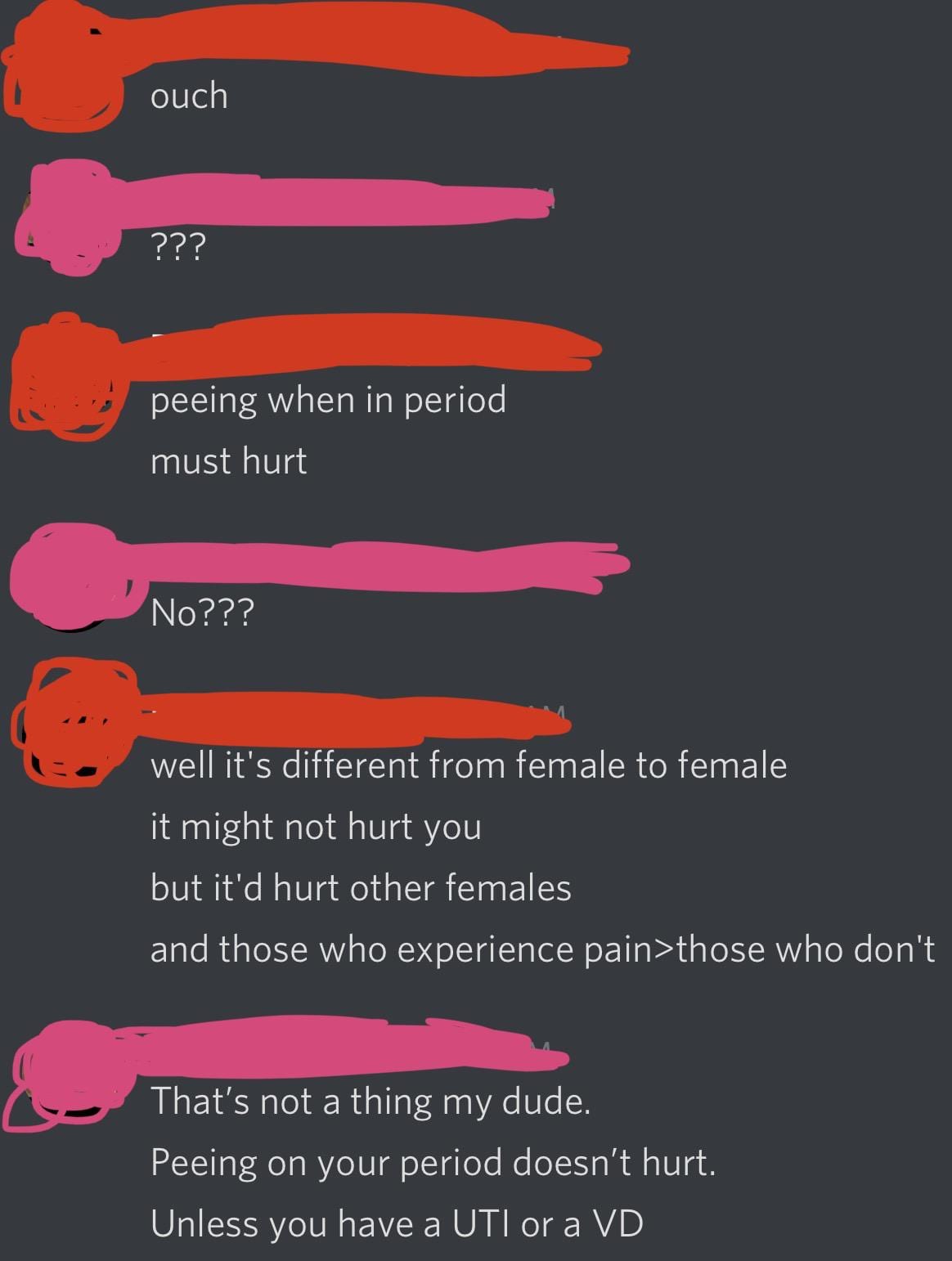
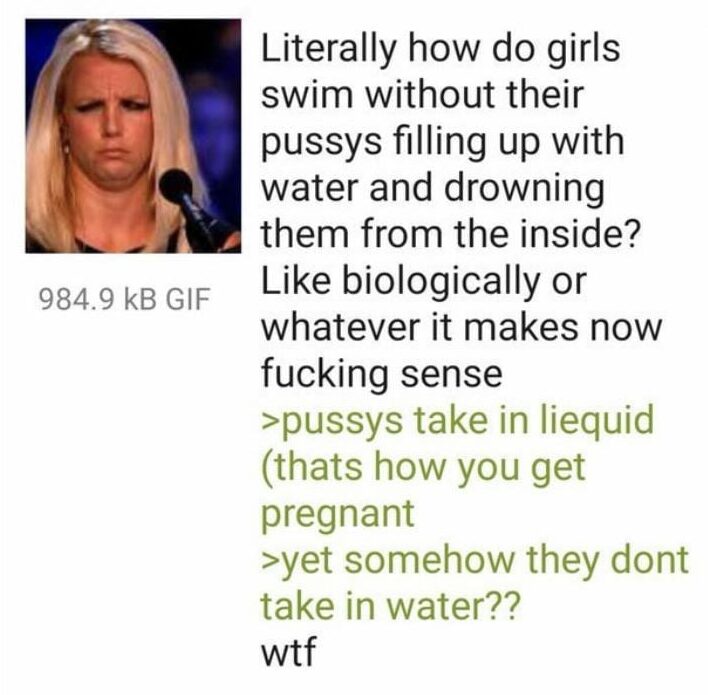
There is a full subreddit dedicated to men (and occasionally others) just being horrifyingly wrong about how female anatomy and biology works. It’s amazing. It’s horrifying. It’s something you won’t be able to look away from.

Here are just a few examples.

15. Padding the question

I…refuse to comment on this one.

14. Common knowledge

Only women have genitals, men have penises, you should know this by now.

13. Full stop

Not sure that’s how it works.

12. Spilling ink

I hope you thought this when you were like 3, otherwise I’m concerned.

11. Push it to the limit

“Can you not?”

10. Know where I’m coming from?

When the stupidity meets the audacity.

9. Trickle down effects

Was this written by a 12th century monk?

8. Rub one out

I once rubbed some water with a towel and it like…disappeared into the floor.

7. BDE

The very smallest, in fact.

6. Only the insides

Trust me, I’m a doctor probably.

5. My number one problem

It’s amazing when they get corrected and still insist they know more about a body they don’t have than people who have it.

4. Water you talking about?

Your mouth takes in liquid and it’s still alive, for some reason.

3. Stop being gross

Sounds like you’ve got some deeper issues to work through, my dude.

2. F*** the system

Um, isn’t she sleeping with you, man?

1. All in time

I had to fully stop and walk away from the computer for a minute.

I don’t know what to conclude from any of that except that our sex ed system is CLEARLY in desperate need of repair.

Has anyone said this kind of thing to you before?

Tell us in the comments.

The post 15 Times Men Got Female Biology Very, Very Wrong appeared first on UberFacts.

A Biology Professor Explained Why Defining Sex and Gender Is Actually Not Simple At All

Sex and gender are much more complicated than most people want to believe. And in a world where many, many brave folks are coming forward to say that they don’t want to be categorized with the sex they were born with, or that they don’t identify with a particular gender at all, or a hundred other combinations of some or all of these things, others (who have never questioned what’s on their birth certificate) are confused.

How can this be true, they ask? Gender is the same as sex, isn’t it? And we just are what we are?

Well, here’s the thing – it turns out that chromosomally, cellularly, and biologically, sex and gender are not black and white, not easily defined, and are often fluid. And that’s not even layering a social or psychological aspect on top of it all.

Don’t believe me? Good, you shouldn’t – I’m a writer, not a biologist!

But Rebecca R. Helm is a biologist, and she recently tweeted an insanely insightful thread about how complicated it can be to classifying biological gender.

The best way to combat confusion is with knowledge, so buckle up and let’s go for a little learning ride, shall we?

First, she acknowledges that, on the outside, determining one’s biological sex might seem simple.

But right away, when you learn just a tiny bit more about those X and Y chromosomes, things begin to get more complicated.

And she keeps going, giving us a rundown of things possible and known, and everything out there that’s still a mystery, until – even though I’m educated and consider myself fairly quick on the uptake – I had to admit I was out of my depth.

And what should we do when we’re out of our depth? Defer to the experts, of course, who are comfortable in the deeper water and willing to hold your head above water, too.

So, let’s all take Rebecca R. Helm’s advice and just try to be kind to people.

Biological sex might not be simple to parse or grasp, but you know what is? Listening to what another human being is telling you about the body they inhabit and referring to them how they ask you to.

That’s something we can all start doing right now.

The post A Biology Professor Explained Why Defining Sex and Gender Is Actually Not Simple At All appeared first on UberFacts.

Australians Have Been Eating a Fish Previously Unknown to Science

Australians already confront crazy-looking (and deadly) animals on a daily basis, so it probably never occurred to them to question a fish that tasted pretty okay and didn’t kill anyone once ingested.

They probably didn’t expect to find out, though, that literally no one had ever heard of or seen the fish before, anywhere in the world.

Well, at least not before 2000, when a fisherman sent pictures of a mystery grouper to fish expert and Queensland Museum curator Jeff Johnson. But even though he saw images of the strange fish a few more times over the years, it wasn’t until 2017 that he got his hands on a physical specimen.

He nabbed 5 of them, actually, at a Brisbane fish market, and set to work identifying the apparently yummy swimmer.

“As soon as I saw them, I thought they were probably a new species, so I purchased all five and began the hard work of formally proving they were a new species,” he said in a statement. “I’ve been told they are quite tasty.”

He and museum geneticist Dr. Jessica Worthington Wilmer worked together to confirm his suspicions, and the new species was named Epinephelus fuscomarginatus.

The new subspecies of grouper isn’t so distinctive looking that people with untrained eyes would notice it straight away, and given that most groupers are fairly generic-looking fish, it’s understandable – if slightly worrying – that no one consuming it gave it a second thought.

The Epinephelus fuscomarginatus is about 27 inches long and lives about 750 feet down along the center of the Great Barrier Reef.

This grouper, interestingly, is not the only species to recently be discovered on its way to someone’s plate. In 2011, a new species of shark was discovered in a Taiwanese fish market, and in 2018, a different shark, thought to be extinct, showed up in a market in Mumbai.

In 2010, researchers discovered a species of monkey that sneezes when it rains, but lost their specimen when the locals in Myanmar ate it.

Oops. Dinner takes precedence over science, you know. I’m not even mad.

The post Australians Have Been Eating a Fish Previously Unknown to Science appeared first on UberFacts.

Horseshoe Crab Blood Has Saved Millions of Lives

I’m not very familiar with horseshoe crabs. It turns out there’s a lot to learn – because any species that has managed to survive for 450 million years likely has at least a couple of evolutionary tricks up their sleeves.

If crabs had sleeves, I mean.

First up: horseshoe crab blood is bright blue, due to copper-based hemocyanin it uses to transport oxygen (instead of the hemoglobin that makes our blood red). Also, instead of using white blood cells to fight infection, they use amebocytes – and the Atlantic horseshoe crab has evolved to the point where their amebocytes of great value to the medical community.

These amebocytes coagulate around extremely small amounts of bacterial contamination, and the reaction takes only 45 minutes as opposed to the 2 days it takes most mammals’ immune systems to respond. Medical laboratories use it to test equipment and vaccines in a much more efficient manner, which prevents people from dying of infections.

The value of horseshoe crab blood is unfortunately leading to overharvesting – a quarter of a million crabs are harvested for their blood every year – and the population is in a steep decline that may be impossible to recover from, unless extreme measures are taken.

The crabs aren’t killed for their blood, though; 30% of their blood is harvested, then they’re returned to the ocean. That said, around 10-30% of the crabs don’t survive the process, and females who are bled often breed less afterward.

But the blood goes for $15k a liter, so I doubt people are going to stop anytime soon.

The post Horseshoe Crab Blood Has Saved Millions of Lives appeared first on UberFacts.

An Extremely Rare Two-Headed Baby Turtle Was Found on a South Carolina Beach

This sure is a strange sighting.

If you’re reading that headline and thinking to yourself “there’s no way a two-headed turtle could be anything other than weird,” well, this little turtle would like you to hold its beer.

I mean, if it drank beer and it was of age to imbibe, I mean.

Because even though the hatchling has two heads, it’s as cute as a button.

Posted by Jayme Davidson Lopko on Wednesday, August 28, 2019

The little guy (guys?) was spotted and filmed by the Sea Turtle Patrol on Hilton Head Island. They were checking out a loggerhead turtle nest, when the strange hatchling caught their eye.

Cause, duh.

They gave him two names – Squirt and Crush (of Nemo fame) – and documented his (their?) existence before setting him free to make his way to the sea.

Posted by Jayme Davidson Lopko on Wednesday, August 28, 2019

The baby was struggle to crawl with its oddly shaped shell, but since the group doesn’t collect turtles, but merely observes and monitors the populations, the scientists didn’t keep it (them?).

Posted by Jayme Davidson Lopko on Wednesday, August 28, 2019

Sadly, the survival rate even for healthy hatchlings is pretty low – only 1 in 1,000 green sea turtles survives to adulthood – so Squirt and Crash are definitely facing an uphill battle.

Sea Turtle Patrol wrote about the find on Facebook.

We often find many strange things when we inventory sea turtle nests. Yesterday I found this twin two-headed hatchling….

Posted by Jayme Davidson Lopko on Wednesday, August 28, 2019

“Sea Turtle Patrol follows rules set by the State Department of Natural Resources which calls for us to protect the nests and turtles but to also allow as natural a process as possible. We do not take hatchlings off the beach to raise or rehabilitate. This little guy is on his own just like his brothers and sisters that came from the nest and like they have been doing for millions of years. Good luck and safe travels special guy!”

Posted by Jayme Davidson Lopko on Wednesday, August 28, 2019

It’s super cool that we get to see something like this exist, even if it’s just for a moment, but it would be so hard to just let him go, knowing things probably won’t turn out well.

Would you be able to do it? I guess some people are just conservationists at heart!

The post An Extremely Rare Two-Headed Baby Turtle Was Found on a South Carolina Beach appeared first on UberFacts.

This Is Why Men Fall Asleep After Sex (Don’t Worry, It’s Not You)

Listen up, people!

Ladies, have you ever had your world rocked in bed by your male lover? Have you experienced the dreamy, lovey-dovey state of a powerful orgasm and then the need to cuddle afterwards?

I hope so.

But I’m sure you’ve also noticed that during intimacy talk, your man drifts a bit, perhaps even falls into a deep sleep, leaving you…what? Alone? Unable to express your love and emotions? Darn it…

Photo Credit: Unsplash, Toa Heftiba

Don’t worry – he’s not sleeping as an excuse to escape cuddle time or ignore your connecting relationship. He’s doing it because you rocked his world. True story!

Male orgasms differ chemically from women’s

It goes without saying that the act of orgasming is experienced in different ways among the sexes. Men ejaculate externally while women “explode” internally. But what does this mean for brain chemistry?

When a man crosses the sexual finish line, his energy is literally spent. His prefrontal cortex (which houses decision making, personal expression, etc) pretty much switches off. Since this is the epicenter of consciousness, alertness, and mental activity, his brain basically gets sleepy.

But in women? Our orgasms doesn’t cause the same sort of energy expense, therefore we can talk and cuddle after sex. Le sigh.

Body reactions to sex and orgasm

Photo Credit: Unsplash, Adi Goldstein

There are many things…um…surging during sex and foreplay. And prolactin, a hormone excreted during playtime plays a huge factor. According to one study, “Research has shown that pituitary hormone prolactin (PRL) plays a role in regulating sexual satisfaction for both men and women.”

David McKenzie, a sex therapist in Vancouver told Reader’s Digest, “A man’s body chemistry changes after orgasm. The biochemical prolactin is released, physically altering his body and making him very tired.”

But that’s not all. Glycogen, a storage of carbohydrates, is spent as well.

Mark Leyner and Billy Goldberg, M.D., authors of Why Do Men Fall Asleep After Sex?, give their explanation: “It is thought that exertion during sex and after climax depletes the muscles of energy-producing glycogen. This leaves men feeling sleepy. Since men have more muscle mass than women, men become more tired after sex.”

Women like to process their experience

Photo Credit: Unsplash, Becca Tapert

Regardless of chemical increases and depletions, it is a simple fact that women enjoy conversational intimacy with their partners.

Laurie Betito, a Montreal sex therapist, said,”Women like to ‘process’ their experiences, hence the desire to talk after sex.”

As a woman, I can vouch for that. I’m better at communicating emotions after sex and therefore crave that tender heart-to-heart talk with my beau, even if he’s drifting off.

So no matter why you might think about your man drifting away into a post-coital slumber, it’s purely a matter of chemicals and fatigue. It is not you.

If anything, take it as a compliment that you wore him out!

The post This Is Why Men Fall Asleep After Sex (Don’t Worry, It’s Not You) appeared first on UberFacts.