Some Scientists Think Humans Began Walking Upright Because of an Ancient Supernova

Humans have always been trying to figure out where we come from. How did we get here, and why do we look the way that we do?

One trait that sets humans apart from other apes is the ability to walk upright. Proto-humans began to walk upright about 6 million years ago. According to one theory, the ability likely gave us an evolutionary advantage — it allowed us to excel at hunting in the savanna, because we were able to see prey at a distance.

But where did the ability come from? Scientists believe that the ability to walk upright is due to a gene mutation on chromosome 17. An event in ancient history must have selected for this mutation, but it’s not clear was it was.

In The Journal of Geology, scientists propose that the event was an ancient supernova.

Photo Credit: Wikimedia Commons

It may seem unlikely that a faraway exploding star could have affected our evolutionary development, but the theory is surprisingly easy to understand.

According to the theory, a star detonated near the Earth and showered the planet with energetic cosmic rays, which in turn increased the amount of highly energetic particles in the atmosphere. As a result, lightning strikes become a lot more common. Lightning strikes are the biggest natural cause of wildfires. Wildfires create treeless savannas. Treeless savannas are where upright-walking humans found success because being able to see over the tall grass was such a benefit.

This theory may seem farfetched, but the timeline matches up — the geological record shows an increase in forest fires 7-8 million years ago, just a million years before humans began walking upright. Also, a separate ancient supernova event was possibly connected to an increase in wildfires.
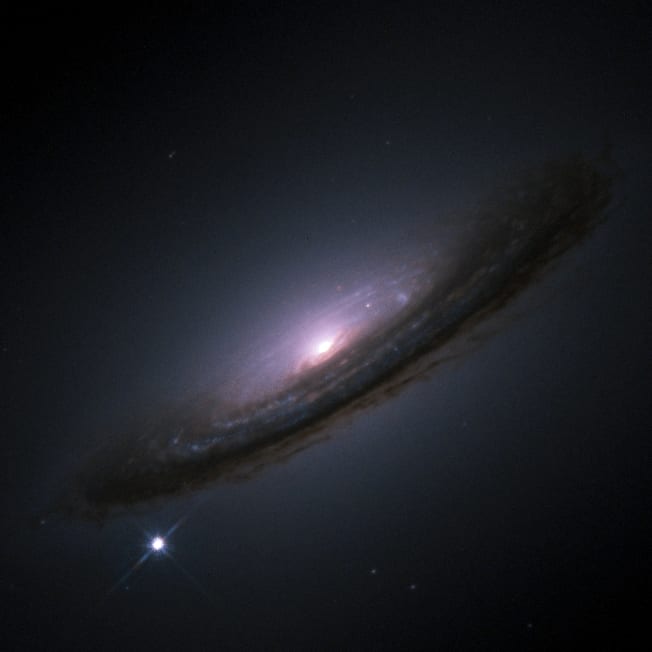
Photo Credit: Wikimedia Commons

It’ll be a long time before anyone knows whether this theory is valid or not — for one, scientists would have to wait for a modern supernova to put the lightning theory to any practical test.

Nonetheless, the idea that human evolution could be affected by the stars isn’t so far-fetched after all!

The post Some Scientists Think Humans Began Walking Upright Because of an Ancient Supernova appeared first on UberFacts.
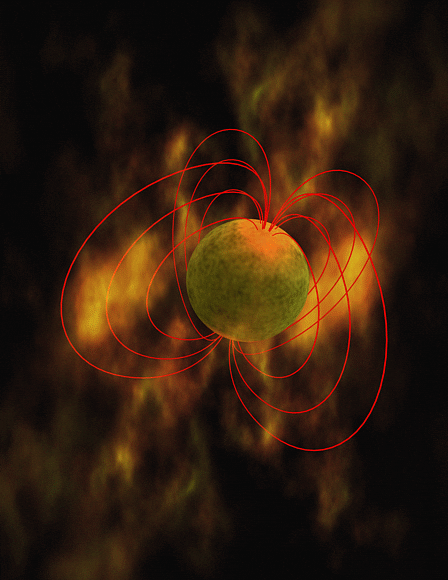
Magnetars: A Magnet so Strong, They Could Tear Your Body Apart

This is kinda crazy…

Some magnets are so weak they can barely keep a photo on the refrigerator. Meanwhile, there are magnetars: the strongest known magnets in the universe. Sadly, you can’t buy these at your local grocery store.

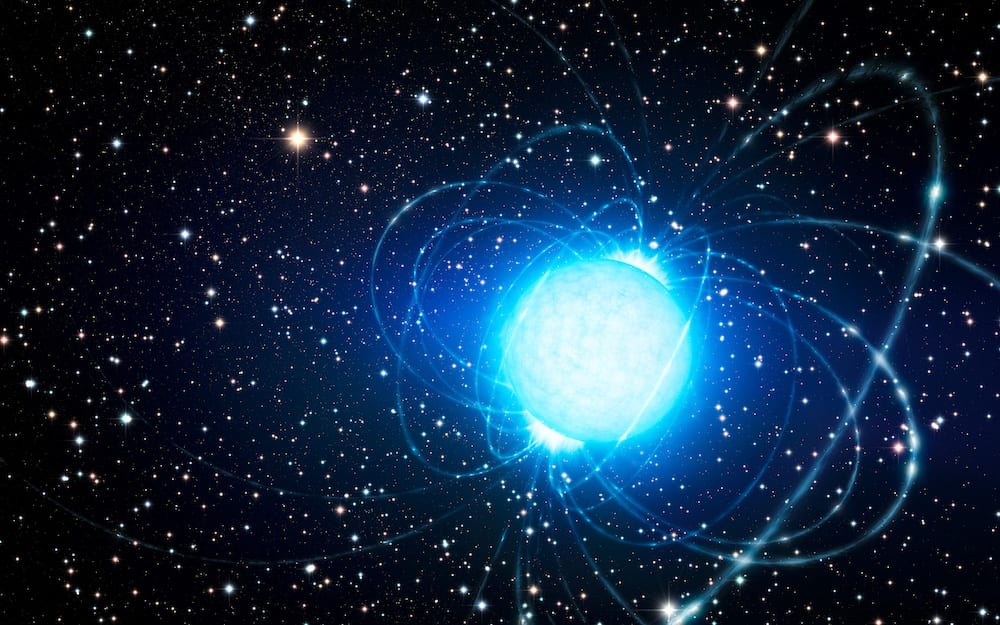
A magnetar is a type of neutron star with an unbelievably powerful magnetic field. Though they have the strongest magnetic pull of any known object in the universe, they are surprisingly small. They’re also very mysterious.

So, where do magnetars come from? Curiosity explains: When a star dies, it explodes into a supernova, collapsing in on itself in a giant extravagant display of light before fading away. If the star was large enough, it will then create a neutron star in its place. A neutron star is so small that it’s often just the size of a small city (for a star, that’s tiny!). However, it’s also incredibly dense. Just one teaspoon weighs at least one billion tons. All this matter spins around hundreds of times per second, creating a magnetic field that is a trillion times stronger than the Earth’s own.

And then there are magnetars. Magnetars are an especially magnetic type of neutron star. Nobody really knows why they’re so magnetic, but they are. They’re roughly 1000 trillion times more magnetic than Earth.

Photo Credit: Wikimedia Commons

This magnetic field is so strong that just coming within 600 miles of it would destroy your nervous system and even change your molecular structure. If you came closer, the gravitational force would destroy you at the atomic level. These stars can also wreak havoc on planets like the Earth.

Thankfully, the closest magnetar to us is much too far to do such damage, and they’re also incredibly rare. Scientists have been on the lookout for magnetars since 1979, but while they’ve found over 2000 neutron stars, fewer than 25 have been confirmed as magnetars.

Photo Credit: Wikimedia Commons

Still, it’s fascinating to know that they’re out there somewhere!

The post Magnetars: A Magnet so Strong, They Could Tear Your Body Apart appeared first on UberFacts.

Astronomers Were Baffled by a Mystery Signal For 17 Years. The Culprit? A Staff Microwave

It’s 2019 and people are finally starting to admit that aliens are probably in our midst. “People” meaning, for example, The New York Times. But scientists and laypeople have been observing unexplainable phenomena for practically forever. Or in one case, practically unexplainable phenomena that turned out to be…definitely not aliens at all. Instead, the weirdness was coming from a way less exciting source: a microwave oven.

Astronomers at a famous Australian telescope called “The Dish” received strange signals from an unknown source for 17 years. 17 years! The signals would always come in once or twice each year. Known as perytons, they were detected “within five kilometers” of the observatory.

Photo Credit: Wikimedia Commons

When the scientists first detected the signals in 1998, they assumed they were coming from the atmosphere, possibly from lightning strikes.

But then, in 2015, they installed a new receiver to monitor the interference. It detected strong signals at 2.4 GHz – the signature of a microwave oven.

Yep, that 17-year-old mystery turned out to originate from the staff kitchen.

Upon further study, the astronomers discovered that the microwave generates interference only if the door is opened after it’s been set to heat. The signals were rare, because they only happened when the telescope was pointed right at the microwave oven while a staff member happened to open the door halfway through eating up their lunch.

So, yeah. Not the most exciting discovery, but a pretty unforgettable story.

Dr. Emily Petroff is the astronomer who finally figured out the source of the perytons.

“Didn’t swear, but definitely wasn’t quiet when the data came through,” she tweeted.

It should be noted that Dr. Petroff and the other astronomers weren’t really searching for aliens, but that’s the conclusion many people might jump to upon mention of “mysterious signals.”

It seems the lab has made some improvements to their microwaving technology since then:

Aliens… Hot pockets… Same thing.

The post Astronomers Were Baffled by a Mystery Signal For 17 Years. The Culprit? A Staff Microwave appeared first on UberFacts.

NASA Just Made it Possible For You to Check the Weather on Mars

Modern living has given us a lot of great things – smartphones, the internet, DoorDash. But this next one might be one of the best examples of humanity’s greatness and ingenuity. You see, you can now check the daily weather on another planet!

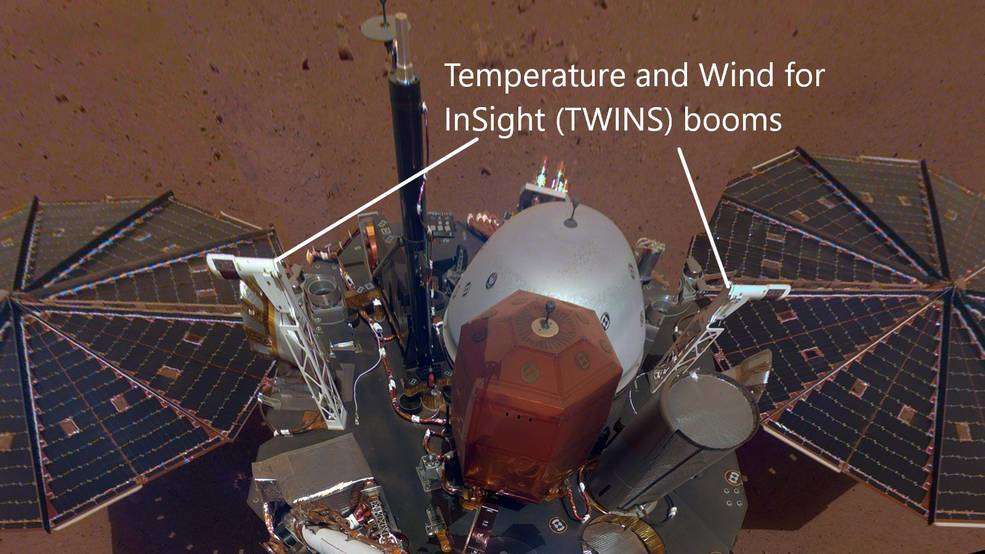
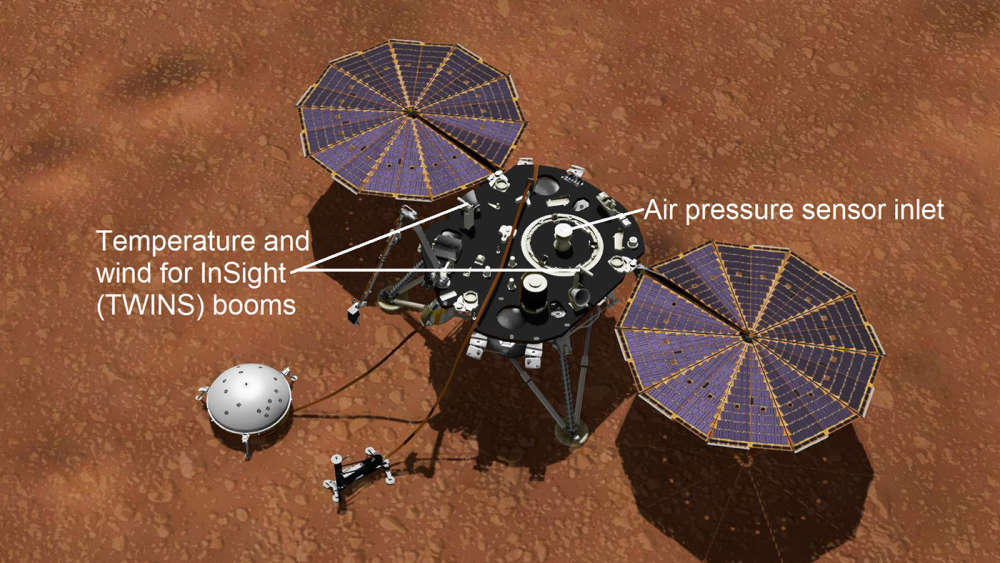
The reports are a part of NASA’s InSight Lander’s – short for Interior Exploration Using Seismic Investigations, Geodesy, and Heat Transport – mission, which is to give Mars a “checkup” of sorts. The robot is set to report temperature, wind, and pressure readings for the foreseeable future.

Image Credit: NASA/JPL

Mission lead Don Banfield reminds us that the lander “is close to the Martian equator – just north of the equator – so it is experiencing Martian winter.”

And Martian winter will have you saying prayers of thanks for the polar vortex you might be experiencing Earthside.

“I didn’t think we’d see any evidence of the storms that are 60-degrees north latitude, but we’re already seeing evidence of the high and low pressure-signal waves that create weather on Mars,” Banfield continues. “We can see those waves all the way down near the equator, as the waves are big enough that they have a signature. That was a surprise.”

Compared to the systems we see here on Earth, the high and low pressures on Mars are far less chaotic, but the coldest temperatures on the red planet average around -139 degrees at 5am. The sunrise heats it to around a balmy 23 degrees, though, so you know. Livable.

Image Credit: NASA/JPL

If you could breathe the air.

InSight will also be recording tectonic activity and meteorite impacts in real time, and monitoring the planet’s crust, mantle, and core.

If you’re one of those people who think colonizing another planet would be super fun, you might want to log on and start gathering your own data on what kind of clothes you’ll need to bring along.

But, you know. Warm stuff for sure.

The post NASA Just Made it Possible For You to Check the Weather on Mars appeared first on UberFacts.

A Study Suggests That We Might Be Alone in the Universe After All

Hollywood has loved to imagine what it will be like to discover intelligent alien life one day, as have books and comics, and most other creative mediums for as long as we can remember. Sadly, science is starting to wonder whether or not the chances are actually good that we’re not alone.

According to a new study out of Oxford University’s Future of Humanity Institute, researchers applied existing knowledge of biology, chemistry, and cosmology to the Drake equation, created by astronomer Frank Drake in 1961 in an attempt to calculate the number of intelligent civilizations in our galaxy.

Photo Credit: Pixabay

The equation takes into consideration things like the average rate of star formation and the average lifespan of intelligent civilizations, among other things. Using Drake’s model combined with modern astronomy, the researchers at Oxford estimate there’s a 53%-99.6% change we’re alone in the galaxy and a 39%-85% chance we’re the only intelligent life to be found in the entire universe.

They’re also relying on the class Fermi Paradox, which asserts that intelligent extraterrestrial beings exist and that they should have visited earth by now. Since they have not, the conclusion is that they are “probably extremely far away and quite possibly beyond the cosmological horizon and forever unreachable.”

Others, like Seth Shostak of the SETI Institute, are dismissive of the recent claims, mainly because there remains too much unknown about the universe to make any such claims.

Photo Credit: Pixabay

“I could walk outside here in Mountain View, California, and not see too many hippos strolling the streets,” he told Mental Floss, “but it would be incorrect for me to say on that rather limited basis that there’s probably no hippos anywhere. It’s a big conclusion to make on the basis of a local observation.”

Not only is so much of the universe still shrouded in mystery, there’s also the idea that scientists and astronomers here on earth aren’t even looking for the right type of communication. So far, we examine potential radio and light signals, but there’s a chance that alien beings are trying to contact us in ways we haven’t designed yet.

The bottom line is that the truth may still be out there, just waiting for our feeble human science to catch up enough to find it.

The post A Study Suggests That We Might Be Alone in the Universe After All appeared first on UberFacts.