
The Sun is not sitting still. It pulls the whole solar system with it as it orbits the center of the…
Voyager 1 will be about one light-day, or roughly 16.1 billion miles, away from Earth in November…
Voyager 1 will be about one light-day, or roughly 16.1 billion miles, away from Earth in November…
The planet Uranus was discovered in 1781, which means people officially found Uranus before they…
The planet Uranus was discovered in 1781, which means people officially found Uranus before they…
10 Crazy Astrology Facts: From Hitler’s Horoscope to Tree Marriages
In moments of uncertainty—heartbreaks, health scares, career limbo—we often look for something, anything, that might offer a sliver of guidance. A little cosmic reassurance. Enter horoscopes. With one hand clutching a coffee and the other nervously scrolling through our daily forecast, we ask the stars for answers we already suspect, hoping they’ll just…confirm things. Logic … Continue reading 10 Crazy Astrology Facts: From Hitler’s Horoscope to Tree Marriages
“Spaghettification” is a legit Astronomy…
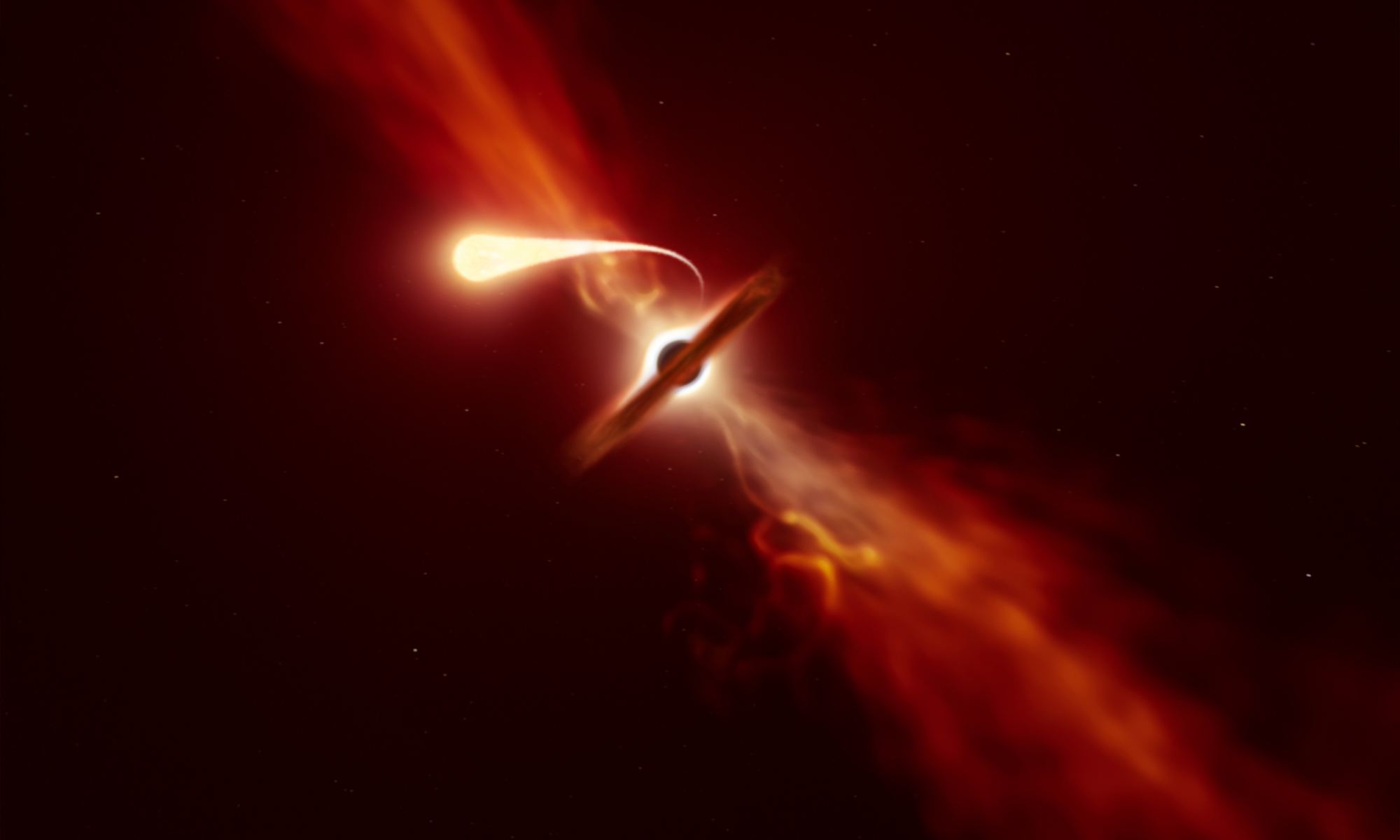
“Spaghettification” is a legit Astronomy term that explains what happens when a person falls into a black hole.
The post “Spaghettification” is a legit Astronomy… appeared first on Crazy Facts.
What American businessman and…

What American businessman and astronomer Percival Lowell mistakenly thought were “spokes” on the surface of Venus were actually shadows of the blood vessels in his eyes cast on his retina, his telescope essentially functioning as a giant ophthalmoscope.
The post What American businessman and… appeared first on Crazy Facts.
Scientists Say There Could Be 36 Alien Civilizations in the Milky Way

We’ve all wondered–could there be, not just life, but intelligent life, out there?
And while relative intelligence of life on Earth could be debatable, two scientists from the University of Nottingham have a new theory that suggests there is.
36 different potential civilizations, to be exact.
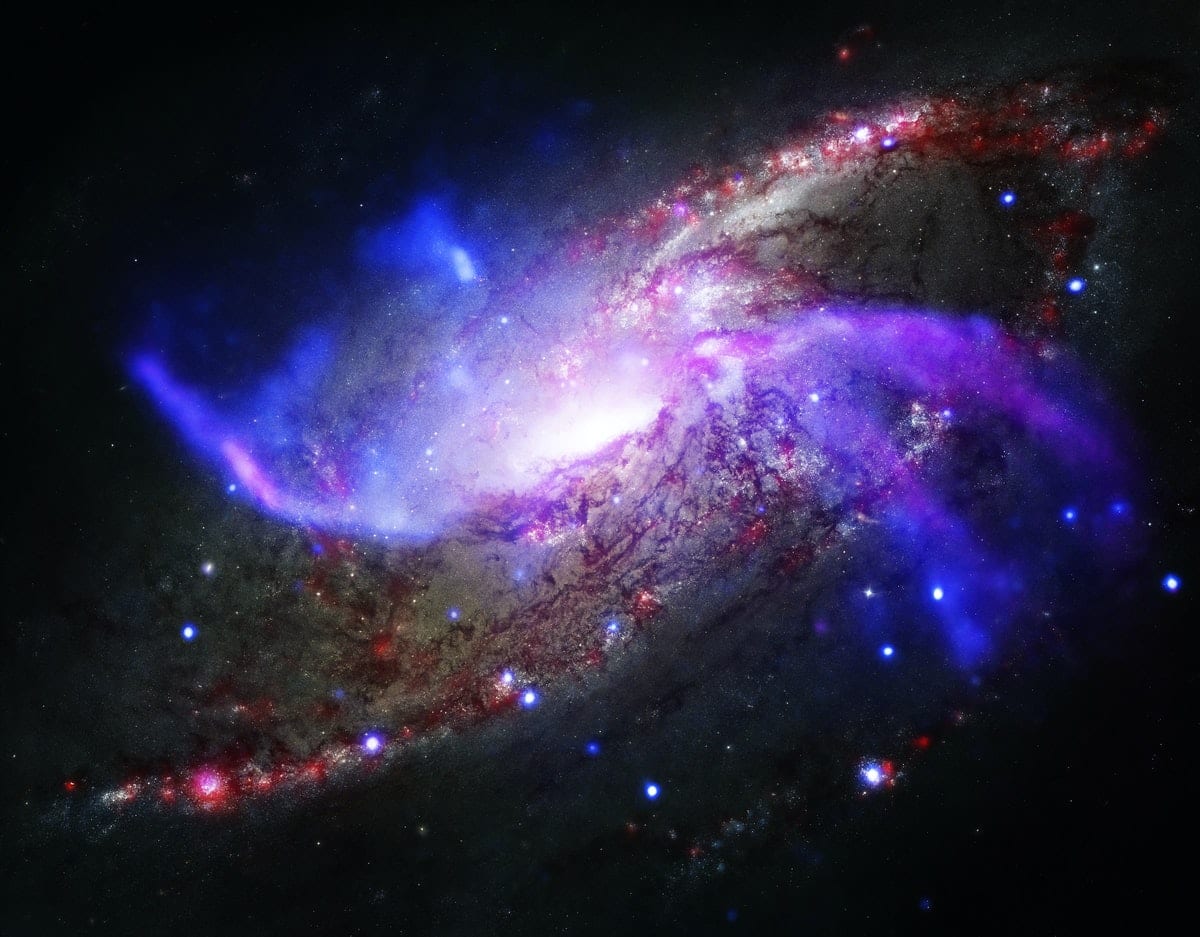
Image credit: NASA via Rawpixel
How can scientists possibly make a prediction about the number of undiscovered civilizations?
It’s a mathematical theory based on a fifty-year-old equation called the Drake equation.
As Popular Mechanics explains:
Drake’s seven key variables, which range from how many habitable planets exoplanets there are in the galaxy to the amount of time over which intelligent life takes shape, are almost impossible to pin down.
The formula acts more like a framework for the probability of finding life; previous estimates have ranged from zero to over a billion civilizations.
But Professor of Astrophysics Christopher Conselice, his colleague Tom Westby, and their team at the University of Nottingham used new technology and assumptions about our galaxy, the Milky Way, to formulate a new hypothesis.
They published their work last summer in The Astrophysical Journal.
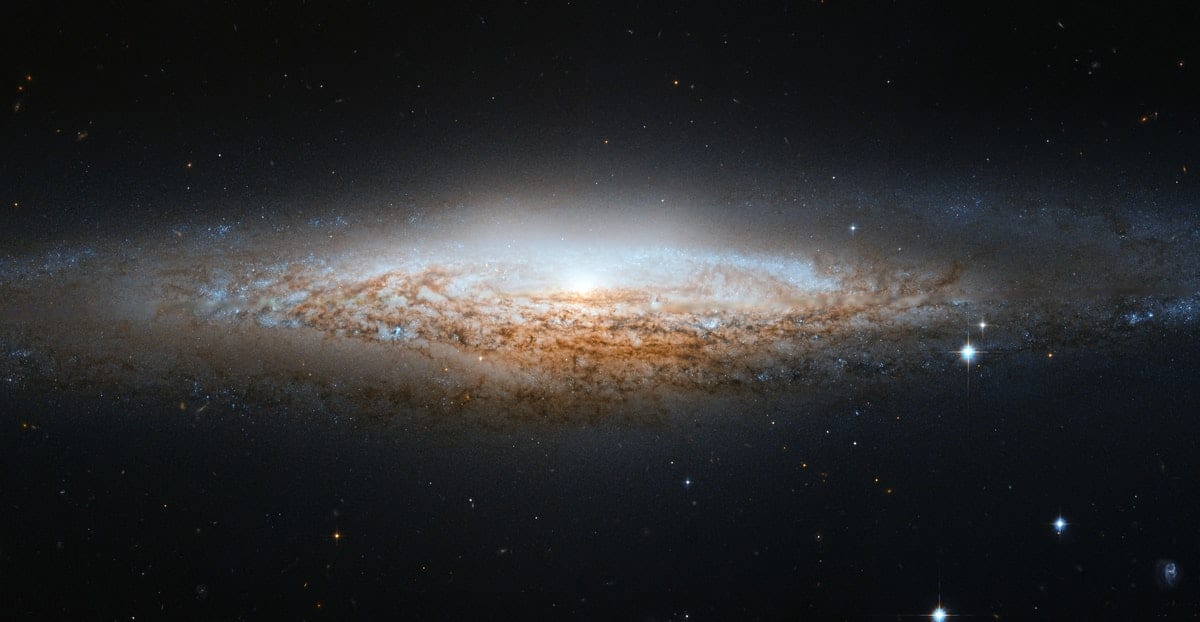
Image credit: NASA via Rawpixel
As quoted in Phys.org, Conselice explains that they based their assumption on the length of time it took a civilization to develop on Earth:
“There should be at least a few dozen active civilizations in our Galaxy under the assumption that it takes 5 billion years for intelligent life to form on other planets, as on Earth.
The idea is looking at evolution, but on a cosmic scale. We call this calculation the Astrobiological Copernican Limit.”
The Copernican limit guides researchers to think on a pretty large scale–where intelligent life develops in either more or less than 5 billion years.
By intelligent life, scientists mean a civilization capable of communication.
On Earth, that development took more than 4.5 billion years, thus the 5 billion year threshold.
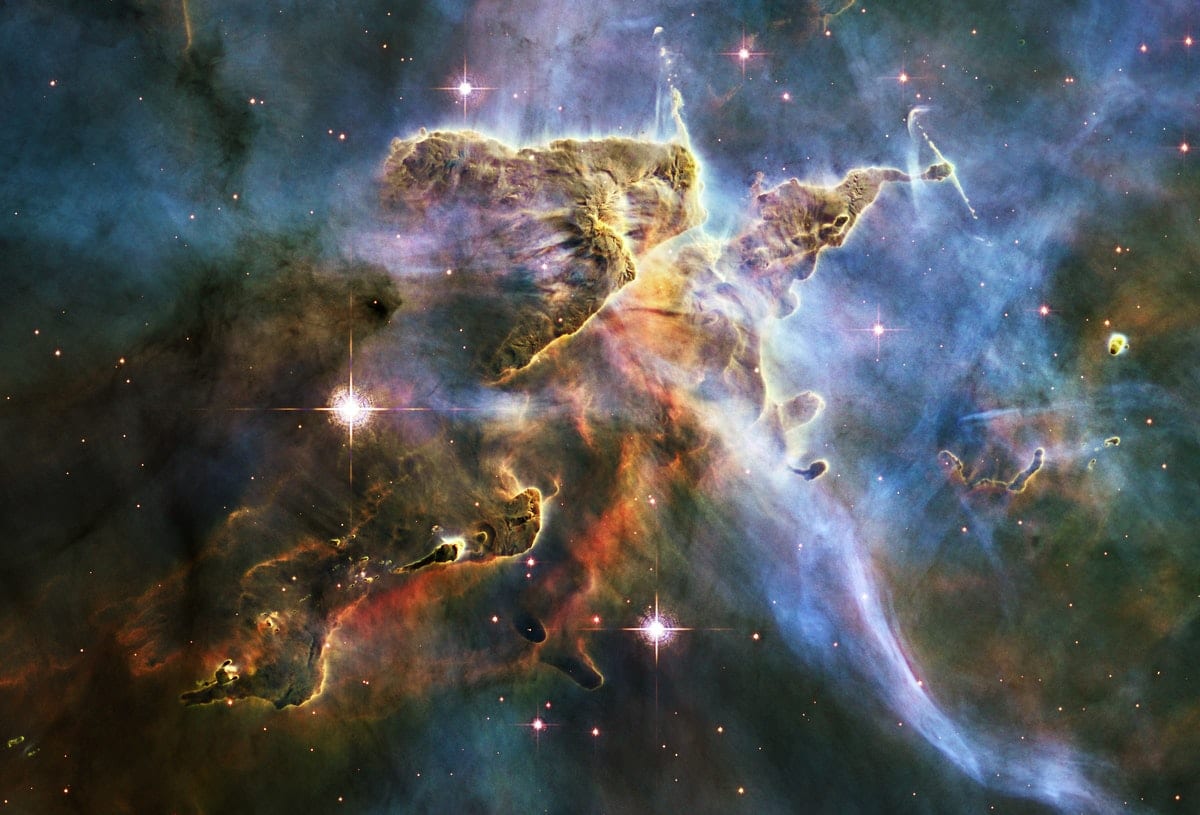
Image credit: NASA via Rawpixel
These calculations have been used for years, but the Nottingham team took it one step further, factoring in the specific composition of Earth’s sun.
As Westby explained:
“In the strong criteria, whereby a metal content equal to that of the Sun is needed (the Sun is relatively speaking quite metal rich), we calculate that there should be around 36 active civilizations in our Galaxy.”
When all of the data is combined and analyzed, they believe just 36 exoplanets possess all the right conditions to support the development of an alien civilization.
Of course that means 36 alien civilizations that are enough like us to be recognizable as communicative beings.
Who knows how many are out there that are so different that we might not even recognize them if we saw them.
The problem is, a theory needs to be proven, and the exoplanets are so far away that while we can see them with high powered telescopes and gather some sensory data on them, we don’t yet have the technology to visit them–even with probes.
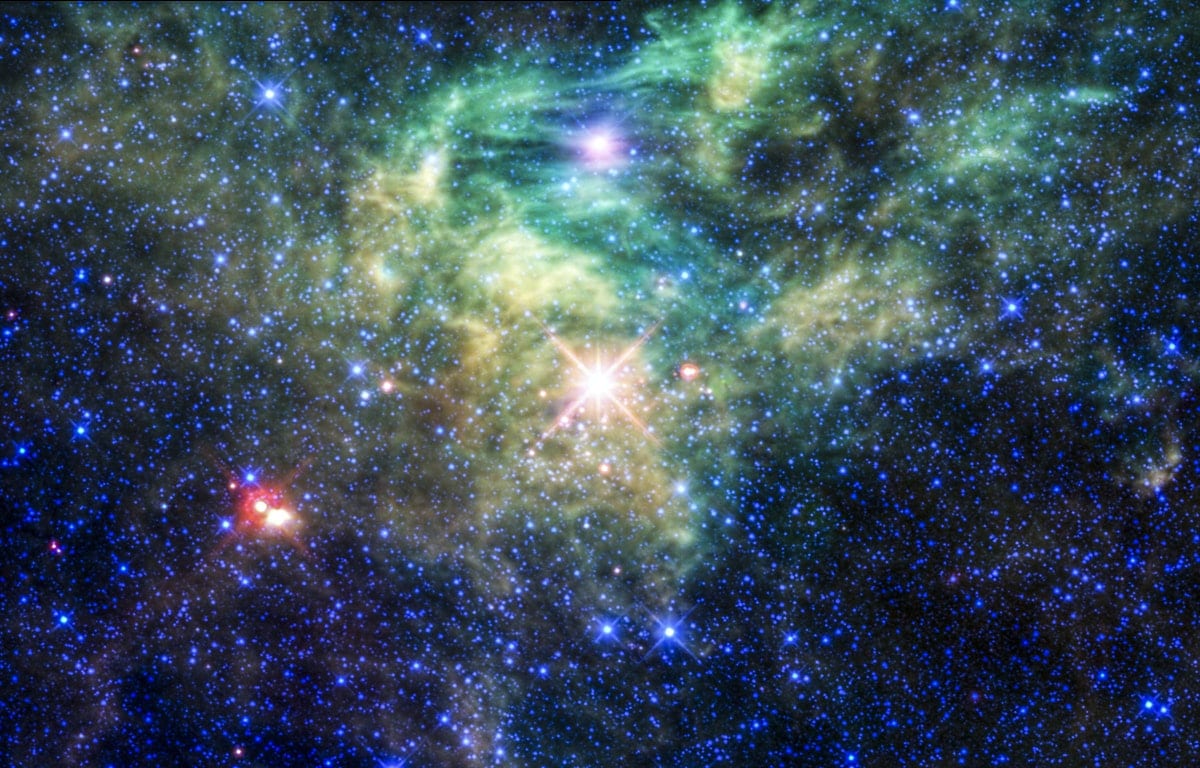
Image credit: NASA via Rawpixel
If they’re so far away, why do we even care?
Well aside from the intrinsic human need to explore and discover, finding out how many other civilizations co-exist could actually tell us something about how long life on earth will last.
As Professor Conselice points out:
If we find that intelligent life is common then this would reveal that our civilization could exist for much longer than a few hundred years, alternatively if we find that there are no active civilizations in our Galaxy it is a bad sign for our own long-term existence.
By searching for extraterrestrial intelligent life—even if we find nothing—we are discovering our own future and fate
This is very exciting in the world of astronomy.
But according to Popular Mechanics and The Guardian, not every scientist is convinced.
Oliver Shorttle of the University of Cambridge told the news organization that more factors need to be considered—such as how exactly life formed on Earth—before taking the new findings as fact.
That’s science for you. There’s always more to consider.
Even so, it’s pretty cool to have such a specific number, don’t you think?
Do you believe there’s life out there? Let us know your theories in the comments!
The post Scientists Say There Could Be 36 Alien Civilizations in the Milky Way appeared first on UberFacts.
By tradition astronomers name lunar…
By tradition astronomers name lunar lava planes after states of mind, such as “Sea of Tranquility”. However when Soviets discovered a new mare, they named it Moscoviense, after Moscow. This caused strife among astronomers, until it was agreed that Moscow is, in fact, a state of mind.
The post By tradition astronomers name lunar… appeared first on Crazy Facts.
An Astronaut Posted Pictures of Earth and Flat-Earthers Complained
The Earth is round – we’ve known this for many hundreds of years. It wasn’t particularly controversial for much of that time, but for some reason there has recently sprung up a small contingent of people that insists, incorrectly, that the world is flat.
Jessica Mier is a NASA astronaut who witnessed the beauty of looking at Earth from a distance. She shared a few photos online with the world so the rest of us could appreciate our home.
The first orientation may make more sense to you, but to me this is the ever-changing skyline on @Space_Station (photo 3). Perspective. The constant traffic of visiting vehicles makes for diverse vistas. Now the #Canadarm2 keeps #Cygnus company after @SpaceX #Dragon’s departure. pic.twitter.com/jfLMcDaf8R
— Jessica Meir (@Astro_Jessica) January 10, 2020
There are always people who want to diminish something beautiful and positive. After Mier uploaded these photos, flat-earthers showed their disdain.
Why do you guys always use fish eye lenses
— Irah Chandler (@irah_chandler) January 10, 2020
Several people accused NASA (and Mier) of using a fisheye lens to take photos of our “flat” Earth. You’re probably familiar with this, but a fisheye lens can make objects look more curved and wider. This effect can make flat objects look more spherical.
Yes. That's fish eye lens. Make earth looks like round. Actually, the earth is Flat!
— Santai Saja (@Sakadaekk) January 10, 2020
Leave the fish eye camera now, see the facts.
— EskiTeksas (@gokseller) January 15, 2020
Others quickly shut down these flat earth theories.
Can someone please sponsor a mission to fly all these flat-earthers to space so they can all shut up once and for all? Actually, that would be a huge waste because they still wouldn’t be convinced.
— Alex (@_wantobefree) January 13, 2020
Beautiful pictures. However the #FlatEarth idiots will stick their fingers in their ears and go "blah blah blah" as usual
— ʀɪᴛᴄʜ (@RitchTeaBisquit) January 13, 2020
Well, at least some of these good people tried to knock some sense into flat-earthers.
Mier currently resides in the International Space Station and is an accomplished physiologist from Texas. It’s clear that she loves her job, and she frequently posts about what she sees from space, the history of astronomy, and her workplace adventures.
Without the actions and sacrifices of those that came before us, humankind would never have set eyes on our Earth from above. The fallen heroes of Apollo 1, Challenger, and Columbia are present in all that we do. #NASARemembers #NASADayofRemembrance pic.twitter.com/BfPtB1peli
— Jessica Meir (@Astro_Jessica) January 30, 2020
She even delivers lectures from space!
I’m thrilled to be speaking with San Diego area students gathered at my alma mater @ucsandiego @Scripps_Ocean about #TheJourney for me as I went from #STEMtoStars. Tune in and watch today at 11:35 am PST: https://t.co/0TCX0P9mJJ pic.twitter.com/1VOUQoEMuW
— Jessica Meir (@Astro_Jessica) January 27, 2020
Regardless of what a few flat-earthers might say, Mier is clearly going to continue killing it at NASA.
What did you think of these pictures and the flat-earthers’ responses? If you have anything to say about these photographs or the flat-earthers who might try to discredit them, know what we’ll totally respect your comments…
The post An Astronaut Posted Pictures of Earth and Flat-Earthers Complained appeared first on UberFacts.
Stars Are Disappearing and Scientists Aren’t Ruling out Aliens as a Cause
There have been a few stories lately when scientists and other suit-and-tie types have been unwilling to say aliens aren’t behind one thing or another – which I guess is the safest course, because no one likes to be proven wrong.
I mean, if a situation actually arose in which aliens were discovered, I doubt people would be running around pointing fingers at all of the folks who said aliens were a fantasy. But what do I know.
…But back to the story at hand, and the hundred-plus stars that have disappeared from the map.
 . . . #岡山県 #井原市 #美星町 #美星天文台 #岡山へ行こう #星活 #星空撮影 #星景ら部 #天の川 #milkyway #nightphotography #nightsky #night_gram #night_shots #japan_night_view #best_moments_night #stars #setouchigram92 #colore_de_saison #瀬戸内カメラ部 #star_hunter_jp #team_jp_西 #Lovers_Nippon #photo_shorttrip #eosm3 #サムヤン12mmf2 #キリトリセカイ #その瞬間に物語を #ダレカニミセタイソラ
Yes, it turns out that the night sky, which has remained static enough to guide seamen and pirates and explorers for eons, is changing.
The Vanishing and Appearing Sources during a Century of Observations Project (VASCO) compares 70-year-old surveys with recent images of the night sky to document what has changed, and after years of painstaking work (there are a lot of stars, after all), they’ve published their results in the Astronomical Journal.
The 100-odd stars that were documented to have disappeared could represent short-lived flashes in the night, or they could be actual stars that disappeared.
The researchers hope their results, and results to come, will be relevant to astronomy and the search for extraterrestrial intelligence (SETI).
“VASCO is a project that is both a SETI project and a conventional astrophysics project,” explained Beatriz Villarroel, a researcher at the Nordic Institute for Theoretical Physics and one of the report’s coauthor. “Even if we do SETI and have SETI questions, we are also interested in publishing other results that we find along the way.”
The disappeared pinpricks of light are curious because when stars die, their last burst of glory is usually hard to miss – people saw and wrote about them long before there were telescopes – so if they can also just wink out without fanfare, well, we want to know why.
And to that end, some of the researchers don’t think we should rule out something like another advanced civilization blocking stars with their solar panels to gather energy.
For her part, Villarroel is on board.
“If we should look for aliens, maybe we should actually look for something that would be truly absurd to find.”
 #NightSky #StarrySky #stargazing #space #astronomy #astropics #MyHappyPlace #UnderAStarrySky #pics #photography #NightPics #WV #WVstargazing #SkyGazing #TheSky
The research is being conducted by a team of 20 astronomers and astrophysicists who have compared 70 years worth of sky images taken by the US Naval Observatory and the Panoramic Survey Telescope and Rapid Response System.
They used software to analyze 600 million light sources that should have appeared in the earliest and most recent sets of data. At first, the number of potential missing stars numbered around 150,000, but was winnowed down to 24,000 after some additional cross-referencing.
In the end, Villarroel is confident the 100 stars they presented are, indeed, missing.
“We have done the best work to remove anything that resembles any artifacts.”
If they are – or were – brief flashes that just happened to show up on the old US Navy surveys, they were likely red dwarf flares, variable stars that dimmed, or the afterglow of a gamma ray burst.
If they really were enduring light sources that disappeared without fanfare, Villarroel – and others – would be much more excited. SETI enthusiasts have speculated about how alien civilizations with advanced engineering power could shield a star from view.”You would have to exclude all-natural things, and then there might also be new natural phenomena that we don’t know about can be more exciting.”
If this is totally blowing your skirt up, the scientists at VASCO plan to implement a citizen science project that lets civilians help search through the rest of the 150,000 candidates.
You know you want to be the one who discovers the spot where technologically advanced aliens are hiding….
The post Stars Are Disappearing and Scientists Aren’t Ruling out Aliens as a Cause appeared first on UberFacts.