People are No Longer Allowed to Swim with Dolphins in New Zealand

If your bucket list includes swimming with “wild” dolphins, well…you’ll have to do it somewhere other than in New Zealand.

Bottlenose dolphins are intelligent, social creatures that can be found in most of the world’s waters, and because they’re keen to interact across species lines, many people want to experience their friendliness firsthand.

The New Zealand Department of Conservation, though, says that people are “loving the dolphins too much,” and that the amount and duration of close encounters is harming the species as a whole.

This new rule, which bans swimming with dolphins, went into effect on July 1, 2019, and applies to all commercial operators around the Bay of Islands. The laws also require operators to restrict viewing and interaction time to no more than 20 minutes per trip, and closes off certain areas around Tapeka Point and Roberton Island.

Additionally, operators may only interact with dolphins in the morning or in the afternoon, but not both, so the dolphins have at least half a day to themselves.

The Department of Conservation made the decision after several different studies have shown that too much interaction with humans can affect the dolphins’ resting and feeding behaviors. One study, published in 2010, found that dolphins get extremely stressed out when touched or even approached by humans – and that it could cause psychological problems that prevent them from resting, feeding, and nurturing their young.

Research has also uncovered the sad fact that calf mortality rate is rising toward 75% in some populations, which would be the highest anyone has seen anywhere (even in captivity).

With the number of dolphins in the Bay of Islands in a drastic decline (over a 66% decrease since 1999), the government of New Zealand felt as if it was their duty to act on their behalf.

View this post on Instagram

“We had an up-close encounter with dolphins…”?⁠ ⁠ Yes, we love our cheeky dolphins in the Bay and they often come up close to play with the boat! It’s a gorgeous way to experience these creatures without climbing through crowds of tourists.⁠ ⁠ Read more of this review here:⁠ ⁠ “We have just enjoyed the most fabulous trip with Barefoot. The sail, the team Luke and Rachel, the catamaran and the food and drink were all first class.⁠ ⁠ ?We were very well looked after as we sailed to Moturua Island. ⁠ ⁠ We had an up close encounter with dolphins as an added bonus, entirely of the dolphins choice. The scenery and the knowledge the staff have of the area made it both stunning and informative. ⁠ ⁠ The trip was superb value for money. We highly recommend this trip!”⁠ ⁠ Thank you so much for sharing your day with us and for choosing our experience. It was so much fun to see you relaxing and enjoying yourselves thoroughly! ⁠ ⁠ – Rachael and Luke⁠ ⁠ #barefootsailingadventures #sailingnz #sailingbayofislands # #bayofislandsnz #bayofislandsweddings #newzealandtravel

A post shared by Barefoot Sailing Adventures (@barefootsailingadventuresnz) on

Hopefully the actions will help the existing dolphins live happier, more natural lives, and maybe, in time, encourage more offspring and growing pods for everyone to enjoy.

I love dolphins as much as the next person, but if they’re not as big on people as they’ve seemed, then I say give them their space.

As a fellow introvert, I can definitely relate.

The post People are No Longer Allowed to Swim with Dolphins in New Zealand appeared first on UberFacts.

10 Facts That Just Might Send You Down a Long Rabbit Hole

There’s almost nothing more exciting than learning about new subjects and then doing a DEEEEP dive into them. It could be history, science, sports, pop culture, politics, etc.

It’s all fair game! And with the Internet, we literally have all the information in the world at our fingertips. That’s why Wikipedia was invented, right? So don’t waste that special opportunity!

Here are 10 facts that might pique your interest and send you down a path of new knowledge.

1. Now, that’s loud!

Photo Credit: did you know?

Source 1 Source 2

2. Trailblazers

Photo Credit: did you know?

Source 1 Source 2

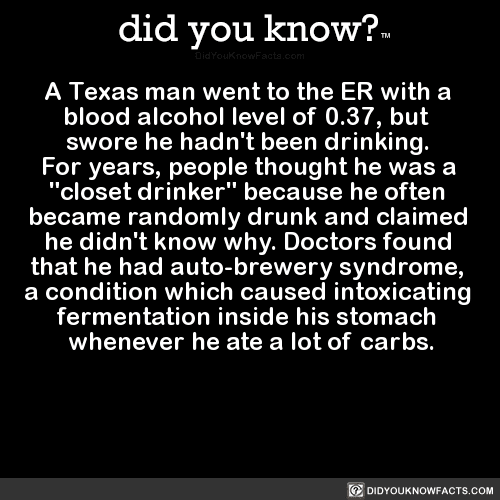
3. Do you have this condition?

Photo Credit: did you know?

Source 1

4. Public Enemy #1

Photo Credit: did you know?

Source 1 Source 2

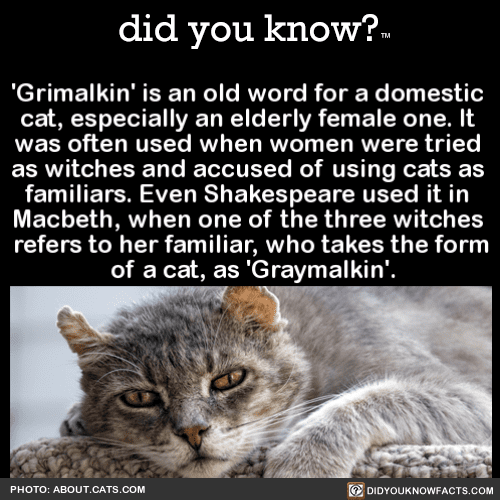
5. Grimalkin

Photo Credit: did you know?

Source 1 Source 2 Source 3

6. Good use of resources

Photo Credit: did you know?

Source 1 Source 2

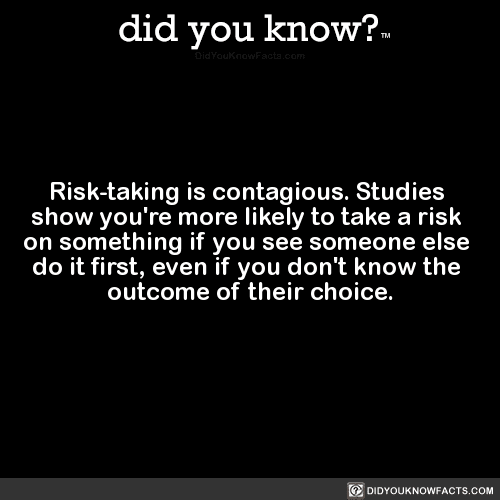
7. Give it a shot!

Photo Credit: did you know?

Source 1 Source 2

8. This is so bizarre

Photo Credit: did you know?

Source 1 Source 2

9. Super Women

Photo Credit: did you know?

Source 1 Source 2

10. Yes! Books rule!

Photo Credit: did you know?

Source 1 Source 2

What do you think? You a little more motivated to learn about some new topics after looking over those facts?

I know I am!

The post 10 Facts That Just Might Send You Down a Long Rabbit Hole appeared first on UberFacts.

15 Photos of Cats That Shouldn’t Have Messed with Bees

These poor kitties really should’ve known better than to mess with bees.

You’ll see what I mean as you scroll through these photos.

A whole lot of swelling going on!

1. Not pleased

Photo Credit: Sad and Useless

2. Mom?

Photo Credit: Sad and Useless

3. Sad

Photo Credit: Sad and Useless

4. Bigfoot

Photo Credit: Sad and Useless

5. All swelled up

Photo Credit: Sad and Useless

6. Uh oh

Photo Credit: Sad and Useless

7. Gigantor

Photo Credit: Sad and Useless

8. Awwwww

Photo Credit: Sad and Useless

9. Oh no!

Photo Credit: Sad and Useless

10. Trying to be cool with it

Photo Credit: Sad and Useless

11. OMG

Photo Credit: Sad and Useless

12. Wait, what?

Photo Credit: Sad and Useless

13. Freaky Deaky

Photo Credit: Sad and Useless

14. I need help

Photo Credit: Sad and Useless

15. See that tear in her eye?

Photo Credit: Sad and Useless

Those pics are kind of sad, aren’t they?

The post 15 Photos of Cats That Shouldn’t Have Messed with Bees appeared first on UberFacts.

An Extremely Rare Two-Headed Baby Turtle Was Found on a South Carolina Beach

This sure is a strange sighting.

If you’re reading that headline and thinking to yourself “there’s no way a two-headed turtle could be anything other than weird,” well, this little turtle would like you to hold its beer.

I mean, if it drank beer and it was of age to imbibe, I mean.

Because even though the hatchling has two heads, it’s as cute as a button.

Posted by Jayme Davidson Lopko on Wednesday, August 28, 2019

The little guy (guys?) was spotted and filmed by the Sea Turtle Patrol on Hilton Head Island. They were checking out a loggerhead turtle nest, when the strange hatchling caught their eye.

Cause, duh.

They gave him two names – Squirt and Crush (of Nemo fame) – and documented his (their?) existence before setting him free to make his way to the sea.

Posted by Jayme Davidson Lopko on Wednesday, August 28, 2019

The baby was struggle to crawl with its oddly shaped shell, but since the group doesn’t collect turtles, but merely observes and monitors the populations, the scientists didn’t keep it (them?).

Posted by Jayme Davidson Lopko on Wednesday, August 28, 2019

Sadly, the survival rate even for healthy hatchlings is pretty low – only 1 in 1,000 green sea turtles survives to adulthood – so Squirt and Crash are definitely facing an uphill battle.

Sea Turtle Patrol wrote about the find on Facebook.

We often find many strange things when we inventory sea turtle nests. Yesterday I found this twin two-headed hatchling….

Posted by Jayme Davidson Lopko on Wednesday, August 28, 2019

“Sea Turtle Patrol follows rules set by the State Department of Natural Resources which calls for us to protect the nests and turtles but to also allow as natural a process as possible. We do not take hatchlings off the beach to raise or rehabilitate. This little guy is on his own just like his brothers and sisters that came from the nest and like they have been doing for millions of years. Good luck and safe travels special guy!”

Posted by Jayme Davidson Lopko on Wednesday, August 28, 2019

It’s super cool that we get to see something like this exist, even if it’s just for a moment, but it would be so hard to just let him go, knowing things probably won’t turn out well.

Would you be able to do it? I guess some people are just conservationists at heart!

The post An Extremely Rare Two-Headed Baby Turtle Was Found on a South Carolina Beach appeared first on UberFacts.
A Family Found Grandma’s Lost Dentures…in the Dog’s Mouth

Dogs are the greatest. They make us happy, they comfort us when we’re sad, and yes, they make us laugh.

And this little dog, named Luna, went above and beyond in that last category.

She found Grandma’s missing dentures. It sounds pretty helpful, right? After all, they were missing…

Posted by Anna Carolina Lima on Wednesday, September 4, 2019

Luna belongs to Anna Carolina Lima and her fiancee, who live in Brazil. They also regularly take the dog to visit Lima’s grandmother, who sometimes keeps the little pup when the two lovebirds need someone to watch her for a while.

Posted by Anna Carolina Lima on Wednesday, September 4, 2019

Luna was there one day when grandma decided she needed a nap. She tucked her dentures under her pillow the way she always does so as to not lose them while she snoozes…

Which is when Luna snagged her opportunity.

And also grandma’s dentures.

Image Credit: Facebook

Grandma spent hours looking for her teeth after waking to find them gone – but when Anna returned to gather her pup, she found them basically immediately.

Image Credit: Facebook

And the pictures are truly wonderful. I mean, just look at that pup with her people teeth!

Image Credit: Facebook

Though it is a little bit gross, and though grandma may find herself needing a new set of dentures, Lima and her grandmother weren’t mad. I mean, just look at that smile!

Dogs are the best.

The post A Family Found Grandma’s Lost Dentures…in the Dog’s Mouth appeared first on UberFacts.

Zoos Are No Longer Able to Acquire African Elephants from the Wild

You might have already assumed that trade in wild African elephants – and endangered species in general – was illegal, even if it was a zoo that was looking to take one in.

We would have been wrong.

Though hopefully that won’t be the case for much longer.

At the 18th meeting of CITES, the Convention on International Trade in Endangered Species, members from over 180 countries reassessed regulations on international elephant trade. A vast majority of the the representatives voted to end the capture and sale of wild African elephants for display in zoos worldwide.

The issue will go for a vote in front of the full conference, but with 46 of the 83 countries in favor, it looks to have a good chance of passing.

Iris Ho, a senior policy advisor at Humane Society International (HSI), told Bloomberg that everyone in the business of supporting endangered species sees this as a win.

“It’s a huge step forward. It’s really historic that the majority of the parties present recognized that African elephants should not be captured in the wild, sent to zoos and be kept in captivity for the rest of their lives.”

The ban would largely affect countries in southern Africa, where elephant populations are healthier and herds are regularly thinned for the purpose of selling them to zoos. Zimbabwe alone sold over 100 wild-caught baby elephants to China in the past 7 years, and the issue of separating calves from their mothers and the rest of the herd certainly has animal welfare experts concerned.

“Calves suffer psychological and physical harm when taken from their mothers,” explains elephant biologist Audrey Delsink of HSI Africa. “Zoos and other captive facilities force these calves to live in an unnatural, unhealthy environment that doesn’t meet their complex needs.”

View this post on Instagram

Did you know that African elephants are the largest land animals on Earth? They are slightly larger than their Asian cousins and can be identified by their large ears that look like the continent of Africa. Their ears radiate heat to help keep them cool, but sometimes the African heat can be too much so they use their trunk to give themselves a shower. Elephants eat roots, grasses, fruits, and bark and they eat a lot of it. In fact, an adult elephant can consume up to 300 pounds of food a day. Female elephants have a longer pregnancy than any other mammal (22 months) and usually give birth to one calf. In 2018, Tarangire’s famed Eloise was the oldest elephant to give birth to twin calves. Source of information: National Geographic https://www.wanderlusttours.org #wanderlust #tours #africa #tanzani #tarangirenationalpark #tarangire #elephants #africanelephants #thisisafrica #travel #concioustravel #mindfultravel

A post shared by Wanderlust Tours (@wanderlusttoursafrica) on

Elephant trade has long been a hot topic, with African nations often territorial about managing their own wildlife without outside interference. Black market demands for ivory has drastically increased elephant poaching in the last few decades, though, so organizations like CITES feel as if they have a duty to protect the endangered species as if it belongs to the world, and not only to its endemic areas in Africa.

Over a million species are listed as at risk thanks to all manner of human activity, so committees like CITES are set to have busy years as they work to revamp how different species are protected around the globe.

“Nature’s dangerous decline is unprecedented,” says CITES Secretary General Ivonne Higuero. “Business as usual is no longer an option.”

I feel like that statement applies to environmental challenges all over the globe, and I hope there are people in every nook and cranny waiting to step up to do their part to save us all.

The post Zoos Are No Longer Able to Acquire African Elephants from the Wild appeared first on UberFacts.
Zoos Are No Longer Able to Acquire African Elephants from the Wild

You might have already assumed that trade in wild African elephants – and endangered species in general – was illegal, even if it was a zoo that was looking to take one in.

We would have been wrong.

Though hopefully that won’t be the case for much longer.

At the 18th meeting of CITES, the Convention on International Trade in Endangered Species, members from over 180 countries reassessed regulations on international elephant trade. A vast majority of the the representatives voted to end the capture and sale of wild African elephants for display in zoos worldwide.

The issue will go for a vote in front of the full conference, but with 46 of the 83 countries in favor, it looks to have a good chance of passing.

Iris Ho, a senior policy advisor at Humane Society International (HSI), told Bloomberg that everyone in the business of supporting endangered species sees this as a win.

“It’s a huge step forward. It’s really historic that the majority of the parties present recognized that African elephants should not be captured in the wild, sent to zoos and be kept in captivity for the rest of their lives.”

The ban would largely affect countries in southern Africa, where elephant populations are healthier and herds are regularly thinned for the purpose of selling them to zoos. Zimbabwe alone sold over 100 wild-caught baby elephants to China in the past 7 years, and the issue of separating calves from their mothers and the rest of the herd certainly has animal welfare experts concerned.

“Calves suffer psychological and physical harm when taken from their mothers,” explains elephant biologist Audrey Delsink of HSI Africa. “Zoos and other captive facilities force these calves to live in an unnatural, unhealthy environment that doesn’t meet their complex needs.”

View this post on Instagram

Did you know that African elephants are the largest land animals on Earth? They are slightly larger than their Asian cousins and can be identified by their large ears that look like the continent of Africa. Their ears radiate heat to help keep them cool, but sometimes the African heat can be too much so they use their trunk to give themselves a shower. Elephants eat roots, grasses, fruits, and bark and they eat a lot of it. In fact, an adult elephant can consume up to 300 pounds of food a day. Female elephants have a longer pregnancy than any other mammal (22 months) and usually give birth to one calf. In 2018, Tarangire’s famed Eloise was the oldest elephant to give birth to twin calves. Source of information: National Geographic https://www.wanderlusttours.org #wanderlust #tours #africa #tanzani #tarangirenationalpark #tarangire #elephants #africanelephants #thisisafrica #travel #concioustravel #mindfultravel

A post shared by Wanderlust Tours (@wanderlusttoursafrica) on

Elephant trade has long been a hot topic, with African nations often territorial about managing their own wildlife without outside interference. Black market demands for ivory has drastically increased elephant poaching in the last few decades, though, so organizations like CITES feel as if they have a duty to protect the endangered species as if it belongs to the world, and not only to its endemic areas in Africa.

Over a million species are listed as at risk thanks to all manner of human activity, so committees like CITES are set to have busy years as they work to revamp how different species are protected around the globe.

“Nature’s dangerous decline is unprecedented,” says CITES Secretary General Ivonne Higuero. “Business as usual is no longer an option.”

I feel like that statement applies to environmental challenges all over the globe, and I hope there are people in every nook and cranny waiting to step up to do their part to save us all.

The post Zoos Are No Longer Able to Acquire African Elephants from the Wild appeared first on UberFacts.

A Guys Tried to Dissuade a Friend from Buying a Purebred Pug by Showing Him a Skull Comparison

This is a strange story…

When NoNienNietNon‘s friend expressed a desire to own a purebred pug, he went all out in trying to convince him otherwise – by showing him the cruel differences between a pug skull and the skulls of other, less bred dogs.

fuck intentionally breeding physical deformities into animals for the sake of vanity

There are plenty of arguments against buying a purebred doing and instead opting to rescue a pup from the shelter, but when it comes to the “squashed face” breeds (like pugs), you can add “the health of the breed” to that list.

Pugs and other dogs with smashed faces (aka brachycephaly) are prone to multiple health issues that shorten their lifespan and impair their quality of life. Dr. Rowena Packer spoke with The Guardian about some of these problems.

“The breeds that are increasing in popularity unfortunately are plagued by a plethora of different health problems – we are talking about issues from head to tail. Whenever we’ve got breeds that do have health problems increasing in popularity naturally we are really concerned about that.”

Professor Paul McGreevy chimed in to talk about how the health problems impact their lifespan.

“These dogs are dying, we think, four years earlier than dogs of the same size with normal-shaped skulls. Because they have got all of the tissues in their head that a normal dog has, but they have less room, they get dental crowding and they also get the soft palette hanging down – that is what gives them the [breathing] sounds.”

The wrinkles on their faces, caused by excess skin, also lead the breeds to struggle with eczema, skin disorders, and even eye problems, and the “ideal” body shape of a head larger than the waist means more and more pug mamas require c-section births.

If that’s not a way of Mother Nature telling you that something has gone awry, I don’t know what is.

The post A Guys Tried to Dissuade a Friend from Buying a Purebred Pug by Showing Him a Skull Comparison appeared first on UberFacts.

Why Are Bugs So Darn Loud?

You’re outside on a warm summer evening: there are no cars, no voices, just the overwhelming cacophony of BUGS. Tons of them. It sounds like a symphony in the trees of nonstop chirping from cicadas, crickets, and other insects. If you’ve ever camped in a national park or a forest, you know exactly what I’m talking about. The forest comes alive and it gets so loud that you are taken aback.

But did you ever ask yourself the question, “Why are bugs so darn loud?” Especially when you look at them and see how little they are?

Let’s take a look at how three small insects make all that noise.

Katydids

Photo Credit: Wikipedia

A lot of the noise you hear from katydids is associated with mating. These insects rub their wings together in a method known as “stridulation,” producing a buzzing sound. Of course, it’s the males that stridulate, since they’re the ones doing the attracting.

Cicadas

Photo Credit: Wikipedia

Only male cicadas make noise, just like katydids and crickets. Unlike katydids, cicadas don’t only make noise to mate, but also to scare off other male bugs and to send out distress signals. To make noise, male cicadas use tymbals, special noise-making organs that are located on their abdomens. Most of the rest of a cicada’s abdomen is hollow, which helps to amplify the noise.

They’re also able to fold their eardrums closed, which is good news for them because they are loud.

Crickets

Photo Credit: Wikipedia

Crickets, crickets, everywhere! Crickets rub their wings together to make noise, but they emit a lower frequency than katydids, which results in a more musical sound instead of a buzzing noise. Crickets also use noise to attract potential mates, and they have a number of different ‘songs’ for different parts of the mating ritual: attracting a mate, wooing a mate, and warning off male competition.


It sure is noisy out there!

The post Why Are Bugs So Darn Loud? appeared first on UberFacts.

10 Facts so Good You Might Just Jump Around

Let’s cut the chit chat and the small talk RIGHT NOW. I’m here with 10 facts that you absolutely NEED in your life right now.

They’re so good, in fact, that I have a feeling you’re going to jump for joy. So go ahead and do it! …After you enjoy these facts.

1. Been there, done that

Photo Credit: did you know?

Source 1 Source 2

2. Ouch…

Photo Credit: did you know?

Source 1 Source 2

3. Freaky!

Photo Credit: did you know?

Source 1 Source 2 Source 3

4. That’s interesting

Photo Credit: did you know?

Source 1 Source 2 Source 3

5. It works!

Photo Credit: did you know?

Source 1 Source 2

6. Give it a shot

Photo Credit: did you know?

Source 1 Source 2

7. Here come the waterworks

Photo Credit: did you know?

Source 1

8. I’ll take two!

Photo Credit: did you know?

Source 1 Source 2 Source 3

9. Harry Potter critters

Photo Credit: did you know?

Source 1 Source 2 Source 3

10. Hey, Gramps!

Photo Credit: did you know?

Source 1 Source 2 Source 3

Might as well JUMP!

The post 10 Facts so Good You Might Just Jump Around appeared first on UberFacts.