A Fisherman Caught a Strange, Alien-Like Fish off the Coast of Norway

A young man named Oscar Lundahl was working on a fishing boat recently when he got the catch—and the surprise—of a lifetime. He was reeling in his catch when he noticed something very unusual on the end of his line: an alien-like fish with bulbous eyes that looked like something from a science-fiction movie.

The weird creature is actually called a ratfish. It is a 300-million-year-old relative of the shark that lives in very deep water and is rarely ever caught. Their eyes are so enormous to help them see in the dark, deep depths where they roam.

Lundahl, who is 19 years old and works for Nordic Sea Angling in Sweden, was fishing for halibut off the island of Andoya in northern Norway when he reeled in the ratfish in 2,600-feet deep waters.

View this post on Instagram

A day at work!

A post shared by Oscar Lundahl (@oscarlundahl) on

The young fisherman described his experience:

“We were looking for blue halibut which is a rare species about five miles (8km) off shore. I had four hooks on one line and felt something quite big on the end of it. It took me about 30 minutes to reel it in because it was 800 metres deep. There were two halibut on two of the hooks and I was really happy about that and then I saw there was something else. It was pretty amazing. I have never seen anything like it before. It just looked weird, a bit dinosaur-like. I didn’t know what it was but my colleague did.”

Lundahl ended up eating the ratfish because the creature did not survive the pressure change when it was reeled in. He said, “It is a bit like cod but tastier.”

I’ll take his word for it.

The post A Fisherman Caught a Strange, Alien-Like Fish off the Coast of Norway appeared first on UberFacts.

A Law Firm Hired a Stray Cat After People Complained About It Wandering Around the Office

There’s only one course of action if a stray cat or dog is wandering around your office. Well, you adopt them, of course! And that’s exactly what a law firm in Brasília, Brazil did with a little fella who goes by the name of Leon.

Leon was just one of the many stray cats wandering the streets of Brasília when he somehow snuck into the Order of Attorneys of Brazil office building. Leon hung around the reception area for a while, but when some people started to complain about the frisky feline, the company found a unique way to keep Leon around: they hired him as a lawyer.

Per the Facebook post they wrote:

“After a heavy rain, this little guy here seeking shelter from the storm went inside the OAB building (the Brazilian equivalent of American Bar Association) and decided to stay. Unfortunately some people started to file some complaints about the fact that at the reception desk there was a stray cat hanging around and trying to make friends with the newcomers. In order to avoid some new complaints the board gave the solution: Hire the cat as an employee.”

Dr. Leon now has his own ID card, his own Instagram page, and he’s grown quite a bit since he first wandered into the office. Leon’s become such a hit that the Order of Attorneys of Brazil decided to launch their own animal rights institute called Instituto Dr. Leon.

I love this story!

And I think Dr. Leon needs his own reality TV show ASAP.

The post A Law Firm Hired a Stray Cat After People Complained About It Wandering Around the Office appeared first on UberFacts.

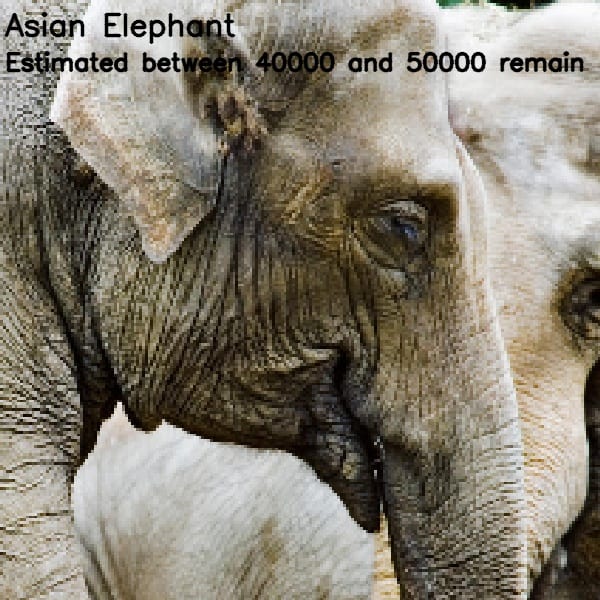
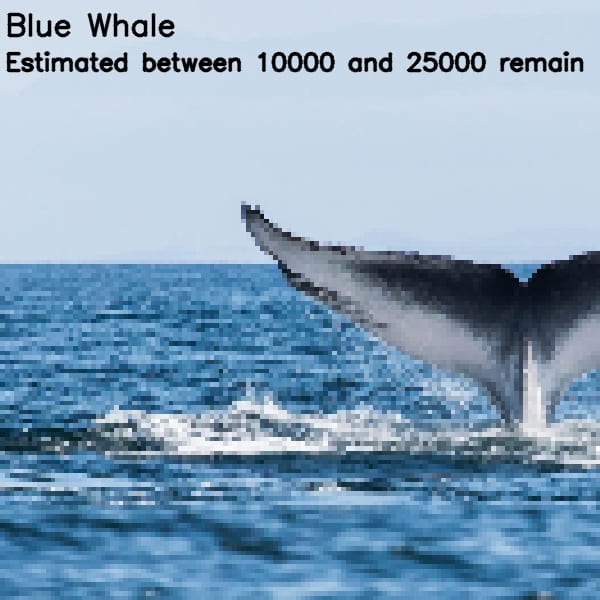
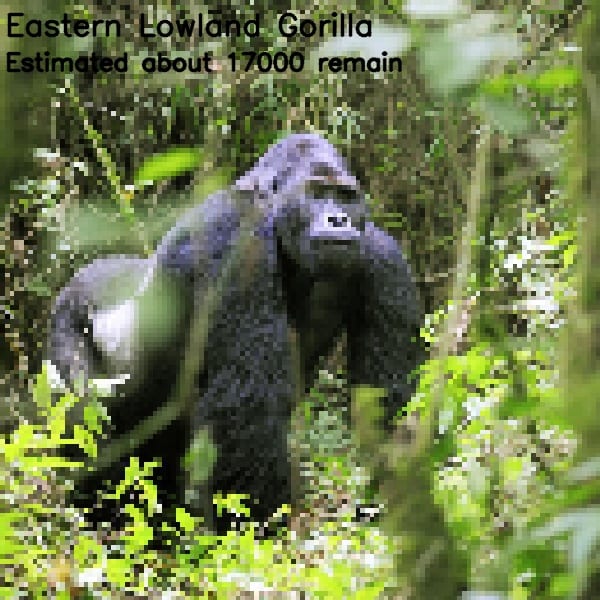
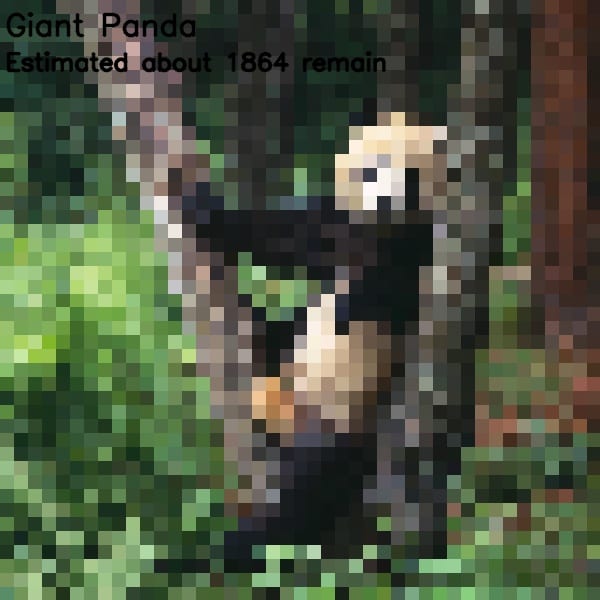
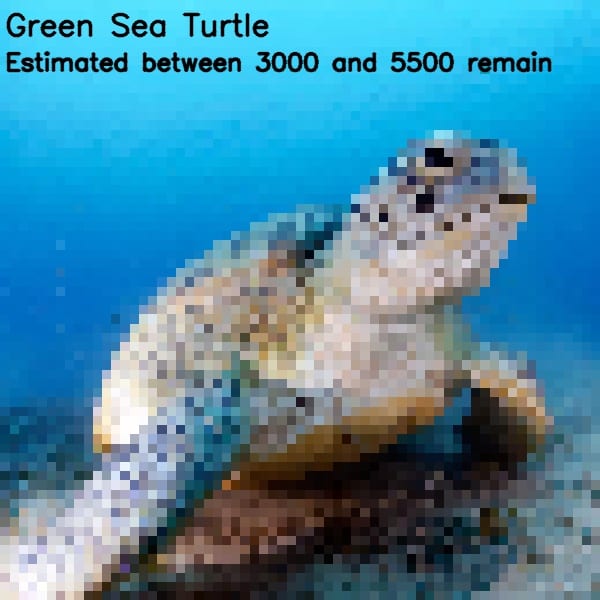
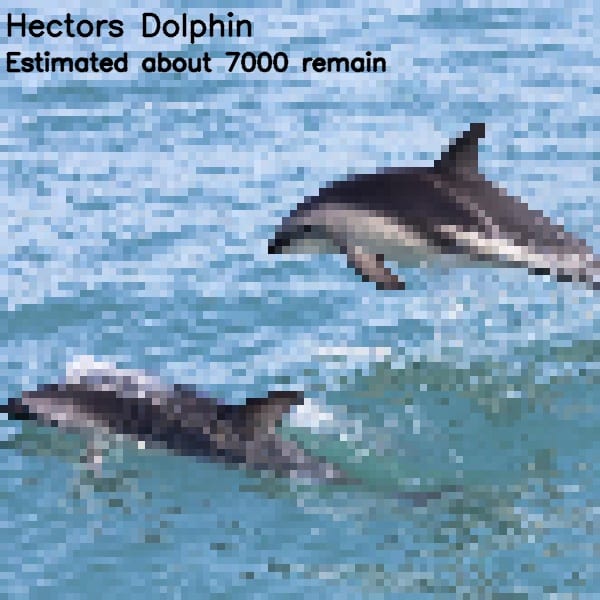
These Pictures of Endangered Animals Have as Many Pixels as There Are Remaining Members of the Species

We’re seeing a mass extinction of animals and plants from the face of the earth at a frightening pace. It’s strange to think that our children or grandchildren will live in a world where giraffes or white rhinos could cease to exist in the wild – could, perhaps, vanish altogether.

Every Pixels is one animal. The more pixelated the image, the closer it is to extinction.

The World Wildlife Fund wanted to shine a spotlight on the often-forgotten but still looming tragedy, so they worked with creative designers Nami Hoshino, Yoshiyuki Mikami, and Kazuhiro Mochizuki at Hakuhodo C&D in Tokyo to create the concept of population pixelation.

Image Credit: JJSmooth44

Image Credit: JJSmooth44

Recently, Imgur user JJSmooth44 made a followup to the project then posted it on Imgur and Reddit, and people seem just as taken.

Image Credit: JJSmooth44

Image Credit: JJSmooth44

The results, as you can see, are stark and sad.

Image Credit: JJSmooth44

Sadder still? These population declines are all driven by humans.

Image Credit: JJSmooth44

Image Credit: JJSmooth44

Will we do something to turn the tide in time?

Image Credit: JJSmooth44

That remains to be seen.

Image Credit: JJSmooth44

But as long as there are a few pixels left, there’s still hope.

The post These Pictures of Endangered Animals Have as Many Pixels as There Are Remaining Members of the Species appeared first on UberFacts.

10 Facts for You to Chew On

Let’s celebrate some great facts!

You can share them with your friends, families, and enemies, and you can whip them out at your next dinner party so people get really impressed with you.

Trust me, it works.

Now memorize these facts!

1. Those programs don’t work.

Photo Credit: did you know?

Source 1 Source 2

2. Bring this to the USA!

Photo Credit: did you know?

Source 1 Source 2 Source 3

3. Wow, that’s quite a story.

Photo Credit: did you know?

Source 1 Source 2

4. She did what she wanted.

Photo Credit: did you know?

Source 1 Source 2

5. Here’s the real math.

Photo Credit: did you know?

Source 1 Source 2 Source 3

6.  Well, that’s disgusting.

Photo Credit: did you know?

Source

7. Have you seen these?

Photo Credit: did you know?

Source 1 Source 2 Source 3

8. That’s just a myth.

Photo Credit: did you know?

Source 1 Source 2

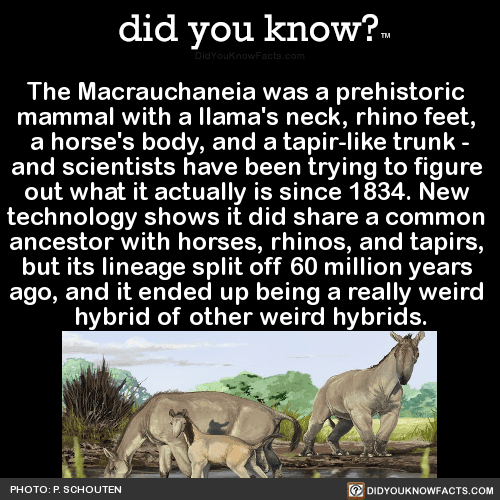
9. All kinds of weird hybrids.

Photo Credit: did you know?

Source 1 Source 2 Source 3

10. Runs in the family.

Photo Credit: did you know?

Source 1 Source 2 Source 3

Hip, hip, HOORAY!

The post 10 Facts for You to Chew On appeared first on UberFacts.

Giraffes Hum to Each Other at Night and How Adorable Is That?

Researchers have always assumed that, given their 13-foot-long tracheas, giraffes were silent beings. There has been some speculation that the gentle, odd-looking vegetarians might produce infrasonic sounds too low for the human ear to catch, but it’s never been proven.

At least, until now.

View this post on Instagram

Dis you know?⬇⬇ Giraffes are very social animals and roam around in groups. These groups, called towers, typically have around 15 members led by an adult male. The other members are females and young males. Tag a friend that needs to see this⬇⬇ Follow @natureeslife Follow @natureeslife • • • • • • Dm your wildlife video for a chance to get featured?? Tag a friend and follow @natureeslife for more ? Credit:@paultje_nl • • • • • • #wildlifeonearth #wildlifeowners #wildlifephotography #wildlifeaddicts #wildlifeindia #seewildlife #destination_wild #ourwildlifedays #wildglobe #natgeowild #tigers #animalelite #giraffe #wildgeography #thedodo #naturelife #wondermore #folkcreative #animals #fantasticearth #earthscope #stayandwonder #discoverearth #roamtheplanet #moodygrams #giraffes #exploretocreate #artofvisuals #visualambassadors #fantasticearth

A post shared by Animals | Photography | Nature (@natureeslife) on

Researchers at the University of Vienna have spent the last 8 years gathering 947 hours of giraffe noises from zoos around Europe, and have come out with some very interesting – and unexpected – findings.

Not only do giraffes hum to each other at night, but they hum at frequencies that humans can actually hear (around 92 Hertz).

The report in BMC Research Notes, expands:

“Based on their acoustic structure, these vocalizations might function as communicative signals to convey information about the physical and motivational attributes of the caller.”

According to Wired:

“Giraffes have excellent vision, so their primary means of communication is thought to be visual signals during daylight hours. As prey animals, it also makes sense that they might not want to make loud noises that can attract the attention of predators. But when vision is impaired at night, low frequency humming might be a great way to make sure the herd stays together.”

More research is needed to correlate the sounds to giraffe behaviors, but scientists suspect the humming might convey information about age, gender, sexual arousal, dominance, and other things that are less understood.

Researchers more firmly believe that the sounds could be meant to keep the herd together at night, or help wanderers find their way back to safety.

Take a listen:

It’s pretty cool, if you ask me. Were I a giraffe, there would be something reassuring about knowing the others would be there all night, making it easy to get some rest.

There’s safety in numbers, after all.

The post Giraffes Hum to Each Other at Night and How Adorable Is That? appeared first on UberFacts.

The Psoas Is the Important Muscle Where Your Body Stores Your Deepest Trauma

This is important information for EVERYONE.

Trauma affects people in different ways—physically and psychologically.

But did you know your body may be storing your trauma in a muscle you’ve probably never heard of?

It’s that pesky psoas (SO-az) .

Photo Credit: Pexels, Burst

Your body is built to react to traumatic experiences physically. Think of it as a basis for survival. Have you ever heard stories of how people acquire superhuman strength and can move a car to save someone? Yeah, like that kind of physical.

Even your very cells react to and store trauma.

If these physical responses remain “stuck,” they begin to cause issues. Animals and babies can easily release stress and trauma by literally shaking it off or by crying. But as adults, we learn to hold in our emotions, thus making the process of release much more drawn out and difficult.

View this post on Instagram

#psoasmuscle

A post shared by Daniele Zanoni (@danielezanonizana) on

How do the psoas muscles come into play?

Your psoas is the strongest muscle in your hip flexors, and it contributes to nearly everything you do— from posture to core strength to moving your legs pretty much at all. Back pain is often related to psoas tightness.

If you’ve ever done yoga, you know that almost everyone has tight hips, even people with flexible hips. Yoga teachers often focus on your hips because they believe, with good reason, that humans “store unexpressed emotions” there.

When you think about it, your hips don’t really move much throughout the day—in the course of normal activity, the rest of your body sort of ends up moving around your hips. That means the moving parts release tension, while the static parts don’t.

Since psoas muscles make up the core of your body, they are most affected by our need to survive (i.e. flight or fight). This is part of why after participating in a yoga or stretching session, we feel calmer and more relieved.

Especially if you spend most of your day sitting down, your psoas is not getting the stretching it needs to release all of the pent up emotion and anxiety of modern life.

Take a look at this video on the proper way to stretch this area.

As you practice, you may find your body shaking on different levels. This is okay, but try not to push too hard. Listen to your body. At times you might feel like a good cry is about to burst through, since your mind and body are open. Allow it to happen. This is the muscle releasing trauma.

The human body is an amazing creation, and we want to keep it that way.

Namaste.

The post The Psoas Is the Important Muscle Where Your Body Stores Your Deepest Trauma appeared first on UberFacts.

The Psoas Is the Important Muscle Where Your Body Stores Your Deepest Trauma

This is important information for EVERYONE.

Trauma affects people in different ways—physically and psychologically.

But did you know your body may be storing your trauma in a muscle you’ve probably never heard of?

It’s that pesky psoas (SO-az) .

Photo Credit: Pexels, Burst

Your body is built to react to traumatic experiences physically. Think of it as a basis for survival. Have you ever heard stories of how people acquire superhuman strength and can move a car to save someone? Yeah, like that kind of physical.

Even your very cells react to and store trauma.

If these physical responses remain “stuck,” they begin to cause issues. Animals and babies can easily release stress and trauma by literally shaking it off or by crying. But as adults, we learn to hold in our emotions, thus making the process of release much more drawn out and difficult.

View this post on Instagram

#psoasmuscle

A post shared by Daniele Zanoni (@danielezanonizana) on

How do the psoas muscles come into play?

Your psoas is the strongest muscle in your hip flexors, and it contributes to nearly everything you do— from posture to core strength to moving your legs pretty much at all. Back pain is often related to psoas tightness.

If you’ve ever done yoga, you know that almost everyone has tight hips, even people with flexible hips. Yoga teachers often focus on your hips because they believe, with good reason, that humans “store unexpressed emotions” there.

When you think about it, your hips don’t really move much throughout the day—in the course of normal activity, the rest of your body sort of ends up moving around your hips. That means the moving parts release tension, while the static parts don’t.

Since psoas muscles make up the core of your body, they are most affected by our need to survive (i.e. flight or fight). This is part of why after participating in a yoga or stretching session, we feel calmer and more relieved.

Especially if you spend most of your day sitting down, your psoas is not getting the stretching it needs to release all of the pent up emotion and anxiety of modern life.

Take a look at this video on the proper way to stretch this area.

As you practice, you may find your body shaking on different levels. This is okay, but try not to push too hard. Listen to your body. At times you might feel like a good cry is about to burst through, since your mind and body are open. Allow it to happen. This is the muscle releasing trauma.

The human body is an amazing creation, and we want to keep it that way.

Namaste.

The post The Psoas Is the Important Muscle Where Your Body Stores Your Deepest Trauma appeared first on UberFacts.

Here Are Some Tweets About Dogs Who Might Melt Your Damn Heart

Pretty much every dog puts a big smile on my face, but these puppers are really going above and beyond the call of duty.

They deserve a day of snoozing in the sun and belly rubs for their efforts.

11. Why sleep in a bed when you have a dog?

10. They’re going to be best friends for life.

9. The dog, yes, but also the caption.

8. This guy is not quite as slick as he’d like to think.

7. You’ll get no argument from me!

6. This is just like having kids.

5. You’re going to want to make sure your sound is up for this.

4. My heart cannot take it.

3. I’m sure they thought no one was looking.

2. Whose day wouldn’t be brightened by Max?

1. They both look so proud of each other!


I hope their owners are ready to pamper these little sweeties!

Do you love browsing the web for cute dogs? Show us your favorite below!

The post Here Are Some Tweets About Dogs Who Might Melt Your Damn Heart appeared first on UberFacts.

Scientists Say That North America Has Lost 3 Billion Birds in the Last 50 Years

We’ve heard all about the plight of the bees that are disappearing at an alarming rate across the world, but the situation with birds doesn’t look too great, either.

A new article in the journal Science estimates that North America has lost a quarter of its bird population – roughly 3 billion birds – in the past 50 years. The researchers looked at populations of 529 different bird species since 1970 to reach their conclusion. They collected data from surveys with the help of volunteer bird spotters and combined that with ten years worth of data on flocks of migrating birds detected by 143 different weather radar installations.

Ken Rosenberg of the Cornell Lab of Ornithology said, “We saw this tremendous net loss across the entire bird community. By our estimates, it’s a 30% loss in the total number of breeding birds. But we also knew that other bird populations were increasing. And what we didn’t know is whether there was a net change.”

The data showed that more than 90% of the losses came from only a dozen bird families, including warblers, blackbirds, finches, and sparrows. Meadowlarks and red-winged blackbirds are two examples of common birds that have seen their numbers decrease.

The news isn’t entirely bad, though; some bird populations have increased, such as raptors (influding bald eagles), and waterfowl. Rosenberg continued, “The numbers of ducks and geese are larger than they’ve ever been, and that’s not an accident. It’s because hunters who primarily want to see healthy waterfowl populations for recreational hunting have raised their voices.”

Mike Parr, another one of the study’s authors, said, “We’re making the wrong moves now to sustain nature for the future, and this is an indication that nature is unraveling and that ecosystems are highly stressed. Our generation is going survive it, and probably the next generation will, but who knows where the tipping point is.”

The researchers say that climate change played only a small role in the overall loss of the birds so far, but it is likely to become more of a threat in the future because of rising seas, draughts and wildfires.

The post Scientists Say That North America Has Lost 3 Billion Birds in the Last 50 Years appeared first on UberFacts.

The Nearly Extinct Northern White Rhino Might Live on Thanks to Lab-Created Embryos

Finally, some good news!

For all the destruction and mayhem that humans have caused around the planet, sometimes we actually do some good things, too. Things like preventing (hopefully) the complete extinction of the northern white rhino.

The last male northern white rhino died in 2018, and only two females, Fatu and Najin, remain of the species. Neither of them are capable of bearing a child. It was believed that once the two females passed away, that would be the end of the northern white rhino.

But scientists recently announced they were able to extract immature eggs from the two remaining females, and the eggs were flown to a laboratory in Italy.

View this post on Instagram

BREAKING NEWS – WE NOW HAVE TWO NORTHERN WHITE RHINO EMBRYOS! We are happy to announce that two northern white rhino embryos have been successfully matured and fertilised. This development marks a turning point in the race to save the northern white rhino from near extinction. The two embryos were created using eggs collected from Fatu, the youngest of the two northern white rhinos and frozen sperm from Suni a deceased northern white rhino male. The embryos are now stored in liquid nitrogen and will be transferred into a surrogate southern white rhino female in the near future. To make this procedure a reality, Fatu’s eggs were injected with Suni’s sperm while Najin’s eggs were injected with Saut’s sperm. Saut’s semen was of really poor quality and scientists had to thaw additional samples to find viable sperms for the procedure. Unfortunately, Najin’s eggs did not make it to a viable embryo despite the fact that one egg initiated segmentation. This landmark effort was achieved at Avantea Laboratories in Cremona, Italy thanks to Prof. Cesare Galli and his team. We have only gotten this far because of your unending support. To be part of the journey towards making a northern white rhino, go to donate.olpejetaconservancy.org/projects/sudan ? ? Jan Zwilling, Ami Vitale, Cesare Galli @kenyawildlifeservice @tourism_wildlifeke @leibnizizw @biorescue_project @bmbf.bund @leibnizgemeinschaft @safariparkdvurkralove #OlPejeta #NorthernWhiteRhino #OvumPickUp #NorthernWhiteRhinoRecovery #NajinandFatu

A post shared by Ol Pejeta Conservancy, Kenya (@olpejeta) on

The eggs were then injected with sperm from two dead male northern white rhinos. Only two of the eggs from one of the rhinos developed into viable embryos, and they were immediately frozen. Because Fatu and Najin can’t carry a pregnancy, the embryos will be transferred to a surrogate mother—a southern white rhinoceros.

View this post on Instagram

With Najin and Fatu, the last two northern white rhinos, unable to carry a pregnancy, the future of the northern white rhino species solely depends on artificial reproduction. ? Over the past few years, scientists have been working very hard on perfecting a procedure for both harvesting and fertilisation in vitro. ? The successful harvest of 10 eggs from the northern white rhinos yesterday (August 22nd, 2019) means that scientists are now closer to saving the species from complete extinction. ? @amivitale ——————————————————————— @kenyawildlifeservice @tourism_wildlifeke @leibnizizw @biorescue_project @bmbf.bund @leibnizgemeinschaft @safariparkdvurkralove ? #OlPejeta #NorthernWhiteRhino #OvumPickUp #NorthernWhiteRhinoRecovery #NajinandFatu #SaveOurRhinos #OnlyTwoLeft #EndExtinction

A post shared by Ol Pejeta Conservancy, Kenya (@olpejeta) on

Jan Stejskal, Director of Communication and International Projects at the zoo in the Czech Republic where Najin and Fatu were born, said:

“Five years ago it seemed like the production of a northern white rhino embryo was [an] almost unachievable goal — and today we have them. The technique for collection of eggs was developed in cooperation with many European zoos and we are happy that this unique cooperation can continue even with attempts at successful embryo transfer.”

Scientists must now transfer the embryos to a surrogate mother and track the embryos’ development into fetuses. From there, scientists still face an enormous uphill climb—the species lacks genetic diversity, and there are very few ways to get it back once there are so few individuals left. Plus, rhinos are slow developing creatures, so to rebuild the population in any meaningful way will take decades.

Sadly, the northern white rhino reached this point mainly due to poaching—they were targeted for their horns, which, though they have no medicinal properties of any sort, are highly prized in traditional Chinese medicine.

The post The Nearly Extinct Northern White Rhino Might Live on Thanks to Lab-Created Embryos appeared first on UberFacts.