This is How Lava Lamps Are Protecting You from Hackers

Everyone worries about data encryption and cybersecurity. I’m certainly no stranger to the concept.

I think my credit card has now been skimmed 3 times in 2 years, but 2020 was 5 years long, so I may have lost count.

That’s where cybersecurity companies like San Francisco based Cloudflare come in, bringing a very unique perspective to data encryption.

As Atlas Obscura reports:

Cloudflare covers about 10 percent of international web traffic, including the websites for Uber, OKCupid, or FitBit.

I’m betting most readers have used at least 2 out of 3 of these sites at some point.

So it’s fascinating to learn that Cloudflare has a pretty unique method for generating random encryption code to protect those sites: a wall of lava lamps.

Posted by Cloudflare on Tuesday, September 27, 2016

Yes, you read that right.

The wall features over 100 lava lamps, spanning a variety of colors, and its random patterns deter hackers from accessing data.

It feels like the most hipster thing ever, but we all know the feeling of zoning out in front of a randomly swirling blob of light and color, right?

Well it turns out:

As the lava lamps bubble and swirl, a video camera on the ceiling monitors their unpredictable changes and connects the footage to a computer, which converts the randomness into a virtually unhackable code.

Posted by Cloudflare on Tuesday, October 25, 2016

Who knew that kind of magic was even possible?

Someone smarter than me, that’s who.

Cloudflare might have taken it to a whole new level, but they didn’t actually invent the “LavaRand” concept, which was patented for a few years by another company in the ’90s.

As Cloudflare explains on their blog:

In cryptography, the term random means unpredictable. That is, a process for generating random bits is secure if an attacker is unable to predict the next bit with greater than 50% accuracy (in other words, no better than random chance).

True randomness, they explain, only exists in the natural, physical world. Most encryption companies rely on pseudorandomness, or the generation of random data.

Pseudorandomness is generated through the use of a deterministic algorithm that takes as input some other random value called a seed and produces a larger amount of random output (these algorithms are called cryptographically secure pseudorandom number generators, or CSPRNGs)

The lava lamp system, it seems, may be a little bit of both, which is kind of mind boggling all on its own.

They’ve withstood the test of academic analysis, years of being used in production, attacks by resourced adversaries, and so on.

Be sure to check out this video from Tom Scott about the lamps:

And if you ever find yourself in the Bay Area, you can go see the futuristic cybersecurity in action for yourself.

Since any kind of external disturbance affects the lamps, increasing the randomness of their patterns, the company has no problem with visitors coming to gawk.

Simply enter the lobby of Cloudflare’s San Francisco headquarters and ask to see the lava lamp display.

I definitely want to check that out.

Did this story blow your mind as much as it did mine? Let us know in the comments!

The post This is How Lava Lamps Are Protecting You from Hackers appeared first on UberFacts.

13 Ridiculous Reasons People Lost Their Jobs

Losing your job sucks. It can mess with your head and your self confidence.

Getting fired brings so any new worries, at a time when you don’t have the headspace to deal with them.

But it’s even worse, when you’ve already got a lot going on.

1. How long is too long though?

Are we talking days? Hours?

A good boss might have suggested a nice fiber supplement.

Image credit: Whisper

2. I’m sensing a theme

Why are employers so obsessed with potty breaks?

What do they think you’re doing in there?

Image caption: Whisper

3. They were afraid she’d spend all day crying in the bathroom?

This one is so heartless I don’t even know what to say.

Image caption: Whisper

4. Don’t they know there’s a movie about this?

They were afraid she’d stay after hours to make amazing new flavors of pie.

Image credit: Whisper

5. What a headache

Whether or not it’s wrongful termination, you gotta hope karma gets them in the end.

Image credit: Whisper

6. I guess that’s one way to avoid a lawsuit?

Or to get out of paying short term disability?

Image credit: Whisper

7. It’s called the Emergency Room for a reason, guys

It’s nice to actually see one where the good guy wins.

Image credit: Whisper

8. I guess their boss wasn’t a family man

Anti-family, even. Just wow.

Image credit: Whisper

9. There’s a special place in hell for this employer

I mean, what exactly is a “good excuse” if not this?

Image credit: Whisper

10. Pretty sure working there would give me a panic attack

That guy can join the other one in The Bad Place.

Image credit: Whisper

11. Do they think it’s a gourmet celery restaurant?

No, really, do they?

Image credit: Whisper

12. If they didn’t immediately get their job back then this one wins them all

I mean, you can get a doctor’s note for that right?

Image credit: Whisper

13. I feel like there’s got to be a better way to say it

Somehow I’m in awe of both the worker and the boss.

Image credit: Whisper

I don’t think I’ve ever heard such awful reasons–beyond the workers’ control–for being let go from a job.

What about you? Share your story in the comments.

The post 13 Ridiculous Reasons People Lost Their Jobs appeared first on UberFacts.

13 Ridiculous Reasons People Lost Their Jobs

Losing your job sucks. It can mess with your head and your self confidence.

Getting fired brings so any new worries, at a time when you don’t have the headspace to deal with them.

But it’s even worse, when you’ve already got a lot going on.

1. How long is too long though?

Are we talking days? Hours?

A good boss might have suggested a nice fiber supplement.

Image credit: Whisper

2. I’m sensing a theme

Why are employers so obsessed with potty breaks?

What do they think you’re doing in there?

Image caption: Whisper

3. They were afraid she’d spend all day crying in the bathroom?

This one is so heartless I don’t even know what to say.

Image caption: Whisper

4. Don’t they know there’s a movie about this?

They were afraid she’d stay after hours to make amazing new flavors of pie.

Image credit: Whisper

5. What a headache

Whether or not it’s wrongful termination, you gotta hope karma gets them in the end.

Image credit: Whisper

6. I guess that’s one way to avoid a lawsuit?

Or to get out of paying short term disability?

Image credit: Whisper

7. It’s called the Emergency Room for a reason, guys

It’s nice to actually see one where the good guy wins.

Image credit: Whisper

8. I guess their boss wasn’t a family man

Anti-family, even. Just wow.

Image credit: Whisper

9. There’s a special place in hell for this employer

I mean, what exactly is a “good excuse” if not this?

Image credit: Whisper

10. Pretty sure working there would give me a panic attack

That guy can join the other one in The Bad Place.

Image credit: Whisper

11. Do they think it’s a gourmet celery restaurant?

No, really, do they?

Image credit: Whisper

12. If they didn’t immediately get their job back then this one wins them all

I mean, you can get a doctor’s note for that right?

Image credit: Whisper

13. I feel like there’s got to be a better way to say it

Somehow I’m in awe of both the worker and the boss.

Image credit: Whisper

I don’t think I’ve ever heard such awful reasons–beyond the workers’ control–for being let go from a job.

What about you? Share your story in the comments.

The post 13 Ridiculous Reasons People Lost Their Jobs appeared first on UberFacts.

Scientists Say There Could Be 36 Alien Civilizations in the Milky Way

We’ve all wondered–could there be, not just life, but intelligent life, out there?

And while relative intelligence of life on Earth could be debatable, two scientists from the University of Nottingham have a new theory that suggests there is.

36 different potential civilizations, to be exact.

Image credit: NASA via Rawpixel

How can scientists possibly make a prediction about the number of undiscovered civilizations?

It’s a mathematical theory based on a fifty-year-old equation called the Drake equation.

As Popular Mechanics explains:

Drake’s seven key variables, which range from how many habitable planets exoplanets there are in the galaxy to the amount of time over which intelligent life takes shape, are almost impossible to pin down.

The formula acts more like a framework for the probability of finding life; previous estimates have ranged from zero to over a billion civilizations.

But Professor of Astrophysics Christopher Conselice, his colleague Tom Westby, and their team at the University of Nottingham used new technology and assumptions about our galaxy, the Milky Way, to formulate a new hypothesis.

They published their work last summer in The Astrophysical Journal.

Image credit: NASA via Rawpixel

As quoted in Phys.org, Conselice explains that they based their assumption on the length of time it took a civilization to develop on Earth:

“There should be at least a few dozen active civilizations in our Galaxy under the assumption that it takes 5 billion years for intelligent life to form on other planets, as on Earth.

The idea is looking at evolution, but on a cosmic scale. We call this calculation the Astrobiological Copernican Limit.”

The Copernican limit guides researchers to think on a pretty large scale–where intelligent life develops in either more or less than 5 billion years.

By intelligent life, scientists mean a civilization capable of communication.

On Earth, that development took more than 4.5 billion years, thus the 5 billion year threshold.

Image credit: NASA via Rawpixel

These calculations have been used for years, but the Nottingham team took it one step further, factoring in the specific composition of Earth’s sun.

As Westby explained:

“In the strong criteria, whereby a metal content equal to that of the Sun is needed (the Sun is relatively speaking quite metal rich), we calculate that there should be around 36 active civilizations in our Galaxy.”

When all of the data is combined and analyzed, they believe just 36 exoplanets possess all the right conditions to support the development of an alien civilization.

Of course that means 36 alien civilizations that are enough like us to be recognizable as communicative beings.

Who knows how many are out there that are so different that we might not even recognize them if we saw them.

The problem is, a theory needs to be proven, and the exoplanets are so far away that while we can see them with high powered telescopes and gather some sensory data on them, we don’t yet have the technology to visit them–even with probes.

Image credit: NASA via Rawpixel

If they’re so far away, why do we even care?

Well aside from the intrinsic human need to explore and discover, finding out how many other civilizations co-exist could actually tell us something about how long life on earth will last.

As Professor Conselice points out:

If we find that intelligent life is common then this would reveal that our civilization could exist for much longer than a few hundred years, alternatively if we find that there are no active civilizations in our Galaxy it is a bad sign for our own long-term existence.

By searching for extraterrestrial intelligent life—even if we find nothing—we are discovering our own future and fate

This is very exciting in the world of astronomy.

But according to Popular Mechanics and The Guardian, not every scientist is convinced.

Oliver Shorttle of the University of Cambridge told the news organization that more factors need to be considered—such as how exactly life formed on Earth—before taking the new findings as fact.

That’s science for you. There’s always more to consider.

Even so, it’s pretty cool to have such a specific number, don’t you think?

Do you believe there’s life out there? Let us know your theories in the comments!

The post Scientists Say There Could Be 36 Alien Civilizations in the Milky Way appeared first on UberFacts.

These Customers Should Have Been Banned for Life

I’ve said for a long time that everyone should be forced to work in customer service at some point in their lives.

If nothing else, I think it would help people to be better, more empathetic customers.

Sadly, people behave in some pretty astounding ways when they are out in public, like these 10 customers who had no shame.

1. Consider yourself lucky it wasn’t on the floor

I wonder if the kid will ever live that story down.

Image credit: Whisper

2. Turns out, when you’ve gotta go, you’ve gotta go

Benefit of the doubt, he forgot where he was and thought it was a toilet stall?

Image credit: Whisper

3. 40-year-old frat party

Move over college, that’s some sociopathic-level hi-jinks right there.

Image credit: Whisper

4. And you thought pee was bad…

The toddler is one thing, but the entitlement and lack of shame wafting off that mom!

Image credit: Whisper

5. This is almost next-level “no F’s were given”

Accidents happen. Just pretend everything’s normal and no one will notice it was you.

Image credit: Whisper

6. I may never look at a fitting room the same

Was she related to the drunk guy though?

Image credit: Whisper

7. Customer Service in any industry is not paid enough

No matter what they are paid, it is not enough. The public are animals.

Image credit: Whisper

8. But wait, it gets worse

You thought it couldn’t get worse, didn’t you?
That will teach you to think.

Image credit: Whisper

9. Drugs and McD’s, never a winning combination

If I turn my head and squint and try really hard I can think of grosser places.

Image credit: Whisper

10. Who knew K-Mart was a popular hookup spot?

To be fair, it seems like no one is using the restroom for its intended purpose, so why not?

Image credit: Whisper

I hope every one of these poor Customer Service employees has health insurance with excellent therapy coverage, because oh my goodness.

Can you imagine walking in to find ANY of this? Please don’t tell me you have a worse story, but if you do, share it in the comments.

The post These Customers Should Have Been Banned for Life appeared first on UberFacts.

Terrible Reasons Why People Got Fired

No one likes to getting fired. When the economy takes a turn for the worse, sometimes it can’t be helped.

And then there are times when it seems like maybe the boss is to blame.

Here are 12 reasons why some truly bad bosses gave their employees the axe.

1. They say “know your worth”

But do they mean it though? Honestly, the nerve.

Image credit: Whisper

2. Last one hired, first one…

Sacrificed at the altar of marital harmony? Eesh.

Image credit: Whisper

3. Do as I say, and as I do

Even if it’s totally illegal. Wow!

Image credit: Whisper

4. Yelling at doggos crosses a sacred line

They say you can tell a lot about the way a person treats their dog.

But should the dog have even been there at all? Was this a trick?

Image credit: Whisper

5. Toddlers gonna toddle

And they all fall down.

Image credit: Whisper

6. Lying liars lie

Seems like maybe HR was jealous.

Image credit: Whisper

7. Sorry, you’re out of sick days

Maybe next time cough on your boss and he’ll send you home instead of firing you.

Image credit: Whisper

8. Pretty sure it wasn’t the breaks

Pretty sure they didn’t want to pay for maternity leave.

Image credit: Whisper

9. Sounds like a really fun office

But if we’re honest, haven’t we all been that person at work?

Image credit: Whisper

10. Invent teleportation or you’re done

It’s not your boss’s job to figure out the schedule. Oh wait…

Image credit: Whisper

11. I’ll fire you before they can fire me

Oldest trick in the book.

Image credit: Whisper

12. Honestly, should’ve seen it coming

Can’t risk being reported for sexual harassment, right?

Image credit: Whisper

Frankly, those bosses sound pretty awful.

As annoying as job hunting can be, I think most of these people would be better off in new jobs.

What do you think? Have you ever been worried a truly bad boss was going to fire you over something stupid? Tell us in the comments!

The post Terrible Reasons Why People Got Fired appeared first on UberFacts.

Jokes About Growing Up as an Only Child

It might seem like all of the funny jokes out there are for and about people who grew up with siblings, but the truth is, there’s plenty to laugh about if you grew up as the only kiddo in the house, too.

If that’s you, you’re going to get – and laugh at – these 10 jokes that talk about the silly humor that happens when you’re an only child.

10. There’s no one to steal your thunder.

I hope you didn’t go through an awkward stage, though.

Image Credit: Pleated-Jeans

9. That part was rough.

You can tell your grandkids about your hardships one day.

Image Credit: Pleated-Jeans

8. Technology has just caught up.

Only kids today have it easy.

Image Credit: Pleated-Jeans

7. I mean, you do you.

You’re an only child so you’re going to anyway.

Image Credit: Pleated-Jeans

6. It’s fighting with love, though.

Most of the time, at least.

Image Credit: Pleated-Jeans

5. I’m sure they loved it.

I hope so, anyway, because it was probably their choice.

Image Credit: Pleated-Jeans

4. It’s a double-edged sword.

Depends on the day.

Image Credit: Pleated-Jeans

3. Maybe he’s an only child, too.

That would be one epic battle right there.

Image Credit: Pleated-Jeans

2. Remembering would involve paying attention to other people.

Our parents didn’t teach us how to do that.

Image Credit: Pleated-Jeans

1. I’m sure there are other things to be mad about.

You still have family, after all.

Image Credit: Pleated-Jeans

I’m not an only child, but I love reading about hardships opposite of mine.

Tell us in the comments your best stories about growing up as an only child!

The post Jokes About Growing Up as an Only Child appeared first on UberFacts.

Jokes About Growing Up as an Only Child

It might seem like all of the funny jokes out there are for and about people who grew up with siblings, but the truth is, there’s plenty to laugh about if you grew up as the only kiddo in the house, too.

If that’s you, you’re going to get – and laugh at – these 10 jokes that talk about the silly humor that happens when you’re an only child.

10. There’s no one to steal your thunder.

I hope you didn’t go through an awkward stage, though.

Image Credit: Pleated-Jeans

9. That part was rough.

You can tell your grandkids about your hardships one day.

Image Credit: Pleated-Jeans

8. Technology has just caught up.

Only kids today have it easy.

Image Credit: Pleated-Jeans

7. I mean, you do you.

You’re an only child so you’re going to anyway.

Image Credit: Pleated-Jeans

6. It’s fighting with love, though.

Most of the time, at least.

Image Credit: Pleated-Jeans

5. I’m sure they loved it.

I hope so, anyway, because it was probably their choice.

Image Credit: Pleated-Jeans

4. It’s a double-edged sword.

Depends on the day.

Image Credit: Pleated-Jeans

3. Maybe he’s an only child, too.

That would be one epic battle right there.

Image Credit: Pleated-Jeans

2. Remembering would involve paying attention to other people.

Our parents didn’t teach us how to do that.

Image Credit: Pleated-Jeans

1. I’m sure there are other things to be mad about.

You still have family, after all.

Image Credit: Pleated-Jeans

I’m not an only child, but I love reading about hardships opposite of mine.

Tell us in the comments your best stories about growing up as an only child!

The post Jokes About Growing Up as an Only Child appeared first on UberFacts.

Physicists Are Getting Closer to Understanding Why Glass Exists

Until someone pointed it out to me, I never really considered that the existence of glass is a weird thing. I mean, I enjoy science, and I read about science, but this particular quirk has escaped me for all of these years!

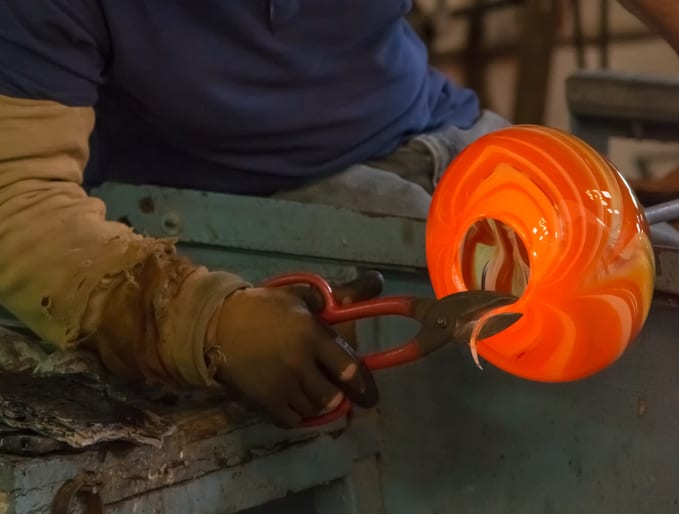
When liquid is cooled, it either crystallizes or hardens into glass. The former is a dramatic switch from the liquid phase, where molecules are disordered and free flowing, into the locked, regular, repeating pattern of the crystal phase (like how water freezes into ice).

Image Credit: iStock

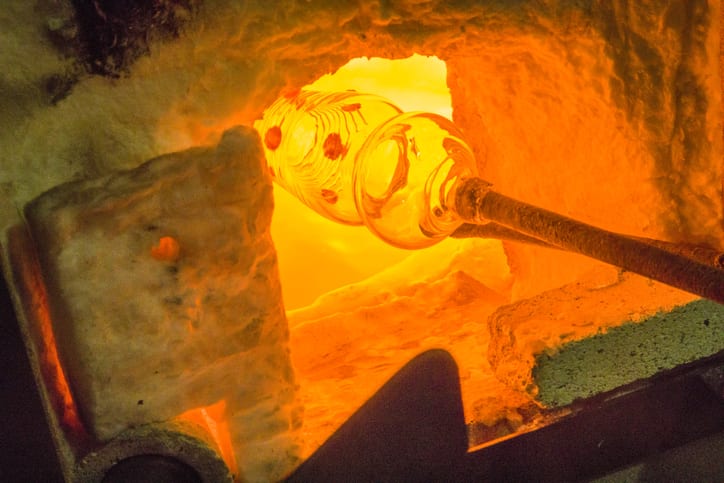
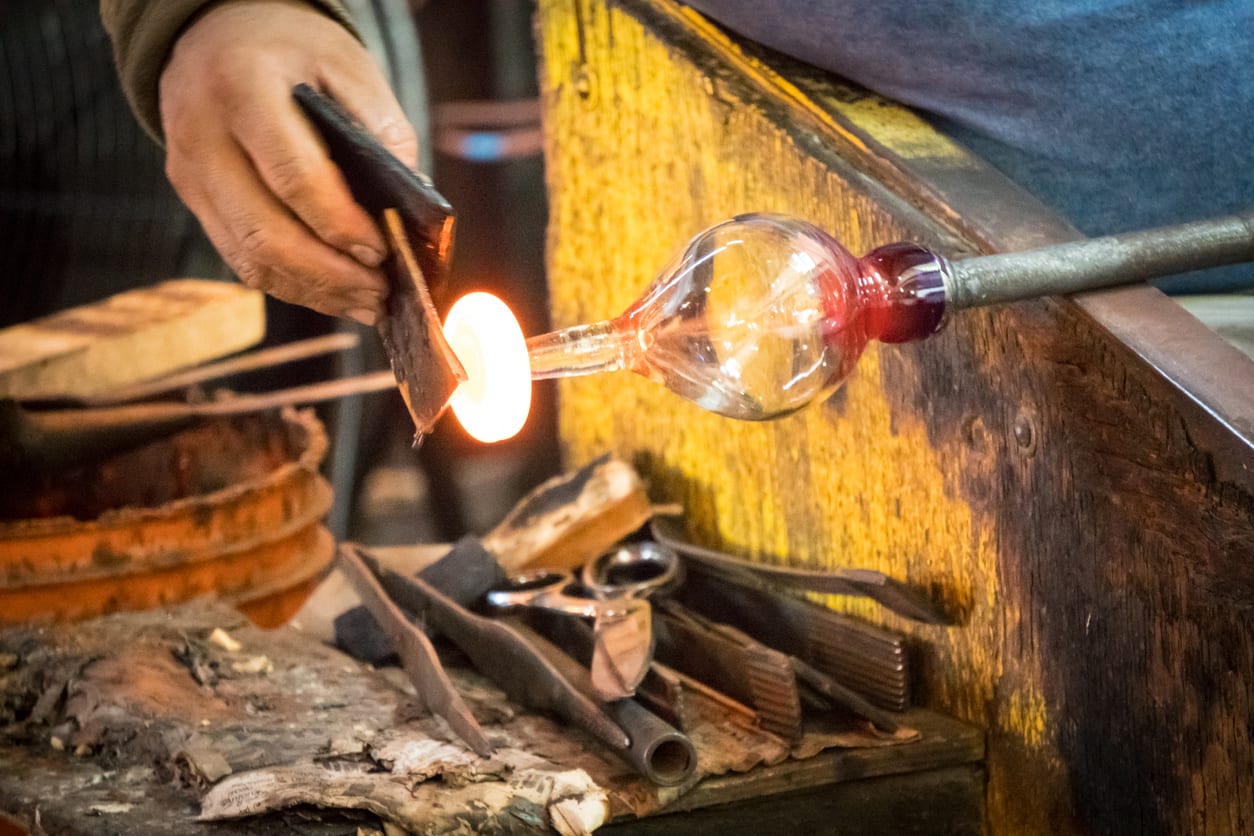
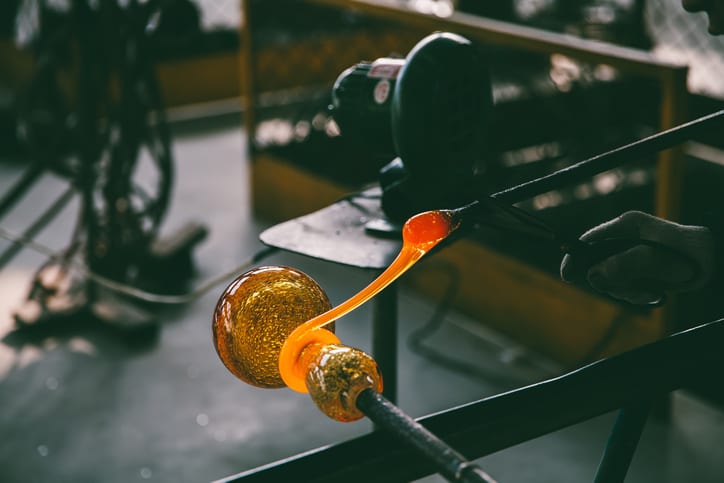
Some liquids, like silica, begins as a molten liquid and when cooled, contracts and crowds closer together until they stop moving. The gradual transition doesn’t reorganize the molecules, and the gradual nature results in glass.

Scientists, though, don’t really understand why the cooling liquid hardens in some scenarios, or why the cold molecules don’t “squish” into new arrangements, confesses Camille Scalliet, a glass theorist at the University of Cambridge.

“Liquid and glass have the same structure, but behave differently.

Understanding that is the main question.”

They have had clues, like the one found by chemist Walter Kauzmann in 1948 when he noticed that the more slowly you cool a liquid, the longer it will cool before it transitions into a denser and more stable glass.

In that scenario, the molecules had longer to shuffle around and find tighter, low-energy arrangements before it fully hardened – and the lowest possible temperature it can stay at before full hardening is now known as the Kauzmann temperature.

Image Credit: iStock

There, the resulting glass has an entropy as low as that of a crystal, creating a paradox – how could glass possess the same order as a crystal?

It can’t, not normally, which implied something special happened at the Kauzmann temperature – something that created an ideal glass structure made of the densest possible packing of molecules.

Mark Ediger, a chemical physicist at the University of Wisconsin Madison, says that’s why “people thought there should be an ideal glass.”

Despite experiments through the years by scientists and glassmakers alike, no way has been found to form ideal glass by cooling a liquid. The cooling process would have to be perhaps infinitely slow, it was surmised, to keep the glass from hardening before it his the Kauzmann temperature.

Then, in 2007, Ediger developed a new method of glassmaking.

“We figured out there was another way to make glasses that are high density and close to the ideal-glass state by a completely different route.”

That route involved creating “ultra-stable glasses” that exist in a state somewhere between ordinary and ideal using a method called vapor deposition.

It required dropping molecules one by one onto a surface (kind of like playing Tetris), which allowed each one to settle into a snug space before dropping the next one. The glass that resulted was denser, more stable, and lower in entropy than any that had been created before, Ediger said.

“These materials have the properties that you would expect if you took a liquid and cooled it over the course of a million years.”

Several years after Ediger figured out how to make this ultra-stable glass, a group at Berkeley, and another in Madrid, set out to study whether it might depart from that universal heat capacity near absolute zero.

Image Credit: iStock

The two groups probed the low-temperature properties of the ultra-stable silicon and ultra-stable indomethacin and found that both had lower heat capacity than the typical near absolute zero – their configurations are especially snug.

Their theory is that there’s a “tunnel” or a “two-level system” that allows atoms to move between alternative configurations, passing through obstacles and occupying both levels at once. Since the ultra-stable glass has such a low heat capacity that results in fewer of these “tunnels,” then it would seem that ideal glass would have none at all, explained David Reichman, a theorist at Columbia University.

“It’s just perfectly, somehow, positioned where all the atoms are disordered – it doesn’t have a crystal structure – but there’s nothing moving at all.”

They believe, then, that when liquid becomes a glass it’s actually attempting to transition into “ideal” glass and a fundamental pull toward long-range order, but the increased viscosity prevents them from ever truly getting there.

Scientists were recently able to test these ideas through simulations, speeding up the process by a factor of 1 trillion and swapping particles to find the best possible fit.

Image Credit: iStock

They published their results in Physical Review Letters and reported that the more stable the simulated glass, the fewer two-level systems it has – just like they suspected.

There are still more experiments to do on substances like amber, which doesn’t fit this mold or these findings, but also exists outside of a laboratory setting.

For now, glass specialists and physicists all over the world are excited to be one step closer to understanding how class is made, how it exists, and how we can make it better.

The post Physicists Are Getting Closer to Understanding Why Glass Exists appeared first on UberFacts.

Physicists Are Getting Closer to Understanding Why Glass Exists

Until someone pointed it out to me, I never really considered that the existence of glass is a weird thing. I mean, I enjoy science, and I read about science, but this particular quirk has escaped me for all of these years!

When liquid is cooled, it either crystallizes or hardens into glass. The former is a dramatic switch from the liquid phase, where molecules are disordered and free flowing, into the locked, regular, repeating pattern of the crystal phase (like how water freezes into ice).


Image Credit: iStock

Some liquids, like silica, begins as a molten liquid and when cooled, contracts and crowds closer together until they stop moving. The gradual transition doesn’t reorganize the molecules, and the gradual nature results in glass.

Scientists, though, don’t really understand why the cooling liquid hardens in some scenarios, or why the cold molecules don’t “squish” into new arrangements, confesses Camille Scalliet, a glass theorist at the University of Cambridge.

“Liquid and glass have the same structure, but behave differently.

Understanding that is the main question.”

They have had clues, like the one found by chemist Walter Kauzmann in 1948 when he noticed that the more slowly you cool a liquid, the longer it will cool before it transitions into a denser and more stable glass.

In that scenario, the molecules had longer to shuffle around and find tighter, low-energy arrangements before it fully hardened – and the lowest possible temperature it can stay at before full hardening is now known as the Kauzmann temperature.

Image Credit: iStock

There, the resulting glass has an entropy as low as that of a crystal, creating a paradox – how could glass possess the same order as a crystal?

It can’t, not normally, which implied something special happened at the Kauzmann temperature – something that created an ideal glass structure made of the densest possible packing of molecules.

Mark Ediger, a chemical physicist at the University of Wisconsin Madison, says that’s why “people thought there should be an ideal glass.”

Despite experiments through the years by scientists and glassmakers alike, no way has been found to form ideal glass by cooling a liquid. The cooling process would have to be perhaps infinitely slow, it was surmised, to keep the glass from hardening before it his the Kauzmann temperature.

Then, in 2007, Ediger developed a new method of glassmaking.

“We figured out there was another way to make glasses that are high density and close to the ideal-glass state by a completely different route.”

That route involved creating “ultra-stable glasses” that exist in a state somewhere between ordinary and ideal using a method called vapor deposition.

It required dropping molecules one by one onto a surface (kind of like playing Tetris), which allowed each one to settle into a snug space before dropping the next one. The glass that resulted was denser, more stable, and lower in entropy than any that had been created before, Ediger said.

“These materials have the properties that you would expect if you took a liquid and cooled it over the course of a million years.”

Several years after Ediger figured out how to make this ultra-stable glass, a group at Berkeley, and another in Madrid, set out to study whether it might depart from that universal heat capacity near absolute zero.

Image Credit: iStock

The two groups probed the low-temperature properties of the ultra-stable silicon and ultra-stable indomethacin and found that both had lower heat capacity than the typical near absolute zero – their configurations are especially snug.

Their theory is that there’s a “tunnel” or a “two-level system” that allows atoms to move between alternative configurations, passing through obstacles and occupying both levels at once. Since the ultra-stable glass has such a low heat capacity that results in fewer of these “tunnels,” then it would seem that ideal glass would have none at all, explained David Reichman, a theorist at Columbia University.

“It’s just perfectly, somehow, positioned where all the atoms are disordered – it doesn’t have a crystal structure – but there’s nothing moving at all.”

They believe, then, that when liquid becomes a glass it’s actually attempting to transition into “ideal” glass and a fundamental pull toward long-range order, but the increased viscosity prevents them from ever truly getting there.

Scientists were recently able to test these ideas through simulations, speeding up the process by a factor of 1 trillion and swapping particles to find the best possible fit.

Image Credit: iStock

They published their results in Physical Review Letters and reported that the more stable the simulated glass, the fewer two-level systems it has – just like they suspected.

There are still more experiments to do on substances like amber, which doesn’t fit this mold or these findings, but also exists outside of a laboratory setting.

For now, glass specialists and physicists all over the world are excited to be one step closer to understanding how class is made, how it exists, and how we can make it better.

The post Physicists Are Getting Closer to Understanding Why Glass Exists appeared first on UberFacts.