
Wisconsin uses briny water from cheese production to de-ice their roads in winter.
In the Kantemo Caves, Mexico…
In the Kantemo Caves, Mexico, snakes hang down from the cave ceiling to catch and eat bats.
One Million Cannibal Ants Have Escaped from an Abandoned Nuclear Bunker
Hundreds of thousands of worker ants have been forced to survive by eating the “corpses of their imprisoned nestmates” after they found themselves trapped in an abandoned nuclear bunker in Poland. Apparently, some individuals fell through a vent in the ceiling and were unable to climb back up to their “mother nest.” They were left little choice if they wanted to survive (not that ants really make “choices” in that way).
The nest was first discovered in 2013, when researchers intending to study bats found close to a million worker ants in the confined space with no light, no source of food, and a year-round temperature that averaged only 10 degrees C. They were immediately intrigued, and wanted to understand how – without a queen, without their typically sources of food, and without sunlight – they were thriving.
Scientists are looking at the situation as an opportunity to learn more about the complex evolutionary history of the ants, and have since released the survivors into their “mother nest” once again – basically just to see what happens.

Image Credit: The Journal of Hymenoptera Research, CC BY 4.0
“The present case adds a dimension to the great adaptive ability of ants to marginal habitats and suboptimal conditions, as the key to understanding their unquestionable eco-evolutionary success,” the authors wrote in their paper.
Before they reintroduced the cannibals into the world, scientists had to confirm that the nest above the ventilation shaft was where the ants had come from in the first place. They took a few individuals and set them along the outskirts of the “mother nest,” and after observing that none of the ants were attacked as outsiders, they were reasonably sure their hypothesis was correct.
Three years later, they decided to help the ants free themselves. They took a 3-meter-long boardwalk in the bunker and set it up as a ramp that led from the floor to the ceiling vent. The ants made their way out from there.

Image Credit: The Journal of Hymenoptera Research, CC BY 4.0
“Soon after the boardwalk had been installed, single ants started to inspect it,” noted the authors.
Within 6 months, and with no further intervention, the bunker was nearly empty. Ants continued to fall through the pipe, but the typically found the ramp and returned to their nest room afterward.
Scientists were thrilled to learn more about the “monumental” ability of wood ants to adapt to “marginal habitats and suboptimal conditions.” We now know they’re able to not only survive, but are able to self-organize and work together without a queen, and without contact with their original nest.
This strange turn of misfortune for the ants has turned into something of a win for science and for all of us – because the better we can understand how insects like ants have managed to survive and to thrive, despite the circumstances, the better prepared we can be to face such inevitable changes ourselves.
The post One Million Cannibal Ants Have Escaped from an Abandoned Nuclear Bunker appeared first on UberFacts.
Chinese and Japanese Speakers Share the Dumbest Things They’ve Seen Tattooed on Someone
Tell me if this sounds familiar…?
Have you ever met someone who thought they were being really deep and spiritual with a Chinese or Japanese character tattooed on their body, but then they later found out that symbol meant “beef with broccoli”?
Lol,
It actually happens all the time, my friends. And these AskRedddit users shared some really good ones.
1. Actually, that means…
“Saw a girl with 魚 tattooed on her shoulder who swore up and down it meant poison… It means fish.”
2. Do you lift, bro?
“I was on the subway in NYC and there was a guy who clearly lifted a lot. He was wearing a sleeveless shirt and on his jacked arms in chinese were the words “牛肉麵” or “Beef noodle soup” for everyone to see. Man looked ready to get the rest of his favorite restaurant’s menu tattooed on his body.”
3. That’s a bummer.
“He thought it said “Love my grandson”. It translated to something like “I love fat boys”. I think it was a google translate failure of epic proportions.”
4. Not your name.
“”Tiny chicken” my friend got that thinking it said his name.”
5. Major eye roll.
“Chinese speaker here. In high school I worked at a CVS. A white woman showed up at the register with a very poorly drawn 力 tattoo, and I said “cool tattoo, means power”. She scoffed and replied to me like I was satan himself, and said “you obviously don’t understand Chinese “letters” the tattoo artist told me it means the strength to overcome anything, even breast cancer…” then she rolled her eyes at me and walked away.”
6. You blew it!
“My friend got a tattoo that said “veni vidi vici” in chinese, well so he thought. The tattoo acutally said “three small dishes”.”
7. Strength and courage…maybe.
“I was scrolling through the web at some tattoos for fun,a person said they got a tattoo that said “Strength and courage” in japanese. It actually said “Little animal, big mistake.” Great quote imo, but I dont think they thought so after they got it permanently marked on their skin.”
8. Uh oh. That’s not good.
“Not my story but a friend of mine.
She had a classmate in college with a kanji tattoo, confused she asked her what it meant.
“High princess”
Turns out it actually said “pig princess”.”
9. Might want to get a cover-up.
“I once saw this middle aged dude wearing “金魚佬” on his shoulder (the rough literary translation is “Goldfish Man”), which in cantonese means a sleazy older man who creeps on younger girls/children. Basically a pedo. Wonder under what circumstances he got that inked…”
10. Lookin’ tough…oh wait…
“机 on his fist. I haven’t taken Chinese but in Japanese it means ‘desk’.”
11. The Fat Man.
“”Kitchen” – confused the kanji, what he wanted I have no idea. “Fat man” – he wanted “big guy” (tough guy?) apparently.”
12. Opposite day?
“Gets a tattoo in google translate Japanese thinking it says “fear no one” but it really means “I fear everyone”.”
13. That’s…me?
“I once had a roommate placed with me in the apartment our company ran for us here in Japan. He was loud, obnoxious, and I generally didn’t get on well with him. But, you try to get along, so we’d go to the izakaya up the street from time to time with other friends to drink and have a good time. The owners were this wonderful old Japanese couple who loved having all these weird gaijin come and entertain the locals.
Anyway, somehow we get talking about tattoos and the roommate is showing his off. He then says that he got the kanji for “friendship” (友) and “peace” (和) tattooed on his back and lifts his shirt to show everyone. There’s a bit of silence, broken by someone asking, “Who’s Tomokazu?”
What Roommate didn’t know, of course, was that those two kanji in that order was a man’s name.
He reacted well, though, taking a beat and then announcing, “I’M TOMOKAZU!” which became a running joke while he was there.”
14. Hahaha, that’s good.
“40+ year old bald white guy with Chinese characters that translated as “I’m a cute little princess” on the length of his forearm.
Had a good laugh the rest of that day.”
15. Didn’t have the heart to tell him…
“I met a guy in the air port when I came back from living in Tokyo for 2 years who had just visited Japan. He had 2 symbols on his shoulder I noticed that were “off”. I stopped him and asked him what his tattoo said. He said ” It means strong will bro.” I didn’t have the heart to tell him….. his two symbols he picked in order were “dog poop”.
If you find this online…. im truly sorry bro. Ha ha.”
The post Chinese and Japanese Speakers Share the Dumbest Things They’ve Seen Tattooed on Someone appeared first on UberFacts.
Here’s the Trick to Solving a Rubik’s Cube
A Hungarian professor named Erno Rubik invented the Rubik’s Cube in 1974, and get this – he didn’t realize he was making a puzzle at all until he accidentally scrambled it up and couldn’t fix it.
“It was a code I myself had invented, yet I could not read it,” he famously said.
It took him a month to solve his own puzzle, which he eventually did by first rearranging each side’s corners to match.
Luckily for you (not him) the internet now exists to tell you how to solve the infamous Cube.
David Singmaster’s layer-by-layer method for solving the Rubik’s Cube was the first to be published, and it’s still the most common method to teach beginners. He basically introduces algorithms – which here means a memorized sequence of moves that will have a specific effect on the Cube’s position – to cube solving.
In fact, all of the methods people use today require you to memorize a series of algorithms and to execute them in a specific order to solve the Cube.
There is more than one set of algorithms you can use to get to the end, and being able to finish a cube is not the same as being able to do it quickly. The way people speed up their solving is by memorizing lots of algorithms and then quickly determining the right algorithm to use in any given Cube situation.


 Cuál es tu PB
 You do OH?
  ~ Follow: @puertoricospeedcubers Follow: @puertoricospeedcubers
  : @_chinurris_ . . . . . . . . . . . . . . . . #speedcubing #speedcube #speedcuber #speedcubers #speedcubinglife #speedcubeography #rubikscube #rubikslife #rubiks_cube #rubikscubesolved #puertorico_world #puertorico
 #puertoricostyle #puertorico
In 1982, an American teenager, Minh Thai, solved the Rubik’s Cube in under 23 seconds, and eventually wrote a book called The Winning Solution that revealed his corners-first method.
In 1997, Jessica Friedrich and her method – later coined CFOP – set the gold standard for quickness, and in 2019, the current world record is just 3.47 seconds.
You can find YouTube videos for both the layer-by-layer method, CFOP, and just about all of the others, as well as pages with detailed instructions. It can seem daunting at first, but if you stick with it, you’ll see there’s a method to the madness, and solving the Cube isn’t about smarts, but memorization and determination.
 . One ride your
  won’t let you forget.
  . It’s the final countdown to the @redbull #mindgamers Rubik’s World Cup. Tune in Sunday 17th November. #rubiks #rubikscube #rubiksworldcup #redbullmindgamers
Solving it fast is a different story, so if you’re after that world record, best of luck.
If you decide to have a go at it sans instructions, though, I’d set your sights on beating Erno Rubik’s time of a month.
And best of luck with that, too.
The post Here’s the Trick to Solving a Rubik’s Cube appeared first on UberFacts.
Sweating Is Not at All Detoxifying, FYI
It feels good to feel your muscles sweat and work, and something about feeling the sweat pop out on your skin makes me feel accomplished, like it might all be worth it in the end.
But of course, you don’t have to exercise to sweat. Hot yoga, saunas, and sweat lodges have become more and more popular, at least in part due to their claims that they help you “sweat out toxins.” But well…that’s not even a little bit true.
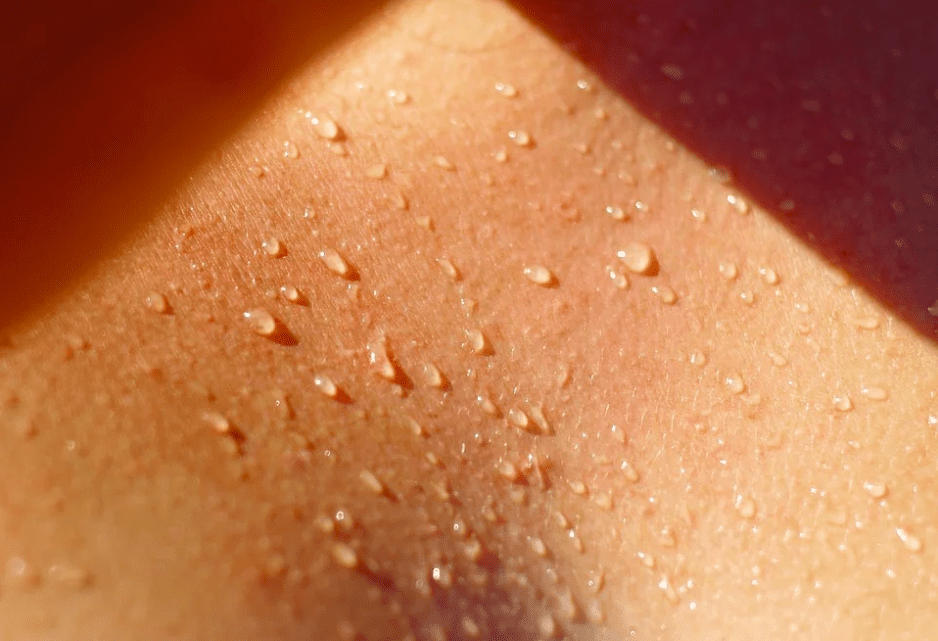
Image Credit: Pixabay
Actually, your liver and kidneys do all of the heavy lifting when it comes to toxins, and exercise isn’t going to make them more or less functional.
Sweat is made up of mostly water, with a bit of sodium, chloride, potassium, and trace amounts of proteins, fatty acids, and maybe a stray “toxin” or two, says dermatologist Tsippora Shainhouse.
“Most of the ‘toxins’ that concern people include pesticides, residue from plastics, or from air pollution. These tend to be fat-soluble, and do not dissolve well in water, so they will not be removed from the body in any significant quantity, given that sweat is 99 percent water.”

Image Credit: Pixabay
In fact, attempting to detox merely by sweating can backfire. If you don’t drink enough water to replace what you’ve sweated out, your kidneys have to work overtime while you’re dehydrated – and if your kidneys are working especially hard, they may not be as efficient at weeding out actual toxins in the meantime.
Image Credit: Pixabay
Which is not to say sweating is bad, nor is exercise. Just don’t expect it to do what your kidneys and liver are already doing, and make sure to drink plenty of water when you’re done.
The post Sweating Is Not at All Detoxifying, FYI appeared first on UberFacts.
20 Funny Insults That Only Really Work in German
German is a kind of an odd language. There are lots of vowels, and in order to speak it correctly, you kind of have to sound as angry as possible. Plus the words get really, really long.
It turns out, though, that their insults are surprisingly creative and funny.
So the next time you really want to let someone have it, try doing it in German!
20. I broke up with him because everyone knows he’s a “pleasure newt.”
A lustmolch is someone obsessed with sex, but it literally translates to “pleasure newt.”
19. Don’t hire that “driller of thin planks.”
If you refer to someone as a dunnbretthohrer, he’s someone who takes the laziest route possible, not the best.
18. Stop being such a “brain denier.”
In other words, use your smarts, gehirnverweigerer.
17. She’s a real “gossip aunt.”
Someone who likes to gossip and spread rumors is a tratschtante.
16. His daughter is a “little snot spoon.”
A rotzloffel is a brat.
15. What a “butt violin.”
An arschgeige is someone who doesn’t perform a task up to par.
14. That guy is nothing but a “butt with ears.”
A total, blithering idiot, otherwise known as an arsch mit ohren.
13. Eh, he’s such an “asparagus Tarzan.”
This one might be one of my favorites – spargeltarzan refers to someone tall and gangly.
12. He’s “someone who waves back at Teletubbies.”
Y’all, I cannot with this one, used to describe someone who just isn’t too bright – teletubbyzuruckwinker.
11. Did you see that “varnish monkey”?
A lackaffe is a man who dresses garishly in public (not that it’s anyone’s business).
10. Stop being a “banana bender.”
If you’re spinning your wheels engaging in a pointless task, someone in Germany might call you a bananenbieger.
9. She’s nothing but an “evolutionary brake.”
If someone is so dumb they’re threatening the evolution of all human life, they’re ripe to be called an evolutionsbremse.
8. You’re a “lump of puke.”
A simple kotzbrocken should do the trick if you’re short on time.
7. She was a bit of a “guzzling woodpecker” at the office Christmas party.
Someone who hits the bottle a bit too hard is a schluckspecht.
6. Hurry up, you “bag of whale blubber.”
If someone is driving like a grandma in front you during your commute, bust out a well-timed trantute.
5. An “ant tattooist.”
For all of the nit pickers in your life who obsess over tiny little details, you’ve got a new one – they’re an ameisentätowierer.
4. When push comes to shove, she’s a “trouser-pooper.”
A hosenscheisser is a coward of the worst order.
3. Instead of “full of hot air,” the Germans prefer to call someone a “hot air gun” or a “babble bag.”
Heissleuftgeblas or labertasche refers to someone who talks a lot about nothing.
2. Somebody is a “smelly boot” today.
I’m definitely going to start using stinkstiefel to refer to the grumps in my life.
1. Her face just invites a slap.
Ever meet someone who’s face just makes you want to slap them? Yes? Now you have a word for that – it’s backpfeifengesicht.
I honestly had no idea I could laugh this hard and something that originated in Germany.
I wonder if they make Germans laugh.
Probably not.
The post 20 Funny Insults That Only Really Work in German appeared first on UberFacts.
Teenagers Are Using Social Media to Make History More Exciting, and It Is Definitely Working
Kids today…
TikTok isn’t history class (it’s probably not allowed in most history classes), but teenagers all over are using the newish social media platform to prove the adults around them wrong (again).
Many of the commentaries are a bit simple, but hey – you have to remember that some people are hearing about these events for the first time.
And simple or complicated, this is a way more fun way to study for a test than reading a textbook or actually paying attention to a lecture.
There are some that tackle tougher historical events, like the Vietnam War and the truth about colonization of the Americas.
Here are some of the best ones!
10. The Monroe Doctrine (1823).
the monroe doctrine, 1823 pic.twitter.com/H46nbl8MZT
— nadia jaferey (@nadiajaferey) October 25, 2019
9. The German occupation of Belgium (1914).
german occupation of belgium, 1914 pic.twitter.com/nPmuUjCSk4
— nadia jaferey (@nadiajaferey) October 25, 2019
8. The colonization of Africa (1400s).
colonization of the continent of africa, 1400s pic.twitter.com/xZlFUPSnu7
— nadia jaferey (@nadiajaferey) October 25, 2019
7. The establishment of the League of Nations (1919).
the establishment of the league of nations, 1919 pic.twitter.com/9m4c3hUi4F
— nadia jaferey (@nadiajaferey) October 25, 2019
6. The assassination of Abraham Lincoln (1865).
the assassination of abraham lincoln, 1865 pic.twitter.com/8uuO8knoOw
— nadia jaferey (@nadiajaferey) October 25, 2019
5. The attack on Pearl Harbor (1941)
attack on pearl harbor, 1941 pic.twitter.com/DWoAXbSflo
— nadia jaferey (@nadiajaferey) October 25, 2019
4. The Black Death (1347-1351).
the black death, 1347-1351 pic.twitter.com/uN6EabK9Qd
— nadia jaferey (@nadiajaferey) October 25, 2019
3. The U.S. exit from Vietnam (1975).
the united states exits vietnam, 1975 pic.twitter.com/sTGg4IVaqE
— nadia jaferey (@nadiajaferey) October 25, 2019
2. The Boston Tea Party (1773).
the boston tea party (1773) pic.twitter.com/r8xMDn56U4
— nadia jaferey (@nadiajaferey) October 25, 2019
1. The European age of exploration/invasion (1405-)
european age of exploration/invasion, 1405 – present pic.twitter.com/A5CSjv9Sph
— nadia jaferey (@nadiajaferey) October 25, 2019
I love these, and would totally have been on board as a teenager!
Do you have a favorite? What would you like to see next? Share with us!
The post Teenagers Are Using Social Media to Make History More Exciting, and It Is Definitely Working appeared first on UberFacts.
The “Scully Effect”: Female “X-Files” Fans Flock to STEM Careers
Scully does it again!
As if The X-Files wasn’t awesome enough as a television show, now we’re learning that all of the little girls who looked up, wide-eyed, at the tough-as-nails, no-nonsense, science-loving Scully are flocking to careers in science, math, and engineering.
Those fields have long been dominated by men, and though that tide has been shifting little-by-little, women in STEM (science, technology, engineering, math) fields still find themselves in the minority more often than not.

The news comes out in a recent report compiled by scientists working for The Geena Davis Institute. They surveyed more than 2000 U.S. women over the age of 25, 68% of whom were X-Files viewers, and asked them whether watching Dana Scully influenced their career decisions as they grew up.
A significant number of them said her character affected them to the point that they chose to major in a STEM field in college, and to work in STEM field as a career. They claimed that Scully gave them positive impressions of women working in science, and more than half said she increased their confidence in their ability to succeed in a male-dominated field.
More than 60% responded that Scully’s character increased their belief in the importance of STEM work.
“In the world of entertainment media, where scientists are often portrayed as white men wearing white coats and working along in labs, Scully stood out in the 1990s as the only female STEM character in a prominent, prime-time television role.”
The study provides data to back up long-held anecdotal beliefs that a “Scully Effect” of this type existed.
Saying definitively that Scully is the reason gets tricky, since there’s always the chance that women interested in STEM are more likely to watch shows like The X-Files in the first place.
That said, if more women are entering STEM fields, I say give Scully the credit (or maybe let her share it with Astrid, from Fringe).
With The X-Files revival, who knows – maybe a whole new generation of girls will be inspired.
The post The “Scully Effect”: Female “X-Files” Fans Flock to STEM Careers appeared first on UberFacts.
This Is Why Baking Makes You Happy, According to Science
There’s something soothing about baking when you’re having a bad day, when the weather turns dreary, or when you’re feeling a bit blue – and it turns out, that’s not just a weird quirk of mine.
According to psychologists, baking makes people happier.
And it’s not just because you get to lick the spatula, either.
View this post on Instagram
Studies have long shown that creative activities contribute to a sense of well-being, and Boston University professor Donna Pincus told HuffPost that there is a type of “stress relief that people get from having some kind of an outlet and a way to express themselves.”
Outlets like knitting or baking.
Baking also requires the cook to focus on straightforward directions that should be executed in a specific order. The series of tasks is a form of mindfulness, as the mundane activity forces you to focus on it, which lets the troubles of the outside world drift away.
View this post on Instagram
Juliana Ohana, a licensed clinical social worker, told HuffPost that it’s therapeutic because it helps you “balance the moment and the bigger picture.”
Basically, baking is a minor feat that you can use to visualize a happy moment in the future, when the cookies, bread, or cake is finished, delicious, and being shared with family or friends.
The act of sharing your finished product can be good for the body and soul, too, says Pincus.
“You feel like you’ve done something good for the world, which perhaps increases your meaning in life and connection with other people.”
View this post on Instagram
“It can be helpful for people who have difficulty expressing their feelings in words to show thanks, appreciation, or sympathy with baked goods,” adds professor Susan Whitbourne.
I guess in the long run it doesn’t matter which of these things – or none of them – give you the warm fuzzies when you set out your butter, pull up a recipe, and fit the beater on your mixer. Baking makes us feel good, people love to eat baked goods, so there’s really no reason to stop anytime soon.
The post This Is Why Baking Makes You Happy, According to Science appeared first on UberFacts.