
At the subatomic level, space is never truly empty. It is filled with a writhing, active population of “Virtual Particles” that pop in and out of existence. Physicists call this “quantum foam”. Physicists theorize fluctuations from this field of energy may have given rise to the Universe.
In WWI, many British naval…
In WWI, many British naval ships were painted with “Dazzle Camo”, a camouflage scheme designed not to make them hard to see, but rather to create a confusing perspective that made judging ship type, speed, and direction difficult.
A man was arrested for trespassing…
A man was arrested for trespassing at the Budweiser brewery. His name? Bud Weisser.
Willem Kolff created…
Willem Kolff created the first dialysis machine in the Netherlands during WWII. Lacking materials, he used sausage casings, tin cans, a washing machine, and salt water. He also saved more than 800 people from the Nazis by hiding them in his hospital. And he later invented the artificial heart.
A London skyscraper melted…
A London skyscraper melted several cars and started fires due to the intensity of the sun’s reflection on its south side. It had to be fitted with a permanent sunshade to prevent more incidents.
In 1883 Sitting Bull made…
In 1883 Sitting Bull made a speech in Sioux, not English, to US officials, generals, and railroad barons that began: “I hate all the White people, you are thieves and liars,” and got worse from there. He would stop periodically to smile and bow, and the audience applauded enthusiastically.
Here’s How Intermittent Fasting May Enhance Your Immune System
For years, it’s been argued whether intermittent fasting is good for us. Is it worth the hunger? Are there any actual health benefits from doing it?
Over the years, some people have claimed that this method has helped with rheumatoid arthritis and other ailments. Studies have also shown that intermittent fasting has improved multiple sclerosis in mice.
Well, there is more evidence that fasting may be beneficial to our health.

Photo Credit: Needpix
Three new studies explore how fasting might temporarily offer certain health benefits to humans. All three studies saw researchers give mice less food or go on a water-only diet for about a day. Each study researched a different type of immune cell and discovered that each type of cell had a unique response to the fasting.
Two of the three studies looked at the T and B cells. These cells help create immunity against past infections and identify and destroy pathogens. When the mice fasted, the T and B cells disappeared from the bloodstream and the organ tissues. The immune cells took shelter in the bone marrow to protect themselves. In other words, the cells migrated to the bone marrow, which is food rich, to survive during fasting.

Photo Credit: Wikimedia Commons

The studies further showed that when the T cells did retreat to the bone marrow, they became supercharged. T cells produce molecules to kill pathogens and cancers, so this is potentially a very important find. When mice were injected with a pathogen they’d had in their bodies before, the fasting mice fought it off in only two days, as opposed to the week it took the regularly-fed mice.
Study author Dr. Yasmine Belkaid said, “It’s a striking enhancement. The goal is to [eventually] understand this magic soup in the bone marrow and extract what’s making that response. If we can train our cells to do these things, we can have an extraordinary impact on human health.”
The third study revolved around the white blood cells that attack pathogens. These are called monocytes. When you’re sick, this type of cell induces inflammation. This study showed that monocytes went down in the bloodstreams of both mice and humans when they fasted; the mice’s bone marrow was still producing monocytes, just not as many were being released into the bloodstream.

Photo Credit: Pixabay
Fasting somehow creates a “roadblock” between bone marrow and blood for the monocyte cells. If fewer monocytes are moving throughout the body, overall inflammation goes down.
These studies suggest that intermittent fasting can be a good thing, and we can manipulate our immune systems based on changing how much we eat.
Something to think about…that’s for sure.
The post Here’s How Intermittent Fasting May Enhance Your Immune System appeared first on UberFacts.
You Can Buy a Tiny House on Amazon for $37,000 That Expands by Remote Control
If you and your family have put in any time house hunting, you know it’s very difficult to find what you’re looking for and not pay a fortune for it. In backlash, the tiny house has arisen.
The tiny house craze doesn’t seem to be letting up any time soon, and now there’s a new addition to the market that you can actually buy on Amazon. And why not? You can buy almost every single you’ll ever need in life on Amazon, so might as well throw a house into the mix as well.
This tiny house is designed by a Chinese company called WHZ Group and costs just $36,800, plus $1,000 for shipping. Just FYI, the average home price in the United States right now is $227,700.

Photo Credit: Amazon/WZH Group
The house can also be expanded with a hydraulic system by using a remote control. How’s that for 21st-century technology?
The house has wind and solar-power systems, a small living space, kitchenette, and a bathroom with a sink, shower, and toilet. If owners are so inclined, they can also have the house wired for electricity. WHZ Group also sells a slightly different version of the house, also on Amazon.
Here are a few photos of the interior.

Photo Credit: Amazon/WZH Group

Photo Credit: Amazon/WZH Group

Photo Credit: Amazon/WZH Group
The house also features a folding deck and a canopy. Take a look at the floor plan:

Photo Credit: Amazon/WZH Group
And this is what the floor plan looks like when the house is compactly folded using the remote control.

Photo Credit: Amazon/WZH Group
Are tiny houses the future? Or just a passing fad that is overhyped at the moment?
What do you think of this idea? I say the smaller, the better. Sign me up!
The post You Can Buy a Tiny House on Amazon for $37,000 That Expands by Remote Control appeared first on UberFacts.
A Huge Underwater Observatory Mysteriously Vanished from the Ocean Floor
Let’s just dive right in to this story: a large underwater observatory has mysteriously gone missing. It was on the seafloor, and now it’s not. Nobody knows why.
The Boknis Eck Observatory has been on the seafloor off the northern coast of Germany since December 2016. It’s managed by GEOMAR Helmholtz Center for Ocean Research Kiel and the Helmholtz Center Geesthacht.
For almost three years, the observatory collected information about water temperature, nutrients, salinity, the speed of water flow, and concentrations of chlorophyll and methane.
But on August 21, transmissions from the observatory suddenly stopped. Divers went down to the site to investigate what went wrong, and they discovered that the entire structure had disappeared except for a shredded transmission cable, Gizmodo reports.
An underwater laboratory disappeared one night last month, and scientists have no idea what happened. https://t.co/EPR3bTHeJg
— CNN (@CNN) September 6, 2019
Sure, it could be an accident. But officials think it’s more likely that someone intentionally removed the observatory, because the structure is so large and heavy that natural causes (such as a storm or animals) couldn’t possibly move it.
But who would steal an underwater observatory? And why?! For now, it remains a mystery. German police are now investigating the incident, and the scientists have asked anyone who knows anything to come forward.
The instrument, located off Germany’s Baltic coast, cost more than $330,000. But its data was ‘priceless,’ one expert said. https://t.co/YHsUOA5rBA
— Smithsonian Magazine (@SmithsonianMag) September 6, 2019
“[At] first we thought of a transmission error,” Hermann Bange, project coordinator for the Boknis Eck Observatory, said in a GEOMAR statement. Then the diving mission revealed that the problem was much larger. “The devices were gone, the divers could not find them anymore. When the divers reached the bottom of the sea last week at the observatory’s location, they found only the torn off land cable. It was completely shredded,” Hermann said.
The $330,000 structure weighed about 770 pounds.
The post A Huge Underwater Observatory Mysteriously Vanished from the Ocean Floor appeared first on UberFacts.
Here Are Some Quick Tips for Capturing Those Cool Blurred Background Photos on Your iPhone
All of us want to take that perfect photo with our iPhone, especially those super-sharp portraits with the blurred background where your subject appears to be professionally shot. For all you budding photographers out there, here are three easy ways to make your photo skills the envy of your friends (even if you don’t own a new phone with a great camera).

Photo Credit: Pexels, Element5 Digital
3. Portrait Mode
This is the simplest method. If you have an iPhone X, XR, XS, or XS Max or an iPhone 7 or 8 Plus, you should have a Portrait Mode feature.
Open up your handy camera app, swipe until you find “Portrait” and simply position your subject within the limits of the lens. It will tell you if you need to move closer or farther away. When the words “Natural Light” appear, then you are set to snap at your heart’s content!
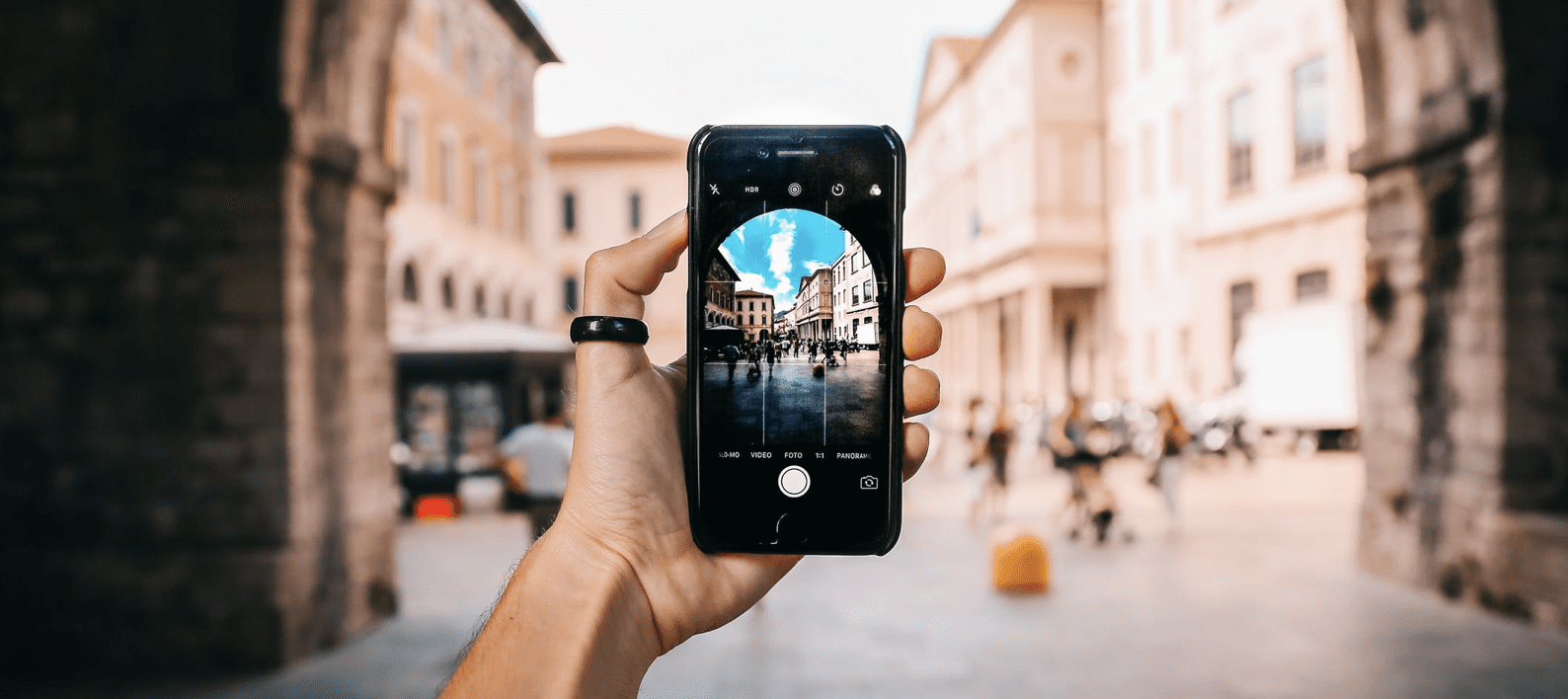
Photo Credit: Pexels, Oleg Magni
2. Position your subject just right – For older iPhones
Place your subject within a few feet of the lens. A yellow box should appear, tap it and the lens will be forced to focus on the object, leaving the background out of focus. Just move closer or farther away until the background fully blurs. You can also tap an object and hold on it to force the camera to lock into focus on it. Then it will keep the same focus, even if you or your subject moves.
1. Third-Party Apps
Sometimes, older iPhones just aren’t capable of capturing that desired blur. Therefore, we recommend trying out a third-party app that performs this feature. There are free apps available (like Blur Photo Background) or paid ones with better features (like AfterFocus). Either way, try some out!
The post Here Are Some Quick Tips for Capturing Those Cool Blurred Background Photos on Your iPhone appeared first on UberFacts.