Here Are the 7 Types of Cookout Dudes Who Show up at Every Summer BBQ

Summer’s end is almost here, which means back to school. It also means the end of grilling hamburgers and hot dogs. But before we get ahead of ourselves, there is still time for a few more BBQs. And you’re be bound to spot at least one of these dudes at your next cookout…

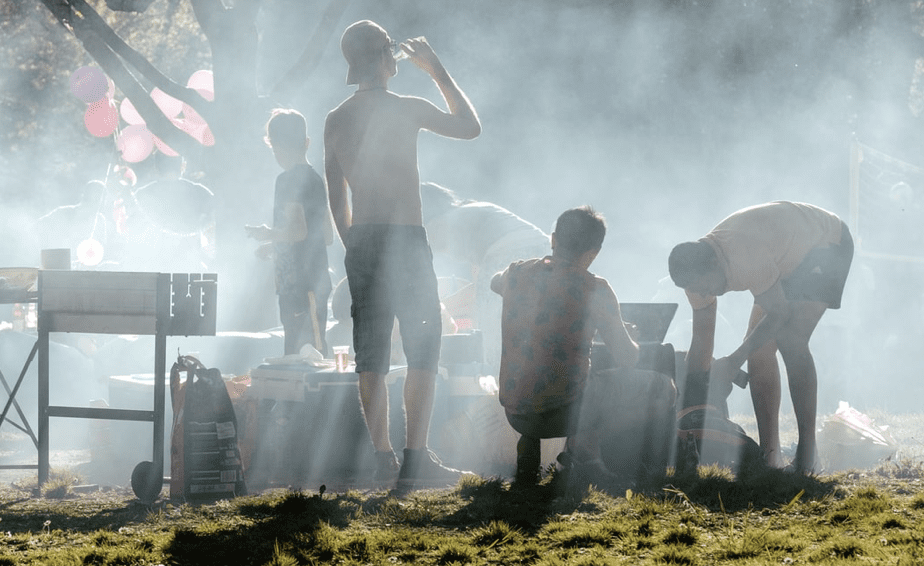
7. The Grill King

Photo Credit: Kaboom Pics

This is the guy who runs the show, flipping burgers and making piles of meat to celebrate bro time in the back yard. He is the epicenter of a cookout, and without his grill smarts your backyard is just a lame hangout.

6. The Grill Pals

Photo Credit: Pexels, Samuel Zeller

Yep, we’ve all seen it. Those bros that linger around the Grill King, chugging a beer while making comments about the best ways to grill – whether or not they have any idea what they’re talking about. But really, without the Grill Pals’ commentary, perhaps the meal would be less…I don’t know…manly?

5. The Lawn Gamer

Photo Credit: Unsplash, Austin Distel

This dude gets the festivities going. He’s probably the one that totes around cornhole waiting for that right moment to spark a backyard competition. He’s super competitive, but always willing to give someone else a turn.

Or at least a guest shot.

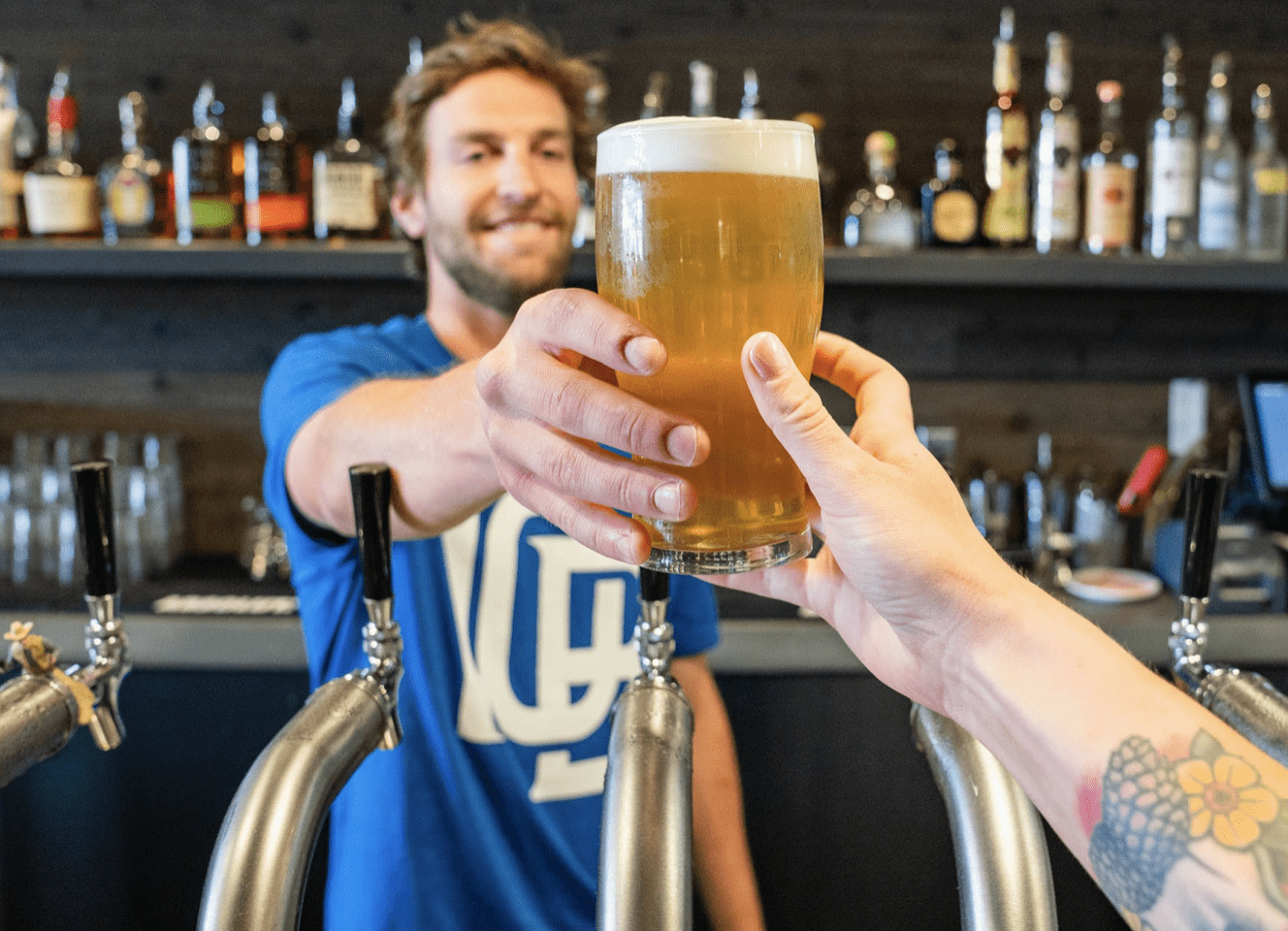
4. The Can-I-Get-You-a-Drink Dude

Photo Credit: Pexels, ELEVATE

No party is complete without that friendly guy offering to get the Grill King an extra spatula or to refill everyone’s drinks – it’s crucial guests don’t go without! We should all raise a beer in his honor.

3. The Bonfire Buddy

Photo Credit: Pexels, Djordje Petrovic

You might have noticed your one friend chomping at the bit for a fire even if it’s 2 in the afternoon. He’s always scoping out kindling and asking the host if he has firewood. But once twilight hits, he’ll be rocking the best hangout fire you’ll ever experience.

This guy is a solid addition to any sort of hang, cookout or no.

2. The Music Man

Photo Credit: Raw Pixels

He’s a what – he’s a what?

Lol.

What is a cookout without ambiance? This guy knows how to set the mood for a great party. He’s probably got a Bluetooth speaker stashed somewhere for when the mood strikes. What’s great is he always has the best playlists ready on his Spotify app!

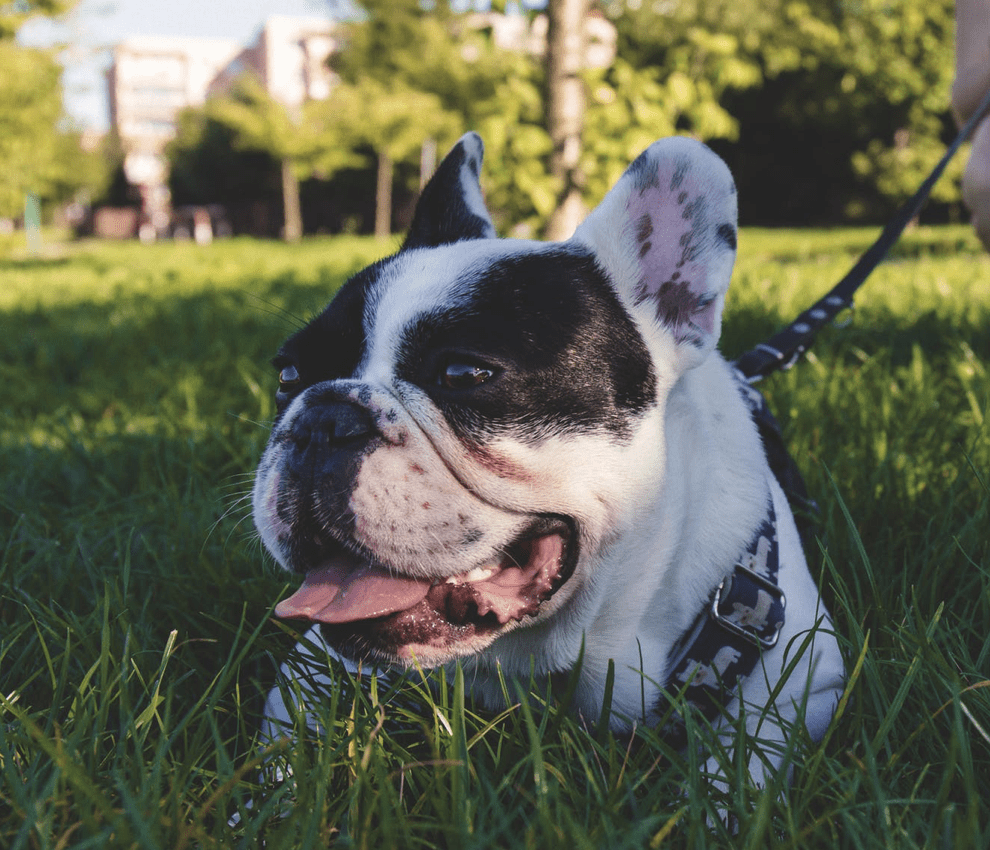
1. The Grill King’s Best Friend

Photo Credit: Free Stocks

Nope, we’re not talking about a Grill Pal. The Grill King’s “number one” is his dog.

And what’s great about having a four-legged friend around? He’ll clean up any delicious food scraps that fall on the ground.

The post Here Are the 7 Types of Cookout Dudes Who Show up at Every Summer BBQ appeared first on UberFacts.

Your Yellow Pit Stains Aren’t Sweat — Learn the Science Behind All the Chemical Reactions Happening

White tees are a crucial part of any wardrobe for men and woman — until the inevitable yellow pit stains. The stains can be super annoying to get out, and many people think they’re caused solely by sweat. So, antiperspirant or deodorant should prevent them, right? Wrong.

On the contrary, yellow pit stains are actually caused by antiperspirant.  They develop from a chemical reaction among the proteins in sweat, the cotton in T-shirts, and the aluminum salts in antiperspirant.

Photo Credit: iStock

Aluminum is the key active ingredient in antiperspirant, and it’s what differentiates antiperspirants from plain deodorants. The ingredient has become controversial in recent decades due to a fear that it is linked to breast cancer (though there’s actually not a clear link). Some health advocates also say that it’s just healthier to let yourself sweat.

Well, apparently there is another reason to avoid aluminum — it is the cause of those pesky yellow pit stains. At the very least, adding more antiperspirant is definitely not going to solve the yellow stain problem.

Photo Credit: iStock

But even before aluminum-based antiperspirant, sweat stains came in a wide range of colors depending on what products people used for deodorant. Around the turn of the 20th century, a product called Odorono tended to result in red underarm stains. Clothing artifacts from history show sweat stains that are yellow, orange, red, brown or even green.

Luckily, there are other

to prevent yellow pit stains without switching your deodorant. You can pre-treat your new, unyellowed T-shirts with an enzymatic laundry spray right after you wear them, or add a bit of lemon juice to your load of whites (but only whites!).

The post Your Yellow Pit Stains Aren’t Sweat — Learn the Science Behind All the Chemical Reactions Happening appeared first on UberFacts.

You’ve Heard of Dog and Cat Shaming. Take a Look at Fish Shaming.

Well, this is new.

You’ve seen kid shaming, dog shaming, cat shaming, and even bird shaming – but did you ever think the day would come when people’s pet fish would be exposed as naughty?

Well, get ready, because even though they probably don’t understand the internet, these 17 fish definitely deserve all the shame in the world.

17. Maybe he doesn’t like your choice of decor.

16. Relapse!

15. Understandable.

14. When you definitely don’t live up to your name.

13. Maybe he likes it that way.

12. But I mean whose fault is that, really?

11. As the mother of a 2.5 y/o, I don’t want to say I get it, but…

10. I guess you should have spent your money on something else!

9. Not everyone has a refined palate.

8. Poor Moira.

7. That’s science.

6. He’s not a fan of escargot.

5. It probably looked like chocolate.

4. Well I mean you keep feeding him so…

3. This is actually awesome.

2. Okay that is very naughty.

1. Only *I* can eat my eggs!

Fish! Who knew?

The post You’ve Heard of Dog and Cat Shaming. Take a Look at Fish Shaming. appeared first on UberFacts.

These 13 Pets Really Don’t Want Their Owners to Ever Leave

You know how your dog or cat’s anxiety can begin the moment they see you drag out your suitcase. They might even try to sit in your suitcase, thinking that you’ll be forced to stay home, or maybe you won’t notice and you’ll just pack around them.

Whatever the reason, these 13 pets are definitely not letting their human go without a fight.

13. Thou shall not pass.

My cat’s new solution to keep me from leaving from aww

12. Okay so you’re mad but at least you’re home!

I tried to leave early for work this morning but Mulder had other ideas… from aww

11. You’d better stay home. I mean, what choice do you have?

My dog wedges his snout between the door when I leave for work so I can’t close it. One time he went the extra mile. from aww

10. Now, hold that pose…

Leaving Bentley is the hardest part of the day from aww

9. You think you’re the only one who can ride this bike, human?

This is how Merlin attempts to prevent my brother from leaving his apartment. from aww

8. This is the best reason to snooze an alarm I’ve ever heard of.

My cat learned that the alarm sound means I wake up, and she snuggles on my chest right after. I’ve been setting my alarm 30 minutes early every day to give her more happy time. from aww

7. That face.

You weren’t planning on leaving the house today, were you? from aww

6. He fits! See?

She thought we were leaving without her from aww

5. Someone’s been watching Puss in Boots.

Every time I leave for work she does this, it’s not fair from aww

4. My heart.

My dog whenever she realizes we are leaving the house from aww

3. He will not be moved.

My dog is smart enough to understand that packing = people leaving bc of how often my parents go on trips. They’re taking him to the beach this week but when he saw them packing he ran out to the back of the car and sat there so they can’t leave without him ? he’s been there for about 40 minutes from aww

2. There’s nothing you can do. Nope.

He cries everyday I leave for work. Today he’s decided he’s coming with me. from aww

1. Let’s see how far you get without these, hmm?

We don’t deserve pets. They’re too pure.

The post These 13 Pets Really Don’t Want Their Owners to Ever Leave appeared first on UberFacts.

8 Important Things You Might Not Know About the Myers-Briggs Test

Many of us have taken the Myers-Briggs test at some point. Teachers, professors, managers – they all seem to think that the results are interesting not only, but that they might be able to provide insight into their workgroups that will make the days, months, and years easier to navigate.

Is that true?

The psychological community has been quick to point out that the test is only one of many that measures a person’s “type” when it comes to dealing with others, how they view decisions and decision-making, and communication skills…but that hasn’t stopped most people from treating the test a little bit like the Harry Potter sorting hat.

If you’re curious about the test and want to know more, these 8 facts are a good place to start.

8. It’s a popular tool used in the hiring – and firing – of employees.

Officials in the U.S. Army, as well as bigwigs with General Electric, Standard Oil, and Bell Telephone were some of the firs to be convinced that being able to spot the right people for the right jobs could help reduce turnover, but having test results in hand also led to some people being reassigned or even fired, based on their “type.”

7. The test was developed by a mother-daughter team.

Katharine Cook Briggs and her daughter, Isabel Briggs Myers, developed the test together.

6. Psychologists refer to the test as a “fortune cookie.”

Though it was long taken as gospel, researchers today argue that the Briggs women misread Carl Jung’s work on types, which led to “an act of irresponsible armchair philosophy and “a Jungian horoscope” that amounts to “little more than an elaborate Chinese fortune cookie.”

The test is still used by a majority of Fortune 100 companies and earns around $20 million a year.

5. Katharine Cook-Briggs was inspired by her future son-in-law (or love for her daughter, depending on how you look at it).

https://www.instagram.com/p/B1F–vShW4d/

When Isabel Briggs returned home from Swarthmore College with her new beau – law student Clarence “Chief” Myers – in tow, Katharine was fasciated by his personality, which was completely unlike everyone else’s in her family.

The desire to understand it – and the man who would eventually propose to her daughter – led to her study of the psychology of personalities.

4. It’s statistically unreliable.

The Myers-Briggs test suffers from low reliability, which means that if you take the test more than twice, there’s a high chance your classification will change – and if you retake the test with more than a 5-week gap between testings, there’s a 50% chance your classification will be different.

Scientifically speaking, that’s not good.

3. The test was inspired by Carl Jung.

View this post on Instagram

ENFP aka Campaigner Extraverted iNtuitive Feeling Perceiving (rare 7%) ENFPs are both "idea"-people and "people"-people, who see everyone and everything as part of a cosmic whole. They want to both help and to be liked and admired by other people, on both an individual and a humanitarian level. This is rarely a problem for the ENFP, as they are outgoing and warm, and genuinely likepeople. Some ENFPs have a great deal of zany charm, which can ingratiate them to more stodgy types in spite of their unconventionality. ENFPs often have strong, if sometimes surprising, values and viewpoints. They tend to try to use their social skills and contacts to persuade others gently (though enthusiastically) of the rightness of these views; this sometimes results in the ENFP neglecting their nearest and dearest while caught up their efforts to change the world. ENFPs can be the warmest, kindest, and most sympathetic of mates; affectionate, demonstrative, and spontaneous. Many in relationships with an ENFP literally say, "They light up my life." But there is usually a trade-off: the partner must be willing to deal with the practical and financial aspects of the relationship, and the ENFP must be allowed the freedom to follow their latest path, whatever that entails. For some ENFPs, relationships can be seriously tested by their short attention spans and emotional needs. They are easily intrigued and distracted by new friends and acquaintances, forgetting their older and more familiar emotional ties for long stretches at a time. And the less mature ENFP may need to feel they’re the constant center of attention, to confirm their image of themselves as a wonderful and fascinating person. In the workplace, ENFPs are pleasant and friendly, and interact in a positive and creative manner with both their co-workers and the public. ENFPs are also a major asset in brainstorming sessions; follow-through on projects can be a problem, however. ENFPs do get distracted, especially if another interesting issue comes along. They also tend towards procrastination, and dislike performing small, uninteresting tasks. #myersbriggs #campaigner #enfp

A post shared by Tracy Pepper (@onemountainatatime) on

When Katharine Briggs discovered Jung’s 1921 treatise Psychological Types, her world changed forever. In it, Jung argues that humans have two perceiving “function-types” and two judging “function-types,” both of which are moderated by a person’s introversion or extraversion.

2. It’s not based on any formal psychology.

View this post on Instagram

For the first time in years, my personality typing has changed. For my time in the military and after, I have always been an ESFJ and am now typed as INFJ-T. This is a significant change and tells me a lot about my growth and change as an individual. The following is a description of INFJ type personalities and I believe suits me to a tee. INFJ: The Advocate personality type is very rare, making up less than one percent of the population, but they nonetheless leave their mark on the world. Advocates have an inborn sense of idealism and morality, but what sets them apart is that they are not idle dreamers. These individuals are capable of taking concrete steps to realize their goals and make a lasting positive impact. People with this personality type tend to see helping others as their purpose in life. Advocates can often be found engaging in rescue efforts and doing charity work. However, their real passion is to get to the heart of the issue so that people need not be rescued at all. Advocates indeed share a unique combination of traits. Though soft-spoken, they have very strong opinions and will fight tirelessly for an idea they believe in. They are decisive and strong-willed, but will rarely use that energy for personal gain. Advocates will act with creativity, imagination, conviction, and sensitivity not to create an advantage, but to create balance. Egalitarianism and karma are very attractive ideas to Advocate personalities. Advocates find it easy to make connections with others. They have a talent for warm, sensitive language, speaking in human terms, rather than with pure logic and fact. #myersbriggs #personality #personalitytypes #infj #infjpersonality #advocate #passionate #justice #karma #decisive #helpingothers #change #changeisgood #growth #understanding

A post shared by Rus S (@singledadlife_adventures) on

Neither Katharine Briggs nor Isabel Myers had any formal education in psychology or psychometrics, or any real professional training at all. Though Katharine would have said “one need not be a psychologist in order to collect and identify types any more than one needs to be a botanist to collect and identify plants,” many disagree.

1. The first test was immersed in the world of the WWII job market.

World War II created a change in the American workforce that’s never been repeated. Women were working, the GI Bill was passed, and many career consultants went into the new era with the Myers-Briggs Type Indicator firmly in hand. The idea was that it would help people be matched with the best job for them, but with hindsight, many wonder if that ended up being true.


So go ahead and enjoy your results – just know that no one test defines you!

The post 8 Important Things You Might Not Know About the Myers-Briggs Test appeared first on UberFacts.

Psychologists Say That Baking Improves Your Mood – Here’s Why

A lot of folks out there who innately understand that the act of measuring ingredients, kneading dough, licking spoons, and dropping cookies, cakes, muffins, bread, or all of the above into a hot oven is a quick fix for a bad day, a fight with your spouse, or a general funk that’s proving hard to escape.

But it turns out that there is psychology behind the fact that baking – for yourself or others – possesses a therapeutic element.

Studies have shown that creative practices, like baking and knitting, have the ability to contribute to a person’s overall sense of well-being, a fact that Boston University’s Donna Pincus says  is due to how baking allows “the benefit of allowing people creative expression.”

“There’s a lot of literature for connection between creative expression and overall wellbeing,” Pincus continues. “Whether it’s painting or it’s making music [or baking], there is a stress relief that people get from having some kind of outlet and a way to express themselves.”

Stress, of course, is linked to a variety of mental and physical problems, which means finding ways to cope is an important step in leading a healthy life.

Baking also helps people practice mindfulness, as it allows you to focus on straightforward directions listed in a specific order – the fact that you’re just following along lets your mind grab onto something other than the stress and anxiety that might exist outside the kitchen.

Julie Ohana, a clinical social worker and culinary art therapist, claims that baking helps you practice the “balance of the moment and the bigger picture.” When you’re baking, you’re measuring ingredients and mixing them together, all while imagining how they’ll come together in the end and how someone else might be pleased to enjoy that final product, too.

Which brings us to another psychological benefit – sharing your baked goods with others. Doing something good without expecting anything in return is a proven mood-booster, confirms Pincus.

“You feel like you’ve done something good for the world, which perhaps increases your meaning in life and connection with other people.”

Food can also function as a mode of communication, says psychology and brain science professor Susan Whitbourne.

“It can be helpful for people who have difficulty expressing their feelings in words to show thanks, appreciation, or sympathy with baked goods.”

In a world where it can be hard to find ways to communicate our feelings to others, being able to say it with baked goods (or a quilt, or a cross-stitch) is as easy as it is satisfying.

So get out there and bake, people – it’s good for your body, your mind, your community and your belly, too.

The post Psychologists Say That Baking Improves Your Mood – Here’s Why appeared first on UberFacts.

Drinking Water All Day IS NOT the Best Way to Stay Hydrated — Learn the Best Methods

I’ve heard my fair share of the advice “make sure you drink a lot of water!”

I’m guilty of worrying over whether my nieces and nephews are hydrating well enough, too, especially on these hot summer days. Dehydration causes fatigue, saps endurance, and can interfere with your mood and ability to concentrate.

And while the National Academy of Medicine does recommend adults drink between 91 and 125 fl oz of water every day, guzzling the stuff morning, noon, and night may not be the optimal way to keep hydrated.

View this post on Instagram

? Do you have access to clean drinking water whenever you want? ⠀ ⠀ ?Last UNICEF report says: 1 in 3 people globally do not have access to safe drinking water: ⠀ ? 2.2 billion people around the world do not have safely managed drinking water services ⠀ ?4.2 billion people do not have safely managed sanitation services ⠀ ?3 billion lack basic handwashing facilities ⠀ ??‍?Next time you think your life sucks remember the above and say thank you for what you have! ⠀ Much love ❤ • • • • • #unicef #un #motivation #appreciate #saythankyou #cleanwater #water #drinkingwater #report #savetheearth #bestlifescenario #travelbloggervibes #africa #children #kids #beirut #baalbek #byblos #lebanon

A post shared by ANNA (@bestlifescenario) on

Especially, says professor of public health David Nieman, if you’re not drinking it with a meal.

“If you’re drinking water and then, within two hours, your urine output is really high and is clear, that means the water is not staying in well…plain water has a tendency to slip right through the human digestive system when not accompanied by food or nutrients.”

In fact, if you think your clear urine is a sign you’re doing something right, that’s not exactly the case, either, according to the Cleveland Clinic – it’s a sign of “overhydration” in most cases.

A 2015 study found that many kinds of drinks help you rehydrate – some as efficiently as water – and that several different elements come into play when considering how much H2O is absorbed in the process. Their research found that if you ingest water along with animo acids, fats and other minerals, it seems to help the body retain the much needed hydration.

For that reason, orange juice, milk, tea, and sports drinks were all good options when hydration is your goal.

“People who are drinking bottles and bottles of water in between meals and with no food, they’re probably just peeing most of that out,” Neiman confirms.

Also? Drinking too much water can actually be harmful.

“In athletes or people who are exercising for hours, if they’re only drinking water, they can throw out too much sodium in their urine, which leads to an imbalance in the body’s sodium levels,” Nieman adds.

The result can be a potentially deadly condition called “hyponatremia,” and in those cases, sports drinks and other beverages that contain nutrients are a better option.

Even if you’re not an athlete, there are better ways than pounding water all day to keep your body and your brain running at optimal levels. Sipping water prevents an overload in the kidneys and helps your body retain and use the water you’ve drank.

Another good tip is to drink water before, during, and immediately after a meal or snack.

“Drinking water with amino acids or fats or vitamins or minerals helps the body take up more of the water, which is why beverages like milk and fruit juice tend to look pretty good in these hydration studies.”

Some of Neiman’s own research suggests that even eating a banana would be a better way to recover from a workout than drinking a bunch of water.

The long and short seems to be that you can and should keep drinking water, but it’s not a bad idea exercise more discretion in the whens and hows – not so much all at once, and taken with food whenever possible.

“Water is good for you,” Neiman cracks, “but you can drown in it, too.”

Words to live by.

The post Drinking Water All Day IS NOT the Best Way to Stay Hydrated — Learn the Best Methods appeared first on UberFacts.

Meet the Woman Who Finally Wore Pants onto the Senate Floor – It Wasn’t Until 1993

With pantsuits all the rage among high-profile female representatives these days, it never occurred to me to wonder about a time when they were all but forbidden on the Senate floor.

Which is silly, maybe, given that there were few public places prior to the 1970s where you would catch a woman wearing pants, but still – this is the 90s, we’re talking about. Bill Clinton was president.

But still women followed the unwritten “no pants allowed” rule.

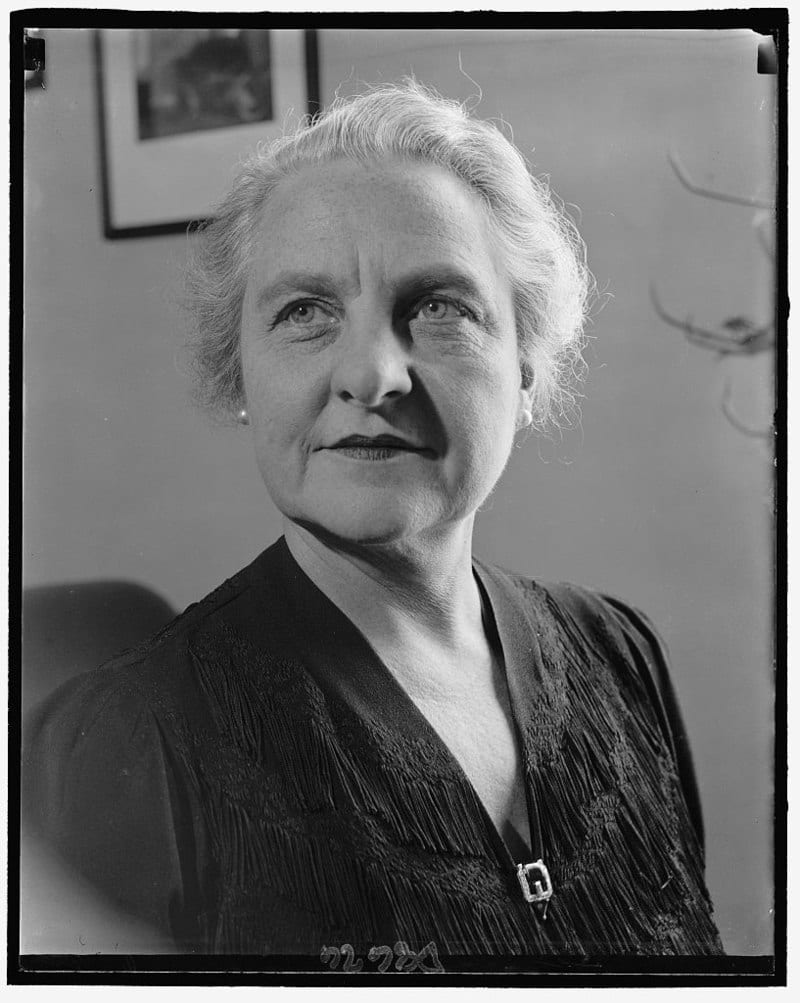
That is, until one woman – the first African-American woman to serve as a U.S. Senator – went in for her first day of work.

Carol Moseley-Braun, the Democratic Senator from Illinois, hadn’t thought twice about donning one of her many pantsuits (her “nice outfit) and heading to the Capitol. When she arrived, however, “the gasps were audible” and she was left wondering what faux pas she’d committed on her very first day.

Image Credit: Wikipedia

It was her pants.

Since the beginning of the legislative branch, members have dressed in a dignified manner befitting the office, though no official dress code was written. And when women began to seek and win political office in 1912, they followed suit (heh), typically choosing dark colors and conservative cuts to eschew unwanted attention. The trend continued into the 40s, as more and more women joined the ranks of representatives. Reps. Mary Norton and Frances Bolton would even patrol female fashion choices on the floor.

Image Credit: Wikipedia

In the 1970s, slacks and pantsuits became acceptable office and formalwear attire, and were also allowed at federal agencies around the same time (except at the FBI, where J. Edgar Hoover reigned).

In 1972, Pat Nixon became the first sitting first lady to be photographed wearing trousers, and Rep. Charlotte T. Reid became the first woman to wear a “black wool, bell-bottomed pantsuit” in “the annals of the U.S. Congress.” One male colleague even told her he “was told there was a lady here in trousers, so I had to come over and see for myself.”

Pat Nixon
Image Credit: Wikipedia

The Senate, however, was much slower to embrace the trend of letting women wear whatever the hell made them the most comfortable.

It is perhaps not surprising, knowing what we know about the Senate, that even in the 1980s women were warned to dress appropriately before showing up for work – not just Senators, but temps, secretaries, or anyone else who might find themselves in the chamber.

“We’ve heard from women staff that in the 1980s, if they came in to work – if they were called in on an emergency basis – they needed to keep a dress to put on quickly or they had to borrow one if they had to appear on the Senate floor,” says historian Richard A Baker.

Though, again, it was not an official or written rule, the Senate employed “doorkeepers” that decided who did and did not look appropriate to appear. They were part security guard, part “protocol monitor,” and still today they make sure that everyone who enters is supposed to be there and is dressed appropriately.

A 1972 request for a written dress code, so that women weren’t thrown off by a different door monitor on any given day, was ignored.

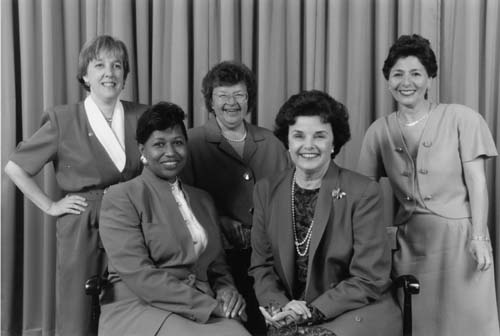
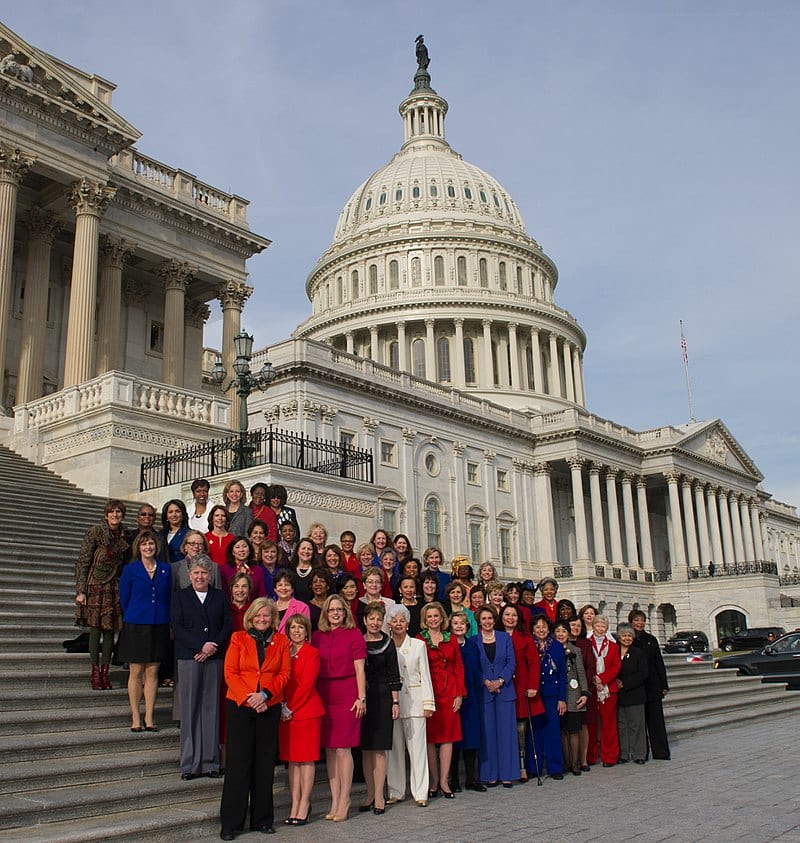
By 1993, things were shifting. For the first, time, more than two women were serving Senate terms at the same time (there were 4). One of them was Moseley-Braun, who was simply unaware of the unwritten rule.

“It was one of those unwritten rules that they don’t tell you about unless you’re part of the circle. And nobody was talking to me about these things, so I had no clue.”

She might not have meant to start a revolution, but when staffers started to thank her for taking up the fight to wear pants on the floors, Moseley realized she had done just that.

“What happened next was that other people started wearing pants. All the women staffers went to their bosses and said, ‘If this senator can wear pants, then why I can’t I’ And so it was the pantsuit revolution.”

For what it’s worth, Senator Barbara Mikulski had also made up her mind to fight the outdated norm that same session, on a day when a bad snowstorm was forecast.

“It was a snowy day,” she told Vice. “I found out more bad weather was coming. I just really wanted to be comfortable. I’m most comfortable wearing slacks.”

Aware of the tradition she would be flipping the bird, Mikulski went to Robert Byrd, president pro tempore of the Senate, and told him she would be wearing pants. After checking the official rules to make sure that pants on women weren’t explicitly outlawed, Byrd gave her the nod.

“He didn’t say yes,” Mikulski recalls, “but he gave a nod.”

Soon after, the Senate sergeant at arms, Martha Pope (the first ever woman to hold the job) amended the written policy manual from “women are required to wear business attire, i.e. dress, skirt and blouse, or business suit” to read “women are required to wear business attire, i.e. dress, skirt/blouse, business suit, coordinated pantsuit (slacks and matching blazer; no stirrup pants).”

Image Credit: Wikipedia

Gotta love the 90s for that last tidbit.

Though recent events suggest that there are plenty in Washington who would love to turn back the clock on many things – including the role of women in politics – pants, pantsuits, and powerful women aren’t going anywhere.

The post Meet the Woman Who Finally Wore Pants onto the Senate Floor – It Wasn’t Until 1993 appeared first on UberFacts.


15 Interesting Food Facts to Chew On

Are you a foodie? Or at least think you are? Think you know the ins-and-outs of what we stuff in our faces every day?

Well, if so, you should definitely keep reading because these food facts are jam-packed with information you might be totally in the dark about, foodie or not.

Read on, friends.

1. Peppers

A chipotle pepper is simply a dried and smoked jalapeño. In fact, all dried chiles have different names than their fresh counterparts.

2. I knew it!

Sour Patch Kids and Swedish Fish both have the same base.

3. A little short

Double Stuf Oreos DO NOT have twice the creme filling. In fact, a curious math teacher discovered that the Double Stufs only have 1.86x the creme as the original cookies, to be extremely precise.

4. Always listen to all of your employees

Flamin’ Hot Cheetos were invented by a janitor who worked at the Frito-Lay plant.

5. Now it all makes sense

Spam is named for a combination of “spice” and “ham.”

6. Delish!

View this post on Instagram

Share your break this #WorldFriendshipDay ?‍♀️

A post shared by KITKAT (@kitkat) on

Kit Kats are filled…with other broken Kit Kats.

7. Not too much, now

Rhubarb leaves are poisonous…so if you’re growing it in your garden, beware. And make sure your kids don’t get into it, too.

8. Four shapes

McDonald’s nuggets come in four distinct shapes: Bell, Bone, Boot, and Ball.

9. Which one’s which?

Bananas are technically berries, while technically strawberries are not berries.

10. For all time

Honey never goes bad. EVER. So tuck that away into your apocalypse-prepper brain…

11. Pounds for days

Pound cake got its name because the original recipe contained one pound of each ingredient.

12. Quite an impressive plant

View this post on Instagram

My dazzling blue kale is nearly a yard long from end to end. (30" actual size) this is what happens if you give the plant everything it needs including proper water, soil, weather, trace minerals, beneficial fungi, beneficial bacteria, and organic matter. I strive to have every one of my plant babies to thrive like this. I'm not there yet.. Thriving plants make for thriving people. Eat more thriving nutrient dense plants. Learn how I grow my thriving plants on my YouTube channel. Link on profile page. #dazzlingkale #dazzlingbluekale #lacinatokale #dinokale #dinosaurkale #tuscankale #brassicaoleracea #nutrientdense #nutritarian #growingyourgreens #backyardgardening #organicgardening #organicgarden #growyourown #growyourownfood #homegrown #bigkale #largekale #hugekale #eatkale #kale #kaleme

A post shared by John Kohler (@growingyourgreens) on

Kale, broccoli, cabbage, cauliflower, Brussels sprouts, and kohlrabi all come from the same plant. It’s called Brassica oleracea, and it’s been bred over time to provide a literal half dozen different veggies for your plate.

13. Straight up

Asparagus grows straight up out of the ground.

14. Gimme the big guns

View this post on Instagram

Since 1896! #TootsieRoll

A post shared by Tootsie Roll Industries (@tootsieroll) on

Tootsie Rolls start out as huge 13-pound logs that are shaped down to their little sizes.

15. That’s the difference

The difference between jam and jelly is thus: jam is made with fruit; jelly is made with fruit juice.

The post 15 Interesting Food Facts to Chew On appeared first on UberFacts.