
In the early 20th century, trains in the US were destroyed in staged head-on collisions in front of live audiences for entertainment. This ended in the 1930s as it was seen to be wasteful of old but otherwise useful locomotives at the height of the Great Depression.
Do Kids Lose What They Learn over Long Summer Breaks?
The Economist recently proclaimed, “Long summer holidays are bad for children, especially the poor.”
This was not the first time such a claim had been made about how kids lose much of what they’ve learned over the year during breaks from school.
Lawmakers, too, are concerned. Each year, bills introduced at the state level attempt to funnel money into summer education programs.

Photo Credit: Pixabay
Yet, reports from research groups such as the Brookings Institute show more nuanced findings as it relates to summertime learning loss among children.
So, do kids suffer educationally from long summer breaks?
Researcher Abel J. Koury used current and nationally representative data to determine if there truly is a loss of learning during the summer in school children.

Photo Credit: Pexels
Koury estimates only 7 percent of kids lost approximately a month of learning in reading and 9 percent of kids lost in math between kindergarten and first grade. Before second grade, the percentages increase to 15 percent in reading and 18 percent in math. The majority of kids in summertime do not seem to be experiencing any loss of learning. Koury also suggests that not only are kids not experiencing significant learning loss, they are actually increasing their skills over the summer.
Koury also looked into whether loss of learning became a long-term issue, and he determined that the difference between children who experienced summertime loss of learning and children who gained skills was insignificant by the end of the school year.

Photo Credit: Max Pixel
Kids who were already strong in either reading or math were the ones who experienced the most significant loss in learning. Furthermore, homework over the summer did not seem to be a factor in whether kids gained or lost learning.
Koury concluded that letting children get outside and play was more important than worrying about their loss of learning. Summer reading lists are great and can be helpful against loss in that area, but keeping kids active and exercising should be a priority for healthy, happy and intelligent children in the long run.
The post Do Kids Lose What They Learn over Long Summer Breaks? appeared first on UberFacts.
15 People Respond to the Burning Question: How Do You Handle a Person Who Cuts in Line?
When people cut in line, it always seems as if there should be something pithy to say that would put them in their place.
If you’ve always come up as empty as I have when you’re put on the spot, then this list of best practices could be right up your alley!
15. So it’s just you then.
— From the old television show “Dead Like Me” —
[A woman cuts in line at the post office]
Rube:: Afternoon, ladies. Are you two old friends?
Woman: Eh, her daughter is in my son’s class.
Rube:: I have a question for you. Is everyone in this line an asshole?
Woman: Excuse me?
Rube:: Is everyone you just cut in front of an asshole?
Woman: Uhm. No?
Rube:: So it’s just you then.
Woman: I have children in the car.
Rube:: I have a cake in the oven. He’s got three minutes left on the meter. She’s got a lunch meeting. We all have a finite amount of time. Now get in the back of the line. And don’t use your children like that — it’s shameful.
14. Try being polite.
I prefer to pretend they didn’t see the line, which can occasionally happen with a bunch of long lines especially if they leave a space for people to get by, I just politely point out the line.
13. Queueing is the national pastime.
Cutting in line – The one crime the UK retains the death penalty for.
12. I mean it would probably work.
“Oi Cunt get the fuck back to your place before I drop ya”
11. Excuse me, sir, do you have a moment to talk about our lord and savior Squidward?
Start trying to convert them to something.
10. Yasss queen.
I used to work at a coffee shop at a university. During the transitions we would get a line 4 to 8 people deep. I was pretty quick and could serve people in less than about 10 seconds each. They usually just wanted coffee and the occasional muffin.
On one occasion with 6 people in line a 30ish year old guy steps in right behind the girl I’m currently serving. You could hear the other 5 people grumble but nobody said anything. He comes up and orders a coffee. I pretend like I didn’t hear him and serve the next in line. He gets pissed and says “I’m in a hurry!” “And they aren’t?” He huffs and walks off.
I got lots of tips for the next few minutes.
9. Act like it’s totally normal.
Just go cut back Infront of them, like, walk up, “sorry excuse me” like it’s totally normal.
8. This feels right.
As Finnish person i can’t think better way than keep your mouth shut and look at them furiously while thinking all the things you could say, but then notice that you missed your ‘ opportunity ‘.
7. Take your chicken seriously.
If someone cut directly in front of me I say nothing and cut in front of them. If they complain about it I just say if they are allowed to cut surely I am too. I need this KFC more then u buddy.
6. Every time.
Guys clear the way! We have a VIP coming through!
I use this one every time
5. Being straight-forward works.
“There’s a line. The back is over there.”
I found being straight forward works. Usually they just don’t know.
4. The line is behind me.
People cutting in line is probably my biggest pet peeve and it’s happened to me several times over the years. I always say the same thing: “The line is behind me”. Only once did a young girl ignore me and cut in front of not just me but the person who was in front of me. I said something to her but it was of no use. The cashier did nothing at all about it.
The best one wasn’t the woman cutting in front of me but a woman with a cart full of groceries in the express lane. Ten items or less. I had seven items. I let her put a bunch of stuff on the conveyor belt and then I told her she was in the wrong lane. She looked at me and I pointed to the sign. Ten items or less. Her response was: “I do this all the time”. I said “not today you won’t”. She continued putting her stuff on the belt and that’s when the cashier leaned over to her and told her to go to another lane. She did. When I was about to head out of the store the woman was still checking out. She said, “you must be having a bad day”. I said, “I was having a great day until I ran into you!”
3. Shame them into submission.
Excuse me, sorry, you probably didn’t realise, the start of the queue is back there” point
Is usually enough to shame them, and if not it makes it obvious to others that they’re aware of what they’ve done.
2. IS THERE?
No words need be said.
Whoever is directly behind the cutter cuts in front. Then the next person behind that person cuts the cutter. Then the next, then the next, and so on until the asshole is in the back where they belong.
What’re they going to say? Here’s how that conversation goes:
“Hey, there’s a line here…”
“Oh? IS THERE?” Furious stare
1. I’m sure it’s fine.
Start coughing as harshly as possible, right towards the back of their neck.
Then say “Damn, I knew that trip to west Africa was a mistake”.
Now you’re well-armed the next time it happens to you!
The post 15 People Respond to the Burning Question: How Do You Handle a Person Who Cuts in Line? appeared first on UberFacts.
The Dunning-Kruger Effect Makes People Think They’re Great…When They Are Most Definitely Not
The Dunning-Kruger Effect is actually a psychological response that prevents people from realizing how inept they are. It’s not a disease, condition or mental health problem.

Photo Credit: Pixabay
The Dunning-Kruger Effect is basically this: the more incompetent someone is at something, the less likely they realize it. Instead, they believe they are nailing it.
Social psychologist David Dunning, PhD, and graduate student Justin Kruger came up with the principle at Cornell University in 1999. In their study, they investigated groups of people, testing them in the areas of logic, grammar and humor. The lower an individual scored, the more they overestimated their skills. They observed when participants scored in the 12th percentile, those same participants would estimate their own scores as being in the 62nd.
Dunning and Kruger also asked subjects to judge the humor in a list of jokes. Some of the participants were considerably poor judges of the quality of the jokes. Yet, they scored themselves quite high on their ability to judge what others would find funny.

Photo Credit: Pixabay
When people believe themselves to be more competent and capable then they really are, they are showing classic Dunning-Kruger. They lack the self-awareness to recognize their own inabilities almost to the point of narcissism.
Paul Hokemeyer, PhD, a clinical and consulting psychotherapist, also adds that from a mental health standpoint, people who exhibit the Dunning-Kruger Effect are often labeled as having poor insight. They hide behind their heightened sense of ability for safety and to protect their sensitive egos.
You may have observed the Dunning-Kruger Effect in action (I’d bet most of us have). The worst worker in the office is often the one who brags about performance. Or maybe you have a friend who is the worst driver on the road, yet claims she’s the best driver out there. Or you know a guy who says he’s a highly sought after guitarist, but then you hear him play…and not so much.

Photo Credit: Max Pixel
We can all be guilty of Dunning-Kruger in varying degrees. No one wants to admit they are the worst at something, even though we can generally recognize incompetence in others. But don’t bother arguing with someone in the throes of the Dunning-Kruger Effect; remember, they don’t actually see their own inability.
The best way to avoid succumbing to Dunning-Kruger is to understand how rare it is to be an expert at something new. Ask questions or take lessons. Don’t assume anything if you haven’t been completely educated or trained on the task.
And just because you’re a genius on one subject does not mean you are a genius in general. Know when you need help with something. Ask for feedback. Accept criticism. And always be humble and willing to learn more.
The post The Dunning-Kruger Effect Makes People Think They’re Great…When They Are Most Definitely Not appeared first on UberFacts.
Travel Instagrammers Share Helpful Tips for Taking Better Travel Photos
No vacation feels complete anymore without the perfect travel photos these days. If you want to take your travel photography up several notches, these travel Instagrammers have some advice for you.
Part of the magic of photography is all about timing. One Berlin-based travel photographer, Theodora Melnik (@______theo), tells HuffPost that sunrise is the perfect time for a photo.


“I can’t recommend shooting sunrise enough,” Theodora said. “Whenever I make the effort, I get to explore even the busiest of places practically by myself, which if you’re thinking of the Eiffel Tower or the Spanish Steps is really something.”
And speaking of the sun — sunset is also a picture-perfect time of day, but don’t make the rookie mistake of only photographing the actual sunset.
“On vacation when you go to the beach at sunset, everyone has their phones pointed directly at the red orb going down over the ocean, which is really pretty and definitely worth capturing. But don’t forget to turn around and see what the sun is shining on,” Tyson Wheatley (@twheat) explains.
Similarly, when visiting a major monument, people tend to snap a photo of it for their records. But Elke Frotscher (@elice_f) recommends photographing the little things that surround the big monuments.
This allows for a more unique photo that truly captures the essence of the place, instead of just a photo of the Eiffel Tower that looks exactly like something you could find on Google.
Have a great trip, and hope the photos turn out great!
The post Travel Instagrammers Share Helpful Tips for Taking Better Travel Photos appeared first on UberFacts.
Check out These 5 Ancient Legends Based on Real Events
A lot of kids go through a phase when they’re fascinated by the legends and myths that have wound their way through the centuries. Whether Robin Hood, Arthur and Lancelot, the antics of the gods of old, or creatures like a unicorn or a vampire, it’s fun to imagine that the world might have once been more magical than it is today.
And these 5 legends, which are rooted in reality, suggest that just maybe…it was.
5. Atlantis
Greek philosopher Plato was the first to describe a beautiful, advanced civilization that once disappeared beneath the sea, never to be seen or heard from again – but he was far from the last to re-tell one of the most well-known myths in human history.
Now, many archaeologists think he was describing the collapse of the Minoan empire after a volcanic eruption rocked Thera (modern-day Santorini). The core of the island collapsed in the aftermath, creating a tsunami that flooded the island and left it completely under water, sending it to a grave from which it never arose.
4. The Ape-Men Army of Sri Lanka
Indian Sanskrit epic the Ramayana features a classic kidnapping plot, in which Sita, the wife of god Rama, is stolen away to the Demon Kingdom on Lanka. To rescue her, Rama banded with an army of ape-like men to build a floating bridge between India and Lanka that they used to defeat the demon king, Ravana.
The tale, of course, is just good storytelling, but the bridge still exists – aerial surveys show a 30-mile-long stretch of limestone shoals under the sea that reaches between India and Sri Lanka.
Experts believe it was above the water until a 15th-century cyclone brought a huge storm surge into the channel.
3. Thunderbird and the Whale
Native American lore tells of a benevolent, supernatural being called a Thunderbird, which once swooped over the sea to snatch a killer whale that was stealing resources from the Quileute tribe.
The bird prevailed, dropping the whale on dry land to die with a thud that shook the ground, and many natives died during the battle and ensuing chaos.
Back in the 1980s, geologists discovered that a powerful earthquake occurred in the area in 1700, one that would have been powerful enough to cause a tsunami. It would have hit the coast where the tribe lived, generating the tales to explain the giant shaking of the earth.
As far as the Thunderbird, many scientists believe it’s based on the Aiornis, a prehistoric giant bird that co-existed thousands of years ago with early North America settlers. The bird had a wingspan of up to 16 feet and used to feast on whales washed up on the beaches.
2. The Guest Star
In 1006, people looking at the sky all over the world described seeing a “guest star.” Persian scholar Ibn Sina was particularly intrigued, however, explaining how the star hung in the sky for months, changing color and eventually emitting sparks before fading away.
We now know that Sina was describing a supernova that took place 7200 years ago and whose dying remnants can still be detected by powerful NASA technology.
They believe the color changes he described were due to the merger of two white dwarfs, which astronomers say would create a supernova bursting with color. What Sina did, essentially, was provide details for modern scientists that would otherwise have been lost to time.
1. The Great Flood
There are stories from around the world that join the biblical account of a great flood that covered most of the earth, wiping out almost all of mankind in the process – so most think it makes sense to assume this event took place in our human past in some way, shape, or form.
Geological records show that around 11,500 years ago, glacier meltwater melted into the North Sea, causing the Black Sea to dry up while the Mediterranean Basin refilled with seawater from the Atlantic Ocean. Between them was dry land, but eventually the Mediterranean overflowed into the Black Sea, forcing the barrier between them to all but disappear.
The result would have been a waterfall 200x the volume of Niagara Falls and covering an area double the size of Manhattan in a single day.
That said, the worst flood of the last 10 millennia took place along the Yellow River in China at a date that coincides with ancient texts.
This is the next best thing to actually being a kid again!
The post Check out These 5 Ancient Legends Based on Real Events appeared first on UberFacts.
Velcro Wants People to Stop Using the Term “Velcro” so They Dropped a Music Video
Velcro was invented in the early 1940s, but after losing its patent in the 1970s, the market was flooded with other “hook and loop” fasteners that, while not Velcro brand, were quickly labeled as such by the public.
Basically, anything that sticks together without adhesive is Velcro, right? Maybe, but once a term becomes “genericized” in that manner, the original company loses its trademark. Legal resource UpCounsel refers to this process as Genericide, because the original company – Velcro, in this instance – would lose not only their trademark, but their ability to stop other companies from using trademarked branding on non-Velcro products. And, thus, they’ll probably lose a whole lot of sales.
 My Generation by Schein Orthotic Shoes – KATE, Silver (floral embossing) . . . . #orthotics #tandsorthotics #schein #scheinfootwear #shoes #velcro #nubuck #velcroshoes #orthoticshoes #orthoticfootwear #childrensfootwear #kidsfootwear #childrensorthotics #silver #floral
In a last-ditch and hilariously original attempt to hold onto their trademark, Velcro has released a music video pretty much begging the public to help them out by saying “hook and loop” instead of their company name.
While the word f*ck isn’t bleeped in the video, the other brand names are, and the people at Velcro are quick to say that they’re not only doing this for themselves, but for every former brand name that fell victim to being so ubiquitous and popular that it eventually spelled their financial death.
“I know that bleeped stuff is more fun to say, but if you keep saying it, our trademark goes away.”
The video is entertaining, catchy, and quite smart – so please, enjoy.
And you know, maybe we could give them a break? Because if nothing else, this whole thing is sort of depressing in its desperation, is it not?
Is it too late? Are people ever going to abandon the word “velcro” for “hook and loop?”
If the people at Velcro have anything to say about it…still probably no, but at least they can say they didn’t go down without a (musical) fight.
The post Velcro Wants People to Stop Using the Term “Velcro” so They Dropped a Music Video appeared first on UberFacts.
Here Are 6 Ways to Get Rid of Extra Hangers Without Throwing Them Away
You likely end up with a surplus of extra hangers on a regular basis. But those hangers don’t have to end up in the trash. Depending on what type of hanger it is, you can find a way to recycle it, Lifehacker reports.
Hangers come in three basic types: wire, plastic and wood. Wire hangers usually can’t go into the recycling bin (unless you live in New York City, where they’re included in the recycling program). Plastic and wood hangers, too, generally shouldn’t go into the recycling.

Photo Credit: iStock
However, you can research your city’s curbside recycling program to see whether they do accept any of these types of hangers. If not, you can ask your dry cleaner if they take used hangers. You can also look for an organization that might need them, such as a shelter. If the hangers are from a clothing store, some of them also take their own hangers back for reuse, such as Target (and next time you go shopping, refuse the hangers so you don’t have to deal with this issue).
You may also be able to recycle wire hangers by taking them in bulk to a metal scrap recycling plant.

Photo Credit: iStock
Of course, you can always reuse these hangers at home by simply adding them to your own closet — if you have any room.
The post Here Are 6 Ways to Get Rid of Extra Hangers Without Throwing Them Away appeared first on UberFacts.
Medieval Drawings of Cats Licking Their Own Butts. That Is All.
Cats have been domesticated for less time than dogs, but that doesn’t mean people haven’t been fascinated with our feline friends for centuries – a fact proven by these medieval paintings of cats grooming their nethers.
And to be honest, butts are pretty much always funny.
Check out the pictures below before you even try to argue with me.
11. Why doesn’t he have whiskers, though?

Image Credit: Tumblr
10. Did Jesus have a cat? Was he doing sign language? I’m so confused.

Image Credit: Tumblr
9. She looks so happy.

Image Credit: Tumblr
8. I mean, who wouldn’t want to focus on that?
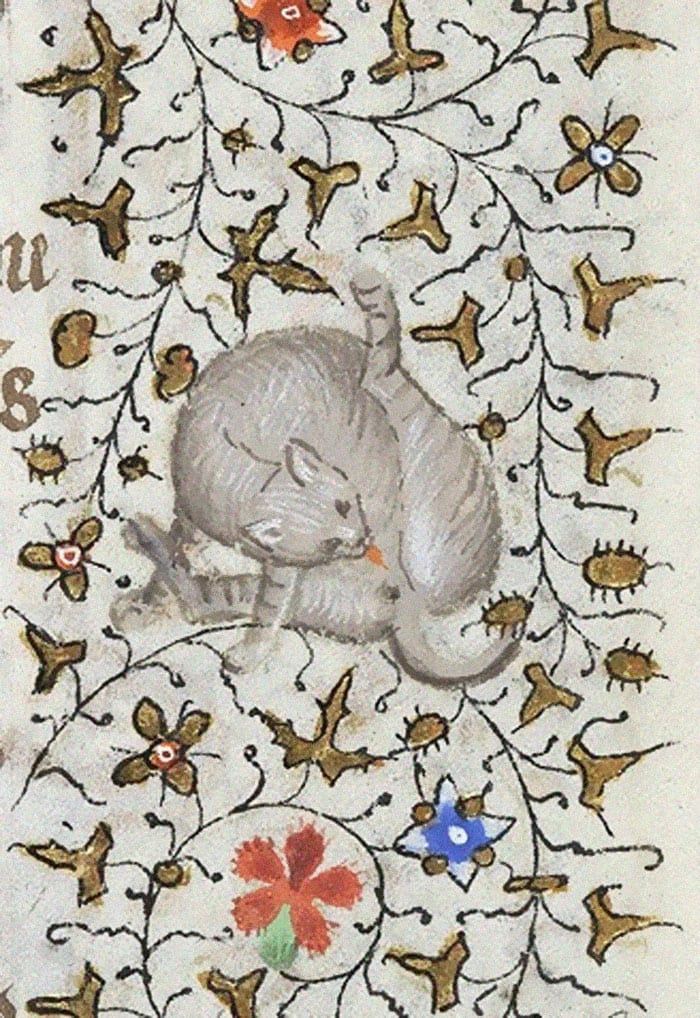
Image Credit:Tumblr
7. The face of a cat that can’t be bothered.

Image Credit: Tumblr
6. That’s quite a tongue.

Image Credit: Tumblr
5. Contortionist cat.

Image Credit: Tumblr
4. How are you going to sneak up on a cat like that?
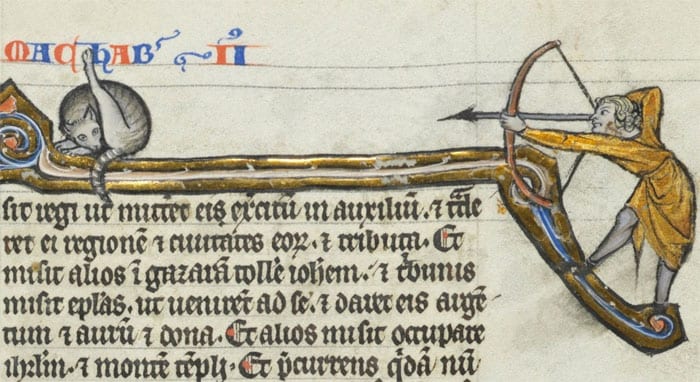
Image Credit: Tumblr
3. I have many questions about this painting, and the butt-licking isn’t even one.

Image Credit: Tumblr
2. One of these things is not like the other.

Image Credit: Tumblr
1. Typical dad cat, not helping with the kids.
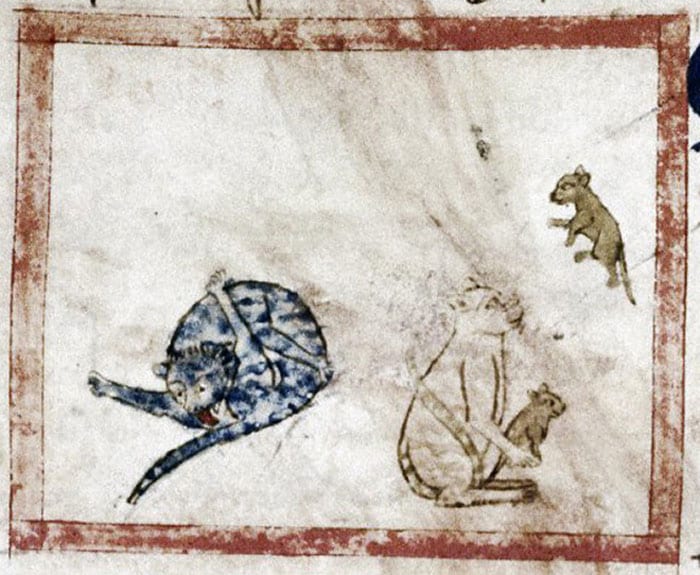
Image Credit: Tumblr
Happy cat watching!
The post Medieval Drawings of Cats Licking Their Own Butts. That Is All. appeared first on UberFacts.
Is Being Killed by a Guillotine Painless? Learn the History, and Everything We Know About It.
Sure, it seems terrifying – a giant blade dropping toward the back of your exposed neck – but it turns out that the people on revolutionary France were actually being relatively humane (at least when it came to how they executed their many victims).
In the intervening centuries, the U.S. (the only developed nation to still use the death penalty) has tried out all sorts of ways to legally murder its citizens, almost all of which have been found to be, well, bad.
If not excruciating.
So, if quick and painless is what we’re going for when it comes to executions, perhaps the guillotine should make a re-entrance. Find a new day in the sun, as it were.
Death by guillotine (as long as the blade is sharp) would be completely painless – the blade almost immediately severs the nerves from your spinal cord to your brain, paralyzing you and blocking pain receptors from sending signals to your brain.
It would be so fast, in fact, that experts don’t think you would feel the blade at all; your death would be nearly instantaneous.
There might be spasms or jerks that happen – involuntary eye or muscle movements – which are common up to five minutes after death as the brain suffocates from lack of oxygen. But the deceased person is, you know…deceased. So they can’t feel anything at all.
Even studies that acknowledge brain activity can continue after death agree that the subject is really not alive in any practical way, which means they do not have any kind of feelings, including pain.


 – Via @pirate_forge #knife #blade #guillotine #knifeordeath #forgedinfire #edc #knifestagram #bladecommunity #knifeporn #sword #chopper #backwoods #pirate #swampninja #handmade #american #style #camping #prepper #outdoors #sportsman #badass #rustic
While the guillotine was much more humane than being shot by a firing squad, hanged, or burned at the stake, the idea of being murdered in much the same way as a chicken was surely something people were trying to avoid by the time it went out of fashion.
Though if I ever found myself on the wrong side of the law (or the mob), this does sound like the best possible way to go.
The post Is Being Killed by a Guillotine Painless? Learn the History, and Everything We Know About It. appeared first on UberFacts.