This is How Lava Lamps Are Protecting You from Hackers

Everyone worries about data encryption and cybersecurity. I’m certainly no stranger to the concept.

I think my credit card has now been skimmed 3 times in 2 years, but 2020 was 5 years long, so I may have lost count.

That’s where cybersecurity companies like San Francisco based Cloudflare come in, bringing a very unique perspective to data encryption.

As Atlas Obscura reports:

Cloudflare covers about 10 percent of international web traffic, including the websites for Uber, OKCupid, or FitBit.

I’m betting most readers have used at least 2 out of 3 of these sites at some point.

So it’s fascinating to learn that Cloudflare has a pretty unique method for generating random encryption code to protect those sites: a wall of lava lamps.

Posted by Cloudflare on Tuesday, September 27, 2016

Yes, you read that right.

The wall features over 100 lava lamps, spanning a variety of colors, and its random patterns deter hackers from accessing data.

It feels like the most hipster thing ever, but we all know the feeling of zoning out in front of a randomly swirling blob of light and color, right?

Well it turns out:

As the lava lamps bubble and swirl, a video camera on the ceiling monitors their unpredictable changes and connects the footage to a computer, which converts the randomness into a virtually unhackable code.

Posted by Cloudflare on Tuesday, October 25, 2016

Who knew that kind of magic was even possible?

Someone smarter than me, that’s who.

Cloudflare might have taken it to a whole new level, but they didn’t actually invent the “LavaRand” concept, which was patented for a few years by another company in the ’90s.

As Cloudflare explains on their blog:

In cryptography, the term random means unpredictable. That is, a process for generating random bits is secure if an attacker is unable to predict the next bit with greater than 50% accuracy (in other words, no better than random chance).

True randomness, they explain, only exists in the natural, physical world. Most encryption companies rely on pseudorandomness, or the generation of random data.

Pseudorandomness is generated through the use of a deterministic algorithm that takes as input some other random value called a seed and produces a larger amount of random output (these algorithms are called cryptographically secure pseudorandom number generators, or CSPRNGs)

The lava lamp system, it seems, may be a little bit of both, which is kind of mind boggling all on its own.

They’ve withstood the test of academic analysis, years of being used in production, attacks by resourced adversaries, and so on.

Be sure to check out this video from Tom Scott about the lamps:

And if you ever find yourself in the Bay Area, you can go see the futuristic cybersecurity in action for yourself.

Since any kind of external disturbance affects the lamps, increasing the randomness of their patterns, the company has no problem with visitors coming to gawk.

Simply enter the lobby of Cloudflare’s San Francisco headquarters and ask to see the lava lamp display.

I definitely want to check that out.

Did this story blow your mind as much as it did mine? Let us know in the comments!

The post This is How Lava Lamps Are Protecting You from Hackers appeared first on UberFacts.

Scientists Say There Could Be 36 Alien Civilizations in the Milky Way

We’ve all wondered–could there be, not just life, but intelligent life, out there?

And while relative intelligence of life on Earth could be debatable, two scientists from the University of Nottingham have a new theory that suggests there is.

36 different potential civilizations, to be exact.

Image credit: NASA via Rawpixel

How can scientists possibly make a prediction about the number of undiscovered civilizations?

It’s a mathematical theory based on a fifty-year-old equation called the Drake equation.

As Popular Mechanics explains:

Drake’s seven key variables, which range from how many habitable planets exoplanets there are in the galaxy to the amount of time over which intelligent life takes shape, are almost impossible to pin down.

The formula acts more like a framework for the probability of finding life; previous estimates have ranged from zero to over a billion civilizations.

But Professor of Astrophysics Christopher Conselice, his colleague Tom Westby, and their team at the University of Nottingham used new technology and assumptions about our galaxy, the Milky Way, to formulate a new hypothesis.

They published their work last summer in The Astrophysical Journal.

Image credit: NASA via Rawpixel

As quoted in Phys.org, Conselice explains that they based their assumption on the length of time it took a civilization to develop on Earth:

“There should be at least a few dozen active civilizations in our Galaxy under the assumption that it takes 5 billion years for intelligent life to form on other planets, as on Earth.

The idea is looking at evolution, but on a cosmic scale. We call this calculation the Astrobiological Copernican Limit.”

The Copernican limit guides researchers to think on a pretty large scale–where intelligent life develops in either more or less than 5 billion years.

By intelligent life, scientists mean a civilization capable of communication.

On Earth, that development took more than 4.5 billion years, thus the 5 billion year threshold.

Image credit: NASA via Rawpixel

These calculations have been used for years, but the Nottingham team took it one step further, factoring in the specific composition of Earth’s sun.

As Westby explained:

“In the strong criteria, whereby a metal content equal to that of the Sun is needed (the Sun is relatively speaking quite metal rich), we calculate that there should be around 36 active civilizations in our Galaxy.”

When all of the data is combined and analyzed, they believe just 36 exoplanets possess all the right conditions to support the development of an alien civilization.

Of course that means 36 alien civilizations that are enough like us to be recognizable as communicative beings.

Who knows how many are out there that are so different that we might not even recognize them if we saw them.

The problem is, a theory needs to be proven, and the exoplanets are so far away that while we can see them with high powered telescopes and gather some sensory data on them, we don’t yet have the technology to visit them–even with probes.

Image credit: NASA via Rawpixel

If they’re so far away, why do we even care?

Well aside from the intrinsic human need to explore and discover, finding out how many other civilizations co-exist could actually tell us something about how long life on earth will last.

As Professor Conselice points out:

If we find that intelligent life is common then this would reveal that our civilization could exist for much longer than a few hundred years, alternatively if we find that there are no active civilizations in our Galaxy it is a bad sign for our own long-term existence.

By searching for extraterrestrial intelligent life—even if we find nothing—we are discovering our own future and fate

This is very exciting in the world of astronomy.

But according to Popular Mechanics and The Guardian, not every scientist is convinced.

Oliver Shorttle of the University of Cambridge told the news organization that more factors need to be considered—such as how exactly life formed on Earth—before taking the new findings as fact.

That’s science for you. There’s always more to consider.

Even so, it’s pretty cool to have such a specific number, don’t you think?

Do you believe there’s life out there? Let us know your theories in the comments!

The post Scientists Say There Could Be 36 Alien Civilizations in the Milky Way appeared first on UberFacts.

You Might Have Grown Up in the 1990s if These Scenarios Make You Nostalgic

We’re around 40 now, but those who grew up in the ’90s still have a fair amount of nostalgia for the decade.

If these scenarios give you the warm fuzzies of nostalgia, then you were definitely a child of the 90s.

Like WWI before it, the era of the 90s was on the cusp of so much new technology, which would be adopted quickly and advance at lightning speed.

It’s fun to think back on some of the common place items that have all but disappeared.

1. Space travel meant the Shuttle

Sure the new rockets are sleek and fancy and touch-screen.

But there was something undeniably special about the spaceship that took off like a rocket and landed like a plane.

Image credit: NASA via Unsplash

2. Cameras with actual film in them

Sure photographers and artists still use film, but the rest of us have basically gone digital.

Now we can take a MILLION shots of the same exact thing, and never print out a single one!

With one of these bad boys, you just better hope you click fast to get a good shot of that Space Shuttle lifting off.

Image credit: Alberico Bartoccini via Unsplash

3. Books filled with phone numbers

What time is that movie showing? Look up the theater in the phone book and call.

Want a pizza? Unless you have a Pizza Hut flyer–check the phone book. (And OMG – remember free personal pan pizzas if you read enough books?)

If only there were a centralized search tool with all the phone numbers AND the other information so you didn’t even have to call…

via GIPHY

4. Along came the internet

Remember the initial excitement of hearing the dial-up modem start to go? And then the boredom as you waited for it to connect…

As soon as it finally did, your mom needed you to get off the internet because she looked up a number in the phone book and needed to make a call…

via GIPHY

With the widespread adoption of the internet, communication leapfrogged into the new millennium.

5. You could phone home from anywhere, for 25 cents

Remember pay phones? I think the last time I saw a working one was in New Zealand, but before that, it was definitely the movie theater in my home town when I was 16.

Sometimes they even came with their own phone books!

Image credit: Maarten van den Heuvel via Unsplash

6. When you called, people would answer

And then they invented answering machines and caller-ID and suddenly, we could screen our calls if we wanted to.

Sure in 90s we mostly still rolled the dice–unlike now. Who even answers their phone anymore?

via GIPHY

7. Conference calling was a luxury

If you wanted to talk to 2 friends at once, you had to convince your parents to pay for 3-way calling. Of course they wouldn’t, because it was too expensive, so then you had to invite the friend with the rich parents.

Now you don’t even opt in–people stick your number in group texts and your phone explodes for hours.

via GIPHY

8. Going to the mall was like planning a covert operation

You had to plan where to meet and what time and god forbid someone be late. And then if you split up, you better have a plan for when and where to be if you wanted a ride home!

Otherwise you’ll be looking for a pay phone and scrounging for quarters.

Image credit: Dieter de Vroomen via Unsplash

9. Thank goodness they invented cell phones

We had one in our car in the late 90s, just for emergencies. You couldn’t really use it, or you’d go over your minutes and get slammed with a massive overage fee!

Going out of town? Take it, I guess, but for heaven’s sake don’t use it or you’ll rack up roaming charges! Basically, it was for emergencies and the Snake game.

via GIPHY

Media of the 90s was pretty great too. Remember learning how to program the VCR?

10. Tapes or CDs: the eternal question

The two co-existed side-by-side for awhile towards the end of the decade. Of course you WANTED CDs. But tapes were so much cheaper.

And also, did you have a discman? Or a CD player in the car?

We couldn’t quite give up those cassette tapes because no one could record to CDs yet, and anyway “mix CD” doesn’t have quite the same ring to it.

Image credit: Mayte Wisniewskit via Unsplash

11. Oops–recorded over again!

Speaking of mix tapes, how about taping your favorite episodes of Star Trek: the Next Generation? Just me?

But how many times did you accidentally record over something important? (I meant to keep that one!) Or record the wrong channel and instead, you got the 9:00 news?

Image credit: Daniel von Appen via Unsplash

12. Be kind: Rewind

And speaking of tapes, who didn’t love going to Blockbuster on a Friday night? The new releases might cost more, but if you rented 6, the seventh one was free.

Just don’t be late returning it and rack up all the late fees.

via GIPHY

Toys and games were different in the 90s too.

13. Blowing the dust out of Nintendo cartridges

Videos weren’t all you could rent from Blockbuster, after all. You could rent video games, too!

And if you put it in, and it didn’t play quite right? No worries!

Just blow in the cartridge, blow in the machine, clear away the cobwebs and it worked as good as new.

via GIPHY

14. You know what dysentery is because you died of it on the Oregon Trail

When asked what we wanted on our tombstone, a popular answer in my school computer class was “Pepperoni and cheese”.

Why did we use to specify cheese though? The world may never know…

via GIPHY

15. The loss of a Tamagatchi pet hit you like it was real

They were real to us. They were ours, and we loved them. We didn’t want to let them down.

Tamagotchis

16. At camp, we made tie dye

It was a legitimate arts and crafts project.

Image credit: Sharon McCutcheon via Pexels

Every single one of these takes me back to my childhood. If these situations ring true for you, then you definitely grew up in the 90s.

Which ones hit hardest for you? What did we leave out? Let us know in the comments.

The post You Might Have Grown Up in the 1990s if These Scenarios Make You Nostalgic appeared first on UberFacts.

Scientists Discover That Pigs Can Actually Play Video Games

There’s a new pig in town, so step aside Wilbur.

In the classic children’s book Charlotte’s Web, E.B. White introduces readers to a very smart little piglet.

As someone who loved the book in 3rd grade, I was only a little surprised to learn that pigs actually are genuinely very smart!

Image credit: Lucia Macedo via Unsplash

Earlier this year, pathobiologists from the Center for Animal Welfare Science at Purdue University in Indiana gave 4 pigs a test originally designed for primates.

They wanted to see if pigs could combine multiple complex tasks to earn a treat.

Image Credit: Frontiers in Psychology

As Rebecca Nordquist, the Assistant Professor of Veterinary Medicine at Utrecht University explains:

The animals need to understand the link between moving around a joystick and what’s happening on a computer screen, and then link what’s happening on the screen to getting a reward.

The four pigs tested were all able to do that to some extent, showing off their smarts.

Each time the pigs successfully completed their task, the researchers gave them a harder one, like progressive levels in Tetris or Mario.

Image Credit: Frontiers in Psychology

Now pigs, of course, do not have opposable thumbs. They were trained to move the joystick with their snouts.

Unsurprisingly, and probably for a variety of reasons, while the pigs were initially successful, they did not perform as well as their monkey predecessors.

Pigs have long been reputed as being very smart, but there are certain tasks that tend to challenge them.

Again, Professor Nordquist explains:

Mirror use, for instance, is not something all pigs can master, and while they can use simple geometric shapes to decide what response to give, recognising other pigs from photographs proves too difficult.

This was surprising since other farm animals like sheep and cattle are able to recognise their sheep and cattle friends on photographs.

Aside from the fact that it’s really bloody interesting, why do scientists care how smart pigs are?

For three reasons, the first being that it’s just really bloody interesting to get into the mind of a pig.

The second reason is a bit more practical. As farmers try out more ethical and socially responsible farming methods, they need to make sure that what they’re doing actually does benefit the animal.

For example: What good is letting pigs roam free if they can’t easily navigate the larger environment to find the food and water that they need?

And the third reason is to help us understand the pig’s “intrinsic value.”

Professor Nordquist describes this as:

Instead of monetary value as an agricultural product or value to a human as a companion, this is the value it has for being itself, just as a pig, with all of the piggy things it does, such as oinking, rooting for things like truffles, socialising, and natural intelligence.

Image credit: Benjamin Wedemeyer via Unsplash

It makes sense. Because the more we understand a thing, the more we love it.

And whether a pig’s intelligence makes people forgo the bacon or not, it could go a long way towards how the animals are treated.

Maybe that’s wrong–maybe they should all be treated as though they’re as smart or smarter than us, simply because they’re alive. But the reality is that humans assign intrinsic value, and so researchers want to make sure that value is weighted correctly.

Either way, it’s pretty remarkable that pigs can play video games. I would like to challenge one to a friendly round of Dr. Mario–truffles are on me if they win.

Did this absolutely blow your mind, or do you have one of those pets who you’re sure is smarter than most people? Share your thoughts in the comments.

The post Scientists Discover That Pigs Can Actually Play Video Games appeared first on UberFacts.

Helpful Wombats Led SomeThirsty Animal Friends to Water

I really love wombats. In 2007 I even visited Australia Zoo, where I got to cuddle the larger-than-expected marsupials.

Like the rest of the world, I was devastated to hear about the wildfires ravaging the Outback, and ecstatic to learn that in some parts of the country, wombats were saving the day.

Image credit: Meg Jerrard via Unsplash

The Outback is vast and sparsely populated, so it’s easy for unusual animal behaviors to go unnoticed.

But on one particular cattle ranch in New South Wales, it became evident that Wombats were helping the ecosystem to thrive despite the drought.

You see, wombats like to burrow deep into the ground.

And on Ted Finnie’s ranch, the wombats burrowed into an underground pool.

Image Credit: Upper Hunter Landcare

As Newsweek reported:

According to Finnie’s estimates, the hole—which looks more like a “crater”–is now around 20 meters (65.6 feet) in diameter and four meters deep.

While some animals had been able to access the water before the wombats got to work, their burrowing widened it up into a nice little billabong that could serve the wider animal population.

Image Credit: Upper Hunter Landcare

Associate Professor Julie Old, a biologist at Western Sydney University, told ABC News:

“It’s almost like the wombats are water diviners, they’re finding the water and digging the holes to get to the water and the other animals are taking advantage of it.”

Image credit: David Clode via Unsplash

They certainly have the claws for it, and lots of other native species are reaping the rewards.

Finnie told the news outlet a recently erected camera trap captured birds, goannas, possums, echidnas and emus drinking at the water hole.

This story was particularly gratifying on the heels of another story earlier in the year that claimed wombats weren’t just digging tunnels but were actually herding other animals into their burrows to protect them from the fire.

I 100% believed this was true, but some experts were not so quick to buy in.

They reminded us laypeople that there’s a fine line between rounding up other hapless species and simply allowing them to coexist.

As one researcher put it:

“I wouldn’t say that wombats are “happy” about sharing with other animals, but they will “tolerate” them as long as they don’t disturb the wombat too much,” Dr. Michael Swinbourne, an ecologist at the University of Adelaide, told AFP.

Honestly, I like the idea that wombats are the marsupial saviors of the Australian animal kingdom.

But I can also accept that they are simply a critical part of a balanced ecosystem, doing their part and letting the others follow.

Either way, they are very good sports, and basically heroes in my book.

What do you think? Should we nominate wombats for a Nobel Peace Prize? Share your thoughts in the comments!

The post Helpful Wombats Led SomeThirsty Animal Friends to Water appeared first on UberFacts.

The Singular ‘They’ Has Been Around for Centuries

FYI, my pronouns are she/her/hers.

When I was a kid, grammar was a big deal. Diagramming sentences… when to use singular and plural…

Sometimes I honestly feel like I am the ONLY person who uses “so-and-so and I” correctly.

And yet, as kids, it felt very natural to use “they” when talking about a person without specifying their gender.

We all did it in the 90s, until it was “corrected” out of us by the grammar police.

Turns out, the kids were all right. We were right.

Image credit: @nadia_bormotova iStock

It can feel confusing sometimes to read “they” in a singular context.

But if the human brain is good at anything, it’s reprogramming itself.

As Lifehacker explains:

We are taught from the moment we start speaking English that the word they is meant solely to describe a plural distinction.

Nonsense.

The oldest written example of the singular they emerged in the 14th century, when it was used in the medieval romance William and the Werewolf.

There’s no telling why they did it back then.

Maybe they weren’t such sticklers for grammatical rules as we are now–they were making up the language as they went along, after all.

Or perhaps they recognized that the generic “he” was discriminatory towards women.

Either way, if you’re a woman who has ever felt annoyed by the generic “he,” then you should probably consider getting on board the “they” train because it’s easier to say and more inclusive than “he or she.”

Image credit: Sharon McCutcheon via Unsplash

It might feel like a new concept, but it’s not.

Just like no one had to teach us to do it when we were kids, delving into the literary canon will find ample examples of writers utilizing the singular they and their.

The Oxford English Dictionary wrote a history of this type of usage, and 5 years ago The Guardian published an article detailing specific historical examples:

Geoffrey Chaucer in 1395, who wrote in The Pardoner’s Tale: “And whoso fyndeth hym out of swich blame, They wol come up…” Shakespeare followed in 1594, in The Comedy of Errors: “There’s not a man I meet but doth salute me/As if I were their well-acquainted friend”.

It took a few centuries for they to pop up in reference to women: Jane Austen uses they in the singular 75 times in Pride and Prejudice (1813) and as Rosalind muses in 1848’s Vanity Fair: “A person can’t help their birth.”

Pride and Prejudice is one of my all-time favorite novels, so I was delighted, but not surprised, to see that Jane Austen employed the singular they.

The fact that it fit so seamlessly into her sentences that I didn’t even notice is further proof that stodgy grammarians shouldn’t hold the modern world back from employing the more inclusive pronouns.

Some examples from Pride and Prejudice, thanks to Pemberley.com include:

“But to expose the former faults of any person, without knowing what their present feelings were, seemed unjustifiable.”

And also:

“I think every thing has passed off uncommonly well, I assure you. … The venison was roasted to a turn — and everybody said they never saw so fat a haunch.”

If you need a reminder, one thing I remember very clearly from 8th grade English class is that “Each, either, neither, all the ones, and all the bodies are singular.”

Image credit: @Erik_V via iStock

Now, more than perhaps any time in history, people are waking up to the need for decolonizing language and making it more inclusive.

And that’s okay. All you have to do is take an introductory college course in English literature to realize that language is constantly evolving.

We don’t use the character thorn ( þ ) any more, and for certeyn (certain) we don’t spell words however we want to most of the time (I’m looking at you, Chaucer).

But still, language necessarily evolves, because if you don’t change, you die.

After all, they added Klingon to the dictionary. So I think we can allow a singular they.

Because if it makes someone feel more truly represented and seen, then it’s totally worth the effort.

What do you think? Does it come naturally to you, or does it take some practice? Share your thoughts in the comments.

The post The Singular ‘They’ Has Been Around for Centuries appeared first on UberFacts.

UFO Chicken Coop Raises Arts and Crafts to a New Level

I think I’m medium-crafty. I knit and crochet. Last year I sewed a LOT of face masks.

But I don’t take on large, ambitious projects that can’t be easily unraveled.

So I am super impressed by people who build actual things, and I loved the story of one couple who took nerdom and crafting to a whole new level.

Back in 2017, Ellen (née DeAngelis) and Brett Wilson of Boise, Idaho expanded their chicken flock.

And as any poultryman knows, chickens need a coop for roosting and to keep them safe from predators.

Being self-described “UFO nerds,” Brett and Ellen came up with a pretty cool plan.

They documented the whole process over on Backyard Chickens so that like-minded and ambitious chicken keepers could do the same.

We quickly determined that the satellite dish would be a stellar foundation. We located two 10 foot dishes on our local Craigslist page and jumped straight into this project.

I didn’t even know you could buy giant satellite dishes on Craigslist, but I guess that’s why I don’t have an awesome chicken coop.

My favorite part of their plan were the mods that they did to make the saucer extra homey and spaceship-like:

We cut window holes for windows and screwed in 6″ acrylic surveillance camera covers we found on ebay. They work perfectly!

They added a laminated wood floor, which can be easily removed for extra cleaning.

After that, the couple cut-to-size 1″ styrofoam insulation, because it’s Idaho and chickens don’t exactly live in igloos.

Next step was covering the insulation with a waterproof barrier. We chose a roofing material similar to tar paper called roofing felt at the local box store.

We cut pie shaped pieces and covered the craft…. hitting the seams with a hardy roofing tape. We then covered the craft with an Aluminum paint to provide waterproofing and a classic UFO color.

This paint is designed for roofing and would also help keep the coop cool in the Summer by reflecting light away.

We had to air the coop out for several days to eliminate any harmful fumes that may be lingering.

I’m just saying, these are some pretty pampered chickens.

After the satellite dishes, the next most ingenious step was placing the whole thing on top of an 8′ trampoline to protect the flock from coyotes and other predators.

Lights were the final touch to truly make it look like a spaceship! (and definitely the best part)

We used 2″ clear tubing to house the LED lights and put the power source on the back hatch door.

The lights are individually addressable LEDs with a 5v 4a power supply controlled by an Arduino mega.

When winter arrived, they added some additional heat that could be monitored remotely using RaspberryPi.

What an amazing home for their chickens.

For Halloween one year, they put out inflatable aliens and more lights, and they were the hit of Boise.

Their next big project was an indoor/outdoor playground for their house cats, which looks like it was also a great success.

Clearly, I need to up my craft game because this is next level creativity!

What do you think? Do they win Pet Owners of the Year?

Be sure to hit us up in the comments!

The post UFO Chicken Coop Raises Arts and Crafts to a New Level appeared first on UberFacts.

This Cancer Doctor Forgives Over $500,000 in Patient Debt

When I feel sick, the last thing I want to think about is bills. But as many Americans know all too well, being sick can be extremely expensive.

According to CNBC over 17% of Americans have defaulted on their medical debt.

In a population of 3.28 million, that’s almost 56 million people who can’t pay their medical bills.

That’s why the story of Dr. Omar Atiq of Pine Bluff, Arkansas is so bittersweet.

Medical expense is familiar concept. We’ve all seen the GoFundMe pages to raise money for treatment.

According to a Time interview with CEO Rob Solomon, 30% of the site’s fundraisers are for medical care.

He even went to Congress to ask for help.

Dr. Omar Atiq has spoken about the same issue, and urged colleagues to contact their government leaders:

But in December 2020, Dr. Atiq, who had been treating cancer patients in Arkansas for three decades, tried to help his patients one last time in the best way that he could.

Forced to close his oncology clinic because of staffing shortages, Dr. Atiq made the decision to forgive all outstanding balances.

After working with his billing company to forgive about $650,000 owed by around 200 patients, he sent an unexpected Christmas card to his patients.

“I hope this note finds you well. The Arkansas Cancer Clinic was proud to serve you as a patient. Although various health insurances pay most of the bills for the majority of patients, even the deductibles and co-pays can be burdensome. Unfortunately, that is the way our health care system currently works.

Arkansas Cancer Clinic is closing its practice after over 29 years of dedicated service to the community. The clinic has decided to forego all balances owed to the clinic by its patients.

Happy Holidays.”

Here’s what the card looked like…

Interviewed by Fox 16, Dr. Atiq explained:

“Being sick is hard, having cancer is harder, and having Cancer in this pandemic is devastating.

I am just a regular physician–a regular person that they have in the neighborhood–it just so happens to be me standing here.

The ones struggling couldn’t pay, so we thought we could just write off the debt.”

What an absolutely amazing human being.

Now a professor at the University of Arkansas Medical School, it is clear that Dr. Atiq’s students won’t just learn how to treat cancer patients, but also how to treat their neighbors.

This story gave me so many feels. What about you? Let us know in the comments.

The post This Cancer Doctor Forgives Over $500,000 in Patient Debt appeared first on UberFacts.

A Teacher’s Balloon Experiment Backfires and Earns a Big FAIL

Teachers learn a lot from their students.

But day in and day out might get a little dull.

Sometimes they might liven things up by playing a prank on their students.

I remember once in Catholic school, the priest came on the intercom to tell my 4th grade teacher that he was God, and she owed him 10%, because she had gone to a casino over the weekend and apparently hit it big.

Or maybe a teacher will try to keep things interesting by performing their own experiments through social observation.

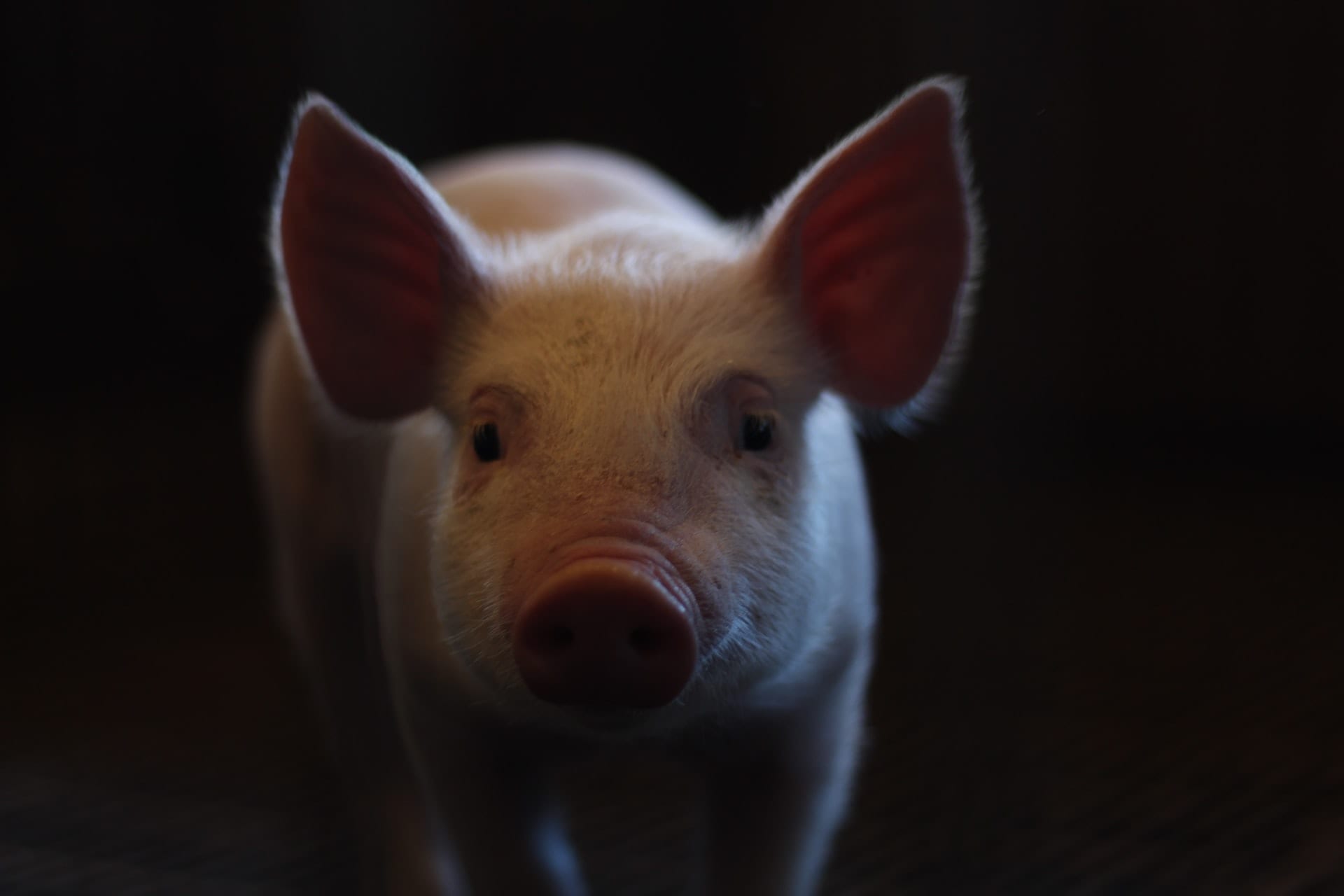
But when one sophomore English teacher tried trick her students into proving a lesson, it backfired hilariously.

First reported on Tumblr by user @solarmorrigan, the story goes like this:

Image credit: Cheezburger

Nice setup by the teacher.

Very “nothing to see here folks, I’m just going to leave this mouse trap right here and casually walk away whistling.”

Image credit: Cheezburger

Clearly, she underestimated her advanced class. This is not their first day.

Image credit: Cheezburger

Aww, see, they just needed permission to let loose a little.

Image credit: Cheezburger

Maybe the problem is that taking the teacher out of the classroom didn’t remove the omnipresent authority of the school.

After all, teachers next door might hear the commotion. And she would be back and would find the balloons popped.

Or maybe the advanced students had more self-discipline than the teacher expected.

Either way, the Stanford Prison Experiment this was NOT.

What do you think–given more time would someone have broken down and popped a balloon? What would you have done? Tell us in the comments.

The post A Teacher’s Balloon Experiment Backfires and Earns a Big FAIL appeared first on UberFacts.
This Kid Went Viral After Walking in on His Dad and It Reminds Us of All the Hilarious Zoom Mishaps

Where were you on November 6, 2020?

If you were like a lot of Americans, you may have been glued to the news.

Together as a country, many of us witnessed a funny moment when the Attorney General of Pennsylvania, Josh Shaprio, was interrupted during an MSNBC interview by an unwitting family member. It was a moment of levity that we all needed. I personally LOL’d.

The past year has definitely been a time for video call mishaps. Remember the boss who turned himself into a potato?

Or the defendant who was definitely not a cat?

Well it was a similar story last November, when Attorney General Shapiro was speaking to MSNBC about serious election issues, when his teenage son wandered into the shot.

The poor kid was frozen for about a second in horror, before slipping away.

One user responded that it was the 2020 version of another popular meme:

That was a tense week, and the laugh couldn’t have come at a better time.

Delighted by the break from serious news, Twitter went wild, with many users comparing the teen’s hasty retreat to Homer Simpson.

A lot of users were also reminded of a similar funny interruption of “BBC Dad” in 2017:

For his part, Shapiro took the whole thing in stride, joking about it with people on Twitter:

Every parent who tried to work from home last year or helped their child with remote schooling has some kind of story like this.

They just didn’t all happen on national news.

What about you? Did you have any funny Zoom mishaps? Share them in the comments.

The post This Kid Went Viral After Walking in on His Dad and It Reminds Us of All the Hilarious Zoom Mishaps appeared first on UberFacts.