Learn Some Great New Information with These 10 Facts

Ready to exercise that brain? Ready to learn?

Then let’s get to work!

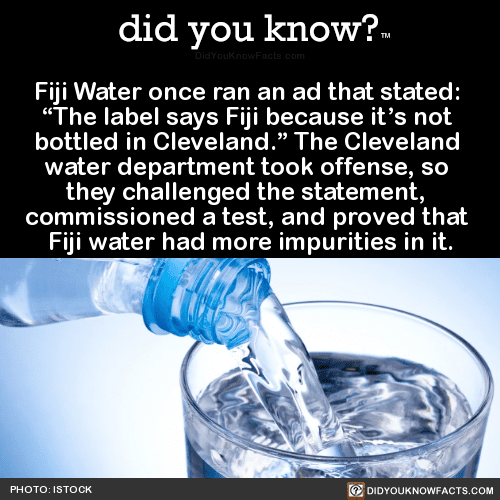
1. I need one of these

Photo Credit: did you know?

Source 1 Source 2

2. Where the bodies were buried

Photo Credit: did you know?

Source 1 Source 2 Source 3

3. That makes sense

Photo Credit: did you know?

Source 1 Source 2

4. Ouch…

Photo Credit: did you know?

Source

5. Nice and quiet

Photo Credit: did you know?

Source 1 Source 2

6. WOW

Photo Credit: did you know?

Source 1 Source 2 Source 3

7. Improvement

Photo Credit: did you know?

Source 1 Source 2 Source 3

8. No more, no less

Photo Credit: did you know?

Source 1 Source 2

9. Double rainbows!

Photo Credit: did you know?

Source 1 Source 2

10. Wild animals

Photo Credit: did you know?

Source 1 Source 2 Source 3

That was some good learnin’!

The post Learn Some Great New Information with These 10 Facts appeared first on UberFacts.

Cities Are Using This High Pitched ‘Mosquito’ Sound to Get Rid of Teenagers After Curfew

This next viral sensation will make you go Hmmm? Or maybe Ouch!

Kodie Helmer came across the next phenomenon racking up over 95,000 shares on her post:

I need your help! ? Okay so I nabbed me a younger man, I said it….I am slightly OLDER than Chris #cougar ?❤ BUT I am…

Posted by Kodie Helmer on Sunday, July 21, 2019

“I heard on the radio that some businesses and even towns are using a sound wave as a deterrent for teens after curfew, INTERESTING right?! So I looked into it and found a series of sounds that become harder to hear as you *ahem* age. This one in particular cannot be heard by most people over the age of 40.

I CANNOT FLIPPING HEAR THIS!!! But, Chris Helmer can ? I called all our kids in and they were covering their ears!!! So, I got to know below, help me feel better (or worse) Tell me, are you OVER or UNDER 40 and CAN YOU HEAR THIS SOUND?!?!?”

I couldn’t help but check this out. If cities and towns can deter teens with it, it’s gotta be something! Here’s the sound.

Did you hear anything? I sure didn’t! I’m almost forty so my hearing must be going… Drat!

I decided to test this on my husband. He’s forty-three, and I thought if I can’t make out this noise he won’t either. I played it and he shrieked in his recliner, cupping his ears and yelling, “Turn that off! Don’t ever do that again! What the hell is that?”

I asked what it sounded like and he responded, “Like the Devil’s dog whistle.”

(I did play it again. I’m mischievous like that.) 

Anyway, it was strange! How could he cringe and shout and I got nothing?

I did some digging on Helmer’s comment about these sounds shooing away teens after dark and came up with something called the Mosquito. It’s a sonic device used throughout Philadelphia and some other municipalities – but it has also been banned in various cities around the world.

What do you think?

The post Cities Are Using This High Pitched ‘Mosquito’ Sound to Get Rid of Teenagers After Curfew appeared first on UberFacts.

What You Should Do with Your Parents’ Social Media Accounts After They Pass Away

Long after people pass away, their social media accounts stay online, which can be both touching and eerie. In case you’d like to prepare, here’s what you can and can’t do with your parents’ social media accounts after they pass away.

Facebook is the only social media company that allows users to decide what will happen to their accounts after they die. By going to “memorialization settings,” your parent can choose from two options: they can have their account deleted after death, or they can assign a “legacy contact” to take over. This person can address friend requests, remove tags, and update profile and cover photos. If no settings are chosen, and Facebook becomes aware of a person’s death, they will turn the page into a memorial. A memorialized profile looks different, with a Tributes section, and it doesn’t show up in “People You May Know” lists anymore.

Photo Credit: iStock

Instagram is owned by Facebook, but they only offer one option: memorializing the account. A memorialized Instagram page doesn’t look any different from an active one, but it becomes inactive and it can’t be altered in any way. You can’t take down posts or change the page’s privacy settings. Otherwise, you can contact Instagram to have the page removed altogether.

Photo Credit: iStock

Lastly, there’s Twitter. Twitter doesn’t offer any memorialization options, nor does it let anyone else log in as the deceased. There’s only one choice, which is to ask for the account to be taken down altogether. If possible, you can ask your parent what they want to happen to their Twitter in case of death; they can always give you their log-in information directly, just in case.

To best prepare for mortality, it actually is pretty important that you leave some log of all your passwords behind – that way whoever is dealing with the estate can get into everything. Check out this article for more steps you might want to take, for your parents or yourself.

The post What You Should Do with Your Parents’ Social Media Accounts After They Pass Away appeared first on UberFacts.

The 10 Car Brands That Cost the Least to Repair

Some of us don’t think about how much potential repairs cost when we’re shopping for a new car because that’s usually the last thing on our mind. But you have to face the facts: at some point, your vehicle is going to have problems – it might even break down and need major repairs.

So if you’re looking for a new ride, you might want to take this list into serious consideration. It could save you some money down the road.

This data is based on crunching the numbers from 5.6 million vehicles that had their check engine lights go on in 2018. Take a look.

1. Mazda

This Japanese producer had the lowest repair rate for check engine problems, costing an average of $285.70. The 2013 Mazda MX-5 Miata was the least expensive Mazda to fix.

2. KIA

From South Korea, KIA’s average repair cost was $319.97. The 2016 KIA Soul was the least expensive model to repair.

3. Dodge

View this post on Instagram

#durango #2017durango #2017dodgedurango #callhersnow

A post shared by ShelbyLeigh86 (@shelbyleigh86) on

The first American car company on the list, Dodge’s average cost was $326.41 with the 2017 Dodge Durango as their most cost-efficient model.

4. Hyundai

Hyundai, from South Korea, averaged $328.32 for check engine light repairs in 2018. Their least expensive model to fix was the 2017 Hyundai Tucson.

5. Chrysler

Chrysler came in at fifth place on the list with an average of $329.43. The 2017 Chrysler 200 was the carmaker’s cheapest car to repair.

6. Jeep

A check engine light cost Jeep owners an average of $338.57. The cheapest model was the 2017 Wrangler.

7. Chevrolet

Chevy owners paid an average of $341.19 to get their rides fixed up. The 2016 Chevrolet Traverse was the most economical model.

8. Volkswagen

The automaker from Germany cost drivers an average of $357.92. The 2017 VW Tiguan cost VW drivers the least amount of cash in the repair shop.

9. Honda

Since I see sooooooooo many Hondas on the street, I’m surprised that the Japanese company was not higher up on the list. The average repair cost was $426.86 and the most economical model was the 2016 Honda CR-V.

10. Toyota

Finally, another Japanese carmaker rounds out the top 10. For Toyota drivers, the 2014 Prius C is your best bet if you want to save money on repairs.

There you have it! Good luck on your car search!

The post The 10 Car Brands That Cost the Least to Repair appeared first on UberFacts.

Ladies, Your Boobs Will Be Cool All Summer with These Freezable Bra Inserts

Ladies, listen up!

Can’t stand the summer heat mixed with boob sweat? Fret no more. There is a product out that will keep you cool and fresh even on the hottest days: Bra Coolers!

Forget about that gross line of perspiration that appears on your shirts, right under your bra line. And the best part is?

These Bra Coolers are made to fit all bra sizes! Yippee!

Photo Credit: Polar Products

A company called Polar Products, led by creator William Graessle, is revolutionizing the cooling garment game – it’s “a leading worldwide manufacturer of body cooling and hot/cold therapy products.”

Since the company’s inception in 1984, Graessle’s “cooling garments [have been] used worldwide to cool surgeons in hot operating rooms, workers in sweltering factory conditions, military personnel out in the field” and more. Those all sound like important uses for the technology, but let’s be real…boob sweat reduction is the future.

What are Bra Coolers?

Exactly as the name suggests, Bra Coolers are oval-shaped packs filled with a special cooling agent intended to be worn in your bra. Are you worried your nipples may freeze from contact? Nope! The cooling agent is set to stay at 58 degrees – just right.

They are made not to need a freezer around to chill them. Customers can use a refrigerator or even a cooler of ice water. Those hot days at a tailgate? No problem.

Each cooling pack maintains temperature for about two hours, depending on activity, breast size, and body metabolism.

What do they look like?

Photo Credit: Polar Products

Each order comes with four cooling packs and two cotton covers. The products are discrete enough to travel with, so you don’t have to worry about any undue embarrassment. So far Polar Products only has “light blue” covers available, but I suppose boob sweat doesn’t need fancy colors – leave that to your bras.

Since they come in a four-pack, you can keep an extra pair handy at home, at work (shhh…), or in a cooler on the way to an event.

Who would buy these?

Um? Every woman?

But if you need a more practical reason think pregnancy, PMS, menopause, or simply summer heat.

How much do Bra Coolers cost?

Don’t worry, you won’t need to sacrifice your first child or even your left breast. Bra Coolers are super affordable…like $37 and change, affordable. That breaks down to $18.50 per boob, which is a small price to pay for comfort.

So get your cooler packs now and go beat the summer heat.

The post Ladies, Your Boobs Will Be Cool All Summer with These Freezable Bra Inserts appeared first on UberFacts.


Indian Scientists Used Mango Leaves to Solve a $2.5 Trillion Global Shipping Problem

This is a fascinating story.

Sometimes, the solution to a $2.5 trillion problem is hiding in plain sight.

The global shipping industry has a major rusting problem that costs an estimated $2.5 trillion each year, per a study from the National Association of Corrosion Engineers. That’s a lot of money.

A team of Indian scientists has found one solution to the issue in the leaves of mango trees. They developed a compound from the leaves that protects ships from rusting in a cost-effective, non-toxic, and environmentally friendly way. Win-win-win!

The scientists picked mango leaves because they’re rich in antioxidants and high in polyphenols, which resist corrosion.

Photo Credit: Pixabay

The compound has yet to be tested in the field, but it shows significant promise. It inhibits corrosion in commercial steel by 99% when immersed in a saline solution that is similar to seawater.

“This is a novel approach to dealing with the problem of corrosion but so far it has been tested only in simulated laboratory conditions rather than in actual use,” Nitya Nand Gosvami, assistant professor at the Indian Institute of Technology Delhi, told QZ.

With more research, this new method could be proven to be vastly superior to the most widely accepted current methods, such as galvanizing with zinc or coating with epoxy-based paints.

Photo Credit: Pixabay

“What has been developed is a dip-coated method—we do not know the strength of this coating and its ability to resist wear and tear in real conditions outside the laboratory, or the commercial viability of the product,” Nitya explained.

Other plant-based methods for reducing corrosion are also under study, including date palm seed extract, ginger root extract, and an extract of seaweed and horsemint.

The post Indian Scientists Used Mango Leaves to Solve a $2.5 Trillion Global Shipping Problem appeared first on UberFacts.

Indian Scientists Used Mango Leaves to Solve a $2.5 Trillion Global Shipping Problem

This is a fascinating story.

Sometimes, the solution to a $2.5 trillion problem is hiding in plain sight.

The global shipping industry has a major rusting problem that costs an estimated $2.5 trillion each year, per a study from the National Association of Corrosion Engineers. That’s a lot of money.

A team of Indian scientists has found one solution to the issue in the leaves of mango trees. They developed a compound from the leaves that protects ships from rusting in a cost-effective, non-toxic, and environmentally friendly way. Win-win-win!

The scientists picked mango leaves because they’re rich in antioxidants and high in polyphenols, which resist corrosion.

Photo Credit: Pixabay

The compound has yet to be tested in the field, but it shows significant promise. It inhibits corrosion in commercial steel by 99% when immersed in a saline solution that is similar to seawater.

“This is a novel approach to dealing with the problem of corrosion but so far it has been tested only in simulated laboratory conditions rather than in actual use,” Nitya Nand Gosvami, assistant professor at the Indian Institute of Technology Delhi, told QZ.

With more research, this new method could be proven to be vastly superior to the most widely accepted current methods, such as galvanizing with zinc or coating with epoxy-based paints.

Photo Credit: Pixabay

“What has been developed is a dip-coated method—we do not know the strength of this coating and its ability to resist wear and tear in real conditions outside the laboratory, or the commercial viability of the product,” Nitya explained.

Other plant-based methods for reducing corrosion are also under study, including date palm seed extract, ginger root extract, and an extract of seaweed and horsemint.

The post Indian Scientists Used Mango Leaves to Solve a $2.5 Trillion Global Shipping Problem appeared first on UberFacts.

In the Last Two Years, Scientists Have Discovered over 50 Species of Plastic-Eating Fungi

This is great news!

If you feel a pang of guilt every time you throw a piece of plastic away and start spiraling into anxiety about the impending climate apocalypse — here is some news that may brighten your day.

Plastic is infamous for its ability to pollute the environment for years and years without degrading. But because the planet is magical, there are certain organisms that can degrade plastic. Dozens and dozens of them, apparently.

In 2011, students at Yale discovered a plastic-eating fungus in Ecuador called Pestalotiopsis microspora. This fungus can digest polyurethane, even in an air-free environment (like the bottom of a landfill).

Photo Credit: iStock

This breakthrough was already good news, but as researchers continued to turn their attention to the subject, it became clear that Pestalotiopsis microspora is not unique among fungi in its ability to degrade plastic.

Researchers at Utrecht University were able to achieve a similar result with Oyster mushrooms and Split gill mushrooms in the lab; this process even resulted in an edible end product. In 2017, scientist Sehroon Khan and his team found another biodegrading fungus in a landfill in Pakistan called Asperillus tubigensis, which is capable of breaking down polyester polyurethane (packing foam).

Sehroon and his team went on to find over 50 other species of plastic-eating fungus since 2017.

Photo Credit: Wikimedia Commons

Scientists still have a long way to go before this research is applicable on a large scale as a means of plastic recycling.

Still, this is proof that anything is possible here on Planet Earth. You never know where new solutions are going to come from.

The post In the Last Two Years, Scientists Have Discovered over 50 Species of Plastic-Eating Fungi appeared first on UberFacts.

A Genius Modified a Roomba to Yell Swear Words When It Crashes into Something

Michael Reeves needs to start working for NASA as soon as possible. The young man is going places, I’m telling you, and his latest video proves why.

Reeves already has a large following on YouTube, and he probably just gained a whole lot more after he successfully programmed a Roomba to shout swear words when it bumps into things.

Photo Credit: YouTube

Some of his followers on YouTube had been asking for Reeves to make a shouting Roomba and he delivered.

Check this out:

Reeves programmed the device to scream in any voice and any words he wanted it to when he was finished. Of course, the swearing Roomba is a huge hit.

Reeves should also probably start selling these (or at least home-modding kits) because he’d probably make a fortune.

Here’s the full video for your viewing enjoyment.

What a wonderful world we live in…

The post A Genius Modified a Roomba to Yell Swear Words When It Crashes into Something appeared first on UberFacts.

Desperate-Sounding Officials Are Using Pizza to Help People Understand Russian Election Interference

Let’s be honest: hearing a story (or, in this case, daily stories) about how Russia used bots and trolls and other vague, internet tactics in order to influence an American presidential election can be kind of hard to wrap one’s mind around.

I mean, this isn’t Cold War tactics like nuclear weapons that we can hide from under our school desks to (pretend we can) survive. Without a concrete thing to point to, officials have found it difficult to really present how big of a deal – and how much of a threat – these actions have been and continue to be to our democracy.

In a last-ditch seeming attempt to meet the masses where they live, the Cybersecurity and Infrastructure Security Agency is relying on pizza to get the message apart.

Because if Americans live anywhere, it’s in a pizza parlor.

The agency created an infographic that they shared in a July 25 tweet that puts the Russian interference in the 2016 election in terms of an ongoing, widespread, and passionate disagreement about whether or not pineapple belongs on pizza.

In a nutshell, we’re to imagine that, instead of using clever tactics to pit Americans against each other when it comes to issues of race, religion, sexual orientation, etc., a foreign power wants to encourage a battle to the death over pineapple.

Image Credit: DHS.gov

“To date, we have no evidence of Russia (or any nation) actively carrying out information operations against pizza toppings. This infographic is an ILLUSTRATION of how information operations have been carried out in the past to exploit divisions in the United States.”

The illustration takes people on a fairly thrilling ride examining how foreign powers like Russia can turn ordinary people against their friends, family, and neighbors.

“Foreign influencers are constantly on the lookout for opportunities to inflame hot button issues in the United States. They don’t do this to win arguments; they want to see us divided.”

Some examples of how they use social media to push further division are given as “Being anti-pineapple is un-American! Millennials are ruining pizza! Keep your pineapple off my pizza! What’s wrong with plain old cheese?”

Basically, the lesson is that you should consume all of your media – especially online media – with a hefty dose of skepticism, and if someone is intent on stirring the pot, make sure to ask yourself what’s in it for them.

Oh, and as for pineapple on pizza? To each her own.

The post Desperate-Sounding Officials Are Using Pizza to Help People Understand Russian Election Interference appeared first on UberFacts.