A Texas Man Built an Awesome, 2,500 Square Foot Home out of Shipping Containers

You’ve probably heard all about the tiny house craze that’s gained massive popularity over the past few years. Well, maybe the next big thing will be based on what Will Breaux did with his house.

Breaux decided to do something radically different by building a 2,500 square foot house in Houston, Texas, out of shipping containers – 11 of them, to be exact. Breaux stacked the shipping containers on top of each other to make a three-story house with a rooftop deck.

View this post on Instagram

We posted a photo about a month ago of the McGowen Container House, and that was an older photo showing the house as incomplete. Well, the house has been complete for some time now and has been lived in for several months. So, we wanted to share an updated photo of the home showing the end product. To learn more about the project post move-in, check out: https://bionicweapon.wordpress.com/2019/04/05/post-move-in-updates/ . . . All info and photo courtesy of @halo36000 | #mcgowencontainerhouse #containerhome #containerhouse #shippingcontainer #shippingcontainerhouse #houstoncontainerhomes #moderncontainerconcepts #moderncontainerhomes #modernhoustonhomes #modernhomeshouston #modernhouston #houstonmodernhomes

A post shared by Modern Houston Homes (@modernhoustonhomes) on

He wanted to own a house like this since the early 2000s, and after years of not being able to find someone to design one, he decided to design the house himself. According to Breaux,

“I began looking at projects that were being built that I liked. Ultimately, a designer with a home builder family was hired to design a 3 story townhouse to be built on the lot. After going round and round for months, I eventually had to fire that group because they weren’t willing to give me what I wanted. Thus, the journey to design my own house began around 2011.”

He said he wanted to use shipping containers because they’re “strong, fireproof, long-lasting, hurricane resistant, and have common characteristics.” Breaux spent a long time learning everything he could about building with shipping containers and then he decided to go for it after he created a 3-D sketch of the house.

Let’s take a look at some photos of the inside of Breaux’s house because it looks awesome.

Photo Credit: WordPress

Photo Credit: WordPress

Photo Credit: WordPress

That is amazing!

Photo Credit: WordPress

Now I kind of want one of these for myself…

The post A Texas Man Built an Awesome, 2,500 Square Foot Home out of Shipping Containers appeared first on UberFacts.

Kenya Installed First Solar Power Plant That Transforms Ocean Water into Drinking Water

A lot of us, as Americans, take clean water for granted. It’s just something that’s part of our everyday routine, whether we need to grab a drink from the faucet, to wash the dishes, or to take a shower – water is always (mostly) there for us.

But that’s not the case in certain parts of the world.

Roughly 2.2 billion people around the globe don’t have access to clean drinking water, but an organization called GivePower is looking to change that. The nonprofit recently installed a solar-powered plant in Kenya that turns salty ocean water into fresh drinking water, benefiting 25,000 people per day.

View this post on Instagram

After being constructed in 1 week, the 6kW solar microgrid began serving power to 40 homes and businesses ? #GivePowerInNepal⠀⠀⠀⠀⠀⠀⁠⠀⁠⠀⠀⠀⠀⠀⁠⠀⠀⠀⠀⠀⠀⠀ #GivePower⠀⠀⠀⠀⠀⠀⁠⠀⁠⠀⠀⠀⠀⠀⁠⠀⠀⠀⠀⠀⠀⠀ #JoinTheCharge ⠀⁠⠀⁠⠀⠀⠀⠀⠀⁠⠀⠀⠀⠀⠀⠀⠀ ⠀⠀⠀⠀⠀⁠⠀⁠⠀⠀⠀⠀⠀⁠⠀⠀⠀⠀⠀⠀⠀ .⠀⠀⠀⠀⠀⠀⁠⠀⁠⠀⠀⠀⠀⠀⁠⠀⠀⠀⠀⠀⠀⠀ .⠀⠀⠀⠀⠀⠀⁠⠀⁠⠀⠀⠀⠀⠀⁠⠀⠀⠀⠀⠀⠀⠀ .⠀⠀⠀⠀⠀⠀⁠⠀⁠⠀⠀⠀⠀⠀⁠⠀⠀⠀⠀⠀⠀⠀ .⠀⠀⠀⠀⠀⠀⁠⠀⁠⠀⠀⠀⠀⠀⁠⠀⠀⠀⠀⠀⠀⠀ .⠀⠀⠀⠀⠀⠀⁠⠀⁠⠀⠀⠀⠀⠀⁠⠀⠀⠀⠀⠀⠀⠀ .⠀⠀⠀⠀⠀⠀⁠⠀⁠⠀⠀⠀⠀⠀⁠⠀⠀⠀⠀⠀⠀⠀ ⠀⠀⠀ #actnow #takeaction #active #building #buildingthefuture #buildingabetterfuture #workforchange #agentsofchange #bethechange #bigsteps #solarpanel #solarmicrogrids #solarenergy #solaristheanswer #solaristhefuture #future #futuregenerations ⠀

A post shared by GivePower (@givepowerfoundation) on

The plant was built in the small town Kiunga, Kenya because of the lack of clean drinking water in sub-Saharan Africa. Turning saltwater into drinking water is both expensive and energy-intensive, which is why GivePower decided to build the plant using solar panels that harvest energy. The two water pumps at the solar-powered plant provide clean drinking water to residents 24 hours a day.

Before the plant was built, people in Kiunga had to travel more than an hour to get clean drinking water. And bathing and washing clothing in saltwater is harsh on skin and fabrics, so access to clean water helps the people in that way, too.

Because of the success of the plant in Kenya, GivePower wants to use this technology to help out people around the world. The organization is already planning projects in Colombia and Haiti. If you want to help out this great cause and donate, you can do that HERE.

Great work!

The post Kenya Installed First Solar Power Plant That Transforms Ocean Water into Drinking Water appeared first on UberFacts.

Indian Scientists Used Mango Leaves to Solve a $2.5 Trillion Global Shipping Problem

This is a fascinating story.

Sometimes, the solution to a $2.5 trillion problem is hiding in plain sight.

The global shipping industry has a major rusting problem that costs an estimated $2.5 trillion each year, per a study from the National Association of Corrosion Engineers. That’s a lot of money.

A team of Indian scientists has found one solution to the issue in the leaves of mango trees. They developed a compound from the leaves that protects ships from rusting in a cost-effective, non-toxic, and environmentally friendly way. Win-win-win!

The scientists picked mango leaves because they’re rich in antioxidants and high in polyphenols, which resist corrosion.

Photo Credit: Pixabay

The compound has yet to be tested in the field, but it shows significant promise. It inhibits corrosion in commercial steel by 99% when immersed in a saline solution that is similar to seawater.

“This is a novel approach to dealing with the problem of corrosion but so far it has been tested only in simulated laboratory conditions rather than in actual use,” Nitya Nand Gosvami, assistant professor at the Indian Institute of Technology Delhi, told QZ.

With more research, this new method could be proven to be vastly superior to the most widely accepted current methods, such as galvanizing with zinc or coating with epoxy-based paints.

Photo Credit: Pixabay

“What has been developed is a dip-coated method—we do not know the strength of this coating and its ability to resist wear and tear in real conditions outside the laboratory, or the commercial viability of the product,” Nitya explained.

Other plant-based methods for reducing corrosion are also under study, including date palm seed extract, ginger root extract, and an extract of seaweed and horsemint.

The post Indian Scientists Used Mango Leaves to Solve a $2.5 Trillion Global Shipping Problem appeared first on UberFacts.

Indian Scientists Used Mango Leaves to Solve a $2.5 Trillion Global Shipping Problem

This is a fascinating story.

Sometimes, the solution to a $2.5 trillion problem is hiding in plain sight.

The global shipping industry has a major rusting problem that costs an estimated $2.5 trillion each year, per a study from the National Association of Corrosion Engineers. That’s a lot of money.

A team of Indian scientists has found one solution to the issue in the leaves of mango trees. They developed a compound from the leaves that protects ships from rusting in a cost-effective, non-toxic, and environmentally friendly way. Win-win-win!

The scientists picked mango leaves because they’re rich in antioxidants and high in polyphenols, which resist corrosion.

Photo Credit: Pixabay

The compound has yet to be tested in the field, but it shows significant promise. It inhibits corrosion in commercial steel by 99% when immersed in a saline solution that is similar to seawater.

“This is a novel approach to dealing with the problem of corrosion but so far it has been tested only in simulated laboratory conditions rather than in actual use,” Nitya Nand Gosvami, assistant professor at the Indian Institute of Technology Delhi, told QZ.

With more research, this new method could be proven to be vastly superior to the most widely accepted current methods, such as galvanizing with zinc or coating with epoxy-based paints.

Photo Credit: Pixabay

“What has been developed is a dip-coated method—we do not know the strength of this coating and its ability to resist wear and tear in real conditions outside the laboratory, or the commercial viability of the product,” Nitya explained.

Other plant-based methods for reducing corrosion are also under study, including date palm seed extract, ginger root extract, and an extract of seaweed and horsemint.

The post Indian Scientists Used Mango Leaves to Solve a $2.5 Trillion Global Shipping Problem appeared first on UberFacts.

Boston Dynamics’ Robot Dogs Have Start Working Together, and I’m VERY Concerned

We previously brought you an article about ONE robot dog from Boston Dynamics that appeared so lifelike it gave all of us the heebie-jeebies.

Well apparently that was just a warm-up.

Because Boston Dynamics recently released a video of 10 of the company’s robot dogs pulling a truck, so you can view at a slightly unsettling vision of what the future might look like.

Not only is the visual pretty frightening, but the thud-thud-thud of the 40 robotic dog legs pounding the pavement adds to the creepiness.

Photo Credit: YouTube

Boston Dynamics said, “These Spot robots are coming off the production line now and will be available for a range of applications soon.” Uh oh, now I’m really scared.

Watch the video below and FEAR FOR THE FUTURE.

Life is turning more into a sci-fi movie by the day…

The post Boston Dynamics’ Robot Dogs Have Start Working Together, and I’m VERY Concerned appeared first on UberFacts.

America’s Longest Pedestrian Suspension Bridge is Set to Open Soon

Still planning on where to take your summer vacation? You might want to consider heading to Gatlinburg, Tennessee, where the longest suspension bridge in the United States is set to open soon.

The Gatlinburg SkyBridge is located in that town’s SkyLift Park, and, from photos and videos of it, it looks like it’ll be incredible.

The bridge offers amazing views of the Smoky Mountains, is 680 feet across and 140 feet high.

The SkyLift takes tourists from the center of Gatlinburg to the top of Crockett Mountain and back, where they can enjoy a restaurant, a bar, and a gift shop.

It looks amazing! Unless you’re afraid of heights…

Posted by Gatlinburg SkyLift Park on Thursday, January 10, 2019

Judging by social media posts, it looks like the SkyBridge will open in either April or May. Just in time for tourist season!

The post America’s Longest Pedestrian Suspension Bridge is Set to Open Soon appeared first on UberFacts.

Group of Engineers Proposed a Wall on the U.S./Mexico Border That’ll Pay for Itself

The US/Mexico border has been the subject of some pretty hotly contested debates recently. However, that debate could potentially be settled by a group of 28 engineers from a dozen universities, who came together to propose a wall that they believe would make those who desire a wall happy while also emphasizing alternative energy.

The plan calls for a 2,000-mile industrial park along the border that would contain natural gas pipelines, solar energy panels, wind turbines, and desalination facilities.

The group believes this could be a win-win situation: “Given that most of the southern border lies in arid or semi-arid regions having high solar irradiation and wind, an energy park along the border is both feasible and desirable.”

The engineers estimate that a solar energy park along the whole border would produce the same amount of energy as a nuclear power plant. The wall would also create scores of jobs and help to assist a positive relationship between the U.S. and Mexico based on mutual interests.

Photo Credit: Pexels

Luciano Castillo of Purdue University, the group leader, said, “Democrats want a Green New Deal. Republicans want border security. Both parties could win. It could be a win–win for the U.S. and Mexico, too. This idea could spark a completely new conversation about the border. And we need that.”

What do you think? Let us know in the comments.

The post Group of Engineers Proposed a Wall on the U.S./Mexico Border That’ll Pay for Itself appeared first on UberFacts.

People are Building Bridges for Animals to Safely Cross Freeways

It’s always a terrible sight to see a dead animal on the highway, whether it’s a deer, coyote, dog, cat, armadillo, or whatever. Unfortunately, we’ve built endless ribbons of roads through wilderness (aka, the homes of animals) and that is just part of everyday life. It’s estimated that roads affect one-fifth of the ecology of the entire United States and that vehicle collisions with animals cost $8 BILLION per year.

Of course, you’ve seen the “Deer Xing” signs and other notices for animals that might be in a particular area, but those warnings can only do so much. That is why animal overpasses and underpasses are so important to maintaining animal habitats and saving the lives of all kinds of creatures – not to mention the hoods of our cars.

Photo Credit: Reddit

The trend started in France in the 1950s, and Europe remains a trendsetter for animal bridges. The Netherlands alone has 66 bridges scattered throughout the country to protect their wildlife, like the one you can see above. Below is an example of an animal bridge in Belgium:

Photo Credit: Reddit

The trend has taken hold in the United States and Canada over the past 30 years. The bridges and underpasses come in all shapes and sizes and are specifically designed for each ecosystem. Here is an example from New Jersey.

Photo Credit: Wikipedia

Here are some other great examples from across the globe. One from Germany.

Photo Credit: Reddit

One from Montana.

Photo Credit: Wikimedia Commons

Alberta, Canada.

Photo Credit: Wikimedia Commons

Here’s a video about the animal crossings in Banff National Park in Canada that will give you some more insight into how important this trend really is.

Now this is a trend we can all get behind in a big way.

The post People are Building Bridges for Animals to Safely Cross Freeways appeared first on UberFacts.

Portland, Oregon is About to Generate Electricity from the City’s Water Pipes

The need for modern societies to move beyond fossil fuels and develop renewable energy alternatives is undeniable. Towards those efforts, city planners of the world should keep an eye on what’s happening in Portland, Oregon.

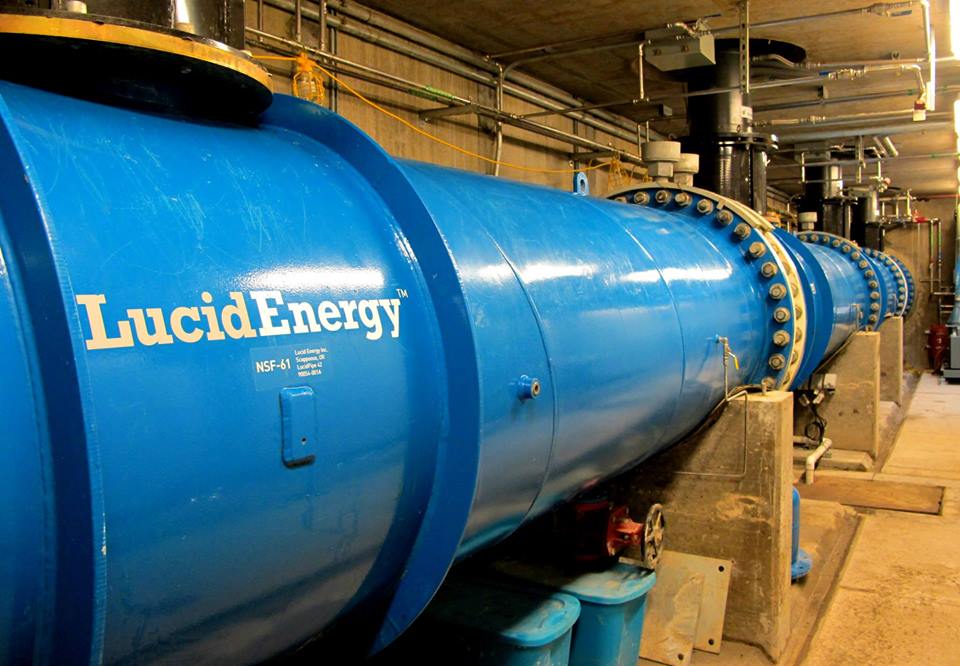
The city has partnered with a company called Lucid Energy to generate clean electricity for the city by utilizing the water already flowing beneath the city.

Photo Credit: Facebook, Lucid Energy

A section of Portland’s water system was replaced by pipes designed by Lucid Energy that contain four 42″ turbines. As the water flows through the pipes under the city’s streets, the turbines spin and provide energy that is put into the city’s electrical grid.

Lucid Energy says this will be “first project in the U.S. to secure a 20-year Power Purchase Agreement (PPA) for renewable energy produced by in-pipe hydropower in a municipal water pipeline.” One big advantage that this type of energy-generating system has is that it isn’t affected by the weather, like solar and wind power are.

The water must be moved by gravity because the energy required to pump water through pipes would make the energy generated by this technology pointless. In other words, cities with an abundance of hills will be the winners with this technology.

Photo Credt: Good Free Photos

When the project is complete it is supposed to generate power to up to 150 homes. While that might not sound like a lot, it is a great start for what is basically a brand new technology.

Take a look at this video to learn more about the project.

Hopefully, city planners and civic leaders around the country are paying attention to what’s going on in Portland.

The post Portland, Oregon is About to Generate Electricity from the City’s Water Pipes appeared first on UberFacts.

In 1969 Forrest Parry, an IBM engineer, had the idea…

In 1969 Forrest Parry, an IBM engineer, had the idea to affix magnetic tape to a plastic card. Every adhesive failed. He went home frustrated. His wife was ironing when he walked in. She suggested he fuse the tape onto the card with the iron. It was a success, and the magstripe card was born. […]