Economists Say That Forgiving Student Debt Could Give the Economy a Major Boost

I don’t know if anyone in power will take these recommendations seriously, but a headline like this is probably music to the ears of the millions of people out there are struggling to pay off their student loans.

Although different politicians have different ideas and plans about how much student loan debt they would forgive (or not), economists say that forgiving student debt could boost the economy in huge ways while also fighting income inequality.

Economists argue that the debt forgiveness could boost the economy because so many Americans are limiting their life decisions based on their student loans.

A prime example is Laura Greenwood, 30, of Montpelier, Vermont. Greenwood works for the state education agency in Vermont, making $63,000 a year. She said, “I make probably a better salary than a lot of my peers.” But, she added about a major life decision, “Children, it’s not about if you want them. It’s about can you afford them?”

Greenwood said she owes $96,000 in student loans for college and graduate school. She admits that this is a major hindrance to the decision to have kids with her partner. She said, “We’re interested in having kids, but just cost of living and all our other bills and then the student loans, it’s just like the final straw.”

Greenwood added that her debt makes the possibility of having children seem impossible.

Stressed

Economists argue that if people like Greenwood and others saddled with debt had that anchor removed, more of them would buy houses, have kids, and start businesses.

Lawrence Yun, the National Association of Realtors chief economist, said, “In the short term, it would be very positive for the housing market. Home sales could be, say, 300,000 higher annually if people were not saddled with large student debt.” According to Yun, this would be “a boost to the housing sector as well as the economy.”

William Foster, a vice president with Moody’s, said about total loan forgiveness, “There’ve been some estimates that U.S. real GDP could be boosted on average by $86 billion to $108 billion per year.” He also said, “Student loans are now contributing to what’s perceived as lower economic prospects for younger Americans.”

Stressed?

On the flip side of those seemingly encouraging statements is the fact that loan debt forgiveness would be expensive. Foster said the total for student loan debt is about $1.5 trillion – which is why it’s such a drain on the economy. He claims the federal government would have to give up $85 billion in annual revenue that it collects from these loans, which would result in a wider fiscal deficit (not that it seems to matter these days).

What do you think about this controversial and divisive topic? Should student debt loan be forgiven? Or partially forgiven? Or do you think that these former students need to pay in full?

Let us know what you think in the comments.

The post Economists Say That Forgiving Student Debt Could Give the Economy a Major Boost appeared first on UberFacts.

A CEO Gives His Employees $2,000 to Go on Vacation and Says They’re More Productive Than Ever

This is pretty great.

Mark Douglas is the CEO of a marketing and advertising company called SteelHouse who has very specific rules when it comes to vacation time for his employees. No, he’s not cutting down on time off – he requires that his workers take vacation time, and he gives each employee a $2,000 bonus each year that they have to spend on their vacations.

How amazing is that?

Beautiful Beach

Douglas said, “It’s one thing to say ‘You have three weeks’ vacation,’ as most companies do. It’s another thing to say ‘You have cash, and if you don’t go on vacation and spend this money, the money literally goes to waste.’ It’s another level of saying this is real.”

Douglas also said that the bonus pays off. He says his workers are more productive than ever and that they “have virtually zero turnovers.” Douglas said that between 2013 and 2016, only 3 employees left out of a workforce of 250 people.

Speicher Durlaßboden - Austria

Douglas said there are five main reasons why he enacted the vacation policy:

1. It gives employees a chance to recharge.

2. It encourages team-building among staff members.

3. A give-and-take mindset gets the best out of people.

4. A good life-work balance attracts great employees.

5. Customers view the company’s dedication to its employees in a positive light.

Douglas added, “I think it’s important that everyone be able to essentially really, truly leave work.”

In addition to that nice perk, the entire SteelHouse company takes a 3-day weekend once a month.

Not too shabby, huh?

The post A CEO Gives His Employees $2,000 to Go on Vacation and Says They’re More Productive Than Ever appeared first on UberFacts.
A Study Show That for Entrepreneurs, 45 Is the New 25

For some people, seeing a young entrepreneur like Mark Zuckerberg completely change the world at such a young age can be disheartening as the years creep by. But wait! This is good news for people who feel like they might’ve missed the boat in one way or another, professionally speaking.

A new study led by Pierre Azoulay of the Massachusetts Institute of Technology analyzed the relationship between age and high-growth entrepreneurship. According to the researchers,

“Our primary finding is that successful entrepreneurs are middle-aged, not young. We find no evidence to suggest that founders in their 20’s are especially likely to succeed. Rather, all evidence points to founders being especially successful when starting businesses in middle age or beyond, while young founders appear disadvantaged.”

Azoulay and his researchers studied data from many sources, including tax forms and the U.S. Census Annual Survey of Entrepreneurs. They pored over records from over 2.5 million entrepreneurs who have founded businesses (not including sole proprietorships) in the U.S. since the 1970s. The conclusion: they found the average age of these entrepreneurs was 42 years old.

They also studied entrepreneurs who were active in growth-oriented entrepreneurship and found that businesses that operated in the high-tech sector had founders that averaged 43 years of age, and that founders of venture-backed startups and businesses based in Silicon Valley were 42 years old, on average.

The researchers also discovered that more successful startup companies had slightly older founders.

The authors of the study continued,

“The 1,700 founders of the fastest growing new ventures (the top 0.1%) in our universe of U.S. firms had an average age at founding of 45.0 (compared to 43.7 for the top 1% and 42.1 for the top 5%). Regardless of the measure of technology-intensiveness chosen, we see older founders as we move toward upper-tail performance, especially for the top 1 in 100 or top 1 in 1,000 firms, as well as for founders with successful exits. This evidence is at odds with the conventional wisdom that successful founders skew younger.”

Okay all of you middle-aged folks, get out there and start a business! You can do it!

The post A Study Show That for Entrepreneurs, 45 Is the New 25 appeared first on UberFacts.
Former Victoria’s Secret Employees Share 10 Things They Want You to Know

Having a job at Victoria’s Secret looks “easy,” but employees are actually quite well-trained.

The store was born out of a desire to make sure people felt comfortable shopping for intimate items. Since 1977, Victoria’s Secret has been the go-to lingerie shop for people of all backgrounds.

The company has launched the careers of many a model and employed thousands of people at its retail locations. Here are some things they want you to know about their experiences.

10. Employee training is rigorous

Andrea, a former employee who worked with the company between 2015 to 2019, explained that everyone is trained for almost 6 weeks so they can better serve customers. She told Mental Floss,

“Whether you’re somebody who’s had a mastectomy, or somebody who’s transitioning, or somebody who’s getting a bra for the first time, that’s what we’re there for and that’s why we do our jobs.”

9. Employees can suggest other retailers

Victoria’s Secret may be the best-known lingerie retailer in the country, but employees can help you find what you need somewhere else if they don’t have a bra or item that fits your needs.

And since they carry sizes ranging only from 32AA-40DDD, some customers definitely need these suggestions.

8. In the past, looks were a bigger deal

Victoria’s Secret was once known for promoting models who were very thin. This was a large part of the company’s culture, and so, historically, the brand would hire thin employees to work at their retail stores, too.

That time is gone.

With slumping sales, Victoria’s Secret is now trying to revamp its image by diversifying. One former employee, says of this era,

“They would hire someone pretty over someone smart or capable. It was definitely part of the ‘fantasy.’”

7. Employees know how to deal with absent-minded boyfriends

Victoria's Secret, pretty red things, random shopping, University Village, Seattle, Washington, USA

Not every boyfriend or partner knows their girlfriend’s size. That’s why employees often suggest other gifts, such as gift cards, sprays, and body lotions.

Expert bra fitters are good, but not good enough to guess the bra size of someone who isn’t actually there.

6. Customers can get too comfortable

Customers are supposed to feel comfortable when they shop at Victoria’s Secret, but employees sometimes spot customers going way too far. Andrea once saw a customer use a pink bow on a bra to do something it wasn’t designed for…

“She takes it and she flossed her teeth with it in front of me. I was like ‘No!’ It’s so gross.”

5. There are some sweet benefits

Not everything is about training and seeing people do strange things. Employees get some nice benefits while they work at Victoria’s Secret, including decent pay and paid time off.

And as any retail worker will tell you, not every company will do the same for its employees.

4. Holidays can get zany

Photo credit: Wikipedia.org, CC BY 2.0

Customers know they can get good deals during the holidays, but employees have to clean up after their messes and deal with extra foot traffic. Andrea says things can also get physical.

“I’ve literally seen grandmas punch each other in the face.”

3. Here’s how to avoid talking to sales reps

Not everyone likes talking to strangers, but company employers have to approach you asking if you need help. Andrea provides a small life hack for the timid shoppers though.

“A good trick if you don’t want help is to remember the name of the person who you’re introduced to. So if the first person is like ‘Hi, my name is Stephanie,’ and then two or three more people come and say ‘Do you need more help?’ just say ‘Stephanie’s helping me, thank you,’ and they will leave you alone.”

2. There’s a reason for the scent

You may have noticed Victoria’s Secret often smells like it was bathed in body spray. That’s because employees are required to spray the store with it. Along with other sales tactics, such as showing you a new bra and offering a store credit card, you can expect employees to try to sell you whatever scent is bombarding you at the store.

1. A lot of items are “damaged out”

People often try to return things that are already ruined, and some customers damage items they try on. An ex-employee said about her former job,

“The worst part was having to damage out [retail speak for taking an irreparable item out of circulation] underwear that girls had tried on without leaving their own underwear on.”

There are some valuable secrets! Which ones surprised you? Let us know below!

The post Former Victoria’s Secret Employees Share 10 Things They Want You to Know appeared first on UberFacts.
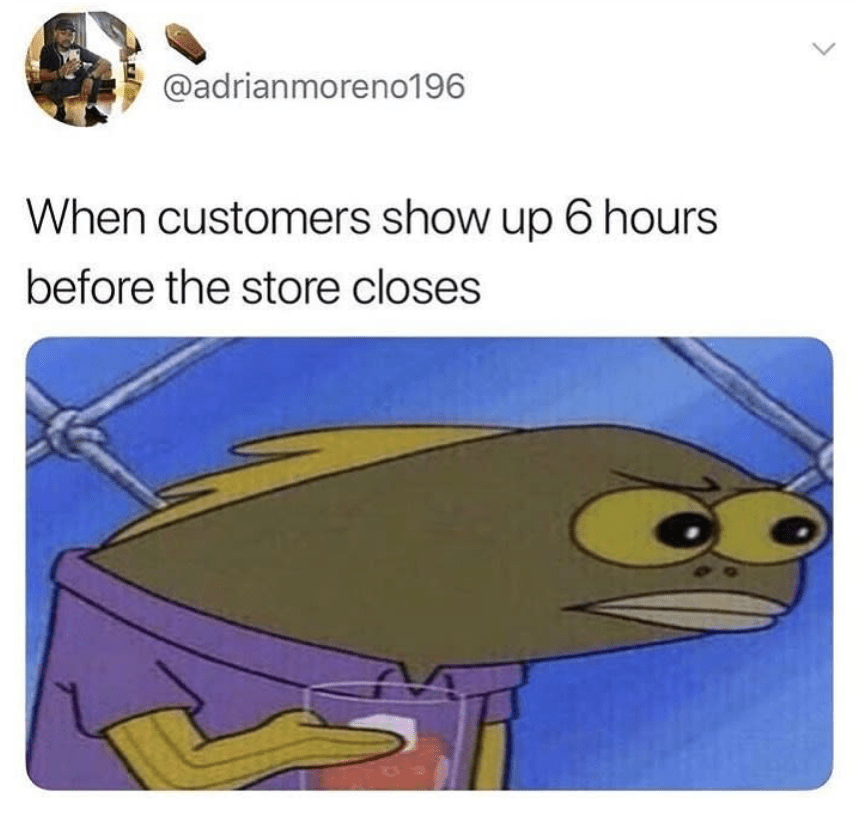
Russia removed Saturday and Sunday…

Russia removed Saturday and Sunday from the calendar for 11 years to create a “continuous working week” from 1929 to 1940. So instead of everyone having Saturday off, some people had Mondays off, others had Tuesdays off, others Wednesday, etc. So your “Weekend” came at different points of the week so the factories didn’t stop. […]

During the Irish Potato Famine…

During the Irish Potato Famine, the poor were hired for useless construction projects called ‘famine follies’ in order to provide them with work that would not take existing work away from other workers. These included roads in the middle of nowhere, between two seemingly random points.

Why Grit Is More Important Than IQ When It Comes to Success

One of my professors in college told us about a former student who was now a bigshot at a company in New York City and how well they were doing. A classmate of mine said to me, “Well, I guess you can have an okay career after you leave here.” I didn’t respond, but I’ve always believed that, ultimately, it really is up to you how far you go in your professional life. Yes, education and connections definitely help along the way, but just because you went to a certain school or a door is opened for you doesn’t mean that anything is guaranteed after that. You have to work hard and keep improving if you want to fulfill your dreams.

And, by the way, everyone has their own definition of what success means. For some, it’s a prestigious job on Wall Street, for others, it’s flipping pancakes at the local diner in their hometown where they know everyone.

Photo Credit: Pixabay

But back to my original point: intelligence might not be the best indicator of future success in life. Instead, it might be what psychologist Angela Duckworth calls “grit.” Duckworth believes that a special blend of passion and persistence is what makes high achievers special. In other words, not high IQ scores, high SAT scores, or a diploma from a prestigious university.

Posted by Angela Duckworth on Wednesday, July 25, 2018

Duckworth believes that grit is about being resilient and hardworking, and always wanting to improve. And another important aspect of this mindset: being able to overcome failure, which is tough for all of us. Passion is another key element in being successful. Duckworth says of some of the successful people she’s studied, “Even if some of the things they had to do were boring, or frustrating, or even painful, they wouldn’t dream of giving up. Their passion was enduring.”

Duckworth believes that effort is more important than IQ and she came up with two equations to explain her concept.

• Talent x effort = skill

• Skill x effort = achievement

Duckworth says, “Talent is how quickly your skills improve when you invest effort. Achievement is what happens when you take your acquired skills and use them.”

Photo Credit: Pixabay

Bottom line: grit, heart, and busting your rear end really do count and pay off. So even if you didn’t get into the best school, don’t have a bunch of family connections, and get rejected from a job (or multiple jobs), keep pushing forward. Be gritty and you’ll go far.

The post Why Grit Is More Important Than IQ When It Comes to Success appeared first on UberFacts.
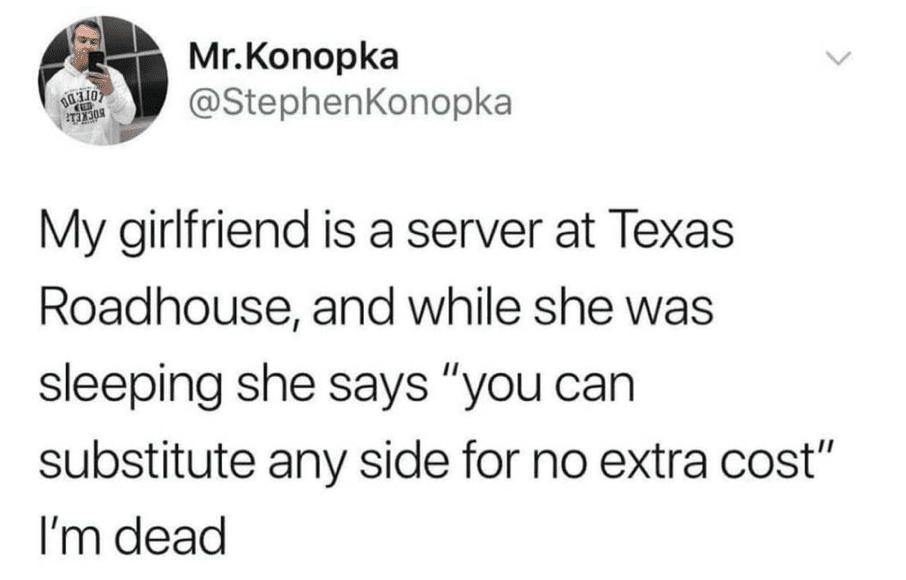
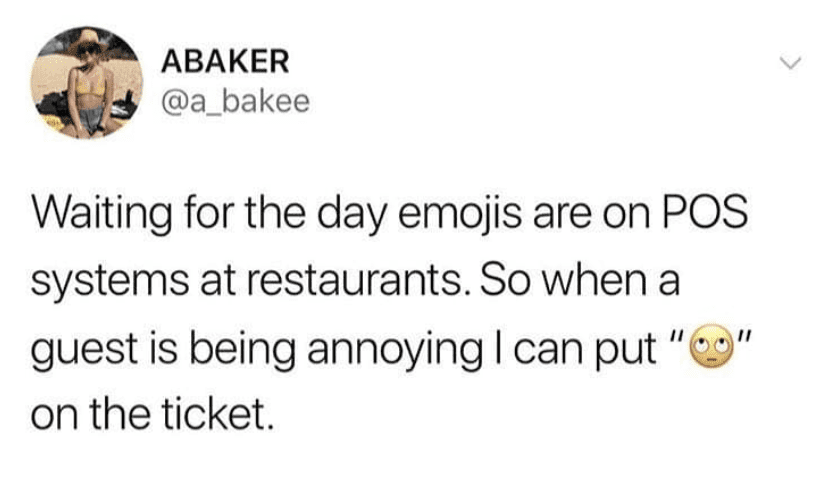
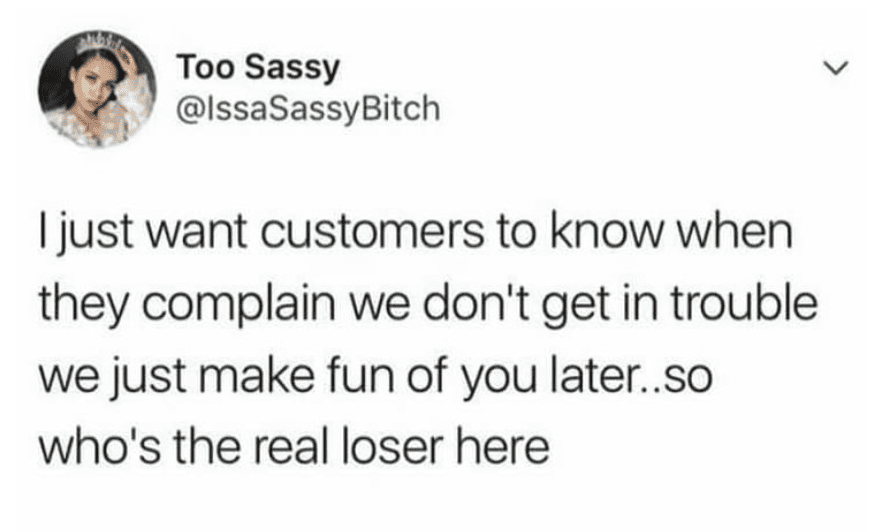
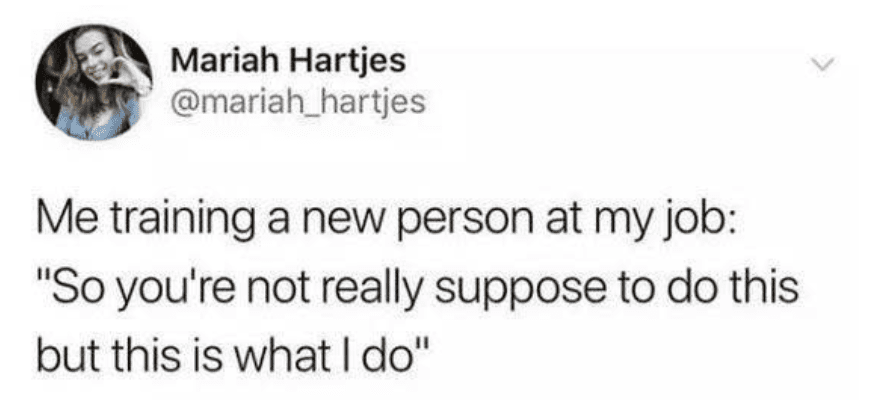
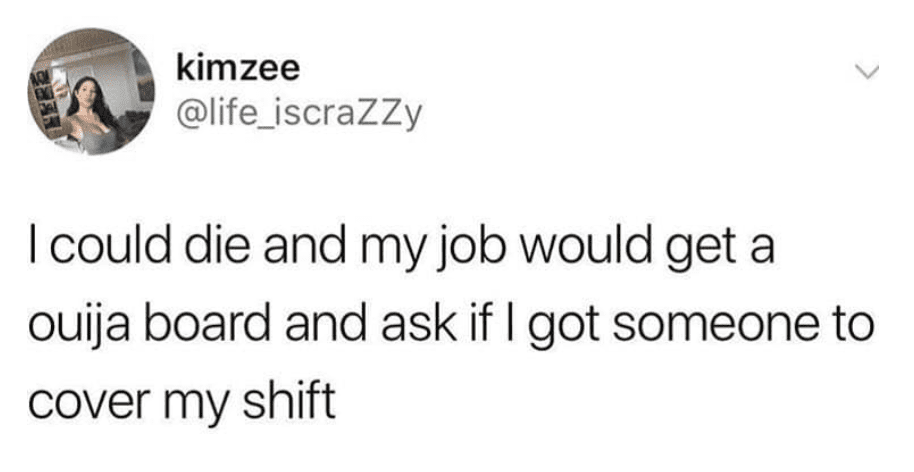
You’ll Understand These Tweets If You’ve Ever Worked in a Restaurant

Oh, the service industry.

If you’ve worked in retail or in restaurants, you will relate to these RL tweets. If you haven’t, then prepare to understand what happens behind the scenes.

12. Sad but true

Photo Credit: Buzzfeed

11. No matter what, have your shift covered

Photo Credit: Buzzfeed

10. I’m so not sorry, lady

Photo Credit: Buzzfeed

9. Rather, 6 minutes before closing. Yeah, don’t be that person.

Photo Credit: Buzzfeed

8. Work dreams are real.

Photo Credit: Buzzfeed

7. Can someone please take that joke out back and pitch it in the trash?

Photo Credit: Buzzfeed

6. Can we make this happen?

Photo Credit: Buzzfeed

5. Next time, I’m handing over my name tag.

Photo Credit: Buzzfeed

4. We really only have two hands

Photo Credit: Buzzfeed

3. This happens

Photo Credit: Buzzfeed

2. Every. Damn. Time.

Photo Credit: Buzzfeed

1. You should see the look on the bank teller…

Photo Credit: Buzzfeed

Working with the public is hard!

The post You’ll Understand These Tweets If You’ve Ever Worked in a Restaurant appeared first on UberFacts.

People Who Quit Their Jobs for Mental Health Reasons Reveal What Happened Next

If you have a job that makes your life miserable and even possibly makes you sick, physically and emotionally, then sometimes you need to take a leap of faith.

That sometimes means quitting your job even when you don’t have another one lined up.

That’s exactly what these AskReddit users did. Find out what happened after they quit…

1. Now you’re on call

“Yes. I had a job that I loved. Had coworkers I loved (I’m still friends with some). Ownership changed. My job that was a M-F, 9-5, somehow turned into on call all the time. My workload was always heavy, got added onto. I would say no to additional workload. It somehow still ended up on my plate. Somewhere around a year after the ownership change, I found myself googling heart attack, and mental breakdown symptoms because I knew something wasnt right.

I finally walked into work one day and handed in my notice. No job lined up. Didnt think it through. I wrote up my notice 5min before I left for work that day. Due to bills, I ended up taking a job I was overqualified for, and made crap for pay. But after a few months I got hired to where I am now.

I do the same type of job as the one I walked away from. Did it work out for me, I’d like to say yes. But only time will tell. I will say both myself and my family are much happier right now. And I havent wondered if I’m having a mental breakdown or possible heart attack since I left. That’s a win.”

2. No regrets

“Got burnt out and quit after bullshit management changes. Luckily I saved up a good amount of money to do whatever I wanted for about 4 months until I finally felt the need to better myself and move on with my life. Got another job that was safer than my last and went back to school to further my degree! It was a much needed break, don’t regret it one bit.”

3. No more

“Yes! I quit a very high-paying job, in fact. I was a software engineer.

It was great at first. I liked my coworkers, and the company was one of those startups that had a ping pong table and coldbrew coffee on tap and all that jazz. It was my first job out of college and I was dazzled by the cool community feel and all the “amenities.”

However, they had no system in place to train me. I was basically expected to just read the codebase and just instantly know exactly what to do. My team leader couldn’t answer my questions, and I quickly started drowning in work.

My once-recreational drug use turned habitual. I was railing lines of coke in the bathroom to stay awake because I stayed until 9pm trying to finish projects by the deadline and doing benzos at night to fall asleep. Once I finally started performing well, that only reinforced my terrible habits. I thought that if I stopped “self-medicating”, I would fall behind and they would fire me.

I cried every day. I was also the only female employee on the software team, and I got these paranoid thoughts in my head that my male coworkers didn’t really like me (in retrospect, I’m sure my alienation was totally my fault and a result of my anxiety). I didn’t even like the programming anymore. When I was in college, I interned with people who were using software to help charities, uncover bogus statistics, and generally lift up communities. My job was nothing like that. The people there acted like they were curing cancer, but the majority of what we did boiled down to helping huge companies build training platforms that were more “hip” and “cool.”

So I quit. Not just that job, but the whole field. I had started abusing harder drugs as well, and I knew I was going to end up killing myself. I went to rehab, and then I went back to school and got my Master’s degree in Education with a focus in mathematics.

I’m a private tutor and a substitute teacher now. I hope to get my PhD one day, but for now I am happy helping young people realize their dreams. I set my own schedule so that I’m able to pursue my passions: volunteering at a children’s hospital tutoring sick kids that need to miss school, and helping young women from local battered women’s shelters and homeless shelters learn graphic design and programming so that they can have valuable marketable job skills.

I’m two years clean from drugs and I have the most wonderful friends and a purrfect kitty! I am so, so happy I quit my job. Even though people thought I was insane for leaving the tech field (and I’m sure my mom’s friends talked shit about me behind her back), I’m glad I didn’t pay them any mind.”

4. Turn it around

“Yeah, I had been overworked and underpaid (and underappreciated) at a small resort for months. Tempers flared and I was given an ultimatum, I chose to walk out the door in the middle of the busy season.

The next night I went to a bar and saw another resort owner (and friend) saying goodbye to his only employee (he typically had 2-3). I walked up after and the conversation went like this:

Me: that sucks, do you have anything else lined up?

Him: nope, I’ve got nothing

Me: do you need somebody to help?

Him: do you need a job?

Me: yup, as of yesterday.

Him: show up tomorrow whenever you want and you’ve got the job.

The rest of the summer I ran his cafe/ shop (I had 7 years of cooking and 2 years retail management experience) and he ran the outfitter.

The first day after showing me around the kitchen he had to go attend to something, when he came back I had 20 people already eating and I was chatting them up and cleaning. He looked around and goes “well, you’re getting a raise.” The rest of the summer was great.”

5. Anxiety

“I quit my job of a year and a half out of anger and spite for my manager, and because of my quickly declining mental health.

While it helped at first the anxiety of not having a steady source of income took a much larger toll on me than anticipated and I really didn’t get to focus on my recovery/ therapy for my mental health until I had secured a new job to quell my anxieties.”

6. Time to quit

“Radio Shack. I worked there for about three months. They paid minimum wage + commission, and the only ways to earn commissions was pushing useless extended warranties or cell phones. And we had to push batteries, like AA and AAA batteries.

We were expected to get so many of these things every so many customers – batteries were like 1 out of every 10 customers. I got a headache every time I walked in for a shift, knowing I had to push this crap on people.

The major turning point for me was when my manager – who was just an arrogant little man who was built like Danny DeVito with John C. Reilly’s face – butted into a transaction of mine. The customer was a special needs man who was buying an up-convert DVD player. It didn’t feel right to push the extras on this man, considering the circumstances. My boss saw this and forcibly took over the transaction and talked this poor man into buying extra cables and disc cleaner and warranties for everything he could.

What should have been a roughly $50 purchase for this man ended costing him close to $100 when all was said and done. The cherry on top was when the man left, manager printed a copy of his receipt, shoved up in my face and proceeded to brag about it. I quit a few weeks later. Luckily, I was able to go back to my old job for a while, while I looked for a permanent job. I ended up going back to school about a year or so later.”

7. No reward

“Left my job of 15 years with nothing lined up because it was gaining me nothing any more aside from being overused for my job knowledge with no reward.

Took a month off, found another job that pays me more per hour than my last after I got promoted to supervisor after putting in 5 months. Couldn’t be happier”

8. Bad signs

“Quit my job at a call centre without anything lined up. I used to cry in my car before a shift, used up all my sick days, and it worsened my suicidal thoughts so I got myself out of there when I couldn’t take it anymore. I quietly stood up from my desk and quit on the spot. I had never walked out on a job before.

Took me a month to find another job with just slightly less hours (so a little less money) but it was worth it because I’m a lot better mentally and physically, and I like the job. Sometimes you just gotta do what you gotta do.

Also people have been asking where I’m from – I’m Canadian.”

9. F that noise

“Worked a call center job after one week of training and two days of actual work.

During the training you’re shown how it’s not possible to order a free trial of these expensive products without seeing the clearly marked (in multiple locations) terms and conditions.

But then I got to the floor and these people were old people who were offered a free gift when they bought something on amazon. They never went to a website and ordered a free trial. They were lied to and then charged $80+ three weeks later.

It was a scam built to prey on old people.

I had a panic attack on the way to work and quit when I arrived. Fuck that noise.

I was a new mom and we were really hurting for money. That was my first job after having my son and we had to beg money off relatives to stay afloat another month until I found a new job which was MUCH better. I was able to be hired as a substitute for a school district and, a month later, get rehired by the same district as a teacher’s aide.

Now I’m about to finish my certification and become a teacher.”

10. Not a scammer

“I worked for a shady company that sold a $2000 vacuum/air purifier. For some reason they needed someone to go door to door offering a “contest” where you had the chance to win $1000 in gas gift cards as long as you had someone come over and give a demonstration of the vacuum cleaner. Except I later found out that the contest winner was always someone in the company, and they give it back to the company.

I decided to quit after one day, I gave my speech about the “contest” to an old lady who didn’t seem to be all there, and she was super excited about the contest. I realized I’m not cut out for scamming people.”

11. Uggghhhh

“I worked in a retail store that was farming-based, but had the political atmosphere of Game of Thrones. Everyone hated each other and constantly tried to undermine one another. If you were talking to someone that someone else didn’t like, it was known across the store, and suddenly, people would stop talking to you. As in, you would stand there and ask a question, and they would turn their back on you.

I got zero training, got promoted to “zone manager,” (more work with no extra pay), and then injured my foot falling off of one of their rickety wooden ladders.

This caused everyone to turn on me because the store had to file a workman’s comp claim, so they missed out on the annual reward: a visit to the Golden Corral buffet in January.

Anyway, after about two weeks of mind-numbing boredom and having everyone staring daggers at me while I tried to figure out what the hell I was supposed to be doing, I just quit. Didn’t give notice. Just left my badge and vest there and went to lunch and never came back.

It took me a few months to find another job, but at least I was no longer alternating between openly weeping and feeling physically nauseous.”

12. I don’t agree with you

“I quit after an argument with my boss because I didn’t agree with how he did things.

Within two months I started my own company doing what he did but the way I thought it should be done. I am still running that business and he shut his down 3 years ago.”

13. A horrible industry

“I quit a job working as a logistics manager for a hospital. It was the worst job I ever had. The union reps would constantly mess with you, taunting you and try to get you fired, I was constantly on edge and would basically snap over everything. I developed a huge persecution complex where everyone was out to get me.

They would purposely feed you false information that would go against required practices. For example, one of the reps gave me a fake forecast for products we needed for the upcoming week, so I was to arrange the delivery/ordering and storing for the products. When I ordered it all and had it delivered I found out we needed like 1/10th of the products that was ordered, so I had to explain to the finance department why we exceeded our weekly budget.

Basically my choices were be fired, or quit because of the colossal fuck up. I was 21 at the time, I’m now in school to get my bachelors of accounting, so I guess it turned out pretty good because I could leave that horrible industry.”

14. Back stabbers

“Oh yes. I had a good job at a college. I felt so lucky to get it (administration) but it turned out that all the employees, staff and faculty, were back-stabbers who set you up for failure. I think it’s just the way academia runs, but I didn’t know that.

I stuck it out for nearly 7 years, and started having suicidal thoughts. Once I realized I was going a little crazy, I gave my notice and quit without a net. I never got over it, though. I’ve had a lot of rough jobs, but that was the absolute worst.”

15. Quite a story

“I worked for an insurance company for 6 years. Was fun at first then went through a divorce and all five years in and stopped caring. So I quit, cashed out my 401K and drove from Indiana down to Key West and got fucking trashed for a week. Then traveled to various states and just hung out and did what the fuck ever. Lasted three months and then went back to Indiana and then went to work for a different insurance company.

I don’t regret it. It was healing and uplifting and met some cool people along the way.”

Have you ever been in this position? What did you do?

Share your story in the comments!

The post People Who Quit Their Jobs for Mental Health Reasons Reveal What Happened Next appeared first on UberFacts.