
Costa Rica is one of the rare countries that officially abolished a permanent army. Its 1949…
The Swiss Constitution enshrines…
The Swiss Constitution enshrines the right for every inhabitant to have a nuclear fallout shelter. If new houses and apartments are built without bunkers, the owners have to contribute a tax to their Canton to secure a place in a government-owned nuclear fallout shelter.
The post The Swiss Constitution enshrines… appeared first on Crazy Facts.
This is Why Supreme Court Justices Serve for Life
If you’ve been paying attention to the news, you’re probably sitting on the edge of your seat and constantly grappling with your rising anxiety.
Also, you might be wondering why the judges who rise to the highest court in the land serve until they’re ready to step down (or until they die), without any interference from others.
I mean, if Presidents can appoint them, why can’t they fire them?

Image Credit: Pixabay
It turns out there are a few reasons the founding fathers agreed that Supreme Court jurists serve for life.
Article III of the Constitution sets up the court and outlines its powers, but leaves it to Congress to organize and staff them, stating only that the judges “shall hold their office during good behavior.”
The meaning of “good behavior” has been debated over the years, and judges who some feel have violated this standard can be impeached – though only one, Samuel Chase in 1804, have been.
He was appointed by President George Washington but was impeached by the House for allegedly partisan rulings. The Senate didn’t agree, and failed to remove him from the bench.
What’s for sure is that “good behavior” can’t mean their decisions being deemed right or wrong, because the point of the lifetime appointment is to shield the judges from the whims of changing outside pressure.”
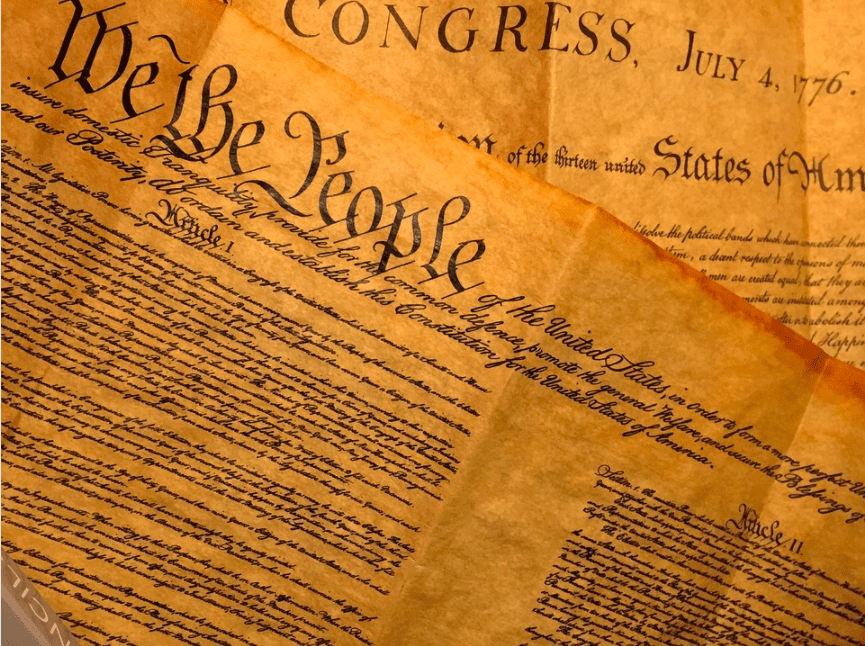
Image Credit: Pixabay
Ryan Vacca, a law professor at the University of New Hampshire’s law school, explains what that means:
“The framers believed it important to separate the legislative, executive, and judicial powers of government, and they believed it was particularly important to create a judiciary that would be independent of popular opinion. If they had to be reappointed or reelected, they would have to worry that unpopular decisions could cost them their jobs.”
Of course, as with other Constitutional issues, it’s become more complicated in the modern world. We live longer, and jurists are being nominated and confirmed at younger and younger ages, which could mean some justices could serve for four-plus decades.

Image Credit: iStock
It could also mean that more justices will voluntarily retire, but it’s clear to see that the courts, set up to be non-partisan and fair, are always tipping one way or another.
What’s the answer?
I don’t know, but the Constitution definitely doesn’t have it.
The post This is Why Supreme Court Justices Serve for Life appeared first on UberFacts.
In 1933 there was a proposed Amendment…
In 1933 there was a proposed Amendment to the US Constitution that would put a Limit of $1 million on personal wealth. In the wake of the Great Depression many Americans developed more socialist values and believed personal wealth should be limited to avoid such an issue from happening again.
The post In 1933 there was a proposed Amendment… appeared first on Crazy Facts.
The constitution of Alabama is the…
The constitution of Alabama is the longest and the most amended constitution in the world. It has more than 900 amendments and consists of about 310,000 words. The constitution of India, the second longest one in the world, is about 145,000 words.
The post The constitution of Alabama is the… appeared first on Crazy Facts.
Thomas Jefferson wanted…

Thomas Jefferson wanted the Constitution rewritten every 19 years. In a letter to Madison he muses that neither the constitution nor the laws of a previous generation should apply to the current one. The 19 years part comes from the mortality tables of the time (people live for much longer now than they did then).
Thomas Jefferson argued that because no generation has a right to bind subsequent…
Thomas Jefferson argued that because no generation has a right to bind subsequent generations, the Constitution should expire every 19 years.