
Did you know that Pokémon started because of a little boy who just really loved catching bugs? When…
Killing a House Centipede is NOT a Good Idea
You’re gonna want to pay attention to this.
Countless house centipedes have met their fates at the receiving end of a rolled-up magazine, a cup, or a shoe.
But they’re getting a bum rap.
While they’re indeed creepy and crawly, and they’ve certainly sent the heartiest of us out a room screaming, they’re good to have around. If you can get past your squeamishness, it’s best to let them live.

Photo credit: Pixabay
Centipedes are on a constant search for their next meal. They dine on mostly unseen and more problematic insects, including silverfish, termites, moths, flies, and cockroaches.
House centipedes can have anywhere from 15 to 177 pairs of legs, depending on the species. They use them to stun and capture prey with a technique called “lassoing.” With the pair closest to their head, they poison their victims with venom and wrap themselves around the dying insect for a satisfying meal. This bug is also one of the few that doesn’t have a nest or web and isn’t problematic in terms of disease or destruction to your home.

Photo credit: iStock
If you can’t live with house centipedes, the best defense is a good offense.
Start by getting rid of their food. This means reducing moisture with a fan or dehumidifier, sealing off cracks where pests are prone to settle and lay eggs, and keeping trash indoors to a minimum.

Photo credit: Pixabay
Sure, the occasional centipede will still find his way in, no matter what you do. Just resist the urge to whack one out clean out of existence. You’ll reap the benefits of fewer pests and walk away with improved karma.
Do centipedes make you uncomfortable? Let us know in the comments below!
The post Killing a House Centipede is NOT a Good Idea appeared first on UberFacts.
Killing a House Centipede is NOT a Good Idea
You’re gonna want to pay attention to this.
Countless house centipedes have met their fates at the receiving end of a rolled-up magazine, a cup, or a shoe.
But they’re getting a bum rap.
While they’re indeed creepy and crawly, and they’ve certainly sent the heartiest of us out a room screaming, they’re good to have around. If you can get past your squeamishness, it’s best to let them live.
Photo credit: Pixabay
Centipedes are on a constant search for their next meal. They dine on mostly unseen and more problematic insects, including silverfish, termites, moths, flies, and cockroaches.
House centipedes can have anywhere from 15 to 177 pairs of legs, depending on the species. They use them to stun and capture prey with a technique called “lassoing.” With the pair closest to their head, they poison their victims with venom and wrap themselves around the dying insect for a satisfying meal. This bug is also one of the few that doesn’t have a nest or web and isn’t problematic in terms of disease or destruction to your home.
Photo credit: iStock
If you can’t live with house centipedes, the best defense is a good offense.
Start by getting rid of their food. This means reducing moisture with a fan or dehumidifier, sealing off cracks where pests are prone to settle and lay eggs, and keeping trash indoors to a minimum.
Photo credit: Pixabay
Sure, the occasional centipede will still find his way in, no matter what you do. Just resist the urge to whack one out clean out of existence. You’ll reap the benefits of fewer pests and walk away with improved karma.
Do centipedes make you uncomfortable? Let us know in the comments below!
The post Killing a House Centipede is NOT a Good Idea appeared first on UberFacts.
This Is Why You Should Never Squash a Stink Bug
If you live in the U.S., there’s a good chance you’ve encountered a brown marmorated stink bug – though the species is native to Asia, it has now been spotted in 43 states since its arrival around 1998.
Though they typically remain outdoors (unless they find themselves carried inside on clothing or other material), they might come inside seeking warmth in the cooler months of fall and winter. Since they’re not small – typically a half-inch long or more – you’ll probably spot them when they do.
But even though our justice against insect invaders is typically swift and mortal, common sense should prevail with stink bugs – don’t squish them.
I mean, unless you enjoy the pungent aroma of skunk or rotten cilantro permeating your rooms.
 . . Stinkbug season in full affect #bughead #Stinkbug

They’re called stink bugs for a reason: the bugs release a terrible scent whenever they feel threatened, and that includes as they die. So really be careful in handling them, period.
Things to try: nudging them alive onto a piece of paper or into a cup, using a vacuum, or leaving out trays of soapy water in the hopes they might take their own lives.
The good news is that you’ll probably only see a few in your house, if any, so you shouldn’t have to figure out how to handle an army of the little buggers.
Another bright spot, scientists are saying that the samurai wasp – the stinkbug’s natural predator in its native habitat – has arrived in the United States. The parasitic wasp has been spotted in 10 states and is expected to spread.
I’ll let you decide whether or not you consider that good news.
I definitely to do. *shudder*
The post This Is Why You Should Never Squash a Stink Bug appeared first on UberFacts.
Do You Have Cockroaches in Your House? Keep Them Away Using Peppermint Oil.
This sounds gross, but there are cockroaches all of the place where I live. Huge, nasty bugs that move a million miles an hour and (obviously) have no regard for my personal space. I live in North Carolina, and when I first relocated here, I was shocked at how many there were (people here misleadingly call them “Palmetto bugs”), but now I guess I’ve gotten used to it.
If you’re in the same boat as me (and you probably are if you live in certain parts of the country), here’s a home remedy you should consider to keep those pesky bugs out of your house and out of your life, especially if you prefer to use non-toxic products.
Researchers from Auburn University released a study that shows that a mix of peppermint oil and white vinegar will keep roaches (and spiders) away.
Here’s what you should do: put 10 drops of peppermint oil into a spray bottle along with two parts water and one part white vinegar. Spray the mixture around your cupboards, along your baseboards, under your sink, near door entrances, and anywhere else you think roaches might be lurking. This will not kill the roaches, but it will keep them away from the sprayed areas—and hopefully out of your hair (sometimes literally).


 —> #cockroach #insect #cockroaches #cucaracha #mosquito #bugs #insects #watchfree #nature #bigmandan #pests #pest #insectsofinstagram #bug #mosquitobites #animal #horror #commandpest #pestagram #insectphotography
Another tip: you can also use peppermint oil by itself to wipe down countertops.
Give this a shot and see how it works for you—I know I’m going to. If you’re not seeing any improvement, it might be time to call in an exterminator.
The post Do You Have Cockroaches in Your House? Keep Them Away Using Peppermint Oil. appeared first on UberFacts.
Why Are Bugs So Darn Loud?
You’re outside on a warm summer evening: there are no cars, no voices, just the overwhelming cacophony of BUGS. Tons of them. It sounds like a symphony in the trees of nonstop chirping from cicadas, crickets, and other insects. If you’ve ever camped in a national park or a forest, you know exactly what I’m talking about. The forest comes alive and it gets so loud that you are taken aback.
But did you ever ask yourself the question, “Why are bugs so darn loud?” Especially when you look at them and see how little they are?
Let’s take a look at how three small insects make all that noise.
Katydids
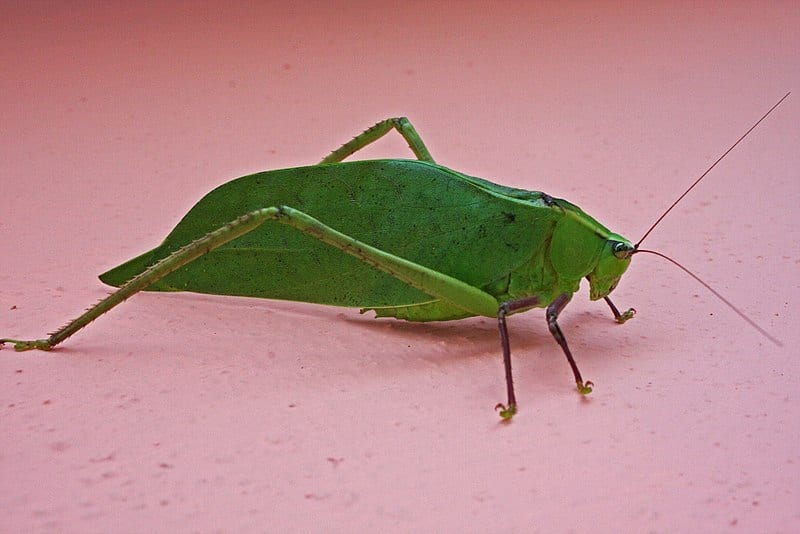
Photo Credit: Wikipedia
A lot of the noise you hear from katydids is associated with mating. These insects rub their wings together in a method known as “stridulation,” producing a buzzing sound. Of course, it’s the males that stridulate, since they’re the ones doing the attracting.
Cicadas
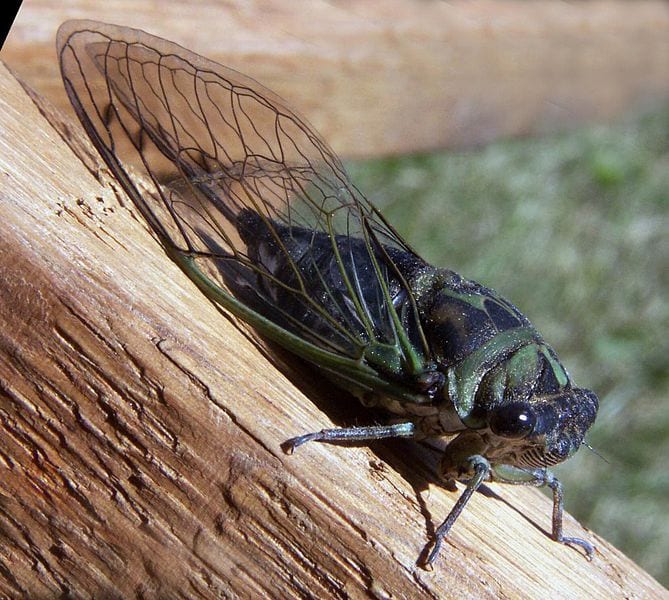
Photo Credit: Wikipedia
Only male cicadas make noise, just like katydids and crickets. Unlike katydids, cicadas don’t only make noise to mate, but also to scare off other male bugs and to send out distress signals. To make noise, male cicadas use tymbals, special noise-making organs that are located on their abdomens. Most of the rest of a cicada’s abdomen is hollow, which helps to amplify the noise.
They’re also able to fold their eardrums closed, which is good news for them because they are loud.
Crickets
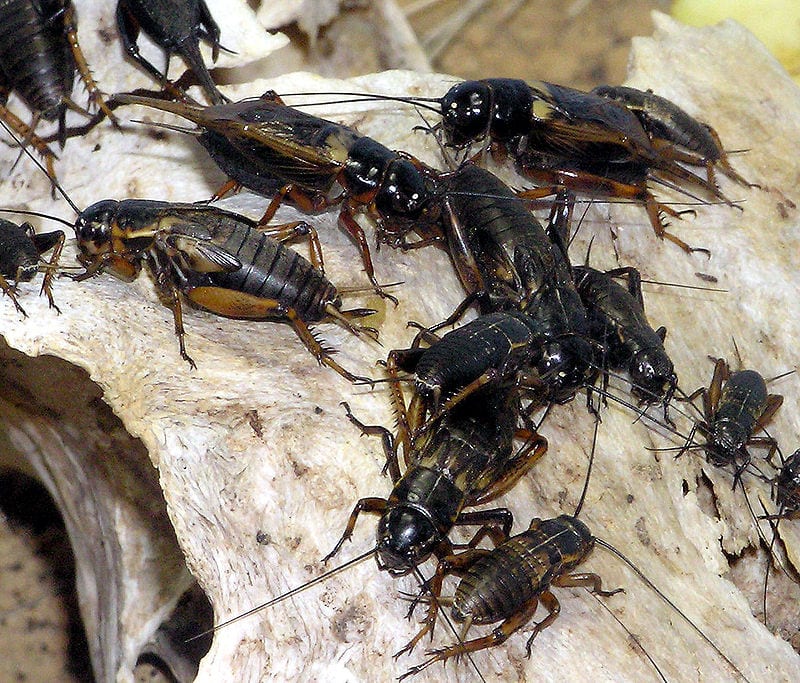
Photo Credit: Wikipedia
Crickets, crickets, everywhere! Crickets rub their wings together to make noise, but they emit a lower frequency than katydids, which results in a more musical sound instead of a buzzing noise. Crickets also use noise to attract potential mates, and they have a number of different ‘songs’ for different parts of the mating ritual: attracting a mate, wooing a mate, and warning off male competition.
It sure is noisy out there!
The post Why Are Bugs So Darn Loud? appeared first on UberFacts.
Las Vegas Is Dealing with a Grasshopper Invasion
Uh oh…prepare to never your houses again…
Have you ever seen the 1950s sci-fi classic Them! about an invasion of ants grown huge due to atomic radiation?
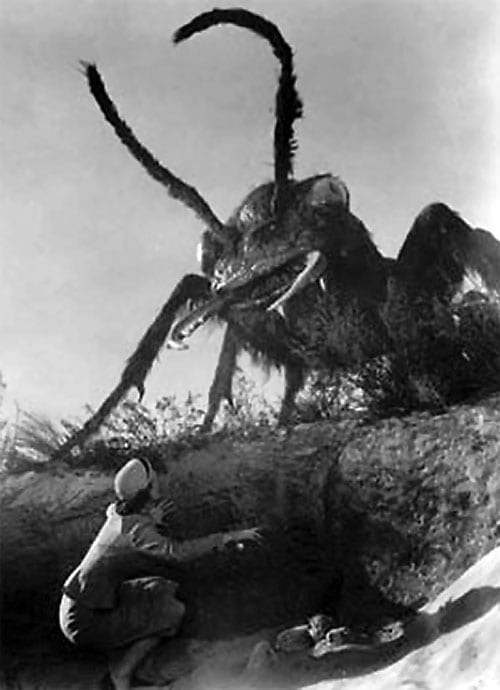
Photo Credit: Warner Bros.
Well, this story is kind of like that, except with grasshoppers…and these bugs are a little smaller, so don’t get too alarmed, okay? Also, no atomic radiation.
But the fact remains that Las Vegas, Nevada, is being overrun with massive hordes of grasshoppers. GRASSHOPPERS! EVERYWHERE!
This is legit the linq rn pic.twitter.com/IIZTFTgsCv
— andi
(@grammyandoo) July 26, 2019
These particular insects are called pallid-winged grasshoppers, and they aren’t messing around. An entomologist named Jeff Knight said that this type of grasshopper’s number increase after wet winters and springs, and the evidence is in the videos and photos that people are sharing from Las Vegas of the insects’ migration.
Koval Ln behind The Linq. Construction worker#grasshopperinvasion pic.twitter.com/2soWBsErB1
— Eva (@KaKass) July 26, 2019
Nevada was one of the five wettest states in the first five months of 2019, double the national average. So, while it may be a normal-ish migration for these grasshoppers, people on social media are freaking the hell out – with good reason.
Breaking! Live footage from the first shots of the Human vs Grasshopper war. @LasVegasLocally @FOX5Vegas #GRASSHOPPERS pic.twitter.com/WfRhpJ5U1r
— Griffin Vincent (@GriffTheDiff) July 26, 2019
yall…. this ain’t it #GRASSHOPPERS #lasvegas pic.twitter.com/3mqtVks7Za
— Javier (@javiverdin) July 26, 2019
The good news? Jeff Knight said the insects don’t bite, don’t carry disease, and they won’t cause damage to anyone’s yard during their weeks-long invasion of Vegas.
Knight also said this isn’t the first time this has happened: “We have records clear from the ’60s of it happening, and I have seen it … at least four or five times in my 30-plus years. There are some special weather conditions that trigger the migration.”
#GRASSHOPPERS have taken over #Vegas! pic.twitter.com/N6aYHTigIH
— Hearth & Home Specialties, Inc. (@hnhsi_inc) July 26, 2019
Las Vegas is a very strange place…and it just got a little weirder.
The post Las Vegas Is Dealing with a Grasshopper Invasion appeared first on UberFacts.
A Photographer Specializes in Close-Up Shots of Insects and Spiders
Alexander Mett is a wildlife photographer from Germany, and his work is pretty incredible. He gets extremely up close and personal with insects and spiders, and I do mean extremely up close.
I’m pretty sure you’ve never seen the intricate details on the faces of little critters like this before.
Take a look at Mett’s photos and be sure to follow him on Instagram.
1. Dewdrops
2. Creepy crawler
3. WOW
 . . . #makrofotografie #naturfotografie #wunderdernatur #wanzen #nabu #macrophotography #macro_captures #insects #macro_freaks #macro_brilliance #top_macro #igbest_macros #macro_highlight #macro_holic #macroshot #majestic_macros #macro_mood #macroworld #macro_kings #macrolove #macro_maniac #invert_macro #NatGeoDE
_(8573971467).jpg)

#/media/File:African.field.cricket.arp.jpg)
4. Bug eyes
5. Bzzzzzzzzzz
6. Great shot
7. Rock star spider
8. Bloodsucker
9. Male yellow sac spider
10. Making the jump
11. Terminator
12. King of the forest
13. Queen wasp
14. Look at that face
15. Yikes
Those are very impressive, don’t you think?
The post A Photographer Specializes in Close-Up Shots of Insects and Spiders appeared first on UberFacts.
Not Every Ladybug Is Lucky, and Here’s How You Tell the Difference
Ladybugs (or ladybirds, for you UK-types) actually include a number of species that fall under the species umbrella coccinellidae. They’re widely considered to be good luck symbols, to represent joys to equal your sorrows, and are sometimes associated with the Virgin Mary.
They’re one of a group of 6,000 or so small beetles that are similar in marking and color – lady beetles, really, not bugs at all – most of which are beneficial creatures that feed on agricultural pests. Everyone likes ladybugs, right?
Well, get ready to rethink your position. The North American ladybug (which is a good little beetle) is strikingly similar to the Asian ladybug, which was introduced by the USDA in order to combat the spread of aphids and has since spread through pretty much every state in the lower 48.

Image Credit: Pixabay
While the Asian ladybug does prey on aphids, it also has overtaken native species – and it’s not nearly as harmless to humans. They like to nest in the cracks and crevices of homes, they can stain walls and fabrics, and they are more aggressive than native varieties (they may even bite you).
They can also ruin the taste of wine if they infest a vineyard, which is no good at all!
You can keep them out of your house by making sure cracks around windows, doors, pipes, vents, etc. are all tightly fitted, and that rips in your screens are repaired. Once they’re inside you can vacuum them up or catch them on sticky tape – but don’t squish them. If you do, them the ensuing goo could stain your furniture.

Image Credit: Pixabay
If you’re wanting ladybugs for your garden, try to make sure the variety you want is what you receive. Which brings us to this: if they’re similar in markings and color, how can we tell the difference?
Well, the Asian variety can be more orange or yellow, instead of the deep red of the native North American ladybug, but the main distinctive feature is this: the Asian species has a marking toward its head that resembles a black M.
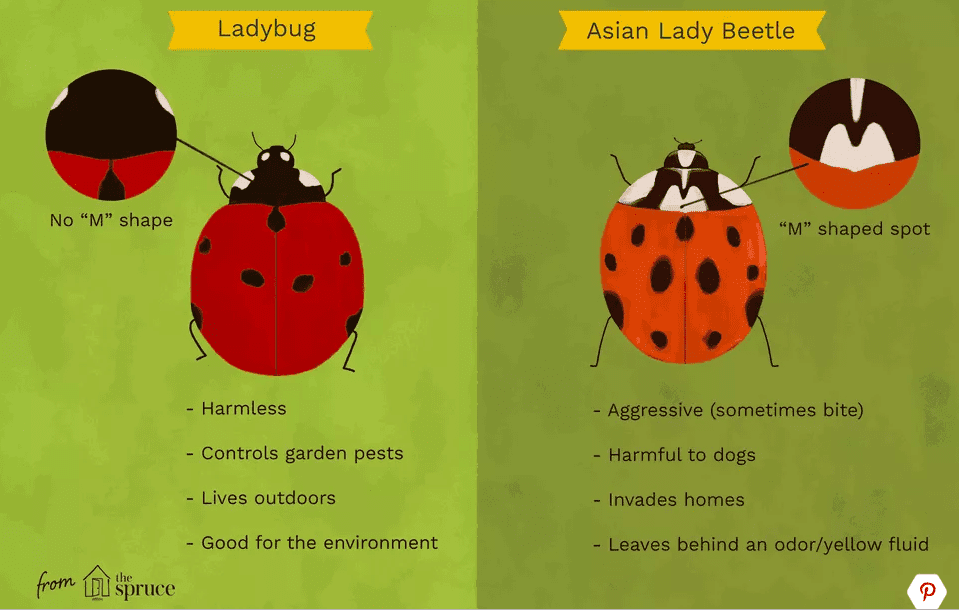
Image Credit: Catherine Song. © The Spruce, 2018
So, look closely, my friends, and don’t assume your luck is about to change if a ladybug lands on you – it could be about to bite.
The post Not Every Ladybug Is Lucky, and Here’s How You Tell the Difference appeared first on UberFacts.
The Reason Why There Are No Mosquitoes at Disney World

It’s hard to imagine any place in Florida being insect-free, but that is the case at The Happiest Place on Earth, Disney World.

Photo Credit: Pixabay
And it’s all because of a carefully-planned operation created to make sure that guests have the most comfortable experience possible (and because mosquitoes carry serious illnesses). The Mosquito Surveillance Program runs the show at Disney World, ensuring that guests are not eaten alive while they wait to get on rides or stroll around the grounds. The program entails spraying insecticides and maintaining natural predators at the park.

Photo Credit: Pixabay
The Mosquito Surveillance team captures the insects, freezes them, and studies them to learn how to best rid Disney World of the pests. They also keep chickens on the grounds and test their blood to see what kind of diseases they might be contracting from mosquitoes, such as West Nile virus.

Photo Credit: Pixabay
Disney actually made a film during World War II about the dangers of malaria, so you know the folks at the park are well versed in the dangers of mosquitoes and the diseases they carry. Watch the video below for more information.
Now if only Disney could find a way to make things a little cooler during the summer…
The post The Reason Why There Are No Mosquitoes at Disney World appeared first on UberFacts.